
Many gardeners believe that planting potatoes as deep as possible will automatically produce bigger potatoes, but that is not true. The right potato planting depth depends on the soil, planting method, moisture, and growing conditions.
Planting too shallow can leave developing tubers exposed, while planting excessively deep in heavy or wet soil can make growth more difficult.
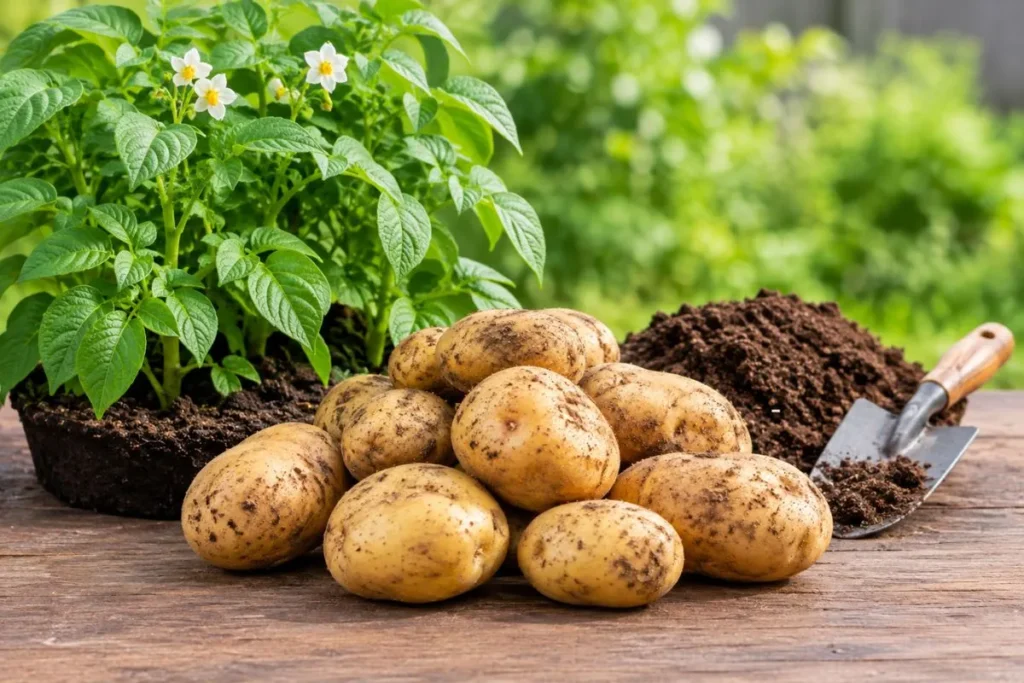
If you’re wondering how deep should you plant potatoes, the goal is to give seed potatoes enough soil coverage while leaving room for healthy shoots to emerge.
Getting the potato seed planting depth right from the start gives your plants a better foundation and makes later care, including hilling, much easier.
What Is the Ideal Potato Planting Depth?
There is no single depth that works perfectly for every potato garden. The ideal potato planting depth depends on your soil, drainage, potato variety, and growing method.
In a typical garden, the seed potato should have enough soil above it to stay protected while still allowing the new shoots to emerge without too much resistance.
For most home gardeners, starting with about 3 to 4 inches of loose soil over the seed potato is a practical approach. As the plant grows, you can gradually add more soil around the stems. This process, known as hilling, gives developing tubers more space and keeps them covered.
How Deep Should You Plant Seed Potatoes?
If you’re asking how deep should you plant seed potatoes, focus on the condition of the soil as much as the measurement. Place healthy seed potatoes in loose, well-drained soil and cover them with a moderate layer of soil.
Avoid packing the soil tightly because young shoots need to push through it easily.
The potato seed planting depth can also vary slightly with the size of the seed pieces. Small pieces do not need to be buried excessively deep.
Larger seed potatoes may have several strong eyes and can be planted using the same basic depth while leaving enough room for shoots to develop upward.
After the shoots appear, don’t simply leave the original depth unchanged. Add loose soil around the growing stems as the plants become taller. This helps protect developing tubers from sunlight and supports a healthy potato tuber growth cycle.
Potato Seed Planting Depth vs. Potato Tuber Depth
It’s important to understand that potato planting depth and the final depth of the potatoes are not necessarily the same thing. The seed potato starts at a certain depth, but the plant can receive additional soil as it grows.
For example, you may begin with a seed potato covered by a few inches of soil. Once the plant develops, you can add more soil around its base. This gradually increases the amount of soil available for developing tubers.
This is one reason gardeners use potato hilling. Rather than burying the seed potato extremely deep at the beginning, you allow the plant to emerge and then build up the soil around it.
The method can make it easier to maintain good soil conditions while keeping developing potatoes protected from light.
Why Planting Potatoes Too Deep Can Be a Problem
Going deeper isn’t always better. If the soil is heavy, compacted, or poorly drained, excessive depth can make it harder for shoots to emerge. Wet soil can also create an unfavorable environment for developing potatoes.
This is especially important when considering how deep to plant seed potatoes in soil. Loose soil gives young plants a much easier path upward than dense, compacted soil. Good drainage is just as important as the depth itself.
Why Planting Potatoes Too Shallow Can Be a Problem
Planting too shallow can create a different set of problems. As the potato plant grows and tubers develop, potatoes close to the surface may become exposed to sunlight. Exposed potatoes can turn green, so keeping developing tubers covered with soil is important.
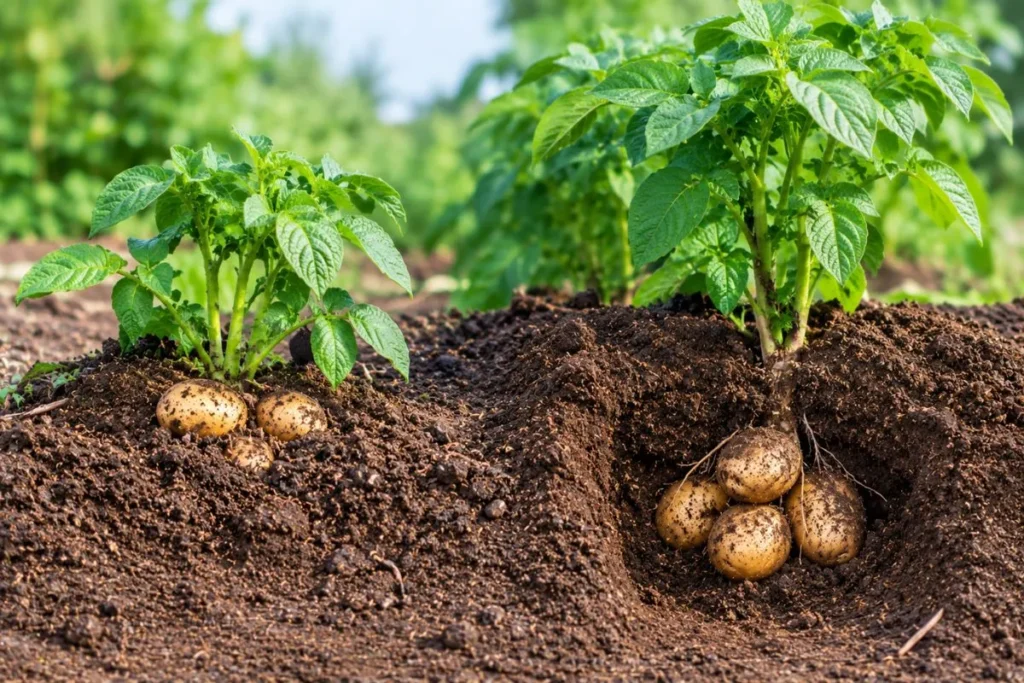
This is why the best depth to plant potatoes should provide enough initial coverage while allowing you to add more soil later. A gradual approach gives you better control over the growing environment than simply planting extremely deep from day one.
Does Soil Type Change the Ideal Potato Planting Depth?
Yes. Soil type can make a noticeable difference. Loose, crumbly soil allows roots and shoots to develop more easily, while heavy clay soil can become compacted and hold excess moisture.
If you’re growing potatoes in loose garden soil, the standard starting depth is usually straightforward. With potato planting depth in heavy soil, focus first on improving drainage and loosening the soil rather than simply digging a deeper hole.
Sandy or light soil may drain quickly, so maintaining consistent moisture becomes more important. Loamy soil is often easier to work with because it can provide a useful balance of drainage, moisture retention, and loose texture.
Does Potato Variety Affect Planting Depth?
Potato varieties can differ in growth habits and tuber development, so it’s better not to treat one measurement as a universal rule.
However, most home gardeners can use the same basic planting approach: start the seed potato at a moderate depth, provide loose soil, and gradually add soil as the plant develops.
The most important goal is to create favorable potato growing conditions rather than focusing only on one number. Proper spacing, moisture, sunlight, soil quality, and regular care all work together to support a healthy crop.
How Deep Should You Plant Potatoes in a Garden?
Many gardeners assume that how deep to plant potatoes in a garden simply means digging the deepest hole possible. That approach can actually create problems, especially if the soil is heavy or holds too much water.
Instead, focus on creating a comfortable planting space where the seed potato has enough soil coverage, good drainage, and loose soil above it.
For a simple potato garden planting method, prepare the soil first, make a planting trench or hole, place the seed potatoes correctly, and cover them with loose soil. As the plants grow, you can add more soil around the stems.
This gives developing potatoes plenty of coverage without forcing young shoots to push through an unnecessarily deep layer.
How Deep to Plant Seed Potatoes in Soil
When deciding how deep to plant seed potatoes in soil, aim for a moderate starting depth rather than burying them excessively. In a home garden, placing seed potatoes about 3 to 4 inches below the soil surface is a practical starting point when the soil is loose and well drained.
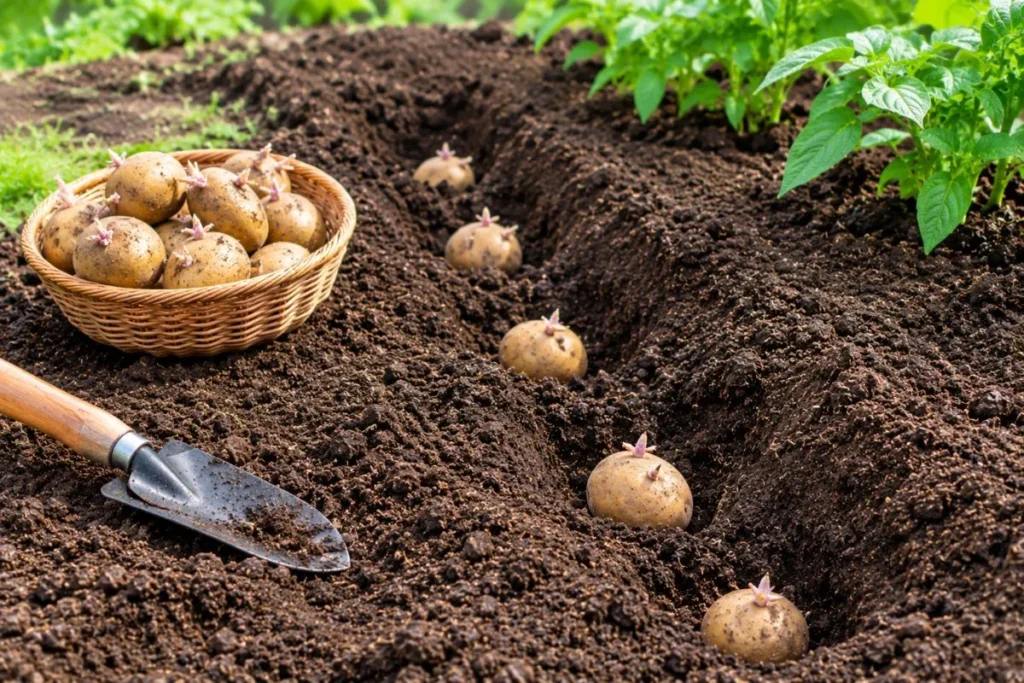
Before planting, loosen the soil so it doesn’t form a hard layer around the seed potato. Place the potato piece with its eyes or sprouts facing upward. Then cover it gently with soil without pressing it down too firmly.
The condition of the soil matters just as much as the measurement. Loose soil allows the young stems and roots to develop more easily. If the soil is compacted, improve its texture before planting instead of simply digging a deeper hole.
Preparing the Garden Soil Before Planting
Good potato soil depth starts with good soil preparation. Remove large stones, weeds, and hard clumps from the planting area. Break up compacted sections and create a loose growing environment.
Potatoes prefer soil that drains well because excess water around the developing tubers can cause problems. At the same time, the soil should hold enough moisture to support steady plant growth.
Adding suitable organic matter can help improve soil structure, particularly when the existing soil is very compact or poor. The goal is simple: create soil that is loose enough for roots and tubers to develop without becoming waterlogged.
How to Plant Potatoes in a Garden Trench
A trench makes planting potatoes simple, especially when you’re growing several plants in a row.
Start by creating a straight trench in the prepared soil. Place each seed potato along the trench with the eyes facing upward. Leave suitable space between the seed pieces so the plants aren’t crowded as they develop.
Cover the potatoes with loose soil and water the area gently. Avoid flooding the trench. The soil should be moist rather than soaked.
As the plants grow, gradually pull or add loose soil around their bases. This helps maintain good coverage around developing tubers and supports the plants as they become taller.
Should You Cover the Seed Potato Completely?
Yes, the seed potato should be covered with soil after planting. Leaving it exposed can allow sunlight to reach the potato as it develops.
However, you don’t need to bury the seed potato extremely deep from the beginning. A moderate layer of soil gives the plant a good starting point while allowing you to increase coverage later.
This gradual approach is especially useful for beginners because you can observe how the plants are growing and adjust the soil level when needed.
How Deep Should Potatoes Be Planted in a Garden?
For gardeners looking for a quick answer to how deep should potatoes be planted in a garden, a starting depth of around 3 to 4 inches of loose soil over the seed potato is a useful general guideline.
But don’t treat this as an unchangeable rule. Heavy soil, poor drainage, unusual weather, and different growing methods can affect the ideal starting depth.
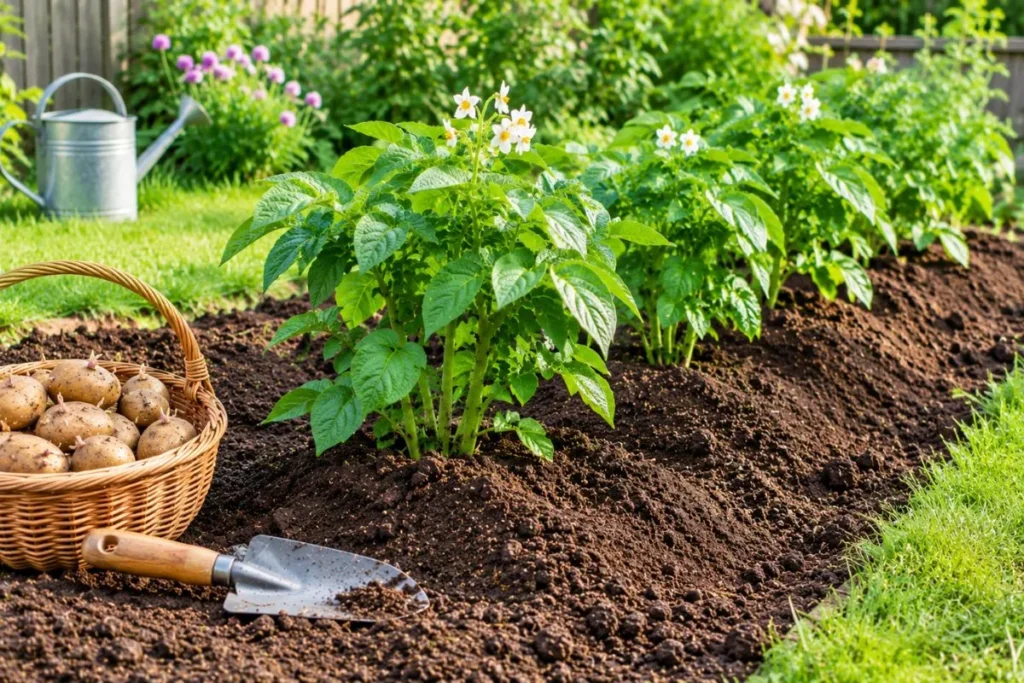
The key is to provide enough soil coverage while keeping the growing environment loose and well drained. Then, as the plant grows, add soil around the base rather than trying to achieve the entire final soil depth at planting time.
What to Do After Planting Potatoes
After planting, keep an eye on moisture and new growth. Avoid letting the soil become completely dry for long periods, but don’t keep it saturated either.
Once the shoots begin emerging, continue watching the soil around the plants. If developing tubers become close to the surface, add more loose soil around the base.
This simple combination of potato planting depth, good soil, suitable spacing, and gradual hilling gives your plants a better environment for producing healthy homegrown potatoes.
Potato Planting Depth and Spacing
Many gardeners think potato planting depth is the only measurement that matters when planting potatoes. It isn’t. Even if you get the depth right, placing seed potatoes too close together can leave plants competing for space, water, nutrients, and sunlight.
Good potato seed spacing works together with proper depth to give each plant enough room to develop.
When planning a garden, think about both potato planting depth and spacing from the beginning. A well-spaced crop is easier to water, hill, inspect, and eventually harvest. It also gives developing tubers more room within the surrounding soil.
How Deep and How Far Apart Should Potatoes Be Planted?
For a typical home garden, start seed potatoes with about 3 to 4 inches of loose soil covering them. Then leave enough space between individual seed pieces for the plants to develop without becoming crowded.
A common spacing approach is to place seed potatoes roughly 10 to 12 inches apart, while rows can be spaced around 2 to 3 feet apart. The exact distance can vary with potato variety, available garden space, and the growing method.
If you’re wondering how deep should potatoes be planted in a garden, remember that depth and spacing solve different problems. Depth provides soil coverage and protection for developing tubers, while spacing provides room for the plants and their underground growth.
Don’t try to squeeze as many seed potatoes as possible into a small area. A crowded crop may be harder to manage, especially when adding soil around the plants or digging up potatoes at harvest time.
Why Is Potato Plant Spacing Important?
Proper potato plant spacing gives each plant access to the resources it needs. Potato plants develop foliage above the soil and roots and tubers below it, so they need room in both directions.
When plants are too close together, their foliage can become crowded. This can make routine care more difficult and reduce airflow around the plants. Underground, closely planted potatoes also have less available soil space for tuber development.
Good potato crop spacing also makes harvesting easier. You can dig around individual plants with less risk of accidentally cutting neighboring tubers.
Potato Seed Spacing Based on Seed Size
The size of your seed pieces can influence how you arrange your crop. Larger seed pieces may have several healthy eyes, while smaller pieces may contain fewer.
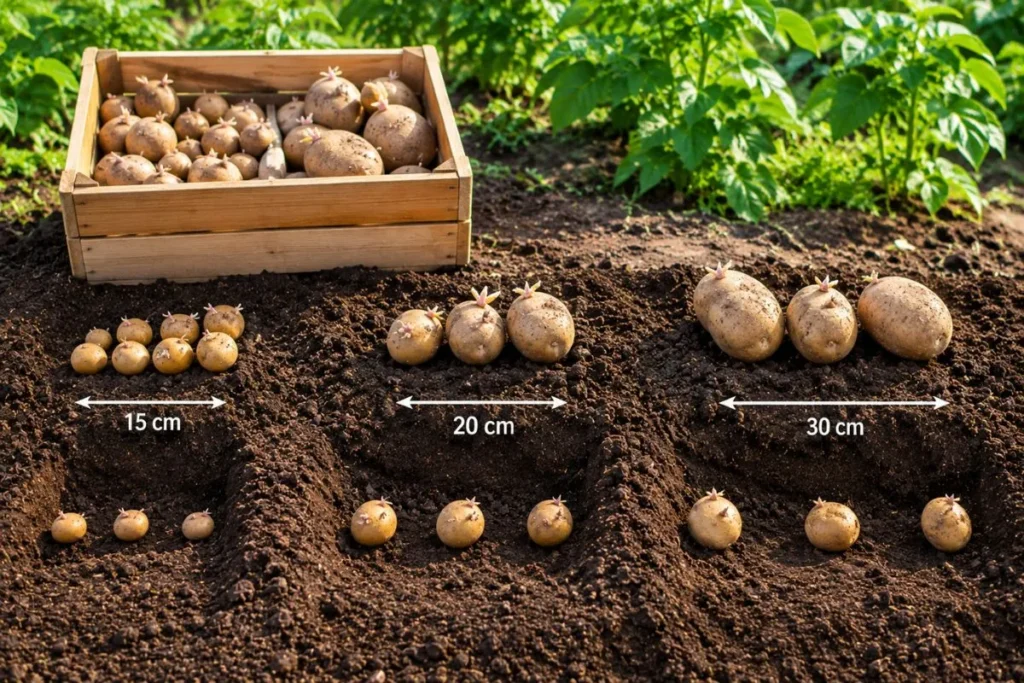
Rather than focusing only on size, make sure every seed piece has at least one healthy growing eye. Keep the pieces reasonably uniform when possible so the plants have a more consistent start.
The potato seed spacing should still leave enough room for the plants to grow. Avoid placing several seed pieces in the same small planting hole simply because they are small.
Potato Plant Spacing for Different Garden Sizes
If you have a large garden, wider potato planting distance between rows can make hilling and harvesting easier. You have more room to move soil toward the plants and walk between rows without disturbing them.
For smaller gardens, you may need to use the available space more carefully. However, reducing spacing too much can make the crop harder to manage. It’s usually better to grow fewer healthy plants than overcrowd the entire bed.
Raised beds can also make spacing easier because you can arrange plants in an organized pattern while keeping the soil loose and productive.
Does Potato Variety Affect Spacing?
Yes, potato varieties can have different growth habits. Some plants produce more compact growth, while others may spread more widely. This means there isn’t one potato planting distance that is perfect for every variety.
Check the planting guidance supplied with your seed potatoes when available. If you don’t have specific instructions, use a moderate spacing arrangement and allow enough room for the plants to grow and for you to care for them.
Variety can also influence the amount of soil and space needed for tuber development. This is another reason not to treat potato planting depth and spacing as completely separate decisions.
Potato Planting Depth and Spacing for Beginners
If you’re new to growing potatoes, keep the setup simple. Give each seed potato a moderate layer of loose soil, leave reasonable space between plants, and provide enough room between rows for maintenance.
Think of it this way: depth protects and supports developing tubers, while spacing gives each plant room to grow.
Once the plants emerge, continue checking their growth rather than assuming everything is perfect because the initial measurements were correct.
Healthy foliage, loose soil, suitable moisture, and enough growing space all contribute to better potato tuber growth and a more manageable harvest.
Frequently Asked Questions
How Deep Should You Plant Potatoes?
For most home gardens, start by covering seed potatoes with about 3 to 4 inches of loose soil. The exact depth can vary with soil type and growing conditions. As the plants grow, gradually add more soil around the stems to keep developing tubers covered.
What Is the Ideal Potato Planting Depth?
A starting depth of around 3 to 4 inches works well in many garden situations. The key is not simply digging deeper. Loose, well-drained soil and proper hilling are also important for healthy potato growth.
How Deep Should Seed Potatoes Be Planted?
Seed potatoes can generally be planted so they have several inches of loose soil covering them. Place the eyes facing upward, then cover the seed pieces gently. Avoid compacting the soil after planting.
Can You Plant Potatoes Too Deep?
Yes. Planting potatoes excessively deep can make it harder for young shoots to emerge, particularly in heavy or compacted soil. Very deep planting can also make drainage more difficult when the soil stays wet.
What Happens If Potatoes Are Planted Too Shallow?
Potatoes planted too close to the surface may become exposed as the plants grow and the soil settles. Developing tubers need to remain covered because exposure to sunlight can cause potatoes to turn green.
How Deep Should Potatoes Be Planted in a Garden?
A practical starting point is around 3 to 4 inches of loose soil over the seed potato. After the plant emerges, additional soil can be added around the base as it grows.
How Deep Should You Plant Potatoes in Containers?
Container-grown potatoes can also start with several inches of soil covering the seed potatoes. Leave enough room in the container to add more soil as the plant grows. A container with good drainage is essential.
Does Potato Planting Depth Affect Potato Size?
Depth can affect growing conditions, but it doesn’t determine potato size by itself. Variety, soil quality, moisture, sunlight, nutrients, spacing, and overall plant care also influence the final harvest.
How Far Apart Should Potatoes Be Planted?
A common home-garden approach is to leave roughly 10 to 12 inches between seed potatoes and around 2 to 3 feet between rows. The best spacing can vary depending on the variety and growing method.
When Should You Hill Potatoes?
Hilling is usually done after the plants have emerged and developed enough foliage to work around. Add loose soil gradually around the plants instead of covering the entire plant at once.
Can Potatoes Grow in Heavy Soil?
Potatoes can grow in heavy soil, but compacted soil can make tuber development and drainage more difficult. Improving soil structure and drainage can create a better environment for growing potatoes.
Conclusion:
Getting potato planting depth right doesn’t mean simply digging the deepest hole you can. Start with a moderate depth, use loose and well-drained soil, and give each seed potato enough space to develop. As the plants grow, gradually add soil around them to keep developing tubers covered.
Remember that depth is only one part of successful potato cultivation. Potato seed spacing, soil quality, moisture, sunlight, hilling, and variety all work together.
Give your plants the right conditions from the beginning, and you’ll have a much better chance of enjoying a healthy crop of homegrown potatoes.

Plant Nest Blog’s author is passionate about plants, gardening, and sustainable living. Through research and practical experience, they share helpful plant care tips, gardening guides, and easy solutions to help readers grow healthier plants and create greener spaces.