
Many people believe that planting vegetables in shade is a waste of time because vegetables need full-day sunshine to grow. That’s not completely true.
While some crops need plenty of direct sunlight, many shade-tolerant vegetables can grow well with limited light, especially in partial or dappled shade. The key is choosing the right crops and understanding how much sunlight your garden actually receives.
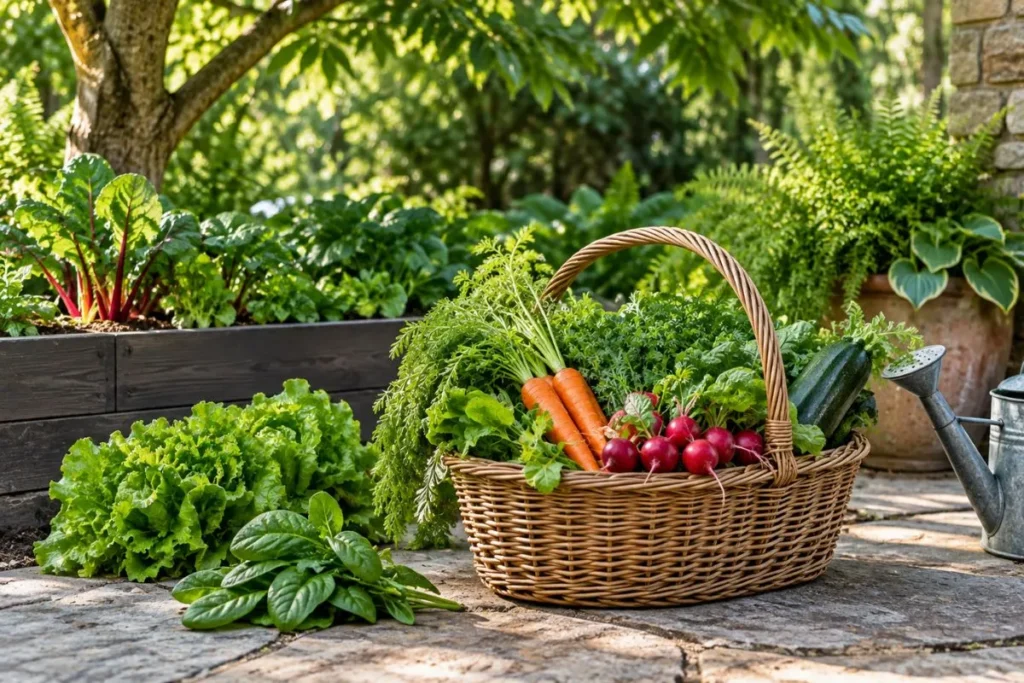
If your yard has a shady corner, don’t give up on it yet. Growing vegetables in shade can still give you fresh, useful harvests when you match the plant to the conditions.
Leafy greens, cool-season crops, and several root vegetables are often more comfortable with less intense sunlight. In this guide, we’ll look at how light affects your garden and how to make the most of a low-light vegetable growing space.
How Much Sunlight Do Vegetables Actually Need?
Before planting, take a close look at your garden’s sunlight. Not all shade is the same. A spot that gets bright morning light for several hours is very different from a corner that stays dark all day.
Understanding this difference can help you choose vegetables for partial shade instead of planting crops that need more sunlight than your space can provide.
Full Sun vs. Partial Shade vs. Full Shade
Full Sun
Full sun means a plant receives several hours of direct sunlight during the day. Many fruiting vegetables prefer this type of location because strong light supports vigorous growth and fruit production.
Partial Shade
Partial shade means the garden receives some direct sunlight but spends part of the day shaded. This can be a useful setup for shade vegetable gardening, particularly for crops that do not require intense, all-day sunlight.
Dappled Shade
Dappled shade is slightly different. Here, sunlight filters through tree branches or other structures, creating a mixture of light and shade. Some shade-loving vegetables can perform well in these conditions when the area still receives enough usable light.
Full Shade
Full shade is the most challenging situation for vegetable growing. A fully shaded location receives very little direct sunlight. Some leafy vegetables may tolerate these conditions better than fruiting crops, but growth can be slower and harvests may be smaller.
How Many Hours of Sunlight Do Vegetables Need?
There is no single sunlight requirement for every vegetable. Different crops have different needs. Some can manage with a few hours of direct light, while others need much more to produce strong growth and a good harvest.
Vegetables receiving around 3 hours of sunlight may still grow if they are naturally tolerant of lower light. With around 4 hours of sunlight, you have more options, particularly among leafy greens and certain cool-season vegetables.
Around 5 hours of sunlight can open the door to even more crops, especially when the light is strong and consistent.
The timing of sunlight also matters. A garden that receives morning sun and afternoon shade can be quite different from one that gets only weak, filtered light.
When planning low-light vegetable gardening, watch your space for a full day and note where sunlight reaches the soil. This simple step can make it much easier to choose the right crops and avoid disappointing results.
Best Vegetables for Planting in Shade
Many people think planting vegetables in shade means you have to settle for weak plants and tiny harvests. That’s not always the case. The trick is to choose crops that naturally handle lower light.
Leafy greens, cool-season vegetables, and several root crops can make good use of a garden that does not receive strong sunlight all day.
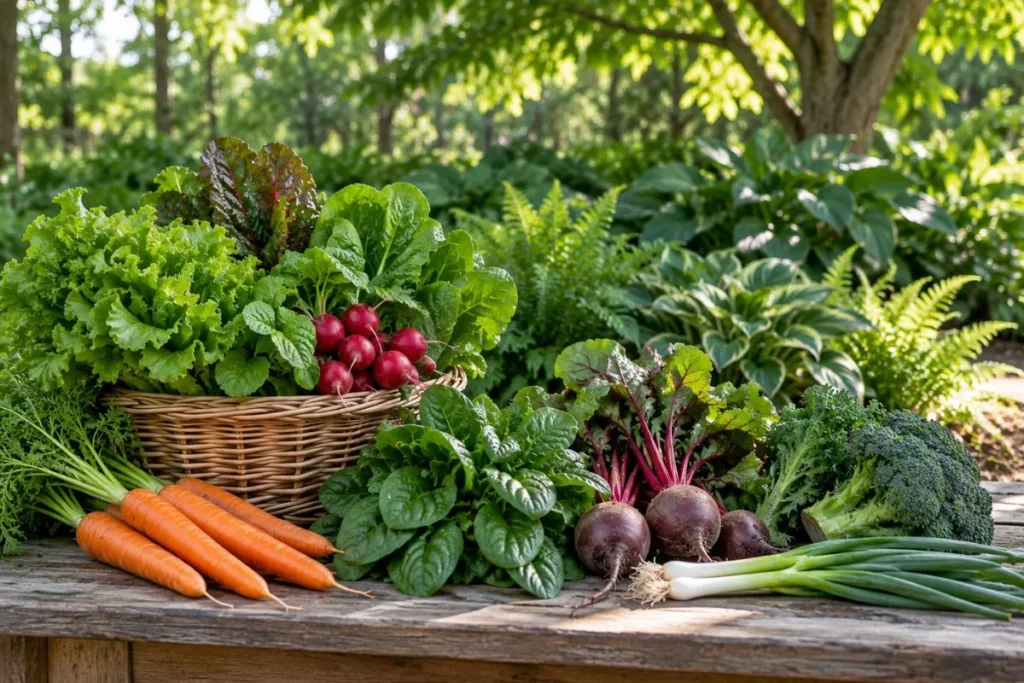
If you’re wondering what vegetables can you grow in full shade, remember that deep shade is much harder than partial shade. Most vegetables still need some usable light to grow well. With the right crop selection, however, even a shady yard can become a productive little food garden.
Leafy Greens That Grow Well in Shade
Leafy greens are often among the best vegetables for planting in shade because you are harvesting their leaves rather than waiting for large fruits to develop. They can also appreciate protection from intense afternoon heat, especially during warmer weather.
Lettuce
Lettuce is one of the easiest shade-tolerant vegetables for a home garden. It can grow with less direct sunlight than many fruiting crops. In a shady location, growth may be slower, but the leaves can still develop nicely when the soil stays consistently moist and fertile.
A little morning sun followed by afternoon shade can be especially useful for lettuce. This makes it a practical choice for growing vegetables in partial shade.
Spinach
Spinach is another excellent option for a low-light vegetable garden. It prefers cooler conditions and can tolerate some shade. Less intense sunlight may even help reduce heat stress during warmer periods.
Plant spinach in loose, fertile soil and keep the moisture consistent. Harvest the outer leaves as they become large enough, allowing the plant to continue producing.
Kale
Kale is a hardy leafy crop that can handle partial shade. Although stronger light can support faster growth, kale can still produce edible leaves in a less sunny location.
It works well when you want leafy greens for shade without needing a large, open garden. Give it enough space for airflow and keep weeds from competing for moisture and nutrients.
Swiss Chard
Swiss chard is a colorful and useful addition to a shade garden vegetable collection. It can tolerate partial shade while producing attractive leaves and stems.
If your garden receives limited sunlight, Swiss chard can be worth trying. Keep the soil fertile and harvest individual outer leaves instead of removing the entire plant at once.
Arugula
Arugula grows quickly and can tolerate some shade. It is especially useful when you want a fast-growing leafy crop for a garden with limited sunlight.
Its peppery leaves are easy to harvest young. Growing it in partial shade can also help keep the growing environment cooler during hot weather.
Mustard Greens
Mustard greens are another option for shade-loving vegetables, particularly during cooler growing periods. Their leaves can be harvested young for a milder flavor or allowed to mature for a stronger taste.
For beginners, mustard greens can be a simple way to experiment with vegetables that need little sunlight.
Root Vegetables for Partial Shade
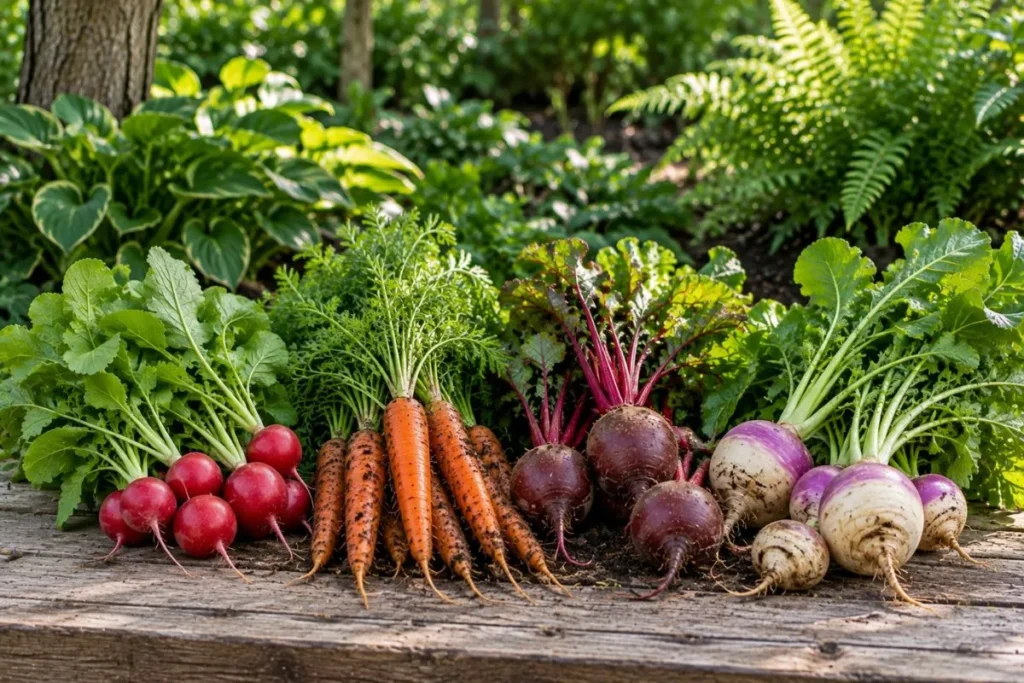
Root crops can also be included when planting vegetables in shade, although their performance depends heavily on the amount of available light. The tops may grow reasonably well in partial shade, while the roots can take longer to reach a useful size.
Radishes
Radishes are among the more convenient root vegetables in shade. They grow relatively quickly and do not need the same amount of sunlight as many fruiting vegetables.
If your garden receives several hours of usable light, radishes can be a good crop to test. Keep the soil loose so the roots can expand without unnecessary resistance.
Beets
Beets can tolerate partial shade, although limited light may slow their growth. Both the roots and young leaves can be useful, making them a flexible crop for growing root crops in shade.
Rich, well-drained soil can help compensate for some of the limitations of a less sunny growing area.
Carrots
Carrots can grow in partial shade when they receive enough usable light. However, slower growth is common when sunlight is limited.
For the best results, use loose soil without large stones or compacted areas. This gives the roots room to develop into a more even shape.
Turnips
Turnips are cool-season root vegetables that can handle some shade. They can be useful when you have a garden area that does not receive full-day sunlight.
Their leafy tops can also be harvested while the roots continue developing, giving you more than one reason to include them in a shady vegetable garden.
Other Vegetables That Can Handle Some Shade
Not every shade-tolerant crop is a leafy green or root vegetable. Several other vegetables can manage partial shade, particularly when they receive a few hours of direct light or bright filtered light.
Broccoli
Broccoli prefers good sunlight, but it can tolerate some partial shade. In fact, protection from intense afternoon heat can be useful in warmer climates.
Choose a brighter section of your shady garden and give each plant enough room for healthy growth.
Cauliflower
Cauliflower can also grow with some shade, although it generally performs better when adequate light is available. A location with morning sunlight and afternoon protection can be more suitable than deep shade.
Good soil preparation and consistent moisture are important for healthy development.
Peas
Peas are cool-season crops that can tolerate partial shade better than many warm-season fruiting vegetables. They also make good use of vertical space when grown with suitable support.
If you are looking for crops for shady gardens, peas can be worth considering where several hours of sunlight are available.
Brussels Sprouts
Brussels sprouts are another cool-season option. They can tolerate partial shade, although growth may be slower when light is limited.
Because they take time to mature, choose a spot with the best available light rather than placing them in the darkest corner of your yard.
Bok Choy
Bok choy is a leafy vegetable that can perform well in cooler conditions and tolerate partial shade. It is especially useful for gardeners who want something different from standard lettuce or spinach.
Keep the soil evenly moist and harvest at the right stage for tender leaves and stems.
Kohlrabi
Kohlrabi can tolerate partial shade and is another useful choice for a smaller vegetable garden. Its unusual swollen stem is the part most gardeners harvest.
Provide fertile soil and avoid overcrowding the plants. Good spacing helps reduce competition and improves airflow.
Green Onions
Green onions are practical for small or partly shaded spaces. They do not require the same growing conditions as large fruiting crops, making them a convenient choice for vegetables for partial shade.
You can grow them in garden beds or containers, making them particularly useful for beginners.
Herbs and Edible Plants for Shady Spaces
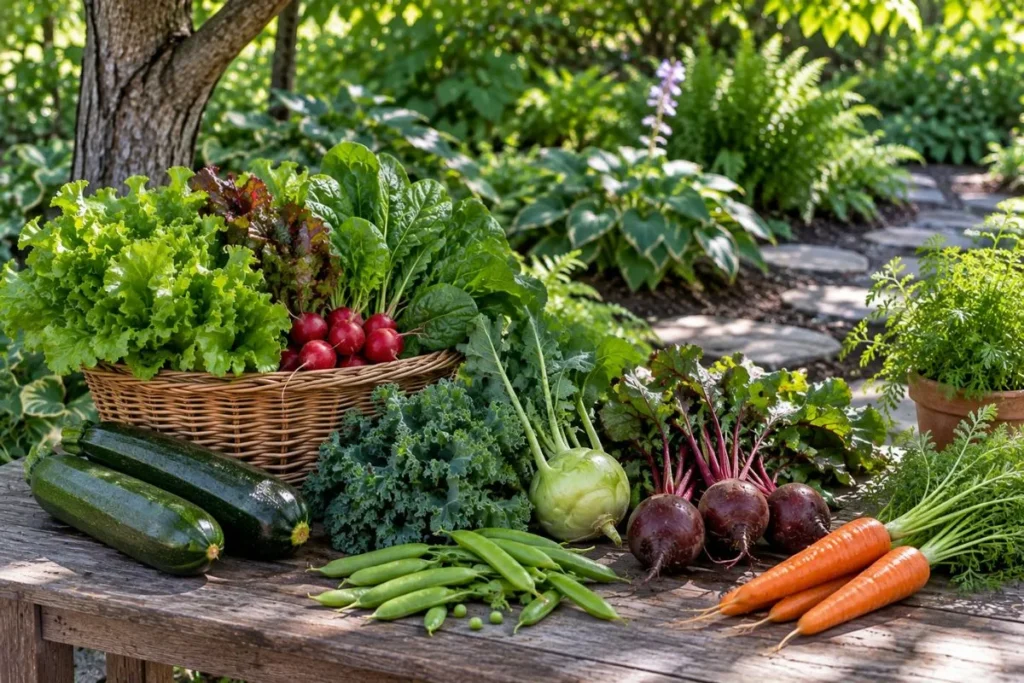
Your shady garden does not have to contain vegetables alone. Some herbs and other edible plants can also tolerate reduced sunlight, giving you more ways to use an otherwise difficult space.
Leafy herbs are generally more suitable for lower-light conditions than plants grown mainly for flowers or fruits. Depending on your climate and the amount of available light, options such as mint, parsley, cilantro, and chives may work in partial shade.
Containers can make this even easier. You can move them toward brighter areas when needed and control their soil and moisture more easily. For anyone new to shade vegetable gardening, combining a few vegetables with edible herbs is a simple way to make the most of limited sunlight.
Best Vegetables to Grow in Partial Shade
Many people assume that a shady garden is automatically a poor place for vegetables. That’s not quite right. Partial shade can actually work well for many crops, especially when the area still receives several hours of useful light. The key is to match the vegetable with the amount of sunlight available instead of treating every shaded spot the same.
When choosing the best vegetables to grow in partial shade, think about what part of the plant you want to harvest. Crops grown mainly for leaves and stems usually handle reduced sunlight more easily than vegetables that need to produce large fruits. With the right choices, growing vegetables in partial shade can give you a useful harvest without needing a perfectly sunny garden.
Why Partial Shade Works for Some Vegetables
Partial shade creates a middle ground between full sun and deep shade. Your plants still receive direct or filtered sunlight, but they are protected from some of the day’s strongest rays.
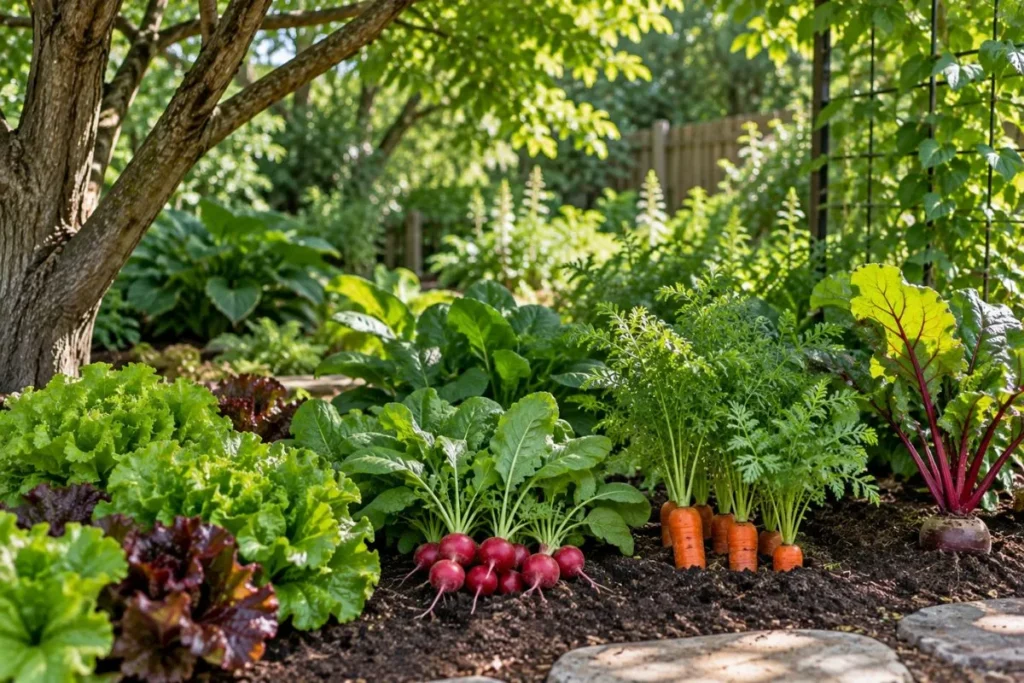
This can be especially helpful in warm weather. Leafy crops may benefit from less intense afternoon heat because excessive heat can cause some greens to become stressed or bolt quickly.
For shade-tolerant vegetables, the goal isn’t to find the darkest corner of your yard. Instead, look for a spot where plants receive enough light to maintain healthy growth while getting some protection from stronger sunlight.
How to Choose Vegetables for Partial Shade
Not every vegetable responds to partial shade in the same way. Before planting, consider three simple factors: sunlight, the part you harvest, and how quickly you want the crop to mature.
Sunlight: A location receiving several hours of direct light is generally more useful than an area that receives only weak filtered light.
Harvest type: Leafy vegetables often cope with reduced light better than fruiting vegetables. Leaves can develop with less energy than large fruits, which usually require stronger light.
Growth speed: Limited sunlight can slow development. Fast-growing crops can therefore be more practical when you want a quicker harvest from a shady garden.
This is why vegetables for partial shade often include leafy greens, cool-season crops, and certain root vegetables.
Best Choices for a Partial-Shade Vegetable Garden
If you’re starting a partial shade vegetable garden, begin with crops that naturally tolerate lower light.
Leafy greens such as lettuce, spinach, kale, and Swiss chard are useful choices. They can provide a steady supply of leaves even when your garden doesn’t receive full-day sunshine.
Radishes and beets can also work in partial shade. Their growth may take longer than it would in stronger light, but they can still be productive when soil and moisture are managed properly.
Peas are another option, particularly during cooler growing periods. They can make good use of vertical space when supported properly.
Broccoli, cauliflower, bok choy, and kohlrabi can also fit into a partial-shade garden when enough usable light is available. These crops may not grow as quickly as they would in ideal conditions, so choosing the brightest part of the shaded area is important.
Match the Crop to Your Available Light
One of the easiest ways to improve results is to place crops according to their light needs.
Use the brighter parts of your garden for vegetables that need more sunlight. Reserve areas with less direct light for crops that are more shade tolerant.
For example, a garden receiving morning sun followed by afternoon shade can be divided so that vegetables with higher light needs occupy the brighter edge, while leafy greens use the more protected section.
This approach makes shade vegetable gardening more efficient because you aren’t asking every plant to grow under identical conditions.
What to Expect From Vegetables in Partial Shade
A partial-shade garden can produce healthy vegetables, but you should expect some differences compared with a full-sun garden.
Growth may be slower, and some crops may take longer to reach harvest size. Root vegetables may develop smaller roots, while crops grown for fruit may produce fewer fruits when light is limited.
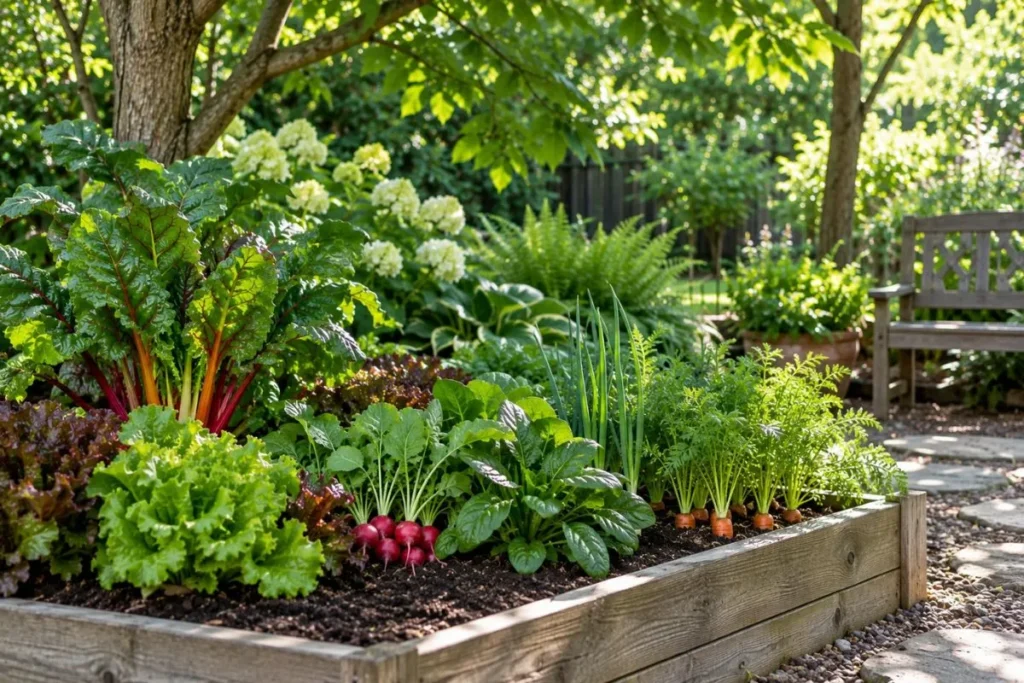
That doesn’t mean the garden has failed. It simply means the available light sets some limits. Choosing suitable crops and giving them good soil, appropriate moisture, and enough growing room can help you maximize vegetable harvest in partial shade.
A Simple Strategy for Better Results
If you’re new to growing vegetables in partial shade, don’t try to fill the entire garden with difficult crops. Start with a few reliable, shade-tolerant options and observe how they respond.
Track how much sunlight each planting area receives. Then compare growth between brighter and darker spots. Over time, you’ll learn which vegetables to grow in shade perform best in your particular garden.
The most important idea is simple: partial shade does not mean no harvest. Choose crops that fit the available light, place them thoughtfully, and give them healthy growing conditions. That’s the foundation of successful planting vegetables in shade.
Frequently Asked Questions
What vegetables grow best in shade?
Leafy greens usually make some of the most practical choices for shady gardens. Lettuce, spinach, kale, Swiss chard, arugula, and mustard greens can handle less direct sunlight than many fruiting crops. Radishes, beets, carrots, and turnips can also work in partial shade, although their growth may be slower.
What vegetables can you grow in full shade?
Very few vegetables perform well in deep, full shade because plants still need light for photosynthesis. Some leafy greens may tolerate very low-light conditions better than other crops, but growth and harvest size can be limited.
If possible, use the brightest available area rather than the darkest corner of the garden.
Can vegetables grow with only 4 hours of sunlight?
Yes, some vegetables can grow with around four hours of sunlight, especially leafy greens and several cool-season crops. Lettuce, spinach, kale, radishes, and some other shade-tolerant vegetables can be suitable choices. The exact result depends on the intensity and timing of the sunlight, soil quality, temperature, and growing conditions.
What vegetables need the least sunlight?
Leafy vegetables generally need less sunlight than crops that produce large fruits. Lettuce, spinach, kale, Swiss chard, and mustard greens are common choices for low-light vegetable gardening. Some root crops, including radishes and beets, can also tolerate partial shade.
Can tomatoes grow in shade?
Tomatoes generally need considerably more sunlight than leafy greens to grow vigorously and produce fruit. A little afternoon shade can be helpful in very hot conditions, but deep shade can reduce growth and fruit production. If you have limited sunlight, reserve the brightest part of your garden for tomatoes.
Can leafy greens grow in low light?
Yes. Leafy greens are among the more adaptable vegetables that need little sunlight. They can often grow in partial shade, although limited light may slow their growth. Keeping the soil fertile and moisture consistent can help plants make good use of the light they receive.
What vegetables are best for partial shade?
Some useful vegetables for partial shade include lettuce, spinach, kale, Swiss chard, radishes, beets, carrots, peas, broccoli, bok choy, and green onions. Choose crops according to the actual amount of light your garden receives rather than assuming every shaded area has the same conditions.
How much sunlight do vegetables need to grow?
Sunlight requirements vary by crop. Fruiting vegetables usually need more direct light, while leafy greens and some cool-season crops can manage with less. Before planting vegetables in shade, observe how many hours of direct or filtered sunlight reach the area and select crops that match those conditions.
Can you grow vegetables in a completely shaded garden?
A completely shaded garden is challenging for vegetable production. Most crops need some usable light, and extremely dark conditions can lead to slow or weak growth.
If your garden has different light levels, place shade-tolerant crops in the less sunny areas and use brighter spaces for crops with higher light requirements.
How do you maximize vegetable growth in partial shade?
Start by choosing suitable crops and placing them in the brightest available part of the shaded garden. Keep the soil healthy, avoid overwatering, provide enough space between plants, and monitor growth throughout the season.
These simple steps can help you maximize vegetable harvest in partial shade even when sunlight is limited.
What Is the Easiest Vegetable to Grow in Shade for Beginners?
Lettuce and spinach are simple starting points for many gardeners because they are leafy crops and can tolerate partial shade. Radishes are another useful choice when you want a relatively quick crop.
Start with a small planting area and watch how the vegetables respond to your garden’s available light.
Can You Grow Vegetables in Shade Successfully?
Yes, growing vegetables in shade can be successful when the plants and growing conditions match the available light. Partial shade gives you more options than deep shade. Choose suitable crops, improve the soil, manage moisture carefully, and understand that some vegetables may grow more slowly than they would in full sun.
Conclusion
Planting vegetables in shade doesn’t mean you have to give up on growing fresh food. A shady garden simply requires a smarter crop selection.
Leafy greens, cool-season vegetables, and several root crops can make good use of partial shade when they receive enough usable light and have healthy soil and consistent moisture.
Start small and pay attention to how sunlight moves across your garden. Choose shade-tolerant vegetables for areas with limited light, use brighter spots for crops with higher sunlight needs, and give each plant enough room to grow.
With a little planning, growing vegetables in partial shade can turn an underused space into a productive garden.

Plant Nest Blog’s author is passionate about plants, gardening, and sustainable living. Through research and practical experience, they share helpful plant care tips, gardening guides, and easy solutions to help readers grow healthier plants and create greener spaces.