
Tomato plant worms are usually caterpillars that feed on tomato leaves, stems, or fruit. Common examples include tomato hornworms, tobacco hornworms, tomato fruitworms, armyworms, and cutworms.
These pests can look very different, so checking their size, color, markings, and feeding damage is the first step toward proper tomato plant pest identification.

The good news is that you don’t need to panic when you spot one. First, look closely at the plant and the damage around it.
If you find chewed leaves, holes, missing foliage, or damaged tomatoes, you may have worms eating tomato plants. Identifying the pest before treating the plant helps you choose a safer and more effective solution.
What Is Eating My Tomato Plant?
Look Closely at the Leaves First
If you’re wondering what is eating the leaves of my tomato plant, start by checking the leaves from top to bottom. Don’t just look at the damaged areas. Turn the leaves over and inspect the undersides, stems, and new growth too. Many caterpillars stay hidden during the day, making them easy to miss.
Large, irregular holes often point to a leaf-feeding pest. You may also find leaves with chewed edges or sections that look almost stripped away. This type of tomato leaf damage can become serious when several pests are feeding on the same plant.
Check for Holes in Tomato Leaves
Small holes and large ragged holes can tell you that something is actively feeding on your plant. Fresh damage usually has cleaner, greener edges, while older damage may begin to dry out or turn brown.
If you keep finding holes in tomato leaves, inspect the plant carefully before applying any treatment. Look for caterpillars, eggs, shed skins, or tiny dark droppings. These clues can help you determine whether worms eating tomato leaves are responsible.
Look for Missing or Heavily Damaged Foliage
Sometimes the damage is much more obvious. A healthy tomato plant can suddenly lose large sections of its foliage when a hungry caterpillar population builds up.
This is especially noticeable with larger tomato hornworms. They can consume substantial amounts of foliage, so a plant may look healthy one day and heavily damaged soon after. If you notice large sections of leaves disappearing, don’t wait too long to inspect the plant.
Check the Tomato Fruit for Feeding Damage
Not all tomato pests stay on the leaves. Some caterpillars target the fruit itself. If you notice small holes, rough patches, or damaged areas on developing tomatoes, inspect the fruit and nearby leaves carefully.
Worms eating tomato fruit can enter the tomato and feed inside, making the problem harder to spot at first. Look for an entry hole, damaged tissue, or frass around the affected area. This type of damage can help separate fruit-feeding pests from caterpillars that mainly attack foliage.
Don’t Ignore Caterpillar Droppings
One useful clue is frass, which is simply the waste produced by feeding caterpillars. It can look like tiny dark, greenish, or brown particles on leaves or around damaged areas.
If you see fresh leaf damage along with frass, take a closer look around the plant. The caterpillar may be nearby, hiding under a leaf or deeper inside the foliage. Finding both the pest and its feeding evidence makes tomato plant pest identification much easier.
Check the Stems and Soil Line
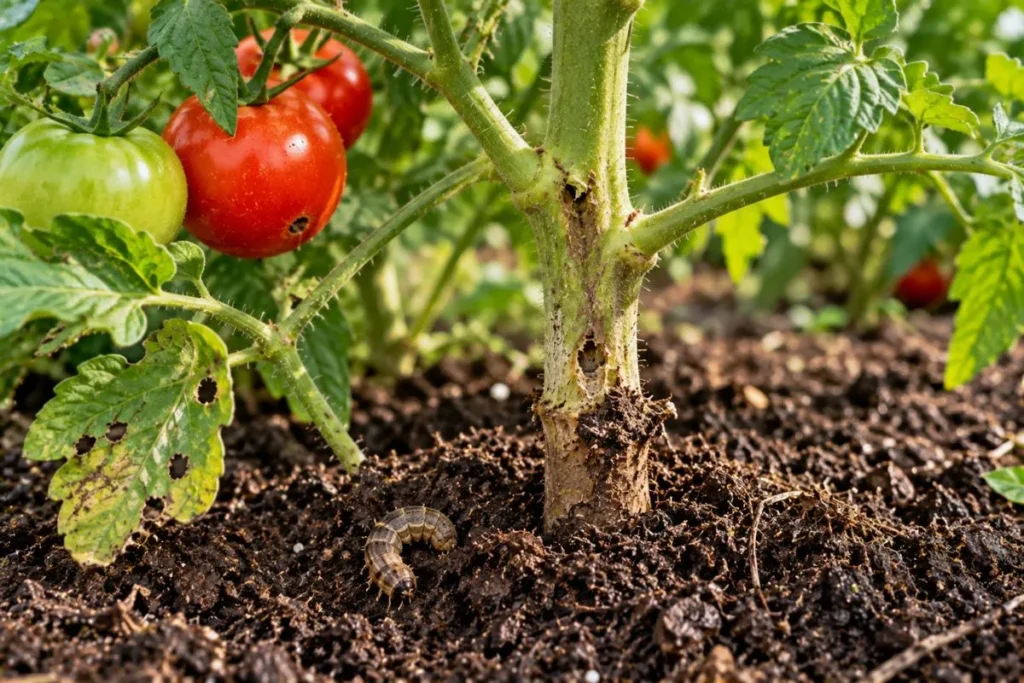
Don’t limit your inspection to the leaves. Some pests feed around the lower part of the plant or near the soil surface.
If a young tomato plant suddenly wilts, bends, or appears cut near the base, investigate the soil and stem. Cutworms, for example, can damage young plants close to the soil line. This pattern is very different from the widespread leaf damage caused by larger foliage-feeding caterpillars.
Look at the Whole Plant Before Treating It
A common mistake is seeing one damaged leaf and immediately spraying the entire plant. Instead, take a few minutes to inspect the whole tomato plant.
Check the upper and lower leaves, stems, flowers, fruit, and soil around the base. Also look at nearby tomato plants because pests can move from one plant to another.
Once you know whether you’re dealing with tomato worms, hornworms, fruitworms, cutworms, or another garden pest, you can choose a more targeted approach. Correct identification is the first step toward effective tomato pest control and helps you avoid treating your plants unnecessarily.
Common Types of Worms on Tomato Plants
Tomato Hornworms
Tomato hornworms are among the most recognizable pests found on tomato plants. They are large caterpillars with green bodies and distinctive markings, and they can become surprisingly difficult to notice because their color blends in with tomato foliage.
These pests are heavy feeders. A single hornworm can eat a significant amount of foliage as it grows, leaving behind bare stems or leaves with large sections missing. If you notice major tomato leaf damage appearing quickly, carefully inspect the plant for hornworms.
Because of their size, mature hornworms can look intimidating, but they are still simply caterpillars. Their most obvious feature is the small horn-like structure near the rear of the body.
Tobacco Hornworms
Tobacco hornworms are closely related to tomato hornworms, which is why gardeners sometimes confuse the two. They can both feed heavily on plants in the nightshade family, including tomatoes.
Their appearance can overlap, but certain markings and body features can help distinguish them. If you find a large green caterpillar on your tomato plant, don’t assume its identity from color alone.
The important thing for gardeners is that both types can cause substantial foliage damage when populations become large. Regularly checking your plants makes it much easier to catch them before the damage spreads.
Tomato Fruitworms
Unlike pests that mainly chew leaves, tomato fruitworms can cause direct damage to the tomatoes themselves. Young caterpillars may feed on leaves, but they can also move toward developing fruit.
You might notice small holes or damaged areas on tomatoes. In some cases, the caterpillar can move into the fruit and feed inside, making the pest harder to spot.
If you see worms eating tomato fruit, don’t only inspect the leaves. Check developing tomatoes closely, especially around damaged areas. Fruit damage can provide an important clue when identifying the pest.
Armyworms
Armyworms are another group of caterpillars that can sometimes attack tomato plants. They get their common name from their tendency to occur in groups and move through vegetation while feeding.
They can chew on leaves and may also damage developing plant tissue. The amount of damage can vary depending on the species and the size of the infestation.
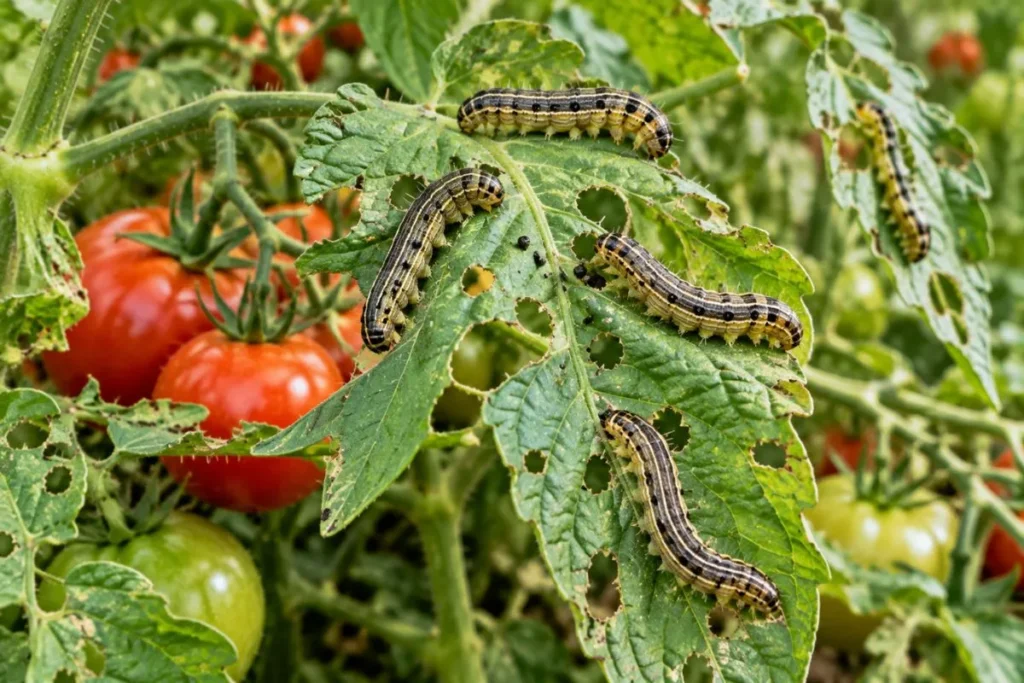
If you notice several damaged leaves across multiple plants, inspect the foliage carefully rather than assuming one large caterpillar is responsible. Smaller caterpillars can be much harder to spot.
Cutworms
Cutworms behave differently from large leaf-feeding hornworms. They are often associated with damage near the base of young plants.
A tomato seedling may suddenly wilt, bend over, or appear severed close to the soil line. If that happens, check around the plant base and nearby soil.
This type of damage is particularly frustrating because the caterpillar may hide during the day. Looking for the pest around the soil surface can help you determine whether cutworms are responsible.
Little Green Worms on Tomato Plants
If you’re asking, “What are the little green worms on my tomato plants?”, don’t rely on their green color alone. Several caterpillars can appear green, and size, markings, location, and feeding pattern provide much better clues.
A small green caterpillar hiding under a leaf could be very different from a large hornworm sitting along a tomato stem. Take a close look before deciding what treatment to use.
A useful approach is to photograph the insect and examine the plant damage at the same time. Matching the pest with its feeding pattern gives you a much better chance of making an accurate identification.
Other Caterpillars on Tomato Plants
Tomato plants can attract other garden caterpillars besides the common pests mentioned above. Their presence doesn’t always mean you have a serious infestation.
Some caterpillars may feed lightly, while others can cause rapid damage. That’s why tomato plant pest identification should come before treatment.
Look at the entire situation: What does the caterpillar look like? Where is it feeding? What part of the plant is damaged? Are you finding one insect or many? These simple observations can tell you much more than the word “worm” alone.
Many People Believe Every Green Worm on a Tomato Plant Is the Same Pest
Many people believe that if they find a green worm on a tomato plant, it must be a tomato hornworm. That is not always the case. Tomato plant worms can look surprisingly similar, especially when they are young. Their color alone is not enough to tell them apart.
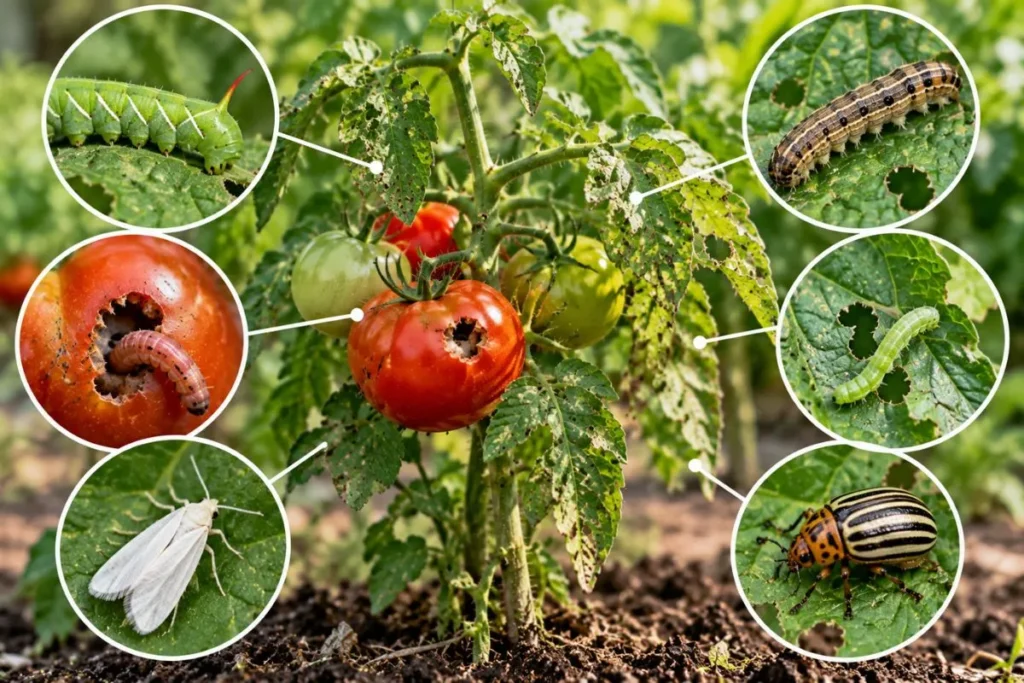
The easiest way to identify worms on tomato plants is to look at several clues together. Pay attention to the caterpillar’s size, color, markings, body shape, location, feeding behavior, and the type of damage it leaves behind. These small details can help you narrow down the pest without guessing.
Check the Color and Body Pattern
Color is one of the first things you will notice, but it should not be your only identification clue.
Some worms on tomato plants are bright green and blend almost perfectly with tomato leaves. Others may be brown, gray, yellowish, or have stripes and spots. A caterpillar can also change slightly in appearance as it grows, so a young pest may not look exactly like a mature one.
Look closely at the body. Does it have stripes? Are there small spots or lines? Is the body smooth, rough, or covered with tiny hairs?
For example, a large green caterpillar with distinctive markings and a horn-like structure at the rear strongly points toward a hornworm. A smaller caterpillar without that horn needs closer inspection because several other tomato plant caterpillars can have a similar green appearance.
Pay Attention to the Size
Size can tell you a lot about tomato plant pest identification.
A very large caterpillar hiding among tomato leaves is more likely to be a mature hornworm than a tiny leaf-feeding caterpillar. On the other hand, small worms may be young caterpillars that have not yet developed the obvious markings you would see on an older insect.
Don’t remove a caterpillar simply because it looks small or harmless. Instead, take a moment to observe it.
Ask yourself:
Is it tiny and newly hatched, or is it already several centimeters long? Is the body thick or thin? Does it have a noticeable horn, stripes, or other markings?
These details make it easier to answer the long-tail question, “How do I identify worms on tomato plants?”
Look for a Horn or Other Distinctive Features
One of the easiest clues is a horn-like structure at the rear of certain caterpillars.
Hornworms are named for this feature. They can become quite large and are often green, which makes them difficult to spot against tomato foliage. If you see a large caterpillar with a noticeable rear horn, you may be looking at a hornworm rather than an ordinary garden caterpillar.
Still, don’t rely on one feature alone. Look at the markings and overall body shape as well.
This is especially useful when dealing with green worms on tomato plants, because several caterpillar species can appear green at first glance.
Check Where the Worm Is Hiding
Where you find the caterpillar can provide another important clue.
Some tomato worms spend much of their time feeding directly on foliage. Others may be found around developing fruit, young shoots, stems, or close to the soil.
Look carefully around:
- New leaves and tender shoots
- The underside of mature leaves
- Flower clusters
- Developing tomatoes
- Stems and branches
- The area close to the soil surface
A caterpillar hiding deep inside dense foliage may be feeding on leaves, while one found near a damaged tomato may be associated with fruit feeding.
Location does not identify the pest by itself, but it helps you build a much clearer picture.
Observe How It Moves and Feeds
Behavior is another useful clue when identifying worms eating tomato plants.
Watch the caterpillar for a few seconds if you can. Is it moving quickly when disturbed? Does it remain still and rely on camouflage? Is it actively chewing leaves? Does it stay near fruit or young growth?
Some caterpillars are easy to spot because they move across exposed foliage. Others stay still during the day and become more active later.
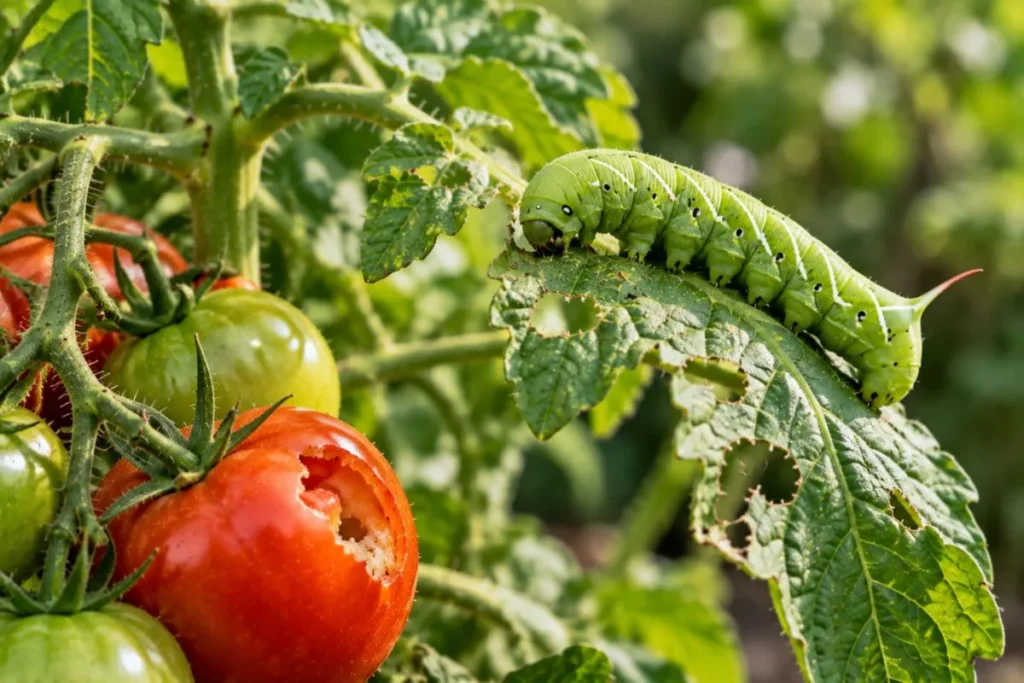
The feeding pattern can also help. A caterpillar that consumes large amounts of foliage may leave a very different pattern from one that feeds mainly on developing fruit.
So instead of asking only, “What color is this worm?” ask:
“What is this caterpillar doing on my tomato plant?”
That simple question can make tomato worm identification much easier.
Examine the Damage Around the Caterpillar
The damage left behind is often just as useful as the insect itself.
If you find a caterpillar near leaves with large missing sections, that feeding pattern can help narrow down the possibilities. If you find one close to tomatoes with small feeding holes, you may be dealing with a fruit-feeding caterpillar.
Look at the shape and location of the damage rather than simply counting holes.
For example, check whether the caterpillar has been:
- Eating along leaf edges
- Removing large sections of leaves
- Feeding between leaf areas
- Damaging young shoots
- Biting into developing fruit
- Feeding close to the plant base
This approach helps connect the pest with its feeding behavior instead of identifying it from appearance alone.
Look for Frass Around the Feeding Area
There is another clue many gardeners overlook: frass.
Frass is the insect waste left behind by feeding caterpillars. It can look like tiny dark or greenish pellets and may appear on leaves, branches, fruit, or the ground beneath the plant.
If you notice fresh-looking frass together with newly damaged foliage, look above and below the nearby leaves. The caterpillar may be hiding close to the feeding site.
Finding frass does not tell you the exact species, but it can confirm that a caterpillar has been actively feeding nearby.
This is especially helpful when you notice tomato leaf damage but cannot immediately find the pest responsible.
Check the Time of Day
Some caterpillars are much easier to find at certain times.
If you inspect your tomato plants during the day and see damage but no caterpillar, don’t assume the pest has disappeared. Some species may hide in protected areas during daylight hours.
Try checking the plants at different times. Gently inspect the underside of leaves, dense foliage, stems, and the soil surface around the plant.
A flashlight can also make searching easier in low-light conditions.
Changing your inspection time can be particularly useful when trying to identify small worms on tomato plants that seem to vanish during the day.
Compare Several Clues Before Identifying the Pest
The safest approach is to combine all the evidence.
Suppose you find a large green caterpillar. Instead of immediately calling it a tomato hornworm, check its body markings, rear end, size, feeding behavior, location, and the damage surrounding it.
Now imagine you find a much smaller caterpillar near a damaged tomato. The combination of its size, location, and feeding pattern may point toward a different type of pest.
This is why tomato plant pest identification should be based on several characteristics rather than color alone.
Frequently Asked Questions
What Are the Worms on My Tomato Plant?
The “worms” you see on tomato plants are usually caterpillars rather than true worms. Common examples include hornworms, fruitworms, armyworms, and cutworms.
Their appearance and feeding habits can vary, so check their size, color, markings, location, and the type of damage they cause before deciding how to treat them.
How Do I Know If Worms Are Eating My Tomato Plant?
Look for fresh holes, chewed leaf edges, missing sections of foliage, damaged fruit, and small droppings called frass. If you notice new damage appearing quickly, inspect the leaves, stems, fruit, and hidden areas of the plant for caterpillars.
What Are the Little Green Worms on My Tomato Plants?
Little green worms on tomato plants are often young caterpillars, but their color alone cannot confirm the species. Look for additional clues such as body markings, size, feeding location, and whether the caterpillar has a horn-like structure.
How Can I Get Rid of Tomato Plant Worms Naturally?
Start with simple methods such as regularly inspecting your plants and removing visible caterpillars by hand. You can also use appropriate biological controls, such as Bacillus thuringiensis (Bt), when suitable for the caterpillar species and product directions. Avoid treating every insect automatically because some garden caterpillars may not be causing meaningful damage.
How Do I Get Rid of Tomato Hornworms Naturally?
Handpicking is one of the simplest ways to remove tomato hornworms when you find them. Check your plants carefully because hornworms can blend into green foliage. Removing them early can also prevent additional feeding damage.
Can Neem Oil Kill Tomato Plant Worms?
Neem-based products may help with some garden pests, but they should not be treated as a universal solution for every caterpillar. If you plan to use a neem product, read the label carefully and make sure it is intended for the pest and plant you are treating. Follow the application instructions exactly.
Can Bt Kill Worms on Tomato Plants?
Bt products can be effective against certain caterpillar pests when the correct strain and formulation are used. The caterpillar generally needs to consume the treated plant material for the product to work. Always check the product label for the target pest, application instructions, and harvest precautions.
Will Tomato Plant Worms Kill My Plant?
A serious infestation can cause substantial foliage or fruit damage, especially when caterpillars feed heavily over several days. However, finding one caterpillar does not automatically mean your tomato plant is in danger. The impact depends on the pest species, number of caterpillars, plant size, and amount of feeding.
Should I Remove Every Caterpillar From My Tomato Plants?
Not necessarily. Some caterpillars can be part of a healthy garden ecosystem and may not cause significant damage. Before removing an unfamiliar caterpillar, identify it when possible and check whether it is actually feeding on your tomato plant.
Why Do Worms Keep Coming Back to My Tomato Plants?
Tomato worms can return because adult moths may continue laying eggs around suitable host plants. Nearby vegetation, garden debris, and an ongoing food supply can also support pest populations. Regular plant inspections make it easier to notice new caterpillars before they become a larger problem.
17.11 What Is the Best Treatment for Worms on Tomato Plants?
There is no single treatment that is best for every tomato worm. The right approach depends on the caterpillar you have and how much damage it is causing. Correct identification should come first, followed by the least disruptive effective control method.
Are Tomato Plant Worms Harmful to Tomatoes?
Some are. Certain caterpillars mainly consume leaves, while others may feed directly on developing tomatoes. Fruit-feeding pests can leave holes and damaged areas that reduce the quality of the harvest. That is why identifying the pest and watching where it feeds are both important.
Conclusion:
Tomato plant worms can be frustrating, especially when healthy leaves suddenly start disappearing or you discover holes in your tomatoes. But don’t panic when you spot a caterpillar. The first step is to figure out exactly what you’re dealing with.
Instead of assuming every green caterpillar is a tomato hornworm, look at its size, color, markings, body shape, location, feeding behavior, and damage pattern. These clues can help you identify the pest more accurately and avoid using unnecessary treatments.
If you only have a few caterpillars, simple methods such as regular inspection and hand removal may be enough. When the infestation is more serious, targeted options such as appropriate biological controls may provide additional help.
The key is to act early. Check your tomato plants regularly, especially the leaves, young growth, fruit, and less visible areas. Catching worms eating tomato plants before their numbers increase can make pest control much easier.
Most importantly, remember that not every caterpillar in your garden is automatically a harmful pest. Good tomato pest control starts with identification, observation, and choosing a treatment that matches the actual problem.
With regular care and a little attention, you can protect your tomato plants from serious caterpillar damage while keeping your garden healthier and more balanced.

Plant Nest Blog’s author is passionate about plants, gardening, and sustainable living. Through research and practical experience, they share helpful plant care tips, gardening guides, and easy solutions to help readers grow healthier plants and create greener spaces.