
Many gardeners believe that giving tomato plants more fertilizer will automatically produce bigger and better tomatoes. That sounds logical, but it can actually cause problems.
Water soluble fertilizer for tomato plants works best when you give plants the right nutrients in the right amount and at the right stage of growth. Used properly, it can provide readily available nutrients that support strong roots, healthy foliage, flowering, and fruit development.
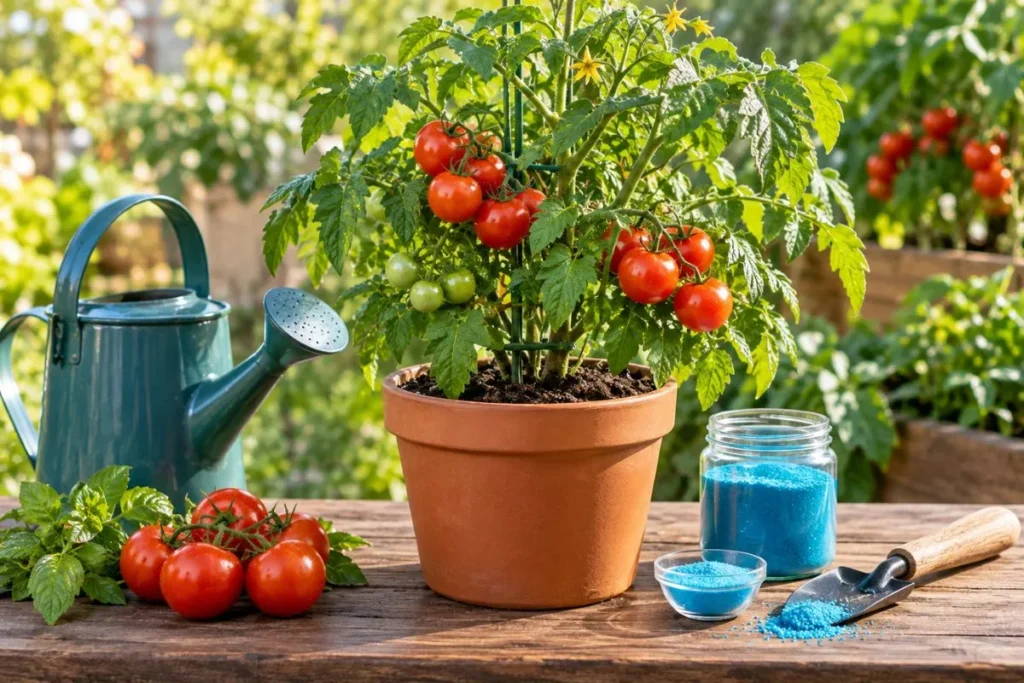
Growing tomatoes is not only about watering and waiting for harvest. Your plants need steady nutrition as they move from young seedlings to flowering and fruiting.
A good water soluble tomato fertilizer can make feeding simple because it dissolves in water and delivers nutrients through the root zone.
Whether you grow tomatoes in containers or a garden bed, choosing the right soluble fertilizer for tomato plants can help maintain healthy growth without unnecessary overfeeding.
What Is Water Soluble Fertilizer for Tomato Plants?
Many gardeners think that all tomato fertilizers work in exactly the same way, but that is not true. Water soluble fertilizer for tomato plants has a useful advantage because it dissolves in water before you apply it. This allows nutrients to move with the water into the soil around the roots, giving your plants access to nutrients as they grow.
How Water Soluble Fertilizer Works
Water soluble fertilizer is a concentrated fertilizer that you mix with water according to the product instructions. Once dissolved, the fertilizer solution can be applied around the tomato plant’s root zone.
The roots then take up available nutrients along with water. This makes water soluble tomato fertilizer a convenient choice for gardeners who want more control over when and how they feed their plants.
Why Gardeners Use Water Soluble Tomato Fertilizer
One reason gardeners choose a soluble fertilizer for tomato plants is its convenience. You can mix the required amount with water and apply it during your normal watering routine. The nutrients are already dissolved, so you do not have to wait for solid fertilizer granules to break down before they become available.
This can be especially helpful when tomatoes are actively growing. A properly used water soluble tomato plant food can provide nutrients that support healthy foliage, root development, flowering, and fruit production.
However, fertilizer works best as part of a bigger care routine that also includes good soil, enough sunlight, proper watering, and suitable drainage.
Water Soluble Fertilizer vs. Regular Fertilizer
Water soluble fertilizer is different from many granular or slow-release fertilizers mainly because you dissolve it in water before application.
Granular products may release nutrients over a longer period, depending on their formulation, while water soluble products are designed for application as a nutrient solution.
That does not mean one type is always better. The best choice depends on your tomato plants, soil, growing conditions, and feeding routine. For gardeners who want easy application and flexible feeding, liquid water soluble fertilizer for tomatoes can be a practical option.
Does Water Soluble Fertilizer Guarantee Bigger Tomatoes?
Not by itself. Using more fertilizer will not automatically produce bigger fruits. In fact, excessive feeding can create nutrient problems and may encourage unwanted leafy growth. The goal is to give tomato plants enough nutrition without overdoing it.
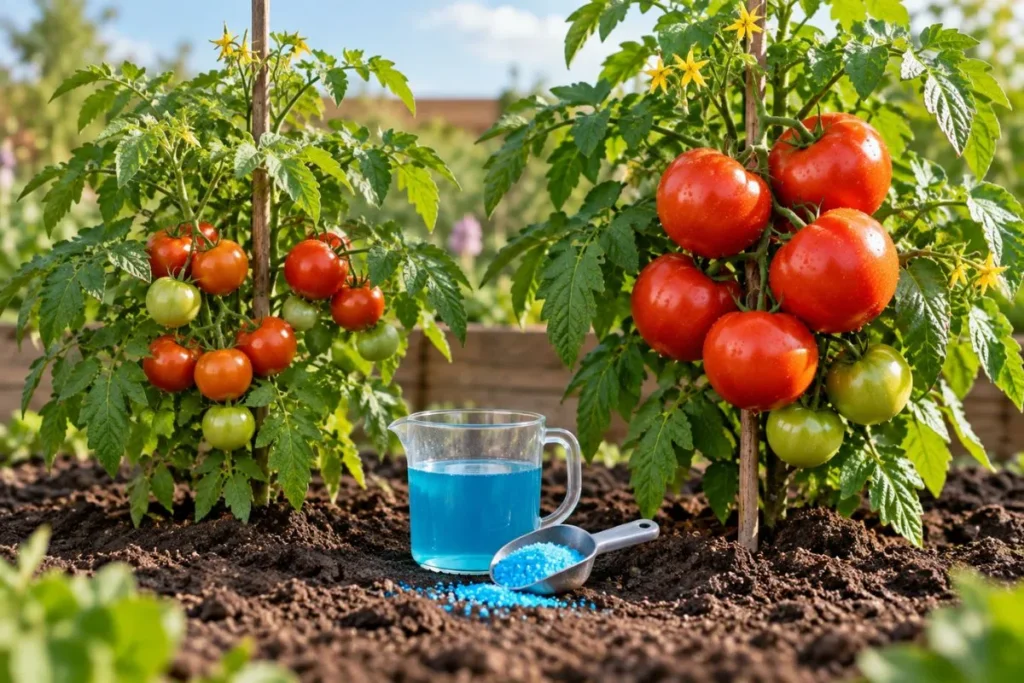
So, when choosing water soluble fertilizer for tomato plants, focus on the fertilizer’s nutrient analysis and follow its mixing instructions carefully. The right product, used at the right rate, can support steady tomato plant growth without turning fertilizer into a guessing game.
Why Do Tomato Plants Need Fertilizer?
Many gardeners assume that healthy soil alone will always give tomato plants everything they need. In reality, tomatoes are heavy feeders, especially when they are growing quickly and producing flowers and fruit.
Water soluble fertilizer for tomato plants can help supply nutrients when the plant’s natural supply is not enough, but the goal is balanced nutrition rather than simply adding more fertilizer.
Tomato plants use nutrients for different jobs throughout the growing season. Roots need nutrients for development, leaves need them to produce energy, and flowers and fruits need a steady supply to support reproduction and harvest.
Understanding these needs makes it much easier to choose the right tomato fertilizer nutrients and use them wisely.
Nitrogen for Tomato Plants
Nitrogen plays an important role in producing healthy green leaves and stems. A tomato plant needs enough nitrogen to build strong vegetative growth, particularly during its early development. If nitrogen is too low, plants may grow slowly and their foliage can become pale.
However, more nitrogen is not always better. Excessive nitrogen can push the plant toward lush leaf growth while reducing the balance needed for flowering and fruit production.
That is why nitrogen for tomato plants should be supplied in an appropriate amount rather than used as a shortcut for faster growth.
Phosphorus for Tomatoes
Phosphorus is another important nutrient for tomato plants. It supports processes involved in root development and reproduction, making it relevant as plants establish themselves and move toward flowering.
Strong roots give plants a better foundation for taking up water and other nutrients.
You may come across phosphorus rich fertilizer for tomatoes when shopping for tomato plant food. But a fertilizer with a very high phosphorus number is not automatically the best choice.
If your soil already contains enough phosphorus, adding extra may not provide the benefit you expect. A balanced approach is usually more sensible.
Potassium for Tomato Plants
Potassium helps tomato plants manage several important functions, including water regulation and processes associated with fruit development. It becomes particularly relevant as plants move into flowering and fruit production.
This is why gardeners often look for high potassium fertilizer for tomatoes when plants begin producing fruit. Still, potassium should not be treated as a magic ingredient. Tomato plants need a range of nutrients, and pushing one nutrient too far can interfere with overall nutrient balance.
Other Nutrients Tomato Plants Need
Nitrogen, phosphorus, and potassium get most of the attention because they are the three primary nutrients listed on fertilizer labels. But tomato plants also need secondary nutrients and micronutrients. Calcium, magnesium, sulfur, iron, manganese, zinc, boron, copper, and molybdenum all have roles in plant growth and development.
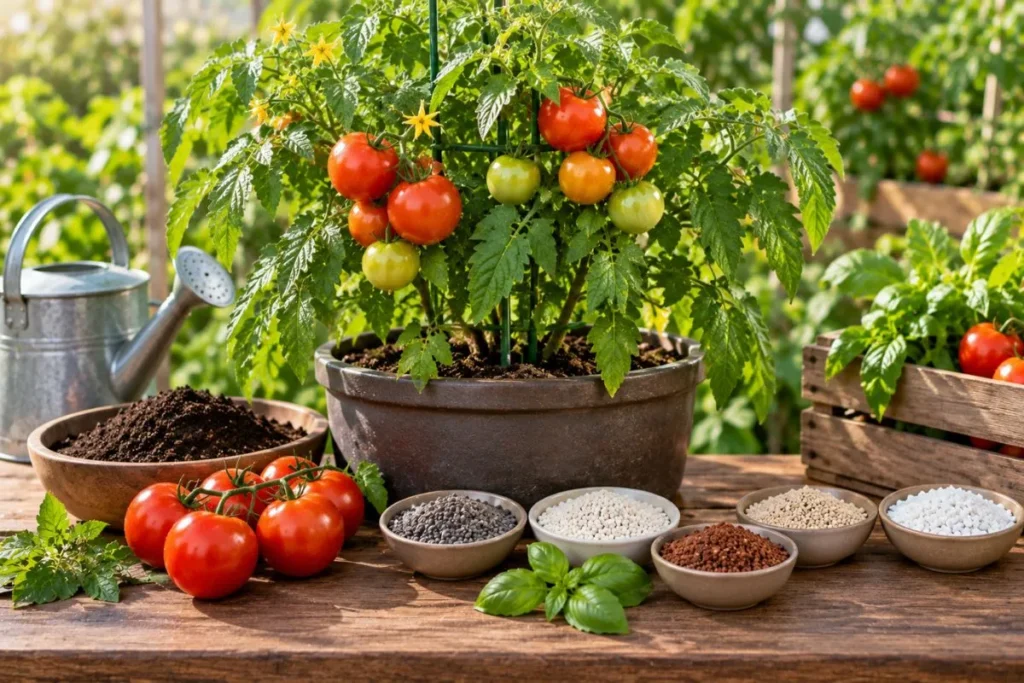
These nutrients work together rather than separately. For example, simply adding more nitrogen will not fix a problem caused by poor moisture management or another nutrient imbalance. When choosing fertilizer for growing tomatoes, think about the complete nutritional picture instead of focusing on one number.
Nutrients Change as Tomato Plants Grow
A young tomato plant does not have exactly the same needs as a mature plant covered with flowers and developing fruit. Early growth focuses heavily on establishing roots, stems, and foliage.
Later, the plant must support flowering and nutrients for tomato fruit development.
This is where a thoughtful tomato plant feeding routine becomes useful. Instead of feeding heavily throughout the season, gardeners can pay attention to the plant’s growth stage and overall condition. A suitable healthy tomato plant fertilizer should complement the plant’s needs rather than overwhelm them.
The same idea applies whether you grow tomatoes in the ground or containers. Soil fertility, watering, plant size, weather, and the fertilizer formulation can all affect nutrient availability.
When these factors work together, your tomato plants have a much better chance of producing strong growth and a worthwhile harvest.
What NPK Ratio Is Best for Tomato Plants?
Many gardeners believe that the fertilizer with the highest numbers on the label must be the best choice for tomatoes. That is a common mistake. A strong fertilizer is not automatically a better fertilizer, and tomato plants do not need extreme amounts of one nutrient.
The best water soluble fertilizer for tomato plants is one that provides a suitable nutrient balance for the plant’s growth stage and growing conditions.
What Does NPK Mean on Tomato Fertilizer?
NPK stands for nitrogen (N), phosphorus (P), and potassium (K). These are the three primary nutrients shown on most fertilizer labels. The numbers tell you the percentage of each nutrient in the product.
For example, a fertilizer labeled 10-10-10 contains equal percentages of nitrogen, phosphorus, and potassium by weight. A product labeled 5-10-15 contains less nitrogen and more phosphorus and potassium.
Understanding these numbers makes it easier to compare different NPK fertilizer for tomatoes products instead of choosing one based only on marketing claims.
What Does Nitrogen Do for Tomato Plants?
The first number represents nitrogen. Nitrogen supports leafy and stem growth, which is especially important while young tomato plants are establishing themselves.
But too much nitrogen can work against your goal. An overfed plant may produce vigorous green foliage without putting enough energy into flowers and fruit. When selecting water soluble tomato fertilizer, look for a formulation that provides adequate nitrogen without encouraging excessive vegetative growth.
What Does Phosphorus Do for Tomatoes?
The second number represents phosphorus. Phosphorus supports several important plant processes, including root development and reproductive growth.
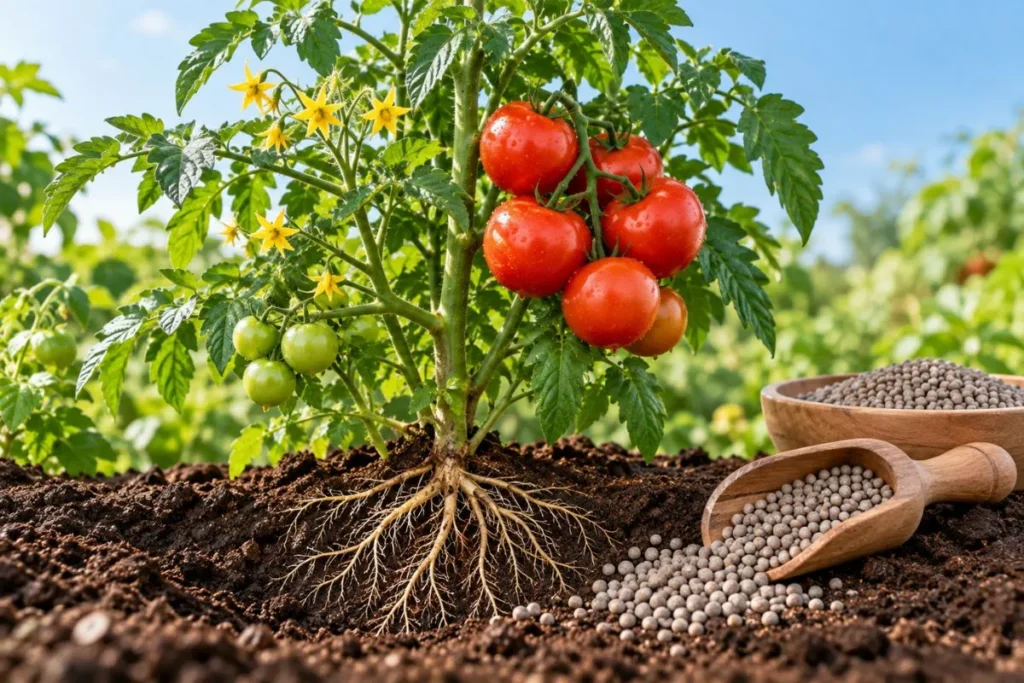
You may hear recommendations for a phosphorus rich fertilizer for tomatoes, especially around flowering. However, a very high phosphorus formula is not automatically necessary.
If your soil already contains sufficient phosphorus, adding more may offer little benefit. Soil conditions should guide fertilizer choices whenever possible.
What Does Potassium Do for Tomato Plants?
The third number represents potassium. Potassium supports water regulation and many processes involved in overall plant health and fruit development. This is one reason potassium often gets attention during the flowering and fruiting stages.
A fertilizer with a higher potassium content may be useful in some situations, but that does not mean every tomato plant needs a high-potassium formula. High potassium fertilizer for tomatoes should be used according to the plant’s needs and the product’s directions, not simply because a higher number sounds better.
What NPK Ratio Is Best for Tomatoes?
There is no single NPK ratio that is perfect for every tomato plant. The ideal choice depends on factors such as soil fertility, plant age, growing conditions, and whether the plant is producing leaves, flowers, or fruit.
A balanced formula can work well when plants need general nutrition, while another formulation may be more suitable at a particular growth stage. If you are searching for the best NPK water soluble fertilizer for tomato plants, focus on the complete nutrient profile rather than chasing the highest number.
For example, a fertilizer with a moderate and balanced analysis may be more appropriate for regular feeding than an extremely concentrated product. If a soil test shows a specific nutrient shortage, you can make a more informed choice instead of guessing.
Should You Change NPK During the Growing Season?
Tomato plants change as they mature, so their nutritional needs can change too. During early growth, plants are building roots, stems, and foliage. Once flowering begins, the plant must support a new reproductive stage. Later, developing tomatoes place additional demands on the plant.
This does not mean you need to constantly switch fertilizers. Instead, pay attention to the plant’s development and follow the fertilizer manufacturer’s recommendations. A suitable water soluble fertilizer for tomato plants for bigger fruits should support healthy overall growth rather than promise instant results.
The key is balance. Give tomatoes enough nutrition to grow strongly, but avoid treating fertilizer as a shortcut. Good soil, consistent moisture, adequate sunlight, and proper plant care still play major roles in producing a healthy tomato harvest.
FAQS
Many gardeners think there is one perfect fertilizer formula that works for every tomato plant. That is not really how tomato nutrition works. The right water soluble fertilizer for tomato plants depends on factors such as the plant’s growth stage, soil fertility, container size, and the fertilizer’s nutrient concentration. The questions below clear up the most common confusion so you can feed your tomatoes with more confidence.
What Is the Best Water Soluble Fertilizer for Tomato Plants?
The best water soluble fertilizer for tomato plants is not necessarily the strongest product on the shelf. Look for a fertilizer with a suitable NPK balance and, where appropriate, additional nutrients that support overall plant growth.
Your choice should also match the plant’s stage of growth. A young tomato plant may have different needs from one that is already flowering or producing fruit. Always check the fertilizer label and follow its recommended dilution rather than choosing a product simply because it promises huge tomatoes.
How Often Should I Use Water Soluble Fertilizer on Tomato Plants?
There is no universal feeding schedule for every product. The correct frequency depends on the fertilizer concentration, growing medium, plant size, weather, and watering routine.
If you’re wondering how often to use water soluble fertilizer on tomato plants, start with the manufacturer’s instructions. Avoid increasing the frequency because the plant seems to be growing slowly. Poor growth can also result from inadequate sunlight, watering problems, root issues, pests, or unsuitable soil.
Can I Use Water Soluble Fertilizer on Tomato Seedlings?
Yes, but young seedlings require more care than established plants. Their roots are still developing, so overly concentrated fertilizer can be unnecessarily harsh.
If you use water soluble fertilizer for tomato plants on seedlings, select a product suitable for young plants and follow its dilution instructions carefully. Good light, appropriate moisture, and healthy growing media are just as important as feeding.
Can I Use Water Soluble Fertilizer During Tomato Flowering?
Yes. Tomato plants continue to need nutrients as they move into flowering. However, flowering does not mean you should suddenly apply a very strong fertilizer.
Water soluble fertilizer for tomatoes during flowering should provide appropriate nutrition without creating an excessive nitrogen supply. Too much nitrogen can encourage leafy growth when your goal is to support a productive flowering plant.
Can I Use Water Soluble Fertilizer During Fruiting?
Yes, water soluble fertilizer can be used during fruit production when the product is appropriate for that stage. As tomatoes develop, the plant continues to require adequate nutrition to maintain healthy foliage and support fruit development.
When choosing water soluble fertilizer for tomatoes during fruiting, pay attention to the complete nutrient profile rather than focusing on one nutrient alone. Proper watering and consistent growing conditions also matter greatly for developing tomatoes.
Is High-Potassium Fertilizer Good for Tomato Plants?
Potassium is an important nutrient for tomato plants, particularly for normal plant functions and fruit development. That is why high potassium fertilizer for tomatoes is often discussed during flowering and fruiting.
However, more potassium is not automatically better. If your soil already contains enough potassium, adding excessive amounts may not improve your plants. Choose a formulation based on actual nutrient needs and follow the recommended application rate.
Can Water Soluble Fertilizer Be Used for Container Tomatoes?
Yes. Water soluble fertilizer can be especially convenient for container-grown tomatoes. Containers have a limited amount of growing medium, and nutrients can leave the container through drainage when plants are watered.
For water soluble fertilizer for tomato plants in containehttps://www.pinterest.com/asmith099/container-gardens/rs, pay close attention to dilution and application frequency.
Do not compensate for nutrient loss by simply using a stronger mixture. Container size, drainage, potting mix, watering habits, and plant growth all affect how often feeding may be needed.
What Happens If You Overfertilize Tomato Plants?
Using too much fertilizer can create problems instead of improving growth. Excess nutrients can increase salt levels around the roots and may lead to fertilizer stress. Plants can show symptoms such as damaged leaf edges, unusual growth, or general decline, although similar symptoms can also have other causes.
If you suspect overfertilization, don’t immediately add another product to correct the problem. First review your recent feeding, watering, and growing conditions. Following the label’s fertilizer dilution for tomatoes and application instructions is one of the simplest ways to reduce the risk of overfeeding.
Can Water Soluble Tomato Fertilizer Replace Good Soil?
No. Fertilizer supplements plant nutrition, but it cannot replace healthy growing conditions. Tomato plants still need suitable soil structure, moisture, sunlight, drainage, and adequate root space.
Think of water soluble tomato fertilizer as one part of the overall care routine. When the basic growing conditions are right, proper feeding can help support healthy tomato plant growth rather than trying to compensate for problems elsewhere.
Conclusion:
Many gardeners think a heavy dose of fertilizer is the secret to a huge tomato harvest, but that approach can easily backfire. The real goal is to give your plants balanced nutrition without overwhelming their roots.
Water soluble fertilizer for tomato plants can be a convenient way to provide nutrients, but it works best when you use the right product, follow the correct dilution, and pay attention to your plant’s growth stage.
A good water soluble tomato fertilizer can support healthy roots, foliage, flowering, and fruit development when it fits your plant’s needs. Instead of chasing the strongest NPK numbers, look at the complete nutrient profile and consider your soil and growing conditions.
Remember that fertilizer is only one part of successful tomato growing. Proper watering, sunlight, healthy soil, drainage, and regular plant care all work together to produce strong plants and a productive harvest.
In the end, the best water soluble fertilizer for tomato plants is not necessarily the most powerful one. It is the one you can apply correctly and consistently without overfeeding.
Give your tomatoes what they need, watch how they respond, and adjust your care when necessary. With a sensible feeding routine, your plants can stay healthier and have a better chance of producing plenty of delicious tomatoes.

Plant Nest Blog’s author is passionate about plants, gardening, and sustainable living. Through research and practical experience, they share helpful plant care tips, gardening guides, and easy solutions to help readers grow healthier plants and create greener spaces.