
Many gardeners believe that marigolds are only decorative flowers, but they can offer more than just bright colors. Marigold plants in vegetable gardens can attract beneficial insects, support garden biodiversity, and play a role in companion planting.
When you grow them near vegetables such as tomatoes and peppers, they can add beauty while helping create a more diverse garden environment.
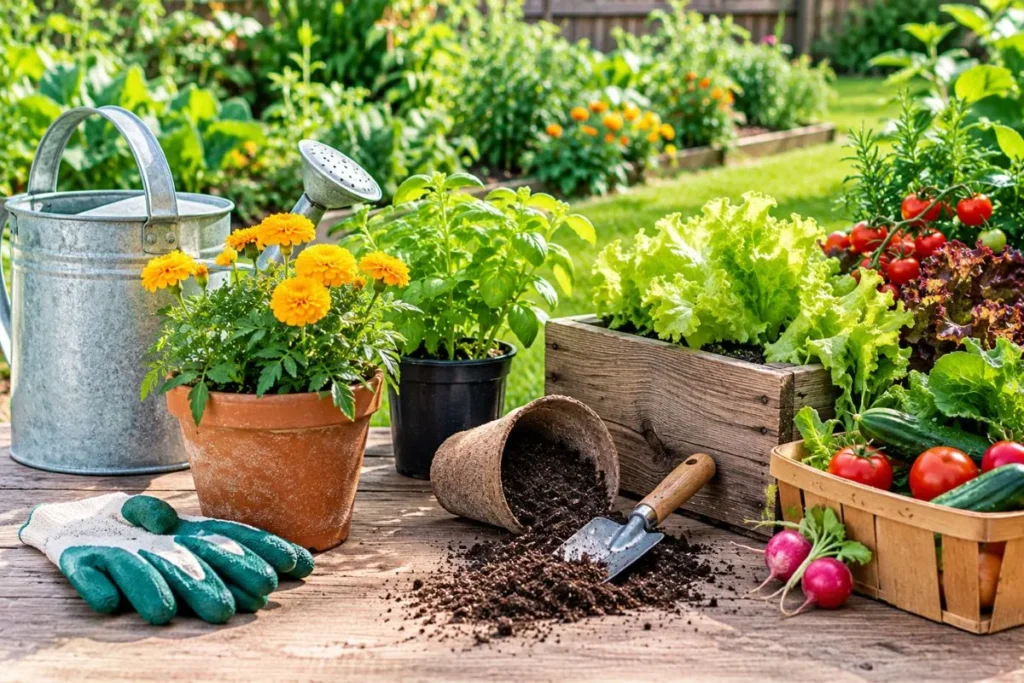
The good news is that marigolds are relatively easy to grow and fit into many garden layouts. You can plant them along vegetable garden borders, around raised beds, or in suitable spaces between crops.
However, they do not repel every pest or guarantee bigger harvests. Choosing the right marigold varieties and giving your vegetables enough room can help you enjoy a colorful garden while making the most of companion planting.
What Are Marigold Plants?
Marigolds are popular flowering plants known for their bright yellow, orange, and golden blooms. Many gardeners grow them in flower beds, containers, and vegetable patches because they are easy to care for and add color throughout the growing season.
When choosing marigold plants in vegetable gardens, it helps to understand their different types, growing habits, and potential benefits for companion planting.
Understanding Marigold Flowers
Marigolds belong to the Tagetes genus and are commonly grown as annual flowers. They usually thrive in sunny locations with well-drained soil and regular watering. Depending on the variety, marigold plants can stay compact or grow into taller plants with large, showy flowers.
These flowers are popular among gardeners because they fit into many garden designs. You can grow them along vegetable garden borders, in raised beds, or in containers near your crops. Their flowers can also attract visiting insects, including some pollinators, which adds diversity to the garden environment.
Marigolds are often used in natural garden pest management, but their benefits depend on the species and growing conditions. Some varieties can help suppress certain soil-dwelling nematodes, while others mainly provide ornamental value. They should not be treated as a guaranteed solution for every garden pest.
Common Types of Marigolds for Vegetable Gardens
Not all marigolds grow the same way. Some stay small and fit neatly between garden borders, while others become tall and produce large flowers. Knowing the differences can help you choose the best marigold varieties for your vegetable garden.
French Marigolds
French marigolds (Tagetes patula) are compact plants that usually produce small, colorful flowers in shades of yellow, orange, and red. Their manageable size makes them a popular choice for raised beds, vegetable garden edges, and smaller growing spaces.
Certain French marigold varieties are also used in gardening strategies to manage specific root-knot nematodes. However, the results depend on the variety, nematode species, and how the plants are grown. French marigolds are a practical option when you want attractive flowers without taking up too much space.
African Marigolds
African marigolds (Tagetes erecta) are known for their taller growth and large, rounded blooms. Their flowers often come in bright yellow and orange shades, making them stand out in garden borders and larger vegetable patches.
Because African marigolds can grow larger than French varieties, they need enough room to develop properly. Plant them where they will not shade smaller vegetables or restrict airflow. They work especially well along the edges of spacious garden beds.
Signet Marigolds
Signet marigolds (Tagetes tenuifolia) have delicate, finely divided leaves and small, simple flowers. They usually have a more delicate appearance than African marigolds and can fit nicely into compact gardens, containers, and narrow borders.
Their smaller flowers add a different look to vegetable beds, while their foliage creates a soft, leafy texture. Signet marigolds are worth considering when you want to grow flowers alongside vegetables without using large amounts of garden space.
Why Gardeners Choose Marigolds for Companion Planting
Companion planting means growing different plants near each other to make practical use of garden space and support a diverse growing environment. Marigolds are common companion flowers because they are relatively easy to grow, offer long-lasting color, and can attract beneficial insects.
One reason gardeners plant marigolds is their potential role in managing certain nematodes. Some marigold varieties can reduce populations of particular harmful nematodes under suitable conditions. However, simply planting a few flowers beside vegetables will not necessarily protect the entire garden.
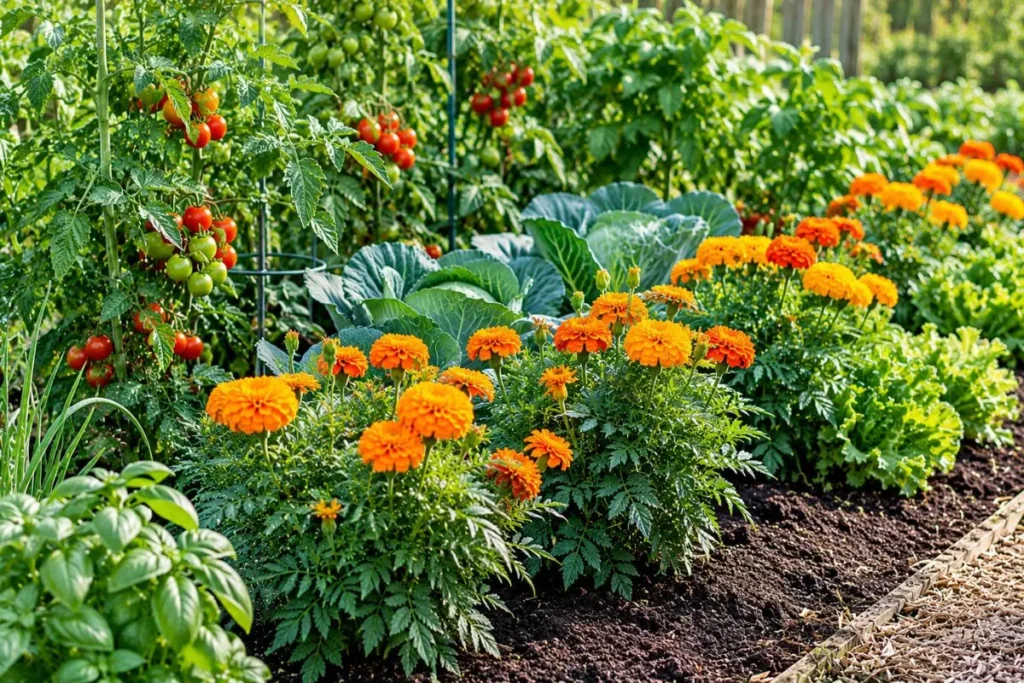
Marigolds can also attract insects that visit flowers for nectar or pollen. These visitors may contribute to garden biodiversity, although the effect depends on the insects present and the surrounding environment.
Growing a range of flowering plants can make your garden more welcoming to beneficial wildlife.
Another advantage is their flexibility. You can plant marigolds near tomato plants, pepper plants, or other vegetables, provided each crop has enough sunlight, water, and growing space. They can also brighten garden borders and raised beds without requiring a separate flower garden.
The key is to use marigolds as one part of a balanced gardening approach. Choose varieties suited to your space, maintain healthy soil, and monitor vegetables for pests instead of relying on companion planting alone.
Powerful Benefits of Marigold Plants in Vegetable Gardens
Some gardeners believe that planting marigolds beside vegetables will automatically keep every pest away and improve harvests. However, marigolds are not a magic solution for garden problems.
Their real value comes from their flowers, their ability to support garden biodiversity, and the potential of certain varieties to help manage specific soil pests. Understanding these benefits will help you use marigold plants in vegetable gardens more effectively.
Help Support Natural Garden Pest Management
Marigolds are often used in natural garden pest management because certain varieties contain compounds that may affect specific pests. Their flowers can also attract insects, making them a useful addition to a diverse vegetable garden.
However, marigolds do not repel every insect that attacks vegetables. Aphids, whiteflies, and other common garden pests may still appear on nearby plants. The results depend on the marigold variety, the pest involved, and the growing environment.
For better results, combine marigold companion planting with regular plant inspections, proper watering, and suitable pest-control methods. This approach helps you manage problems early without relying on flowers alone.
Help Manage Certain Soil-Dwelling Nematodes
One of the more useful benefits of marigolds involves certain plant-parasitic nematodes. These microscopic organisms live in soil, and some species damage vegetable roots, causing stunted growth, yellowing leaves, and reduced yields.
Research has shown that particular marigold varieties can suppress certain nematodes under suitable conditions. French marigolds are often used for this purpose, although effectiveness varies by variety and nematode species.
If nematodes are a problem in your vegetable garden, identify the issue before choosing a solution. Simply planting marigolds around an established crop may not provide the same results as growing a suitable variety specifically as a cover crop. Good soil management and crop rotation may also be necessary.
Attract Pollinators and Beneficial Insects
Marigold flowers can attract visiting insects, including some bees and other pollinators. Adding flowering plants to a vegetable garden creates more opportunities for insects to find food and may help support a more diverse garden ecosystem.
Some beneficial insects also feed on pests, their eggs, or their larvae. Although marigolds cannot guarantee that these insects will settle in your garden, including a variety of flowering plants can make the space more attractive to helpful wildlife.
For the best results, avoid depending on one flower alone. Grow different flowers that bloom at different times, and limit unnecessary pesticide use that could harm pollinators and other beneficial insects.
Add Color and Beauty to Vegetable Beds
Vegetable gardens do not have to look plain. Marigolds bring bright yellow, orange, and golden flowers to growing spaces, making them more attractive without requiring a separate flower bed.
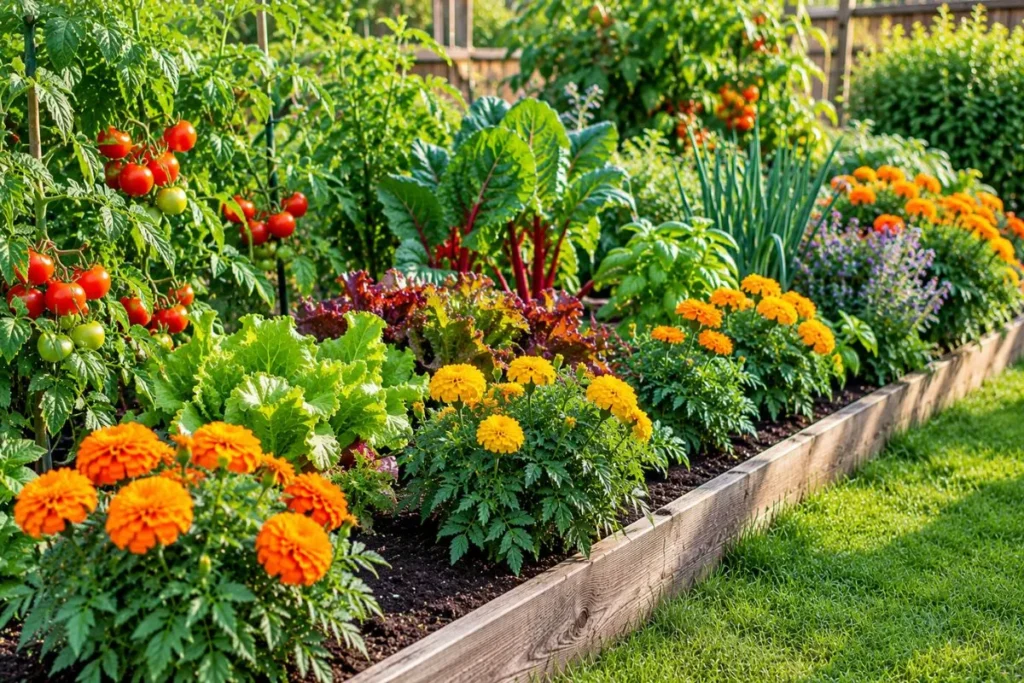
You can plant marigolds along pathways, around raised beds, or near the edges of vegetable rows. Their colorful blooms create a pleasant contrast with green tomato leaves, pepper plants, lettuce, and other crops.
Compact marigold varieties work well in smaller spaces, while taller varieties can add height to wider garden borders. Just make sure the flowers do not shade vegetables that need plenty of sunlight.
Make Companion Planting More Interesting
Companion planting gives you a practical way to grow flowers and vegetables in the same space. Marigolds are popular for this purpose because they offer ornamental value and can fit into different garden layouts.
For example, you might grow marigolds near tomato or pepper plants while leaving enough room for the vegetables to spread. You can also add them to the edges of cucumber or squash beds, where they can brighten the area without interfering with vines.
Remember that not every plant combination provides a special growing advantage. The most important things are suitable spacing, enough sunlight, healthy soil, and access to water.
Support Biodiversity in the Garden
Growing only one type of plant can create a less varied environment for insects and other garden wildlife. Adding marigolds and other flowering plants helps introduce more plant diversity into your vegetable patch.
Different flowers attract different visitors, depending on their shape, color, nectar, and pollen availability. A diverse garden may offer more feeding opportunities for pollinators and other insects throughout the growing season.
To support garden biodiversity, combine marigolds with suitable herbs, flowering vegetables, and other garden-friendly plants. Choose varieties that suit your local climate, and avoid treating every insect as a pest. Some insects are harmless or beneficial.
Which Vegetables Grow Well With Marigolds?
Marigolds can grow alongside many common garden vegetables, but that does not mean every combination produces better crops. Their suitability depends on available space, sunlight, water, and the growth habits of nearby plants.
When choosing vegetables that grow well with marigolds, focus on compatible growing conditions and realistic expectations rather than assuming every pairing provides pest protection.
Marigolds and Tomato Plants
Tomatoes are a popular choice for companion planting with marigolds. Both plants generally grow well in sunny locations, making it possible to include them in the same garden bed when there is enough space.
You can plant marigolds near the edges of tomato rows or at suitable points around the bed. Compact French marigolds are often easier to fit around tomatoes than large, spreading varieties. Leave enough room for tomato plants to develop, and make sure their leaves receive good airflow.
Gardeners sometimes plant marigolds near tomatoes to help manage certain soil nematodes. However, the effect depends on the marigold variety, the nematode species, and how the plants are grown. Marigolds will not automatically prevent tomato hornworms, aphids, or other tomato pests.
For a healthy tomato garden, combine thoughtful companion planting with consistent watering, suitable support, and regular inspections for pests and disease.
Marigolds and Pepper Plants
Pepper plants can share garden space with marigolds when both receive adequate sunlight and well-drained soil. The flowers add color around the pepper bed, while their compact varieties can fit into smaller garden layouts.
Plant marigolds along the edge of the pepper patch or leave a suitable gap between individual plants. Avoid placing large marigolds so close that they shade peppers or make harvesting difficult.
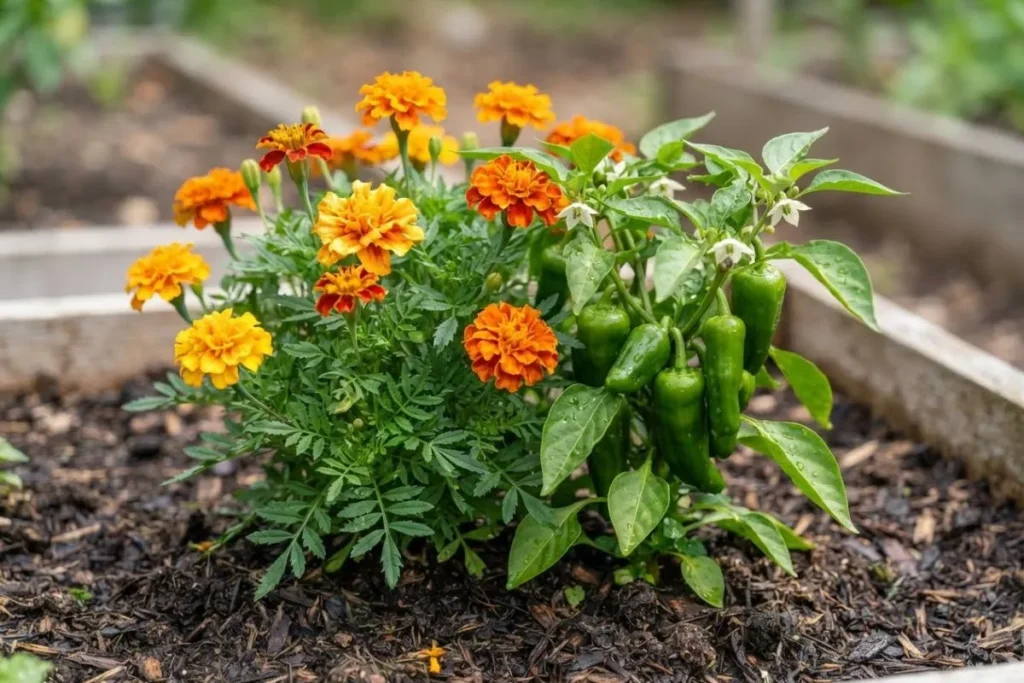
Both plants need appropriate watering, but the soil should not remain waterlogged. Check moisture regularly, especially during hot weather or when growing peppers in raised beds and containers.
Marigolds can contribute to garden diversity, but they should not be considered a guaranteed shield against pepper pests. Monitor the leaves and stems, identify problems early, and use targeted control methods when necessary.
Marigolds and Cucumber Plants
Cucumbers can grow alongside marigolds if you plan the layout carefully. Since cucumber vines may spread across the ground or climb a trellis, placing flowers at the bed’s edge can be more practical than planting them directly in the middle of the crop.
Choose compact marigolds for smaller cucumber beds, and avoid blocking sunlight or airflow around the vines. If your cucumbers grow vertically, you may have more room to place flowers near the base or along the outer edge, provided the arrangement does not create overcrowding.
Cucumbers need consistent moisture during active growth, while marigolds also require watering when the soil becomes dry. Check the soil rather than following a fixed schedule, and ensure excess water can drain away.
Although marigolds may attract visiting insects and add diversity, they do not reliably prevent cucumber beetles, aphids, or other cucumber pests. Inspect your plants regularly and use suitable protection if problems develop.
Marigolds and Squash Plants
Squash plants can take up a lot of room because their leaves and vines may spread widely. Marigolds can still work as companion flowers, especially when planted along the outer edges of the squash bed or in nearby containers.
Select the location before planting so the marigolds do not become buried under squash leaves or compete heavily with the crop. Compact varieties are often easier to manage in small gardens, while larger marigolds may suit wider borders.
Squash plants benefit from good airflow and enough space for leaves and developing fruit. Keep the growing area accessible so you can check for common problems, including powdery mildew and squash bugs.
Marigolds add color and may support beneficial insects, but they should not be relied on to eliminate squash pests. Pair them with regular inspections and appropriate garden management.
Marigolds With Other Common Vegetables
Marigolds can also fit into beds containing beans, lettuce, cabbage, and other vegetables. The best arrangement depends on each crop’s mature size, sunlight needs, and spacing requirements.
For example, compact marigolds may suit the edges of a lettuce bed where they will not shade the leaves. Around beans, leave enough space for the plants to climb or spread according to their variety.
In cabbage beds, make sure marigolds do not interfere with airflow or access for checking leaves for caterpillars and other pests.
You can also use marigolds in mixed vegetable gardens by planting them along pathways or at the ends of rows. This approach keeps the flowers accessible while leaving the main growing area open for crops.
There is no single companion planting arrangement that works for every garden. Start with a small number of marigolds, observe how the vegetables grow, and adjust spacing when necessary.
Healthy soil, suitable sunlight, proper watering, and regular pest monitoring remain the foundation of a productive vegetable garden.
How to Use Marigold Plants in Vegetable Gardens
You don’t need to plant marigolds randomly throughout your vegetable patch to enjoy their benefits. The best approach is to choose locations where they add color, fit comfortably alongside crops, and support a well-organized garden layout.
Whether you grow vegetables in raised beds, containers, or traditional rows, a little planning helps you use marigold plants in vegetable gardens without overcrowding your crops.
Plant Marigolds Along Vegetable Garden Borders
Planting marigolds along garden borders is one of the easiest ways to combine flowers with vegetables. Border planting keeps most of the growing space available for crops while adding bright color around the edges.
French marigolds are a good option for narrow borders because many varieties stay relatively compact. African marigolds may work better along wider pathways or larger garden edges where their taller growth will not shade nearby vegetables.
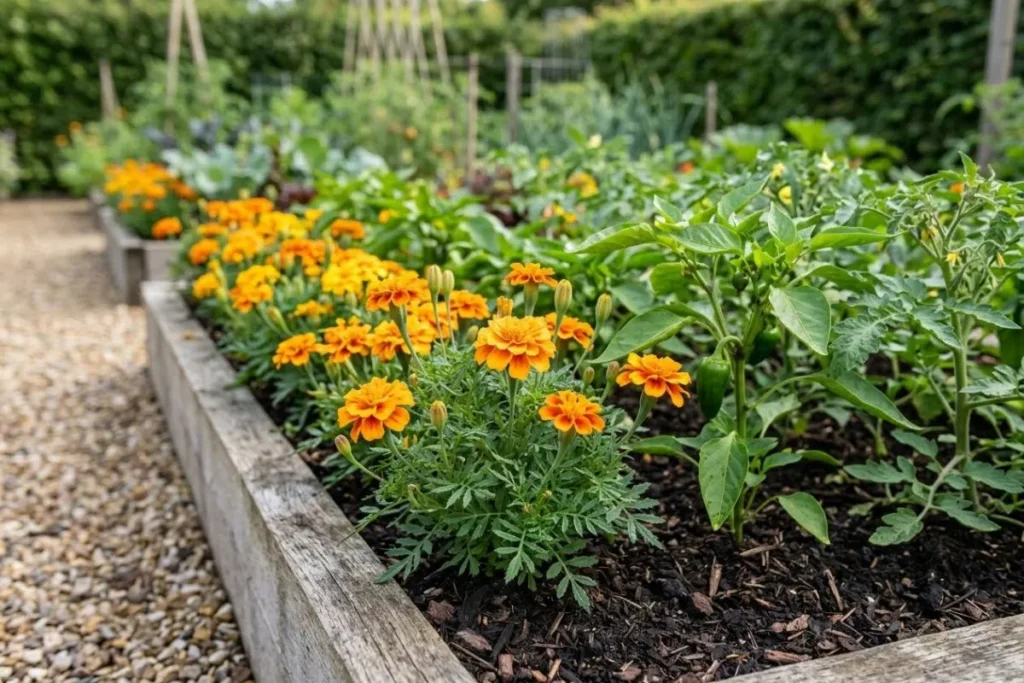
Before planting, check the mature height and spread of your chosen variety. Leave enough space for walking, watering, and harvesting. You should also make sure the flowers receive sufficient sunlight rather than placing them in deep shade behind taller crops.
Marigolds along borders can attract visiting insects and contribute to garden biodiversity. However, they should not be treated as a guaranteed barrier against pests. Keep inspecting your vegetables and use appropriate pest-management methods when needed.
Plant Marigolds Between Vegetable Rows
Growing marigolds between vegetable rows can help you make better use of available space, especially in larger gardens. However, this method works best when the vegetables have enough room and the flowers do not interfere with their growth.
Start by checking the recommended spacing for your vegetables. If the rows are already close together, adding marigolds may cause overcrowding and reduce airflow. In that situation, planting flowers at the ends of rows or around the outer edges may be a better choice.
Compact marigold varieties are generally easier to manage between rows than tall, spreading types. Keep the flowers away from areas where they might block access to irrigation lines or make harvesting difficult.
This arrangement can make a vegetable garden more attractive, but remember that companion planting results vary. The main goal is to combine plants with compatible growing needs while maintaining enough space for each crop.
Grow Marigolds in Raised Vegetable Beds
Raised beds are useful for growing vegetables in a controlled space, and marigolds can fit into these beds when the layout allows. Their flowers can brighten the edges of a bed without taking up too much room in the main planting area.
For small raised beds, choose compact French or signet marigolds. Place them along the edges where they will receive adequate sunlight but will not shade smaller vegetables. In larger beds, you may have room for taller varieties if you position them carefully.
Use well-drained soil and check the moisture level regularly. Raised beds can dry out faster than garden beds in the ground, particularly during warm or windy weather. Water when needed, but avoid keeping the soil constantly saturated.
Before planting, consider the mature size of every crop in the bed. Tomatoes, peppers, and other vegetables need enough room for roots and foliage. Proper spacing helps prevent overcrowding and makes routine garden care easier.
Grow Marigolds in Containers Near Vegetables
If you have limited garden space, growing marigolds in containers is a practical alternative. You can place pots beside vegetable beds, near patio planters, or along sunny garden paths. This arrangement lets you enjoy flowering plants without changing the layout of your main growing area.
Choose a container with drainage holes and enough room for the mature size of the marigold variety. Smaller varieties generally suit compact pots, while larger marigolds need more space for their roots.
Use a suitable, well-draining potting mix rather than heavy garden soil that may remain too wet in a container. Check the soil regularly because pots can dry out faster than garden beds. During hot weather, you may need to water more often.
Position the containers where the flowers receive enough sunlight without blocking light or airflow around nearby vegetables. You can move the pots when necessary, which makes container-grown marigolds especially useful for flexible garden arrangements.
Choose the Right Marigold Variety for Each Location
Choosing the right variety makes it easier to grow marigolds alongside vegetables successfully. Consider the available space, the height of nearby crops, and the purpose of your planting arrangement before buying seeds or seedlings.
French marigolds are often suitable for compact vegetable beds and narrow borders. Their smaller growth habit makes them easier to position around crops without using too much space.
African marigolds produce larger flowers and often grow taller. They can make an attractive display along wider garden borders, but you should avoid placing them where they will shade vegetables that need full sunlight.
Signet marigolds have delicate foliage and small flowers that work well in containers and smaller garden spaces. They are worth considering when you want a lighter-looking planting arrangement.
If your main goal is to manage certain soil-dwelling nematodes, choose a suitable marigold variety based on the specific pest involved. Not every marigold has the same effect, and ordinary border planting may not provide reliable nematode control.
Ultimately, the best marigold variety for vegetable garden companion planting is one that suits your climate, growing space, and gardening goals. Plan the arrangement carefully, maintain adequate spacing, and observe how your flowers and vegetables perform throughout the season.
Frequently Asked Questions About Marigold Plants in Vegetable Gardens
Do Marigolds Help Vegetable Gardens Grow Better?
Marigolds can make vegetable gardens more attractive and support garden biodiversity by providing flowers that visiting insects may use. Certain varieties can also help suppress specific soil-dwelling nematodes under suitable conditions.
However, marigolds do not automatically increase vegetable yields or improve every growing condition. For healthy crops, combine companion planting with good soil preparation, proper watering, adequate sunlight, and regular pest monitoring.
Which Vegetables Grow Well With Marigolds?
Marigolds can grow alongside tomatoes, peppers, cucumbers, squash, beans, lettuce, and cabbage when their growing requirements are compatible. The key is to provide enough space for each plant to receive sunlight, water, and nutrients.
Compact marigold varieties are often easier to fit into smaller vegetable beds, while taller varieties need more room. Remember that growing well together does not mean marigolds will automatically protect these vegetables from pests.
Do Marigolds Keep Pests Away From Vegetable Plants?
Marigolds are often used for natural garden pest management, but they do not repel every garden insect. Some varieties may help manage certain nematodes, while their flowers can attract beneficial insects.
Results depend on the marigold variety, the pest species, and the growing conditions. Check your vegetables regularly and use suitable pest-control methods rather than relying on marigolds alone.
How Far Apart Should Marigolds Be Planted From Vegetables?
The correct spacing depends on the marigold variety and the vegetables growing nearby. Compact French marigolds can fit into smaller spaces, while larger African marigolds need more room.
Check the seed packet for the mature plant size and recommended spacing. Leave enough distance for airflow, sunlight, watering, and harvesting. Avoid planting marigolds so closely that they compete with vegetables for essential resources.
When Should I Plant Marigolds in My Vegetable Garden?
Marigolds generally grow best in warm weather after the danger of frost has passed. You can sow seeds directly into suitable garden soil or start them indoors and transplant the seedlings when conditions are favorable.
In warm climates, planting time depends on local temperatures and seasonal weather. Choose a sunny location and avoid planting during extreme heat if young seedlings are likely to struggle.
Are French Marigolds Better Than African Marigolds for Vegetable Gardens?
Neither type is always better. French marigolds usually stay more compact, making them useful for small beds and narrow borders. African marigolds often grow taller and produce larger flowers, so they are better suited to wider spaces where they will not shade vegetables.
Certain French marigold varieties are also used to manage specific nematodes. Choose according to your available space and gardening goals.
Can I Plant Marigolds in Raised Vegetable Beds?
Yes, marigolds can grow in raised vegetable beds if there is enough space and sunlight. Plant compact varieties along the edges to preserve room for vegetables. Use well-drained soil and monitor moisture because raised beds may dry out faster than ground-level gardens.
Avoid overcrowding, and make sure the flowers do not block access to crops or interfere with their growth.
Do Marigolds Help Protect Tomato Plants From Pests?
Marigolds may contribute to a diverse garden environment when planted near tomatoes, but they do not guarantee protection from tomato pests. Their effectiveness depends on the pest involved and the planting arrangement.
Some varieties may help suppress certain soil-dwelling nematodes, but they will not reliably prevent every insect problem. Inspect tomato leaves and stems regularly, and use appropriate pest-management techniques when needed.
Can Marigolds and Vegetables Share the Same Soil?
Yes, marigolds and many vegetables can grow in the same garden soil when drainage, sunlight, and soil conditions meet their needs. Both generally benefit from soil that drains well and provides adequate nutrients.
Avoid waterlogged conditions, and leave enough space between plants to reduce competition. If you are growing marigolds specifically to manage nematodes, remember that results depend on the variety and the nematode species present.
Do Marigolds Come Back Every Year?
Most common garden marigolds are grown as annuals, meaning they complete their life cycle in one growing season. They may produce seeds that germinate naturally in a suitable environment, so new seedlings can sometimes appear the following year.
However, this does not guarantee that the same plants will return. If you want marigolds in your vegetable garden each season, collect suitable seeds or sow fresh ones when the weather is right.
Conclusion:
Marigold plants in vegetable gardens are an easy way to add bright colors, support garden biodiversity, and explore companion planting. Whether you grow them near tomatoes, peppers, cucumbers, or other vegetables, marigolds can make your garden more attractive while providing flowers for visiting beneficial insects. Certain varieties may also help manage specific soil-dwelling nematodes when grown under suitable conditions.
For the best results, choose marigold varieties that fit your garden space, provide enough sunlight, and avoid overcrowding your vegetables. Remember that marigolds are not a complete solution for garden pests, so combine them with regular plant inspections and appropriate gardening practices.
If you want to try companion planting, start with a few marigolds along your vegetable garden borders or in the corners of raised beds. With proper care and realistic expectations, these cheerful flowers can become a useful and beautiful addition to your vegetable garden.

Plant Nest Blog’s author is passionate about plants, gardening, and sustainable living. Through research and practical experience, they share helpful plant care tips, gardening guides, and easy solutions to help readers grow healthier plants and create greener spaces.