
Many people think spinach only grows well in cool weather, but the red Malabar spinach plant breaks that rule. This colorful red vine spinach loves warmth and grows as a climbing leafy green, making it a great choice for gardeners who want fresh greens during hot weather.
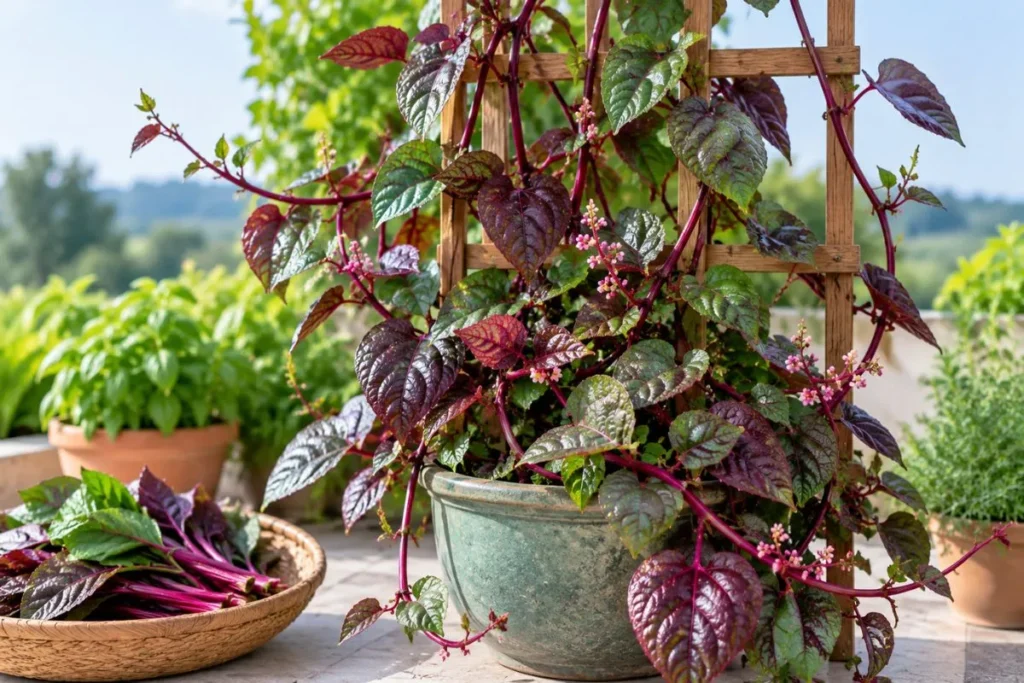
The Red Malabar spinach plant is also easy to grow once you give it the right conditions. With its attractive red stems, lush green leaves, and vigorous vines, it can add both beauty and food to your garden.
Whether you’re growing it from Red Malabar spinach seeds, planting it in a garden bed, or using a container, a little basic care can lead to healthy, productive growth.
What Is Red Malabar Spinach?
The Red Malabar spinach plant isn’t the same as the cool-season spinach you usually see in vegetable gardens. Despite its name, it belongs to the Basellaceae family and grows as a warm-loving vine.
Its botanical name is Basella rubra, and gardeners often call it red vine spinach because of its colorful stems and climbing habit.
Unlike regular spinach, this tropical spinach thrives when temperatures rise. It produces fleshy, green leaves on attractive reddish-purple stems and can climb several feet when given proper support. That makes it a useful choice for gardeners looking for a productive leafy green vegetable during warm weather.
Why Is It Called Climbing Spinach?
One of the easiest ways to recognize this plant is its growth habit. Red Malabar spinach develops long, flexible vines instead of growing as a low leafy rosette like traditional spinach. With a trellis, fence, or other support, the Malabar spinach vine can climb upward and make excellent use of vertical garden space.
Its climbing nature also makes it practical for smaller gardens. Rather than allowing the vines to spread across the ground, you can train them upward. The result is a productive spinach vine plant that also adds an attractive green-and-red look to your garden.
What Does a Red Malabar Spinach Plant Look Like?
A healthy plant has broad, fleshy, heart-shaped leaves that are usually deep green. The stems are the real showstopper. In the red type, they can develop striking red to purple-red coloring as the plant grows.
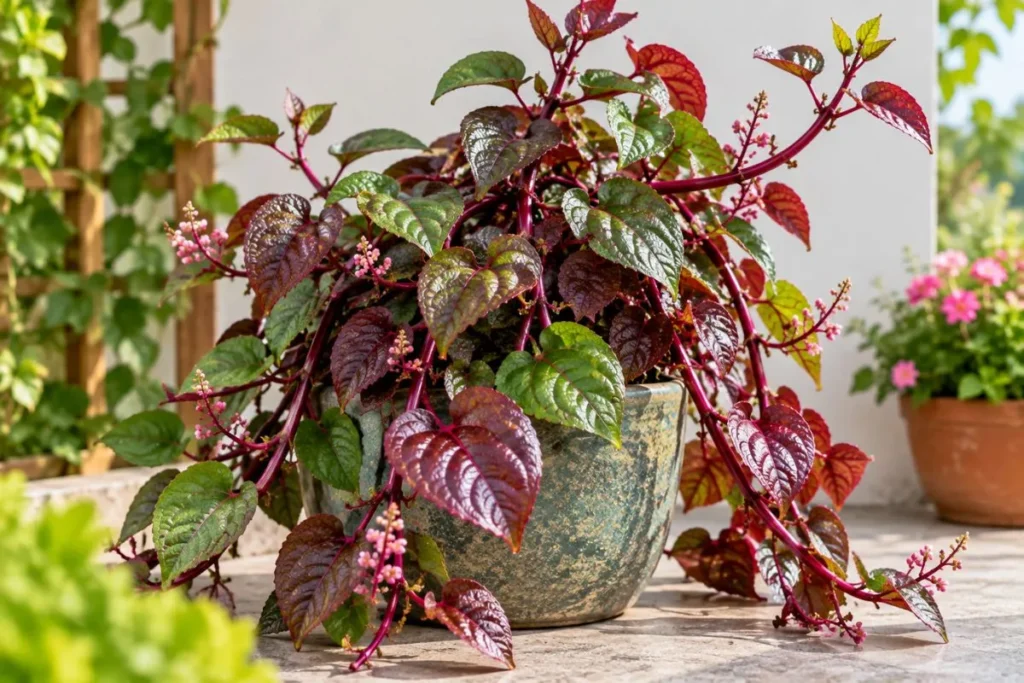
The leaves and young stems are edible, which is one reason this plant is popular with home gardeners. Its thick leaves also have a different texture from ordinary spinach, so don’t expect them to look or feel exactly the same.
Red Malabar Spinach Loves Warm Weather
If your garden gets hot during the growing season, this plant can be a great fit. Basella rubra is naturally suited to warm, humid conditions and generally performs better in heat than traditional spinach.
This is why growing Red Malabar spinach can be especially useful when regular spinach starts struggling in hot weather. Give the plant warmth, suitable growing conditions, and something to climb, and it can produce plenty of fresh leaves throughout the growing season.
Why Grow Red Malabar Spinach at Home?
The red Malabar spinach plant offers more than edible leaves. It grows quickly under favorable conditions, takes advantage of vertical space, and brings vibrant color to a vegetable garden. You can grow it in a garden bed or try container-grown Malabar spinach if space is limited.
For beginners, it is also an interesting alternative to traditional leafy greens. Once established, the vines can provide repeated harvests while continuing to grow upward. If you live in a warm climate, how to grow healthy Red Malabar spinach at home is a skill worth learning.
Section 3. Red Malabar Spinach Varieties and Related Types
Many gardeners assume that every Malabar spinach plant is basically the same, but there are some useful differences to know. Red Malabar spinach is best known for its colorful stems and vigorous vine growth, while related types can have greener stems and slightly different appearances. Knowing these differences makes it easier to choose the right plant for your garden.
Red Malabar Spinach vs. Green Malabar Spinach
The main difference between Red Malabar spinach and green Malabar spinach is easy to spot: the stems. Red Malabar spinach, commonly associated with Basella rubra, develops attractive reddish or purple-red stems. Green Malabar spinach, often associated with Basella alba, has predominantly green stems.
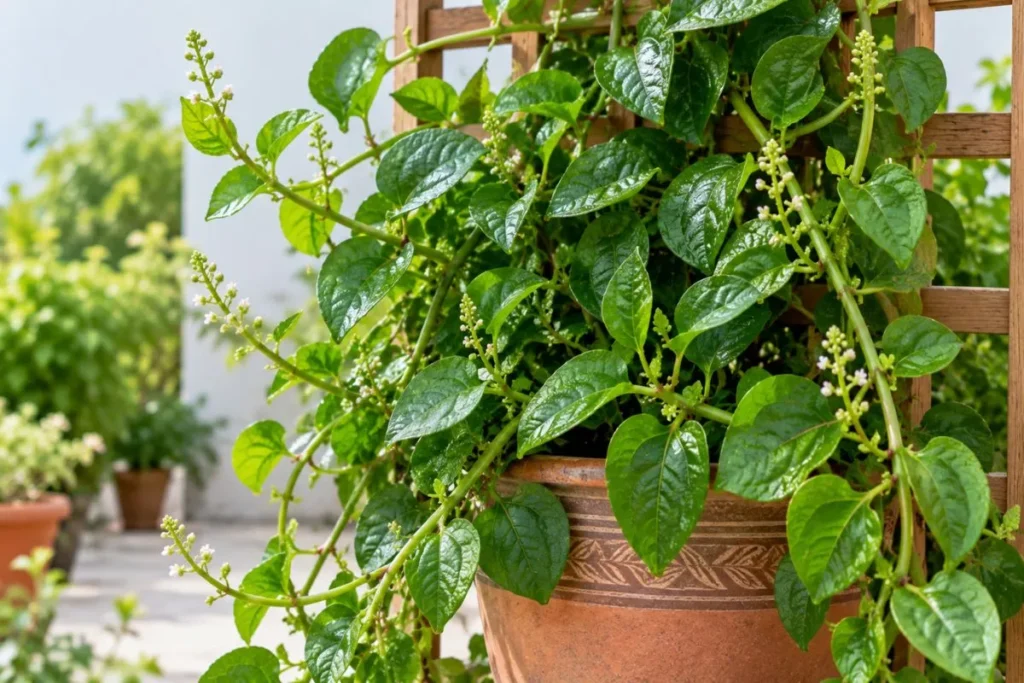
Both are climbing leafy greens and can grow vigorously in warm conditions. Their leaves are also edible, so the choice often comes down to appearance, availability, and personal preference. If you want a vegetable vine that adds strong color to your garden, a red vine spinach plant is a particularly attractive option.
Red Malabar Spinach vs. Regular Spinach
Despite the shared word “spinach,” these plants grow quite differently. Traditional spinach is a cool-season leafy green that usually forms a low-growing plant. Red Malabar spinach is a warm-season vine that prefers heat and climbs when given suitable support.
This difference makes it useful when summer temperatures become too high for regular spinach. Instead of giving up on fresh leafy greens during warm weather, gardeners can grow tropical spinach such as Malabar spinach.
The texture is different, too. Malabar spinach has thicker, more succulent leaves than traditional spinach. Its leaves work well in many cooked dishes, while young leaves can also be used in salads.
Understanding Basella Rubra and Basella Alba
You may come across the names Basella rubra and Basella alba when researching Malabar spinach varieties. These botanical names are useful for distinguishing the red-stemmed and green-stemmed forms commonly sold or discussed by gardeners.
Basella rubra is commonly associated with the red-stemmed form, making it the key botanical name to remember when looking for a Red Basella plant or red vine spinach. Basella alba is commonly associated with the green-stemmed form.
However, plant names can vary between seed sellers and gardening sources. That’s why it’s smart to check the plant description and photos before buying seeds. If you’re specifically looking for a Basella rubra plant, make sure the listing clearly identifies the red-stemmed type.
Which Malabar Spinach Type Should You Grow?
If your main goal is attractive garden growth, the red form is hard to overlook. Its colorful stems stand out against the green leaves and can make a simple trellis look much more interesting.
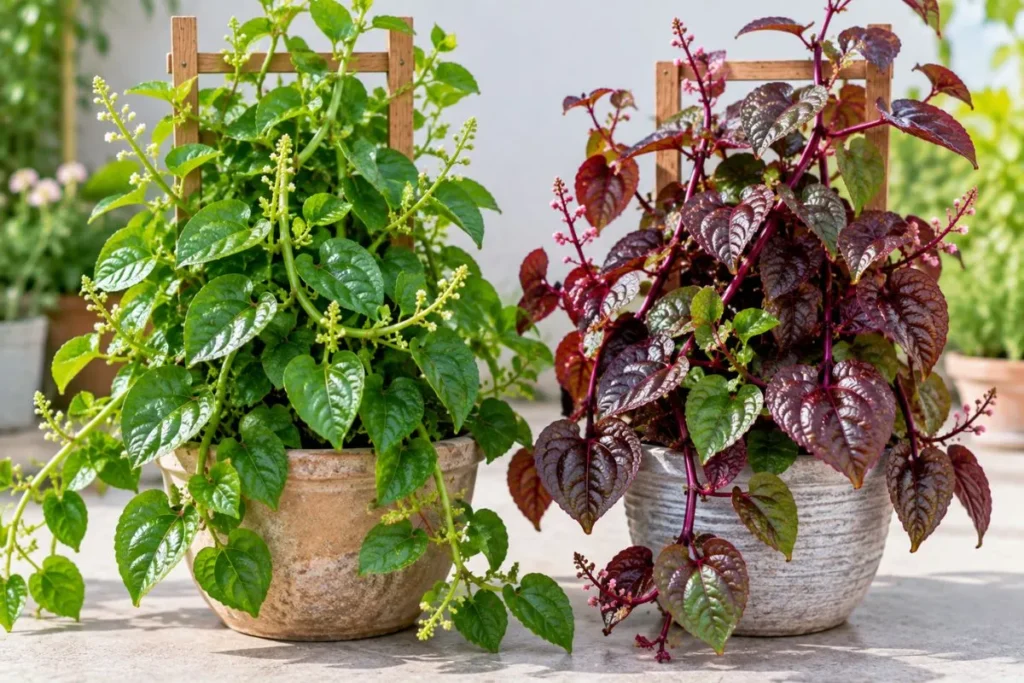
If you mainly care about growing edible leaves, both red and green types can be useful. Focus on the growing conditions available to you, the space you have, and whether you want a colorful spinach vine plant or a more traditionally green appearance.
Whichever type you choose, provide warmth, suitable soil, adequate moisture, and room for the vines to climb. With the right setup, both can become productive Malabar spinach plants for a home garden.
How to Grow Red Malabar Spinach From Seeds
Many gardeners assume that Red Malabar spinach seeds will sprout quickly as soon as they touch moist soil, but that isn’t always the case. These seeds have a fairly tough outer coating, so temperature, moisture, and proper planting can make a big difference.
If you want to know how to grow Red Malabar spinach from seeds, starting with the right preparation gives your plants a much better beginning.
How to Prepare Red Malabar Spinach Seeds
Before planting, choose healthy, mature Malabar spinach seeds from a reliable source. Avoid seeds that look damaged, moldy, or unusually shriveled. Good-quality seeds give you a stronger starting point for successful germination.
Because the seed coat can be hard, soaking the seeds in clean, room-temperature water for several hours or overnight is a useful preparation step. It can help soften the outer coating and allow moisture to reach the seed more easily. After soaking, plant the seeds promptly rather than leaving them sitting in water for an extended period.
If you’re growing spinach from seed, remember that warmth is especially important for Malabar spinach. This is a warm-season plant, so cold soil can slow germination considerably.
How to Plant the Seeds
Choose a spot with warm soil and good drainage. You can sow Red Malabar spinach seeds directly into the garden or start them in small containers and transplant them later.
Plant the seeds only about ½ inch deep. Cover them lightly with soil and water gently so you don’t wash the seeds away. Keep the soil evenly moist while you’re waiting for the first shoots to appear.
Don’t pack the soil down too heavily over the seeds. A loose, well-draining growing medium allows moisture and air to reach the developing seed. Once seedlings emerge, give them plenty of light and enough room to develop without excessive crowding.
If you’re planting several seeds, leave appropriate spacing between them. You can thin weaker seedlings later if too many sprout in the same area. This helps the strongest plants develop into vigorous Malabar spinach vines.
How Long Do Malabar Spinach Seeds Take to Germinate?
Under warm, favorable conditions, Malabar spinach seeds commonly take around 1 to 3 weeks to germinate. Don’t panic if you don’t see sprouts immediately. Cool temperatures, overly dry soil, planting too deeply, or older seeds can all delay germination.
The key is to keep the growing medium consistently moist but not waterlogged. Warm conditions are equally important. Since Basella rubra naturally prefers warm weather, germination tends to be more reliable when the soil is comfortably warm.
Once tiny seedlings appear, continue providing good light and steady moisture. As they become stronger, you can prepare them for their next stage of growth by giving the young plants adequate space and, eventually, a structure to climb.
For anyone learning how to grow healthy Red Malabar spinach at home, patience during this early stage pays off. Strong germination creates a much better foundation for a productive red vine spinach plant later in the season.
FAQs
Is Red Malabar Spinach a Real Spinach?
Red Malabar spinach is commonly used like spinach, but botanically it is different from traditional spinach. It belongs to the Basella genus and grows as a warm-season climbing vine. Its thick, edible leaves make it a useful leafy green for hot-weather gardens.
How Fast Does Red Malabar Spinach Grow?
Under warm conditions with enough moisture, sunlight, and fertile soil, Red Malabar spinach can grow vigorously. Growth speed depends on temperature, soil quality, watering, and overall plant care. Providing a support early also helps the developing vine grow in a more organized way.
Does Red Malabar Spinach Need Full Sun?
The plant grows well with plenty of sunlight, especially during the warm growing season. A bright location can encourage strong vines and healthy leaf production. In extremely hot conditions, some afternoon protection can help reduce heat stress.
How Often Should You Water Red Malabar Spinach?
Water when the soil begins to dry, keeping it consistently moist without leaving the roots sitting in water. Young plants may need closer attention, while established vines can develop a more regular watering routine. Hot, dry weather can increase the plant’s water needs.
Can Red Malabar Spinach Grow in Containers?
Yes. Red Malabar spinach in containers can grow successfully when the pot has good drainage, suitable soil, enough sunlight, and enough room for the roots. Because it is a climbing plant, add a trellis or other support so the vines have somewhere to grow.
Does Red Malabar Spinach Need a Trellis?
A trellis isn’t absolutely required, but it is very helpful. Since the plant naturally produces long vines, a Malabar spinach trellis lets you train the growth upward instead of allowing the plant to sprawl across the ground.
How Do You Grow Red Malabar Spinach From Seeds?
Start with good-quality Red Malabar spinach seeds and plant them in warm, moist, well-draining soil. Keep the growing medium consistently moist while the seeds germinate. Once seedlings become established, provide plenty of light and give the young vines suitable support.
How Do You Propagate Red Malabar Spinach?
You can propagate Red Malabar spinach plant from seeds or healthy stem cuttings. Stem cuttings can be rooted in water or a suitable growing medium before being planted once roots develop. This makes propagation a convenient way to create additional plants.
When Can You Harvest Red Malabar Spinach?
Harvest when the plant has produced healthy, usable leaves and established vines. Young, tender leaves are often preferred for eating. Regular harvesting can also help keep the plant productive and prevent the vines from becoming overly unruly.
Is Red Malabar Spinach Perennial?
In warm, frost-free climates, Malabar spinach can behave as a perennial. In areas that experience cold or frost, it is commonly grown as a warm-season annual. Climate plays a major role in how long the Red Malabar spinach plant survives.
Conclusion:
Growing a Red Malabar spinach plant is much easier when you understand what this warm-season vine needs. Give it suitable sunlight, fertile and well-draining soil, consistent moisture, and a strong support structure, and it can reward you with vigorous growth and plenty of fresh leaves.
Whether you’re growing red vine spinach in a garden bed or container, start with healthy seeds or cuttings and pay attention to the plant as it grows.
With regular watering, sensible feeding, pruning, and harvesting, you can keep your Basella rubra plant looking healthy and productive throughout the growing season.

Plant Nest Blog’s author is passionate about plants, gardening, and sustainable living. Through research and practical experience, they share helpful plant care tips, gardening guides, and easy solutions to help readers grow healthier plants and create greener spaces.