
Many people think the biggest and darkest eggplant is automatically the best one, but that’s not always true. How to select eggplant is really about looking at a few simple signs of freshness, texture, and quality. The right eggplant should look healthy, feel firm, and be suitable for the dish you plan to make.
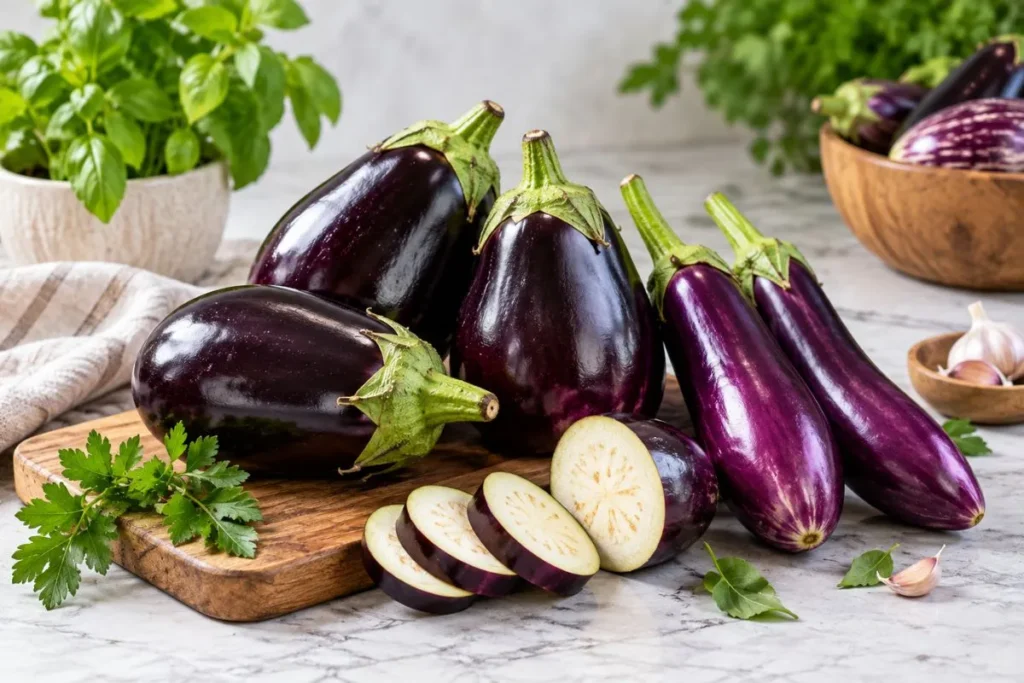
If you’re wondering how to choose eggplant at the grocery store or how to pick eggplant from a market, don’t worry it doesn’t have to be complicated. In the next sections, you’ll learn the easy signs of fresh eggplant selection, how to recognize quality produce, and what to check before putting an eggplant in your shopping bag.
What Should a Fresh Eggplant Look Like?
When choosing fresh eggplant, start with its overall appearance. A good eggplant should look lively and healthy rather than dried out or damaged. Its skin should generally be smooth and have a natural shine, although the exact appearance can vary between eggplant varieties.
Look for Smooth, Shiny Skin
Fresh eggplant usually has smooth eggplant skin with a healthy, glossy appearance. The surface should feel relatively even and should not be covered with deep wrinkles. A little natural variation is fine, but heavily wrinkled skin can be a sign that the eggplant has been sitting around for too long.
Pay attention to the entire surface instead of checking only one small area. Shiny eggplant skin is a useful freshness clue, but it should not be the only thing you consider. You’ll get a much better idea of eggplant quality when you combine appearance with firmness, weight, and the condition of the stem.
Check the Eggplant Color
Color can help you identify a healthy eggplant, but it depends on the variety. A traditional purple eggplant will usually have rich, even coloring, while Japanese, Italian, baby, and other varieties can look quite different.
Don’t assume that the darkest eggplant is always the freshest. Instead, look for color that appears natural and appropriate for that particular variety. Faded, severely discolored, or unusual areas deserve a closer look.
Look for Bruises and Blemishes
Next, inspect the skin for eggplant bruises, cuts, deep marks, or large blemishes. A tiny surface mark does not necessarily mean the whole vegetable is bad, but deep damage can affect freshness and texture.
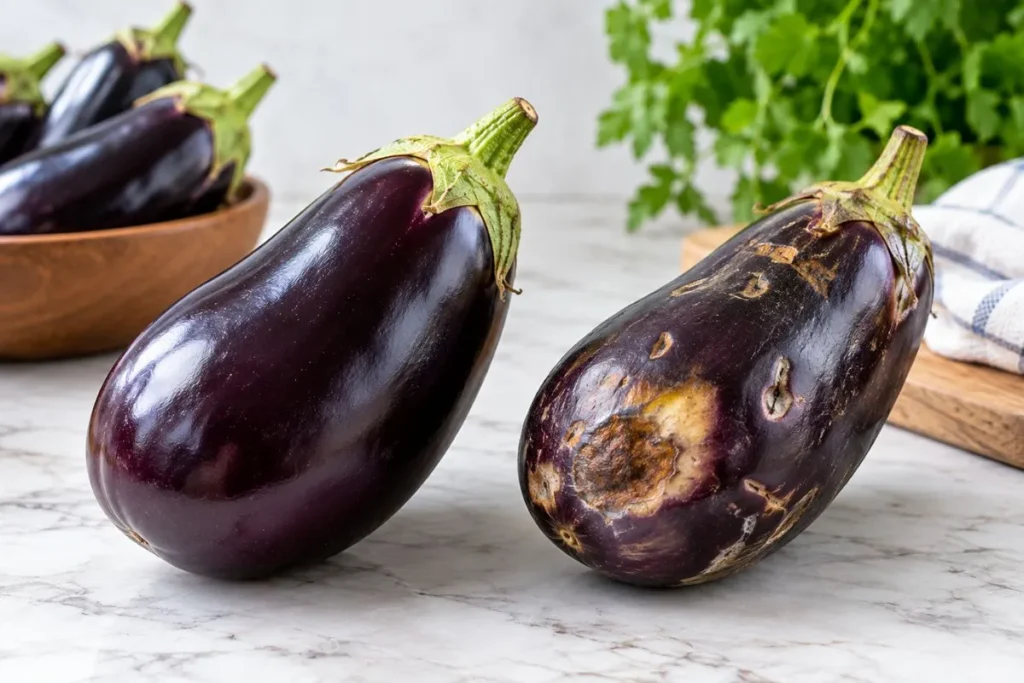
For the best fresh eggplant selection, choose fruit that has mostly clean, healthy-looking skin. Avoid eggplants with large soft-looking patches, extensive damage, or obvious signs of spoilage. This simple check can save you from taking home an eggplant that won’t cook well.
Quick tip: When learning how to tell if an eggplant is fresh, don’t judge it by color alone. Look at the skin, overall appearance, and condition of the fruit together.
Check Eggplant Firmness Before Buying
Many people believe that an eggplant should feel completely hard to prove that it is fresh, but that’s not quite right. How to select eggplant also means knowing what the right firmness feels like.
A fresh eggplant should feel firm and full, with just a little give when you gently press it. If it feels extremely hard, overly soft, or mushy, take a closer look before buying.
Gently Press the Eggplant
The easiest way to check eggplant firmness is with a gentle touch. Hold the eggplant in your hand and lightly press the skin with your fingertips. A good firm eggplant should have a little spring to it and return to its shape after you release the pressure.
You don’t need to squeeze hard. A gentle test is enough to judge the eggplant texture. If the flesh feels firm but not rock-hard, that’s usually a good sign. This simple check is especially useful when learning how to select eggplant by size and firmness because it helps you avoid fruit that has already started losing its quality.
Avoid Soft or Mushy Spots
Pay attention to areas that feel unusually soft. One slightly softer area may be caused by handling, but large soft patches are a warning sign. Very soft or mushy flesh can indicate that the eggplant is aging or has started to deteriorate.
Run your fingers gently over different parts of the eggplant rather than checking only one spot. If you notice several weak areas, deep dents, or a watery feeling beneath the skin, choose another one. For the best fresh eggplant selection, firmness should be fairly consistent across the fruit.
Why Firmness Matters for Cooking
Firmness matters because it can affect the final texture of your meal. A fresh, firm eggplant generally holds its shape better during cooking and can give you a more pleasant texture in roasted, grilled, baked, sautéed, or cooked dishes.
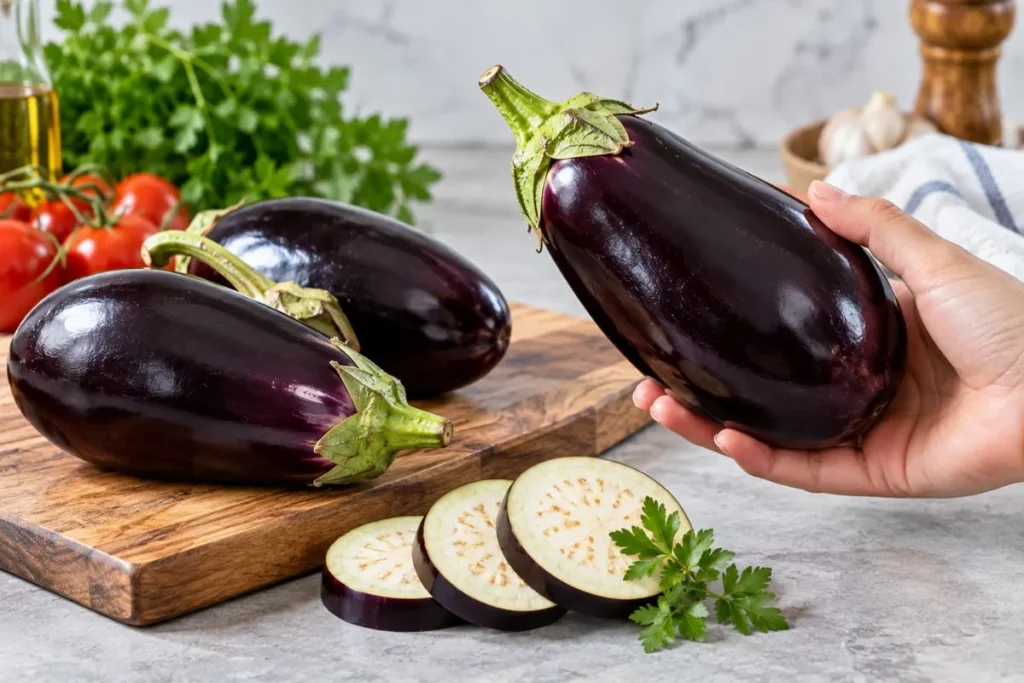
On the other hand, an eggplant that is already very soft may become overly mushy when cooked. That doesn’t mean every soft eggplant is automatically bad, but it does mean you should inspect it more carefully.
So, when deciding how to choose the best eggplant for recipes, don’t focus only on appearance. Give it a gentle touch, check the firmness, and choose one that feels fresh and substantial. This small step can make a noticeable difference in cooking quality and helps you pick better produce with confidence.
Check the Stem and Cap for Freshness
Many people think you can select eggplant just by looking at its size and skin, but the stem and cap can give you another useful clue. When learning how to select eggplant, don’t skip this small detail. A fresh-looking stem and healthy cap can help you spot better-quality produce before you buy it.
Look at the Eggplant Stem
Start by checking the eggplant stem at the top. A fresher eggplant generally has a stem that looks healthy and relatively firm rather than extremely dry, shriveled, or brittle. The stem should not look badly damaged or covered with obvious signs of spoilage.
You can also compare a few eggplants side by side. If one has a noticeably fresher-looking stem while another looks very dried out, the fresher one may be the better choice. This is a simple part of fresh eggplant selection that takes only a few seconds.
Inspect the Green Cap
Next, take a quick look at the green leafy part around the stem, often called the eggplant cap. It should look reasonably fresh and healthy for the variety. Avoid produce with a cap that appears severely dried, brown, damaged, or rotten.
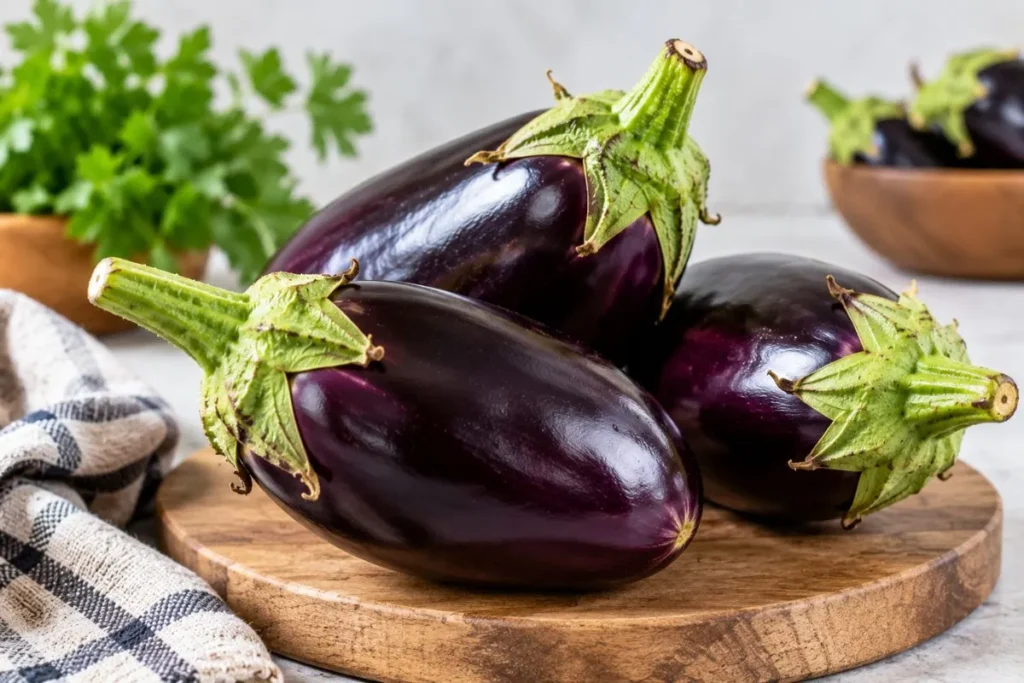
The cap should also fit naturally around the top of the fruit. While this clue should not be used by itself, it can support what you see from the rest of the eggplant. When you’re trying to choose fresh eggplant, small details like this can make your selection easier.
Combine Stem, Cap, and Skin Clues
The smartest approach is to use several freshness signs together. A healthy stem and cap are helpful, but they are only part of the picture. Look at the eggplant skin, check the overall appearance, and consider how the fruit feels before making your final choice.
This approach is especially useful when you want to know how to tell if an eggplant is fresh. Instead of relying on one feature, combine the stem, cap, appearance, and other freshness clues. That gives you a much better chance of taking home an eggplant with good texture and cooking quality.
FAQs
How Do You Choose a Good Eggplant?
Choose an eggplant that looks fresh, has healthy skin, and feels firm without being rock-hard. A good eggplant should not have large bruises, deep soft spots, excessive wrinkles, or signs of spoilage. Checking several features together is the easiest way to choose fresh eggplant with confidence.
How Can You Tell If an Eggplant Is Fresh?
To tell if an eggplant is fresh, look for smooth skin, a healthy appearance, and good firmness. The stem and cap should also look reasonably fresh rather than severely dried or damaged. A fresh eggplant should feel substantial for its size and should not have obvious mushy areas.
Should Eggplant Be Hard or Soft?
Eggplant should be firm but not completely hard. When you gently press it, the skin and flesh should have a little give and then spring back. If it feels extremely soft or mushy, it may be past its best quality.
What Color Eggplant Is Best?
There isn’t one color that is always best. Purple eggplant is common, but eggplant varieties can have different colors, shapes, and sizes. Instead of choosing based only on color, check the overall appearance, firmness, and freshness.
Is a Smaller or Larger Eggplant Better?
Neither size is automatically better. The best choice depends on the variety and what you’re cooking. Smaller eggplants may work well when you want a tender texture, while larger ones can be useful for recipes that need more flesh. When learning how to select eggplant, focus on freshness and suitability for your recipe rather than size alone.
How Do You Choose Eggplant Without Bitterness?
If you want to know how to choose eggplant without bitterness, start with fresh, firm fruit that isn’t overly mature. Variety and growing conditions can also affect flavor, so appearance alone cannot guarantee that an eggplant will never taste bitter.
How Do You Know If an Eggplant Is Bad Before Buying?
Look for obvious warning signs such as mold, strong unpleasant odors, deep bruises, leaking areas, severe wrinkles, or very soft and collapsing flesh. If several parts of the eggplant look or feel damaged, it’s safer to choose another one.
What Should a Fresh Eggplant Look Like?
A fresh eggplant should generally have healthy-looking skin with a natural sheen and an even appearance for its variety. It should not look severely dried out, heavily wrinkled, or badly bruised. The stem and cap can also provide useful clues when you’re making a fresh eggplant selection.
What Is the Best Way to Select Eggplant?
The best way to select eggplant is to combine several simple checks. Look at the skin, gently test the firmness, inspect the stem and cap, consider the weight and size, and make sure the eggplant suits your recipe. No single sign tells the whole story.
How Do You Select Eggplant at the Grocery Store?
When learning how to select eggplant at the grocery store, first compare the available fruit visually. Choose one with healthy skin, good firmness, and no major damage. Then check the stem and overall weight before putting it in your cart.
Conclusion:
Learning how to select eggplant doesn’t have to be complicated. You simply need to pay attention to a few important details, including appearance, firmness, skin condition, stem, cap, and overall freshness.
These quick checks can help you avoid poor-quality produce and choose an eggplant that is ready for your favorite recipe.
The next time you’re at the grocery store or market, don’t just grab the first eggplant you see.
Take a moment to look, feel, and compare. Once you know how to choose eggplant and recognize the signs of fresh eggplant selection, you’ll be able to pick better-quality eggplants with much more confidence.

Plant Nest Blog’s author is passionate about plants, gardening, and sustainable living. Through research and practical experience, they share helpful plant care tips, gardening guides, and easy solutions to help readers grow healthier plants and create greener spaces.