
A lot of gardeners assume that carrot seeds are hidden inside the carrot root, just like tomato seeds are inside a tomato. That isn’t true. The orange carrot growing underground is only the edible root.
If you’re wondering where are carrot seeds on the plant, you’ll need to look above the soil because that’s where the seeds actually develop.
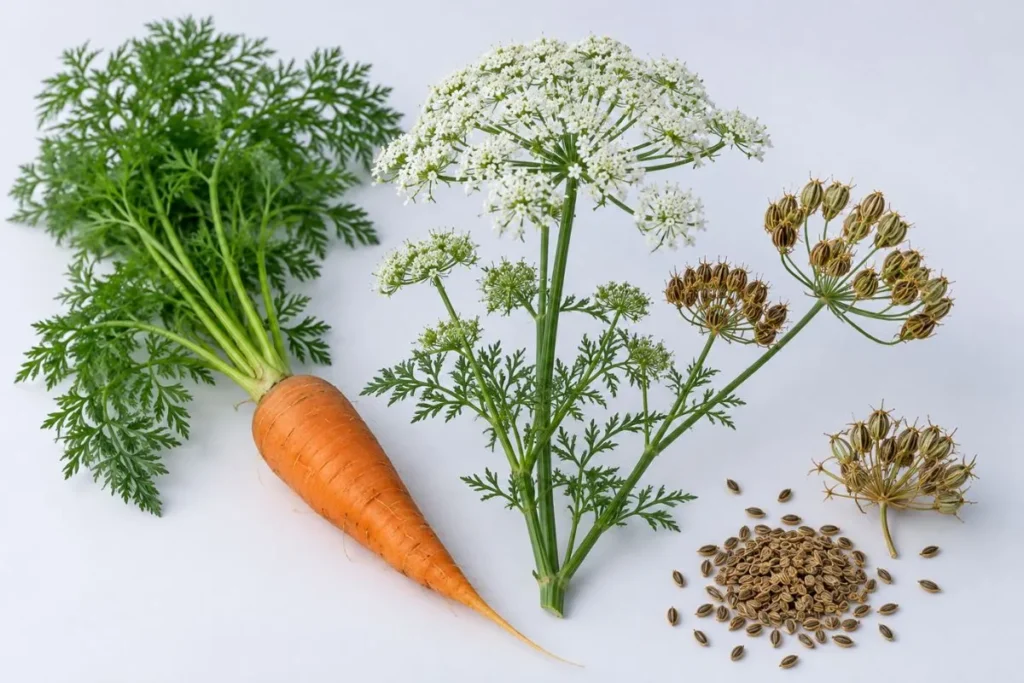
Carrot seeds grow on the plant’s flower heads after the carrot reaches its flowering stage. These umbrella-shaped clusters, known as carrot flower umbels, appear during the plant’s second year of growth.
In this guide, you’ll learn where are carrot seeds located on the plant, where do carrot seeds grow, how to identify mature carrot seed heads, and the easiest way to harvest and save your own seeds successfully.
Understanding the Carrot Plant Life Cycle
Carrots Are Biennial Plants
To understand where are carrot seeds on the plant, you first need to know how a carrot grows. Carrots are biennial plants, which means they complete their life cycle over two years instead of one.
This is one of the biggest reasons many gardeners never see carrot seeds on the plant. Most people harvest the roots during the first year, long before the plant has a chance to flower and produce seeds.
First Year: The Plant Grows the Edible Root
During the first growing season, the carrot plant puts all of its energy into developing a strong, healthy root underground. This is the orange carrot that ends up on your dinner plate. At this stage, the plant only produces green leaves above the soil.
There are no flowers, carrot seed heads, or seeds because the plant is focused entirely on storing nutrients for the following year.
If you’re hoping to learn where do carrot seeds grow, you won’t find them during the first year. The carrot root itself never contains seeds.
Second Year: Flowers Begin to Appear
If the carrot is left in the ground through winter, it enters its second year of growth. As temperatures rise, the plant sends up a tall flower stalk from the center of the leaves. Soon, small white flowers bloom in umbrella-shaped clusters known as carrot flower umbels.
These flowers mark the beginning of the plant’s reproductive stage. They also answer the common question, where can you find carrot seeds? The seeds will eventually develop on these flower clusters not inside the carrot root.
How Flowers Turn Into Seeds
Once the flowers open, bees and other pollinators transfer pollen between blooms. This natural carrot pollination process allows seeds to develop. After pollination, the flowers begin to fade, and small green seeds start forming on the flower heads.
Over the next several weeks, these seeds mature, dry out, and gradually turn brown. This is when you’ll clearly see carrot seeds on the plant. Knowing this stage of the carrot plant lifecycle makes it much easier to recognize when the seeds are fully mature and ready for harvesting.
Why Most Gardeners Never See Carrot Seeds
Many gardeners pull up their carrots during the first season because that’s when the roots are at their best for eating. As a result, they never reach the carrot flowering stage or experience the plant’s natural seed production process.
If your goal is growing carrots for seed, you’ll need to leave a few healthy plants in the garden over winter. By the second year, they’ll flower, attract pollinators, and produce mature seeds that you can collect, store, and plant again in future growing seasons.
Where Are Carrot Seeds on the Plant?
Many people think the seeds are hidden inside the carrot root because that’s the part we harvest and eat. This is one of the biggest gardening myths. In reality, the carrot root never produces or stores seeds.
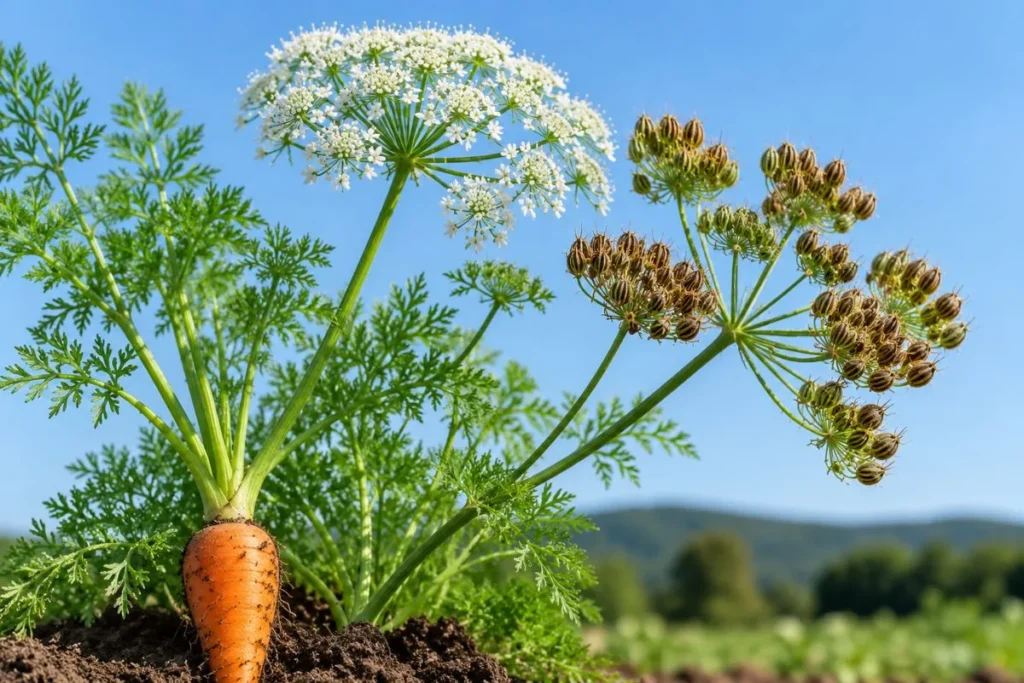
If you’re searching for where are carrot seeds on the plant, the answer is surprisingly simple they grow above the ground on the plant’s flower heads.
Where Are Carrot Seeds Located on the Plant?
The exact answer to where are carrot seeds located on the plant is that they develop on the dried flower clusters at the top of the flowering stalk. After the carrot plant finishes blooming, each tiny flower begins producing seeds.
These flowers grow together in umbrella-shaped clusters called umbels, which later become carrot seed heads.
If you’re wondering where can you find carrot seeds, don’t dig up the carrot root. Instead, look at the top of the mature plant where the flower heads have dried naturally. That’s where the seeds are produced and harvested.
Where Do Carrot Seeds Grow?
Many beginner gardeners ask, where do carrot seeds grow? They grow on the flower heads after the blooming period is over. As the flowers fade, small green seeds begin to form. Over time, sunlight and warm weather help these seeds mature until they become dry and brown.
This process is completely natural and happens above the soil. The edible carrot root simply supports the plant by storing energy. The actual carrot seed production takes place on the flower stalk, making it easy to collect seeds once they are fully mature.
What Part of the Carrot Plant Produces Seeds?
The only part of the carrot plant that produces seeds is the flower head. Each carrot flower cluster contains dozens of tiny flowers, and each flower has the potential to produce a seed after successful pollination.
As these flowers complete their life cycle, the entire cluster slowly transforms into a dry seed head filled with mature seeds. This is why experienced gardeners often wait until the carrot flower umbels become brown and crispy before collecting them.
How to Identify Mature Carrot Seed Heads
Finding the seeds is easy once you know what to look for. Healthy carrot seed heads change noticeably as they mature, making them fairly simple to identify.
The first sign is that the bright white flowers have completely faded. As the seed head continues to mature, the entire flower cluster changes from green to a light brown or tan color.
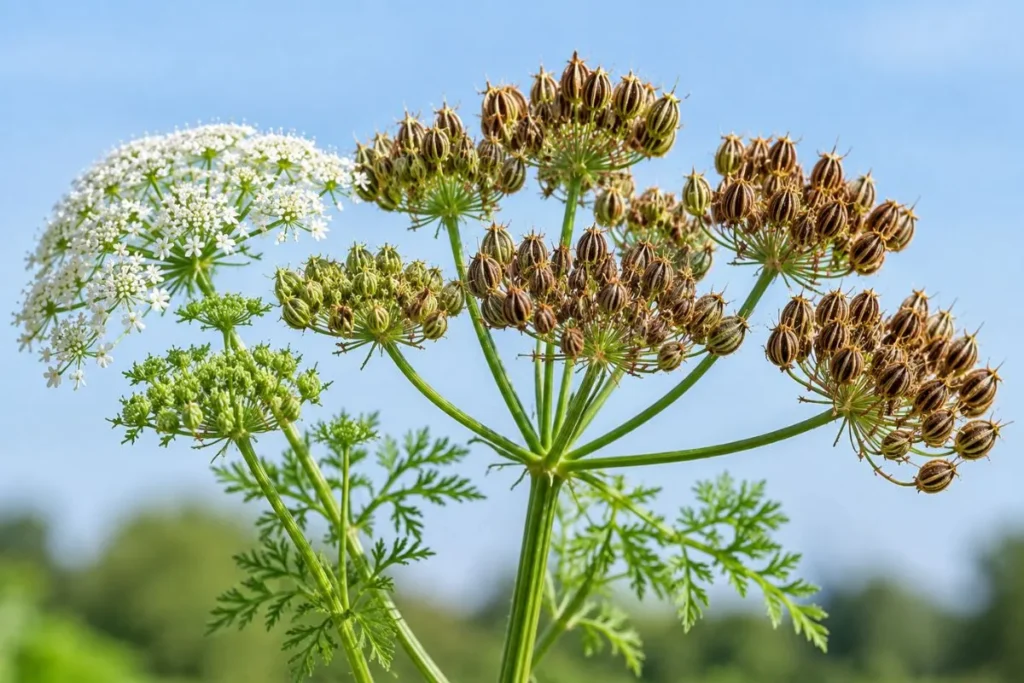
At the same time, the seeds become dry instead of soft, and the seed head begins to curl inward as it dries naturally. A final sign of maturity is that the seeds separate easily when you gently rub the flower head between your fingers.
These are all clear indicators that the mature carrot seeds are ready for harvesting. Collecting them at the right stage improves their chances of germinating successfully, while harvesting too early can result in immature seeds with poor germination rates.
Why the Seeds Never Grow Inside the Carrot Root
It’s easy to assume the orange root should contain seeds because many vegetables store seeds inside the edible part. Carrots are different. The root’s job is simply to store nutrients that help the plant survive until the next growing season.
The plant uses those stored nutrients to produce flowers, and only then does carrot seed formation begin on the flower heads above the ground. That’s why you’ll never find seeds by cutting open a carrot.
What Do Carrot Seed Heads Look Like?
Many new gardeners think carrot seeds grow inside pods like peas or beans. That’s not how carrots produce seeds. In fact, carrots don’t form seed pods at all. Instead, the seeds develop on unique carrot seed heads, which change in appearance as they mature.
Once you know what to look for, it’s easy to recognize them in your garden.
What Does a Carrot Seed Head Look Like?
If you’ve ever asked, “What do carrot seed heads look like?”, the easiest answer is that they resemble a tiny upside-down umbrella. The flower heads grow in rounded clusters made up of dozens of small stems, creating a shape known as an umbel.
When the plant is in bloom, these carrot flower clusters are covered with tiny white flowers. From a distance, they almost look like delicate lace floating above the leaves. These flowers are where the seeds will eventually develop.
How Carrot Seed Heads Change Over Time
A carrot seed head goes through several noticeable stages before it’s ready for harvest. Watching these changes helps you know exactly when the seeds are mature.
At first, the flower cluster is bright white and fully open. As time passes, the flowers begin to wilt and disappear. The cluster slowly changes from green to a light tan and eventually becomes brown. During this stage, the seed head also starts to curl inward, protecting the developing seeds as they dry naturally.
By the end of the process, the entire seed head feels dry and brittle. This is a good sign that the carrot seed maturity stage has been reached.
What Do Mature Carrot Seeds Look Like?
The seeds themselves are very small, flat, and slightly oval. Their surface has tiny ridges and fine bristles that give them a rough texture. As they ripen, their color changes from green to light brown and finally to a darker brown.
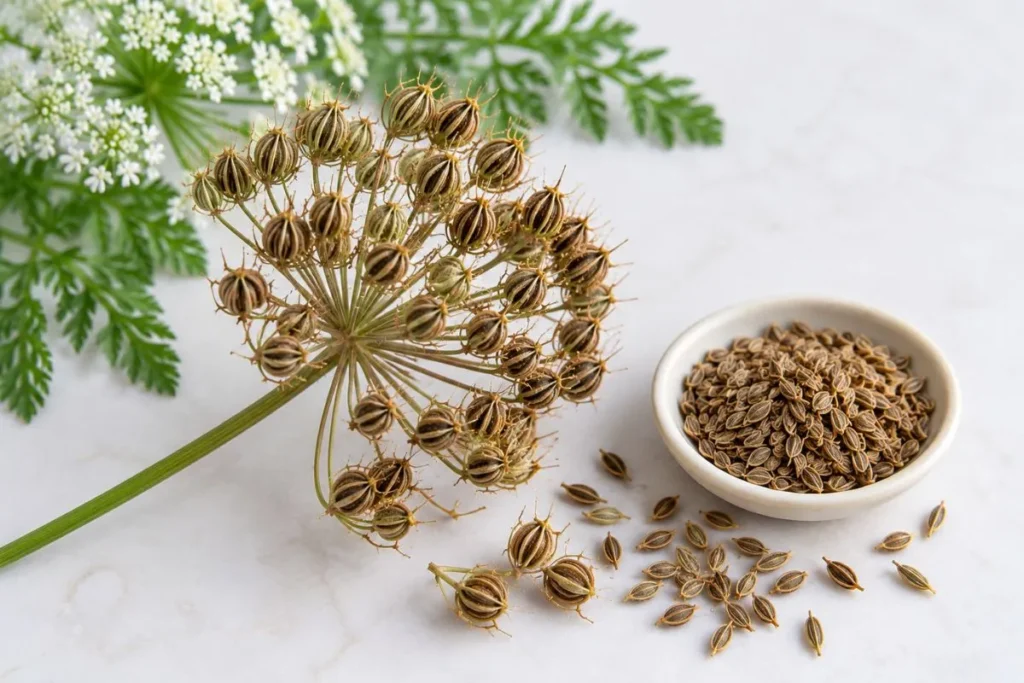
Because they are so lightweight, mature carrot seeds can be blown away by strong wind if they are left on the plant for too long. This is why experienced gardeners check their dry carrot seed heads regularly once they begin turning brown.
How to Tell if a Seed Head Is Healthy
Not every seed head produces high-quality seeds. Healthy carrot seed heads have a uniform brown color and hold plenty of well-developed seeds across the flower cluster. The seeds should feel firm and dry when touched, and they should separate easily from the head without much effort.
On the other hand, seed heads that remain green, feel damp, or show signs of mold are usually not ready for harvesting. Waiting until the seeds are fully mature improves both seed quality and future germination.
Healthy vs. Immature Carrot Seed Heads
Knowing the difference between healthy and immature seed heads can save you from collecting seeds that won’t grow.
A healthy seed head is dry, brown, slightly curled inward, and filled with firm seeds. An immature seed head is still green, soft, and moist, with seeds that haven’t finished developing. Harvesting too early often results in poor germination because the carrot seed formation process is not yet complete.
Taking a little extra time to observe these changes ensures you’ll collect stronger seeds that are ready for planting in the next growing season.
Frequently Asked Questions
Where are carrot seeds on the plant?
Carrot seeds grow on the flower heads at the top of the plant, not inside the orange root. After the flowers finish blooming, they dry out and produce carrot seed heads filled with mature seeds. If you’re wondering where are carrot seeds on the plant, simply look at the dried umbrella-shaped flower clusters above the ground.
Where do carrot seeds grow?
If you’re asking where do carrot seeds grow, they develop on the flower stalk after the carrot plant enters its second year of growth. The seeds form inside the dried flower clusters, also known as carrot flower umbels, once pollination is complete.
Where are carrot seeds located on the plant?
Where are carrot seeds located on the plant? They are attached to the dried flower heads at the very top of the flowering stem. You won’t find them underground or inside the carrot root because the root’s purpose is only to store nutrients for the plant.
What do carrot seed heads look like?
Healthy carrot seed heads start as white umbrella-shaped flower clusters. As they mature, the flowers fade, and the entire cluster turns tan or brown. The seeds become dry, firm, and easy to remove by gently rubbing the seed head with your fingers.
When do carrot plants produce seeds?
Carrots usually produce seeds during their second year because they are biennial plants. After surviving winter, the plant flowers in spring or early summer, and seeds develop once the flowers have been pollinated.
How long does it take for carrots to produce seeds?
It generally takes 18 to 24 months for carrots to complete their life cycle and produce seeds. The first year is spent growing the root, while the second year is dedicated to flowering and carrot seed production.
Can you collect seeds from carrot flowers?
Yes, you can collect seeds from carrot flowers, but only after the flowers have completely dried and turned brown. Harvesting too early may result in immature seeds that have poor germination rates.
How do you harvest carrot seeds?
To harvest carrot seeds, wait until the carrot seed heads are dry and brown. Cut the flower heads from the plant, place them in a paper bag or tray, and gently rub them to release the seeds. After removing any plant debris, allow the seeds to dry completely before storing them in a cool, dry place.
Can you grow carrots from saved seeds?
Absolutely. As long as the seeds were collected from healthy, mature carrot seed heads and stored properly, they can be planted in the next growing season. Many gardeners save seeds from heirloom varieties to grow fresh carrots year after year.
Why don’t most gardeners see carrot seeds?
Most gardeners harvest carrots during the first growing season while the roots are still tender. Because the plants are removed before they flower, they never reach the stage where carrot flowers turn into seeds. Leaving a few healthy plants in the ground through winter allows them to bloom and produce seeds the following year.
Conclusion:
By now, you know the answer to the common question, where are carrot seeds on the plant. Unlike many people believe, carrot seeds don’t grow inside the orange root. Instead, they develop on the dried carrot flower umbels that appear at the top of the plant during its second year of growth.
Learning where do carrot seeds grow and how to identify mature carrot seed heads makes seed saving much easier.
Once the flower heads turn brown, become dry, and release seeds easily, they’re ready to harvest. Collecting your own seeds not only saves money but also gives you a reliable supply of seeds for future planting seasons.
Whether you’re a beginner or an experienced gardener, understanding the carrot seed location and the plant’s natural life cycle will help you harvest healthier seeds with confidence.
The next time someone asks, “Where can you find carrot seeds?”, you’ll know they’re found on the dried flower heads above the ground not inside the carrot itself.
With the right timing, proper harvesting, and careful storage, you can successfully save mature carrot seeds, grow new plants year after year, and enjoy a more sustainable and rewarding gardening experience.

Plant Nest Blog’s author is passionate about plants, gardening, and sustainable living. Through research and practical experience, they share helpful plant care tips, gardening guides, and easy solutions to help readers grow healthier plants and create greener spaces.