
It is widely believed among gardeners that.how to save basil seeds is a difficult process that only experienced gardeners can do. That’s a common misconception.
The truth is, saving basil seeds is simple, costs almost nothing, and doesn’t require any special gardening skills or expensive tools.
Once you know the right method, you can collect seeds from healthy basil plants and use them to grow fresh basil season after season while saving money and reducing waste.
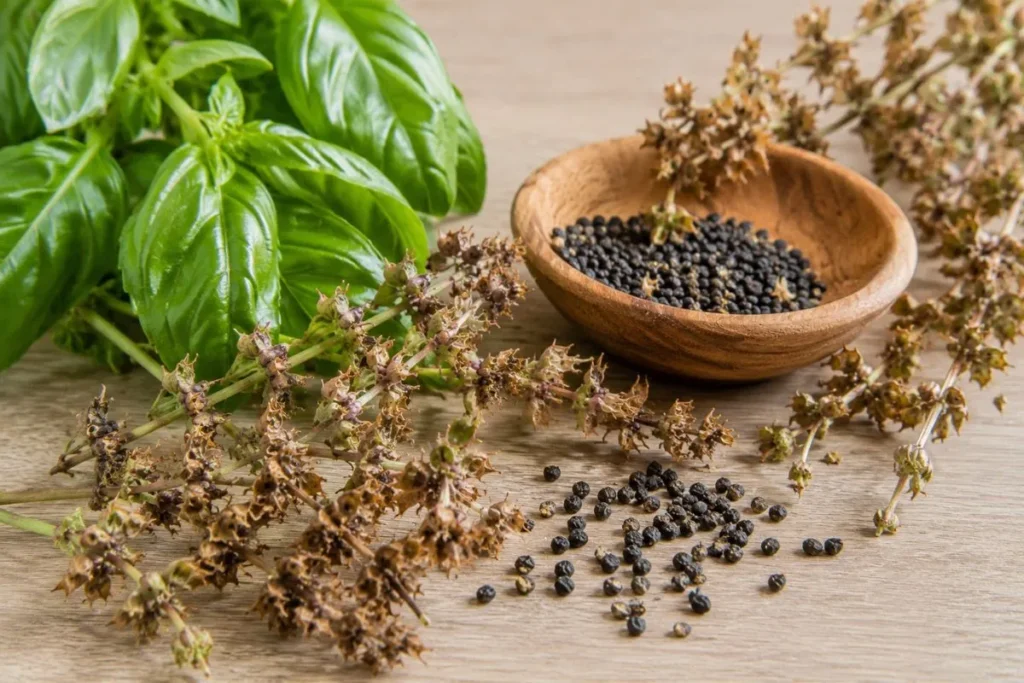
In this article, you’ll learn how to save basil seeds for next year step by step. We’ll cover when to harvest basil seeds, how to collect and dry them properly, the best way to store them for maximum germination, and the common mistakes to avoid.
Whether you’re completely new to basil seed saving or want to improve your seed-saving skills, this guide will help you confidently preserve your own basil seeds for future planting.
What You Need Before You Save Basil Seeds
The good news is that you don’t need fancy gardening tools to start collecting basil seeds. Most of the things you’ll need are probably already sitting somewhere in your kitchen or garden shed.
Keeping the process simple is actually one of the reasons so many people enjoy saving herb seeds. A few basic supplies are enough to harvest, clean, and store your seeds safely.
Let’s look at what you’ll need.
Paper Bag
A simple paper bag is perfect for collecting basil flower heads after they’re ready.
Unlike plastic bags, paper allows air to circulate. This helps prevent trapped moisture, which can lead to mold or damaged seeds.
Many experienced gardeners use paper bags during basil seed collection because they’re inexpensive and work really well.
Small Bowl
Once you’ve removed the dried flower heads, you’ll need a clean bowl to catch the seeds while separating them from the dried plant material.
A bowl also keeps tiny basil seeds from getting lost during the cleaning process.
Clean Plate or Tray
A flat plate, baking tray, or shallow dish gives you enough space to spread out the seeds.
This makes it much easier to remove bits of dried stems, flowers, and other debris while collecting basil seeds.
Paper Towels
Paper towels are useful for drying freshly harvested seeds.
Spread the seeds in a single layer and allow them to air dry naturally. Proper drying is one of the most important steps in basil seed saving, because moisture is the biggest enemy of long-term storage.
Airtight Container
Once the seeds are completely dry, they’ll need a safe place to stay until planting season.
Small airtight containers work very well, including:
- Glass jars
- Plastic seed containers
- Small storage tubes
- Reusable seed envelopes placed inside sealed containers
Keeping air and moisture away helps preserve seed quality for months.
If you’re learning how to collect and store basil seeds, choosing the right storage container is just as important as harvesting the seeds correctly.
Glass Jar or Seed Envelope
Many gardeners like using small paper seed envelopes first before placing them inside a sealed glass jar.
This extra layer of protection helps organize different basil varieties while reducing moisture buildup.
If you’re saving seeds from several plants, label each envelope with:
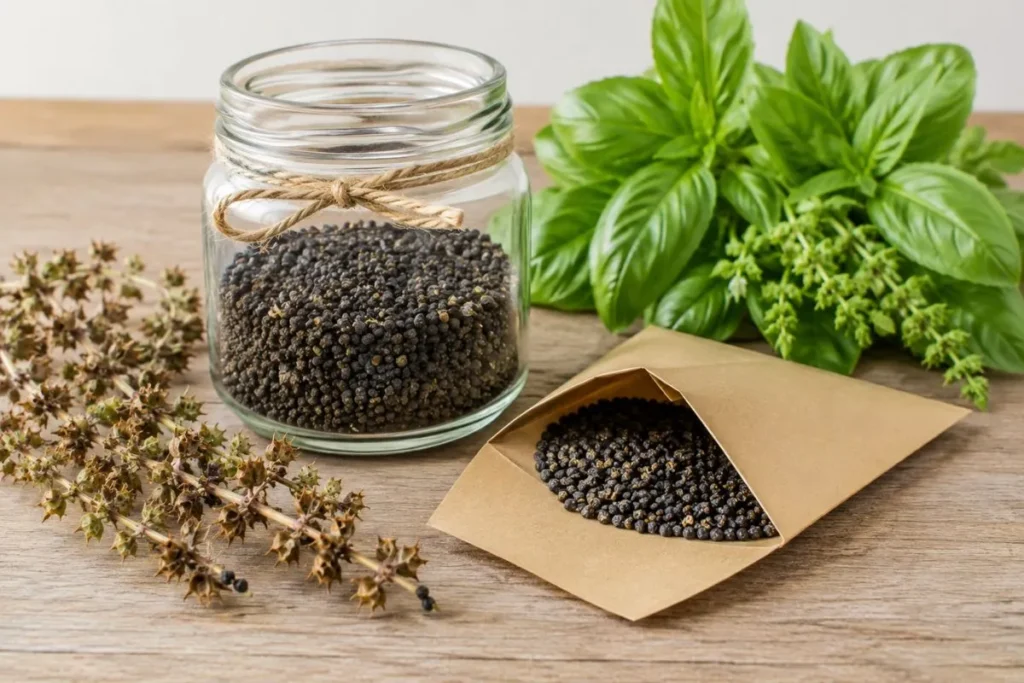
- Plant variety
- Harvest date
- Collection location (optional)
Good organization makes planting much easier next season.
Permanent Marker
It might seem like a small thing, but labeling your saved seeds can save a lot of confusion later.
Always write:
- Basil variety
- Date harvested
- Year collected
After a few months, every envelope starts looking the same. Clear labels help you stay organized.
Why Using the Right Tools Matters
Some people believe they can simply pick the seeds and toss them into a drawer until next year.
Unfortunately, that usually doesn’t end well.
Seeds are living organisms. Even after harvesting, they need the right conditions to stay healthy.
Using the proper tools helps:
- Keep seeds clean.
- Prevent mold and moisture damage.
- Improve long-term storage.
- Increase the chances of successful germination.
- Protect your hard work.
If your goal is how to preserve basil seeds for better germination, paying attention to these simple details makes a noticeable difference.
You don’t need expensive equipment or professional gardening supplies. Simple household items are more than enough when used correctly.
Think of these supplies as small investments that help protect your future basil harvest.
Understand the Basil Plant Life Cycle Before Harvesting Seeds
Many gardeners believe that once basil starts flowering, the plant is no longer useful and should be removed immediately.
While it’s true that flowering reduces leaf production, this is actually the most important stage if you want to learn how to save basil seeds.
Basil cannot produce seeds without first producing flowers. If you remove the flowers too soon, the plant will never develop basil seed pods, leaving you with no seeds to collect.
Understanding the basil plant lifecycle will help you harvest healthy, mature seeds with a much higher germination rate.
How Basil Produces Seeds
Before you can successfully harvest basil seeds, it’s important to understand how the plant naturally produces them. Basil begins its life by growing strong stems and plenty of fresh green leaves.
This is the stage when most people enjoy harvesting basil for cooking. As the plant matures, it starts producing flower spikes at the top of its stems. These small flowers attract bees and other pollinators that help fertilize the plant.
After pollination, the flowers slowly dry out and turn into tiny basil seed heads that contain several seeds inside each pod. Over time, these seeds continue to mature until they become dark, dry, and ready for harvesting.
This natural process is why patience is so important during basil seed saving. Allowing the plant to complete its life cycle gives you healthier seeds that are much more likely to grow into strong basil plants next season.
Should You Let Basil Flower?
If your goal is to harvest fresh basil leaves throughout the summer, you may have heard that you should remove the flowers as soon as they appear. That advice is useful for increasing leaf production, but it doesn’t apply if your goal is saving basil seeds.
To produce seeds, basil must be allowed to flower naturally. Every flower has the potential to become a seed pod, so removing flower spikes too early stops seed production completely.
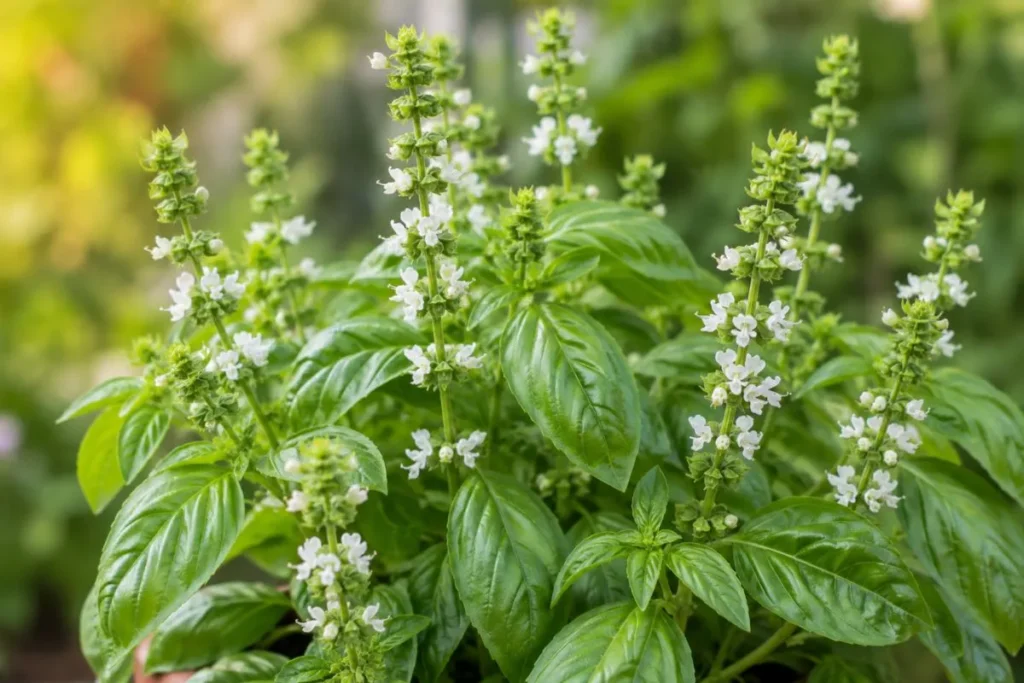
Letting basil flower also supports bees, butterflies, and other beneficial pollinators while giving you the opportunity to collect dozens or even hundreds of basil flower seeds from a single healthy plant.
Although flowering means the plant produces fewer leaves and may slow its growth, the reward is a generous supply of seeds for future planting.
Many experienced gardeners solve this by harvesting leaves from most of their basil plants while allowing one or two healthy plants to flower and produce seeds. This simple method makes herb seed saving both practical and rewarding.
What Do Mature Basil Seeds Look Like?
Knowing what mature basil seeds look like is one of the easiest ways to avoid harvesting them too early. After the flowers fade, the basil seeds after flowering continue developing inside small seed pods.
At first, the seeds are soft and light in color, but as they mature, they become dark brown or black, hard to the touch, and completely dry. The surrounding basil seed heads also change appearance, turning brown, dry, and brittle.
A simple way to check whether the seeds are ready is to gently rub a dry flower spike between your fingers over a clean plate. If several tiny black seeds fall out easily, the seeds are fully mature and ready for basil seed collection.
If very few seeds come out or they still look pale or green, it’s best to leave the flower heads on the plant for another few days.
Waiting until the seeds are fully mature is one of the most important steps in collecting basil seeds, as mature seeds have a much better chance of germinating successfully when you plant them in the next growing season.
When Is the Best Time to Save Basil Seeds?
Many people think they can harvest basil seeds as soon as the plant starts flowering. That’s one of the biggest misconceptions about how to save basil seeds. Flowers are only the first stage of seed production.
If you collect the seeds too early, they won’t be fully mature and are less likely to germinate. The secret to successful basil seed saving is knowing exactly when the seeds are ready. Waiting a little longer allows the seeds to fully develop, giving you stronger, healthier seeds for next season.
Signs the Seeds Are Ready
Instead of following a specific date, let your basil plant tell you when it’s time to harvest. As the seeds mature, the plant goes through several visible changes that are easy to recognize.
Look for these signs before starting your basil seed collection:
- Flower spikes turn brown instead of green.
- Flowers become completely dry and begin to fall off naturally.
- Basil seed pods become dry and brittle to the touch.
- Seeds turn dark brown or black, which indicates they are fully mature.
- Seeds fall out easily when you gently rub the dry seed heads between your fingers.
If you notice green, pale brown, or soft seeds, leave them on the plant for a few more days. Harvesting mature seeds is one of the easiest ways to improve germination and make saving basil seeds more successful.
When to Harvest Basil Seeds
If you’re wondering when is the best time to save basil seeds, the answer depends more on the condition of the plant than the calendar. Most basil plants are ready for seed harvesting in late summer or early fall, after the flowers have completely dried.
For the best results, follow these simple timing tips:
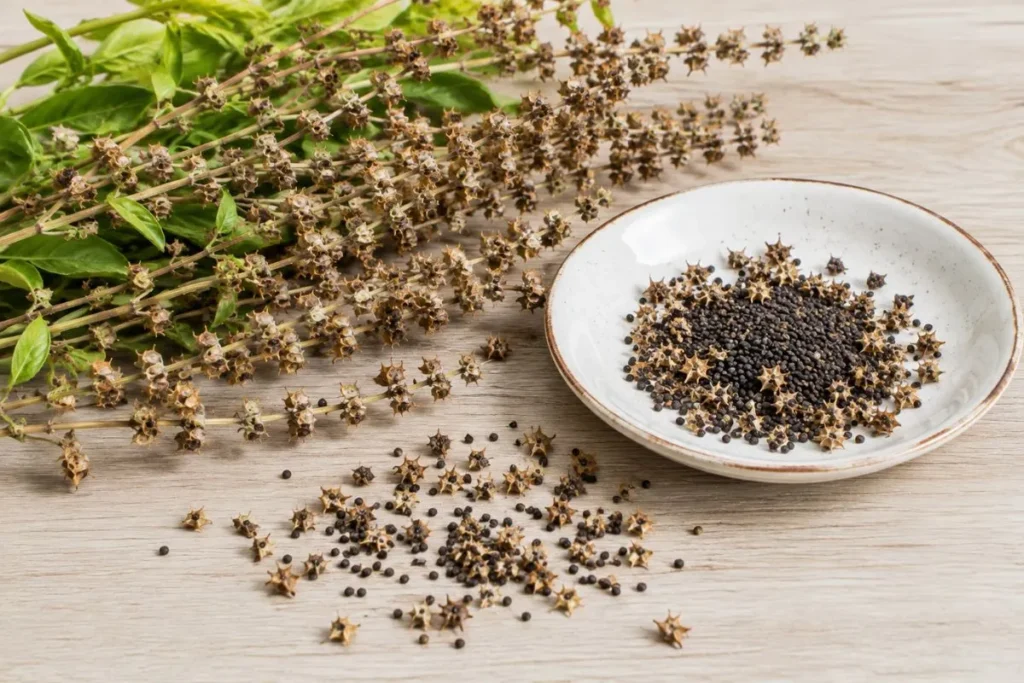
- Harvest only after the flower heads have fully dried.
- Choose a dry, sunny day whenever possible.
- Collect seeds after the morning dew has evaporated or during a dry afternoon.
- Avoid harvesting during rainy or humid weather.
- Wait until the seeds naturally separate from the pods with gentle pressure.
These simple practices make how to harvest basil seeds at home much easier and help keep your seeds dry, clean, and ready for storage.
Mistakes to Avoid
Even experienced gardeners can make mistakes when collecting basil seeds. Fortunately, most of these problems are easy to avoid once you know what to look for.
Here are the most common mistakes:
- Harvesting too early. Immature seeds usually have poor germination and may not grow into healthy plants.
- Harvesting after rain or watering. Damp seeds can develop mold during storage.
- Ignoring the condition of the seed pods. Dry, brown seed heads are a much better indicator than simply counting the number of days.
- Rushing the process. Giving the plant extra time often results in stronger, healthier seeds.
- Storing seeds before they’re completely dry. Even a small amount of moisture can reduce seed quality and shorten storage life.
By avoiding these mistakes and paying attention to the natural signs of maturity, you’ll greatly improve your success with how to save basil seeds for next year.
Healthy, fully mature seeds are much easier to store, have a longer shelf life, and produce stronger basil plants when it’s time to plant them again.
How to Save Basil Seeds (Step-by-Step Guide)
Many people think how to save basil seeds is a long and complicated process, but it’s actually quite simple. Once your basil seeds have fully matured, the rest of the process only requires a little patience and careful handling.
By following these easy steps, you’ll be able to collect and store basil seeds that stay healthy and have an excellent germination rate for the next growing season.
Let the Flowers Dry Naturally
The first step is to let the basil flowers dry completely while they are still attached to the plant. Don’t rush to cut them as soon as they fade. The seeds continue to mature inside the basil seed pods even after the flowers have dried.
Wait until you notice:
- Brown, dry flower spikes
- Brittle seed heads
- Dark brown or black seeds inside the pods
Allowing the flowers to dry naturally is one of the most important parts of basil seed saving because mature seeds are much more likely to germinate successfully.
Pro Tip: Choose a healthy, disease-free basil plant for seed saving. Healthy parent plants produce stronger seeds.
Step 2. Cut the Seed Heads
Once the flower spikes are completely dry, use a clean pair of garden scissors or pruning shears to cut them from the plant. Cut just below the dried flower cluster to keep the seed heads intact.
Place the cut seed heads into:
- A paper bag
- A shallow basket
- A clean tray
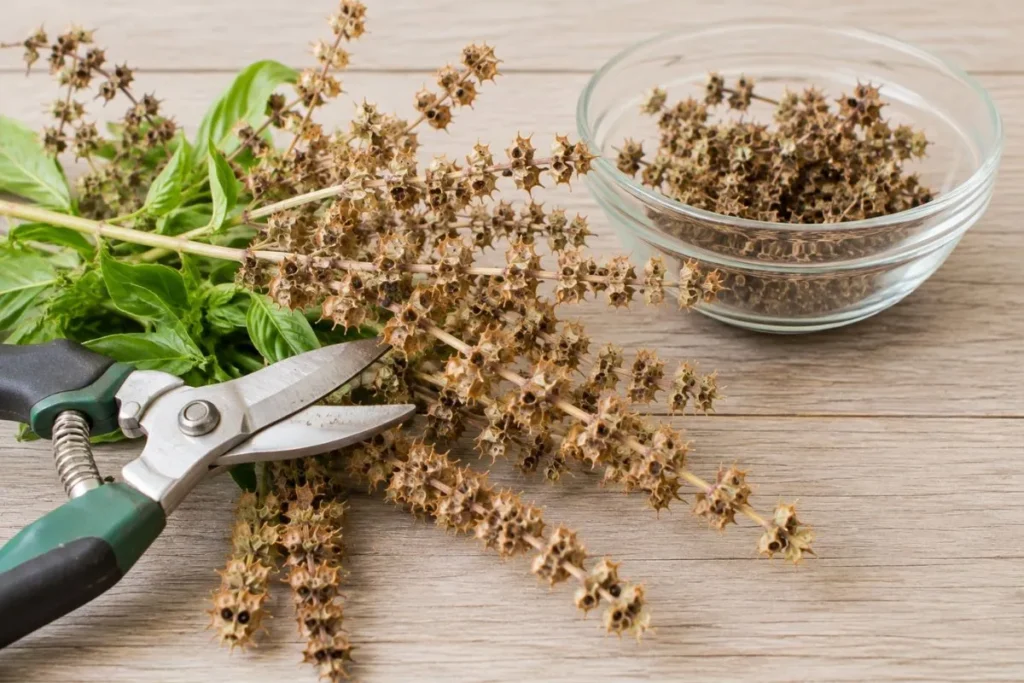
Avoid using plastic bags because they trap moisture, which can damage the seeds.
If you’re learning how to harvest basil seeds, handling the seed heads gently will prevent valuable seeds from falling onto the ground.
Dry Them Indoors
Even though the flower spikes look dry, they often contain a little leftover moisture. Place the seed heads on a clean plate, tray, or paper towel in a warm, dry, and well-ventilated room.
Leave them to dry for about 5 to 7 days.
Keep them away from:
- Direct sunlight
- Humid rooms
- Rain or moisture
This extra drying time helps improve seed quality and reduces the risk of mold during storage.
Remove the Seeds
After the seed heads have dried completely, it’s time to remove the seeds.
Simply rub the dry flower heads gently between your fingers over a clean bowl or tray. As you do this, the tiny mature basil seeds will fall out naturally.
You’ll notice a mixture of:
- Basil seeds
- Dried flower petals
- Tiny stems
- Chaff
Don’t worry if everything falls together. Cleaning comes in the next step.
This simple method is the easiest way to collect basil seeds without damaging them.
Separate Chaff from Seeds
Now it’s time to clean your seeds by removing unwanted plant material.
You can do this by:
- Picking out larger stems by hand.
- Gently blowing away the lighter chaff.
- Using a fine kitchen sieve if needed.
The goal isn’t to make the seeds perfectly clean. Removing most of the dried flower pieces is enough for successful storage.
Cleaning your seeds properly improves airflow and makes basil seed preservation much easier.
Dry the Seeds Again
Even after cleaning, it’s a good idea to let the seeds dry one final time before storing them.
Spread the cleaned seeds in a thin layer on:
- A paper towel
- A ceramic plate
- A coffee filter
- A paper plate
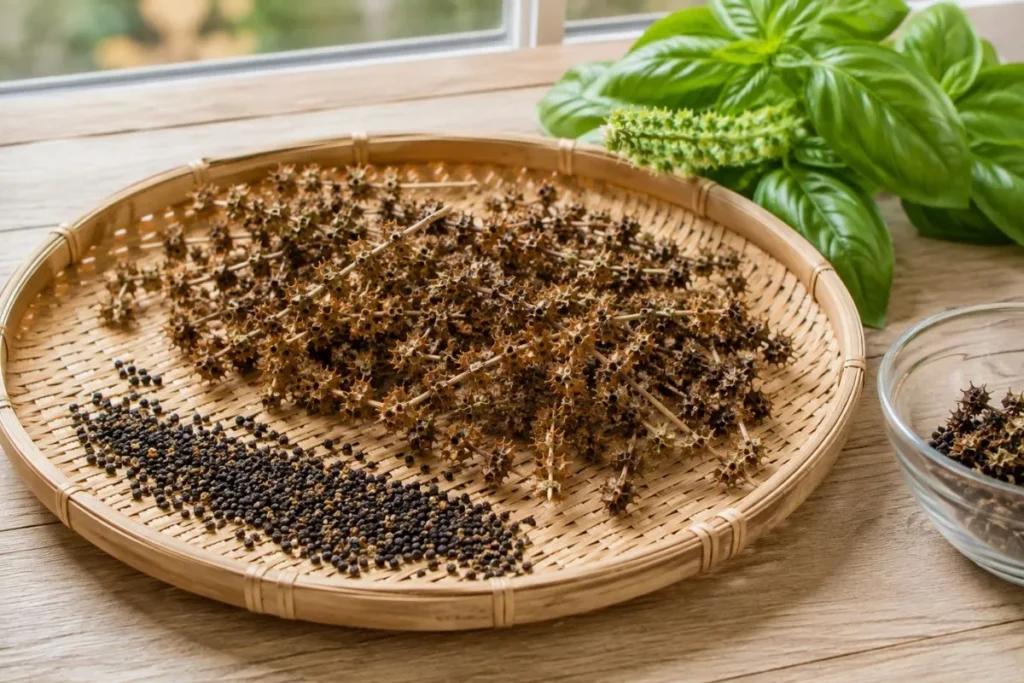
Leave them in a cool, dry room for another 2 to 3 days.
This final drying step ensures there’s no hidden moisture left on the seeds, which is essential if you want to preserve basil seeds for better germination.
Never speed up the process by using:
- An oven
- A microwave
- A hair dryer
- Direct sunlight
Natural air drying is always the safest option.
Store Them Correctly
Once the seeds are completely dry, place them in a clean, airtight container for long-term storage.
Good storage options include:
- Glass jars with tight-fitting lids
- Paper seed envelopes
- Small airtight containers
- Coin envelopes stored inside a sealed jar
Don’t forget to label each container with:
- Basil variety
- Harvest date
- Collection year
Store your seeds in a place that is:
- Cool
- Dry
- Dark
- Away from humidity and direct sunlight
Proper storage is the final and most important step in how to collect and store basil seeds. When stored correctly, your seeds can remain viable for several years and be ready to grow into healthy basil plants when the next planting season arrives.
By following these seven simple steps, you’ll master how to save basil seeds for next year with confidence. The process takes very little time, costs almost nothing, and rewards you with a free supply of quality basil seeds for future gardens.
How to Harvest Basil Seeds Without Damaging the Plant
Many gardeners think they need to pull out the entire basil plant to collect its seeds. That’s not true. If you’re learning how to harvest basil seeds, there’s no need to uproot or heavily prune the plant.
With the right technique, you can collect basil seeds while keeping the plant as healthy as possible. A gentle harvesting method also helps protect the mature seeds from being lost or damaged during the process.
The Gentle Harvesting Method
The safest way to harvest basil seeds is to handle the plant carefully and only remove the parts that contain mature seed heads. Before you begin, inspect the plant and make sure the flower spikes are completely dry and the seeds have turned dark brown or black.
Follow these simple steps:
- Choose a dry day with no rain or heavy humidity.
- Use clean, sharp garden scissors or pruning shears.
- Cut only the mature flower spikes instead of large sections of the plant.
- Hold a paper bag or bowl underneath the seed head while cutting to catch any loose seeds.
- Place the harvested seed heads gently into a paper bag or tray to avoid crushing them.
- Leave any green or partially developed flower spikes on the plant so they can continue producing mature seeds.
This gentle method is widely recommended for basil seed collection because it reduces seed loss and allows the remaining flowers to keep developing naturally.
Pro Tip: If your basil plant has many flower spikes, harvest only the fully mature ones first. You can come back a week later to collect the remaining seed heads after they have ripened.
Common Harvesting Mistakes
Even though collecting basil seeds is simple, a few common mistakes can reduce the quality of your harvest.
Avoid these errors:
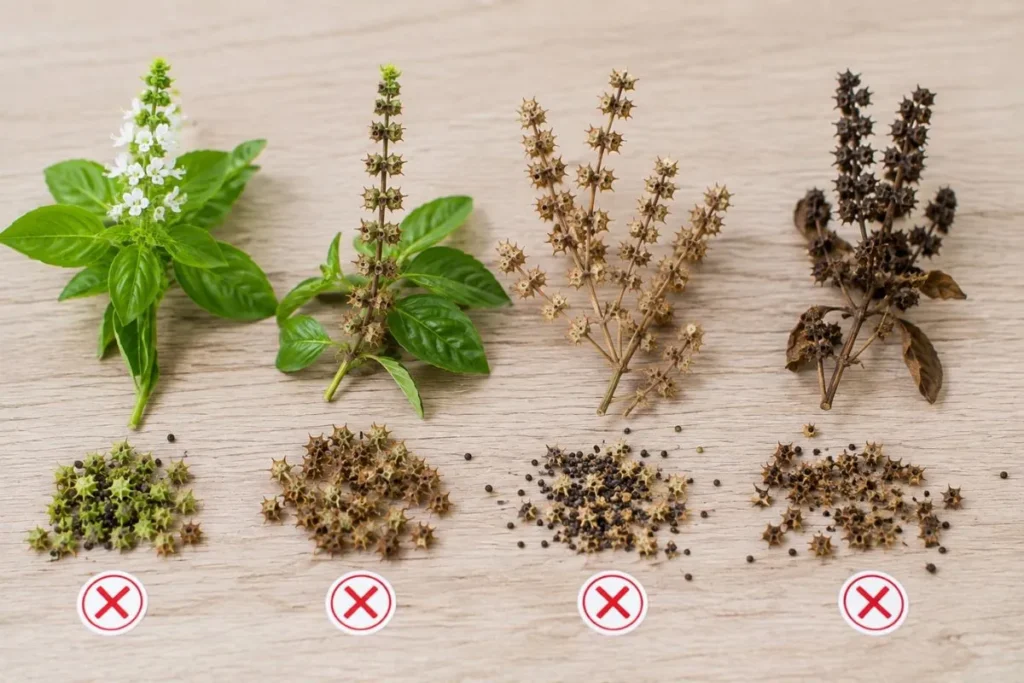
- Harvesting seed heads while they are still green.
- Pulling or shaking the plant too hard, causing seeds to fall onto the ground.
- Using dull scissors that crush the stems instead of making clean cuts.
- Harvesting during rainy or humid weather.
- Mixing mature and immature seed heads together.
- Storing freshly harvested seed heads before they have dried completely.
These mistakes can lower germination rates and make basil seed saving less successful.
Tips for Better Seed Quality
If you want strong, healthy seeds that grow well next season, a few extra precautions can make a big difference.
Keep these expert tips in mind:
- Select seeds only from healthy, disease-free basil plants.
- Harvest from the strongest plants with vigorous growth.
- Allow seeds to mature naturally before collecting them.
- Handle seed heads gently to avoid damaging the tiny seeds.
- Keep different basil varieties separate if you’re saving seeds from more than one type.
- Label each batch immediately after harvesting to avoid confusion later.
- Dry harvested seed heads thoroughly before removing the seeds.
Following these simple practices will improve the overall quality of your basil seed collection and increase the chances of successful germination when it’s time to plant again.
A little extra care during harvesting goes a long way. By using a gentle harvesting method, avoiding common mistakes, and selecting only fully mature seeds, you’ll have a reliable supply of healthy basil seeds ready for future growing seasons
Frequently Asked Questions (FAQs)
Can you save seeds from basil plants?
Yes, you can easily save seeds from healthy basil plants. Simply allow the plant to flower and let the flower spikes dry naturally until the seeds mature.
Once the basil seed pods turn brown and the seeds become dark and hard, you can harvest, dry, and store them for the next growing season. This is one of the easiest ways to practice basil seed saving at home.
How do you know when basil seeds are ready?
Mature basil seeds are usually dark brown or black, hard, and dry. The flower spikes should also be brown and brittle. A quick way to check is by gently rubbing a dry seed head between your fingers.
If the seeds fall out easily, they’re ready to harvest. If they’re still green or soft, wait a few more days before collecting basil seeds.
How long do basil seeds stay viable?
When stored correctly in a cool, dry, and dark place, basil seeds usually remain viable for 3 to 5 years. However, the highest germination rates are generally achieved when the seeds are planted within the first one to two years after harvesting.
Should basil flowers be removed before saving seeds?
No. If your goal is how to save basil seeds, you should allow the flowers to remain on the plant. The flowers eventually develop into seed pods, and removing them too early will prevent the plant from producing seeds.
Can I save seeds from store-bought basil?
Yes, if the basil plant is healthy and allowed to flower naturally, you can save its seeds. However, keep in mind that some store-bought basil may be hybrid varieties. While the seeds will usually germinate, the new plants may not always grow exactly like the parent plant.
What’s the best way to store basil seeds?
The best way to store basil seeds is in a paper seed envelope or small airtight container placed in a cool, dry, and dark location. Label each container with the basil variety and harvest date to stay organized. Proper storage helps maintain good germination for several years.
Do basil seeds need to be dried before storage?
Yes. Drying is an essential step in how to collect and store basil seeds. Seeds that contain moisture can develop mold or lose their ability to germinate. Always allow the seeds to air dry completely before placing them into storage containers.
Can different basil varieties cross-pollinate?
Yes. Different basil varieties growing close together can cross-pollinate through insects such as bees. If you want to preserve a specific variety, such as Sweet Basil or Thai Basil, it’s best to keep different varieties separated or isolate their flowers before they bloom.
Are homemade basil seeds better than store-bought seeds?
Homemade basil seeds can be just as good as store-bought seeds when they’re collected from healthy plants and stored properly. They also save money and allow you to continue growing basil that has already adapted well to your local growing conditions.
How many basil seeds does one plant produce?
A single healthy basil plant can produce hundreds of seeds during one growing season. The exact number depends on the plant’s size, variety, and growing conditions. Even one mature plant can provide enough seeds for several future harvests or to share with family and friends.
Conclusion
Learning how to save basil seeds is a simple gardening skill that offers long-term rewards. Instead of buying new seeds every year, you can collect, dry, and store seeds from your healthiest basil plants to grow fresh basil season after season.
With the right timing, proper harvesting techniques, and careful storage, you’ll have a reliable supply of high-quality seeds ready whenever it’s time to plant again.
The key is to let the basil flowers mature naturally, harvest only fully developed seeds, dry them thoroughly, and store them in a cool, dry, and dark place.
Following these simple steps helps improve germination rates and keeps your basil seed collection healthy for years to come.
Whether you’re a beginner or an experienced gardener, saving basil seeds is an easy way to reduce gardening costs, preserve your favorite basil varieties, and become more self-sufficient.
A little patience today can reward you with countless basil plants in future growing seasons.
Now that you know how to save basil seeds, you’re ready to start your own basil seed saving journey with confidence.
The next time your basil plants begin to flower, don’t remove those blooms let nature take its course, collect the mature seeds, and enjoy growing healthy, flavorful basil year after year.

Plant Nest Blog’s author is passionate about plants, gardening, and sustainable living. Through research and practical experience, they share helpful plant care tips, gardening guides, and easy solutions to help readers grow healthier plants and create greener spaces.