
How Long Does Basil Germinate? Many people think basil seeds should germinate within just two or three days, so they assume the seeds have failed if they don’t see any growth right away.
In reality, basil seeds usually take 5 to 10 days to germinate under the right conditions, though it can sometimes take a little longer depending on temperature, moisture, and light .
The truth is, how long does it take basil to germinate depends on factors like temperature, moisture, soil quality, and seed freshness. In most cases, basil seeds germinate in 5 to 10 days, although some may take up to 14 days under less-than-ideal conditions.
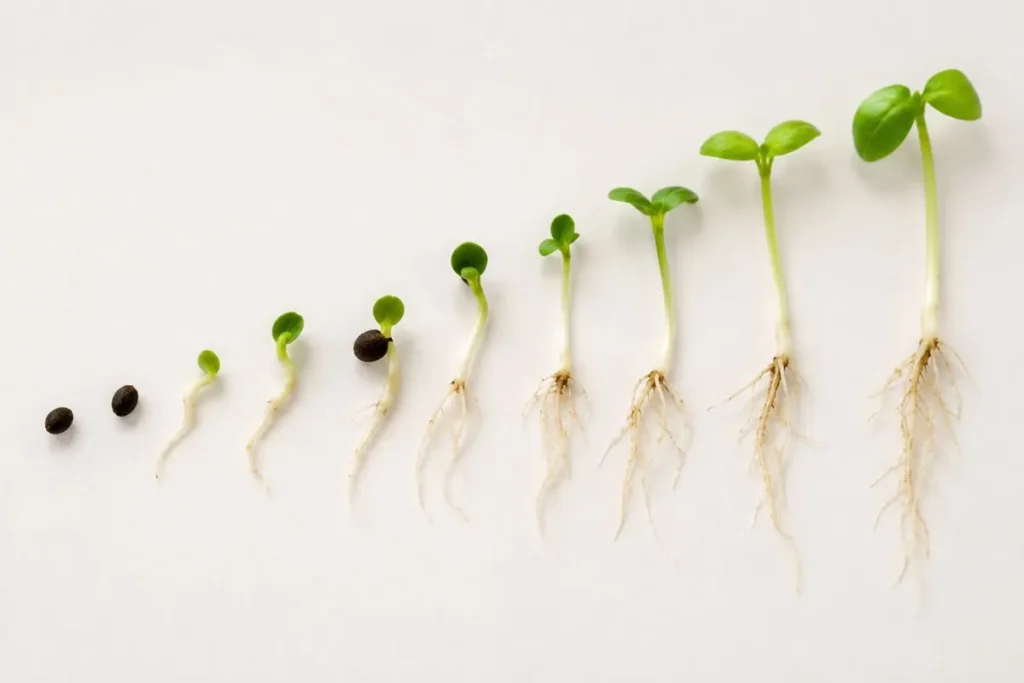
In this guide, you’ll learn everything you need to know about basil seed germination, including the average basil germination time, what affects how quickly seeds sprout, and how long does basil take to sprout from seed in different growing conditions.
You’ll also discover practical tips to improve germination, avoid common mistakes, and grow healthy basil plants with confidence.
How Long Does It Take Basil to Germinate?
The Average Basil Germination Time
Under ideal conditions, basil seeds usually germinate in 5 to 10 days. This is the average basil germination time for most popular varieties, including sweet basil.
If your growing environment is warm and the soil stays evenly moist, you may even notice the first sprouts around day five.
However, not every seed follows the exact same schedule. Some basil seeds may take up to 14 days to sprout, especially if the temperature is a little cooler or the seeds are older.
So don’t rush to dig them up or throw them away if nothing has appeared after a week. A little patience often pays off.
If you’re asking how long for basil seeds to sprout, here’s a simple timeline you can expect:
- Days 1–3: The seeds absorb water and begin waking up.
- Days 5–10: Most healthy basil seeds start sprouting.
- Days 10–14: Slower seeds may still germinate if conditions are suitable.
This timeline gives you a realistic expectation and helps you avoid worrying too soon.
Fresh Seeds vs. Older Seeds
One factor that many beginner gardeners overlook is seed age. If you’re wondering how long does basil germinate, the answer often depends on how fresh your seeds are.
Fresh basil seeds usually have a higher germination rate and tend to sprout more quickly. Older seeds are still capable of growing, but they often germinate more slowly, and some may not sprout at all.
If you’ve stored your seeds for several years, it’s normal to experience a longer basil seeds germination period. In general, how long do basil seeds take to germinate can vary based on seed quality, storage conditions, and the growing environment.
Using fresh, high-quality seeds is one of the best ways to shorten the basil germination time and encourage fast, healthy growth.
Temperature Makes a Big Difference
Temperature is one of the most important factors in basil seed germination. Basil is a warm-season herb, so it prefers warm soil over cool conditions.
When the soil temperature stays between 70°F and 85°F (21°C to 29°C), basil seeds usually germinate at their fastest. If temperatures drop below this range, germination slows down considerably. In colder soil, seeds may sit dormant for days before they begin growing.
This is why gardeners often find that how long does it take basil to germinate indoors is shorter than outdoors during early spring. Indoor conditions are easier to control, making it simpler to maintain the warmth basil loves.
Moisture Is Just as Important
Water also plays a major role in determining how long do basil seeds take to grow during the germination stage. Basil seeds need consistently moist soil to activate the germination process.
The keyword here is moist, not soaked.
Overwatering can reduce oxygen around the seed and increase the risk of rot, while dry soil can stop germination altogether. Keeping the growing medium evenly damp gives seeds the ideal environment to sprout on time.
Does Light Affect Germination?
Unlike some garden plants, basil seeds don’t rely heavily on light to begin germinating. Their priority is moisture and warmth. Once seedlings emerge above the soil, however, they need plenty of bright light to continue growing into healthy young plants.
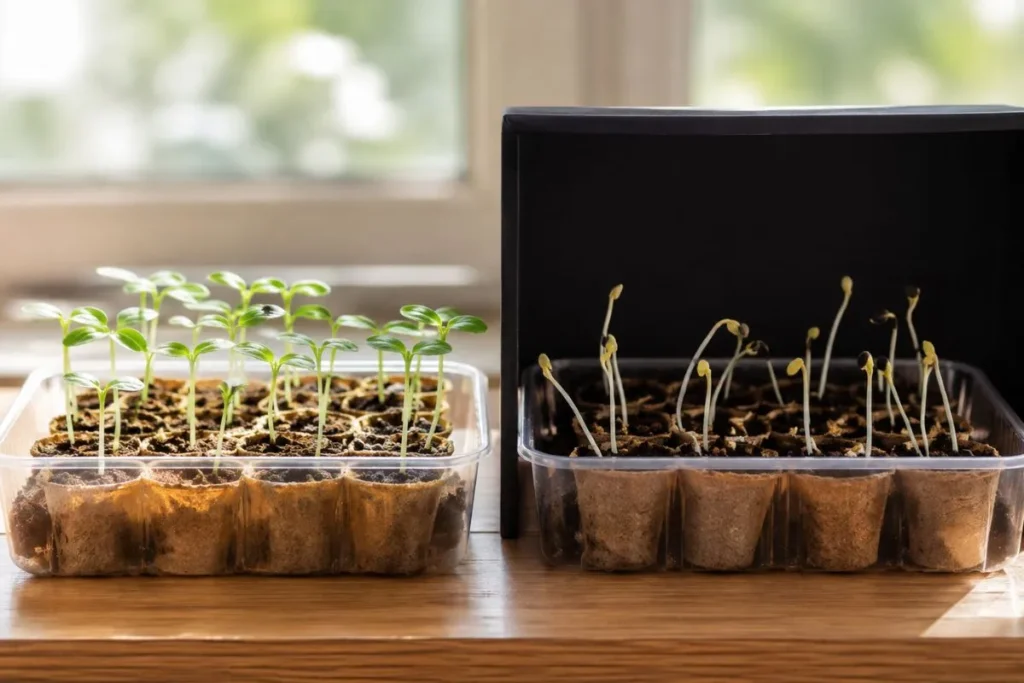
If you’re starting basil indoors, placing the seed tray near a bright window or under grow lights after sprouting will help prevent weak, leggy seedlings.
Different Basil Varieties Can Germinate at Slightly Different Rates
Most basil varieties have similar germination times, but small differences can occur. Sweet basil, Genovese basil, lemon basil, Thai basil, and purple basil generally sprout within the same 5 to 10-day window when conditions are ideal.
So if you’re wondering how long do sweet basil seeds take to germinate, the answer is usually around one week, although environmental conditions always play a bigger role than the specific variety.
What If Your Basil Seeds Haven’t Sprouted Yet?
If you’re still waiting after 10 days, don’t panic. Many gardeners immediately assume their seeds have failed, but that’s often not the case.
Before giving up, check these simple things:
- Is the soil warm enough?
- Has the soil stayed consistently moist?
- Did you plant the seeds too deeply?
- Are the seeds fresh and viable?
In many cases, making a small adjustment is all it takes to encourage germination.
The key takeaway is simple: how long does it take basil to germinate isn’t determined by luck.
With fresh seeds, warm temperatures, proper moisture, and good growing conditions, most basil seeds sprout within 5 to 10 days, giving you a healthy start toward growing a productive basil plant.
How the Basil Seed Germination Process Works
Many beginner gardeners believe that basil seeds start growing the moment they are planted. That’s not quite true. Before you see any green shoots above the soil, a lot is happening beneath the surface.
The basil seed germination process is a series of natural stages that turn a tiny seed into a healthy seedling. Understanding these stages helps you know what to expect and prevents you from disturbing the seeds too early.
What Happens After You Plant Basil Seeds?
The Seed Absorbs Water
The first step in basil seed germination begins when the seed absorbs water from the soil. This process is called imbibition. As the seed takes in moisture, it swells and becomes active after being dormant.
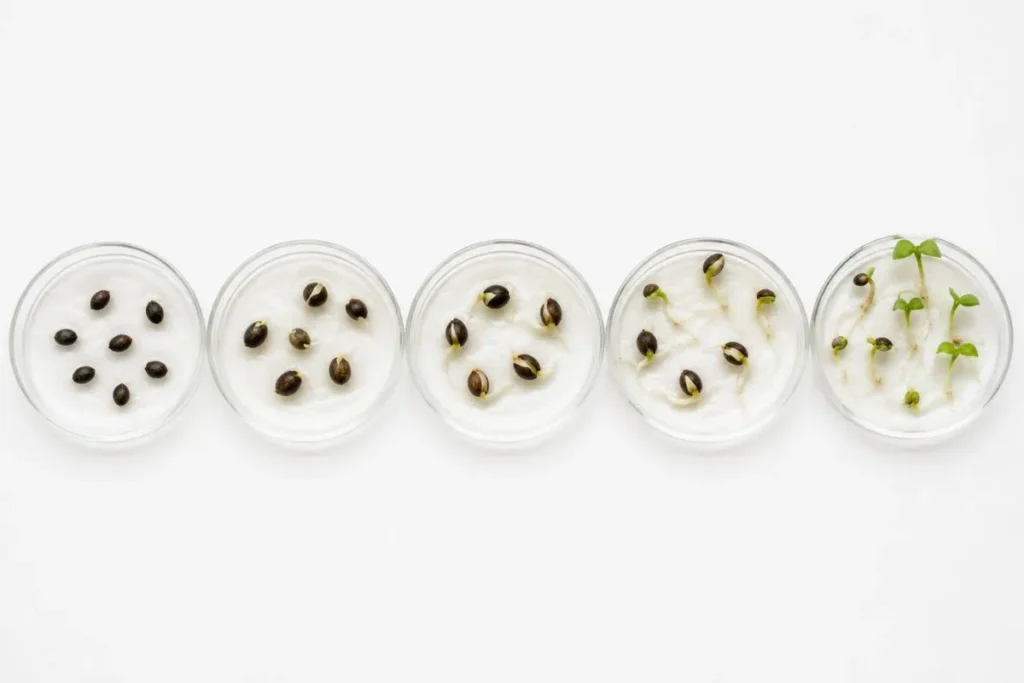
At this stage, you won’t see any visible growth above the soil, but important changes are taking place inside the seed. Stored nutrients begin feeding the tiny plant embryo, preparing it for growth.
This is why keeping the soil consistently moist is so important. If the soil dries out during this stage, the germination process can slow down or stop completely.
The Seed Coat Softens and Splits
After absorbing enough water, the hard outer shell of the seed begins to soften. As the embryo continues to grow, pressure builds inside until the seed coat cracks open.
This is one of the most important moments in the basil seeds sprouting process because it allows the young plant to emerge. Although this happens underground, it’s a clear sign that germination is progressing normally.
Warm temperatures and good soil moisture help this stage happen more quickly.
The First Root Appears
Once the seed coat opens, the first root called the radicle pushes downward into the soil. This marks the beginning of basil root development.
The root anchors the seedling and starts absorbing water and nutrients from the growing medium. A healthy root system is the foundation of a strong basil plant, so avoid moving or disturbing the seed tray during this stage.
Good-quality basil growing conditions, including loose and well-draining soil, encourage faster root growth.
The Stem Pushes Through the Soil
After the root becomes established, the young stem begins growing upward toward the soil surface. Within a few days, you’ll notice a tiny green shoot breaking through the soil.
For many gardeners, this is the most exciting part of basil seedling growth because it’s the first visible sign that the seeds have successfully germinated.
Once the shoot appears, place the seedlings where they can receive plenty of bright light. This helps them grow straight and strong instead of becoming weak and leggy.
Stage 5: The First Leaves Develop
The first leaves you see are called cotyledons, or seed leaves. These are different from the true basil leaves that develop later.
Soon after, the plant produces its first set of true leaves, which have the familiar basil shape and aroma. At this point, the seedling begins making its own food through photosynthesis and enters a new stage of healthy growth.
Proper basil sprout care now becomes essential. Continue watering carefully, provide plenty of light, and avoid overwatering to support steady development.
How Long Does the Entire Germination Process Take?
Although every garden is different, the complete basil seed germination process usually takes 5 to 10 days under ideal conditions. Cooler temperatures or inconsistent moisture can slow things down, while warm soil and fresh seeds often lead to quicker basil seedlings.
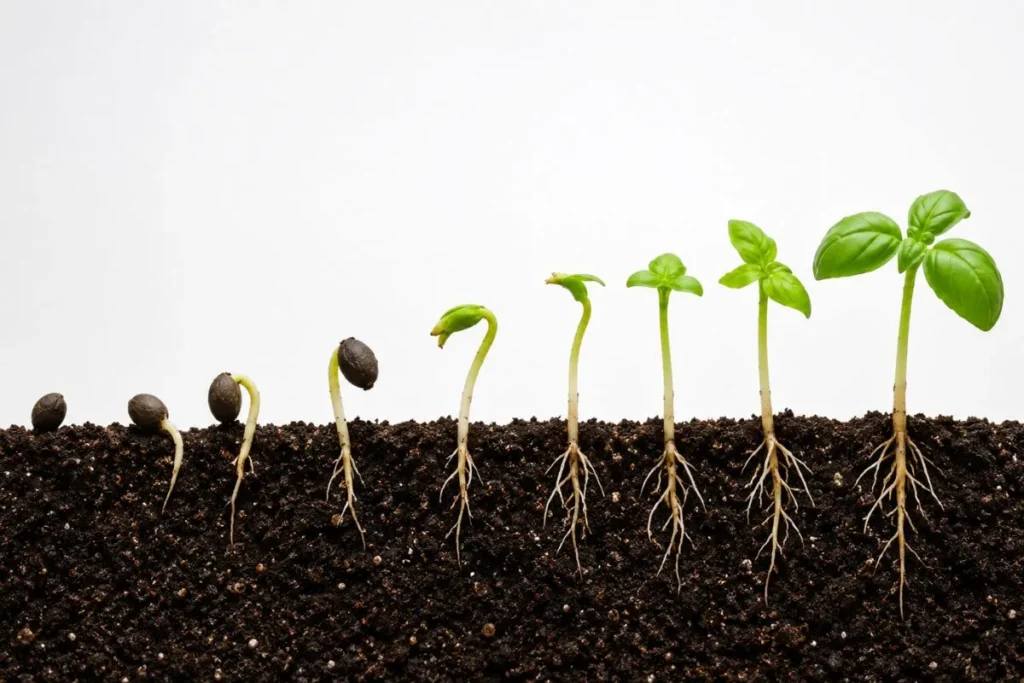
It’s important to remember that every seed grows at its own pace. Some may sprout several days before others, even when planted in the same tray. This is completely normal and doesn’t usually indicate a problem.
Signs Your Basil Seeds Are Germinating Successfully
As your basil develops, look for these positive signs:
- The soil remains evenly moist but not waterlogged.
- A tiny white root emerges beneath the soil.
- Small green shoots break through the surface.
- Seed leaves (cotyledons) open fully.
- The first true basil leaves begin to appear.
- Seedlings remain upright with a healthy green color.
These are all indicators that your basil seedling growth is progressing as expected.
Why Understanding the Germination Process Matters
Knowing what happens during each stage of germination helps you become a more confident gardener. Instead of worrying when nothing appears above the soil after a few days, you’ll understand that the seed is busy developing underground before it emerges.
By recognizing each step from water absorption and basil root development to healthy basil sprout care and leaf formation—you’ll be better prepared to create the right environment for strong, healthy plants.
A little patience during this early stage goes a long way toward growing productive basil that will thrive throughout the season.
What Affects Basil Germination Time?
Many gardeners think that every basil seed will sprout in exactly the same number of days. That’s a common misconception. Even if you plant seeds from the same packet, they may not all germinate at the same time.
The answer to how long does it take basil to germinate depends on the growing conditions you provide. Temperature, soil, moisture, seed quality, and planting depth all play a major role in basil seed germination.
When these conditions are ideal, seeds sprout much faster and produce healthier seedlings.
Temperature
Temperature is one of the biggest factors that affects basil germination time. Basil is a warm-season herb, so its seeds perform best in warm soil.
The ideal soil temperature for germination is 70°F to 85°F (21°C to 29°C). Within this range, most basil seeds sprout quickly and develop strong roots.
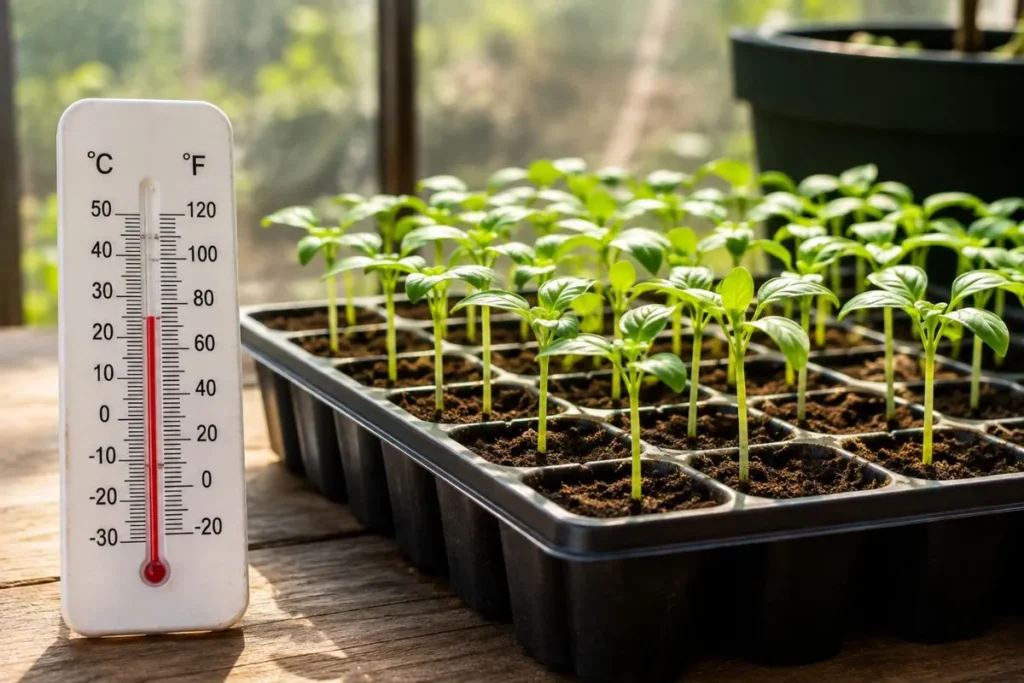
If you’re wondering what temperature is best for basil seed germination, this temperature range provides the perfect environment for healthy growth.
On the other hand, cooler temperatures slow the germination process. Seeds planted in cold soil may remain dormant for several extra days, while extremely low temperatures can prevent them from sprouting altogether.
Tips to Maintain the Right Temperature
- Start basil seeds indoors during cool weather.
- Place seed trays in a warm location.
- Use a seedling heat mat if your room is cool.
- Avoid exposing seeds to sudden temperature changes.
Maintaining the proper basil seed temperature is one of the easiest ways to encourage quicker germination.
Soil Quality
The type of soil you use can significantly affect how fast basil seeds germinate.
Heavy garden soil often becomes compacted, making it difficult for young roots to grow. A light, well-draining seed-starting mix creates the ideal environment for successful germination.
The best soil for basil seeds should have the following qualities:
- Light and airy texture
- Excellent drainage
- Good moisture retention
- Rich in organic matter
- Free from weeds and diseases
A quality basil seed starting mix also allows oxygen to reach the seed, which is essential for healthy growth.
Choosing the right growing medium improves overall basil growing conditions and gives seedlings a stronger start.
Moisture
Water is essential during germination, but balance is the key.
Basil seeds need evenly moist soil from the day they are planted until seedlings emerge. Soil that dries out can interrupt germination, while overly wet soil may lead to seed rot or fungal problems.
Many beginners ask, how often should I water basil seeds during germination?
Instead of watering on a strict schedule, check the soil daily. If the top layer begins to feel slightly dry, gently mist or water it until it is evenly moist again.
For healthy basil seed watering, remember these simple tips:
- Keep the soil consistently moist.
- Avoid soaking the soil.
- Water gently to prevent moving the seeds.
- Ensure containers have drainage holes.
Proper basil seed moisture helps activate the seed while protecting it from common germination problems.
Seed Quality
Not all seeds perform the same.
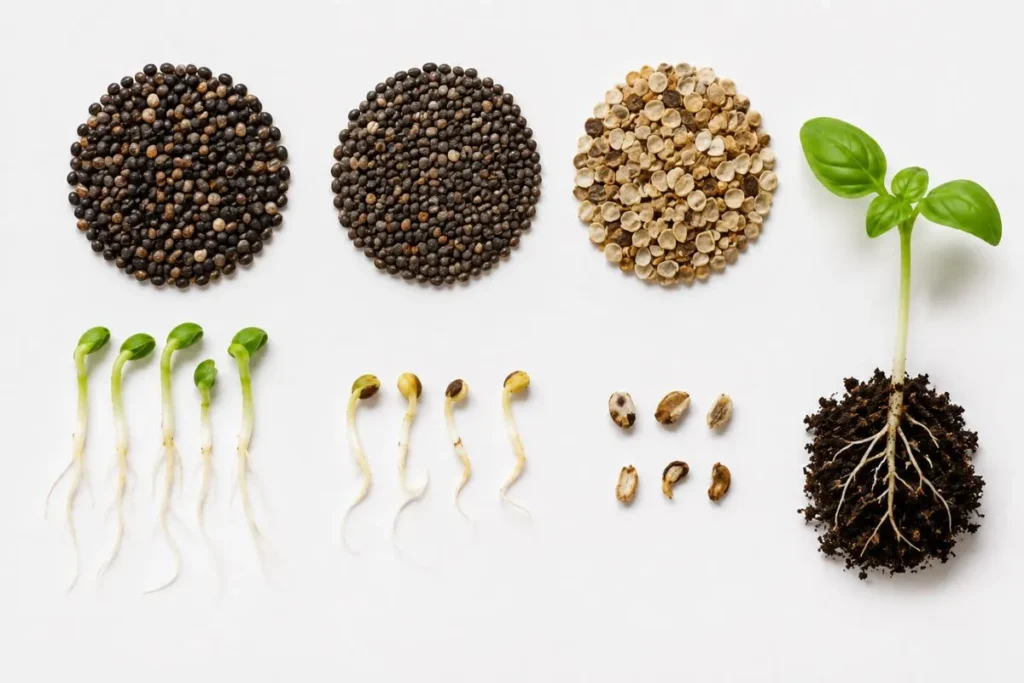
Fresh, high-quality basil seeds usually germinate faster and more consistently than old or poorly stored seeds. As seeds age, their germination rate naturally declines.
If you’ve saved seeds for several years, don’t be surprised if they take longer to sprout or if only some of them germinate.
To improve your basil seed success, consider these recommendations:
- Buy seeds from trusted suppliers.
- Check the packet’s packing or expiration date.
- Store unused seeds in a cool, dry place.
- Protect seeds from humidity and direct sunlight.
Healthy seeds are the foundation of successful basil cultivation, making them well worth the investment.
Planting Depth
Planting depth is another factor that many gardeners overlook.
Basil seeds are very small and should only be covered with a thin layer of soil. Planting them too deeply forces the young shoot to work much harder to reach the surface, delaying germination and sometimes preventing it altogether.
For the best results, sow basil seeds about ¼ inch (6 mm) deep or lightly press them into the soil with a thin covering of seed-starting mix.
Following the correct basil seed depth improves germination and gives seedlings a much better chance of emerging successfully.
Quick Planting Tips
- Don’t bury seeds too deeply.
- Space seeds evenly to reduce overcrowding.
- Gently firm the soil after planting.
- Water carefully so the seeds stay in place.
These simple basil planting tips can make a noticeable difference in how quickly and evenly your seeds sprout.
How to Make Basil Seeds Germinate Faster
Many people think there’s a secret trick that makes basil seeds sprout overnight. Unfortunately, that’s not true. You can’t force basil seed germination to happen instantly, but you can create the perfect growing conditions that help seeds germinate as quickly as possible.
By following a few simple practices, you’ll improve your germination rate and enjoy healthy seedlings sooner.
Use Fresh Seeds
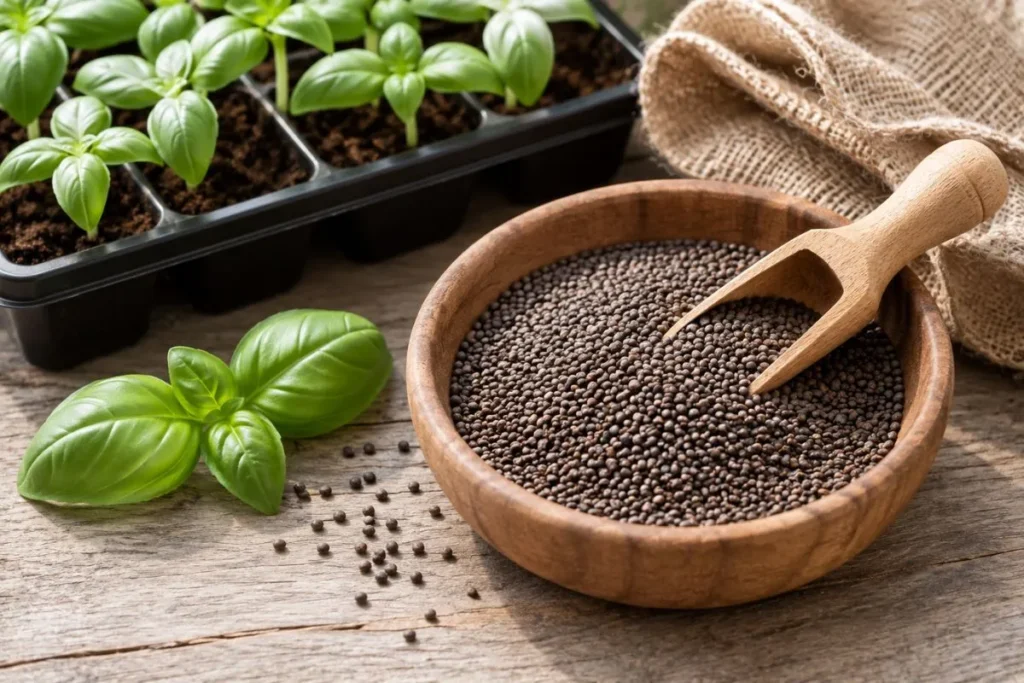
The easiest way to speed up germination is to start with fresh, high-quality seeds.
Fresh basil seeds have a higher germination rate because they contain more stored energy for early growth. Older seeds can still sprout, but they often take longer and may produce fewer healthy seedlings.
When buying seeds:
- Purchase from a trusted supplier.
- Check the packaging date if available.
- Avoid using seeds that have been stored for several years.
- Keep unused seeds in a cool, dry place.
Using fresh seeds is one of the best answers to the question, how to make basil seeds germinate faster.
Keep the Soil Warm
Warm soil is one of the biggest reasons basil seeds sprout quickly.
Basil is a heat-loving herb, and seeds germinate best when the soil temperature stays between 70°F and 85°F (21°C to 29°C).
If you’re starting seeds indoors during cooler months, you can maintain the ideal temperature by:
- Placing seed trays in a warm room.
- Using a seedling heat mat.
- Keeping trays away from cold windows and drafts.
- Maintaining a consistent indoor temperature.
Providing steady warmth encourages faster basil seeds sprouting and healthier early growth.
Water Properly
Water is essential, but too much can be just as harmful as too little.
The goal is to keep the soil consistently moist without making it soggy. Excess water reduces oxygen around the seeds and may cause them to rot before they germinate.
For proper basil seed care:
- Check the soil every day.
- Water gently using a spray bottle or fine watering can.
- Never allow the soil to dry out completely.
- Ensure containers have drainage holes.
Good watering habits create ideal conditions for basil seed starting and improve overall germination success.
Use a Humidity Dome
A simple humidity dome can make a noticeable difference during germination.
Covering the seed tray with a clear plastic dome or plastic wrap helps trap moisture and warmth around the seeds. This creates a mini greenhouse effect that encourages faster sprouting.
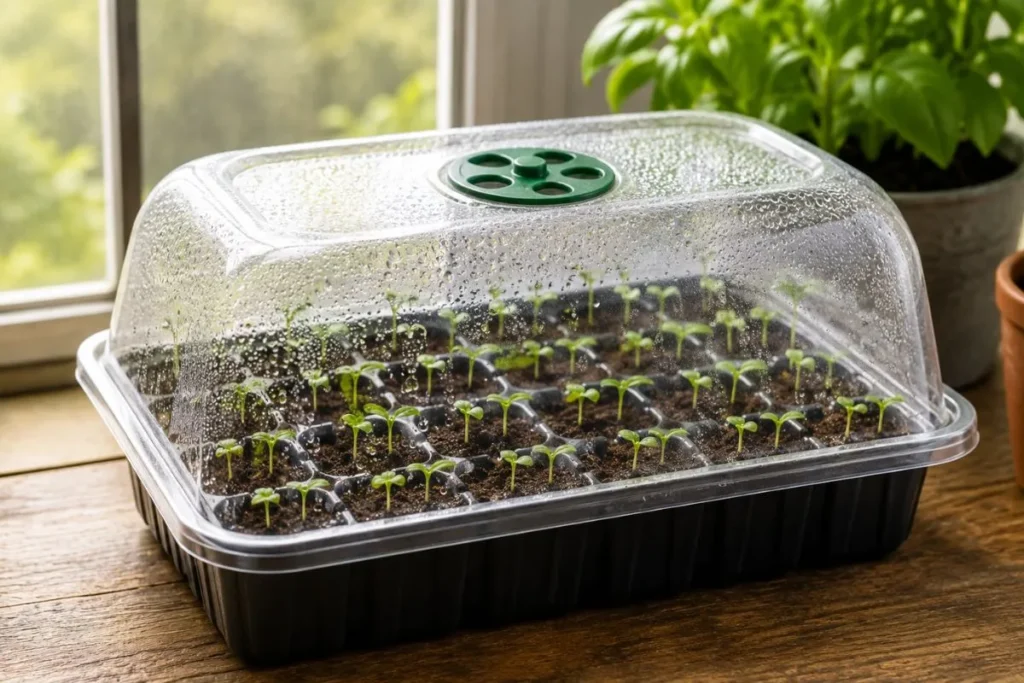
Once the first seedlings appear, remove the cover to improve airflow and prevent mold or fungal diseases.
A humidity dome is especially helpful if the air inside your home is dry.
Give Seeds Enough Airflow
While moisture is important, fresh air is equally necessary.
Poor airflow creates the perfect environment for mold and fungal diseases that can damage young seedlings.
To improve airflow:
- Remove humidity covers after germination.
- Avoid overcrowding seed trays.
- Place seedlings in a well-ventilated room.
- Allow space between containers whenever possible.
Healthy airflow supports stronger seedlings and reduces common basil germination problems.
Choose the Right Growing Medium
The growing medium directly affects how easily young roots can develop.
A light seed-starting mix is much better than heavy garden soil because it drains well while still holding enough moisture for germination.
The best growing medium should be:
- Light and fluffy
- Well-draining
- Moisture-retentive
- Sterile and free from weeds
- Rich in organic matter
Choosing the right medium improves basil growing conditions and supports faster root development from the very beginning.
Avoid Overhandling the Seed Tray
One mistake many beginners make is checking the seeds too often.
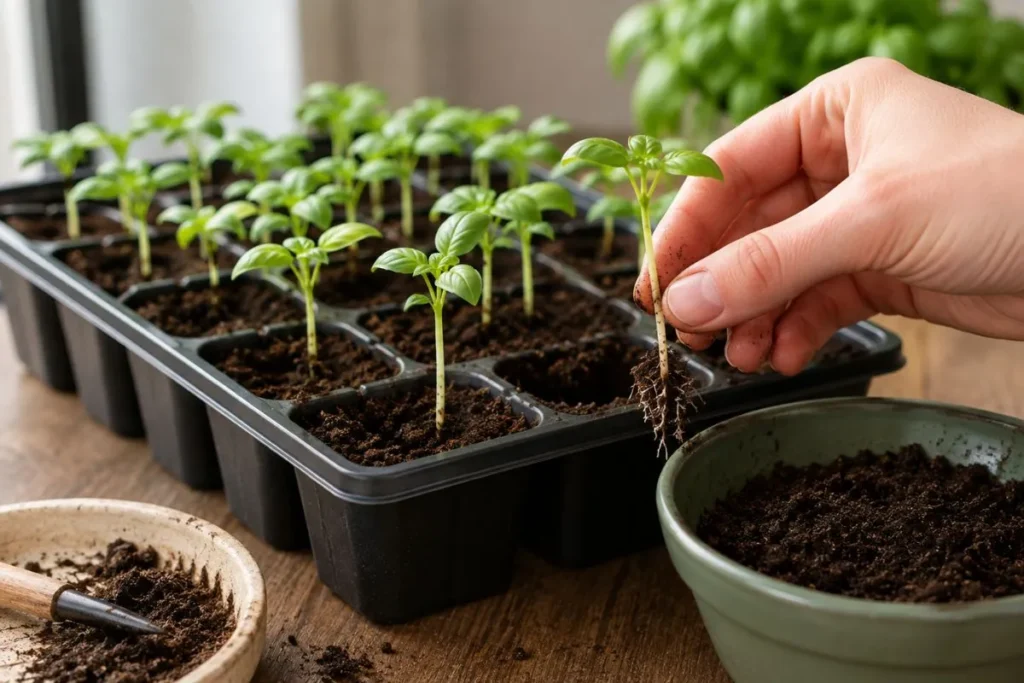
It’s tempting to dig into the soil to see if anything is happening, but disturbing the seeds can damage delicate roots before they even reach the surface.
Instead:
- Leave the seeds undisturbed after planting.
- Check moisture without digging into the soil.
- Be patient during the germination period.
- Handle seedlings carefully once they emerge.
Giving the seeds time to develop naturally leads to healthier basil seedling growth.
Quick Checklist for Faster Basil Germination
If you want the best chance of quick and successful germination, follow these simple steps:
- Use fresh basil seeds.
- Keep the soil temperature between 70°F and 85°F (21°C to 29°C).
- Keep the soil evenly moist but never waterlogged.
- Use a light, well-draining seed-starting mix.
- Cover the tray with a humidity dome until seedlings appear.
- Provide good airflow after germination.
- Avoid disturbing the seeds while they are developing.
Following these proven techniques will significantly improve your chances of success. While there’s no magic shortcut, creating the right environment is the most effective way to make basil seeds germinate faster.
With a little patience and proper care, you’ll soon have strong, healthy basil seedlings ready for the next stage of growth.
Frequently Asked Questions (FAQs)
How long does it take basil to germinate?
Under ideal growing conditions, basil seeds usually germinate within 5 to 10 days. If the soil is warm, consistently moist, and the seeds are fresh, you may notice sprouts in as little as five days. However, cooler temperatures or older seeds can extend the germination period to around 14 days.
How long do sweet basil seeds take to germinate?
Sweet basil seeds generally germinate in 5 to 10 days, just like most other basil varieties. To get the best results, keep the soil temperature between 70°F and 85°F (21°C to 29°C) and maintain even moisture throughout the germination period.
Can basil germinate in cold weather?
Yes, basil seeds can germinate in cool weather, but the process is much slower. Since basil is a warm-season herb, cold soil delays basil seed germination and may reduce the overall germination rate.
If temperatures remain too low, some seeds may not sprout at all. Starting basil indoors or using a seedling heat mat can help provide the warmth seeds need.
Should basil seeds be covered with soil?
Yes, but only lightly. Because basil seeds are very small, they should be planted about ¼ inch (6 mm) deep or covered with a thin layer of seed-starting mix. Planting them too deeply can make it harder for seedlings to reach the surface, which may delay germination.
Why are my basil seeds not sprouting?
There are several possible reasons your basil seeds haven’t germinated yet:
- The soil is too cold.
- The growing medium is too dry or too wet.
- The seeds are old or have poor viability.
- The seeds were planted too deeply.
- The soil lacks proper drainage.
Checking these conditions usually helps identify the problem and improve your chances of successful germination.
Can I speed up basil seed germination?
Yes. While you can’t force seeds to sprout overnight, you can encourage faster germination by creating ideal growing conditions. Use fresh seeds, keep the soil warm, maintain consistent moisture, use a quality seed-starting mix, and avoid disturbing the seeds after planting.
These simple steps can help basil seeds germinate more quickly and evenly.
How often should I water basil seeds during germination?
There isn’t a fixed watering schedule. Instead, check the soil every day and water whenever the surface begins to dry slightly. The goal is to keep the soil evenly moist without making it soggy. Overwatering can cause seeds to rot, while dry soil may stop the germination process.
When should I transplant basil seedlings?
Transplant basil seedlings once they have developed two to three sets of true leaves and have a strong root system. If you’re moving them outdoors, wait until the risk of frost has passed and gradually harden the plants off over several days.
This helps reduce transplant shock and encourages healthy, long-term growth.
Conclusion
If you’ve been wondering how long does it take basil to germinate, the simple answer is that most basil seeds sprout within 5 to 10 days when they have the right growing conditions.
Warm soil, consistent moisture, fresh seeds, and proper planting depth all play an important role in achieving fast and successful basil seed germination. Even if some seeds take a little longer, patience and proper care usually lead to healthy seedlings.
Growing basil from seed doesn’t have to be complicated. By understanding the basil germination time, avoiding common mistakes, and following the tips shared in this guide, you’ll give your plants the best possible start.
Before long, those tiny sprouts will grow into thriving basil plants that are ready to harvest and enjoy in your favorite recipes.
Now it’s your turn! Plant your basil seeds, apply these proven techniques, and watch them grow. If you have any questions or tips from your own gardening experience, feel free to share them in the comments below we’d love to hear from you!

Plant Nest Blog’s author is passionate about plants, gardening, and sustainable living. Through research and practical experience, they share helpful plant care tips, gardening guides, and easy solutions to help readers grow healthier plants and create greener spaces.