
It’s easy to think that growing sweet basil from seeds is difficult and only experienced gardeners can do it successfully. That’s simply not true. In reality, how to grow sweet basil from seeds is one of the easiest gardening skills to learn.
With quality seeds, the right soil, enough sunlight, and regular watering, even a complete beginner can grow healthy basil plants at home.
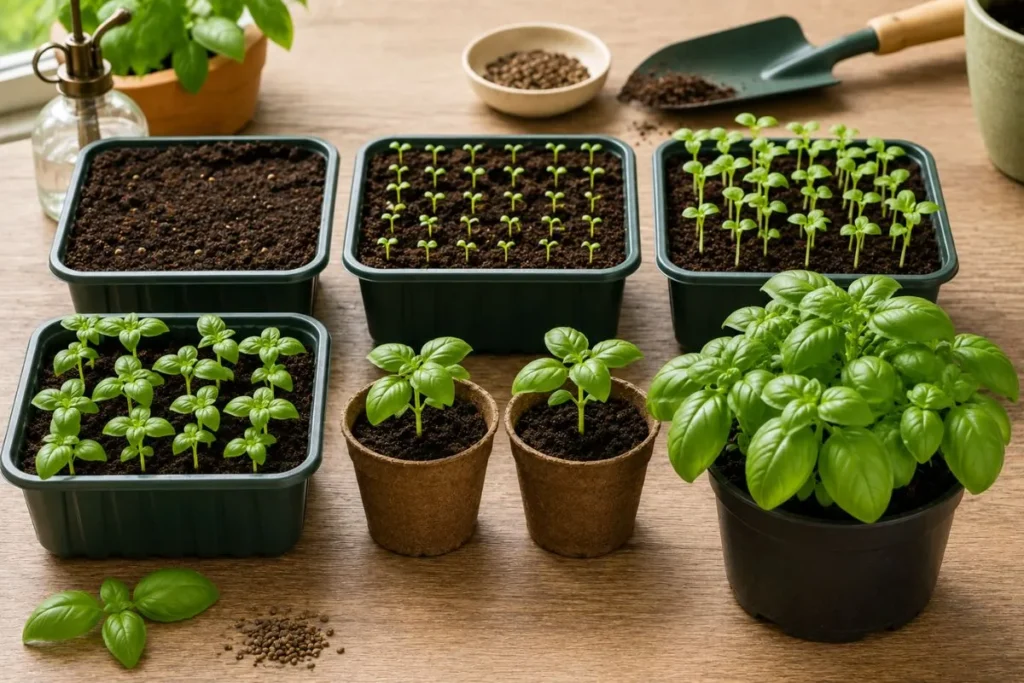
In this guide, you’ll learn how to grow sweet basil from seeds step by step, from choosing the right seeds to caring for young seedlings.
You’ll also discover the best way to grow sweet basil from seeds, common mistakes to avoid, and practical tips to help you grow strong, flavorful basil whether you’re planting in your garden, containers, or indoors.
Why Grow Sweet Basil from Seeds?
Growing sweet basil from seeds is one of the most rewarding ways to start an herb garden. While buying ready-made plants is convenient, starting from seed gives you more control over the entire growing process.
It also allows you to enjoy watching your basil develop from a tiny seed into a healthy, productive plant.
If you’re wondering whether it’s worth the extra effort, the answer is yes. Once you understand how to grow sweet basil from seeds, you’ll find that the process is simple, affordable, and enjoyable.
Benefits of Growing Sweet Basil from Seeds
It’s More Budget-Friendly
One of the biggest advantages of growing sweet basil from seed is the cost. A single packet of sweet basil seeds usually contains dozens or even hundreds of seeds, often for the price of one nursery plant.
Instead of purchasing multiple plants each season, you can grow an entire herb garden from one packet of seeds. This makes it an excellent option for beginners and anyone looking to save money.
You Can Choose from More Basil Varieties
Garden centers often stock only a few basil varieties, but seed catalogs offer many more options.
When you grow sweet basil from seeds, you can explore different types such as:
- Genovese basil
- Italian sweet basil
- Lemon basil
- Purple basil
- Thai basil
- Cinnamon basil
Starting from seed gives you the freedom to choose the variety that best suits your cooking, gardening style, or climate.
Stronger Root Development
Plants started from seed naturally adapt to their growing environment from day one. As they develop, they build a strong and healthy root system without the stress of being transplanted multiple times.
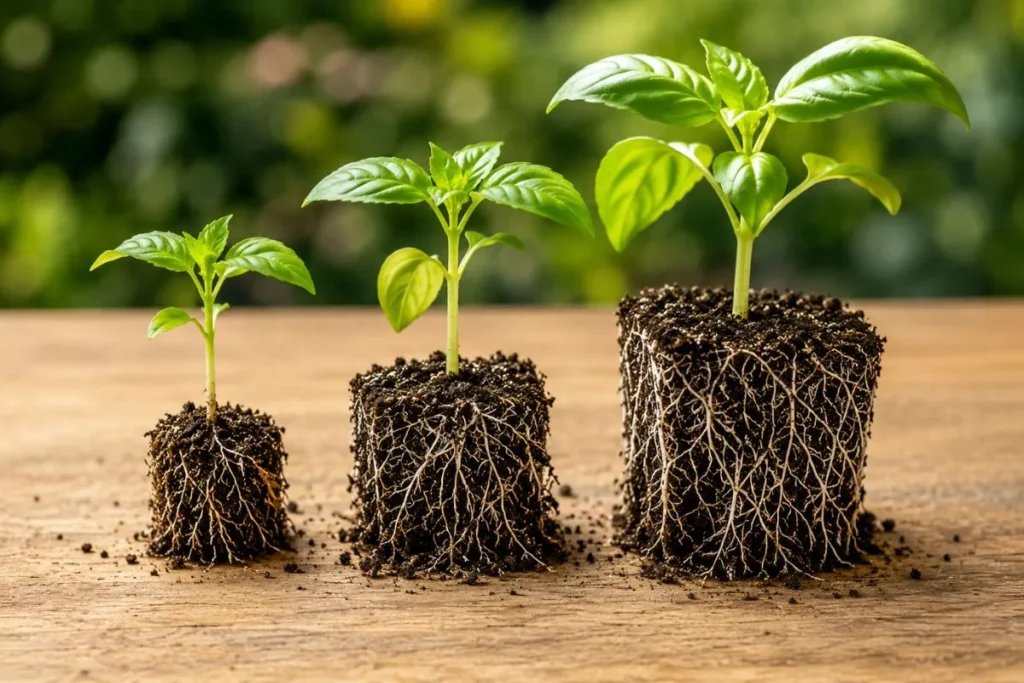
Healthy roots improve water and nutrient absorption, making the plant more resilient throughout the growing season. This is one reason many experienced gardeners prefer a basil plant from seed instead of buying mature plants.
You Stay in Control of the Growing Process
Another benefit of following a sweet basil seed growing guide is that you’re in charge of every stage of growth.
You decide:
- Which soil to use.
- How often to water.
- Where the plants receive sunlight.
- Whether to grow indoors or outdoors.
- When to fertilize and transplant.
This level of control helps you create the best possible environment for healthy basil plants.
Perfect for Beginner Gardeners
If you’re new to gardening, sweet basil is one of the easiest herbs to start with.
The seeds germinate quickly, the plants grow fast, and basil doesn’t require complicated care. Even if you’ve never grown herbs before, learning how to grow sweet basil from seeds step by step is a great way to build confidence and develop your gardening skills.
With a little patience and regular care, you’ll soon have fresh basil ready to harvest for salads, pasta, pizza, soups, and many other homemade dishes.
Enjoy Fresh Basil Anytime
Growing your own basil means you can harvest leaves whenever you need them. Fresh basil has a stronger aroma and richer flavor than dried basil, making it a favorite ingredient for home cooks.
Instead of buying small bunches from the grocery store, you’ll have a steady supply growing right outside your kitchen or on a sunny windowsill.
It’s a Rewarding Gardening Experience
There’s something satisfying about watching tiny seeds grow into lush green plants. Every stage—from germination to the first harvest—teaches you more about gardening and gives you a sense of accomplishment.
Whether you plant basil in containers, raised beds, or directly in the garden, the experience is both relaxing and rewarding.
Is Growing Sweet Basil from Seeds Worth It?
Absolutely.
If you’re looking for the best way to grow sweet basil from seeds, starting from seed is hard to beat. It’s affordable, gives you access to more varieties, encourages healthier root systems, and lets you manage every step of the growing process.
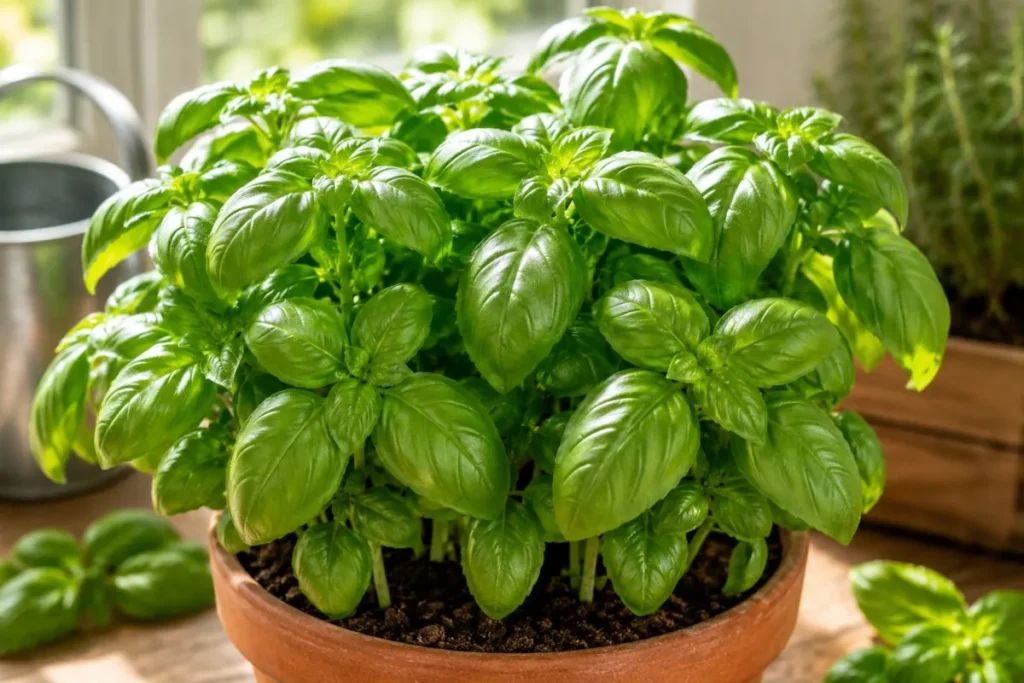
Most importantly, it’s beginner-friendly and doesn’t require expensive equipment or advanced gardening knowledge.
Once you master the basics of how to grow sweet basil from seeds, you’ll enjoy a continuous supply of fresh, fragrant basil that’s perfect for cooking and adding beauty to your home garden.’
What You’ll Need Before You Start
Many beginners think they need expensive gardening equipment before learning how to grow sweet basil from seeds. That’s a common myth. In reality, you only need a few basic supplies to grow healthy basil plants successfully.
Using the right tools from the beginning makes planting easier, improves sweet basil seed germination, and gives your seedlings the best possible start.
Essential Supplies
Before you plant your first seed, gather all the essentials. Having everything ready will make the planting process smoother and help you avoid mistakes.
Sweet Basil Seeds
The most important item you’ll need is fresh, high-quality sweet basil seeds.
Always buy seeds from a trusted supplier because fresh seeds have a higher germination rate and produce healthier plants. If you’re following a sweet basil seed growing guide, starting with quality seeds is the first step toward success.
Tips for choosing basil seeds:
- Buy from reputable garden centers or seed companies.
- Check the packaging date if available.
- Store unused seeds in a cool, dry place.
- Avoid using very old seeds for better germination.
Seed-Starting Mix
A quality basil seed starting mix provides the perfect environment for germination.
Unlike regular garden soil, seed-starting mix is lightweight, drains well, and allows young roots to grow easily. It also holds enough moisture without becoming waterlogged.
The best soil for basil should:
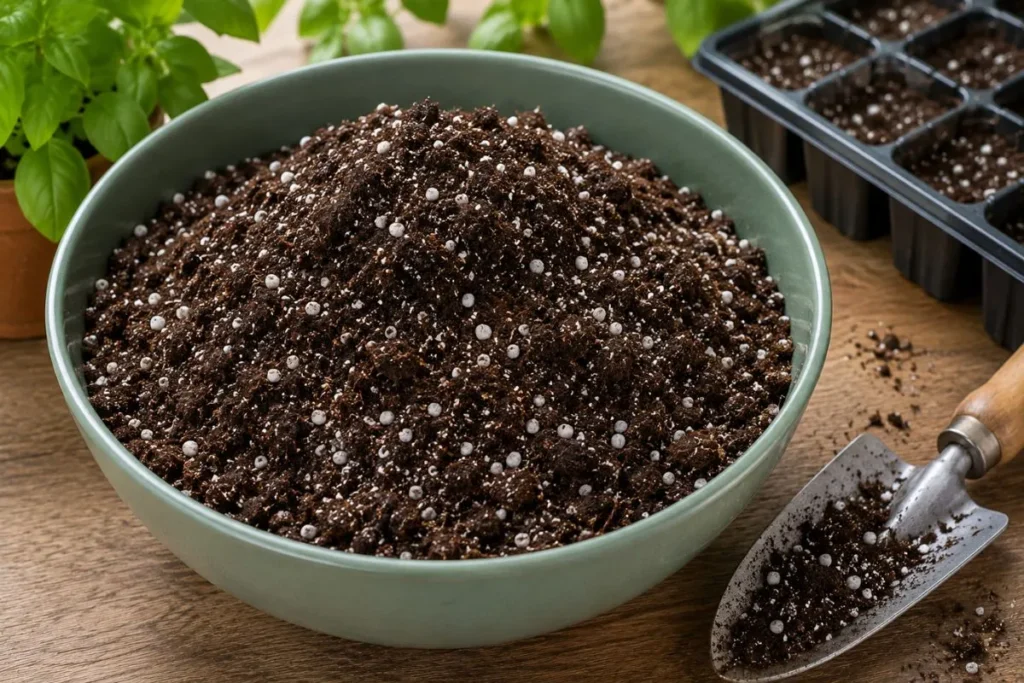
- Be loose and well-draining.
- Retain enough moisture.
- Allow good airflow around the roots.
- Be free from weeds and diseases.
Using the right growing medium creates ideal basil growing conditions for healthy seedlings.
Seed Trays or Small Pots
You’ll need a container to start your seeds.
A basil seed tray is ideal because it lets you grow several seedlings in one place. Small pots also work well, provided they have drainage holes.
When choosing containers, make sure they:
- Have drainage holes.
- Are clean before use.
- Provide enough room for root growth.
Healthy roots begin with the right container.
Spray Bottle
Young basil seeds can easily move if watered with a strong stream.
A spray bottle allows you to gently mist the soil without disturbing the seeds. It also helps keep the growing medium evenly moist during germination.
This simple tool is highly recommended for successful basil seed starting.
Water
Water is essential for germination, but the amount matters.
Sweet basil seeds need consistently moist soil—not soaking wet soil. Too much water can cause the seeds to rot, while too little moisture can stop germination completely.
The goal is to keep the soil evenly damp until seedlings emerge.
Plant Labels
If you’re growing more than one herb or basil variety, plant labels are extremely useful.
They help you keep track of:
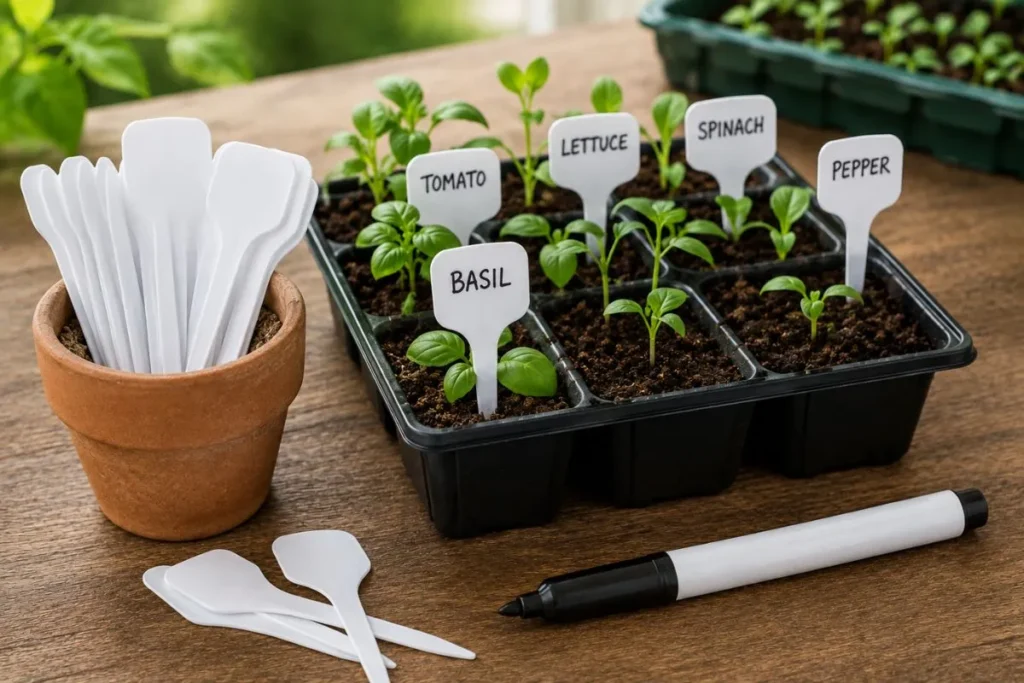
- Plant variety
- Planting date
- Expected germination time
Simple labels make it easier to monitor your plants as they grow.
Grow Lights (Optional)
Natural sunlight is the best option, but not every home gets enough bright light.
If you’re learning how to grow sweet basil from seeds indoors, LED grow lights can provide the light your seedlings need to grow strong and healthy.
Grow lights are especially useful:
- During winter.
- In apartments with limited sunlight.
- On cloudy days.
- In rooms without south-facing windows.
They help prevent weak, leggy seedlings and support steady growth.
Heat Mat (Optional)
A seedling heat mat is another useful tool, especially if you’re planting during cooler months.
Sweet basil grows best in warm soil, and a heat mat helps maintain the ideal temperature for faster germination.
Although it’s optional, it can improve germination speed and produce more uniform seedlings.
Extra Tools That Make Gardening Easier
These tools aren’t essential, but they can make growing basil more convenient:
- Small hand trowel
- Watering can with a fine rose
- Humidity dome
- Small gardening scissors
- Tray for collecting excess water
- Gardening gloves
These simple tools make caring for your basil plants much easier as they grow.
Prepare Your Growing Area
Before planting, choose a location that provides the right environment for basil.
Look for a spot that offers:
- Plenty of bright light
- Good air circulation
- Warm temperatures
- Easy access for watering
- A clean surface for planting
If you’re growing indoors, a sunny windowsill or a shelf with grow lights works perfectly.
Why These Supplies Matter
Starting with the right supplies gives your basil the best chance to thrive. Fresh seeds, a quality basil seed starting mix, suitable containers, proper watering tools, and enough light all work together to support healthy growth from day one.
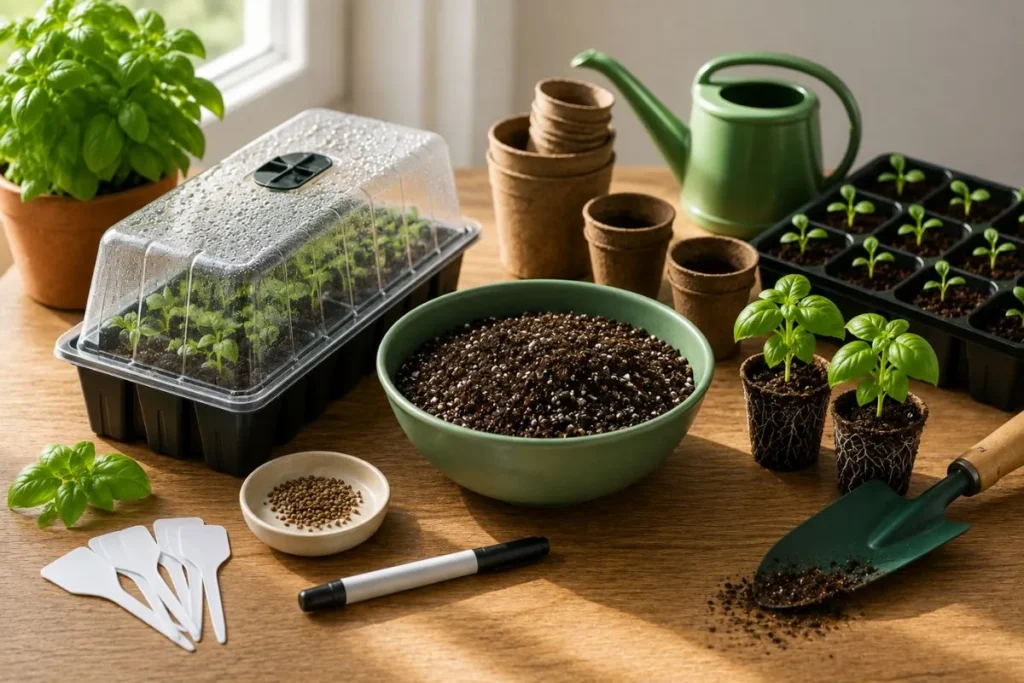
Once you’ve gathered everything you need, you’re ready for the next step how to grow sweet basil from seeds step by step. With the right preparation, you’ll enjoy stronger seedlings, healthier plants, and a plentiful harvest of fresh, fragrant basil.
How to Grow Sweet Basil from Seeds (Step-by-Step)
Many people think that learning how to grow sweet basil from seeds is complicated and requires years of gardening experience. That’s a myth. The truth is, growing sweet basil is a simple process when you follow the right steps in the correct order.
From selecting quality seeds to caring for young seedlings, every stage plays an important role in producing healthy, flavorful basil plants.
Choose High-Quality Sweet Basil Seeds
Your success starts with the seeds you buy.
Fresh, high-quality seeds have a much better germination rate than old or poorly stored seeds. Healthy seeds also produce stronger seedlings that grow into productive basil plants.
When choosing seeds:
- Buy from a trusted garden center or reputable online supplier.
- Check the packaging or expiration date.
- Choose seeds that are suitable for your local climate if possible.
- Store leftover seeds in a cool, dry place.
Starting with quality seeds is the foundation of any successful sweet basil seed growing guide.
Prepare the Soil
Before planting, prepare a growing medium that allows roots to develop easily.
The best soil for basil is light, loose, and well-draining. A quality seed-starting mix provides enough moisture for germination while allowing excess water to drain away. Heavy garden soil can become compacted, making it harder for young roots to spread.
To prepare the soil:
- Fill your seed tray or small pots with seed-starting mix.
- Lightly press the soil to remove large air pockets.
- Moisten the soil before sowing the seeds.
- Avoid soaking the growing medium.
Creating the right basil growing conditions from the start gives your seedlings the best chance to thrive.
Plant the Seeds
Now it’s time to sow your basil seeds.
If you’re wondering how to plant sweet basil seeds, the process is straightforward.
- Plant each seed about ¼ inch (6 mm) deep.
- Cover the seeds lightly with seed-starting mix.
- Leave enough room between seeds to reduce overcrowding later.
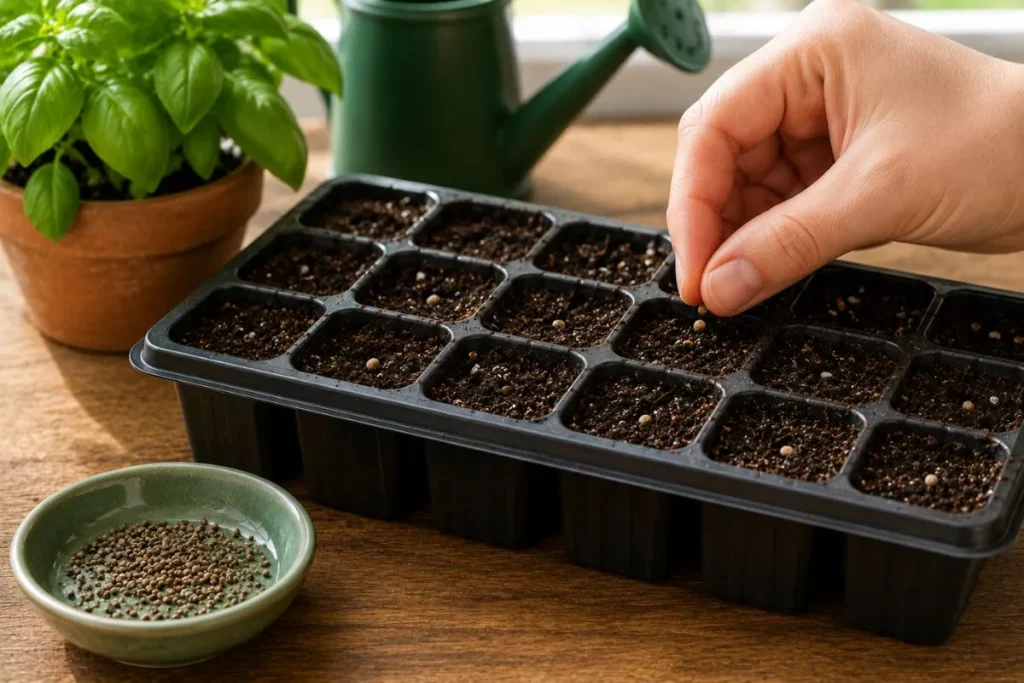
Proper basil seed depth allows young shoots to reach the soil surface more easily, while correct basil seed spacing improves airflow and reduces competition for nutrients.
Avoid planting too deeply, as this can delay germination and weaken seedlings.
Water Correctly
Watering is one of the most important parts of growing basil from seed.
After planting, gently water the soil using a spray bottle or watering can with a fine rose. This prevents the seeds from being washed away.
Many beginners ask, how often should I water sweet basil seeds?
Instead of following a strict schedule, check the soil every day. Water whenever the surface begins to dry slightly. The goal is to keep the soil evenly moist, not soaking wet.
For successful basil seed watering:
- Water gently.
- Keep the soil consistently moist.
- Never allow the soil to dry out completely.
- Avoid standing water in trays or pots.
Balanced watering encourages healthy germination and strong root growth.
Provide Warmth and Light
Sweet basil loves warmth and plenty of light.
The ideal basil seed temperature for germination is 70°F to 85°F (21°C to 29°C). Keeping the soil within this range helps seeds sprout faster and more evenly.
Once seedlings emerge, they need 6 to 8 hours of bright light each day.
If you’re growing basil indoors:
- Place containers near a sunny south-facing window.
- Use grow lights if natural sunlight is limited.
- Rotate containers regularly so seedlings grow evenly.
Providing enough basil sunlight requirements helps prevent weak, leggy plants and encourages healthy growth in an indoor herb garden.
Wait for Germination
After planting, patience becomes your most valuable gardening tool.
Most sweet basil seed germination takes 5 to 10 days under ideal conditions. If temperatures are slightly cooler, it may take up to two weeks.
If you’re wondering how long does it take sweet basil seeds to germinate, don’t worry if nothing appears during the first few days. Seeds are busy developing beneath the soil before any green shoots become visible.
Signs of healthy germination include:
- Tiny green shoots breaking through the soil.
- Seed leaves opening.
- Upright seedlings with a healthy green color.
- Even growth across the seed tray.
These are all good signs that your basil germination time is progressing normally.
Care for Young Seedlings
Once your seedlings emerge, their needs begin to change.
Proper how to care for sweet basil seedlings involves providing enough light, water, and airflow while avoiding overcrowding.
To keep your basil seedlings healthy:
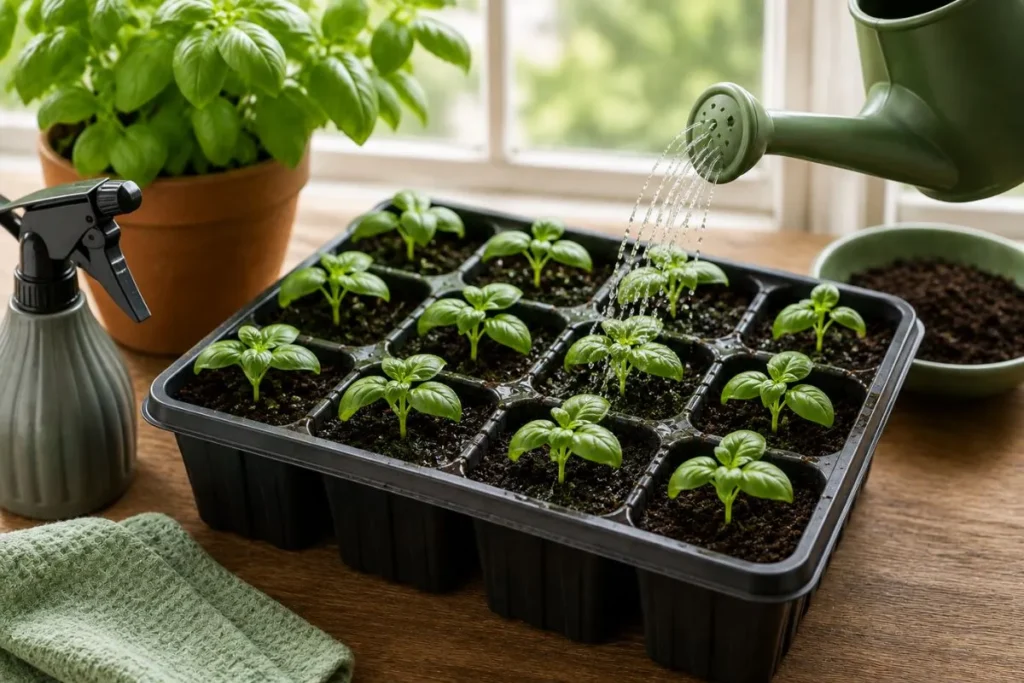
- Continue watering whenever the soil begins to dry slightly.
- Give seedlings plenty of bright light every day.
- Improve air circulation around the plants.
- Remove weaker seedlings if they become overcrowded.
- Avoid handling the stems too often, as they are still delicate.
Good basil seedling care during the first few weeks encourages strong stems, healthy roots, and vigorous basil seedling growth.
How to Grow Sweet Basil from Seeds Indoors
Many people think you need a large backyard to grow basil successfully. That’s simply not true. If you’re wondering how to grow sweet basil from seeds indoors, you’ll be happy to know that basil grows exceptionally well inside your home.
With the right container, enough light, and a warm environment, you can enjoy fresh basil all year round even if you live in an apartment.
Growing basil indoors also gives you more control over temperature, watering, and lighting, making it easier to produce healthy plants.
Choose the Right Container
The first step is selecting a suitable container.
You can use seed trays to start your basil and later move the seedlings into larger pots. If you’re planting directly into a container, choose one that is at least 6 to 8 inches deep with drainage holes at the bottom.
Good drainage is essential because basil doesn’t like sitting in soggy soil.
Some great container options include:
- Plastic nursery pots
- Clay or terracotta pots
- Ceramic containers with drainage holes
- Fabric grow bags
- Window boxes
If you’re growing basil in containers, always place a tray underneath to catch excess water.
Use a High-Quality Potting Mix
Indoor basil performs best in a light, well-draining growing medium.
Avoid using heavy garden soil because it compacts easily and may introduce pests or diseases into your home.
Instead, fill your container with a quality basil potting mix or seed-starting mix that:
- Drains excess water easily.
- Retains enough moisture.
- Allows good airflow around the roots.
- Contains organic matter for healthy growth.
Healthy soil creates the perfect environment for strong root development and vigorous plants.
Place Basil Where It Gets Plenty of Light
Light is one of the biggest challenges when growing basil indoors.
Sweet basil needs 6 to 8 hours of bright light every day to produce healthy leaves and sturdy stems.
The best location is:
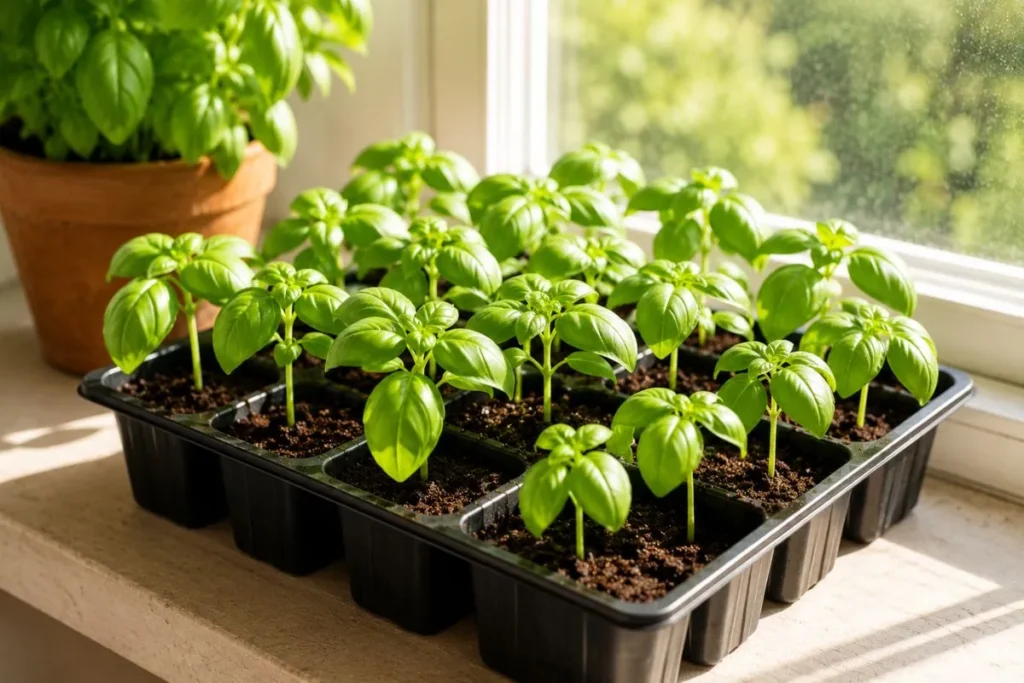
- A south-facing window.
- A west-facing window with plenty of afternoon sunlight.
- Any bright location that receives direct sunlight for several hours.
Rotate the pot every few days so all sides of the plant receive equal light. This encourages balanced growth instead of leaning toward one direction.
Meeting your basil’s light requirements is one of the most important steps in how to grow sweet basil from seeds indoors.
Use Grow Lights When Natural Light Isn’t Enough
If your home doesn’t receive enough sunlight, don’t worry.
Grow lights are an excellent solution for maintaining healthy basil plants throughout the year.
LED grow lights are energy-efficient and provide the light spectrum basil needs for steady growth.
For best results:
- Place the light about 6 to 12 inches above the seedlings.
- Keep the lights on for 12 to 16 hours per day.
- Raise the lights as the plants grow.
Using grow lights helps prevent weak, stretched seedlings and keeps your indoor herb garden productive.
Keep the Temperature Warm
Basil grows best in warm conditions.
Maintain an indoor temperature between 70°F and 80°F (21°C to 27°C) whenever possible.
Avoid placing containers:
- Near air conditioners.
- Beside heating vents.
- Close to drafty windows.
- In rooms with sudden temperature changes.
A stable temperature encourages faster growth and healthier foliage.
Water the Right Way
Indoor basil usually needs less water than outdoor plants because it’s protected from wind and direct sun.
Before watering, check the top inch of soil with your finger. If it feels dry, it’s time to water.
Keep these tips in mind:
- Water deeply but gently.
- Allow excess water to drain away.
- Never leave the pot standing in water.
- Avoid wetting the leaves too often.
Consistent watering helps maintain healthy roots without causing root rot.
Give Your Plants Good Air Circulation
Fresh air is just as important indoors as it is outside.
Good airflow reduces excess moisture around the leaves and helps prevent fungal diseases.
To improve air circulation:
- Leave space between pots.
- Open a nearby window occasionally if weather permits.
- Use a small fan on a low setting if your growing area is enclosed.
Healthy airflow leads to stronger stems and healthier basil plants.
Feed Your Basil for Better Growth
Once your basil seedlings have several sets of true leaves, they benefit from occasional feeding.
Use a balanced liquid fertilizer diluted to half strength every 2 to 4 weeks during the growing season.
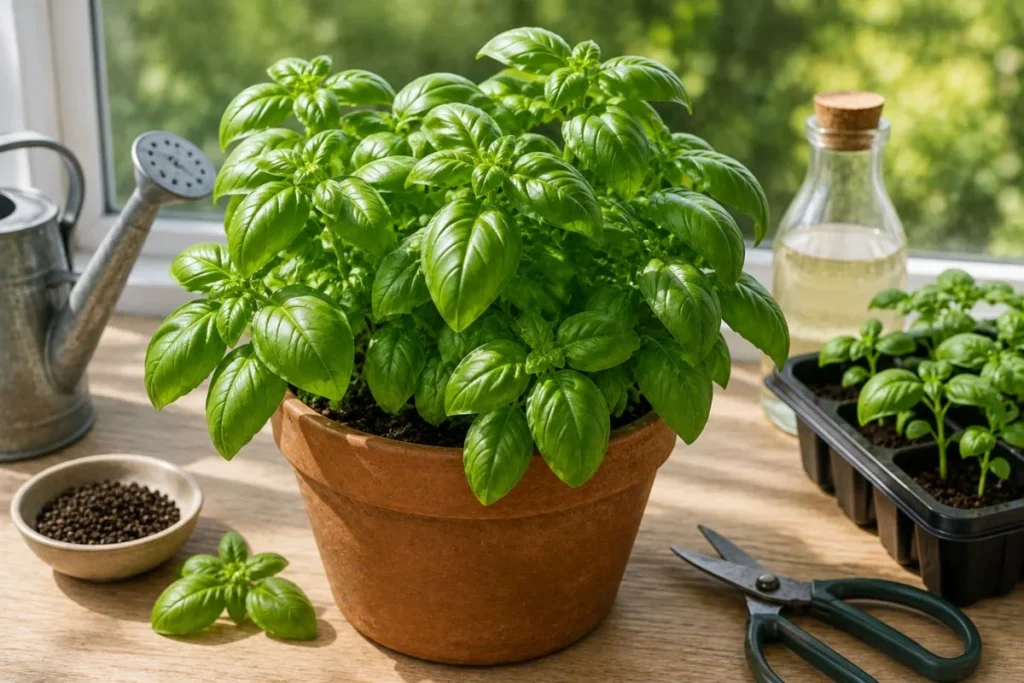
Avoid overfeeding because too much fertilizer can reduce the flavor and aroma of basil leaves.
A moderate feeding schedule supports healthy growth without encouraging excessive leafy growth.
Harvest Regularly to Encourage New Growth
One of the best parts of growing basil indoors is that regular harvesting actually improves the plant.
Once your basil reaches 6 to 8 inches tall, begin harvesting by pinching or cutting stems just above a pair of leaves.
Regular harvesting:
- Encourages bushier growth.
- Produces more leaves.
- Delays flowering.
- Extends the harvesting season.
The more consistently you harvest, the fuller and healthier your basil plant becomes.
Common Indoor Growing Mistakes to Avoid
To keep your basil thriving indoors, avoid these common mistakes:
- Using containers without drainage holes.
- Overwatering the soil.
- Growing basil in low-light areas.
- Allowing cold drafts to reach the plant.
- Overcrowding multiple plants in one small pot.
- Forgetting to harvest regularly.
Avoiding these mistakes makes it much easier to grow healthy basil all year long.
Frequently Asked Questions (FAQs)
How to grow sweet basil from seeds step by step?
Growing sweet basil from seeds is simple when you follow the right process. Start by choosing fresh, high-quality seeds and filling a seed tray or small pot with a well-draining seed-starting mix.
Plant the seeds about ¼ inch (6 mm) deep, keep the soil evenly moist, and place the container in a warm, sunny location. Once the seedlings develop several true leaves, continue watering regularly and transplant them when they’re strong enough.
Following these steps is the best way to grow sweet basil from seeds successfully.
How long does it take sweet basil seeds to germinate?
Sweet basil seeds typically germinate within 5 to 10 days when the soil temperature stays between 70°F and 85°F (21°C to 29°C). Cooler conditions may slow germination, while fresh seeds and proper care often lead to faster sprouting.
How often should I water sweet basil seeds?
There isn’t a fixed watering schedule because it depends on your growing conditions. Check the soil every day and water whenever the top layer starts to feel slightly dry. Keep the soil consistently moist but never waterlogged, as too much water can cause the seeds or young roots to rot.
Can I grow sweet basil from seeds indoors?
Yes. In fact, how to grow sweet basil from seeds indoors is one of the easiest ways to enjoy fresh herbs year-round. Place the containers near a sunny window or use grow lights if natural light is limited.
Maintain warm temperatures, use well-draining soil, and water consistently for the best results.
What is the best soil for basil seeds?
The best soil for basil is a light, loose, and well-draining seed-starting mix. It should retain enough moisture for germination while allowing excess water to drain away. Avoid heavy garden soil because it can become compacted and restrict healthy root growth.
When should I transplant sweet basil seedlings?
Transplant your basil seedlings once they have 2 to 3 sets of true leaves and a well-developed root system. If you’re moving them outdoors, wait until all danger of frost has passed and gradually harden the plants off over several days to help them adjust to outdoor conditions.
Why are my sweet basil seeds not germinating?
There are several reasons why sweet basil seeds may fail to sprout, including:
- Soil that’s too cold.
- Overwatering or underwatering.
- Old or low-quality seeds.
- Planting seeds too deeply.
- Poor drainage or compacted soil.
Checking these conditions usually helps identify the issue and improves future germination success.
How can I grow healthy sweet basil from seed?
To grow healthy sweet basil from seed, start with fresh seeds, use a quality seed-starting mix, provide plenty of sunlight, keep the soil evenly moist, and maintain warm temperatures. Feed the plants lightly after they establish, prune regularly to encourage bushy growth, and harvest often to keep the plant productive throughout the season.
Conclusion
Learning how to grow sweet basil from seeds is much easier than many people think. With fresh seeds, a quality seed-starting mix, proper watering, plenty of sunlight, and a warm growing environment, you can successfully grow healthy basil plants at home.
By following the step-by-step methods shared in this guide, you’ll give your plants the best possible start and enjoy steady growth from germination to harvest.
Whether you’re growing sweet basil from seed indoors, outdoors, or in containers, consistency is the key to success. Simple tasks like watering correctly, providing enough light, pruning regularly, and transplanting at the right time will help your basil stay healthy and productive throughout the growing season.
Even if you’re a beginner, these easy techniques can help you grow lush, flavorful basil with confidence.
Now it’s your turn to put these tips into practice. Plant your sweet basil seeds, care for them patiently, and enjoy harvesting fresh leaves for your favorite recipes.
If you found this sweet basil seed growing guide helpful, share it with fellow gardeners and leave a comment below with your questions or growing tips we’d love to hear about your basil-growing journey!

Plant Nest Blog’s author is passionate about plants, gardening, and sustainable living. Through research and practical experience, they share helpful plant care tips, gardening guides, and easy solutions to help readers grow healthier plants and create greener spaces.