
Many gardeners believe that the longer sugar snap peas stay on the vine, the sweeter and better they’ll become. Unfortunately, that’s one of the biggest myths about growing peas. Leaving the pods on the plant for too long actually makes them lose their crisp texture.
The peas inside become larger, the pods turn fibrous, and the sweet flavor begins to fade. The good news is that learning how to harvest sugar snap peas at the right time is simple.
With proper timing and a few easy harvesting techniques, you can enjoy crunchy, sweet pea pods while encouraging your plants to produce even more throughout the season.
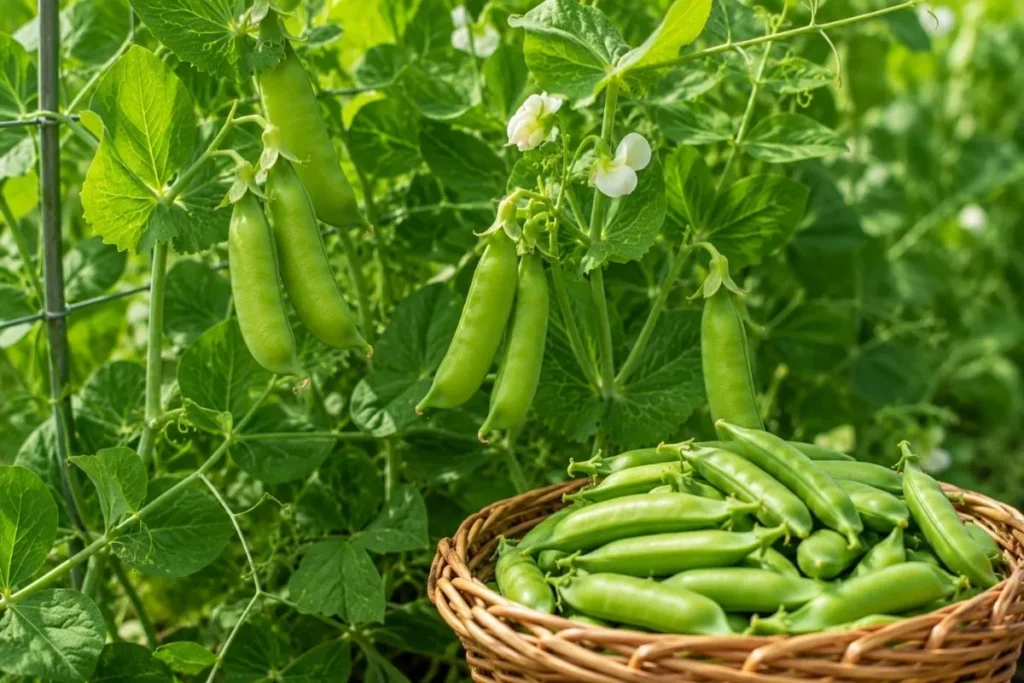
In this guide, you’ll learn everything you need to know about harvesting sugar snap peas the right way.
We’ll cover when to harvest sugar snap peas, how to tell when sugar snap peas are ready to pick, the best time of day to harvest, how to pick pods without damaging the vines, common harvesting mistakes to avoid, and the best ways to store your fresh harvest.
Whether you’re growing peas for the first time or looking to improve your garden pea harvest, these practical tips will help you enjoy sweeter pods and healthier plants.Check product
Why Harvesting Sugar Snap Peas at the Right Time Matters
Harvesting may seem like the easiest part of gardening, but timing can make a huge difference. Picking your peas at the right stage improves their flavor, keeps the pods crisp, and encourages the plants to keep producing.
Many gardeners spend weeks caring for their pea plants but don’t realize that harvesting at the wrong time can reduce both quality and yield. Understanding when to harvest sugar snap peas helps you get the most from every plant in your vegetable garden.
Sweeter Flavor and Crisp Texture
One of the biggest reasons to harvest at the right time is flavor.
Fresh sugar snap peas are naturally sweet because they contain high levels of natural sugars while the pods are still young. As the pods continue to mature, some of those sugars gradually turn into starch.
This makes the peas less sweet and the pods less crisp.
The best pods are bright green, smooth, and full without becoming swollen. They have a satisfying crunch and are perfect for fresh salads, stir-fries, or healthy snacks.
If your goal is to enjoy the sweetest fresh sugar snap peas, don’t wait until the pods become oversized. Harvest them while they’re tender for the best taste and texture.
Bigger Harvests Throughout the Season
One simple habit can significantly increase your sugar snap pea yield harvest regularly.
Every time you remove mature pods, the plant puts its energy into producing more flowers and fresh pea pods. Frequent picking keeps the harvest going for much longer.
On the other hand, leaving mature pods on the vine tells the plant that its job is finished because the seeds are developing. Once this happens, the plant gradually slows down new flower production, reducing future harvests.
That’s why experienced gardeners check their vines every couple of days during the pea harvesting season. Even picking a handful of pods regularly can make a noticeable difference in the total number of peas you harvest.
If you’re wondering how often should you harvest sugar snap peas, the answer is simple: harvest as soon as the pods reach the ideal size instead of waiting for all of them to mature together.
Healthier Pea Plants
Harvesting on time also keeps your pea plants healthier.
Mature pods require more nutrients and energy as the seeds continue growing. By removing harvest-ready pods, the plant can focus on producing fresh flowers, healthy vines, and new pea pods instead of supporting older ones.
Regular harvesting also gives you the perfect opportunity to inspect your plants closely. While collecting your homegrown sugar snap peas, you can quickly spot:
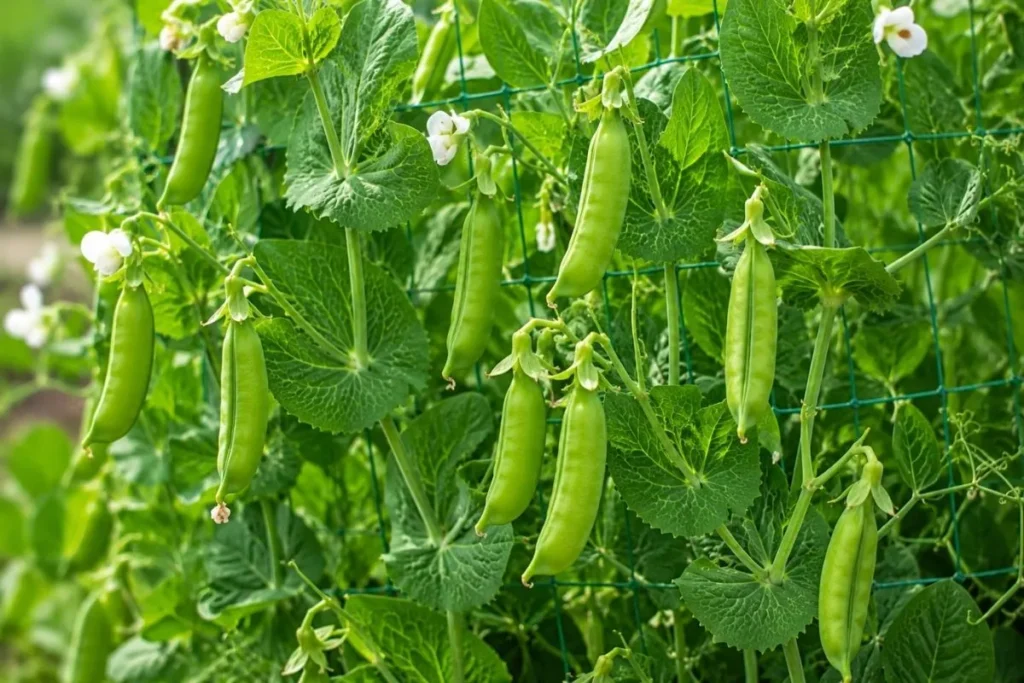
- Yellow or damaged leaves
- Insect pests
- Broken vines
- Diseased pods
- Weeds competing for nutrients
Finding these problems early makes them much easier to manage and helps maintain healthy pea plants throughout the growing season.
A Small Habit That Delivers Big Results
Harvesting isn’t something you do just once at the end of the season. It’s an ongoing part of growing healthy pea plants.
Taking a few minutes every couple of days to inspect your vines and pick mature pods helps you:
- Enjoy sweeter, crispier pea pods.
- Increase your overall garden pea harvest.
- Encourage continuous pod production.
- Keep your plants healthy and productive.
- Get the most from your sugar snap pea crop.
Learning how to harvest sugar snap peas at the right time is one of the easiest ways to improve both the quality and quantity of your harvest. A little attention throughout the season will reward you with fresh, crunchy peas that taste far better than anything you’ll buy at the store.
How to Tell When Sugar Snap Peas Are Ready to Pick
Many gardeners assume they should wait until sugar snap pea pods are as large as possible before harvesting. That’s a common mistake. Bigger pods don’t always mean better quality.
In fact, oversized pods often become less crunchy as the peas inside continue to mature. If you’re wondering how to tell when sugar snap peas are ready to pick, the key is to look at the pod’s size, color, and texture rather than simply waiting for it to grow bigger.
Fortunately, it’s easy to identify harvest-ready pods once you know what to look for. Here are the signs that tell you it’s the perfect time to start harvesting sugar snap peas.
Check the Pod Size
The first thing to examine is the size of the pod.
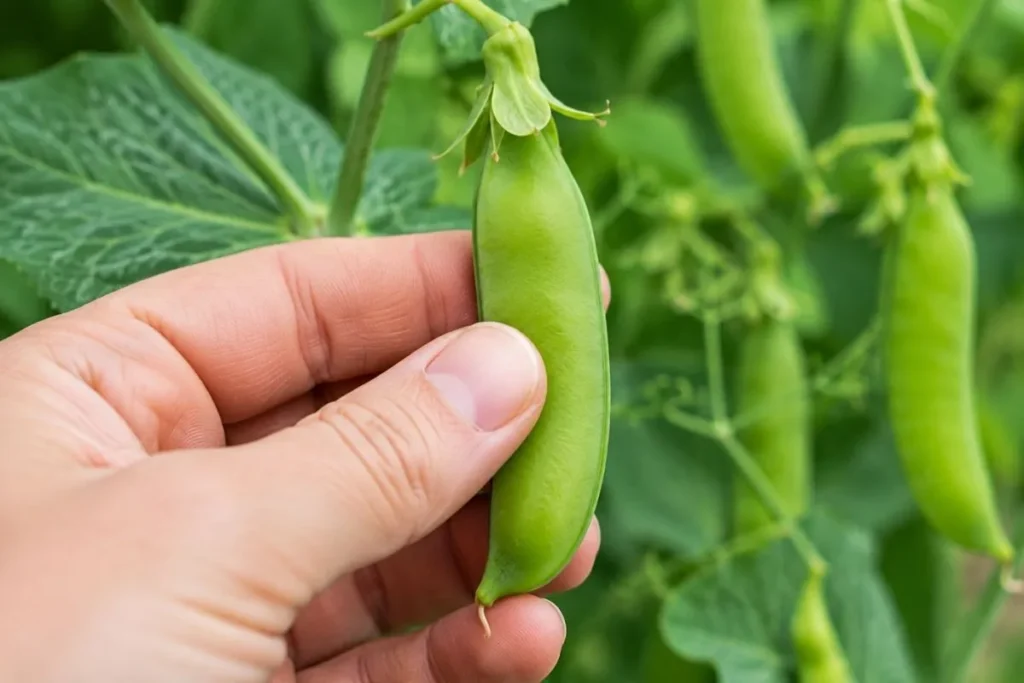
Most sugar snap peas are ready to harvest when the pods are about 2½ to 3½ inches long. At this stage, they look full and slightly rounded, but they shouldn’t appear overly swollen.
Unlike shelling peas, sugar snap peas are eaten with the entire pod. That means you’re looking for pods that have started filling out while still remaining tender and juicy.
If the peas inside become too large, the pod may lose some of its sweetness and crisp bite.
Signs the pod is the right size:
- Around 2½–3½ inches long
- Full but not overly swollen
- Evenly shaped from end to end
- Firm and plump without feeling hard
Checking pod size is one of the easiest ways to know when is the best time to harvest sugar snap peas.
Look at the Color
Color is another reliable indicator that your peas are ready.
Healthy, harvest-ready pods should have a bright, vibrant green color. They should look fresh, glossy, and free from yellow or brown patches.
If the pods begin turning pale green, yellow, or dull, they’re likely becoming overripe. Older pods may still be edible, but they usually lose the crisp texture that makes fresh sugar snap peas so enjoyable.
When walking through your garden, choose pods with:
- Bright green color
- Smooth skin
- Healthy appearance
- No signs of drying or discoloration
Harvesting pods at this stage helps you enjoy the best flavor while keeping your pea harvesting season productive.
Feel the Texture
Your hands can tell you almost as much as your eyes.
A harvest-ready sugar snap pea should feel firm, smooth, and crisp. The pod should be slightly thick because the peas inside have started developing, but it shouldn’t feel overly hard or woody.
Gently squeeze the pod between your fingers. You should be able to feel small, rounded peas inside without the pod becoming tight or stretched.
The surface should also feel:
- Smooth
- Crisp
- Tender
- Slightly fleshy
Avoid pods that feel soft, wrinkled, or dry, as these are signs they’re no longer at their best.
If you’re learning how to pick sugar snap peas, using both sight and touch will help you make the right choice every time.
Watch for Overripe Pods
Knowing when not to harvest is just as important as knowing when to pick.
Overripe sugar snap peas are easy to identify once you know the warning signs. As the pods stay on the vine longer, the peas inside continue growing, causing the pod to become overly swollen and less tender.
Common signs of overripe pods include:
- Large peas pushing hard against the pod
- Thick, oversized pods
- Tough or fibrous texture
- Dull green or yellowing color
- Pods beginning to dry out
Although these peas are still edible, they won’t have the sweet, crunchy texture that makes harvesting snap peas so rewarding.
If you notice a few overripe pods, remove them promptly. This allows the plant to direct its energy toward producing more fresh pods instead of continuing to mature older ones.
Quick Tip
If you’re still unsure whether your peas are ready, harvest one pod and taste it. A perfectly harvested sugar snap pea should be sweet, juicy, and crunchy with small, tender peas inside. If the peas are starchy or the pod feels chewy, it’s a sign you waited a little too long.
Once you’ve harvested a few times, recognizing pea pods ready to harvest becomes second nature. With regular checks and careful picking, you’ll enjoy a steady supply of sweet, crisp pods straight from your garden all season long.
When Is the Best Time to Harvest Sugar Snap Peas?
Many people believe that you can harvest sugar snap peas whenever it’s convenient, and the quality will stay the same.
While the pods will still be edible, harvesting at the right time of day and under the right weather conditions can make a noticeable difference in their sweetness, crispness, and freshness.
If you’ve been asking, “When is the best time to harvest sugar snap peas?”, the answer depends on more than just the size of the pods.
Choosing the right harvest time helps you enjoy the freshest peas while keeping your plants healthy and productive. Let’s look at the best times and conditions for harvesting sugar snap peas.
Morning vs. Afternoon Harvesting
For the best quality, early morning is the ideal time to harvest sugar snap peas.
During the cooler morning hours, the pods are naturally full of moisture after the cool night. This keeps them crisp, juicy, and sweet. Harvesting before the day’s heat also helps the pods stay fresh longer after they’re picked.
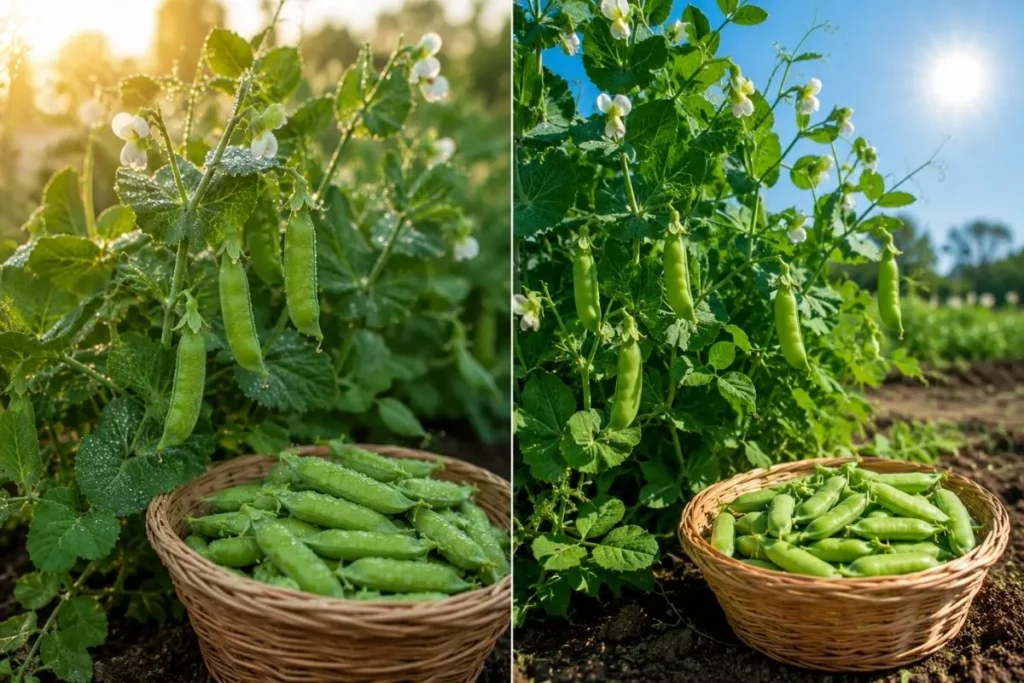
If you wait until the afternoon, especially during warm weather, the pods may lose some of their moisture. Although they’ll still be edible, they may not be as crisp as those harvested earlier in the day.
If you can’t harvest in the morning, early evening is your next best option because temperatures begin to cool again.
Best times to harvest sugar snap peas:
- Early morning after the dew has dried
- Late afternoon or early evening on cooler days
- Avoid harvesting during the hottest part of the afternoon
Following this routine helps preserve the quality of your fresh sugar snap peas and improves your overall garden pea harvest.
Harvesting During Different Weather Conditions
The weather has a bigger impact on harvesting than many gardeners realize.
The best time to pick peas is on a dry day when the plants are free from excess moisture. Wet vines and pods can spread fungal diseases more easily, especially if you’re harvesting multiple plants.
If it rained recently, wait until the leaves and pods have dried before harvesting. This simple habit helps protect your healthy pea plants and reduces the chance of disease spreading throughout your garden.
Hot weather also deserves special attention. On warm days, try to finish harvesting early in the morning before temperatures rise. Cooler conditions help the pods stay firm and reduce moisture loss after picking.
For the healthiest pea harvesting season, keep these weather tips in mind:
- Harvest on dry days whenever possible.
- Wait until morning dew has evaporated.
- Avoid picking during heavy rain.
- Harvest early on hot days.
- Skip harvesting during strong winds that could damage delicate vines.
Paying attention to the weather is a simple way to improve both the quality of your harvest and the health of your pea plants.
How the Growing Season Affects Harvest Time
As the season changes, your harvesting schedule should change too.
During the peak growing season, sugar snap pea plants grow quickly. New pods can develop in just a few days, so you’ll usually need to inspect your vines every two to three days. Frequent harvesting keeps the plants producing fresh flowers and new pods.
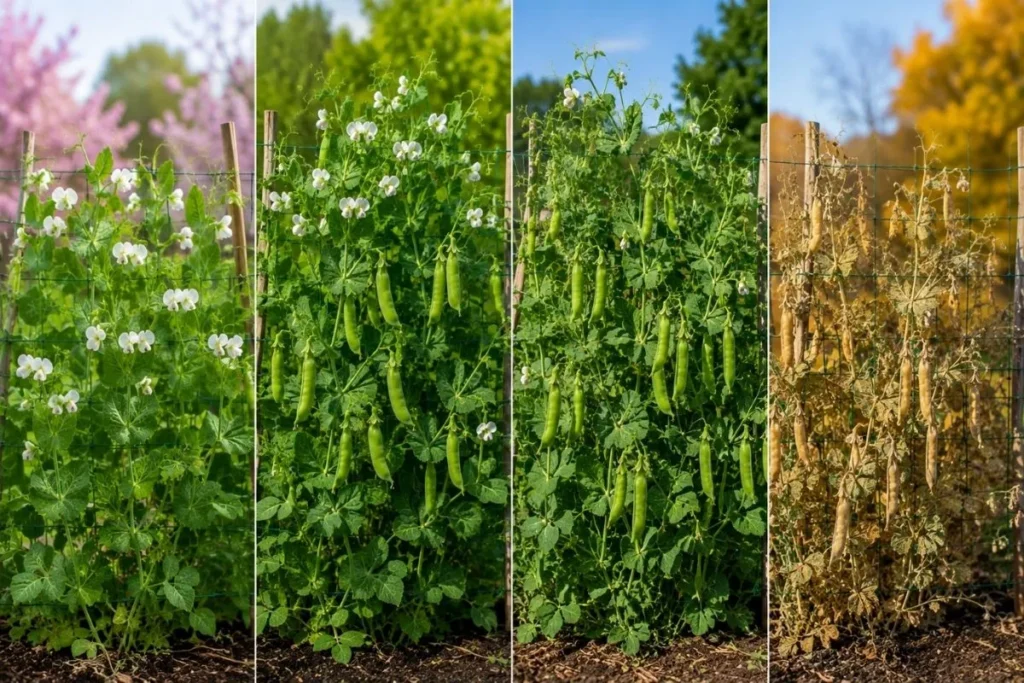
Later in the season, as temperatures become warmer or the plants begin slowing down, pod production naturally decreases. At this point, you may not need to harvest as often.
Instead of following a fixed calendar, pay attention to your plants. Factors such as sunlight, rainfall, soil conditions, and temperature all influence when to harvest sugar snap peas.
Checking your vines regularly allows you to pick pods at their best stage while avoiding overripe peas.
Seasonal harvesting tips:
- Check plants every 2–3 days during peak production.
- Harvest more often during cool, active growing weather.
- Expect slower production as the season comes to an end.
- Continue removing mature pods to encourage additional growth whenever possible.
Following these simple habits will help you maintain a steady supply of homegrown sugar snap peas throughout the growing season.
Quick Tips for Choosing the Best Harvest Time
To get the sweetest and crispiest peas every time, remember these simple tips:
- Harvest early in the morning whenever possible.
- Wait until plants are dry before picking.
- Avoid harvesting during the hottest hours of the day.
- Check your vines every few days for mature pods.
- Adjust your harvesting schedule as plant growth changes throughout the season.
Knowing when is the best time to harvest sugar snap peas is just as important as knowing how to pick them. By combining the right timing with regular harvesting, you’ll enjoy sweeter pods, healthier plants, and a longer-lasting harvest from your vegetable garden.
5. Tools You Need Before Harvesting Sugar Snap Peas
Many beginner gardeners think they need expensive gardening tools to harvest peas successfully. The truth is, harvesting sugar snap peas is one of the easiest gardening tasks, and you only need a few simple tools. In most cases, your hands are enough.
However, using the right equipment can make harvesting faster, protect the delicate vines, and keep your freshly picked pods in excellent condition.
Preparing your tools before heading into the garden also helps you avoid damaging the plants and makes the entire harvesting process more enjoyable.
Harvesting by Hand
The simplest and most popular way to harvest sugar snap peas is by hand.
Sugar snap pea vines are delicate, so it’s important to handle them carefully. Instead of pulling on the pod, hold the vine gently with one hand while removing the mature pod with the other.
This prevents the stems from snapping and protects nearby flowers and young pods that will become your next harvest.
Hand harvesting also allows you to examine each plant closely. As you collect your fresh sugar snap peas, you can easily spot yellow leaves, insect damage, or diseased pods before they become bigger problems.
Benefits of harvesting by hand:
- Protects delicate pea vines.
- Reduces the risk of breaking stems.
- Helps preserve flowers and young pods.
- Allows you to select only harvest-ready pea pods.
- Keeps your homegrown sugar snap peas in the best condition.
If you’re learning how to pick sugar snap peas, harvesting by hand is the safest and most beginner-friendly method.
Using Garden Scissors or Pruners
Although most sugar snap pea pods can be picked by hand, a small pair of garden scissors or hand pruners can be useful, especially if a pod is firmly attached to the vine.
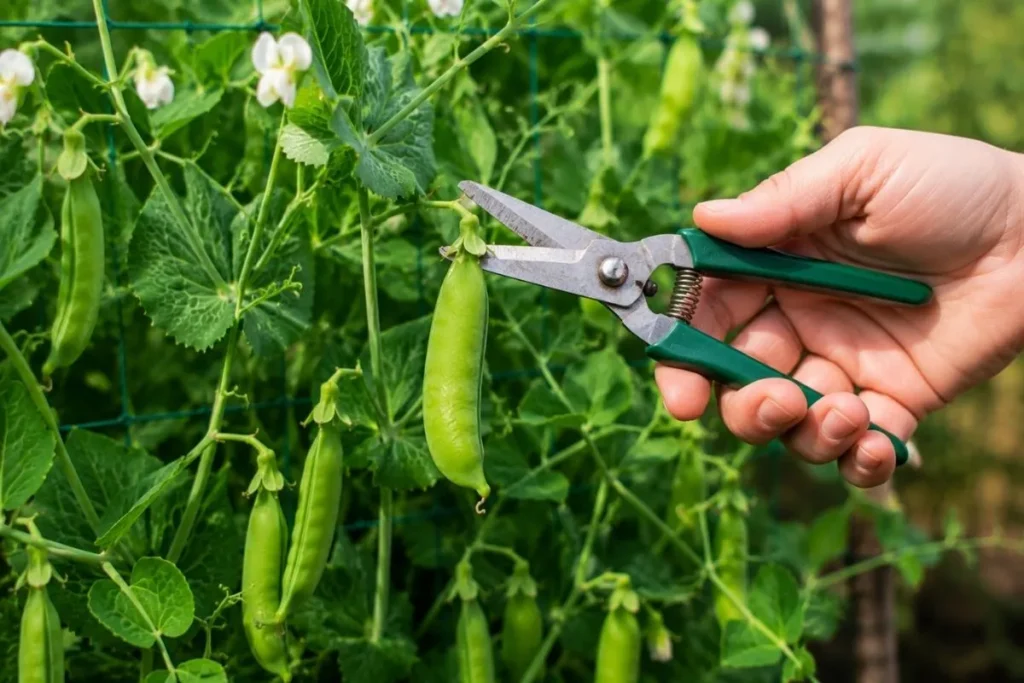
Instead of pulling harder, make a clean cut just above the pod’s stem. This reduces stress on the plant and helps prevent accidental damage to nearby vines.
Before harvesting, always make sure your scissors or pruners are clean and sharp. Dirty tools can spread plant diseases, while dull blades may crush the stems instead of cutting them cleanly.
Tips for using scissors or pruners:
- Clean the blades before harvesting.
- Make small, precise cuts.
- Avoid cutting flowers or young pea pods.
- Handle the vines gently while cutting.
- Store tools in a dry place after use.
Using clean tools is a simple way to keep your healthy pea plants productive throughout the season.
Choosing a Clean Basket or Container
After picking your peas, you’ll need a suitable container to keep them fresh.
A lightweight basket, bucket, bowl, or harvesting bag works well. Choose a clean container with enough space so the pods don’t become crushed under their own weight.
Instead of piling everything into one large bucket, many gardeners prefer using smaller baskets. This helps protect the delicate pods from bruising and makes carrying your garden pea harvest much easier.
To keep your peas as fresh as possible:
- Use a clean basket or container.
- Place the pods gently instead of tossing them in.
- Keep the container in the shade while harvesting.
- Avoid overfilling the basket.
- Refrigerate or store the peas soon after harvesting.
These simple steps help maintain the crisp texture and sweet flavor of your fresh pea pods until you’re ready to eat or store them.
Quick Harvesting Checklist
Before you begin harvesting snap peas, make sure you have:
- Clean hands or lightweight gardening gloves.
- Small garden scissors or hand pruners (optional).
- A clean basket, bucket, or harvesting bag.
- Comfortable clothing for easy movement.
- A few extra minutes to inspect your plants while picking.
The good news is that you don’t need a lot of equipment to enjoy a successful sugar snap pea harvest. With a little care and a few basic tools, you can harvest your peas safely, protect your plants, and enjoy fresh, crunchy pods throughout the growing season.
Expert Tips to Get Maximum Yield from Sugar Snap Pea Plants
Many gardeners believe that planting healthy seeds is enough to guarantee a big harvest. While good seeds are important, they aren’t the only factor. Even the healthiest plants won’t produce their maximum crop without proper care throughout the growing season.
If your goal is how to harvest sugar snap peas for maximum yield, a few simple gardening habits can make a huge difference.
The following expert tips will help your plants stay healthy, produce more flowers, and reward you with an abundant sugar snap pea crop.
Harvest Frequently
One of the easiest ways to increase your sugar snap pea yield is to harvest regularly.
Every time you remove mature pods, the plant continues producing new flowers and fresh pea pods. If ripe pods stay on the vine too long, the plant shifts its energy toward seed production instead of growing more peas.
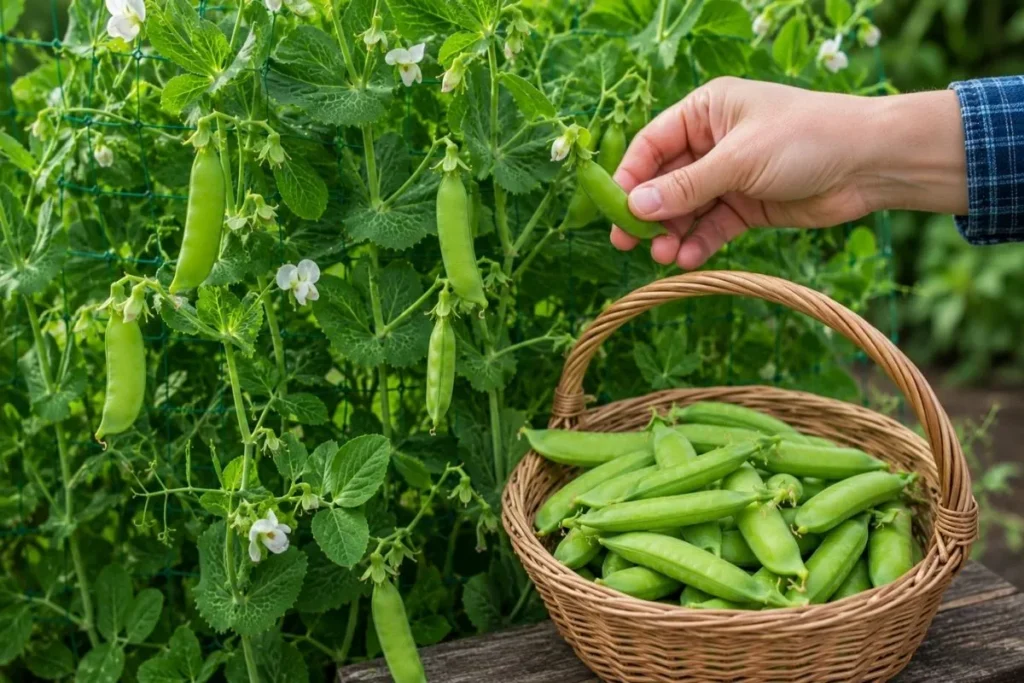
During peak production, check your plants every two to three days. Regular harvesting helps maintain a steady supply of crisp, sweet peas throughout the season.
Best practices:
- Pick mature pods as soon as they’re ready.
- Check plants every few days.
- Don’t allow ripe pods to stay on the vine for too long.
- Harvest consistently throughout the season.
Frequent harvesting is one of the simplest ways to enjoy a larger garden pea harvest.
Water Consistently
Sugar snap peas grow best when they receive consistent moisture.
The soil should remain evenly moist but never waterlogged. Long periods of dry soil can reduce flower production and slow pod development, while overwatering may increase the risk of root diseases.
Water deeply rather than lightly sprinkling the surface. Deep watering encourages stronger roots that can support healthier vines and higher yields.
For the best results:
- Water early in the morning.
- Keep the soil evenly moist.
- Avoid letting the soil dry out completely.
- Reduce waterlogging by ensuring good drainage.
Healthy watering habits lead to healthier plants and more fresh sugar snap peas.
Support Climbing Vines
Most sugar snap pea varieties are climbing plants that grow much better with proper support.
Using a trellis, netting, or garden stakes keeps the vines upright, improves airflow, and makes harvesting much easier. Supported vines also receive better sunlight, which helps the plants produce more flowers and pods.
Without support, vines often spread across the ground where pods are harder to find and more likely to suffer from pests or rot.
Benefits of supporting your vines include:
- Better air circulation.
- Easier harvesting.
- Cleaner pea pods.
- Reduced disease problems.
- Higher overall production.
Supporting the vines is one of the most effective ways to improve your pea plant maintenance routine.
Feed Plants Properly
Although sugar snap peas don’t require heavy feeding, they still benefit from nutrient-rich soil.
Before planting, mix compost or well-rotted organic matter into the soil. This provides slow-release nutrients that help support healthy growth throughout the season.
Avoid using fertilizers that contain excessive nitrogen. Too much nitrogen encourages leafy growth instead of flowers and pods.
Instead, choose balanced plant nutrition and healthy soil to support continuous harvesting.
Good feeding practices include:
- Add compost before planting.
- Use balanced fertilizer only if needed.
- Avoid excessive nitrogen.
- Maintain healthy soil with organic matter.
Healthy soil creates stronger plants that produce more pods over time.
Frequently Asked Questions (FAQs)
Even after learning how to harvest sugar snap peas, you may still have a few questions. That’s perfectly normal, especially if you’re growing peas for the first time. Below are answers to some of the most common questions gardeners ask about harvesting sugar snap peas and keeping their plants productive.
How do I know when sugar snap peas are ready to harvest?
Sugar snap peas are ready to harvest when the pods are bright green, firm, plump, and about 2½ to 3½ inches long. The peas inside should be small to medium-sized, giving the pod a full appearance without making it overly swollen.
If the pod is crisp and snaps easily when bent, it’s ready to pick. Harvesting at this stage gives you the sweetest flavor and the best texture.
How often should I pick sugar snap peas?
During the peak growing season, you should harvest sugar snap peas every 2 to 3 days.
Regular picking encourages the plants to continue producing flowers and new pods. Waiting too long between harvests can slow production because mature pods signal the plant to focus on developing seeds.
Can you harvest sugar snap peas every day?
Yes. During periods of rapid growth, you can harvest sugar snap peas every day if new pods are ready.
Daily harvesting won’t harm healthy plants. Instead, it helps keep the vines productive and prevents pods from becoming overripe.
What happens if sugar snap peas stay on the vine too long?
Pods left on the vine for too long become larger and tougher. The peas inside continue growing, making the pods less sweet and less crisp.
Overripe pods also reduce future production because the plant begins directing its energy toward seed development instead of producing new flowers and fresh pods.
Should I wash sugar snap peas before storing them?
No. It’s best to store sugar snap peas without washing them first.
Extra moisture can shorten their shelf life and increase the risk of mold. Instead, gently remove any dirt and refrigerate the pods in a breathable bag or container. Wash them just before eating or cooking.
What is the best time of day to harvest sugar snap peas?
Early morning is usually the best time to harvest sugar snap peas.
The cooler temperatures help the pods stay crisp and full of moisture. For the best results, wait until the morning dew has dried before picking. If you can’t harvest in the morning, early evening is the next best option.
Can I freeze freshly harvested sugar snap peas?
Yes. Freshly harvested sugar snap peas freeze very well.
For the best quality, blanch the pods in boiling water for a couple of minutes, immediately cool them in ice water, drain them thoroughly, and store them in freezer-safe bags or airtight containers. This helps preserve their color, flavor, and texture for several months.
Do sugar snap peas continue producing after harvesting?
Yes. Sugar snap pea plants continue producing as long as mature pods are harvested regularly.
Frequent harvesting encourages the plants to develop more flowers and fresh pods. Combined with proper watering, healthy soil, and regular care, this practice helps extend the pea harvesting season and increases your overall sugar snap pea yield.
Conclusion
Learning how to harvest sugar snap peas the right way is one of the simplest ways to enjoy sweeter, crispier pods and a longer harvesting season. While growing healthy plants is important, harvesting them at the right time is what truly makes the difference.
By picking pods when they’re young, bright green, and perfectly plump, you’ll enjoy better flavor while encouraging your plants to keep producing.
Remember, successful harvesting sugar snap peas isn’t about waiting for the biggest pods. Instead, check your plants regularly, harvest every few days, and handle the vines gently to avoid damaging future growth.
Small habits like harvesting in the morning, using clean tools, and storing your peas properly can help preserve their freshness and improve your overall garden pea harvest.
Whether you’re growing peas in a backyard garden, raised bed, or containers, the techniques in this guide will help you harvest with confidence. From recognizing the perfect pod to storing your fresh harvest, each step plays a role in producing healthier plants and higher yields.
Now that you know how to harvest sugar snap peas, it’s time to put these tips into practice. Visit your garden regularly, pick your pods at the perfect stage, and enjoy the sweet, crunchy taste of fresh homegrown sugar snap peas all season long. Happy gardening!
Disclaimer
The information shared in this article is for educational and informational purposes only. While we strive to provide accurate and up-to-date gardening advice, results may vary depending on your climate, soil conditions, plant variety, and gardening practices.
The tips provided are based on general best practices and should be adapted to your local growing conditions. We do not guarantee specific harvesting results or crop yields.
Always use your own judgment and consult local gardening experts if you need advice tailored to your area. By following this guide, you acknowledge that you are responsible for how you apply the information.

Plant Nest Blog’s author is passionate about plants, gardening, and sustainable living. Through research and practical experience, they share helpful plant care tips, gardening guides, and easy solutions to help readers grow healthier plants and create greener spaces.