
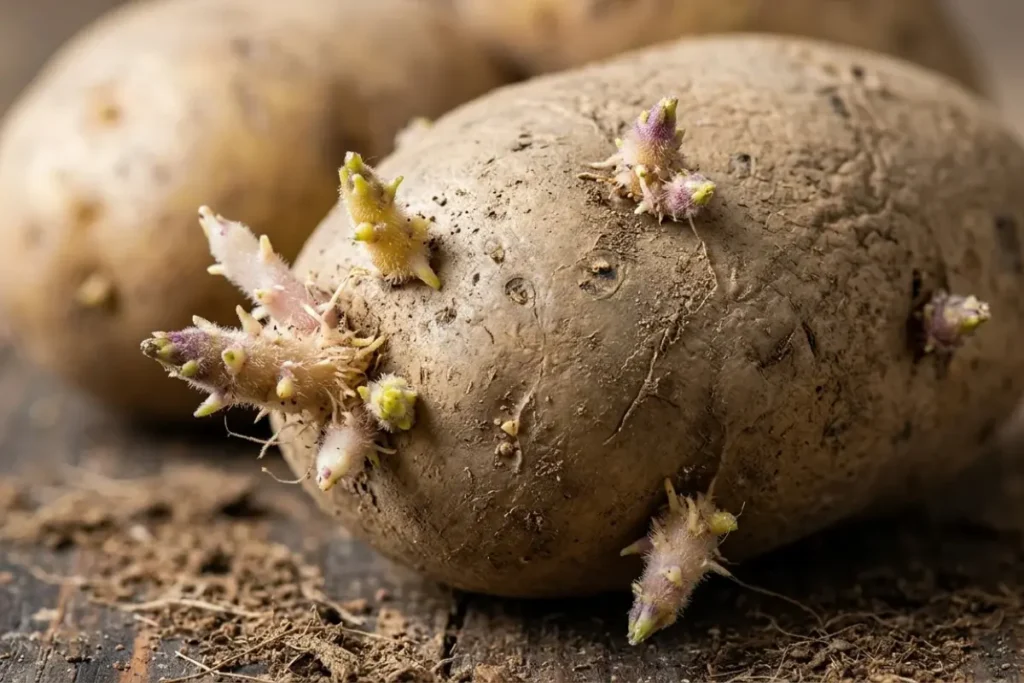
Have you ever found a potato in your kitchen with tiny shoots growing from its eyes? Those little shoots are called sprouts, and they are the first sign that a potato is ready to start growing. If you want to grow your own potatoes, you can encourage this process at home with a few simple steps.
Learning how do you sprout a Potato does not require expensive equipment or special gardening skills. You mainly need healthy seed potatoes, a suitable place, and a little patience. The right temperature, light, and airflow can help your potatoes develop strong, healthy sprouts before planting.
In this guide, you will learn how to sprout potatoes step by step, how to encourage potatoes to grow sprouts faster, which potatoes are suitable for planting, and what mistakes to avoid. You will also find out when your potatoes are ready to go into the soil.
What Does It Mean to Sprout a Potato?
Sprouting a potato means encouraging small shoots to grow from the eyes on its surface. These eyes are natural growing points that can develop into new potato plants when the conditions are right.
Gardeners often call this process chitting. It involves placing seed potatoes in a cool, bright location for a few weeks before planting. The goal is to encourage short, sturdy green or purple shoots rather than long, weak ones.
Sprouting gives potatoes a head start before they enter the garden. Instead of waiting for the eyes to wake up underground, you allow them to begin growing indoors.
However, not every potato is suitable for planting. Potatoes sold for eating may have been treated to slow down sprouting, and some can carry diseases. Certified seed potatoes are a better choice because they are specifically produced for growing.
What Do You Need to Start Sprouting Potatoes?
Before you begin, collect a few basic supplies. You do not need a greenhouse or complicated gardening tools.
Healthy Seed Potatoes
Start with firm, healthy seed potatoes. Choose potatoes with several visible eyes and no signs of rot, mold, or serious damage.
Certified seed potatoes are generally the best option because they are selected for planting and help reduce the risk of introducing potato diseases into your garden.
An Egg Carton or Shallow Tray
An empty egg carton works well for holding individual potatoes. You can also use a shallow cardboard box or seed tray.
The important thing is to keep the potatoes stable with their eyes facing upward. Avoid stacking them because they need enough room for their sprouts to develop.
A Cool, Bright Location
Choose a location with indirect natural light and good airflow. A cool room, bright windowsill, or sheltered indoor area can work.
Avoid placing potatoes in direct, strong sunlight or somewhere that gets excessively hot.
Clean Gardening Tools
If you plan to cut larger seed potatoes into smaller pieces, use a clean, sharp knife. However, small seed potatoes can usually be planted whole.
Having these supplies ready makes the process easier and helps you avoid unnecessary handling.
How to Start Sprouting Potatoes Step by Step
Getting potatoes to sprout is fairly simple, but the way you arrange and store them matters. Follow these steps to encourage healthy growth before planting.
Choose the Right Potatoes
Start by selecting healthy seed potatoes. Look for firm potatoes with several eyes spread across their surfaces.
Avoid potatoes that feel soft, smell unpleasant, or show signs of decay. A damaged potato may develop rot instead of healthy shoots.
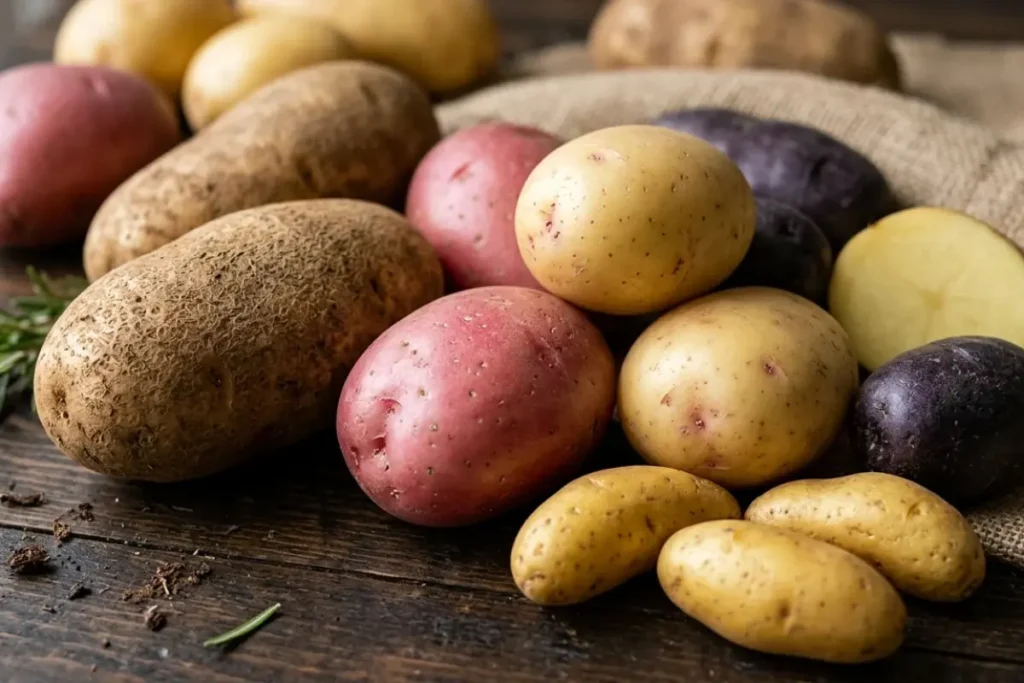
If you are growing potatoes for the first time, choose a variety that suits your local climate and growing season. Early varieties can be useful when you want a relatively quick harvest.
Place the Potatoes in an Egg Carton
Put each potato into a separate egg carton compartment. Position the potatoes with their eyes facing upward.
This arrangement keeps them from rolling around and gives their sprouts enough space to grow.
If you are using a shallow tray, arrange the potatoes in a single layer without allowing them to touch too closely.
Find a Cool Spot With Indirect Light
Place your potatoes somewhere cool and bright. Light encourages the sprouts to develop into short, sturdy shoots.
A temperature around 10–15°C (50–59°F) is generally suitable for chitting potatoes.
Avoid dark cupboards because they can encourage long, pale, weak sprouts. You should also avoid very warm locations, as excessive warmth can cause unwanted growth and shriveling.
Allow the Sprouts to Develop
Give your potatoes time to develop their shoots. Check them regularly, but avoid moving or handling them unnecessarily.
You should begin seeing small sprouts emerging from the eyes. Healthy sprouts are usually short, firm, and green, purple, or pinkish depending on the potato variety.
If the potatoes are not showing signs of growth immediately, do not worry. Some varieties take longer than others.
Check Their Condition Regularly
Inspect the potatoes every few days. Remove any potatoes that become soft, rotten, or moldy.
Make sure the area has enough airflow and does not become too warm or damp.
You do not need to water potatoes while they are sprouting. They already contain the moisture and stored energy needed to begin producing shoots.
Wait Until They Are Ready for Planting
Most potatoes are ready for planting after approximately two to four weeks of chitting, although the timing depends on the variety and growing conditions.
Look for short, strong sprouts measuring around 1–2.5 cm (½–1 inch).
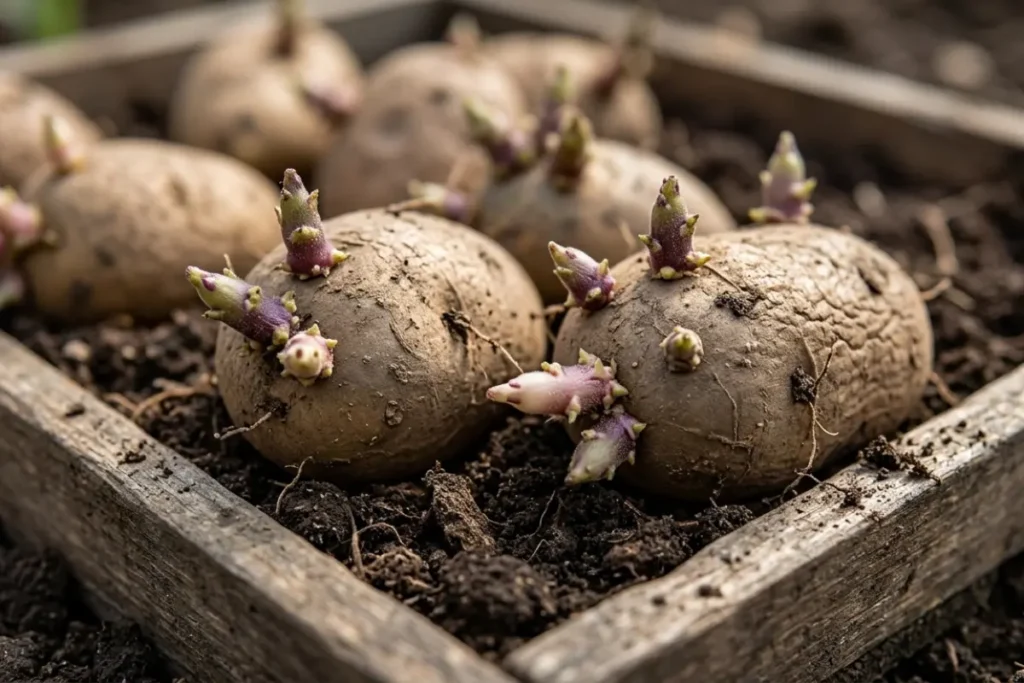
Once the sprouts are developed, handle the potatoes carefully. They can break off easily, especially when they are longer.
Your seed potatoes are now ready for planting in suitable garden soil or containers.
How to Encourage Potatoes to Grow Sprouts Faster
Sometimes potatoes take longer to sprout than expected. This can happen because of their variety, age, storage conditions, or temperature.
If you are wondering how to encourage potatoes to grow sprouts, focus on providing the right environment rather than trying to force growth.
Provide Enough Indirect Light
Light is one of the most important factors during chitting. Place your potatoes in a bright location where they receive indirect natural light.
Without enough light, sprouts may become long, thin, and pale. These weak shoots can break easily when you move the potatoes.
You want short, sturdy sprouts that can handle planting.
Maintain a Suitable Temperature
Potatoes generally sprout well in cool conditions. Keeping them around 10–15°C (50–59°F) can encourage steady growth.
Very cold conditions may slow sprouting, while excessive warmth can produce weak shoots or cause the potatoes to shrivel.
Try to maintain a reasonably consistent temperature instead of moving potatoes between very hot and cold places.
Choose Potatoes With Visible Eyes
Some potatoes already have small buds developing around their eyes. These may begin sprouting sooner than potatoes without visible growth.
When choosing seed potatoes, look for firm specimens with several healthy eyes.
Give Them Enough Space
Avoid piling potatoes on top of one another. A single layer allows better airflow and makes it easier to monitor their growth.
Good airflow also helps prevent moisture from collecting around the potatoes.
Avoid Excessive Moisture
One common mistake is adding water to potatoes to make them sprout faster. This is unnecessary and can increase the risk of rotting.
Keep the potatoes dry during chitting. They do not need soil or watering until they are planted.
How Long Does It Take for a Potato to Sprout?
Potatoes commonly take around two to four weeks to develop useful sprouts when kept in suitable conditions.
However, the exact timing varies. Some potatoes may show small shoots within a week, while others need longer.
Here is a general idea of what you might notice during the process:
| Time | What to expect |
| First week | Small buds may begin appearing |
| Second week | Sprouts become more noticeable |
| Third week | Shoots continue developing |
| Fourth week | Many potatoes are ready for planting |
These are approximate stages, not a fixed schedule. Always check the condition of the sprouts rather than relying only on the number of days.
If your potatoes are still firm and healthy, give them more time. Do not place them somewhere hot just to speed up the process.
What Do Healthy Potato Sprouts Look Like?
Knowing the difference between healthy and unhealthy sprouts can help you decide when to plant your potatoes.
Healthy potato sprouts are generally short, sturdy, and firm. Their color can be green, purple, pink, or reddish depending on the potato variety. They should grow from the natural eyes of the potato.
Weak sprouts usually look long, thin, pale, and fragile. They often develop when potatoes are stored in darkness or excessive warmth.
If you notice long shoots, move the potatoes to a cooler, brighter location. Avoid pulling off healthy sprouts unless they are damaged or you have a specific reason to remove them.
Can You Sprout Store-Bought Potatoes?
Yes, ordinary grocery-store potatoes can sometimes develop sprouts. However, they are not always the best choice for growing a new crop.
Some commercial potatoes are treated with sprout inhibitors to keep them looking fresh for longer. Others may sprout naturally after being stored for some time.
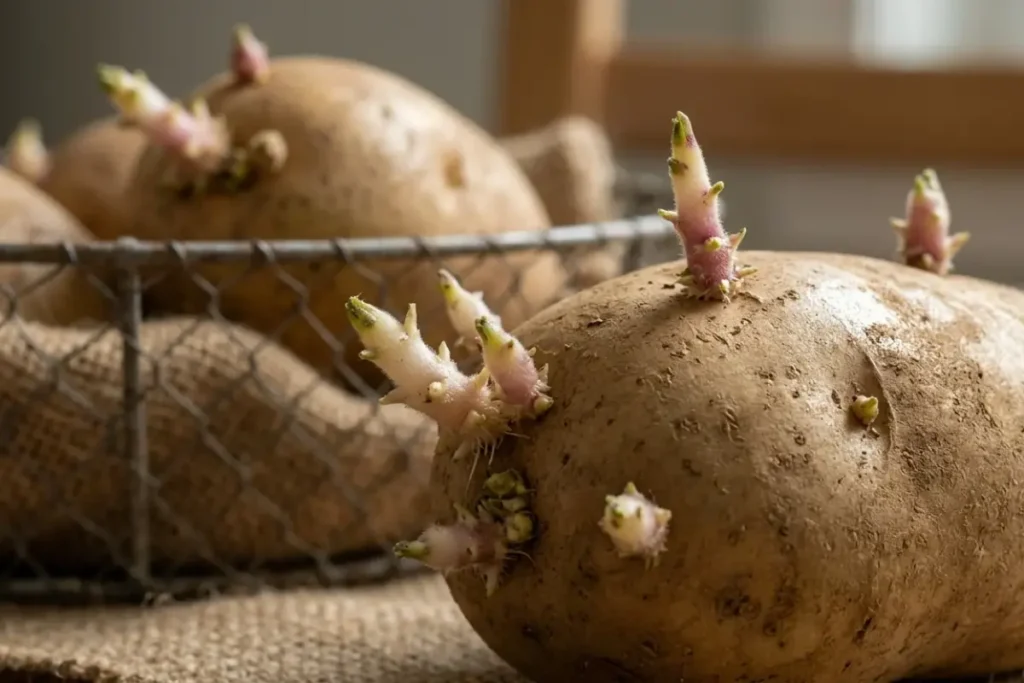
There is also a difference between potatoes intended for eating and certified seed potatoes. Seed potatoes are produced and inspected for planting, while grocery-store potatoes are selected primarily for food use.
If you want to experiment, choose a firm potato with healthy eyes and no signs of decay. However, for a more reliable harvest, use certified seed potatoes.
Also, never plant potatoes that are green, badly damaged, or rotten.
Should You Cut Potatoes Before Sprouting?
In most cases, you do not need to cut potatoes before sprouting them. Small seed potatoes can be chitted and planted whole.
Larger seed potatoes can sometimes be cut into smaller pieces to create additional planting portions. Each piece should have at least one or two healthy eyes.
However, cutting is a separate preparation step, and it is usually better to allow freshly cut pieces to dry and form a protective layer before planting.
Do not put freshly cut, wet potato pieces into a damp environment for sprouting. They can become more vulnerable to rot.
If you are new to growing potatoes, using whole seed potatoes is often the simpler approach.
When Are Sprouted Potatoes Ready to Plant?
Your potatoes are generally ready to plant when they have short, strong sprouts around 1–2.5 cm long.
The sprouts should be firmly attached and should not look excessively stretched or fragile.
Before planting, check that the garden soil is workable and not waterlogged. Potatoes grow best in loose, well-draining soil with plenty of organic matter.
Planting Sprouted Potatoes in the Ground
Choose a sunny location with loose soil. Dig a planting trench or individual holes, then position each seed potato with its sprouts facing upward.
Cover the potatoes with soil and water gently if the soil is dry.
Leave enough space between plants for their stems and underground tubers to develop. Spacing depends on the potato variety and the growing method.
Growing Sprouted Potatoes in Containers
If you do not have a garden, you can grow potatoes in large containers or potato-growing bags.
Choose a container with drainage holes and fill the bottom with suitable potting soil. Place the sprouted potatoes on the soil with their shoots facing upward, then cover them with a layer of soil.
As the plants grow, gradually add more soil around the stems while keeping the upper leaves exposed. This process is commonly called earthing up.
Common Mistakes to Avoid When Sprouting Potatoes
Even though chitting is straightforward, a few mistakes can affect the quality of your sprouts.
Keeping Potatoes in Complete Darkness
Dark storage can produce long, pale shoots that break easily. Keep potatoes in a cool location with indirect natural light to encourage stronger growth.
Storing Potatoes Somewhere Too Warm
Excessive warmth can encourage weak growth and cause potatoes to lose moisture. Maintain a cool, reasonably stable temperature instead.
Adding Water During Sprouting
Potatoes do not need watering while they are being chitted. Extra moisture can encourage mold and rot, so keep them dry and provide good airflow.
Using Rotten or Damaged Potatoes
Soft spots, mold, and unpleasant smells can indicate decay. Choose firm, healthy seed potatoes and remove any that begin rotting.
Waiting Too Long Before Planting
Very long sprouts can become tangled, fragile, and difficult to handle. Plant your potatoes when the sprouts are short, strong, and well developed.
Frequently Asked Questions About Sprouting Potatoes
How do you sprout a potato quickly?
Choose firm seed potatoes with visible eyes and place them in a cool, bright location. Keep the temperature around 10–15°C and provide good airflow. Avoid watering them because excess moisture can cause rotting.
Do potatoes need sunlight to sprout?
Potatoes do not need direct sunlight to begin sprouting, but indirect natural light helps produce short, sturdy shoots. Keeping them in complete darkness can result in long, weak sprouts.
Can I sprout potatoes in an egg carton?
Yes. An egg carton is a convenient way to keep individual seed potatoes upright during chitting. Place each potato with its eyes facing upward and keep the carton in a cool, bright location.
How long should potato sprouts be before planting?
Potato sprouts are generally ready for planting when they reach approximately 1–2.5 cm (½–1 inch). Short, strong sprouts are preferable to long, fragile shoots.
Can I plant a potato that has already sprouted?
Yes, provided the potato is healthy, firm, and suitable for planting. Position it with the sprouts facing upward and cover it with soil.
Why are my potatoes not sprouting?
Your potatoes may be dormant, too cold, or treated with a sprout inhibitor. Some varieties also take longer to develop shoots. Try keeping healthy seed potatoes in a cool, bright location and give them more time.
Should I remove long potato sprouts before planting?
Not necessarily. Healthy sprouts can be planted carefully, but very long shoots are fragile and may break during handling. It is better to encourage short, sturdy sprouts during chitting.
Can I sprout potatoes without soil?
Yes. Chitting potatoes does not require soil. You can place them in an egg carton or shallow tray and allow their eyes to develop shoots before planting.
Do I need to water potatoes while they are sprouting?
No. Potatoes contain enough stored moisture to produce their first shoots. Keep them dry during chitting to reduce the risk of rot.
Can green potatoes be used for planting?
Green potatoes should not be used as food because greening can indicate increased glycoalkaloids, including solanine. For planting, choose healthy certified seed potatoes rather than relying on green grocery-store potatoes.
Conclusion:
Learning how to sprout potatoes is a simple way to give your plants a head start before the growing season. You do not need special equipment or complicated techniques. Healthy seed potatoes, a cool location, indirect light, and good airflow are usually enough to encourage strong sprouts.
Remember to check your potatoes regularly and avoid adding unnecessary moisture. Once short, sturdy shoots have developed, plant them carefully in well-draining soil or suitable containers.
With the right preparation, you can turn a few seed potatoes into healthy plants and enjoy growing your own potatoes at home.

Plant Nest Blog’s author is passionate about plants, gardening, and sustainable living. Through research and practical experience, they share helpful plant care tips, gardening guides, and easy solutions to help readers grow healthier plants and create greener spaces.