
Various people believe you need a backyard, garden bed, or large outdoor space for growing a potato plant indoors. That’s not true. You can grow potatoes inside your home with a suitable container, healthy planting material, enough light, and basic care.
In fact, growing potatoes indoors can be a practical option for apartment gardeners and anyone who wants to grow food in a small space.
The process is easier than it sounds. You don’t need to become an expert gardener overnight. With the right setup, you can enjoy indoor potato gardening and watch your plant develop from a small sprout into a productive potato plant.
This guide will walk you through how to grow a potato plant indoors step by step, including the conditions that help potatoes grow well in containers.
Can You Really Grow Potatoes Indoors?
Yes, you can. Potatoes are particularly suitable for indoor gardening because the part you eat develops underground as tubers. Instead of planting them in a traditional garden bed, you can use a deep container and create a suitable growing environment inside your home.
This makes how to grow potatoes indoors without a garden a realistic option for people with limited outdoor space.
The key is giving the plant what it needs throughout its growth. A bright window can provide natural light, while an indoor grow light can help when sunlight is limited.
A well-draining container, suitable soil, proper moisture, and enough room for the developing tubers also matter. Whether you live in an apartment or simply want an indoor vegetable garden, growing potatoes inside the house can be a fun and rewarding project.
What You Need to Grow Potatoes Indoors
You don’t need expensive gardening equipment for growing potatoes indoors. A common misconception is that indoor potato gardening requires a special hydroponic system or professional growing setup.
It doesn’t. A few basic supplies can give your potato plant a comfortable place to grow and produce tubers.
Before you start growing potatoes inside the house, gather everything you need. Having your supplies ready makes planting easier and helps prevent problems later. Here’s what to look for.
Seed Potatoes or Sprouted Potatoes
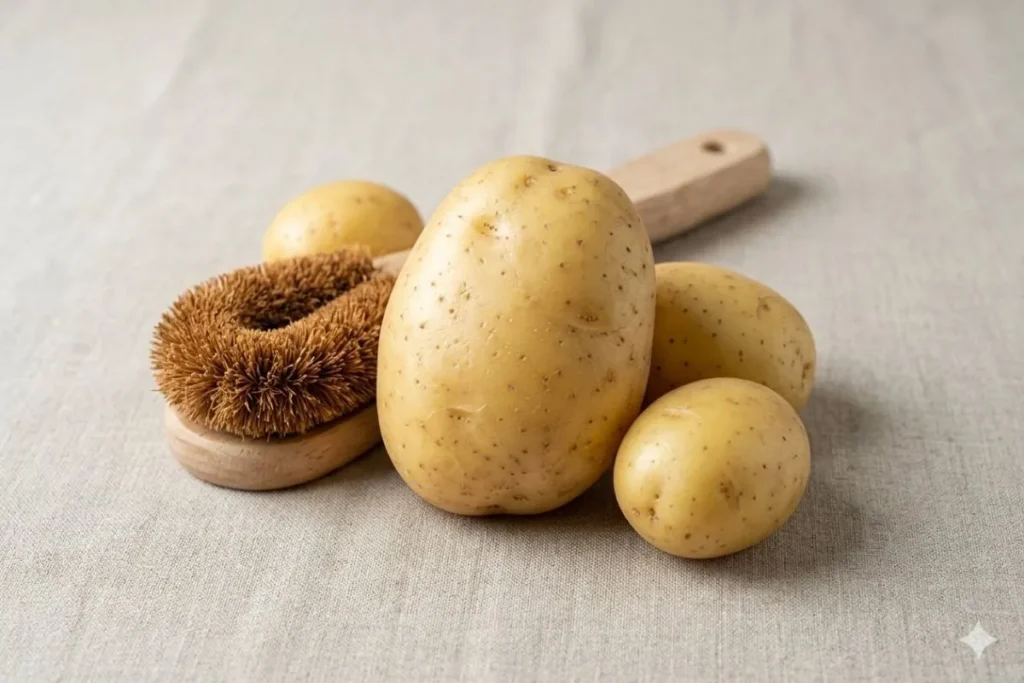
The first thing you need is a good planting potato. Seed potatoes are usually the simplest choice because they are specifically intended for growing. Choose firm potatoes that look healthy and have no obvious soft, rotten, or damaged areas.
You may also come across sprouted potatoes at home. These potatoes have small shoots, commonly called potato sprouts, growing from their eyes. A sprouted potato can show that the tuber is ready to begin new growth, but using healthy seed potatoes gives you more control over your indoor potato growing project.
Don’t worry if the potato looks small. What matters is its health and the presence of strong sprouts. These sprouts will develop into stems and leaves above the soil, while new potato tubers develop underground.
For beginners, start with a few healthy planting pieces rather than filling one container with too many potatoes. Giving each plant enough room can make potato plant growth easier to manage.
The Right Container
Choosing the right container is one of the most important steps in growing potatoes in containers. Potatoes need enough space for their roots and developing tubers, so a shallow pot isn’t ideal.
A deep container, large gardening pot, or suitable growing bag can work well. Whatever you choose, make sure it has drainage holes at the bottom. These holes allow excess water to escape instead of collecting around the roots.
If you’re wondering, what size container is best for growing potatoes indoors, focus on depth and available growing space rather than choosing the smallest pot that fits on a shelf. A container that gives the plant room to develop is a much better choice.
You can use containers made specifically for vegetable gardening, but you don’t necessarily need a fancy potato growing container. A sturdy, food-safe gardening container with good drainage can work. Just make sure it is clean and strong enough to hold moist soil.
Suitable Potting Soil
Good soil gives your potato plant a strong start. Avoid using dense garden soil that becomes hard and compacted inside a container. Instead, choose a loose, well-draining potting soil for potatoes or a quality container-growing mix.
So, what soil is best for growing potatoes indoors? Look for a growing medium that holds enough moisture for the plant but still allows excess water to drain away. Potatoes need room for their roots and developing tubers, so compacted soil can make growing more difficult.
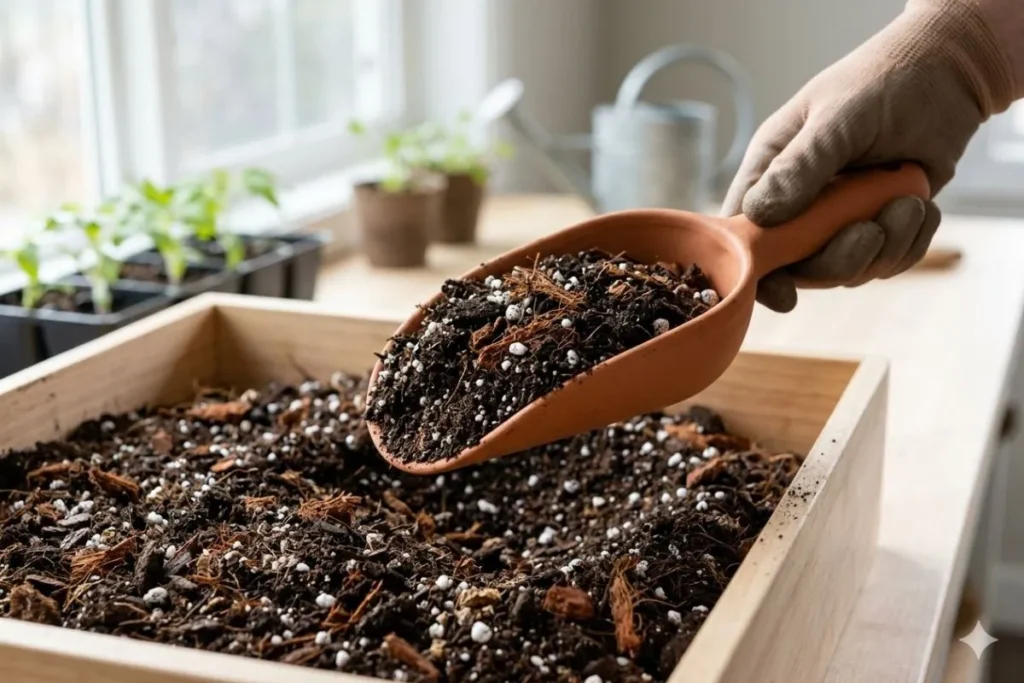
A suitable indoor potato soil should also provide enough support for the plant as it becomes taller. If the soil settles heavily after watering, loosen the surface gently rather than allowing it to become packed.
The goal isn’t to create a complicated soil formula. For most home growers, a quality potting mix designed for container vegetables is a simple starting point.
Light and Grow Lights
Light is another key part of successful indoor potato plant care. Although the tubers grow below the soil, the plant still needs adequate light above the soil to produce healthy leaves and stems.
Place your container somewhere that receives plenty of bright natural light. A sunny window can be a convenient option for an indoor vegetable garden. However, not every home gets enough sunlight throughout the day.
That’s where indoor grow lights can help. If natural light is weak or inconsistent, a suitable grow light can provide additional illumination. Keep the light positioned according to the manufacturer’s instructions rather than placing it extremely close to the leaves.
If you’re asking, how much light does an indoor potato plant need, the simple answer is that it needs consistent, adequate light for healthy leafy growth. Watch the plant as it develops. Thin, weak, or stretched growth can be a sign that the plant isn’t getting enough light.
With the right potato, container, soil, and lighting setup, you’re ready to move from preparation to actual planting. The next step is where your indoor potato growing project really gets started.
How to Grow a Potato Plant Indoors Step by Step
You don’t need to be an experienced gardener to learn how to grow a potato plant indoors step by step. Another common belief is that potatoes need to be planted deep in the ground all at once.
In a container, you can take a more controlled approach and gradually build the growing space around the plant as it develops. This makes growing potatoes indoors in containers much easier to manage.
Once your supplies are ready, the actual planting process is straightforward. Follow these steps, give the plant consistent care, and keep an eye on its growth as the weeks pass.
Choose Healthy Seed Potatoes
Start with healthy seed potatoes that are firm and free from obvious rot or damage. Look for potatoes with small, sturdy potato sprouts emerging from their eyes.
If the potato has several strong sprouts, you can use it for your indoor potato growing project. Avoid potatoes that feel unusually soft, have large damaged areas, or show signs of decay.
Healthy planting material gives your potato plant growth a better starting point. You want the plant to spend its energy developing strong stems and foliage rather than dealing with damaged or unhealthy tissue.
Prepare the Container
Before planting, make sure your container is clean and has working drainage holes. Add a layer of your prepared potting mix to the bottom.
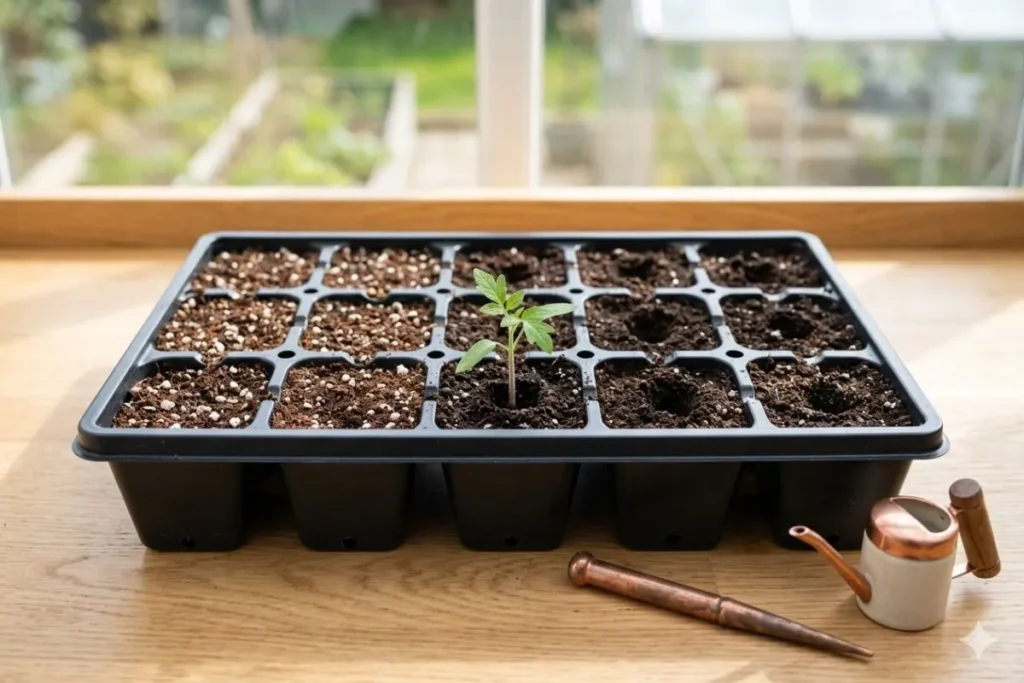
Don’t fill the container completely at this stage. Leave enough room for the plant to grow upward and for additional soil to be added later.
Place the initial soil layer evenly across the bottom. It should be loose rather than tightly compressed. This gives the developing potato plant roots room to spread.
Plant the Potato
Place the seed potato on top of the soil with the strongest sprouts facing upward. Cover it with a layer of soil, leaving enough room above the soil surface for new growth to emerge.
After planting, give the soil a light watering. Don’t soak the entire container. The aim is to moisten the growing medium without creating standing water.
This is the basic process behind potato planting indoors. Once the sprouts emerge, you’ll be able to see the plant developing above the soil while its underground growth continues.
If you’re learning how to grow potatoes indoors in containers, resist the temptation to keep disturbing the soil to check for tubers. The developing roots and tubers need a stable growing environment.
Place the Container in the Right Location
Move the container to a bright location where the growing plant can receive consistent light. A bright window may work well, but make sure the plant isn’t constantly exposed to conditions that cause the soil to dry out too quickly.
If your home doesn’t provide enough natural light, use suitable indoor grow lights. Consistent lighting supports healthy stems and leaves as the plant develops.
Turn the container occasionally if the plant starts leaning strongly toward one direction. This can help encourage more even growth.
Keep the plant away from areas where it can easily be knocked over. A stable location is especially important once the foliage becomes taller.
Water the Potato Plant
Watering is one of the easiest parts of potato plant care to get wrong. More water doesn’t automatically mean faster growth.
Instead, check the soil before watering. If the upper layer feels dry, water the plant thoroughly enough to moisten the growing medium. Allow excess water to drain through the bottom of the container.
Avoid leaving the container sitting in collected water. Constantly saturated soil can create an unhealthy environment around the potato plant roots.
So, how often should you water potatoes grown indoors? There isn’t one perfect schedule for every home. Temperature, container size, light, humidity, and soil all affect how quickly the growing medium dries. Check the soil regularly instead of watering according to the calendar alone.
Add More Soil as the Plant Grows
As the stem grows taller, gradually add more potting mix around the lower portion of the plant. This technique gives the plant additional growing space and supports the developing underground portion.
Don’t bury the entire plant in one go. Add soil gradually while allowing the upper foliage to remain above the surface.
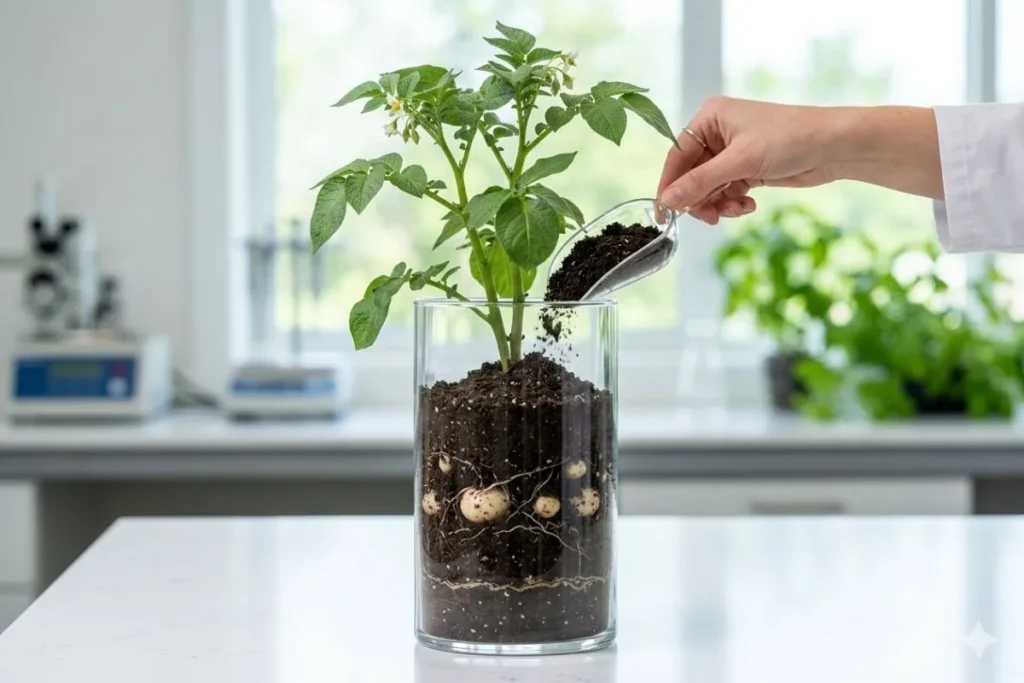
This step is particularly useful when growing potatoes in pots because the container provides a controlled environment for managing the growing depth.
Continue watching the plant as it grows. The combination of healthy foliage above the soil and developing structures below the surface is an important part of successful indoor potato growing.
Fertilize When Needed
Potatoes need nutrients to support healthy growth, but more fertilizer isn’t always better. If you’re using a quality potting mix that already contains nutrients, you may not need to fertilize immediately.
As the plant develops, follow the instructions on a suitable vegetable fertilizer if additional feeding is needed. Don’t exceed the recommended amount.
A balanced approach to potato plant fertilizer can support foliage and tuber development. Overfertilizing, however, can create unnecessary problems and may encourage excessive leafy growth.
Keep the process simple: provide suitable soil, adequate moisture, sufficient light, and nutrients when appropriate. With these basics in place, your potato plant can continue developing inside its container.
Frequently Asked Questions About Growing Potatoes Indoors
You don’t need a large garden or complicated equipment to grow potatoes inside. However, beginners often have a few questions before starting. Here are straightforward answers to the most common questions about growing a potato plant indoors.
Can You Grow a Potato Plant Indoors?
Yes, you can grow a potato plant indoors. The plant needs a suitable container, healthy planting material, appropriate soil, enough light, and regular care.
Growing potatoes indoors can work especially well for people with limited outdoor space. A bright indoor location or suitable grow light can help provide the conditions the plant needs.
How Do You Grow Potatoes Indoors in Containers?
Start with a healthy seed potato and place it in a suitable container filled with a layer of quality potting mix. Position the sprouts upward, cover the potato with soil, and water it lightly.
As the plant develops, continue providing adequate light and moisture. Gradually adding soil as the plant grows can also give the developing tubers more room.
This simple method makes growing potatoes in containers practical for beginners.
How Long Does It Take to Grow Potatoes Indoors?
The growing time depends on the potato variety and the conditions inside your home. Light, temperature, moisture, container size, and overall plant health can all affect the timing.
Instead of relying only on a specific number of days, watch the plant for signs that it is reaching maturity. This is especially important when growing potatoes year round, because indoor conditions can vary from season to season.
How Much Light Does an Indoor Potato Plant Need?
An indoor potato plant needs plenty of consistent light for healthy leafy growth. A bright window may provide natural light, while an indoor grow light can help when sunlight is limited.
If the plant becomes weak, thin, or unusually stretched, check whether it is receiving enough light. Good lighting is an important part of indoor potato plant care.
What Size Container Is Best for Growing Potatoes Indoors?
Choose a container that provides enough depth and growing space for the plant and its developing tubers. It should also have good drainage.
Avoid choosing a very small container simply because it is easier to fit indoors. A suitable potato growing container should give the plant enough room to develop without becoming overcrowded.
What Soil Is Best for Growing Potatoes Indoors?
A loose, well-draining potting mix is a good choice for indoor potatoes. The soil should hold enough moisture for healthy growth while allowing excess water to drain away.
Avoid dense soil that becomes hard and compacted. Suitable potting soil for potatoes gives the roots and developing tubers a better environment.
How Often Should You Water Potatoes Grown Indoors?
There’s no universal watering schedule because indoor conditions differ. Check the soil regularly and water when it starts to become dry rather than following a strict calendar.
The goal is to keep the growing medium appropriately moist without leaving it constantly waterlogged. Good drainage is just as important as proper watering when caring for an indoor potato plant.
Can You Grow Potatoes Indoors Without a Garden?
Yes. You can grow potatoes indoors without having a traditional garden. A suitable container can replace a garden bed and allow you to grow potatoes in a relatively small space.
This makes how to grow potatoes indoors without a garden especially useful for apartment gardeners, renters, and people with limited outdoor space.
Can You Grow Potatoes From a Store-Bought Potato?
A store-bought potato may develop sprouts, but that doesn’t automatically make it the best planting material. For more predictable results, many growers choose healthy seed potatoes intended for planting.
If you decide to use a sprouted potato, inspect it carefully and avoid using one that is soft, rotten, or visibly damaged.
Can Potatoes Grow Indoors Year Round?
Potatoes can be grown indoors at different times of the year when you can maintain suitable growing conditions. Indoor growing gives you more control over light, moisture, and the growing environment.
However, growing potatoes year round doesn’t mean every planting will produce the same results. Variety and indoor conditions still influence plant growth and harvest timing.
Conclusion:
Growing potatoes doesn’t require a backyard, large garden, or complicated equipment. With a suitable container, healthy seed potato, quality potting soil, enough light, proper watering, and regular care, growing a potato plant indoors can be surprisingly simple.
The process is easy to follow: choose healthy planting material, prepare your container, plant the potato, provide enough light and moisture, add soil as the plant grows, and wait for the right time to harvest.
You don’t need to be an experienced gardener to get started. If you’re new to indoor gardening, begin with just one container and learn as your plant grows.
Whether you live in an apartment or simply want to experiment with growing potatoes at home indoors, this is a fun way to make use of limited space while growing your own food.
So, are you ready to give it a try? Will you grow your potato plant near a sunny window or use an indoor grow light?

Plant Nest Blog’s author is passionate about plants, gardening, and sustainable living. Through research and practical experience, they share helpful plant care tips, gardening guides, and easy solutions to help readers grow healthier plants and create greener spaces.