
A common gardening myth is that starting basil seeds inside a home is hard and that you need a greenhouse, pricey gear or years of gardening experience to succeed. That is simply not true.
With the setup and a few simple tricks anyone can grow basil seeds inside and enjoy fresh healthy herbs all year even if you live in a small apartment with limited space.
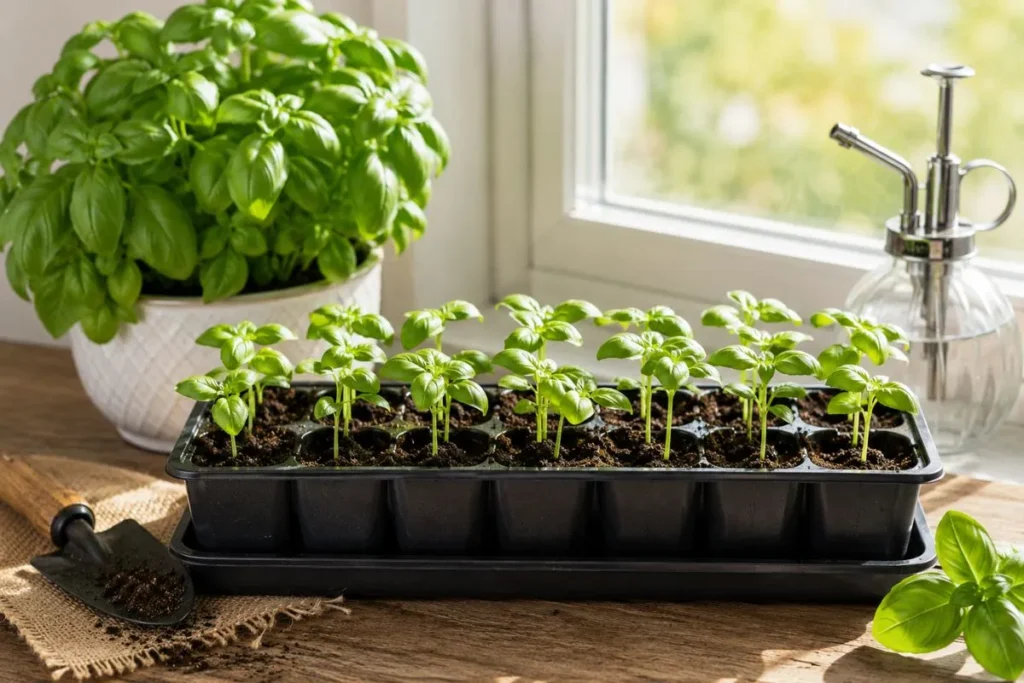
If you have been looking for a full indoor basil seed growing guide you are in the place. This beginner friendly article takes you through every step from picking the seeds to caring for healthy basil plants and picking fresh leaves.
Along the way you will also see a few chosen gardening products that can make the process easier. If something catches your eye you can view it. Buy it directly from the article to help you start with confidence.
Why Grow Basil Seeds Indoors of Buying Plants?
Growing Basil from Seeds Saves You Money
If you use basil a lot in your kitchen buying fresh basil or mature plants over and over can become costly. A single packet of basil seeds costs less and can produce dozens of healthy plants.
This makes growing basil seeds indoors a smart and budget friendly choice for beginners and experienced gardeners alike. Whether you want one indoor basil plant or you are planning a full indoor herb garden starting from basil seeds gives you more value for your money.
Enjoy Fresh Basil Throughout the Year
One of the advantages of learning how to grow basil seeds indoors is that you do not have to wait for the right season. Unlike plants that depend on the weather indoor basil can thrive all year with the right care.
Having basil at home means you can simply pick a few leaves whenever you are making pasta, pizza, salads, soups, sandwiches or homemade pesto. It is convenient, fresh and within reach.
You Have Complete Control Over Growing Conditions
When you grow basil from seed you control every part of the growing process. You can choose quality soil, water basil properly give basil the right amount of light and keep the temperature ideal.
This level of control helps produce basil and reduces many common problems that store bought herbs often face. As a result basil has a chance of growing strong producing vibrant leaves and lasting much longer.
Perfect for Beginners Who Want to Start Indoor Gardening
Many people think indoor herb gardening is hard. Basil is actually one of the easiest herbs to grow. Basil seeds germinate quickly the plants grow fast. They are forgiving if you make a few beginner mistakes.
That is why basil is often recommended as the herb for anyone starting indoor herb gardening. Even if you have never planted a seed before this guide will show you how to start basil seeds indoors with confidence.
Plants Started from Seed Are Often Healthier
Store bought basil plants usually grow in nursery conditions and can feel stressed after being moved into a new home. When you grow basil seeds indoors the basil adapts to your environment from the very beginning.
This helps develop roots healthier stems and better overall growth. Over time you will enjoy a productive basil that keeps producing fresh leaves for months.
You Can Choose the Basil Variety That Fits Your Needs
Another reason to start from seed is the wide range of basil varieties available. Garden centers often carry one or two types while seed packets offer many options for different flavors and recipes.
Sweet basil is ideal for cooking Genovese basil is famous for pesto Thai basil adds a bold flavor to Asian dishes lemon basil offers a refreshing citrus aroma and purple basil adds beautiful color to your herb collection.
Choosing your variety lets you grow basil that perfectly matches your cooking style.
Watching Basil Grow Is Surprisingly Rewarding
There is something satisfying about planting seeds and watching them turn into thriving plants. From basil seed germination, to harvesting your fresh leaves every stage feels rewarding.
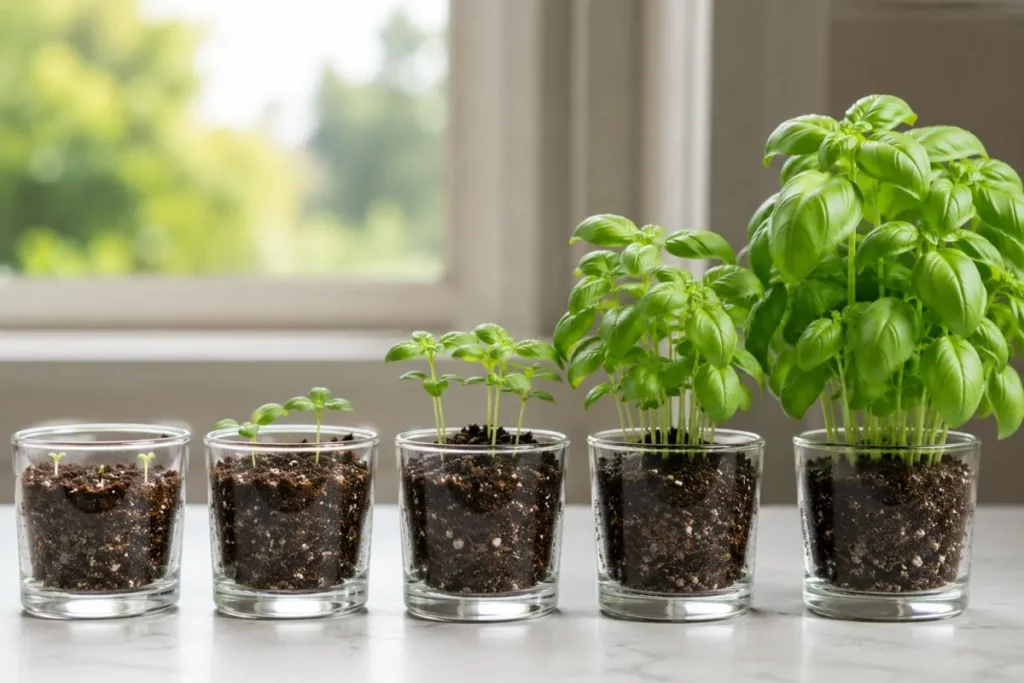
Whether you are creating a small home herb garden on your kitchen windowsill or adding basil to an indoor collection growing your own basil is a fun and relaxing hobby. By the end of this guide you will know how to grow basil seeds indoors and enjoy fresh basil whenever you need it.
Things You’ll Need Before You Plant Basil Seeds Indoors
Many people believe that you need gardening equipment to grow basil seeds indoors but that is not true. In fact you only need a simple supplies to create the right environment for basil seeds.
Picking the materials from the start makes the growing process easier and gives basil plants a much better chance of growing strong and healthy.
Before you begin planting gather the following essentials. Having everything ready will save time and help you avoid beginner mistakes.
Basil Seeds
The first thing you need is a good-quality packet of basil seeds. Fresh high-quality seeds usually have a germination rate, which means more basil seeds will sprout successfully. If you wonder about the way to grow basil seeds indoors in pots it all starts with choosing reliable seeds from a trusted brand.
Sweet Basil is the popular variety for beginners because it is easy to grow and works well in many recipes. If you want to try something you can also choose Genovese, Thai, Lemon or Purple Basil depending on your cooking preferences.
Small. Seed Trays
Your basil seeds need a place to begin growing. Small pots and basil seed trays are both choices because they give enough space for young seedlings to develop healthy roots.
Seed trays are especially useful if you plan to grow plants at once. They also make it easier to monitor watering and basil seed germination before moving the seedlings into containers.
Whatever container you choose make sure it has drainage holes at the bottom. Proper drainage keeps water from collecting around the roots reducing the risk of root rot and fungal problems.
Use a Quality Potting Mix
One of the mistakes beginners make is using ordinary garden soil indoors. Garden soil is often too heavy does not drain and may contain insects, weeds or diseases.
Instead use a well-draining basil potting mix designed for container gardening. The best soil for basil keeps moisture for the seeds while letting excess water drain away easily.
A quality potting mix also improves airflow around the roots helping basil seedlings grow faster and healthier. Using the soil from day one creates the perfect foundation for successful growing basil seeds indoors.
Provide Light
Light is one of the most important factors in growing healthy basil. Without light basil seedlings become weak, thin and leggy. If you have a south-facing window that receives six to eight hours of sunlight each day basil should grow well.
If natural light is limited during winter consider using basil grow lights. LED grow lights give light and are an excellent solution for indoor gardening. Choosing the light for basil early on helps produce compact plants with vibrant green leaves and steady growth.
Keep a Spray Bottle Handy
planted basil seeds do not need heavy watering. A spray bottle is one of the tools for keeping the soil evenly moist without disturbing the seeds. A gentle mist prevents the soil from drying out while avoiding overwatering, which’s one of the most common reasons basil seeds fail to sprout. This simple tool makes caring for basil seedlings much easier during the first few weeks.
Use a Water Tray
Place your pots or basil seed tray on a water tray to catch excess water after watering. It keeps your growing area cleaner. Protects windowsills, shelves and countertops from water damage.
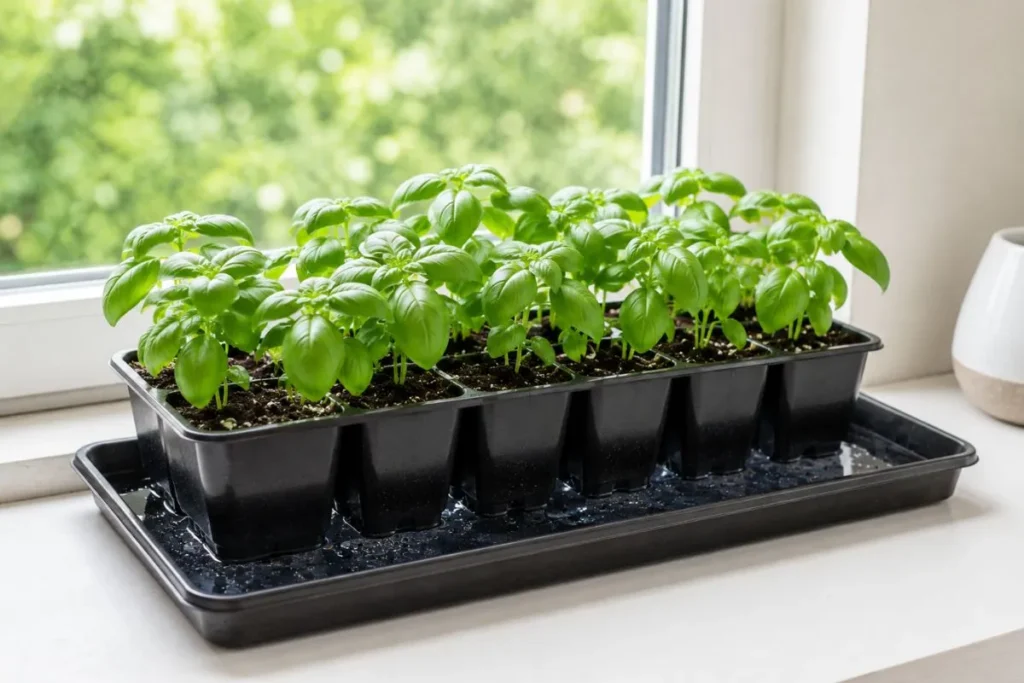
A tray also makes it easier to water from the bottom when needed. Bottom watering encourages roots to grow while keeping the surface soil from becoming overly wet.
Label Your Plants
If you are growing than one variety of basil plant labels are a small investment that makes a big difference. They help you remember which variety of basil is planted in each pot and allow you to track planting dates.
This is especially useful if you are experimenting with herbs in your indoor herb garden or comparing different basil varieties.
Choose the Right Container Size
The size of your container matters more than many beginners realize. Small pots are perfect for starting basil seeds. Once basil seedlings develop several sets of leaves they will eventually need a larger home.
For long-term growth containers that are around 6 to 8 inches usually give enough room for healthy root development. If you plan to grow herbs indoors investing in durable containers will make future planting much easier.
Don’t Overlook Drainage
Even the best basil seeds in pots will not perform well if excess water has nowhere to go. Proper drainage is essential because basil roots dislike sitting in wet soil.
Always choose containers with drainage holes. Use a loose potting mix that lets water flow freely. This simple step helps prevent root diseases and supports vigorous growth throughout the growing season.
Getting Everything Ready Makes Growing Easier
Preparing your supplies before planting may seem like a step but it makes a huge difference later. When you have quality basil seeds, suitable containers, nutrient-rich potting mix, proper lighting and good drainage you have already set yourself up for success.
Once everything is, in place you are ready to move on to the part planting your basil seeds and watching them sprout into healthy productive plants.
Choosing the Best Basil Seeds
Many beginners think that all basil seeds are identical and that any variety will give the plants. In truth each basil variety has its flavor, scent, growth style and kitchen use. Picking the basil seeds before you plant basil seeds indoors can change your gardening experience and the dishes you make.
The good news is that every basil variety can grow indoors when you give it proper care. The best basil choice depends on your taste, cooking habits. What you want from your indoor herb garden.
Sweet Basil The Best Choice for Beginners
If someone is learning to grow basil seeds indoors Sweet Basil is the start. Sweet Basil germinates fast grows reliably. Adapts well to indoor conditions.
Sweet Basil has green leaves and a fresh slightly sweet flavor that fits many everyday recipes. Sweet Basil is great for pasta, pizza, sandwiches, soups, salads and homemade sauces.
Because Sweet Basil is easy to care for many recommend it for anyone starting basil seeds indoors for the time.
Genovese Basil Perfect for Homemade Pesto
Genovese Basil is a popular variety among home gardeners and chefs. Genovese Basil looks like Sweet Basil. Makes larger leaves with a richer aroma and stronger flavor.
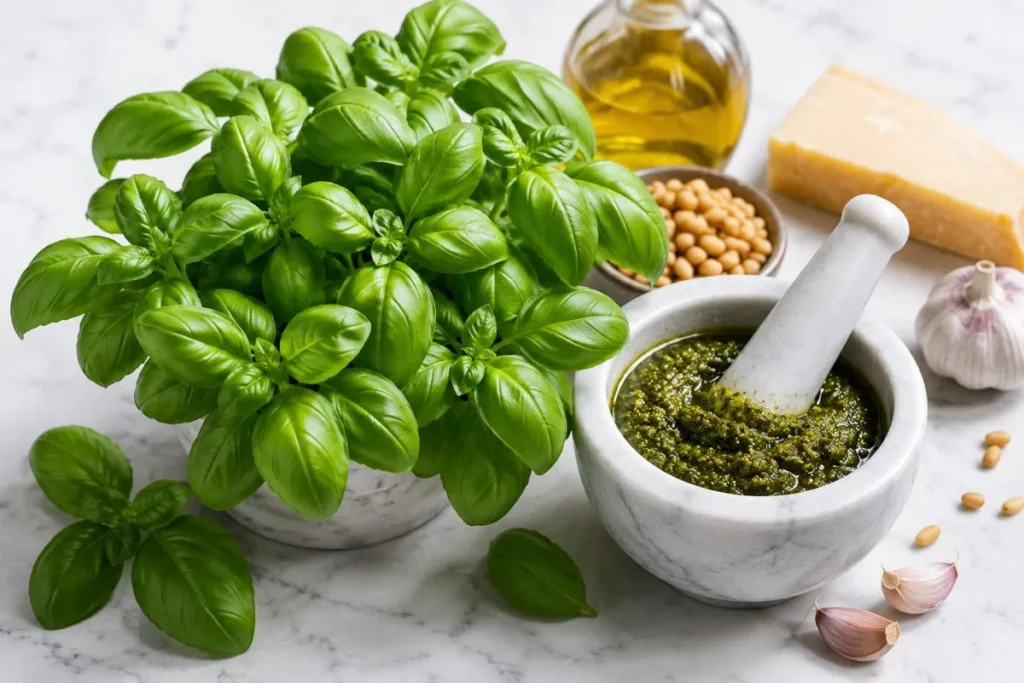
If someone loves making pesto Genovese Basil is an excellent choice. Genovese Basil also does well in containers making it ideal for anyone wanting the best way to grow basil seeds indoors in pots.
With lighting and regular harvesting Genovese Basil can give a steady supply of fresh leaves all season.
Thai Basil A Great Choice for Asian Cuisine
Thai Basil has a flavor different from traditional basil. Thai Basil leaves taste of licorice and spice making it a favorite in stir-fries, curries, noodle dishes and other Asian recipes.
Besides its taste Thai Basil is also a pretty plant with dark stems and purple flowers when it matures. If someone enjoys kitchen experiments Thai Basil can be an addition to the indoor herb garden.
Lemon Basil Fresh and Citrusy
As the name shows Lemon Basil smells fresh with citrus. Is different from other basil varieties. Lemon Basil leaves mix basil flavor with subtle lemon notes making them perfect for seafood dishes salads, herbal teas, desserts and refreshing summer drinks.
Lemon Basil is easy to keep indoors. Adds both flavor and fragrance to the kitchen.
Purple Basil –. Flavorful
If someone wants something practical Purple Basil is worth considering. Purple Basil has purple leaves that give a stunning contrast among other herbs and add a slightly spicy flavor to meals.
Purple Basil works in salads, garnishes, infused oils and decorative herb arrangements. Purple Basil brings color to the home herb garden without needing care than other basil varieties.
Which Basil Variety Grows Best Indoors?
Every basil variety can thrive indoors but some adapt more easily than others. For people Sweet Basil and Genovese Basil are the best basil choices because they grow fast produce many leaves and tolerate indoor conditions very well.
If the main goal is growing Sweet Basil indoors Sweet Basil responds to regular watering, plenty of light and occasional pruning. Sweet Basil also recovers quickly after harvesting letting you enjoy leaves for months.
Which Basil Variety Is Best for Beginners?
For anyone wondering how to start basil seeds indoors Sweet Basil is still the winner. Sweet Basil is forgiving, grows fast and needs no care beyond the basics. Even if someone is completely new to indoor herb gardening Sweet Basil offers a chance of success.
Once confidence grows someone can experiment with Genovese, Thai, Lemon or Purple Basil to enjoy flavors and expand the indoor herb collection.
Should You Choose Organic Basil Seeds?
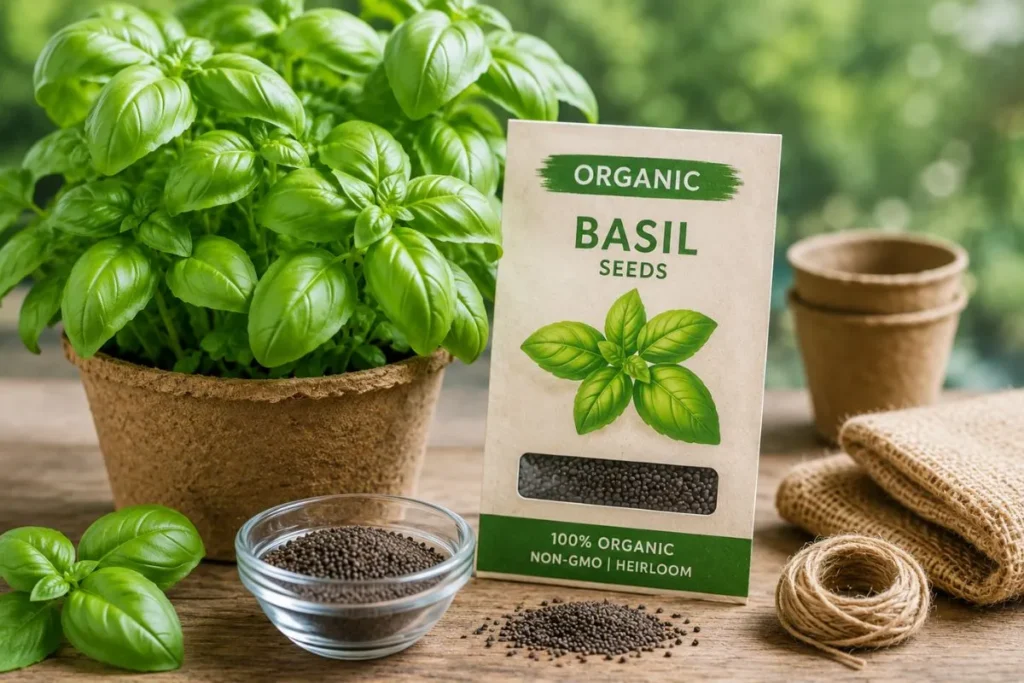
Whenever possible it is an idea to buy organic basil seeds from a trusted supplier. Organic basil seeds are often made without chemicals and are known for high quality and reliable germination rates.
Although organic basil seeds may cost a more they can be a worthwhile investment for healthy plants and a natural gardening experience.
Buy Fresh Seeds from a Trusted Brand
No matter which basil variety is chosen always check the seed packet before buying. Fresh basil seeds usually have better germination rates than older seeds.
Look for:
– A packing date
– A high germination rate
– Clear planting instructions
– A trusted gardening brand
– Properly sealed packaging
Starting with quality basil seeds gives the plants the best beginning and increases the chances of growing healthy basil indoors.
Choose the Variety That Matches Your Lifestyle
There is no single ‘perfect’ basil variety for everyone. The best basil choice depends on how basil will be used. If Italian dishes are cooked regularly Sweet Basil or Genovese Basil is a fit. If Asian recipes are enjoyed Thai Basil is an option.
For something Lemon Basil offers a refreshing citrus flavor while Purple Basil adds beauty and bold color to the indoor garden.
Choosing the basil seeds is the first step, toward learning how to grow basil seeds indoors. Once the favorite basil variety is picked the next step is. Giving the basil seeds the best start.
Step-by-Step Guide: How to Grow Basil Seeds Indoors
Many people believe that planting basil seeds is as simple as dropping them into soil and adding water. While basil is one of the herbs to grow following the right planting steps makes a huge difference.
If you want plants with strong roots and plenty of flavorful leaves each step matters. This step-by-step guide to growing basil seeds indoors will help you avoid mistakes and give your seeds the best possible start.
Prepare the Container
Before you plant anything prepare your container properly. Whether you’re using pots or a basil seed tray make sure every container has drainage holes. Good drainage prevents water from collecting around the roots. Helps keep your seedlings healthy.
Fill your container with a high-quality potting mix until its half an inch below the rim. Avoid pressing the soil down firmly because basil roots grow best in loose airy soil.
Lightly moisten the soil before planting so its evenly damp but not soaking wet. Starting with prepared containers is one of the easiest ways to grow basil seeds indoors successfully.
Plant the Seeds Correctly
One of the important parts of learning how to plant basil seeds indoors is getting the planting depth right. Basil seeds are small so they should not be buried deeply.
Place the seeds about ¼ inch (6 mm) below the surface of the soil. Gently cover them with a thin layer of potting mix. Planting them deep can make germination slower or prevent the seeds from sprouting altogether.
If you’re planting in a pot leave about 2 to 3 inches of space between seeds. For pots sow two or three seeds together and thin the seedlings later if necessary. Proper spacing gives each plant room to develop healthy roots and strong stems.
This simple planting method greatly improves basil seed germination. Gives young plants the space they need to thrive.
Water the Seeds the Right Way
Watering is one area where many beginners make mistakes. Basil seeds need moisture but they don’t like soggy soil.
After planting gently mist the soil with a spray bottle of pouring water directly onto the seeds. This keeps the seeds in place while evenly moistening the soil. During germination check the soil daily. If the surface begins to dry out lightly mist it again.
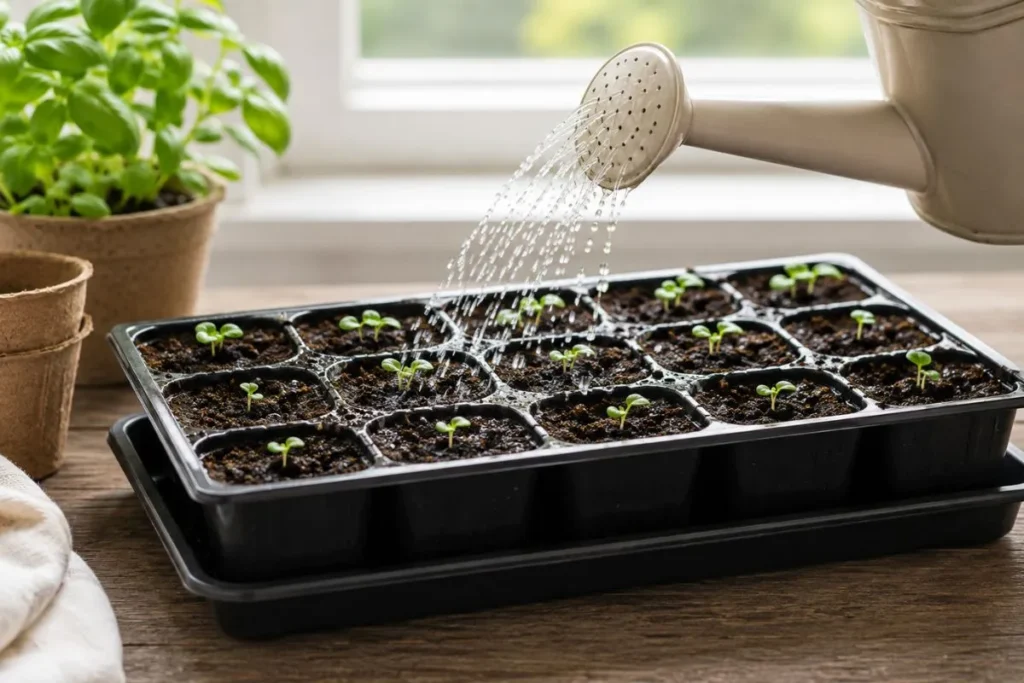
If you’re wondering how often should you water basil seedlings indoors the answer depends on your homes temperature and humidity. Rather than following a schedule, water whenever the top layer of soil begins to feel slightly dry. This method helps maintain a basil watering schedule without overwatering.
Keeping the soil evenly moist is one of the biggest secrets to successful growing basil seeds indoors.
Give Your Basil Plenty of Light
Light plays a role in growing strong basil plants. Without light seedlings become thin, weak and stretched out as they search for sunlight.
Place your containers near a south-facing window where they can receive 6 to 8 hours of sunlight each day. If natural sunlight is limited don’t worry. Many gardeners successfully learn how to grow basil seeds indoors under grow lights by using full-spectrum LED lights.
Position the basil grow lights 6 to 12 inches above the seedlings and keep them on for around 12 to 16 hours each day. This provides the light for basil and encourages compact healthy growth.
If you don’t have a window using grow lights is also the easiest solution for anyone wondering how to grow basil seeds indoors without sunlight.
Maintain the Right Temperature
Basil loves warmth. Seeds germinate best when the temperature stays between 70°F and 80°F (21°C to 27°C).
Try to keep your containers from cold windows, air conditioners and heating vents as sudden temperature changes can slow growth. Maintaining indoor conditions supports healthy basil growing conditions and improves germination.
If your home feels dry during winter increasing humidity slightly can also help young seedlings establish themselves more easily.
Providing the basil temperature requirements creates an ideal environment for steady healthy growth.
Be Patient During Germination
Once everything is set up the hardest part is simply waiting. Most basil seeds begin sprouting within 5 to 10 days although some may take, up to two weeks depending on the growing conditions.
If you’re asking how long does it take basil seeds to grow indoors you’ll usually see the first tiny green shoots appear within the week when moisture, warmth and light are all consistent.
Healthy seedlings will develop small seed leaves followed by their first true leaves shortly afterward.
If no seedlings appear after two weeks check whether the soil stayed moist enough whether the seeds were planted deeply or if the room temperature was too cool.
Frequently Asked Questions (FAQs)
How long does it take basil seeds to grow indoors?
Basil seeds usually begin to sprout within 5 to 10 days when they receive warmth, moisture and light. After germination the seedlings continue growing quickly.
You’ll often see the first true leaves within two to three weeks. Under basil growing conditions most plants are ready for their first light harvest in about 6 to 8 weeks.
If you’re wondering how long does it take basil seeds to grow indoors remember that cooler temperatures or insufficient light can slow the process.
Can basil grow indoors without sunlight?
Yes basil can grow indoors without sunlight as long as it receives enough artificial light. If your home doesn’t have a window full-spectrum LED basil grow lights are an excellent alternative.
Keeping the lights on for around 12 to 16 hours a day provides the light for basil and encourages healthy growth. This is one of the solutions for anyone searching for how to grow basil seeds indoors without sunlight.
What is the best soil for growing basil seeds indoors?
The best soil for growing basil seeds indoors is a light, loose and well-draining potting mix designed for containers. Avoid using garden soil because it compacts easily and holds too much water.
A quality basil potting mix allows roots to breathe while keeping moisture for healthy growth. Good soil is one of the important factors in successfully growing basil seeds indoors.
How often should I water basil seedlings indoors?
There isn’t a fixed watering schedule because every home has temperatures and humidity levels. Of watering on specific days check the soil regularly. When the top inch feels slightly dry it’s time to water.
This approach creates a basil watering schedule and helps prevent both overwatering and underwatering. If you’re asking how often should you water basil seedlings indoors the goal is to keep the soil consistently moist not soaking wet.
Can I grow basil in pots?
Yes basil starts well in small pots or seed trays. These containers are perfect for basil seed germination and early seedling growth. However once the plants develop sets of true leaves it’s best to transplant them into larger containers.
This gives the roots room to expand and supports stronger healthier plants over time.
Do basil plants need fertilizer indoors?
Yes,. Only in moderation. Once your basil seedlings become established feeding them with a liquid fertilizer every three to four weeks is usually enough. Much fertilizer can cause rapid leaf growth with less flavor so its better to use small amounts.
Combined with watering and lighting occasional feeding helps maintain healthy indoor basil plants.
Can I grow basil indoors all year?
Absolutely. One of the benefits of growing basil indoors is that you can enjoy fresh herbs throughout the year. Long as your plants receive enough light, warmth, water and regular care they’ll continue producing leaves regardless of the season.
Many gardeners successfully grow basil indoors year round using either sunny windows or LED grow lights.
Why are my basil seeds not sprouting?
There are possible reasons why basil seeds fail to germinate. The common causes include planting the seeds too deeply allowing the soil to dry out using old seeds with poor germination rates or keeping the temperature too cool.
Following a step-by-step guide to growing basil seeds indoors greatly improves your chances of successful sprouting.
When should I start harvesting basil leaves?
Wait until your basil plant has developed at six to eight healthy leaves before harvesting. Of removing large sections at once pinch off the top leaves just above a pair of leaf nodes.
This encourages the plant to branch out and produce more leaves. Regular harvesting is one of the ways to keep your basil healthy and productive.
Is growing basil from seed better than buying a plant?
For most home gardeners yes. Starting from seed is usually more affordable gives you access, to a selection of basil varieties and allows your plants to adapt to your indoor environment from the beginning.
If you’re learning how to grow basil seeds indoors for beginners starting from seed is a way to build confidence while enjoying healthier longer-lasting plants.
Conclusion
Learning how to grow basil seeds indoors is much easier than many people expect. You don’t need a garden, expensive equipment or years of gardening experience to enjoy fresh basil at home.
With the seeds a quality potting mix, proper lighting, consistent watering and a little patience you can successfully grow basil seeds indoors and enjoy healthy plants throughout the year.
In this guide we’ve covered everything from choosing the basil variety and preparing your supplies to planting seeds caring for seedlings avoiding common mistakes pruning, harvesting and solving everyday growing problems.
By following these steps even complete beginners can create a thriving indoor herb garden and enjoy a steady supply of fresh basil for cooking.
Remember that every successful basil plant starts with consistent efforts. Check your plants regularly provide light avoid overwatering and harvest leaves often to encourage continuous growth.
These simple habits will help your basil stay healthy, productive and full of flavor.
If you’re ready to start your gardening journey now is the perfect time to put these tips into action.
Browse the recommended gardening products included throughout this article to find quality seeds, containers grow lights and other helpful tools that can make growing basil seeds indoors even easier.

Plant Nest Blog’s author is passionate about plants, gardening, and sustainable living. Through research and practical experience, they share helpful plant care tips, gardening guides, and easy solutions to help readers grow healthier plants and create greener spaces.