
Many gardeners believe that more fertilizer means more flowers on a plumeria, but that is not always true. In fact, using too much fertilizer can do more harm than good. The right plumeria plant fertilizer should provide the nutrients your plant needs without forcing excessive growth.
When you understand what your plumeria actually needs, you can support lush foliage, strong roots, healthy stems, and better flowering without overfeeding the plant.
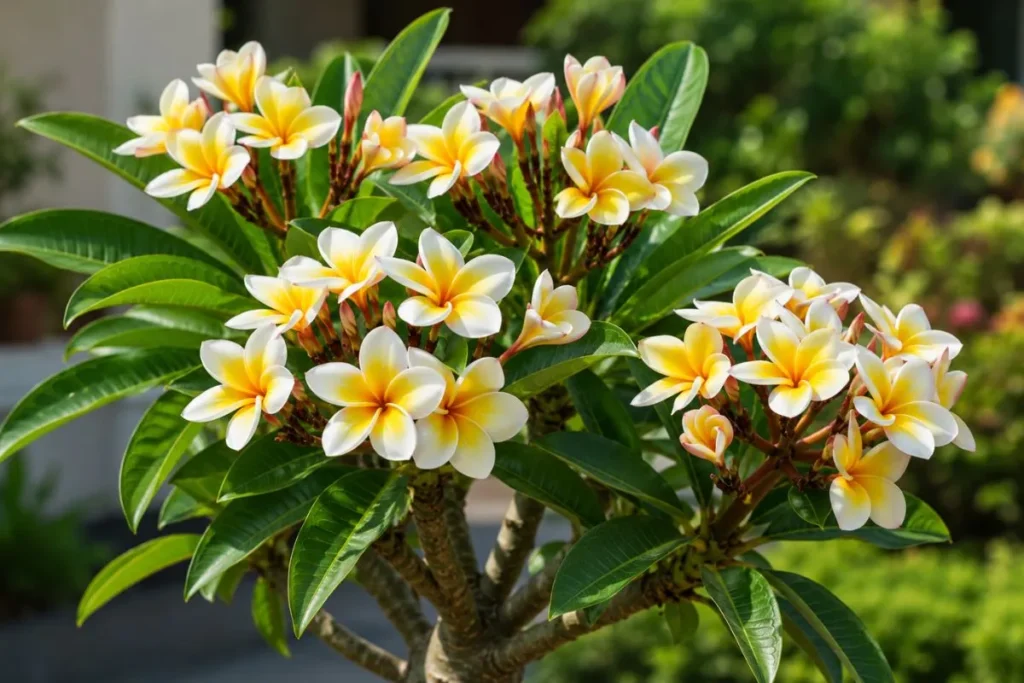
Plumerias, also called frangipani, are beautiful flowering plants that can grow vigorously in the right conditions. But fertilizer is not a magic solution. Your plant needs the right combination of nutrients, sunlight, water, soil, and growing conditions to stay healthy.
Choosing the right plumeria fertilizer is therefore less about using the strongest product and more about giving your plant suitable nutrition at the right time.
The three main nutrients to understand are nitrogen, phosphorus, and potassium. Each one plays a different role in plant growth. Knowing how these nutrients work will make it much easier to choose the best fertilizer for plumeria plants and avoid common feeding mistakes.
What Is the Best Fertilizer for Plumeria Plants?
Choosing the best fertilizer for plumeria plants is not about finding the strongest formula on the shelf. Plumerias need nutrients for healthy leaves, strong roots, and flower development, but the right choice depends on the plant’s condition and growing stage. A fertilizer that works well for one plumeria may not be the best choice for another.
If you’re looking for the best plumeria plant fertilizer for more flowers, start by checking the fertilizer’s nutrient ratio and understanding what your plant needs. Different fertilizer types can support plumeria growth in different ways.
Balanced Fertilizer for Plumeria
A balanced fertilizer provides nitrogen, phosphorus, and potassium in relatively similar amounts. It can be useful when your main goal is to support overall plant health rather than focusing on one specific stage.
Balanced fertilizer can help provide general nutrition for a growing plumeria, especially when the plant is producing new leaves and stems. It can also be a practical option for gardeners who want a simple feeding routine.
However, balanced does not always mean perfect. Your plumeria’s soil, growing conditions, and current growth can affect which formula makes the most sense.
High-Phosphorus Fertilizer for Plumeria
Phosphorus is an important plant nutrient, particularly for root development and reproductive growth. Because of this, many gardeners search for a high phosphorus fertilizer for plumeria flowers when they want more blooms.
But adding extra phosphorus is not automatically going to make a plumeria flower more. If the soil already contains enough phosphorus, applying more may provide little benefit.
Instead of choosing fertilizer simply because it has a high phosphorus number, look at the complete NPK ratio and the needs of your plant. Good nutrition is about balance, not chasing one nutrient.
High-Nitrogen Fertilizer for Plumeria
Nitrogen plays a major role in green foliage and vegetative growth. A plumeria needs nitrogen to produce healthy leaves and new growth.
The problem starts when nitrogen is supplied in excessive amounts. Too much nitrogen can encourage vigorous leafy growth while flowering becomes less impressive.
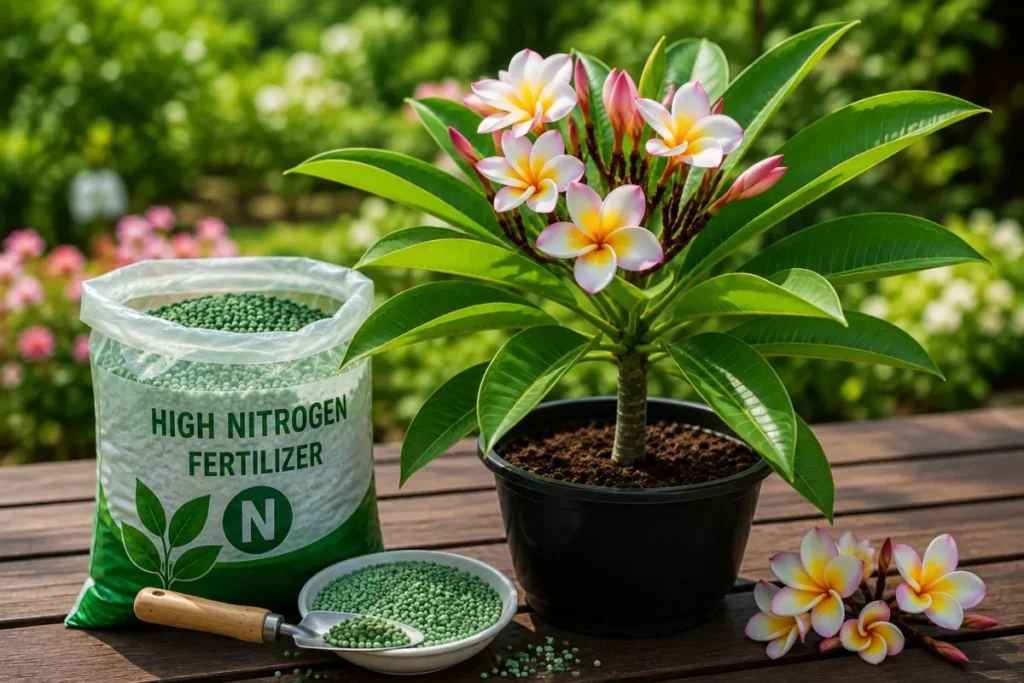
So, while nitrogen for plumeria is essential, more is not always better. If your plant already has plenty of healthy foliage, constantly increasing nitrogen may not be the best approach.
Slow-Release Fertilizer for Plumeria
A slow-release fertilizer for plumeria releases nutrients gradually rather than making them available all at once. This makes it a convenient option for gardeners who do not want to feed their plants frequently.
Slow-release formulas can provide a steady supply of nutrients over a longer period when used correctly. They can also reduce the temptation to repeatedly add fertilizer because the feeding process is less frequent.
Still, slow-release does not mean risk-free. Applying too much can lead to excessive nutrients in the growing medium. Always follow the recommended application rate on the product label.
Liquid Fertilizer for Plumeria
Liquid fertilizer for plumeria is another popular option because it is easy to mix and apply. It can be especially convenient when you want more control over how much fertilizer you provide.
Liquid fertilizers are normally diluted with water before application. This allows the nutrients to be delivered in a controlled solution.
The important thing is to follow the recommended dilution rate. A stronger mixture is not a shortcut to faster growth. Overly concentrated fertilizer can damage roots and may cause fertilizer burn.
Organic Fertilizer for Plumeria
If you prefer naturally derived products, an organic plumeria plant fertilizer for healthy growth may be worth considering.
Organic fertilizers can provide nutrients from sources such as composted materials and other naturally derived ingredients. Depending on the formulation, nutrients may become available gradually.
However, organic does not automatically mean you can use unlimited amounts. Organic fertilizers can still cause problems when overapplied. Read the label and use the recommended quantity for your plant and growing conditions.
Granular Fertilizer for Plumeria
Granular fertilizer comes in small solid particles that are applied to the soil or growing medium according to the product instructions. Some granular fertilizers release nutrients quickly, while others are designed to release them slowly.
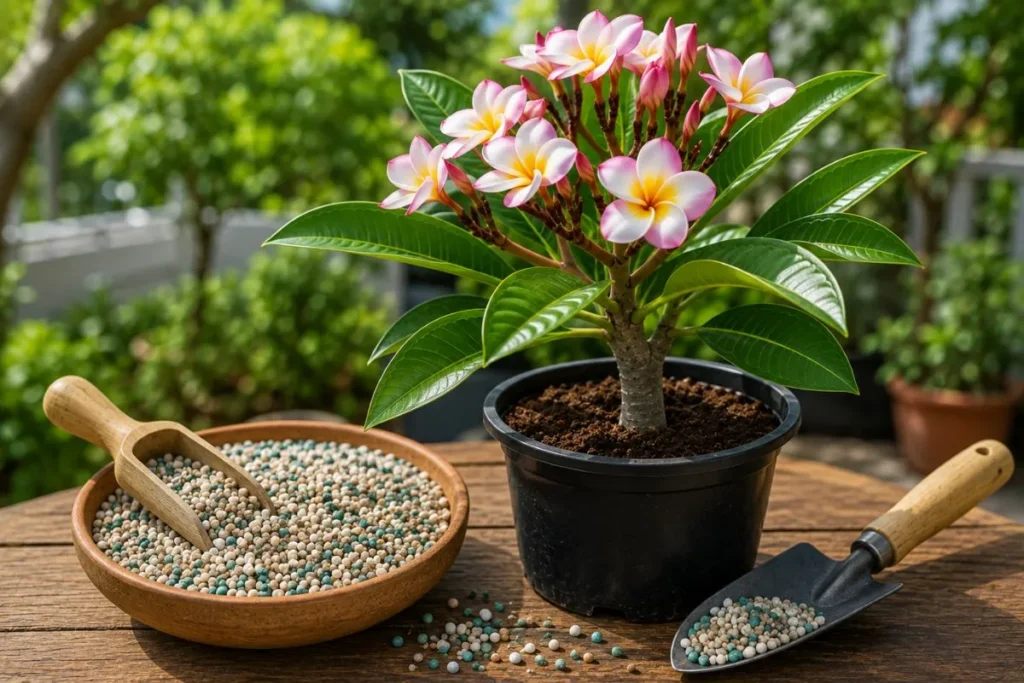
This type can be convenient for gardeners who prefer a simple application method. It can also work well for both container-grown and garden-grown plumerias when applied correctly.
The key is to avoid placing concentrated fertilizer directly against the plant’s stem. Proper application helps reduce the risk of root or stem damage.
Which Fertilizer Type Should You Choose?
There is no universal answer to the question, “What is the best fertilizer for plumeria?” Your choice should depend on what your plant needs and which feeding method fits your gardening routine.
If you want a straightforward option for general nutrition, a suitable balanced fertilizer may be a practical starting point. If convenience matters, slow-release fertilizer can reduce how often you need to feed. Liquid fertilizer can work well if you prefer more control over application and dilution.
For gardeners who prefer naturally sourced products, organic fertilizer is another option. The important thing is to choose a quality formulation and use it correctly.
Most importantly, don’t assume that a stronger fertilizer will automatically produce more flowers. Healthy plumerias respond best to appropriate nutrition rather than excessive feeding. The goal is to give your plant what it needs without creating a nutrient imbalance.
Understanding NPK Fertilizer for Plumeria
NPK stands for nitrogen (N), phosphorus (P), and potassium (K). These are the three primary nutrients commonly listed on fertilizer labels. Each one has a different job inside the plant, so understanding the difference can help you make smarter decisions when feeding your plumeria.
For example, a fertilizer label might show numbers such as 10-10-10. These numbers represent the percentage by weight of nitrogen, phosphate, and potash in the product. The numbers are useful, but they should not be viewed as a simple score where a higher number means a better fertilizer.
Nitrogen for Plumeria
Nitrogen is closely linked to green, leafy growth. It helps plumerias develop healthy foliage and supports the production of new stems and leaves.
When a plumeria has inadequate nitrogen, its growth may become weak or slow, and the foliage can lose its healthy green appearance. This is why nitrogen for plumeria remains an important part of proper plant nutrition.
But there is a catch. Too much nitrogen can push the plant toward excessive vegetative growth. You may see plenty of leaves and vigorous stems while the flowering performance does not match what you expected.
If your goal is beautiful blooms, don’t automatically reach for the highest-nitrogen fertilizer. Your plant needs enough nitrogen for healthy growth, but excessive amounts can upset the balance between foliage and flowering.
Phosphorus for Plumeria
Phosphorus is another major nutrient that plays an important role in plant development. It supports root development and is involved in processes related to energy transfer and reproductive growth.
Healthy roots are especially important because they help the plant access water and nutrients from the growing medium. Good root development gives a plumeria a stronger foundation for continued growth.
Phosphorus is also commonly associated with flowering, which is why gardeners often search for the best NPK fertilizer for plumeria flowering.
However, don’t assume that adding huge amounts of phosphorus will automatically create more flowers. If the plant already has sufficient phosphorus, extra applications may not solve the real reason for poor blooming.
The smarter approach is to provide appropriate nutrition and make sure other growing conditions are also suitable.
Potassium for Plumeria
Potassium supports several important functions within plants. It contributes to overall plant strength, water regulation, and the plant’s ability to handle different environmental stresses.
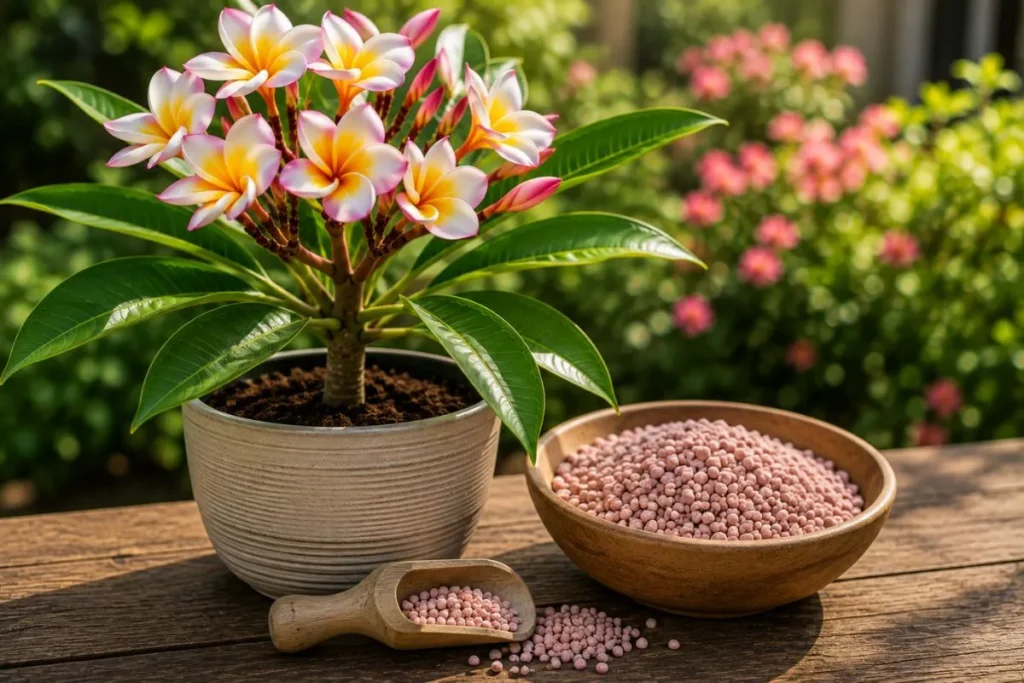
For plumerias, adequate potassium for plumeria can be an important part of a complete nutrition program. It should not be ignored simply because nitrogen and phosphorus often receive more attention.
A fertilizer containing nitrogen, phosphorus, and potassium gives you a broader nutritional foundation than a product focused heavily on only one nutrient.
What Do NPK Numbers Mean?
Understanding fertilizer numbers is easier than it first appears.
Suppose a fertilizer label says 10-10-10. The first number represents nitrogen, the second represents phosphorus in phosphate form, and the third represents potassium in potash form.
A different fertilizer might show 5-10-5. This does not automatically make it better or worse than 10-10-10. It simply contains a different concentration and nutrient balance.
This is why you should avoid choosing a fertilizer based only on the largest number. Look at the entire formulation and consider what your plumeria actually needs.
Choosing the Right Plumeria Fertilizer Ratio
There is no single plumeria fertilizer ratio that is perfect for every plant and every situation.
A young plant establishing itself may have different nutritional priorities from a mature plant that is already growing strongly. Likewise, a plumeria growing in nutrient-rich soil may require a different approach from one growing in depleted soil.
Instead of searching for one magical NPK ratio, focus on maintaining appropriate nutrition without overfeeding.
This is particularly important when trying to encourage flowering. A fertilizer for flowering plants should still provide enough overall nutrition to maintain healthy foliage and roots.
Why Nutrient Balance Matters
Think of NPK as a team. Nitrogen, phosphorus, and potassium each have different responsibilities, but the plant needs them to work together.
Too little of one nutrient can affect growth. Too much of another can create an imbalance. Simply increasing one nutrient is not always the answer.
This balanced approach is especially useful when choosing plumeria fertilizer for blooms. Good flowering does not come from one nutrient alone. The plant needs suitable nutrition alongside proper growing conditions.
NPK Is Only Part of Plant Nutrition
Although NPK gets most of the attention, plumerias also need several secondary and micronutrients in smaller quantities.
Calcium, magnesium, sulfur, iron, and other micronutrients can contribute to normal plant development. This does not mean you should automatically add multiple supplements to your fertilizer routine.
Instead, look at the complete fertilizer label and the condition of your plant. If there is a suspected nutrient deficiency, identify the likely cause before adding extra products.
The goal is simple: provide complete and appropriate nutrition without turning fertilizing into a guessing game.
Powerful Plumeria Plant Fertilizer Tips for Bigger Blooms
Now that you understand NPK, it is time to put that knowledge into practice. These plumeria plant fertilizer tips focus on using fertilizer wisely rather than simply using more of it.
Choose a Fertilizer Made for Flowering Plants
If your main goal is flowers, choose a fertilizer formulated to support flowering rather than relying on a product designed primarily for heavy leafy growth.
A suitable flowering fertilizer can provide the nutrients your plumeria needs while supporting its transition toward reproductive growth.
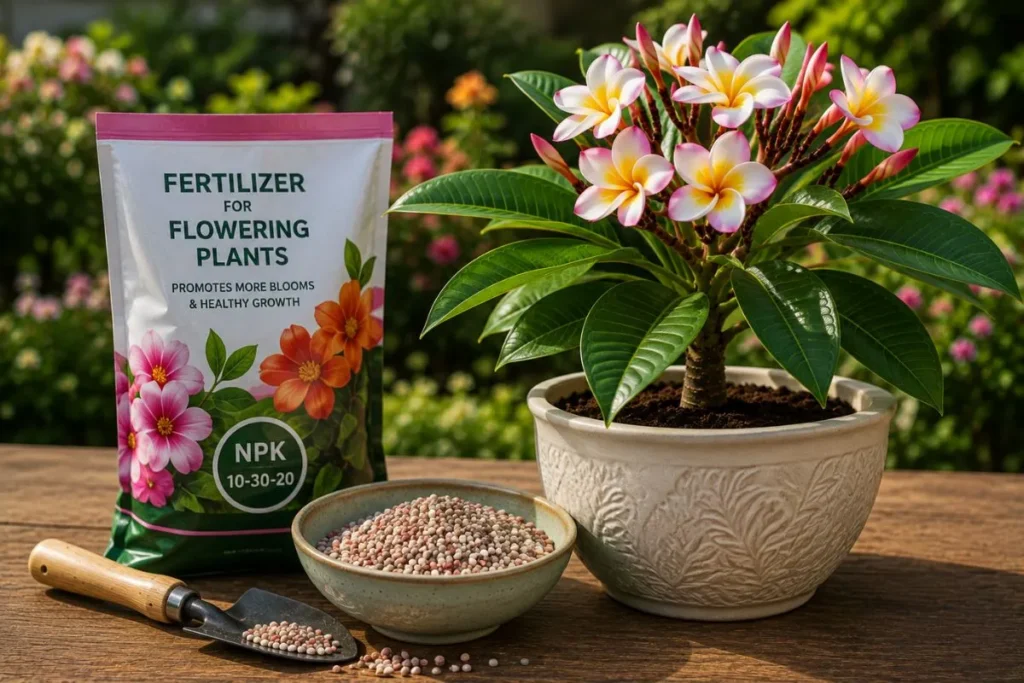
Still, don’t judge a fertilizer only by marketing claims. Read the NPK numbers and application instructions. A good plumeria flowering fertilizer should fit your plant’s overall nutritional needs.
Feed During Active Growth
Plumerias are most responsive to feeding when they are actively growing. This is when the plant is producing new leaves, stems, and roots and using nutrients more actively.
Rather than applying fertilizer simply because a certain date has arrived, pay attention to the plant’s growth. Active growth is a much better signal than following a rigid routine that ignores your local conditions.
This is especially useful for gardeners creating a plumeria fertilizer during growing season routine.
Use the Right Amount
More fertilizer is not better. Applying too much can increase the concentration of salts around the roots and may damage the plant.
Always follow the application rate printed on the fertilizer label. If the product is concentrated, measure it carefully instead of estimating by eye.
A moderate feeding applied correctly is much safer than a heavy application intended to speed up growth.
Adjust Feeding as Flowering Approaches
As your plumeria develops toward flowering, avoid treating fertilizer like an instant bloom switch.
The plant needs an appropriate nutritional foundation throughout its growth cycle. When flower buds begin developing, continue paying attention to the plant rather than suddenly applying excessive amounts of bloom fertilizer.
If you’re wondering when to fertilize plumeria for better blooms, the answer starts with active, healthy growth. Flowering support works best when the plant has already developed a strong foundation.
Consider Slow-Release Fertilizer
A slow-release fertilizer for plumeria can be useful if you prefer a feeding method that requires less frequent application.
These fertilizers are designed to release nutrients gradually over time. That can make them convenient for gardeners who sometimes forget regular feeding.
However, always check how long the product is designed to last and follow the recommended amount. Adding more simply because the fertilizer releases slowly can still lead to overfertilization.
Use Liquid Fertilizer Correctly
Liquid fertilizer can give you more control over feeding because you can dilute the product according to the recommended application rate.
When using liquid fertilizer for plumeria, measure the concentrate carefully and mix it with the appropriate amount of water.
Never assume that doubling the concentration will double the growth. A stronger solution can increase the risk of root damage and fertilizer burn.
Don’t Ignore Potassium
When gardeners think about flowering, they often focus heavily on phosphorus. But potassium also deserves attention.
Potassium for plumeria supports important plant processes and contributes to overall plant strength. A complete fertilizer program should not treat potassium as an afterthought.
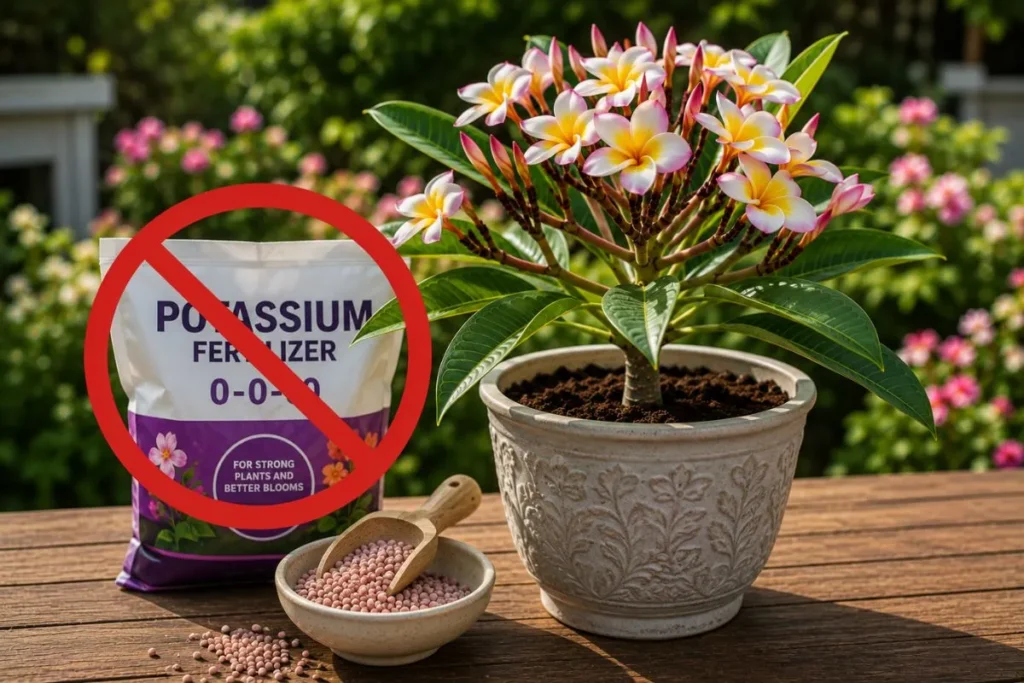
Rather than choosing an extreme formula based on one nutrient, look for a suitable overall NPK balance.
Support the Roots With Good Soil
Fertilizer cannot compensate for poor growing conditions. If the soil stays waterlogged or the roots cannot function properly, adding more fertilizer is unlikely to solve the problem.
Plumerias benefit from a growing medium that provides both drainage and enough support for healthy roots. Good plumeria soil nutrients are useful only when the roots can access them.
Healthy plumeria root development creates a better foundation for absorbing water and nutrients.
Provide Micronutrients When Needed
NPK is important, but plants also use smaller amounts of other nutrients.
If a fertilizer already contains useful micronutrients, that may help provide more complete nutrition. However, don’t add separate supplements without a reason.
If your plumeria shows unusual symptoms, first consider factors such as watering, soil conditions, pests, light, and root health. Not every leaf problem is caused by a nutrient deficiency.
Avoid Fertilizing a Stressed Plant
A struggling plant is not always asking for more fertilizer.
If your plumeria is severely wilted, drought-stressed, damaged, or dealing with root problems, adding a strong fertilizer can put additional pressure on the plant.
First address the underlying growing problem. Once the plant begins recovering and returns to active growth, you can reassess its nutritional needs.
This simple step can prevent unnecessary fertilizer damage.
Watch the Plant and Adjust Your Routine
Your plumeria can tell you a lot if you pay attention.
Look at new growth, leaf color, stem development, and flowering behavior. If the plant is growing steadily and looks healthy, there may be no reason to dramatically change your fertilizer routine.
On the other hand, if growth suddenly changes, don’t immediately add more fertilizer. Step back and consider what else may have changed.
Temperature, sunlight, watering, soil drainage, pests, and seasonal growth can all affect plant performance.
The best fertilizing plumeria plants strategy is therefore not completely rigid. Use your fertilizer label as a guide, observe your plant, and make sensible adjustments based on its condition.
A Simple Takeaway for Better Plumeria Growth
The strongest fertilizer is not necessarily the best fertilizer. A successful approach combines appropriate NPK nutrition with careful application, healthy roots, suitable soil, and good growing conditions.
If you’re trying to encourage plumeria blooms, focus first on building a healthy plant. Then use fertilizer as a tool to support that growth rather than treating it as a quick fix.
With the right approach, your plumeria plant fertilizer routine can support lush foliage, stronger growth, and the conditions needed for beautiful flowering without unnecessary overfeeding.
When to Fertilize Plumeria for Better Blooms
Knowing when to fertilize plumeria for better blooms is just as important as choosing the right fertilizer. Many gardeners focus on the product but overlook timing. Feeding at the wrong stage can waste fertilizer, encourage unwanted growth, or stress the plant.
The best time to feed a plumeria is generally during its active growing period, when the plant is producing new leaves, stems, and roots. As growth slows and the plant moves toward dormancy, its need for additional fertilizer also decreases.
Start Fertilizing in Spring
Spring is usually the time when plumerias begin waking up from their slower winter period. As temperatures rise and the plant starts producing fresh growth, its demand for nutrients increases.
This makes spring an important part of your plumeria feeding schedule. Rather than immediately giving the plant a heavy dose, watch for signs of active growth first.
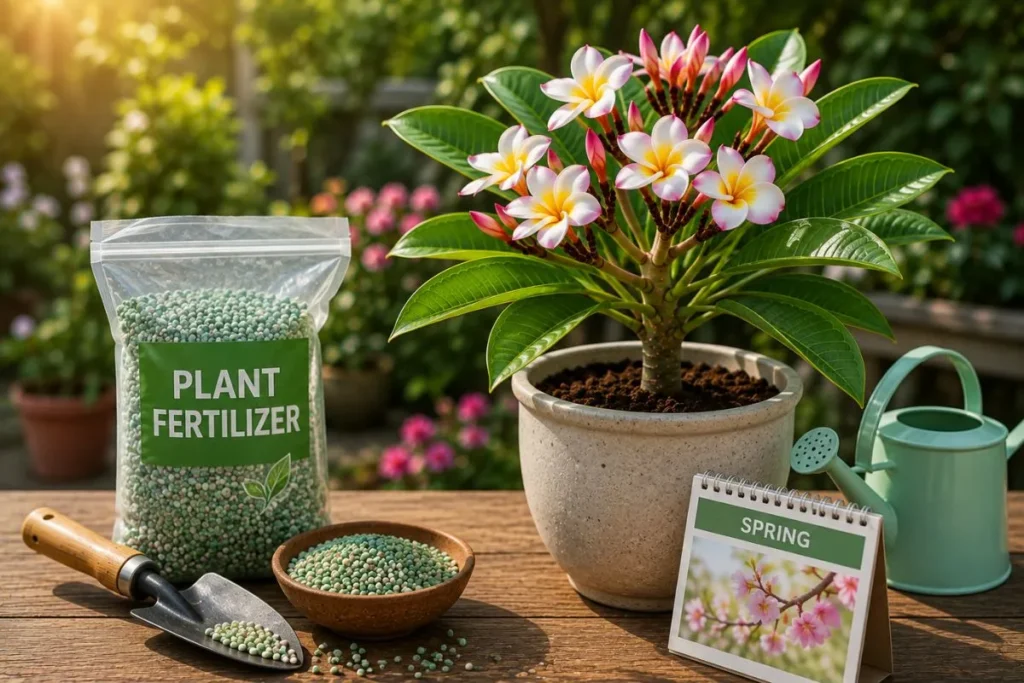
Once you see new leaves or shoots developing and the plant is actively growing, you can begin feeding according to the fertilizer label.
Starting gradually is a better approach than suddenly applying a large amount after winter.
Fertilize Plumeria During Active Growth
The main growing season is when your plumeria can make the most use of available nutrients. During this period, the plant is putting energy into new foliage, stems, roots, and eventually flowers.
A consistent plumeria fertilizer during growing season routine can help maintain adequate nutrition without relying on large, occasional applications.
The exact frequency depends on the fertilizer you use. A slow-release product may need to be applied less often, while a diluted liquid fertilizer may be used more frequently according to its instructions.
Always follow the product label instead of creating a stronger feeding schedule on your own.
Summer Is an Important Feeding Period
For many plumerias, summer brings warm temperatures, plenty of sunlight, and strong growth. This can make plumeria fertilizer in summer an important part of maintaining healthy development.
If your plant is actively growing and conditions are suitable, it may continue using nutrients throughout this period.
However, don’t assume that hot weather means you should automatically increase fertilizer. Extreme heat, drought, or other stress can affect how well the plant handles feeding.
Pay attention to the plant’s condition before applying fertilizer. Healthy active growth is a better signal than temperature alone.
How Often Should You Fertilize a Plumeria Plant?
There is no single feeding frequency that works for every plumeria. The answer depends on the fertilizer formulation, plant size, growing medium, and environmental conditions.
If you’re asking how often should you fertilize a plumeria plant, start with the instructions provided by the fertilizer manufacturer.
A slow-release fertilizer may provide nutrients over several weeks or months, depending on the product. Liquid fertilizers generally require more frequent applications because their nutrients become available more quickly.
Avoid adding extra fertilizer between recommended applications simply because the plant has not flowered yet. More frequent feeding does not guarantee more flowers.
Adjust Fertilizer as Flowering Develops
Flower production takes energy, so a healthy plumeria needs appropriate nutrition while it develops buds and flowers.
However, flowering should not be treated as a signal to dramatically increase fertilizer. If the plant is already receiving suitable nutrition, excessive feeding may create an imbalance rather than improve blooming.
If you’re specifically searching for plumeria fertilizer for flowering, choose a product that fits the plant’s overall nutritional needs and follow the recommended application rate.
Good flowering starts with a healthy plant, not an oversized dose of fertilizer.
What About Late Summer and Fall?
As temperatures and daylight conditions change, plumeria growth may begin to slow. This is a signal to reassess your feeding routine.
You may not need to continue feeding at the same rate when the plant is no longer producing significant new growth.
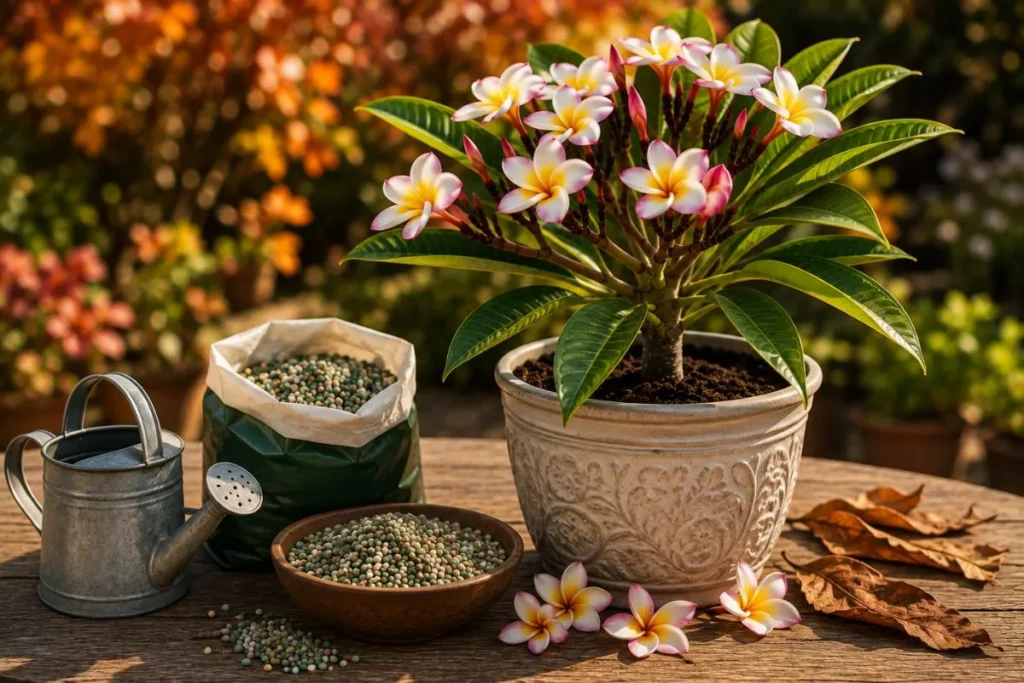
Continuing a heavy feeding routine when the plant is naturally slowing down can result in unnecessary nutrient buildup. Instead, let the plant’s growth pattern guide your approach.
Reduce Fertilizing Before Dormancy
Plumerias can enter a dormant or semi-dormant period when conditions become less favorable for active growth. During this time, the plant’s nutrient demand is much lower.
As growth slows, gradually reduce or stop fertilizing according to your climate and growing conditions.
This is especially important for gardeners who grow plumerias in areas with cooler winters. Applying fertilizer when the plant is barely growing serves little purpose and can leave unused nutrients in the soil.
Don’t Fertilize a Dormant Plumeria Just to Make It Grow
Dormancy is a natural part of the plant’s growth cycle. It is not necessarily a sign that your plumeria needs more fertilizer.
If your plant has stopped producing new growth because of seasonal conditions, adding fertilizer will not necessarily force healthy growth.
Instead, allow the plant to rest and resume feeding when active growth returns.
This simple adjustment can make your plumeria feeding schedule much more effective.
A Simple Seasonal Plumeria Fertilizing Guide
You can think of your feeding routine in four simple stages:
Spring: Watch for new growth and begin feeding when the plant becomes active.
Summer: Continue feeding according to the fertilizer instructions while the plumeria is actively growing and flowering.
Late season: Reduce feeding as growth begins to slow.
Dormancy: Avoid unnecessary fertilizing while the plant is inactive.
This approach is much easier to follow than trying to force your plant into a strict calendar-based schedule.
Watch the Plant Instead of the Calendar
The calendar can give you a general idea of when to fertilize, but your plant gives you better information.
If your plumeria is actively producing new growth, it may be ready for feeding. If it is dormant, stressed, or showing signs of environmental problems, adding fertilizer may not be the right move.
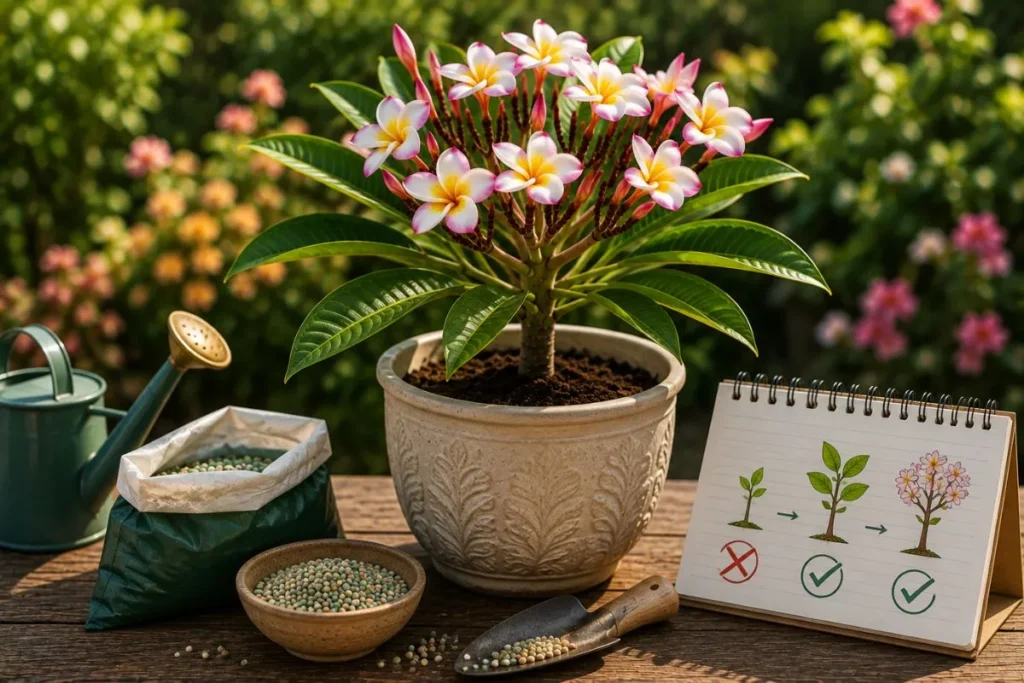
Your local climate also matters. A plumeria grown in a warm region may have a longer growing season than one exposed to cooler temperatures.
So, when deciding when to fertilize plumeria, combine the season with what your plant is actually doing.
The Best Time to Feed for Better Blooms
If your goal is better flowering, focus on maintaining healthy growth throughout the active season rather than waiting until flower buds appear and then applying a heavy dose.
A healthy root system, strong foliage, suitable growing conditions, and appropriate nutrition give your plumeria a much better foundation for producing flowers.
In short, the best plumeria fertilizer for blooms is only effective when you use it at the right time and in the right amount. Feed during active growth, adjust your routine as the seasons change, and give the plant a break when it enters dormancy. This simple timing strategy can help you avoid overfeeding while supporting stronger, healthier plumeria growth.
FAQs About Plumeria Plant Fertilizer
What Is the Best Fertilizer for Plumeria?
The best fertilizer for plumeria is one that provides appropriate amounts of nitrogen, phosphorus, and potassium without overfeeding the plant. A quality fertilizer designed for flowering plants can be a good choice when used according to its label directions. Instead of choosing the strongest formula, focus on a nutrient balance that supports healthy growth and flowering.
How Often Should You Fertilize a Plumeria Plant?
How often you should fertilize a plumeria depends on the fertilizer type and the plant’s growing conditions. Follow the manufacturer’s recommended application schedule.
Slow-release fertilizers generally require less frequent applications, while liquid fertilizers may be applied more regularly when properly diluted. Avoid adding extra fertilizer between applications because more feeding does not necessarily mean more flowers.
When Should I Fertilize Plumeria for Better Blooms?
The best time to fertilize plumeria is during its active growing season. Begin feeding when the plant starts producing new growth in spring and continue according to the fertilizer instructions while it remains actively growing. As growth slows toward dormancy, reduce or stop fertilizing. This timing helps provide nutrients when the plant can use them most effectively.
Is High-Phosphorus Fertilizer Good for Plumeria?
High-phosphorus fertilizer can provide phosphorus, an important nutrient involved in root development and reproductive growth. However, using a very high-phosphorus product does not automatically guarantee more flowers.
If your plumeria already has sufficient phosphorus, adding more may not improve flowering. A suitable overall nutrient balance is usually more important than simply choosing the highest phosphorus formula.
Can I Use a Balanced Fertilizer on Plumeria?
Yes, a balanced fertilizer can be used on plumeria when it suits the plant’s nutritional needs. Balanced formulas provide nitrogen, phosphorus, and potassium and can support general growth. Choose a suitable product and follow its recommended application rate rather than assuming that a stronger dose will produce faster results.
Is Organic Fertilizer Good for Plumeria?
Organic fertilizer can be a useful option for plumerias when you prefer naturally derived nutrients. Depending on the product, organic fertilizers may release nutrients more gradually. However, organic fertilizer can still cause problems if it is overapplied. Always follow the product directions and consider the existing condition of your soil.
Can You Use Slow-Release Fertilizer for Plumeria?
Yes. Slow-release fertilizer for plumeria can be convenient because it releases nutrients gradually over time. It can reduce the need for frequent feeding and make plant care easier. The key is to apply the correct amount and avoid adding additional fertilizer too soon.
What NPK Ratio Is Best for Plumeria Flowering?
There is no single NPK ratio that is perfect for every plumeria. The ideal choice depends on the plant’s growth stage, soil, and overall growing conditions. Rather than focusing only on a high phosphorus number, choose a suitable fertilizer that provides balanced nutrition and follow the recommended application rate.
Why Is My Plumeria Growing Leaves but Not Flowers?
A plumeria may produce lots of leaves without flowers for several reasons. Excessive nitrogen can encourage leafy growth, but insufficient sunlight, immature plants, seasonal conditions, watering problems, or other environmental factors can also affect flowering. Before adding more fertilizer, check the plant’s overall growing conditions.
Can Overfertilizing Damage a Plumeria Plant?
Yes. Overfertilizing can cause nutrient buildup around the roots and may lead to fertilizer burn, damaged foliage, weak growth, or other problems. Using more fertilizer than recommended will not necessarily make a plumeria grow faster. Always measure fertilizer carefully and follow the product’s application instructions.
Can Fertilizer Alone Make a Plumeria Bloom More?
No. Fertilizer is only one part of successful plumeria care. Flowering also depends on factors such as adequate sunlight, suitable watering, healthy roots, proper drainage, temperature, and the plant’s maturity. The right plumeria plant fertilizer can support healthy growth, but it cannot replace good overall plant care.
Should I Fertilize a Plumeria During Dormancy?
Generally, unnecessary fertilizing should be avoided while a plumeria is dormant or barely growing. During dormancy, the plant’s nutrient requirements are much lower. It is usually better to resume feeding when active growth returns and the plant begins producing new leaves or stems.
Conclusion
Choosing the right plumeria plant fertilizer can make a big difference in your plant’s growth and flowering. The goal is not to use more fertilizer, but to give your plumeria the right nutrients at the right time.
A suitable NPK balance, proper feeding schedule, and careful application can help support healthy leaves, strong roots, and beautiful blooms.
Remember to fertilize mainly during active growth and adjust your routine as the seasons change. Avoid overfeeding, especially when your plumeria is stressed or dormant. Also, don’t rely on fertilizer alone.
Plenty of sunlight, proper watering, good drainage, and healthy soil are just as important.
With consistent care and the right plumeria fertilizer for blooms, you can create healthier growth and give your plumeria a better chance to produce the lush foliage and stunning flowers you want.

Plant Nest Blog’s author is passionate about plants, gardening, and sustainable living. Through research and practical experience, they share helpful plant care tips, gardening guides, and easy solutions to help readers grow healthier plants and create greener spaces.