
Many gardeners believe that adding more fertilizer will automatically make a tea plant grow faster and produce more leaves. That sounds logical, but it is not quite true. Fertilizer for tea plants works best when you give the plant the nutrients it actually needs in the right amount.
Too much fertilizer can stress the roots, damage leaves, and create unhealthy growth. The goal is not to feed your tea plant as much as possible. It is to give it balanced nutrition while also keeping its soil, water, light, and growing conditions in good shape.
Tea plants, especially Camellia sinensis, are grown for their young leaves and shoots. Healthy foliage is therefore a major part of successful tea plant care. A plant that receives suitable nutrition can develop stronger growth and maintain attractive green leaves. But fertilizer is only one part of the picture. The plant also needs suitable soil, adequate moisture, good drainage, and the right growing environment.
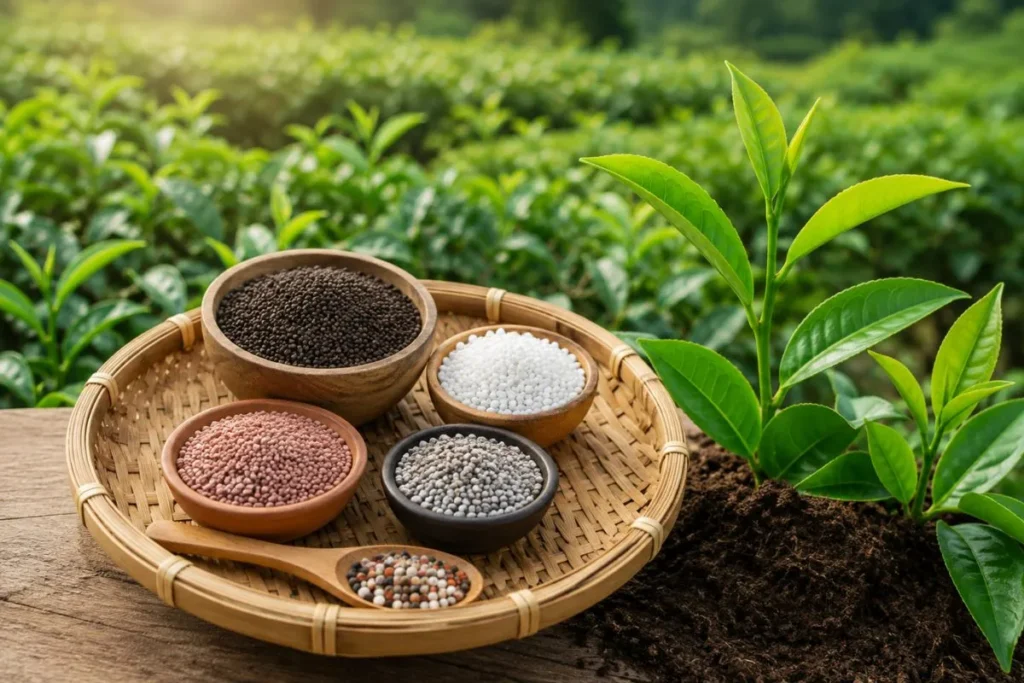
This is why choosing the right tea plant fertilizer matters. A fertilizer should support the plant without overwhelming it. When nutrition is poorly managed, the plant may show problems such as pale foliage, weak growth, leaf-edge damage, or slow development. In contrast, thoughtful feeding can help maintain steady and healthy growth.
So, instead of asking only, “What is the strongest fertilizer for tea plants?” it is better to ask, “What nutrition does my tea plant need right now?” That small change in thinking can make your fertilizer routine much more effective.
Why Tea Plants Need Proper Nutrition
Like other plants, tea plants need several nutrients to carry out important biological processes. These nutrients help support leaf development, root function, overall plant strength, and new growth.
Among the major nutrients, nitrogen is particularly important for leafy plants because it plays a major role in vegetative growth. This explains why nitrogen fertilizer for tea plants often gets attention from gardeners who want healthy green foliage. However, nitrogen should not be treated as the only nutrient that matters.
Tea plant nutrition is more about balance. The plant also needs phosphorus, potassium, and smaller amounts of secondary and micronutrients. If one nutrient is missing or unavailable because of unsuitable soil conditions, simply adding more fertilizer may not solve the problem.
This is where understanding tea plant nutrients becomes useful. Instead of guessing, you can look at the plant, consider its growing conditions, and pay attention to the soil. That approach helps you avoid unnecessary feeding and makes it easier to maintain consistent growth.
What Proper Feeding Can Do for Tea Plants
Good nutrition can support healthy tea plant growth and help the plant maintain strong, attractive foliage. When the plant has access to suitable nutrients, it has a better foundation for producing new shoots and leaves.
For gardeners growing tea plants for harvesting, healthy leaf production is especially important. However, fertilizer alone cannot guarantee a larger harvest. Light, temperature, watering, pruning, soil quality, and the plant’s overall health all influence how well it grows.
Think of fertilizer as one piece of the puzzle. It supplies nutrients, but it does not replace good tea plant care.
That is also why a consistent approach is usually better than occasional heavy feeding. Giving a tea plant a large amount of fertilizer after noticing slow growth may do more harm than good.
Slow growth can have many causes, including poor light, unsuitable moisture, root problems, temperature stress, or nutrient issues.
Understanding the real cause before adding fertilizer is a much smarter approach.
A Good Fertilizer Routine Starts With Understanding the Plant
Before choosing or applying fertilizer, consider where your tea plant is growing and how it is behaving.
Is it a young plant or an established tea bush? Is it growing in a pot or in the ground? Is it actively producing new leaves? Does the soil drain well? Are the leaves healthy and green, or are they showing unusual changes?
These simple observations can tell you a lot.
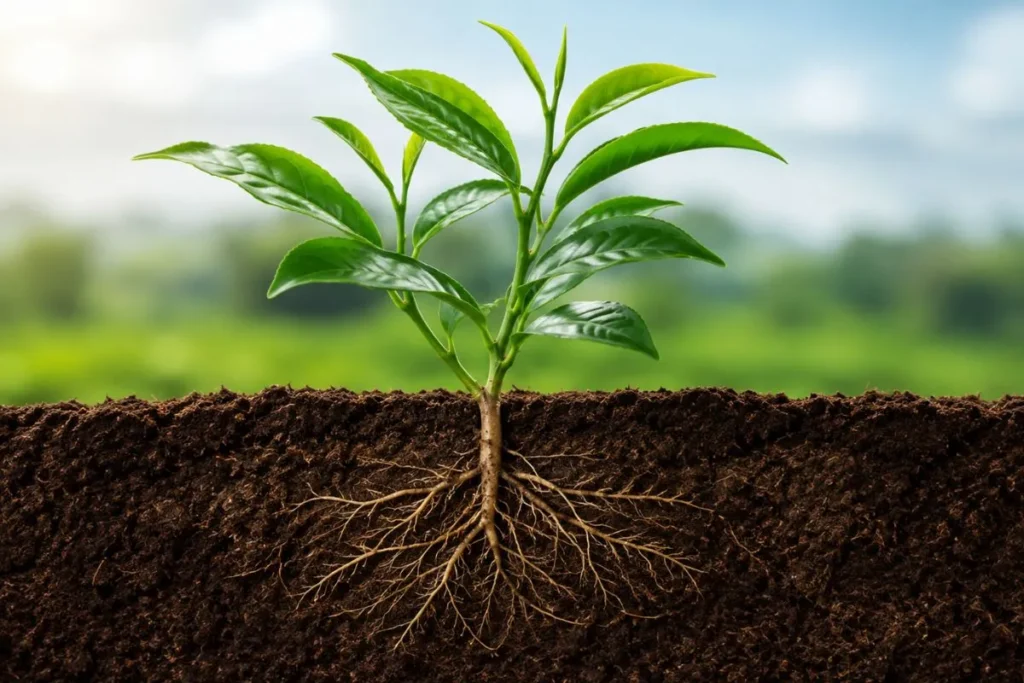
For example, fertilizer for potted tea plants needs to be managed thoughtfully because container soil has a limited volume. Outdoor plants may have access to a larger soil area and more natural organic matter. An indoor tea plant may also grow differently because indoor light is often weaker than outdoor light.
The key takeaway is simple: the right fertilizer for tea plants should fit the plant and its growing conditions, not just the label on the fertilizer bag.
What Nutrients Do Tea Plants Need to Grow?
If you want to understand how to feed a tea plant properly, start with the nutrients it needs. Fertilizer is simply a convenient way of supplying some of these nutrients.
The three nutrients most commonly discussed on fertilizer labels are nitrogen, phosphorus, and potassium, often shortened to NPK. Each one has a different role. Tea plants also need secondary nutrients and micronutrients in smaller quantities.
You do not need to become a chemistry expert to understand this. The basic idea is simple: tea plants need a balanced supply of nutrients, and each nutrient contributes to different parts of plant growth.
Nitrogen: The Key Nutrient for Leafy Growth
Nitrogen is one of the most important nutrients to understand when caring for tea plants. It is closely associated with vegetative growth and the development of green plant tissue.
Because tea plants are grown primarily for their leaves and young shoots, nitrogen naturally gets a lot of attention. Adequate nitrogen can support healthy leaf growth and help the plant maintain vigorous foliage.
This is why gardeners often search for nitrogen fertilizer for tea plants when they notice slow or weak foliage development. But there is an important catch: more nitrogen is not always better.
Too much nitrogen can push the plant toward excessive, soft growth. It can also contribute to fertilizer-related problems if the product is applied too heavily. Instead of simply adding more nitrogen whenever growth seems slow, look at the entire growing environment.
If the plant does not receive enough light, for example, adding extra fertilizer may not fix the underlying problem. The same applies if the roots are sitting in poorly drained soil or if watering is inconsistent.
A healthy tea plant needs nitrogen, but it needs it as part of a complete nutrition plan.
Phosphorus: Supporting Strong Roots
Phosphorus is another major plant nutrient. It plays an important role in processes connected with energy use and plant development, including root growth.
Strong roots give a tea plant a better foundation for taking up water and nutrients from the growing medium. This makes phosphorus an important part of overall tea plant nutrition.
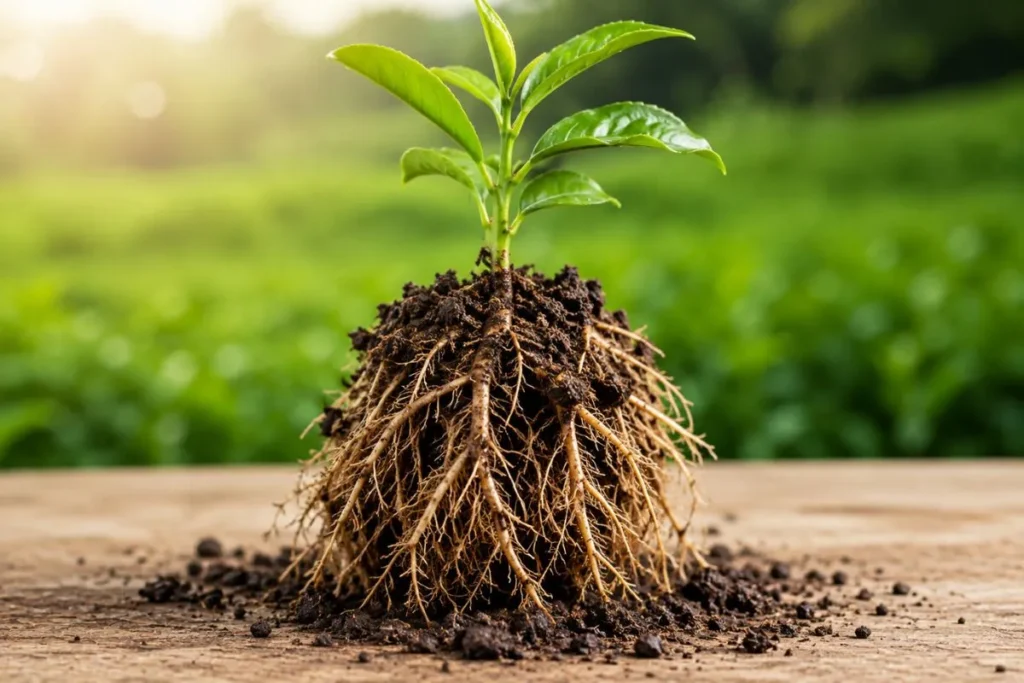
However, there is no reason to assume that a tea plant needs large amounts of phosphorus simply because phosphorus is listed as an important nutrient. If the soil already contains enough phosphorus, adding more may not provide an extra benefit.
This is an important lesson when choosing fertilizer: a nutrient is helpful when the plant needs it, not simply because more of it is available.
A balanced approach is much more sensible than repeatedly adding individual nutrients without knowing what the plant or soil actually lacks.
Potassium: Supporting Overall Plant Strength
Potassium is the third major nutrient represented by the “K” in NPK. It supports several important plant processes and contributes to overall plant vigor.
For tea plants, potassium is part of the nutritional balance that helps the plant maintain healthy development. It works alongside nitrogen and phosphorus rather than replacing either one.
This is why gardeners should think about nitrogen phosphorus potassium for tea plants as a complete nutritional picture rather than focusing on one nutrient alone.
A tea plant with adequate nitrogen but poor overall nutrition may still fail to perform as expected. Good plant care is rarely about maximizing a single nutrient. It is about providing the right conditions for the entire plant.
Secondary Nutrients and Micronutrients Tea Plants Need
Nitrogen, phosphorus, and potassium may appear on the front of a fertilizer bag, but they are not the entire story.
Tea plants also use nutrients such as calcium, magnesium, sulfur, iron, and other micronutrients. These nutrients are needed in smaller quantities, but that does not mean they are unimportant.
For example, magnesium is involved in chlorophyll and normal photosynthetic activity. Iron is also important for healthy plant function and chlorophyll formation. Other nutrients support cell development, enzyme activity, and different internal processes.
When one of these nutrients becomes unavailable, a tea plant may develop symptoms that look like a simple fertilizer problem. Leaves may become pale, growth may slow, or new foliage may appear unusual.
That is why tea plant nutrient deficiency should not be diagnosed simply by looking at one symptom and immediately adding fertilizer. Similar symptoms can come from several different causes.
Why Soil Matters as Much as Fertilizer
Even when nutrients are present in the soil, plants may not always be able to use them efficiently. Soil conditions influence how available certain nutrients are to plant roots.
Tea plants generally perform well in acidic soil for tea plants, so maintaining suitable soil conditions is an important part of their care. If the soil environment is unsuitable, adding more fertilizer may not produce the result you expect.
This is one reason soil should not be treated as an afterthought. Good tea plant soil provides the foundation from which the roots obtain water, air, and nutrients.
Before assuming that a struggling plant simply needs more fertilizer, consider the bigger picture. Check the soil condition, drainage, watering habits, light, and signs of stress. These factors can help explain why a tea plant is not growing as expected.
The Bottom Line on Tea Plant Nutrients
A healthy tea plant needs more than a single nutrient. Nitrogen supports leafy growth, phosphorus contributes to root and developmental processes, and potassium supports overall plant function. Secondary nutrients and micronutrients also play important roles.
The smartest approach is to think about tea plant nutrition as a balance rather than a race to add more fertilizer. Once you understand what the plant needs, it becomes much easier to make sensible decisions about feeding.
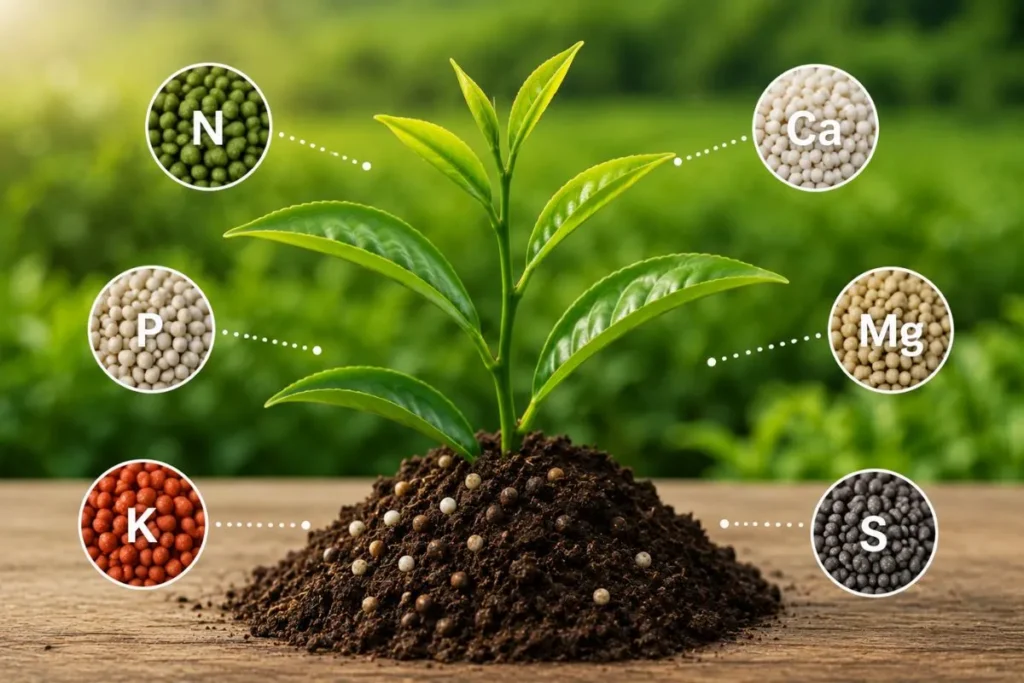
In the next parts of the guide, we can build on this foundation by looking at the different types of fertilizer for tea plants and how to choose the right option for healthy, steady growth.
What Is the Best Fertilizer for Tea Plants?
Many gardeners assume that the best fertilizer for tea plants is simply the one with the highest nutrient numbers on the label. That is not how it works. A stronger fertilizer is not automatically a better fertilizer.
Tea plants need the right type of nutrition in a form that suits their soil and growing conditions. Using an overly concentrated product can cause more problems than it solves. The better approach is to choose a fertilizer that supports steady growth without putting unnecessary stress on the plant.
So, what is the best fertilizer for tea plants? In most cases, look for a fertilizer that suits acid-loving plants, provides balanced nutrition, and can be used safely according to the plant’s growth stage and growing environment. The exact choice can vary depending on whether you are growing Camellia sinensis in a container, garden bed, or another growing setup.
Best Fertilizer for Camellia Sinensis
The tea plant is scientifically known as Camellia sinensis, and choosing a fertilizer designed for its growing preferences can make feeding much easier. Rather than picking a product at random, look for one that is suitable for acid-loving plants and provides nutrients in a form that tea plants can use.
A good Camellia sinensis fertilizer should support healthy foliage and steady development without encouraging excessive growth. Tea plants naturally prefer an acidic growing environment, so a fertilizer intended for acid-loving plants can often be a practical choice.
This does not mean you need a fertilizer marketed specifically with the words “tea plant” on the package. Many products designed for acid-loving plants can also be suitable, provided their nutrient profile and application instructions fit your plant.
When choosing fertilizer for Camellia sinensis, pay attention to the complete product label rather than focusing on one number. Look at the NPK ratio, recommended dosage, application instructions, and whether the product is intended for plants that prefer acidic conditions.
It is also worth considering the condition of your existing soil. If the soil already contains adequate nutrients, adding a heavy fertilizer may be unnecessary. The goal is to supplement what the plant needs, not overload the growing medium.
For gardeners searching for the best fertilizer for Camellia sinensis plants, this is an important distinction. The best product is not necessarily the most expensive or strongest option. It is the one that fits the plant and its growing conditions.
Balanced Fertilizer for Tea Plants
A balanced fertilizer for tea plants can be a useful option when you want to provide a broad range of major nutrients rather than concentrating heavily on one nutrient.
You will usually see three numbers on a fertilizer label, representing nitrogen, phosphorus, and potassium. These numbers help you understand the relative nutrient content of the product.
A balanced fertilizer can be useful when your tea plant needs general nutritional support and there is no clear reason to target a specific nutrient. It gives you a straightforward starting point without making the feeding routine unnecessarily complicated.
However, “balanced” does not mean “use more.” Even a suitable fertilizer can cause problems when applied at a higher rate than recommended. Always follow the manufacturer’s instructions and consider the size and condition of your plant.
How to Read a Fertilizer Label
You do not need advanced gardening knowledge to understand a fertilizer label. Start by looking at the three numbers shown on the package. These represent the fertilizer’s NPK analysis.
The first number represents nitrogen, the second represents phosphorus, and the third represents potassium. Comparing these numbers helps you understand what the fertilizer is designed to provide.
You should also check whether the fertilizer is slow-release or fast-acting, whether it is suitable for acid-loving plants, and how much the manufacturer recommends using.
Avoid choosing a product only because it has a large number on the front. A high nutrient concentration can make it easier to accidentally overapply the product.
A better question is: Does this fertilizer match the needs of my tea plant?
That simple question can prevent many common fertilizing mistakes.
Acid-Loving Plant Fertilizer
Tea plants generally prefer acidic growing conditions, which makes acid-loving plant fertilizer an option worth considering.
This type of fertilizer is designed for plants that perform well in lower-pH soil. Depending on the product, it may provide nutrients in a formulation intended to work well under acidic conditions.
For tea growers, this can be useful because fertilizer selection should not be separated from soil conditions. If the growing medium is suitable for the plant, nutrients are more likely to be available in a useful form.
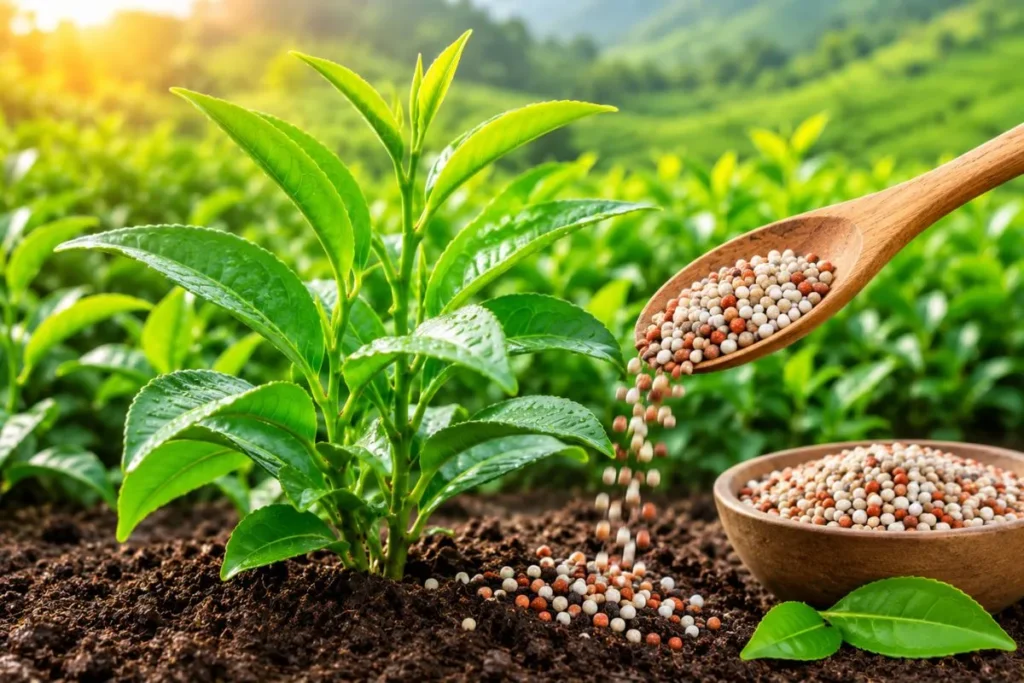
Still, acid-loving fertilizer does not mean you should ignore soil pH. A fertilizer is not a substitute for understanding the condition of the growing medium.
If you suspect that your soil is too alkaline or otherwise unsuitable, testing the soil can provide much better information than simply adding more fertilizer.
Why Acidic Soil Matters for Tea Plants
Tea plants naturally grow best in acidic conditions. This preference is one reason tea plant fertilizer should be considered alongside soil quality.
When soil conditions move outside the plant’s preferred range, certain nutrients can become less available. You may then see signs of poor growth even though the soil technically contains nutrients.
This can lead to a frustrating cycle. A gardener sees weak growth, adds more fertilizer, sees little improvement, and adds even more. The actual problem may be the soil environment rather than the amount of fertilizer.
That is why checking the growing medium is a smart step before changing your feeding routine.
Organic, Synthetic, or Slow-Release: Which Is Best?
When shopping for the best fertilizer for tea plants, you may notice several different categories, including organic fertilizers, synthetic fertilizers, liquid fertilizers, and slow-release products.
There is no single category that is automatically perfect for every tea plant.
Organic fertilizer for tea plants can be useful when you want to add nutrients while also contributing organic matter to the growing medium. Compost and other organic materials can support soil quality when used properly.
Synthetic fertilizers can provide more predictable nutrient concentrations and can be convenient when you want precise feeding. The important thing is to use them according to their instructions.
The right choice depends on your plant, soil, growing environment, and personal gardening routine.
What About Tea Shrub and Tea Bush Fertilizer?
You may also come across terms such as tea shrub fertilizer or tea bush fertilizer when searching for products.
These terms generally refer to fertilizers intended for tea-growing plants rather than a completely separate category of plant nutrition. When comparing products, do not rely only on the wording used in the product name.
Read the label and check what the fertilizer actually contains.
If you are growing Camellia sinensis, focus on whether the product suits acid-loving plants and whether its nutrient profile makes sense for your growing conditions.
Choosing Fertilizer Based on Your Growing Situation
The “best” fertilizer can change depending on where your tea plant grows.
For a container-grown tea plant, you may need to pay closer attention to nutrient buildup because the plant has a limited amount of growing medium. A product suitable for containers can make feeding easier when used correctly.
For an outdoor tea plant, soil type, rainfall, drainage, and natural organic matter can all influence the plant’s nutritional environment.
Indoor tea plants can have another challenge: their growth may be slower because of lower light levels. In that situation, adding extra fertilizer simply because the plant is not growing quickly may not solve the problem.
This is why there is no universal answer to the question, “What is the best fertilizer for tea plants?” The best choice is the one that fits the plant’s actual situation.
A Simple Way to Choose the Right Fertilizer
If you are standing in a garden center and feeling overwhelmed by dozens of fertilizer options, keep it simple.
First, make sure the product is suitable for the type of tea plant you are growing. Next, look at its nutrient analysis and check whether it is appropriate for acid-loving plants. Then consider whether you want an organic, liquid, or slow-release formula.
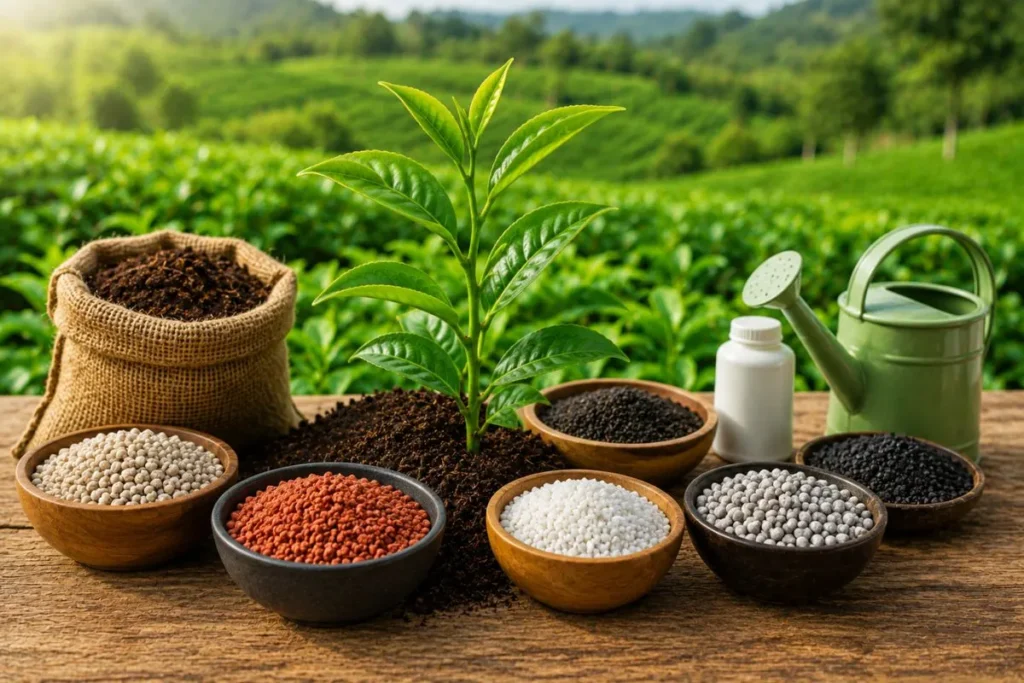
Finally, read the application instructions before buying it.
You do not need to buy the strongest fertilizer available. You need a reliable product that you can apply correctly and consistently.
The same principle applies whether you are looking for fertilizer for Camellia sinensis, best fertilizer for tea plants, or a general tea plant fertilizer. Good results come from matching the product to the plant rather than chasing the highest nutrient concentration.
11 Powerful Tips for Using Fertilizer for Tea Plants
Many gardeners think that a tea plant will grow faster if they fertilize it every time it looks a little weak. That is one of the easiest ways to create problems. Fertilizer for tea plants should not be treated as a quick fix for every growth issue.
The right approach is to understand what your plant needs, apply nutrients carefully, and watch how the plant responds. A simple and consistent feeding routine is usually far better than heavy or random applications.
If you want healthier foliage and steady growth, these 11 practical tips can help you make better fertilizer decisions without overcomplicating your tea plant care routine.
Test the Soil Before Fertilizing
Before reaching for a bag of fertilizer, take a moment to understand what is happening in the soil. Soil testing can tell you useful information about nutrient levels and pH. This can prevent you from adding nutrients that the plant may already have in sufficient amounts.
This is particularly useful for Camellia sinensis, because tea plants prefer acidic growing conditions. If the soil pH is unsuitable, the plant may struggle to access certain nutrients even when those nutrients are already present.
A soil test can therefore give you a much clearer starting point than guessing.
For example, if your tea plant is growing slowly, you might assume it needs more fertilizer. But the actual issue could be unsuitable pH, poor drainage, compacted soil, or another growing problem. Adding more fertilizer would not necessarily correct any of these issues.
So, before changing your tea plant fertilizer routine, check the soil whenever practical.
Choose Fertilizer Based on Plant Needs
Not every tea plant needs the same feeding routine.
A young plant is still establishing its root system. A mature tea bush has different demands because it has a larger root system and more established growth. A plant growing in a container also has a very different growing environment from one planted directly in the ground.
This means you should choose fertilizer based on the plant’s actual situation rather than following a routine simply because it worked for another plant.
Look at the plant’s age, size, growing medium, current growth, and overall condition. These details can help you decide whether your current feeding approach makes sense.
If your tea plant is healthy and producing new growth, there may be no reason to dramatically increase feeding. If it is struggling, investigate the cause before assuming that fertilizer is the answer.
The goal is to provide enough nutrition to support growth without creating an excess.
Use the Right NPK Ratio
The NPK numbers on a fertilizer label can look confusing at first, but they are useful once you understand what they represent.
The first number represents nitrogen, the second represents phosphorus, and the third represents potassium. These numbers give you an idea of the relative nutrient concentration in the fertilizer.
When choosing fertilizer for tea plants, do not automatically choose the product with the largest numbers. A highly concentrated product can be easy to overapply, especially if you are new to fertilizing.
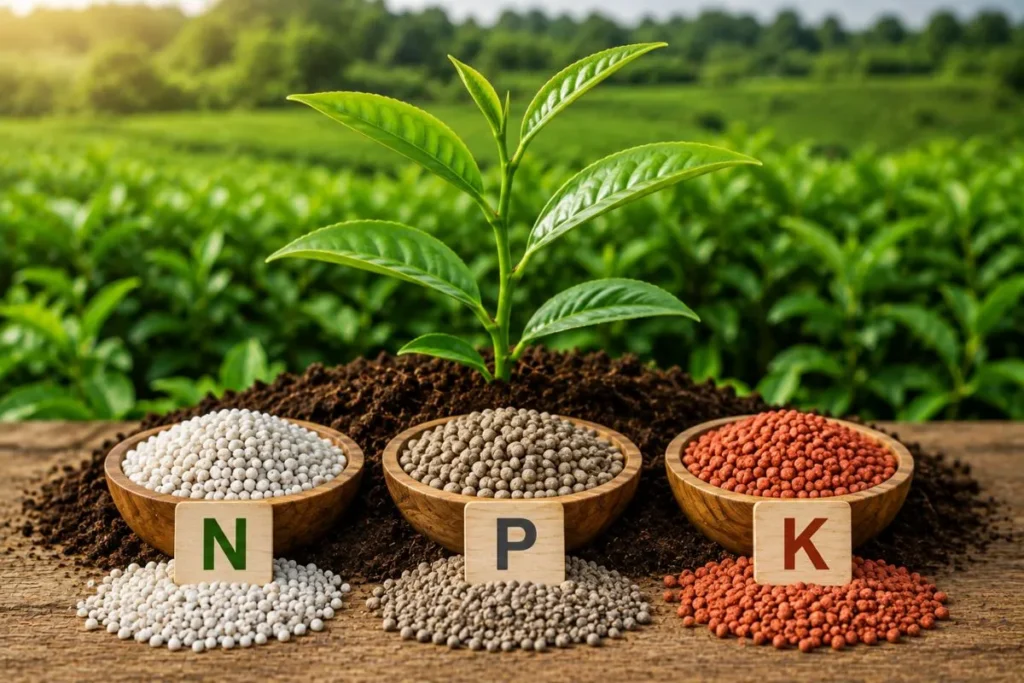
Instead, consider what your tea plant actually needs and select a product that provides appropriate nutrition.
A suitable balanced fertilizer for tea plants can be a practical option for general feeding, but the exact choice should also take the growing medium and plant condition into account.
It is also important to follow the fertilizer label. If the manufacturer recommends a particular amount for a certain container size or soil area, use that information as your starting point.
Using more fertilizer than recommended does not mean your plant will receive better nutrition.
Follow the Correct Fertilizer Schedule
Tea plants generally benefit from nutrients when they are actively growing. During active growth, the plant is producing new foliage and shoots, so providing appropriate nutrition can support its development.
This is why having a simple tea plant fertilizer schedule can be helpful. Instead of fertilizing randomly, you can keep track of when you last fed the plant and follow the instructions for your chosen product.
The ideal schedule depends on the fertilizer itself. A liquid fertilizer may have a different application frequency from a slow-release product. Plant size and growing conditions also matter.
Do not copy another gardener’s schedule without considering these differences.
If you are wondering when to fertilize tea plants, start by looking at the plant’s growth cycle and the instructions provided with your fertilizer. Active growth is generally the period when feeding is most useful, while stressed or dormant plants may not need the same level of nutritional support.
Apply Fertilizer at the Right Frequency
One of the most common mistakes is fertilizing too frequently.
You may think that giving your tea plant a little fertilizer every few days will keep it constantly supplied with nutrients. In reality, repeated applications can cause nutrients and soluble salts to build up in the growing medium.
This is particularly important for container-grown plants because their roots have access to a limited amount of soil.
When deciding how often to fertilize tea plants, consider the fertilizer type first. Slow-release products are designed to provide nutrients over an extended period, while liquid products may need more frequent but carefully measured applications.
Always follow the product instructions instead of creating your own high-frequency routine.
If the plant is growing well, more fertilizer is not necessarily going to improve it. Healthy growth is a sign that your overall care routine may already be working.
Water the Plant Properly Before or After Feeding
Water and fertilizer work closely together, so watering should be part of your feeding routine.
Avoid applying concentrated fertilizer to severely dry soil unless the product specifically instructs you to do so. A very dry root environment can increase the risk of root stress.
Proper moisture also helps nutrients move through the growing medium. After applying an appropriate fertilizer, water according to the product’s instructions and the plant’s normal watering needs.
The key is not to keep the soil constantly soaked. Tea plants need moisture, but poor drainage can create its own problems.
For container-grown tea plants, make sure excess water can escape through drainage holes. Standing water around the roots can reduce root health and make it harder for the plant to absorb nutrients properly.
So, when using fertilizer for tea plants, think about the entire root environment rather than fertilizer alone.
Consider Slow-Release Fertilizer
If you prefer a simpler feeding routine, slow-release fertilizer for tea plants can be worth considering.
As the name suggests, these fertilizers are designed to release nutrients gradually rather than making all the nutrients available at once. This can make feeding more convenient and reduce the need for repeated applications.
Slow-release formulas can be particularly useful for gardeners who sometimes forget fertilizer schedules. Instead of remembering frequent applications, you can follow the product’s instructions for how and when to apply it.
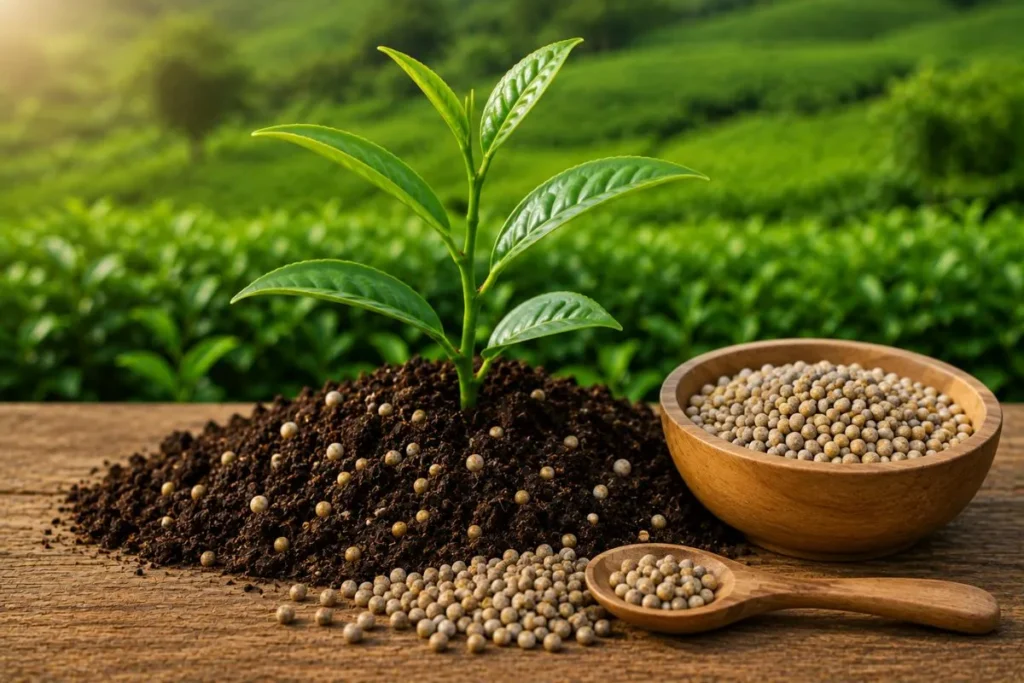
However, slow-release does not mean risk-free.
You still need to use the correct amount. Adding extra product because it releases slowly can still result in excessive nutrients. Always check the label and avoid combining multiple fertilizer products unless you understand how their nutrient contributions will interact.
A slow-release product is a convenience, not a reason to ignore dosage.
Use Organic Fertilizer Carefully
Organic fertilizer for tea plants can be an appealing choice, especially for gardeners who prefer natural soil-building methods.
Materials such as mature compost can contribute organic matter to the growing medium and help create a healthier soil environment. Organic fertilizers can also release nutrients more gradually, depending on the material used.
But there is a common misconception that organic fertilizer cannot harm plants. It can.
Any fertilizer or nutrient-rich material can cause problems if it is used excessively or applied inappropriately. The fact that a product is natural does not mean the plant needs unlimited amounts.
When using organic fertilizer, choose mature, well-processed materials and avoid applying excessive amounts around the plant.
Compost is often best viewed as part of a broader soil-care strategy rather than a reason to stop paying attention to nutrient balance.
If you are searching for the best organic fertilizer for tea plants, focus on the quality of the product, its nutrient content, and how well it fits your growing conditions.
Adjust Feeding for Potted Tea Plants
Potted tea plants require special attention because their roots are confined to a limited amount of growing medium.
Every time you water a container, some nutrients can potentially move through the soil and out of the drainage holes. At the same time, repeated fertilizer applications can cause salts to accumulate.
This makes fertilizer for potted tea plants a little different from feeding plants growing in the ground.
Start by choosing a fertilizer suitable for container plants and follow the recommended dosage carefully. Avoid applying extra fertilizer simply because the plant appears to be growing slowly.
Also check the pot itself. A container should have adequate drainage, and the growing medium should allow water to move through without becoming permanently saturated.
If you notice white or crusty material accumulating on the surface of the soil or around the pot, it may be a sign of mineral or salt buildup. In that situation, adding more fertilizer is probably not the solution.
Container gardening rewards moderation. A smaller root environment means mistakes can affect the plant more quickly.
Watch for Signs of Overfertilization
Too much fertilizer can cause serious problems, so learn to recognize the warning signs.
One common problem is fertilizer burn on tea plants. You may notice brown or scorched-looking leaf edges, unusual leaf damage, or a general decline after a heavy fertilizer application.
The roots can also become stressed when excessive soluble salts accumulate in the growing medium.
If you think you have overfertilized your tea plant, stop adding fertilizer and assess the growing medium and plant condition. Depending on the situation and product instructions, careful watering may help move excess soluble salts through a well-draining container.
Do not respond to fertilizer damage by adding another product to “balance it out.” That can make the situation worse.
This is why overfertilizing tea plants is something worth preventing rather than trying to correct later.
A good fertilizer routine should leave your plant looking healthy and steadily growing. If every feeding seems to cause leaf damage, your dosage, frequency, or overall approach needs to be reconsidered.
Watch for Nutrient Deficiencies
Just as too much fertilizer can cause trouble, too little available nutrition can affect plant growth.
Signs of a tea plant nutrient deficiency can include pale foliage, weak growth, poor development, or unusual changes in newer or older leaves. However, these symptoms do not always mean the plant needs more fertilizer.
Watering problems, poor drainage, unsuitable pH, insufficient light, pests, and root damage can produce similar symptoms.
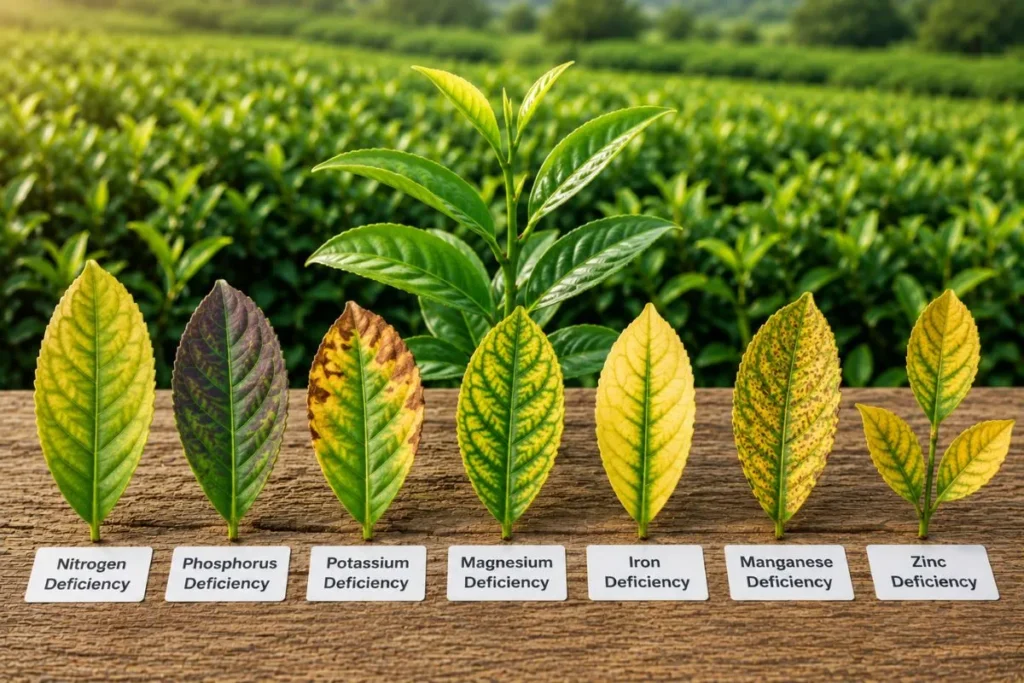
This is why diagnosis should come before treatment.
If you notice unusual leaves, first look at the entire growing environment. Check the soil moisture, drainage, light exposure, recent weather conditions, and any changes you have made to your care routine.
If possible, a soil test can provide more useful information than guessing from leaf color alone.
Once you understand the likely cause, you can make a more informed decision about tea plant nutrition.
How to Put These 11 Fertilizer Tips Into Practice
You do not need to change everything at once. Start with the basics.
First, understand your plant and its growing environment. Then check the soil when appropriate. Choose a fertilizer that matches the plant’s needs and follow the label carefully. Keep track of when you feed the plant so you do not accidentally apply fertilizer too often.
After feeding, watch the plant instead of immediately adding more.
Healthy new growth, good leaf color, and steady development are more useful indicators than simply how much fertilizer you have applied.
Remember, the goal of fertilizing tea plants is not to force rapid growth. It is to provide appropriate nutrition while maintaining a healthy root environment.
When you combine sensible feeding with proper watering, suitable soil, good drainage, and adequate light, your tea plant has a much better chance of producing strong, healthy growth.
Organic Fertilizer for Tea Plants: Is It a Good Choice?
Many gardeners assume that organic fertilizer is always safer and better than every other type of fertilizer. That is not necessarily true. Organic fertilizer for tea plants can be a great choice, but it still needs to be used correctly.
Natural products can contain nutrients, and too much of any nutrient-rich material can create problems. The real goal is to improve the growing environment and provide useful nutrition without overwhelming the plant.
For tea plants, organic feeding can be especially appealing because good organic matter can support soil health while supplying nutrients gradually. It can also help create a more natural growing environment around the roots. However, the quality of the organic material matters, and not every homemade or natural fertilizer is equally useful.
Why Use Organic Fertilizer for Tea Plants?
Organic fertilizers come from natural materials such as composted plant matter, animal-based materials, or other naturally derived sources. Depending on the product, they can provide nutrients while also contributing organic matter to the growing medium.
This can be helpful for gardeners who want to improve their overall tea plant care routine rather than focusing only on feeding.
Healthy soil is an important part of growing Camellia sinensis. When the growing medium contains good organic matter, it can provide a better environment for roots and beneficial soil organisms.
Organic feeding can also be useful for gardeners who prefer a slower and more gradual approach to plant nutrition. Instead of trying to push rapid growth, the focus is on maintaining a healthy growing environment over time.
Still, organic fertilizer should not be viewed as a magic solution. If your tea plant has poor drainage, unsuitable soil, insufficient light, or another underlying problem, adding organic fertilizer alone will not fix it.
Compost for Tea Plants
Compost is one of the simplest organic materials to consider when improving soil around tea plants.
Well-matured compost contains decomposed organic material that can improve soil structure and contribute small amounts of nutrients. It can also help create a more supportive environment for roots.
When using compost for tea plants, quality matters. Use compost that is fully decomposed rather than fresh organic waste. Mature compost should have a dark, crumbly appearance and an earthy smell rather than a strong unpleasant odor.
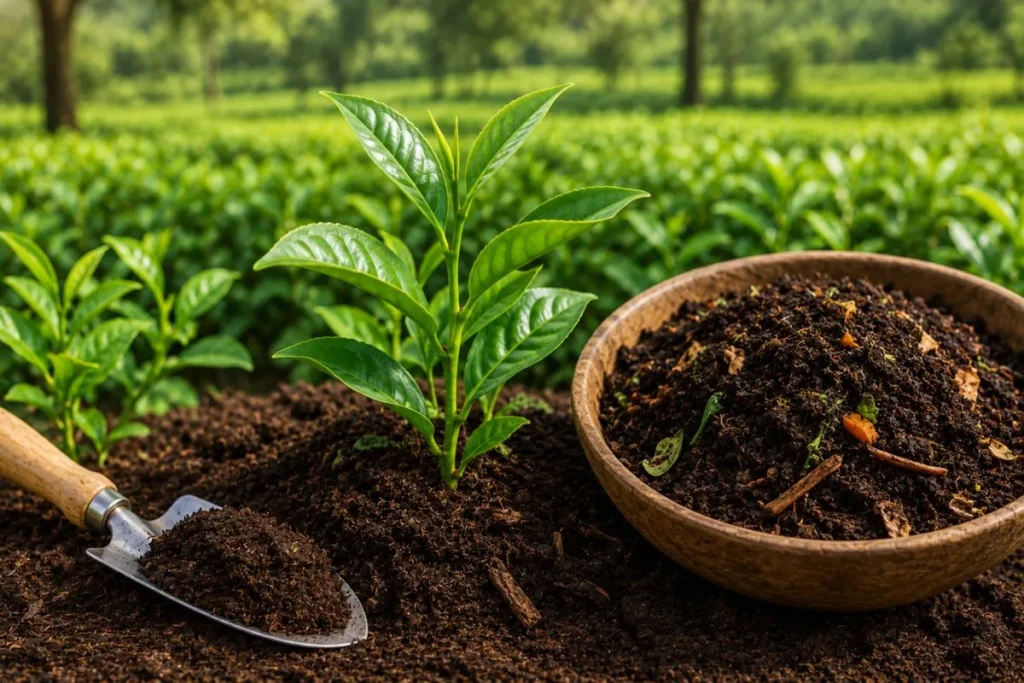
You do not need to create a huge pile around the plant. A moderate amount incorporated appropriately into the growing medium or used as a soil amendment is generally more sensible than applying a thick layer of nutrient-rich material.
For container-grown tea plants, be particularly careful. A pot has limited space, so adding too much compost can change the texture and drainage of the growing medium. Tea plants need a root environment that drains well rather than one that stays constantly wet.
How Compost Supports Tea Plant Soil
One advantage of compost is that it does more than simply provide nutrients.
Organic matter can improve the physical condition of soil. In suitable amounts, it can help support moisture retention while still allowing the growing medium to maintain useful air spaces.
This matters because healthy roots need access to both water and oxygen.
For gardeners growing tea plants outdoors, incorporating suitable organic matter into poor soil can be part of a long-term soil improvement strategy.
However, compost should not be used as a substitute for every other aspect of plant nutrition. Its nutrient content can vary considerably depending on what materials were composted and how the compost was produced.
That means you should not assume that compost alone will provide every nutrient your tea plant needs.
Should You Use Compost Instead of Fertilizer?
Compost and fertilizer serve somewhat different purposes. Compost is primarily useful as an organic soil amendment and can contribute nutrients, while a formulated fertilizer provides a more predictable nutrient analysis.
If your tea plant is growing well in healthy soil, compost may be a useful part of your general soil-care routine. If the plant has a confirmed nutrient deficiency, however, a fertilizer with a known nutrient profile may provide a more targeted solution.
This is an important distinction when looking for the best organic fertilizer for tea plants. A material being organic does not automatically mean it has the exact nutrient balance your plant needs.
Homemade Fertilizer for Tea Plants
Homemade fertilizer can sound attractive because it is inexpensive and easy to make. You may find suggestions involving kitchen scraps, leftover plant materials, or common household ingredients.
But there is a problem: homemade mixtures often have unpredictable nutrient concentrations.
You may know what ingredients you added, but you may not know exactly how much nitrogen, phosphorus, potassium, or micronutrients the final mixture contains. That makes it difficult to control the amount of nutrition your tea plant receives.
This is why the question “Can you use homemade fertilizer for tea plants?” does not have a simple yes-or-no answer.
Some homemade organic materials can contribute useful nutrients or organic matter, but they should not automatically be treated as a complete fertilizer.
Be Careful With Kitchen Scraps
Kitchen scraps are often discussed as homemade plant fertilizer, but putting fresh food waste directly around a tea plant is not the same as applying finished compost.
Fresh scraps can attract pests, create unpleasant odors, and decompose unevenly. Some materials may also temporarily affect the soil environment as they break down.
A better approach is to compost suitable organic waste properly first.
Once organic materials have fully decomposed, they become much more useful as a soil amendment. This gives you a more stable material than simply burying or scattering fresh kitchen waste around your tea plant.
Homemade Fertilizer Does Not Mean More Fertilizer
Another common mistake is assuming that because a homemade fertilizer is natural, it can be applied frequently.
That is not a good rule.
Tea plants still need balanced nutrition, regardless of whether the nutrients come from an organic source or a commercial product. Applying too much nutrient-rich material can disturb the growing environment and may contribute to problems.
If you are unsure about a homemade mixture, using a properly labeled product can actually make feeding easier because you know its nutrient analysis and recommended application rate.
Organic Fertilizer for Potted Tea Plants
Organic feeding requires extra care when your tea plant grows in a container.
The limited amount of growing medium means that changes can happen faster than they might in a large garden bed. Too much organic material can also affect drainage and soil texture.
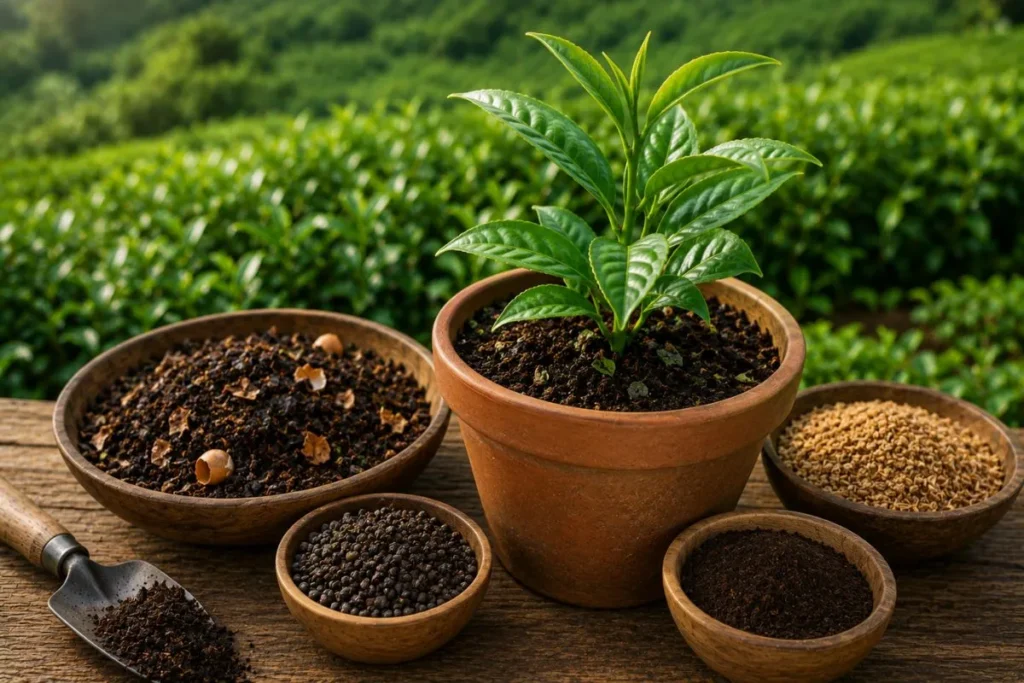
When using organic fertilizer for tea plants in containers, choose materials that are appropriate for container growing. Avoid filling a pot with heavy compost or adding large quantities of unknown homemade mixtures.
Good drainage should remain a priority.
The plant should have enough moisture for healthy roots, but excess water should be able to move away from the root zone.
Organic Fertilizer and Acid-Loving Tea Plants
Tea plants generally prefer acidic growing conditions, so it is important to consider the effect that any organic amendment may have on the growing medium.
Do not assume that every organic material will automatically maintain the ideal conditions for tea plants. Different composts and organic products can have different characteristics.
If your plant is struggling despite regular organic feeding, consider checking the soil rather than automatically adding more material.
A soil test can help you understand whether the growing medium has suitable pH and nutrient levels.
When Organic Fertilizer Makes the Most Sense
Organic fertilizer can be a good fit when your main goal is to support long-term soil health and provide gentle nutritional support.
It can work particularly well as part of a broader gardening routine that includes quality soil, good drainage, proper watering, and suitable light.
For gardeners who enjoy building healthy soil naturally, mature compost and carefully selected organic fertilizers can be valuable tools.
But if you need precise nutrition, a formulated fertilizer may be easier to manage. The important thing is not whether the label says “organic” or “synthetic.” What matters is whether the product or material provides appropriate nutrition for your tea plant and whether you use it correctly.
How to Fertilize Tea Plants for Healthy Growth
Many gardeners think fertilizing a tea plant is simply a matter of sprinkling fertilizer around the base and watering it. It sounds easy, but the way you apply fertilizer can make a big difference.
Using more fertilizer or applying it carelessly will not automatically create healthier growth. The real goal is to deliver the right amount of nutrition to the root zone while avoiding unnecessary stress.
If you already know which fertilizer suits your tea plant, the next step is learning how to use it properly. A simple application routine can help you avoid common mistakes and make your tea plant fertilizer work more effectively.
Check Soil Moisture Before Applying Fertilizer for Tea Plants
Before applying fertilizer for tea plants, check whether the soil is extremely dry.
Applying concentrated fertilizer to very dry soil can increase the risk of root stress. If the growing medium is excessively dry, address the moisture issue first according to the plant’s normal watering needs.
At the same time, avoid fertilizing a plant sitting in waterlogged soil. Tea plant roots need oxygen as well as moisture, and poor drainage can interfere with healthy root function.
Measure Fertilizer for Tea Plants Carefully
One of the easiest mistakes to make when using fertilizer for tea plants is guessing the amount.
Do not assume that a little extra fertilizer will produce extra growth. Instead, measure the product according to the manufacturer’s instructions.
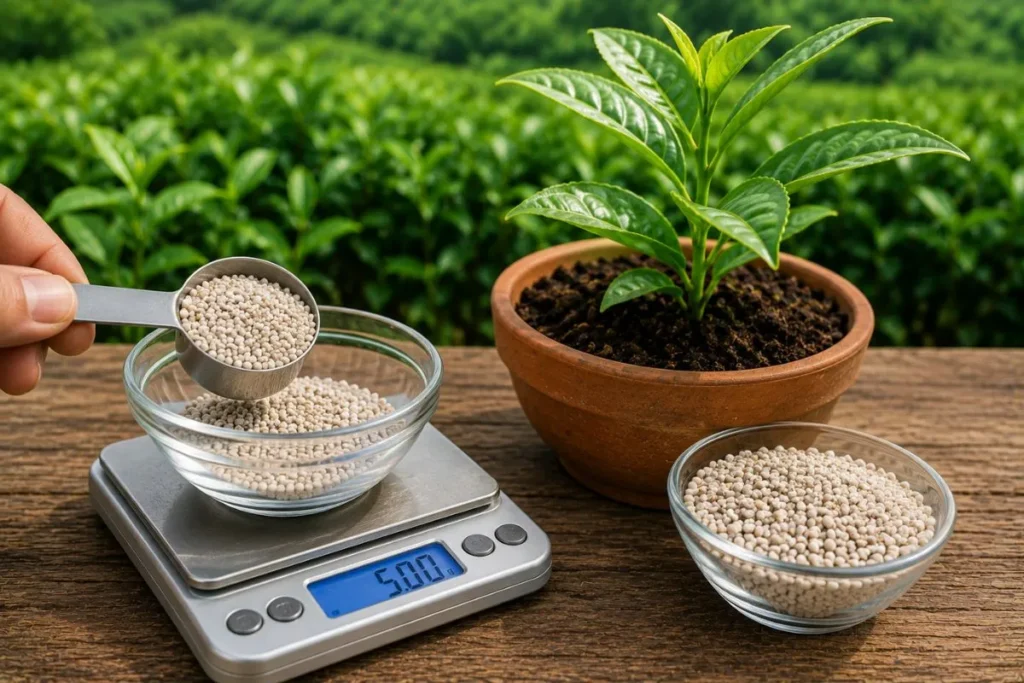
The recommended amount can depend on factors such as the product’s concentration, plant size, pot size, or growing area. A small container may require far less fertilizer than a mature plant growing outdoors.
If the label gives different rates for different plants or applications, choose the instruction that best matches your tea plant.
Apply Fertilizer for Tea Plants Around the Root Zone
When applying granular fertilizer for tea plants, avoid creating a concentrated pile directly against the stem.
Instead, distribute the fertilizer according to the product directions around the appropriate root area. The goal is to make nutrients available to the roots without creating a highly concentrated spot.
For a container-grown tea plant, follow the instructions for the pot size. For plants growing outdoors, the application area may be broader.
Use Liquid Fertilizer for Tea Plants as Directed
Liquid fertilizers can be convenient because they are mixed with water and distributed through the growing medium.
However, concentration matters.
Always dilute a concentrated liquid fertilizer for tea plants according to the product label. Do not make the mixture stronger because your tea plant appears to be growing slowly.
Water Properly After Applying Fertilizer for Tea Plants
Some granular fertilizers need watering after application so that nutrients can move into the growing medium.
If your fertilizer for tea plants label recommends watering after application, follow that instruction.
Water should move through the soil without leaving the root zone permanently saturated. For container-grown tea plants, check that the pot has functioning drainage holes.
Frequently Asked Questions About Fertilizer for Tea Plants
If you still have questions about fertilizer for tea plants, you are not alone. Choosing the right product, knowing when to use it, and understanding how much your tea plant needs can feel confusing at first. Here are the most common questions gardeners ask about feeding Camellia sinensis.
What Is the Best Fertilizer for Tea Plants?
The best fertilizer for tea plants is one that provides suitable nutrition while fitting the plant’s growing conditions. Look for a product appropriate for acid-loving plants and follow its application instructions carefully. The best choice can vary depending on whether your tea plant grows in a container, indoors, or outdoors.
Avoid choosing a fertilizer simply because it has a higher nutrient concentration. A suitable product used correctly is generally more useful than an overly strong fertilizer applied too heavily.
How Often Should You Fertilize Tea Plants?
How often you should fertilize tea plants depends on the fertilizer you use, the plant’s growth stage, and its growing environment. Slow-release products usually have a different feeding schedule from liquid fertilizers.
The safest approach is to follow the manufacturer’s recommended frequency rather than creating your own schedule. During active growth, a tea plant may have greater nutritional needs than during periods of slow or dormant growth.
If the plant is already growing well, applying additional fertilizer more frequently is not necessarily beneficial.
What Nutrients Do Tea Plants Need to Grow?
Tea plants need several essential nutrients for healthy development. The major nutrients include nitrogen, phosphorus, and potassium, while secondary nutrients and micronutrients are also important.
Nitrogen is particularly associated with leafy growth, while phosphorus and potassium support other important plant functions. The plant also needs nutrients such as magnesium, calcium, sulfur, and iron in appropriate amounts.
A nutrient problem should not be diagnosed from leaf color alone because watering, soil pH, light, pests, and root problems can cause similar symptoms.
What Is the Best Organic Fertilizer for Tea Plants?
The best organic fertilizer for tea plants depends on what your plant and soil actually need. Mature compost can be a useful soil amendment because it adds organic matter and contributes some nutrients.
Commercial organic fertilizers can also be useful because their nutrient content is usually listed on the package, making them easier to measure than homemade mixtures.
If you use organic fertilizer, remember that natural does not mean unlimited. Apply it according to the product’s instructions and avoid excessive amounts.
Can You Use Homemade Fertilizer for Tea Plants?
Yes, some homemade organic materials can contribute nutrients or organic matter, but they should not automatically be treated as complete fertilizer.
The main issue with homemade fertilizer is that its nutrient concentration can be difficult to determine. You may not know exactly how much nitrogen, phosphorus, potassium, or micronutrients your tea plant is receiving.
For more predictable feeding, a properly labeled fertilizer or mature compost is often easier to manage. Avoid applying unknown mixtures heavily around the plant.
What Is the Best Fertilizer for Camellia Sinensis?
A fertilizer suitable for acid-loving plants can be a practical choice for Camellia sinensis. Look for a product with an appropriate nutrient profile and follow its recommended dosage.
You do not necessarily need a product specifically labeled “tea plant fertilizer.” A suitable fertilizer for acid-loving plants may also work, provided it matches the growing conditions and is used correctly.
Soil condition is also important. If the growing medium has an unsuitable pH, simply adding more fertilizer may not solve the problem.
When Is the Best Time to Fertilize Tea Plants?
The best time to fertilize tea plants is generally connected to their active growth period. When the plant is actively producing new shoots and leaves, it is using resources for development.
The exact timing depends on your local growing conditions and the fertilizer you choose. Always consider the product’s instructions rather than relying on a fixed calendar date.
Avoid treating fertilizer as a solution for a severely stressed plant. If the plant is struggling because of drought, waterlogging, disease, pests, or another environmental issue, correct that problem first.
Can You Use Fertilizer for Potted Tea Plants?
Yes, you can use fertilizer for potted tea plants, but container growing requires careful attention to dosage.
A pot contains a limited amount of growing medium, so repeated fertilizer applications can lead to nutrient or salt buildup. At the same time, nutrients can also be lost when water passes through the container.
Use a fertilizer appropriate for container plants and follow the recommended amount. Make sure the pot has good drainage, and avoid increasing the dosage simply because the plant appears to be growing slowly.
How Do You Fertilize Tea Plants for More Leaves?
To fertilize tea plants for more leaves, focus on providing appropriate nutrition rather than trying to force rapid growth with large amounts of fertilizer.
Tea plants need suitable nutrients, but leaf production also depends on light, water, temperature, soil, pruning, and overall plant health.
A fertilizer routine can support healthy foliage, but it cannot compensate for poor growing conditions. If your tea plant is not producing new leaves, look at the entire environment before increasing fertilizer.
What Happens If You Overfertilize Tea Plants?
Overfertilizing tea plants can damage roots and cause symptoms such as brown leaf edges, scorched foliage, poor growth, or general plant stress. Excess fertilizer can also contribute to salt buildup in the growing medium.
If you suspect you have applied too much fertilizer, stop adding more and assess the plant and soil. For container plants, appropriate watering and good drainage can help manage excess soluble salts, depending on the fertilizer and situation.
The best solution is prevention. Measure fertilizer carefully and follow the recommended application rate instead of assuming that more will produce faster growth.
Is Nitrogen Fertilizer Good for Tea Plants?
Nitrogen is an important nutrient for tea plants because it supports vegetative growth and healthy foliage. However, that does not mean a tea plant needs large amounts of nitrogen.
Using excessive nitrogen can encourage unbalanced growth and may contribute to fertilizer-related problems. If you are considering nitrogen fertilizer for tea plants, look at the plant’s overall nutritional needs rather than focusing on nitrogen alone.
Is Slow-Release Fertilizer Good for Tea Plants?
Slow-release fertilizer can be a convenient option because it is designed to provide nutrients gradually over time. This can make it easier to maintain a consistent feeding routine.
However, slow-release fertilizer still needs to be applied at the recommended rate. Adding extra product because it releases slowly can still result in excessive nutrition.
Choose a slow-release formula that is appropriate for your tea plant and follow the package instructions.
Can Tea Plants Grow Without Fertilizer?
Tea plants can survive without regular fertilizer when growing in naturally fertile soil that provides sufficient nutrients. However, nutrient availability can change over time, particularly in containers or heavily used growing areas.
If growth becomes weak or foliage shows possible signs of nutrient deficiency, assess the soil and growing conditions before deciding whether fertilizer is needed.
The goal is not to fertilize simply because you have a fertilizer available. Feed the plant when there is a sensible reason to do so.
Conclusion
Growing a healthy tea plant is not about using the strongest fertilizer or feeding it as often as possible. The real secret is balance. The right fertilizer for tea plants should support healthy growth without overwhelming the roots or disturbing the growing environment.
If you are growing Camellia sinensis, start by understanding what your plant actually needs. Consider the soil, growing conditions, plant size, and current growth before choosing a fertilizer.
A suitable product can provide valuable nutrients, but fertilizer works best when it is combined with good soil, proper watering, adequate light, and good drainage.
Remember that more fertilizer does not mean more growth. Overfertilizing can cause leaf damage, root stress, and other problems. Instead, follow the product instructions, measure carefully, and give your tea plant time to respond.

Plant Nest Blog’s author is passionate about plants, gardening, and sustainable living. Through research and practical experience, they share helpful plant care tips, gardening guides, and easy solutions to help readers grow healthier plants and create greener spaces.