
Boxwood plants do not need constant feeding to remain green and healthy. This is one of the most common misunderstandings about using fertilizer for boxwood plants. In fact, feeding boxwoods too often can produce weak growth, burn the roots, and damage the leaves. If your shrubs already grow in fertile, well-drained soil, they may need little or no additional fertilizer.
Boxwoods are naturally slow-growing evergreen shrubs. That slow growth does not always mean something is wrong. Some gardeners see limited growth and immediately apply a strong boxwood plant fertilizer, hoping it will make the shrubs grow faster.
However, forcing rapid growth can make boxwoods less dense and more difficult to maintain. It may also produce soft shoots that are more vulnerable to cold weather and environmental stress.
A boxwood may need feeding when it has pale foliage, unusually small leaves, weak growth, or a confirmed nutrient deficiency. It may also require extra nutrients when growing in poor or depleted soil. However, these symptoms do not always mean the plant is hungry.
Yellow leaves can result from overwatering, drought, winter injury, root damage, pests, disease, or unsuitable soil pH. Applying fertilizer for yellowing boxwoods without finding the real cause may make the problem worse.
Before feeding boxwood shrubs, look closely at their growing conditions. Check whether the soil drains properly and whether the roots receive enough water during dry weather.
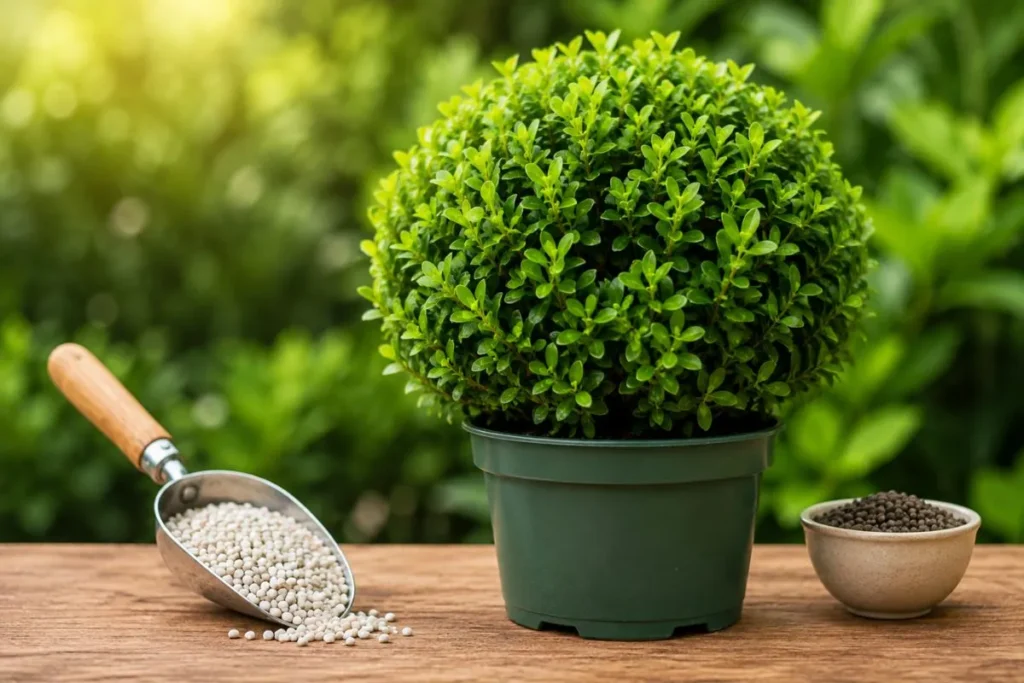
Inspect the leaves and branches for insects, spots, discoloration, or dieback. Also check whether the shrub was planted too deeply. Fertilizer cannot correct poor drainage, root rot, pest damage, or improper planting.
A soil test is the most reliable way to understand your boxwood fertilizer requirements. It shows the soil’s pH and reveals whether important nutrients are missing. Sometimes nutrients are already present, but an unsuitable pH prevents the roots from absorbing them. In that case, adding more boxwood plant food will not solve the underlying issue.
Healthy, established boxwoods may receive enough nutrients from the surrounding soil, decomposing mulch, and other organic matter. If your shrubs have normal leaf color, dense foliage, and steady seasonal growth, they probably do not need heavy feeding.
The goal of good boxwood plant care is to support compact and balanced growth rather than force the plant to grow as quickly as possible.
Fertilizer is only one part of caring for boxwoods. These shrubs also need suitable soil, proper drainage, consistent watering, careful pruning, and correctly applied mulch. Even the best plant food for boxwoods cannot overcome unhealthy roots or persistently soggy soil.
Treat fertilizer as a supporting tool, not as a cure for every boxwood problem.
What Is the Best Fertilizer for Boxwood Plants?
The best fertilizer for boxwood plants is one that provides the nutrients your soil actually lacks. It should encourage steady growth without forcing the shrub to produce weak, oversized shoots. No single product works perfectly for every boxwood because soil quality, plant age, climate, and growing conditions can differ.
Before choosing a boxwood plant fertilizer, check the shrub’s health and, if possible, test the soil. A soil test can show which nutrients are missing and help you avoid unnecessary feeding. This makes it much easier to select the right product instead of relying on guesswork.
2.1 What Boxwoods Need From a Fertilizer
Boxwoods mainly require nitrogen, phosphorus, and potassium. These nutrients appear as three numbers on fertilizer packaging, commonly called the NPK ratio. Each nutrient performs a different job, and your boxwood needs them in suitable amounts.
Nitrogen supports leaf and stem growth. It also helps boxwoods maintain their rich green appearance. A shrub with a confirmed nitrogen deficiency may develop pale foliage and grow more slowly than expected. In this situation, a carefully applied nitrogen fertilizer for boxwoods may help.
Too much nitrogen, however, can create long, soft shoots instead of compact foliage. This weak growth may be more vulnerable to weather damage and can increase the amount of pruning your shrub needs. The goal is to support natural growth rather than force it.
Phosphorus supports root development and other important plant processes. However, many garden soils already contain enough phosphorus. Adding more will not automatically produce stronger roots. Repeated applications can lead to a buildup in the soil, so only use a high-phosphorus boxwood shrub fertilizer when testing shows a real need.
Potassium helps maintain overall plant strength. It also supports the boxwood’s ability to cope with drought, cold, and other stressful conditions. However, excessive potassium may affect how the roots absorb other nutrients. Like all fertilizer ingredients, it should be applied in the correct amount.
Boxwoods also need smaller amounts of iron, magnesium, and other micronutrients. These elements contribute to healthy foliage and normal plant development. Sometimes a boxwood cannot absorb them because the soil pH is unsuitable. In that case, applying more evergreen shrub food may not help until the soil problem is corrected.
Choosing a Balanced Boxwood Fertilizer
A balanced fertilizer for boxwoods contains equal or similar proportions of nitrogen, phosphorus, and potassium. It can be a suitable choice when the soil needs all three nutrients. However, the word “balanced” does not mean that the product is automatically right for every shrub.
If the soil already contains enough phosphorus or potassium, adding more may provide no benefit. This is why testing your soil is much better than choosing a fertilizer based only on the numbers printed on the package.
You should also check the nutrient concentration and recommended application rate. Two products may have similar NPK ratios but require very different amounts. Always measure the product carefully and follow its label. Never estimate the amount by throwing a few handfuls around the shrub.
Some fertilizers also contain iron, magnesium, or other micronutrients. These can be useful when your soil or plant has a confirmed deficiency. Still, you should avoid selecting a product simply because it contains a long list of ingredients. The best plant food for boxwoods is one that meets an actual need.
More fertilizer does not mean faster or healthier growth. Overfeeding can burn the roots, discolor the leaves, and produce weak branches. When you are uncertain about the correct amount, using the lowest appropriate label rate is usually the safer approach.
Slow-Release vs. Quick-Release Fertilizer
A slow-release fertilizer for boxwoods provides nutrients gradually over a longer period. This allows the shrub to receive a steady supply instead of a large amount at once. For many established boxwoods, slow-release fertilizer is a practical and convenient choice.
Slow-release products can support compact, controlled growth and reduce sudden growth spurts. They may also require fewer applications than quick-release products. However, slow-release fertilizer can still damage roots when applied too heavily. Always spread the recommended amount evenly across the root zone and keep concentrated granules away from the trunk.
Quick-release fertilizers make nutrients available much faster. A liquid fertilizer for boxwoods may be helpful for container plants or when a soil test confirms a nutrient deficiency that needs quicker correction. Liquid products are easy to distribute, but accurate mixing is essential.
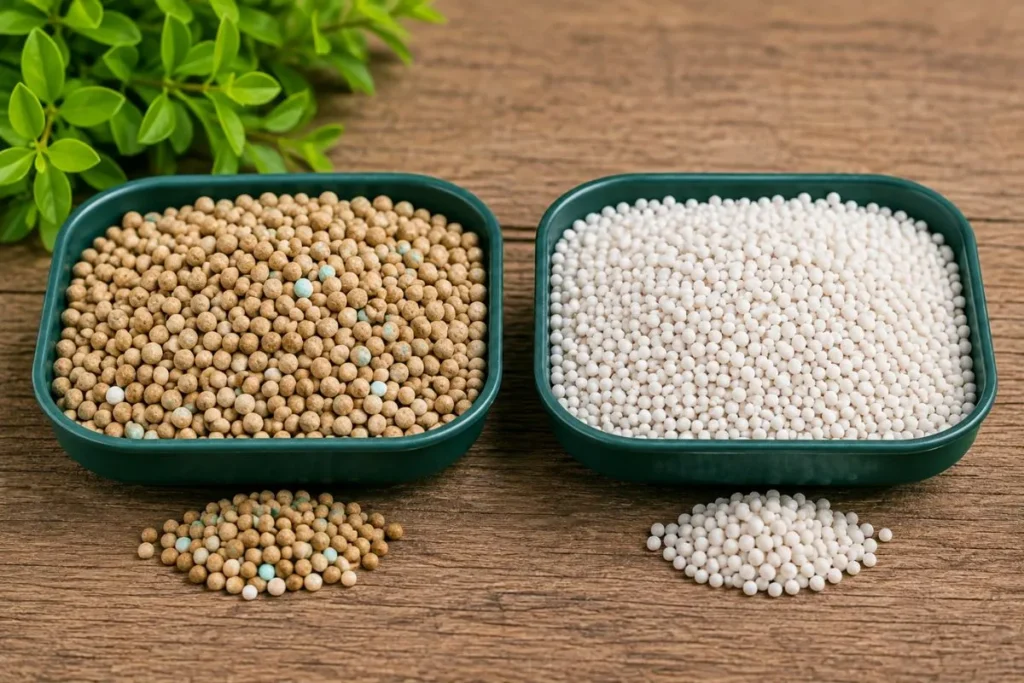
A solution that is too concentrated can burn roots and scorch leaves. You should not apply strong liquid fertilizer to completely dry soil. Watering the root area first can reduce the risk of damage. You should also avoid spraying the leaves unless the product label clearly allows foliar application.
For most established landscape shrubs, a properly measured slow-release product is often the easier option when feeding is genuinely necessary. Quick-release or liquid fertilizer may be more suitable for boxwoods in pots or specific nutrient problems that require close management.
Ultimately, the best fertilizer for boxwood plants is not the strongest product on the shelf. It is the fertilizer that matches your soil, supplies the missing nutrients, and encourages healthy growth without harming the plant.
What NPK Ratio Is Best for Boxwoods?
A high NPK ratio does not make a fertilizer better for boxwoods. Stronger formulas can supply more nutrients than the plant needs, leading to leaf scorch, weak shoots, or root damage. The best NPK ratio for boxwoods depends on the nutrients already present in the soil. That is why you should understand the fertilizer label and check the soil before choosing a product.
3.1 Understanding the Three Numbers on the Fertilizer Label
Every fertilizer package displays three numbers separated by dashes, such as 10-10-10 or 12-4-8. These numbers show the percentage by weight of nitrogen, phosphate, and potash in the product. They are commonly described as nitrogen, phosphorus, and potassium.
The first number represents nitrogen. This nutrient helps the shrub produce leaves and stems. Since boxwoods are grown mainly for their evergreen foliage, nitrogen often receives the most attention. However, too much nitrogen can make the plant produce long, soft shoots instead of dense, controlled growth.
The second number represents phosphate, the fertilizer’s phosphorus component. Phosphorus supports several internal plant processes and contributes to root development. However, established garden soil may already contain enough of it. Adding more phosphorus will not automatically make boxwood roots larger or stronger.
The third number represents potash, the fertilizer’s potassium component. Potassium supports water regulation, plant strength, and tolerance to environmental stress. A suitable amount can help boxwoods remain vigorous, but an excessive amount may disrupt the uptake of other nutrients.
The numbers also tell you how concentrated the product is. For example, a 10-10-10 fertilizer contains 10% of each listed nutrient component, while a 20-20-20 product contains twice that concentration. These products may have a similar nutrient balance, but they are not applied in the same amount.
This is why the ratio alone cannot tell you what NPK ratio is best for boxwoods. You also need to consider the product’s concentration and recommended application rate. Using twice as much fertilizer can dramatically increase the nutrients entering the soil, even when the ratio stays the same.
Always read the complete label before applying fertilizer. Pay attention to how much area the product treats and whether the directions are based on the size of the planting bed or the shrub. Accurate measurement is essential for safe boxwood fertilizer application.
Should You Use 10-10-10 Fertilizer on Boxwoods?
A 10-10-10 fertilizer is often described as a general-purpose or balanced product. It contains equal percentages of nitrogen, phosphate, and potash. Many gardeners assume this makes it the safest and most complete boxwood plant food, but that is not always true.
You can use 10-10-10 fertilizer on boxwoods when the soil needs all three nutrients and the product label approves its use on ornamental shrubs. The key is to confirm that need rather than applying it automatically every year.
If your soil already contains enough phosphorus and potassium, a 10-10-10 product will add nutrients the shrub may not require. Phosphorus can accumulate in the soil over time because it does not always move out of the root zone quickly. An excessive amount may also affect the availability of certain micronutrients.
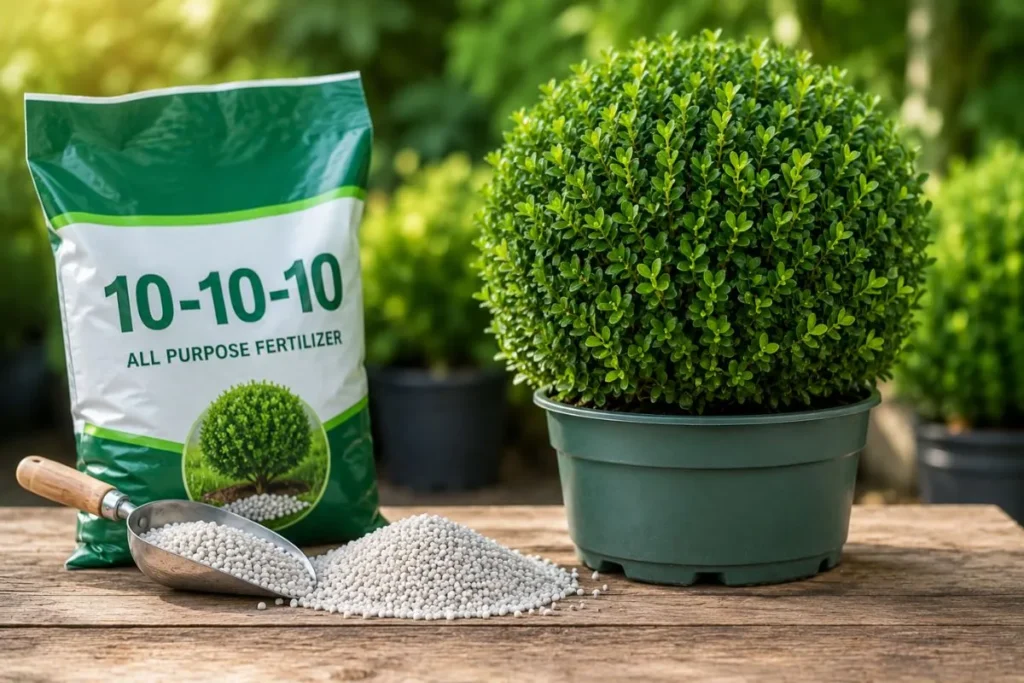
A soil test offers the clearest answer. If the results show low levels of nitrogen, phosphorus, and potassium, a balanced formula may be appropriate. If only one nutrient is low, a more targeted product will usually make more sense.
You should also consider the condition of the boxwood. A healthy shrub with rich green leaves and steady seasonal growth may not need fertilizer at all. Applying a balanced fertilizer for boxwoods simply as a routine garden task can encourage unwanted growth without improving the plant’s health.
When using 10-10-10 fertilizer, follow the product’s directions instead of copying a general measurement from another source. The correct quantity depends on the treated area, soil condition, product form, and manufacturer’s instructions. Keep the fertilizer off the stems and avoid leaving concentrated piles near the plant.
When a Nitrogen-Focused Fertilizer May Help
A nitrogen-focused formula may be useful when a soil test confirms low nitrogen and the boxwood shows related signs. These signs may include pale foliage, limited leaf development, and unusually weak seasonal growth.
A fertilizer with a higher first number and lower second and third numbers can supply nitrogen without adding large amounts of phosphorus and potassium. This can be a more precise choice when the soil already has suitable levels of the other nutrients.
Still, pale or yellow leaves do not always mean your shrub needs a nitrogen fertilizer for boxwoods. Poor drainage can damage the roots and prevent them from taking up nutrients. Dry soil can create a similar problem. An unsuitable pH may also restrict nutrient availability even when the soil contains enough fertilizer.
Root damage, deep planting, compacted soil, insect activity, and disease can also cause slow growth or leaf discoloration. In these cases, adding nitrogen will not fix the real problem. It may place extra stress on roots that are already struggling.
Look closely at where the symptoms appear. Consider recent weather, watering habits, drainage, and changes around the root zone. If branches are dying, leaves have spots, or the plant declines quickly, investigate pests and diseases before feeding it.
When a nitrogen deficiency is confirmed, apply the selected product at the label rate. The goal is to restore normal foliage and steady development, not to force rapid growth. Watch the shrub during the growing season and avoid making another application just because the results are not immediate.
So, what NPK ratio is best for boxwoods? There is no universal number. A 10-10-10 fertilizer may work when the soil lacks all three primary nutrients, while a nitrogen-focused formula may suit soil that already has enough phosphorus and potassium. Let the soil and the condition of the shrub guide your choice. This approach gives your boxwoods what they need without wasting fertilizer or risking unnecessary damage.
Organic vs. Synthetic Fertilizer for Boxwoods
Organic fertilizer is not automatically safer or better for every boxwood plant. Likewise, synthetic fertilizer is not always harsh or harmful. Either option can work well when it matches the soil’s needs and you apply it correctly. When choosing fertilizer for boxwood plants, focus on the product’s nutrient content, release speed, and proper application instead of relying only on the words “organic” or “synthetic.”
Organic Fertilizer Options for Boxwoods
Organic fertilizers come from plant, animal, or naturally occurring mineral sources. Popular options include finished compost, aged manure, plant-based meals, and packaged organic shrub fertilizers. These materials usually release nutrients as soil organisms break them down.
The gradual release makes organic products attractive to gardeners who want to encourage steady development. They are less likely to produce a sudden burst of soft growth when applied at the correct rate. However, they still contain nutrients and can be overused. Natural does not mean unlimited or risk-free.
Finished compost is one of the most useful organic materials for boxwood beds. It adds organic matter and can improve soil structure. In heavy soil, organic matter may create better conditions for air and water movement. In sandy soil, it can help the ground retain moisture and nutrients more effectively.
When using compost for boxwood shrubs, spread a modest layer over the soil around the plant. Keep it away from the trunk and main stems. Compost piled against a shrub can trap moisture, reduce airflow, and create favorable conditions for decay.
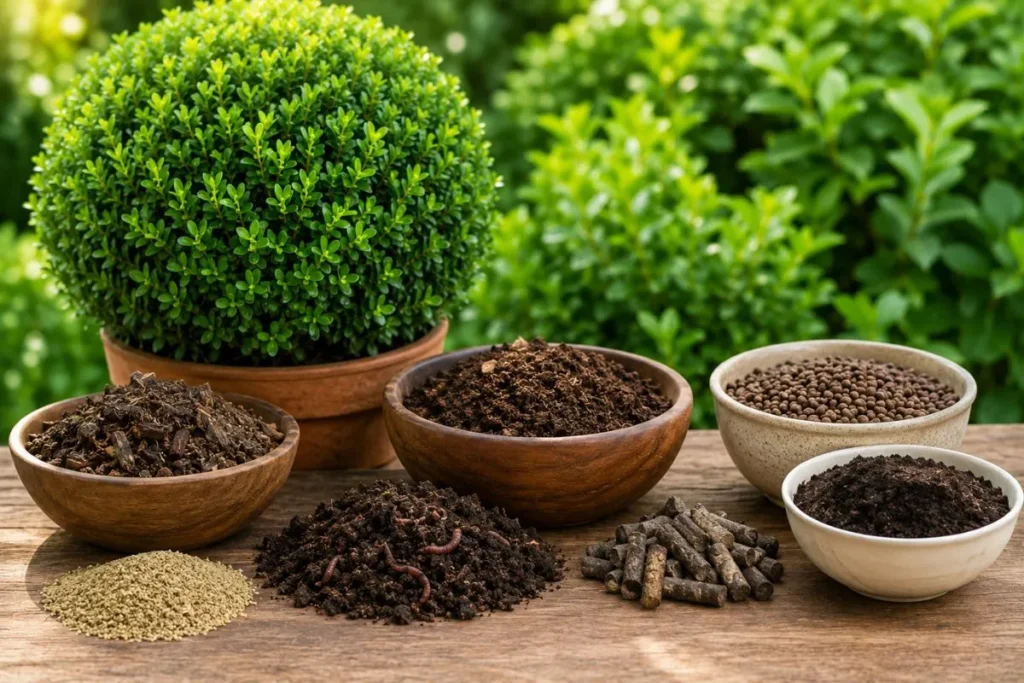
Compost is mainly a soil amendment rather than a complete, precisely measured fertilizer. Its nutrient content varies depending on the materials used to make it. It may improve the soil without supplying enough of a particular nutrient to correct a confirmed deficiency.
Aged or well-composted manure can also add organic matter and nutrients. However, you should never place fresh manure around boxwood roots. Fresh manure may contain high levels of salts and ammonia that can burn roots. It may also introduce weed seeds or harmful organisms into the planting bed.
Even aged manure should be used carefully. Its nutrient strength can vary, so adding large amounts may provide more nitrogen or phosphorus than your plants require. If you want to use manure as an organic fertilizer for boxwoods, choose a properly composted product from a reliable source and follow any available application guidance.
Packaged organic shrub foods offer more predictable nutrient information than homemade compost. Their labels show the nutrient analysis and application rate, making them easier to measure. The best organic fertilizer for boxwood plants should meet a confirmed need, release nutrients at a manageable speed, and be clearly labeled for ornamental shrubs.
Organic products also depend on soil activity. Microorganisms must break down many of these materials before the nutrients become available. This process may slow in cold, dry, or unhealthy soil. As a result, an organic fertilizer may not deliver an immediate response.
Synthetic Fertilizer Options for Boxwoods
Synthetic fertilizers are manufactured to provide nutrients in specific concentrations. They are available as granules, spikes, powders, and liquids. Their biggest advantage is precision. You can read the label and know the nutrient analysis contained in the package.
This predictable composition makes synthetic products useful when you need to correct a specific nutrient shortage. Instead of adding a broad mixture of organic materials, you can choose a formula that closely matches the results of a soil test.
Some synthetic products release their nutrients quickly, while others use coatings or other methods to release them gradually. Therefore, the term “synthetic” does not always mean fast-acting. A controlled-release boxwood shrub fertilizer may supply nutrients over several weeks or months.
Synthetic fertilizer can produce dependable results, but accurate measurement is essential. Because these products are concentrated, a small measuring mistake can add too many soluble salts to the root zone. This may cause brown leaf edges, wilting, discoloration, or damaged roots.
Never assume that adding extra product will make your boxwood greener in less time. Applying more than the label recommends can result in fertilizer burn instead of healthy growth. Spread granular fertilizer for shrubs evenly so one section of the root system does not receive a concentrated dose.
A liquid fertilizer for boxwoods can be useful when you want more control over dilution or need to feed a container-grown shrub. It distributes nutrients quickly through moist soil, but that speed also increases the need for careful mixing. A concentrated solution can damage fine roots.
Synthetic fertilizers do not add meaningful organic matter to the ground. They supply nutrients, but they do not replace compost or correct poor soil structure. If your planting bed is heavily compacted or drains badly, synthetic boxwood plant food will not solve those physical problems.
Which Fertilizer Should You Choose?
The choice between organic and synthetic fertilizer depends on what you want to achieve. If your main goal is to improve soil structure while supplying nutrients slowly, compost or another organic option may be useful. If testing reveals a specific deficiency that requires an accurately measured nutrient source, a synthetic product may offer greater control.
Organic products often release nutrients more slowly and contribute organic matter to the soil. However, their nutrient levels can vary, especially in homemade compost and manure. They may also take longer to produce visible results because decomposition depends on moisture, temperature, and soil organisms.
Synthetic fertilizers provide exact nutrient percentages and can act more quickly. They are easy to measure when you follow the label, but overapplication can cause damage. They also do little to improve the soil’s texture or biological activity.
Cost can influence your decision as well. Homemade compost may be inexpensive, but producing mature compost takes time and space. Packaged organic products are convenient but may cost more per application. Synthetic fertilizers are often concentrated and may treat a larger area, although prices differ between products and brands.
You do not always have to choose one approach exclusively. Some gardeners improve their beds with finished compost while using a carefully selected fertilizer only when testing reveals a nutrient shortage. This approach supports the soil and gives the plant targeted nutrition when necessary.
When comparing products, avoid choosing one simply because it promises dramatic growth. Boxwoods naturally grow at a controlled pace, and rapid growth is not the goal. The best plant food for boxwoods should promote dense foliage, stable roots, and consistent development.
Ultimately, the best fertilizer for boxwood plants may be organic, synthetic, or a combination of careful soil improvement and targeted feeding. The right choice depends on your soil, the shrub’s condition, your budget, and how quickly nutrients need to become available. Whichever option you choose, accurate application matters more than the marketing label on the package.
When Should You Fertilize Boxwood Shrubs?
Boxwoods should not be fertilized whenever they look tired or stop growing. Their growth naturally slows during certain parts of the year, and adding fertilizer at the wrong time can do more harm than good. The best time to apply fertilizer for boxwood plants is usually when the roots can absorb nutrients and the shrub is ready to begin active growth.
The Best Season to Feed Boxwoods
So, when should you fertilize boxwood shrubs? For most established boxwoods, early spring is usually the best time. Apply fertilizer as the soil becomes workable and the plant prepares to produce new growth.
Feeding at this stage gives the roots access to nutrients when the shrub is entering its natural growing period. The plant can then use those nutrients to support leaves, stems, and roots instead of producing growth at an unsuitable time.
The exact timing depends on your local climate. Spring arrives earlier in warm regions and later in cold areas. Instead of fertilizing on the same calendar date every year, pay attention to the weather, soil condition, and plant.
Wait until the ground is no longer frozen or waterlogged. Fertilizer applied to frozen soil cannot move effectively into the root zone. It may wash away during rain or snowmelt, wasting the product and contributing to nutrient runoff.
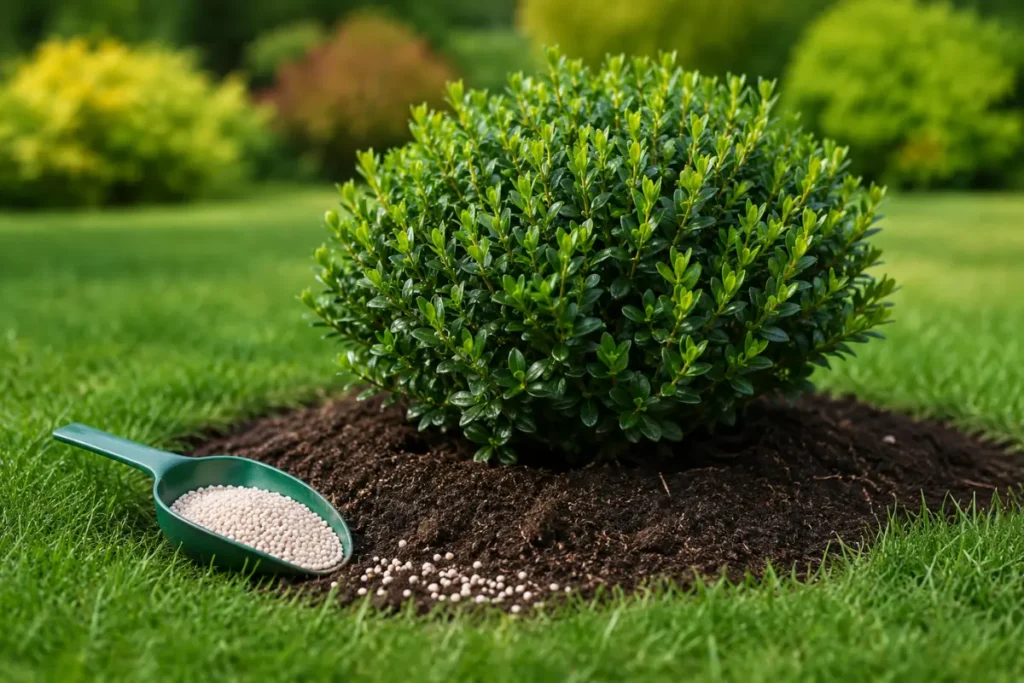
You also do not need to wait until the boxwood has produced a large amount of new foliage. Applying a suitable boxwood shrub fertilizer shortly before or around the beginning of active growth gives the plant time to access the nutrients gradually.
If you use a slow-release product, early spring application can provide steady nutrition over an extended period. Always check the product label because release times and application instructions vary. Some fertilizers are designed for one seasonal application, while others may require a different schedule.
Avoid applying fertilizer only because spring has arrived. First, inspect the shrub. If it has healthy color and normal growth, it may not require feeding. A reliable boxwood fertilizer schedule should respond to the plant’s needs rather than treat fertilizing as an automatic yearly task.
Should You Fertilize Boxwoods in the Fall?
Fall is not usually the best time to apply a nitrogen-rich boxwood hedge fertilizer. Feeding too late in the season may encourage fresh shoots that do not have enough time to mature before cold weather arrives. These tender shoots may be more vulnerable to frost, winter burn, and sudden temperature changes.
The risk is especially important in areas with cold winters. Boxwoods need time to slow their growth and prepare for dormancy. A late application of quick-release fertilizer can interrupt this natural process by stimulating new foliage.
That does not mean every fall garden task is harmful. Fall can be a useful time to inspect the soil, remove weeds, refresh worn mulch, and plan future improvements. Finished compost may sometimes be used as a light soil amendment, but it should not be piled against the stems or applied in excessive amounts.
Fall mulching and fall fertilizing are not the same thing. Mulch protects shallow roots from temperature changes and helps the soil hold moisture. Fertilizer supplies nutrients that may encourage growth. Confusing the two can lead to unnecessary late-season feeding.
In mild climates, the timing may differ because boxwoods can remain active for longer periods. Even then, you should not assume that fall feeding is necessary. Consider the local growing season, current plant condition, and directions for the specific evergreen shrub food you intend to use.
If a soil test reveals a deficiency late in the year, you may still be better off waiting until the appropriate application period unless a local horticultural expert recommends immediate treatment. Correcting a nutrient problem is important, but timing the application carefully helps the plant use the fertilizer effectively.
When You Should Avoid Fertilizing Boxwoods
Do not fertilize boxwoods during drought unless you can provide suitable moisture and the product directions allow the application. Dry, stressed roots cannot use nutrients efficiently. Fertilizer salts may become concentrated in dry soil and increase the risk of root injury.
Extreme heat is another poor time for feeding boxwood shrubs. High temperatures already place stress on evergreen foliage and roots. Encouraging growth during a heatwave can increase the plant’s demand for water when moisture is difficult to maintain.
Avoid fertilizing when the ground is saturated. Boxwood roots need oxygen as well as moisture. Waterlogged soil limits airflow and may lead to root decline. Adding plant food will not repair drainage problems, and nutrients may wash beyond the root zone.
Frozen soil is also unsuitable for fertilizer application. The product cannot move into the ground normally, and runoff may carry it away when the surface thaws. Wait until the soil is workable and the shrub is approaching active growth.
A newly transplanted boxwood may need time to recover before receiving fertilizer. Transplanting disturbs the roots, so the plant should first focus on establishment. Strong feeding immediately after planting may place additional stress on damaged or undeveloped roots.
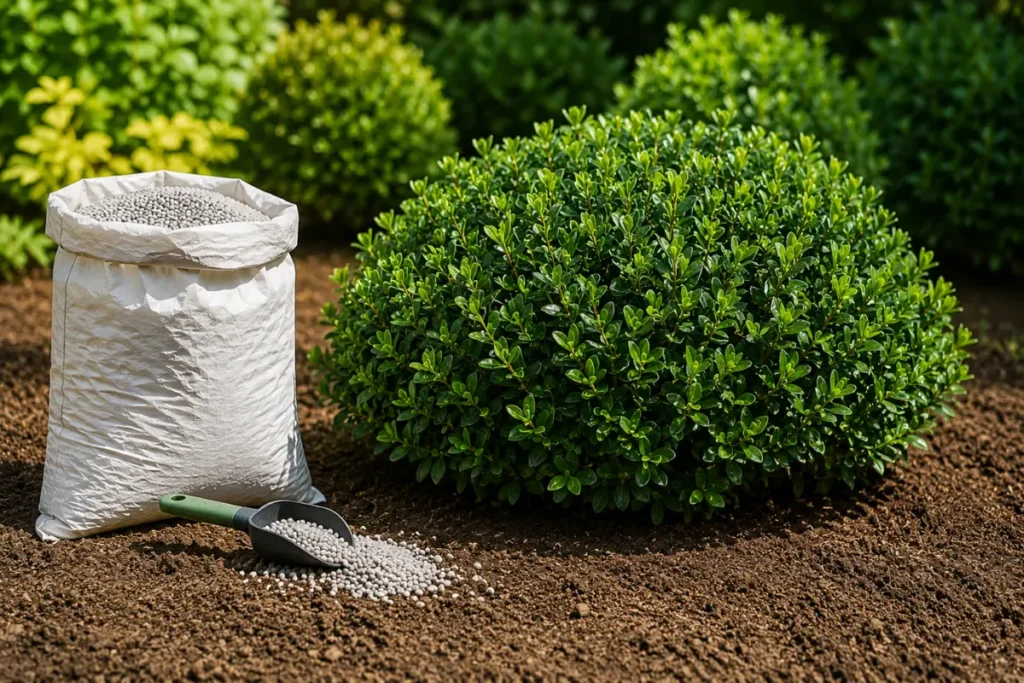
You should also avoid fertilizing a boxwood that is declining for an unknown reason. Leaf spots, branch dieback, rapid discoloration, and sudden leaf loss may indicate pests, disease, or root trouble. Fertilizer cannot cure these conditions. Identify the problem before adding nutrients.
Late-season applications should be avoided when they are likely to trigger growth before winter. This is especially true for high-nitrogen or quick-release products. Tender new shoots may not harden properly before freezing temperatures arrive.
The answer to when to feed boxwoods comes down to plant condition, soil condition, weather, and local climate. Early spring is often the most suitable period for established shrubs that genuinely need nutrients. By applying the right product at the right time, you can support healthy growth without exposing your boxwoods to unnecessary stress
Quick Boxwood Fertilizer Guide
A single fertilizing routine does not work for every boxwood. A mature hedge, a newly planted shrub, and a boxwood growing in a container all have different needs. The right approach depends on the plant’s age, growing conditions, and current health. Use this quick boxwood fertilizer guide to decide what your shrub may need.
Healthy, Established Boxwoods
Healthy, established shrubs may not need fertilizer every year. If your boxwoods have dense foliage, normal leaf color, and steady seasonal growth, avoid feeding them simply because spring has arrived.
Check their condition and consider testing the soil before applying any boxwood plant food. If a nutrient shortage is confirmed, early spring is generally the best time to feed established shrubs. Apply the recommended amount over the root zone and keep the product away from the main stems.
A slow-release fertilizer for boxwood shrubs is often a practical option because it supplies nutrients gradually. This supports controlled development without encouraging a sudden flush of soft growth. Follow the label carefully because even a slow-release product can damage roots when overapplied.
Newly Planted Boxwoods
Newly planted boxwoods need healthy root development more than heavy feeding. Their roots are still adjusting to the surrounding soil, so applying a strong fertilizer immediately after planting can create additional stress.
Focus on correct planting depth, consistent watering, and good drainage. Keep the soil evenly moist but never waterlogged. A modest amount of finished compost may improve the soil, but avoid placing concentrated fertilizer or fresh manure inside the planting hole.
If you are considering fertilizer for newly planted boxwoods, give the shrubs time to become established first. A soil test can help you decide whether feeding is necessary later. When nutrients are required, use a suitable product at the lowest recommended label rate.
Boxwoods With Yellow Leaves
Yellow leaves do not automatically mean a boxwood needs fertilizer. Poor drainage, drought, winter injury, unsuitable soil pH, root damage, pests, and disease can all cause discoloration.
Before looking for the best fertilizer for yellowing boxwood leaves, inspect the shrub and its growing environment. Check the soil moisture, examine the branches, and look for spots, insects, or dying sections. If several plants in the same bed show similar symptoms, soil or drainage problems may be responsible.
A soil test can reveal whether the plant lacks nitrogen or another nutrient. It can also show whether the soil pH is limiting nutrient absorption. Apply fertilizer for yellowing boxwoods only after confirming that a nutrient problem is the real cause.
Boxwoods Growing in Pots
Container-grown boxwoods often need a different feeding routine because regular watering carries nutrients out through the drainage holes. Their roots also have access to a limited amount of potting mix.
A controlled-release product can provide steady nutrition over time. A carefully diluted liquid formula may also work during active growth. The best fertilizer for boxwood plants in pots should be easy to measure and suitable for container-grown shrubs.
Never add a concentrated product to completely dry potting soil. Water the plant first if needed, then apply the fertilizer according to its label. Make sure the container has open drainage holes because trapped water can damage roots and make nutrient problems worse.
Watch for white crusts on the soil surface or around the pot. This may indicate a buildup of fertilizer salts. If buildup occurs, pause feeding and allow clean water to drain through the pot, provided the plant and container can be flushed safely.
Overfertilized Boxwoods
More evergreen shrub food will not help an overfertilized boxwood recover. Adding another product can increase the concentration of salts around the roots and cause further damage.
Possible signs of overfertilization include brown leaf edges, wilting, unexpected leaf drop, weak shoots, or a visible crust on the soil. These symptoms can resemble other boxwood problems, so consider recent fertilizer applications before deciding on the cause.
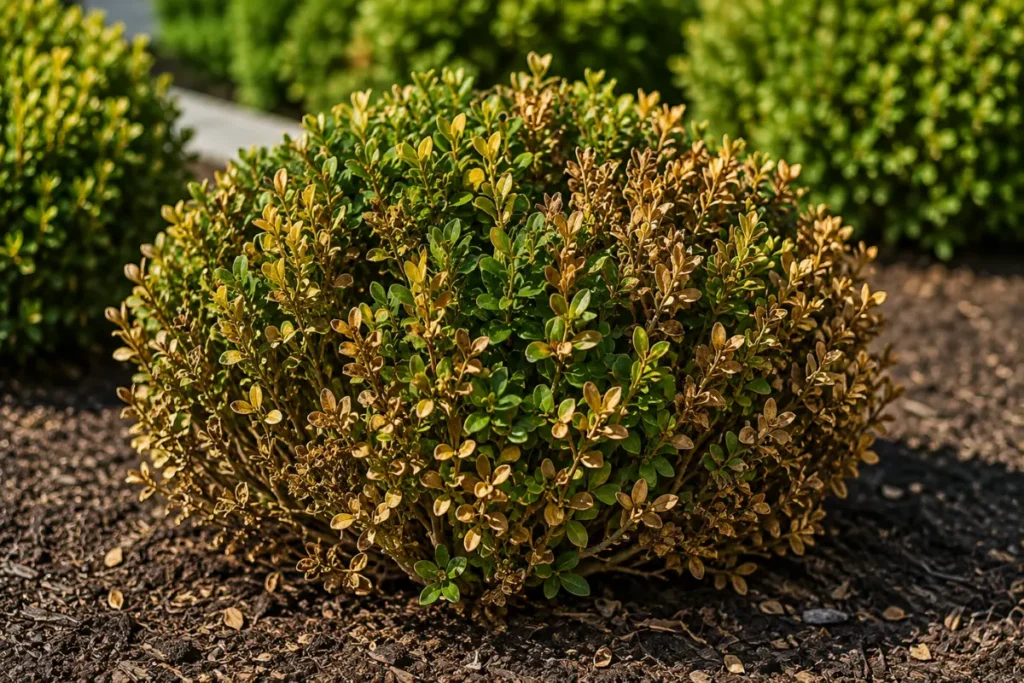
Stop feeding the plant if you suspect overfertilization. Do not add a second product to “balance” the first one. If drainage is good and the soil is not already saturated, careful watering may help move some soluble salts away from the immediate root area.
Severe damage may require advice from a local horticultural professional.
Boxwood Hedges
A boxwood hedge should be treated as one connected planting area instead of a collection of isolated shrubs. Spreading boxwood hedge fertilizer evenly helps prevent irregular growth and differences in foliage color.
Measure the entire bed or root-zone area before calculating the amount. Avoid giving each shrub a guessed handful because plants at the ends and center of the hedge may receive uneven doses. Follow the product’s coverage rate and distribute it consistently.
Fertilizer should support dense, steady growth rather than force long shoots. Excessive feeding creates more pruning work and may reduce the neat appearance that makes boxwood hedges attractive.
A Simple Boxwood Fertilizer Schedule
A practical boxwood fertilizer schedule begins with observation. Inspect the foliage and new growth, review the soil conditions, and test the soil when possible. If the shrub is healthy and no deficiency is present, skip the application.
When feeding is necessary, early spring is commonly the most suitable period. Use a product that matches the identified nutrient need, measure it accurately, and apply it across the root zone. Water according to the label and current soil conditions.
Recheck the plant during the growing season, but do not expect an immediate transformation. Boxwoods grow slowly by nature. The best results come from steady care, not repeated applications.
The best fertilizer for boxwood plants is only effective when it suits the plant’s situation. Established shrubs may need occasional feeding, newly planted boxwoods need time to settle, yellowing plants need an accurate diagnosis, and container shrubs need careful nutrient management. Adjusting your approach is the safest way to maintain healthy foliage, strong roots, and attractive boxwood growth.
Frequently Asked Questions About Boxwood Fertilizer
Choosing the strongest fertilizer will not make boxwoods grow healthier or faster. These slow-growing shrubs perform best when you feed them according to their actual needs. Here are quick answers to the most common questions about fertilizer for boxwood plants.
What Is the Best Fertilizer for Boxwood Plants?
The best option is usually a measured, slow-release shrub fertilizer selected according to soil-test results. It should supply the nutrients your soil lacks without encouraging excessive growth.
What NPK Ratio Is Best for Boxwoods?
There is no perfect NPK ratio for every boxwood. A balanced formula may work when the soil needs all three main nutrients, while a nitrogen-focused product may suit soil that already has enough phosphorus and potassium.
When Should I Fertilize Boxwood Shrubs?
Early spring is generally the best time to fertilize established boxwoods. Feed them as active growth begins, but only when the shrubs or soil show a genuine need for nutrients.
How Often Should You Fertilize Boxwood Plants?
Healthy boxwoods may not need fertilizer every year. Check their color and growth, and test the soil when possible. Avoid following a rigid boxwood fertilizer schedule if the plants already look healthy.
Can I Use 10-10-10 Fertilizer on Boxwoods?
You can use 10-10-10 when a soil test shows that nitrogen, phosphorus, and potassium are needed. Do not apply it automatically because the soil may already contain enough phosphorus or potassium.
Are Coffee Grounds Good for Boxwoods?
Coffee grounds are not a complete boxwood plant fertilizer, and piling them around shrubs may cause problems. Add small amounts to a compost pile first, then use the finished compost as a soil amendment.
Can I Use Rose or Azalea Fertilizer on Boxwoods?
Do not choose fertilizer based only on the plant name printed on the package. Rose or azalea food may have a nutrient balance or acidifying effect that your boxwood soil does not need. Check the analysis and soil pH first.
How Do I Fertilize Boxwoods Without Burning Them?
Measure the product carefully, spread it evenly across the root zone, and keep it away from the stems. Follow the label’s watering directions and never assume that a larger amount will produce better results.
What Fertilizer Should I Use for Yellowing Boxwoods?
First, identify why the leaves are yellow. Drainage trouble, root damage, winter injury, pests, disease, or unsuitable soil pH may be responsible. Use fertilizer for yellowing boxwoods only when a nutrient deficiency is confirmed.
Should Newly Planted Boxwoods Be Fertilized?
New boxwoods usually need time to develop roots before receiving strong fertilizer. Focus on proper planting, drainage, and consistent moisture. Feed later only if the soil or plant condition shows a need.
What Is the Best Fertilizer for Boxwoods in Pots?
A controlled-release container fertilizer or properly diluted liquid product can work well. Apply it during active growth according to the label, and make sure excess water drains freely from the pot.
Can Overfertilized Boxwoods Recover?
Recovery depends on the severity of the damage. Stop fertilizing immediately and do not add another product to balance the soil. If drainage is good, careful watering may help reduce soluble salt buildup around the roots.
Conclusion
Choosing the right fertilizer for boxwood plants starts with understanding the soil. Boxwoods are naturally slow-growing shrubs, so limited growth does not always indicate a nutrient deficiency. If the leaves look healthy and the plant produces steady seasonal growth, additional feeding may not be necessary.
Before applying fertilizer, check the soil moisture, drainage, pH, and overall condition of the shrub. Yellow leaves or dying branches may result from root problems, harsh weather, pests, or disease. Fertilizer will not correct these issues. A soil test can help you identify missing nutrients and choose a suitable product without guessing.
When feeding is needed, apply the fertilizer at the correct time and rate. Early spring is generally ideal because the shrub is preparing for active growth.
Spread the product evenly across the root zone, keep it away from the stems, and follow the manufacturer’s watering directions. Avoid overfeeding because excess nutrients can burn roots and encourage weak shoots.
Remember that even the best fertilizer for boxwood plants is only one part of proper care. Healthy boxwoods also need good drainage, consistent watering, suitable soil, careful pruning, and correctly placed mulch
. Focus on improving the entire growing environment, and your boxwoods will have a better chance of developing strong roots, dense foliage, and lasting color.

Plant Nest Blog’s author is passionate about plants, gardening, and sustainable living. Through research and practical experience, they share helpful plant care tips, gardening guides, and easy solutions to help readers grow healthier plants and create greener spaces.