
Most people think that protection from rabbits for plants simply means putting up a fence and forgetting about it. Unfortunately, that’s one of the biggest gardening myths.
Rabbits are clever, persistent, and can squeeze through surprisingly small gaps or chew on young plants before you even notice the damage. A single solution is rarely enough to keep your garden safe.
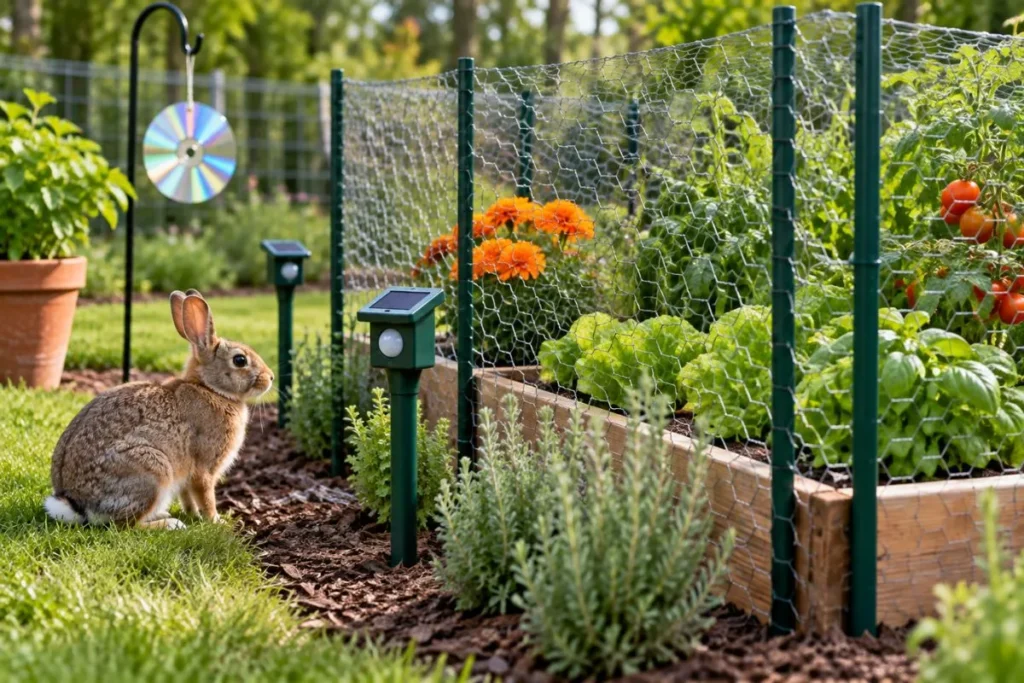
The good news is that you don’t have to give up on growing healthy flowers, vegetables, or shrubs. With the right mix of rabbit protection for plants, natural deterrents, and smart gardening habits, you can protect plants from rabbits without making your yard look like a fortress.
In this guide, you’ll learn practical ways to keep rabbits away from plants, prevent costly damage, and enjoy a thriving garden all season long.
Why Rabbits Eat Garden Plants
If you’ve ever walked outside and found your favorite flowers or vegetables half-eaten overnight, you’re not alone. Rabbits are one of the most common garden visitors, and they see your backyard as an easy source of fresh food.
Understanding why they come in the first place is the first step toward finding the best protection from rabbits for plants.
Fresh Growth Is a Rabbit’s Favorite Meal
Rabbits naturally prefer soft, tender growth because it’s easy to chew and packed with nutrients. Young seedlings, fresh vegetable leaves, and newly planted flowers are especially attractive. That’s why gardeners often notice the most rabbit damage to plants during spring when new growth is everywhere.
Vegetables like lettuce, spinach, peas, beans, carrots, and leafy greens are among their top choices. Many flowering plants and young shrubs are also at risk, especially before they become established.
Your Garden Offers Food and Shelter
A garden gives rabbits everything they need in one place. Besides fresh plants, they also look for places to hide from predators. Tall grass, dense shrubs, wood piles, and overgrown corners make perfect shelters. Once rabbits feel safe, they often return every day, making garden rabbit control much more difficult if the problem isn’t addressed early.
Keeping your yard tidy can reduce hiding spots and make your garden less inviting without harming wildlife.
Seasonal Changes Increase Rabbit Activity
Rabbit feeding habits change throughout the year. In spring and early summer, they focus on tender shoots and seedlings. During dry summers, they may turn to garden plants because natural food becomes scarce. In fall and winter, when wild vegetation is limited, rabbits often chew on shrubs, bark, and woody stems to survive.
Knowing these seasonal patterns helps you plan better rabbit prevention for gardens before serious damage begins.
Some Plants Attract Rabbits More Than Others
Not every plant is equally appealing. Rabbits are much more likely to target sweet, soft, and leafy plants than those with strong scents or rough textures. While no plant is completely rabbit-proof, choosing more rabbit-resistant plants, flowers, and shrubs can reduce the chances of repeated damage.
Combining rabbit-resistant varieties with physical barriers and natural repellents creates a stronger long-term strategy than relying on just one solution.
Early Prevention Saves Time and Plants
Many gardeners wait until they notice missing leaves before taking action. By then, rabbits may already see your yard as a regular food source. Starting early with simple rabbit protection for plants-such as protecting seedlings, reducing hiding places, and using natural deterrents-can prevent ongoing rabbit chewing plants and save both your time and your harvest.
Protecting your garden before rabbits become frequent visitors is always easier than trying to stop them once they’ve settled in.
How to Tell if Rabbits Are Damaging Your Plants
Many gardeners assume that any missing leaves or damaged plants must be caused by insects. That’s not always true. In many cases, rabbits are the real culprits.
If you know what rabbit damage looks like, you can take action sooner and choose the right protection from rabbits for plants before the problem gets worse.
Look for Clean Bite Marks on Stems
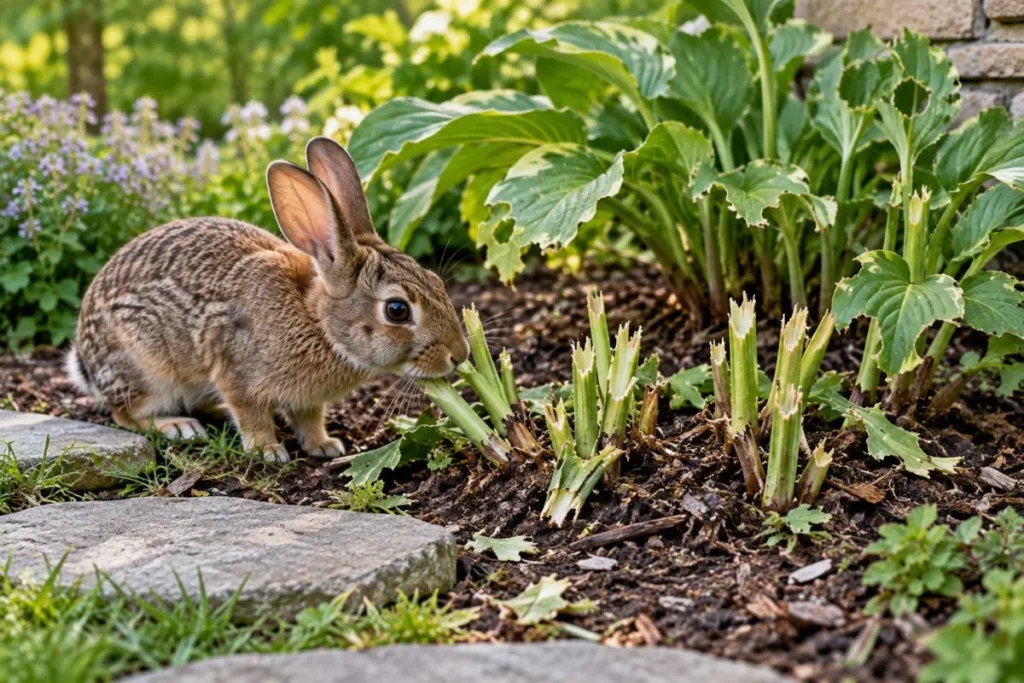
One of the easiest ways to identify rabbit damage is by checking the stems of your plants. Rabbits have sharp front teeth that leave neat, clean cuts instead of rough or torn edges. Unlike deer, which often rip leaves and branches, rabbits make smooth, angled bites close to the ground.
This type of damage is common on flowers, vegetables, and young shrubs. If you notice freshly clipped stems, it’s a strong sign that you need better rabbit protection for plants.
Watch for Missing Seedlings Overnight
Have you planted new seedlings only to find them missing the next morning? Rabbits often feed during the evening, at night, or early in the morning when it’s quiet. Tender seedlings are one of their favorite foods because they’re soft and easy to eat.
If young plants disappear without a trace, don’t rush to blame poor growth or weather. This is often one of the earliest warning signs that you need to protect plants from rabbits before they return for another meal.
Check for Small, Round Droppings
Rabbit droppings are another clear clue. They look like small, round pellets and are usually found near damaged plants or along garden paths. Fresh droppings mean rabbits have been visiting recently and may continue coming back if they find plenty of food.
Spotting these pellets early can help you start rabbit damage prevention before your entire garden becomes a regular feeding spot.
Look for Rabbit Tracks Around Your Garden
If the soil is soft after rain or watering, you may notice rabbit footprints. Their tracks usually show four toes on the front feet and longer back feet that land ahead of the front prints when they hop.
Tracks near flower beds, vegetable patches, or newly planted areas are another reliable sign that your garden needs stronger rabbit control measure garden
Notice Damage Close to the Ground
Rabbits usually feed at ground level because they rarely stand tall to reach higher branches. If leaves, stems, bark, or flowers are damaged within the first one or two feet from the ground while the upper parts remain untouched, rabbits are a likely cause.
This feeding pattern is different from many other garden pests and can help you identify the problem quickly.
Don’t Ignore Repeated Damage
Sometimes gardeners replace damaged plants without solving the real issue. If the same flowers, vegetables, or shrubs keep getting eaten every few days, rabbits have probably made your yard part of their feeding route.
The sooner you recognize these warning signs, the easier it is to apply the best protection from rabbits for plants. Early action helps keep rabbits away from plants, reduces future losses, and makes long-term rabbit prevention for gardens much more effective.
Best Protection from Rabbits for Plants (Complete Guide)
Many people believe there’s one magic product that provides complete protection from rabbits for plants. The truth is, there isn’t a single solution that works in every garden. Rabbits quickly get used to one type of deterrent, especially if food is still easy to reach.
The best way to protect plants from rabbits is to combine several simple methods that work together. This approach offers better long-term results and helps keep your garden healthy throughout the growing season.
Install a Rabbit-Proof Fence
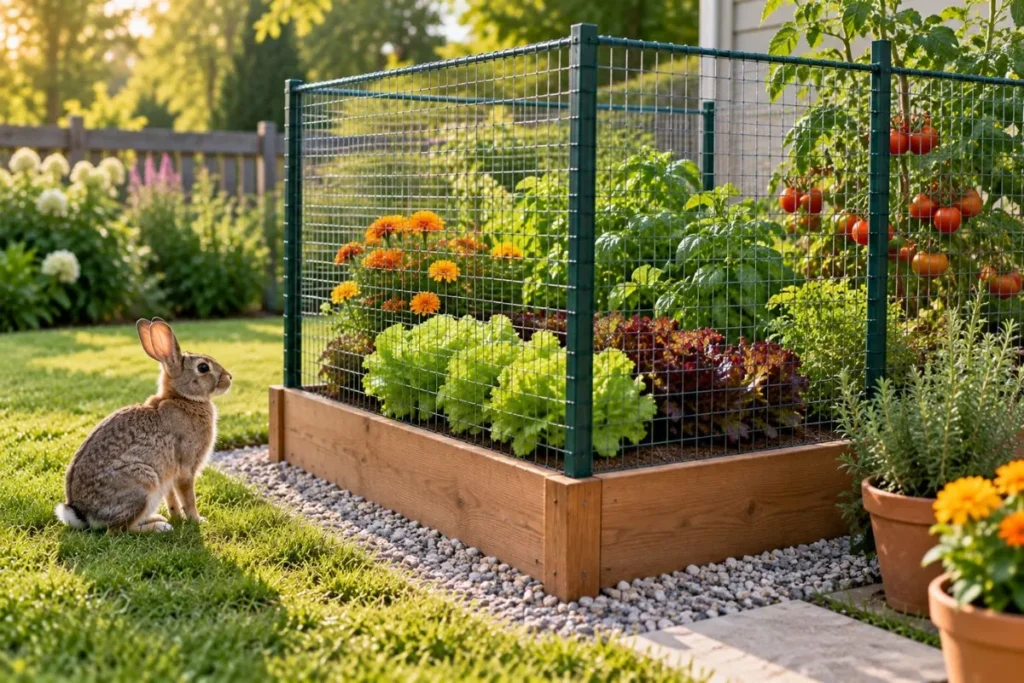
A strong fence is one of the most reliable ways to create a rabbit-proof garden. Since rabbits are small and persistent, your fence should be designed specifically to stop them instead of simply marking the edge of your garden.
A fence that is about 2 to 3 feet high is usually enough because rabbits are not great jumpers. However, many gardeners overlook the fact that rabbits can dig. Burying the bottom of the fence about six inches into the soil, or bending the lower edge outward, makes it much harder for rabbits to get underneath.
The material you choose also matters. A rabbit exclusion fence made from fine wire mesh or wire mesh for rabbit protection works much better than fencing with large openings. Chicken wire rabbit fence is another popular option because it is affordable, durable, and easy to install.
Whatever material you choose, inspect it regularly for small gaps or loose sections because even a tiny opening can allow rabbits to enter your garden.
Use Chicken Wire Around Valuable Plants
If fencing your entire yard isn’t practical, protecting individual plants is an excellent alternative. Creating a simple rabbit barrier for plants with chicken wire or wire mesh can protect your most valuable flowers, vegetables, shrubs, and young trees without a large investment.
Wrap the wire around each plant while leaving enough space for healthy growth. The protective cage should not touch the leaves or branches because plants need room to spread naturally.
This method works especially well for newly planted shrubs, vegetable seedlings, and small fruit bushes that are most vulnerable during their early growth stages.
Using individual plant guards is a smart and affordable solution when you only need to protect specific areas of your garden.
Apply Natural Rabbit Repellents
Many gardeners prefer learning how to protect plants from rabbits naturally instead of using strong chemical products. Natural repellents make plants less attractive by creating smells or tastes that rabbits dislike while remaining safer for children, pets, and beneficial insects.
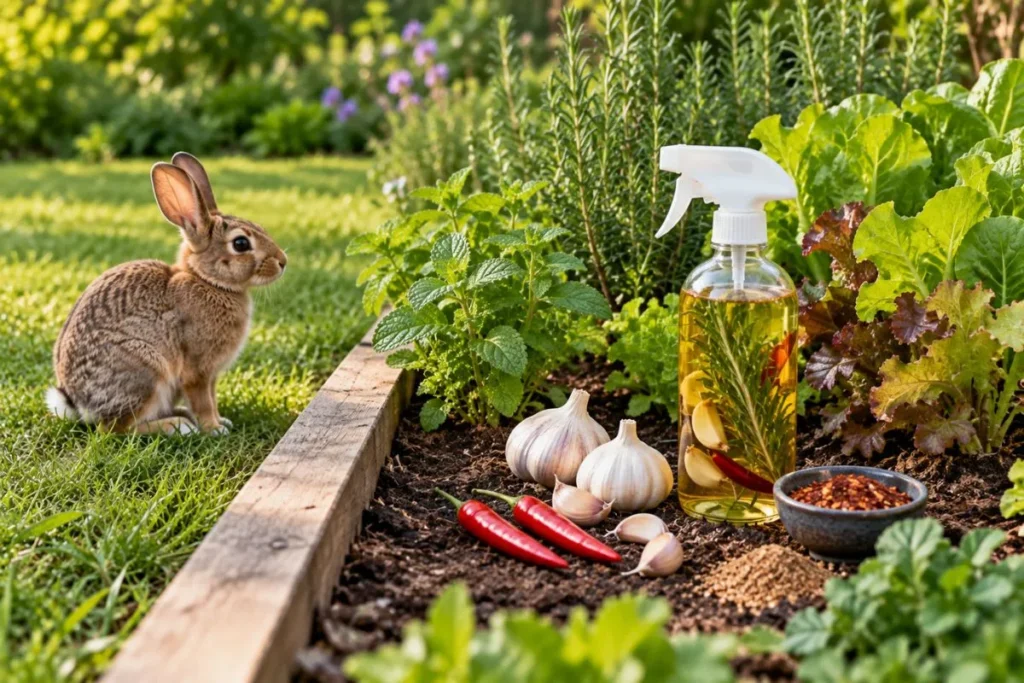
Several commercial rabbit repellent sprays are available, and many are made with natural ingredients such as garlic, herbs, or plant oils. These products can be especially useful if you’re looking for a natural rabbit repellent for flower beds without affecting the appearance of your garden.
Natural repellents are not permanent, though. Rain, irrigation, and strong sunlight gradually reduce their effectiveness. Reapplying them regularly is important if you want consistent rabbit protection for plants throughout the season.
Try Homemade Rabbit Repellents
If you enjoy simple DIY gardening projects, homemade protection from rabbits for plants can be both affordable and effective. Many common household ingredients can help discourage rabbits when used correctly.
Garlic is one of the most popular natural options because its strong smell is unpleasant to rabbits. A homemade garlic spray can be applied around garden beds to reduce rabbit activity.
Chili peppers are another common ingredient. Their spicy taste makes plants less appealing, encouraging rabbits to search for food elsewhere.
Some gardeners also place small containers of vinegar near garden borders because the strong scent may help keep rabbits away. Others use strongly scented soap near flower beds and vegetable gardens.
While homemade repellents can reduce rabbit visits, they work best when combined with physical barriers instead of being used as the only form of protection.
Protect Young Plants and Seedlings
Young plants are usually the first ones rabbits notice because their soft leaves and tender stems are easy to eat. That’s why protecting new growth early is one of the smartest gardening habits you can develop.
Garden cloches, protective mesh covers, and small wire cages create a barrier around delicate plants while still allowing sunlight, rain, and fresh air to reach them. Temporary fencing is another good solution for larger planting areas during the first few weeks of growth.
Checking seedlings regularly also helps you spot damage before it spreads. Early protection gives plants enough time to become stronger and much less attractive to rabbits.
Use Raised Garden Beds
Raised beds alone won’t completely stop rabbits, but they can make effective rabbit protection for raised garden beds when combined with other barriers. Since the plants sit higher above the ground, rabbits often find them more difficult to reach.
For even better results, install rabbit-proof netting around the edges of the raised bed and place wire mesh underneath before adding soil. This creates extra protection from both digging and chewing.
Many gardeners find that combining raised beds with protective fencing creates highly effective rabbit-proof vegetable beds, especially for growing lettuce, carrots, beans, and other vegetables that rabbits enjoy.
Plant Rabbit-Resistant Flowers and Vegetables
Choosing the right plants can naturally reduce rabbit problems. Although no plant is completely rabbit-proof, many species are far less appealing because of their strong scent, rough texture, or bitter taste.
Several rabbit-resistant flowers, including lavender, marigolds, salvia, and daffodils, are less likely to be eaten. Vegetables such as onions, garlic, asparagus, and rhubarb are also considered more resistant than leafy greens.
For landscaping, rabbit-resistant shrubs like boxwood, juniper, and holly can help create a garden that rabbits are less interested in visiting.
Adding more rabbit-resistant plants throughout your yard reduces the chances of heavy browsing while keeping your landscape attractive.
Best DIY Protection from Rabbits for Plants
Many gardeners think DIY methods are less effective than expensive products. In reality, simple homemade solutions can provide excellent protection from rabbits for plants when they are used consistently and combined with other preventive measures.
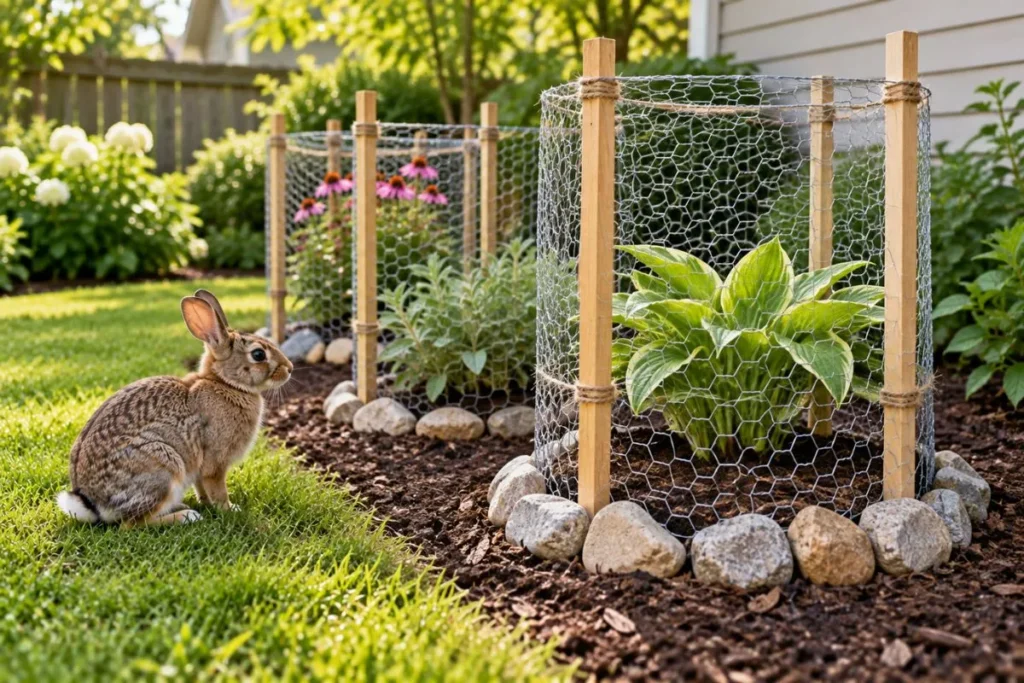
Build Simple Wire Plant Cages
One of the easiest DIY projects is making protective cages from chicken wire or wire mesh. These cages create a strong barrier around vegetables, flowers, and shrubs while allowing sunlight, air, and water to reach the plants. This is one of the most affordable ways to protect plants from rabbits without fencing your entire garden.
Make Homemade Rabbit Repellent
Creating homemade protection from rabbits for plants is simple and budget-friendly. A spray made with garlic, chili peppers, or strong-smelling herbs can make plants less attractive to rabbits. Apply the mixture around plants rather than soaking the leaves, and remember to reapply it after heavy rain for the best results.
Use Recycled Materials as Plant Guards
You don’t always need to buy new garden supplies. Plastic bottles, mesh baskets, or old buckets with the bottoms removed can be turned into protective covers for young plants. These homemade guards work especially well for seedlings until they become strong enough to resist minor rabbit browsing.
Protect Raised Beds with DIY Barriers
If you grow vegetables in raised beds, adding homemade wire frames or rabbit-proof netting around the edges offers effective rabbit protection for raised garden beds. This extra layer of defense helps keep rabbits away while still making it easy to care for your plants.
Combine Several DIY Methods
The most successful DIY protection from rabbits for plants doesn’t rely on just one technique. Combining homemade repellents, wire cages, raised bed barriers, and regular garden maintenance creates a stronger defense. This layered approach helps keep rabbits away from plants and provides reliable protection throughout the growing season.
Expert Tips for Long-Term Rabbit Protection
Many gardeners think that once rabbits leave the garden, the problem is solved forever. Unfortunately, rabbits often return if they find easy access to food again. Long-term protection for plants from rabbits depends on regular maintenance and using several methods together instead of relying on just one solution.
Combine Fencing with Natural Repellents
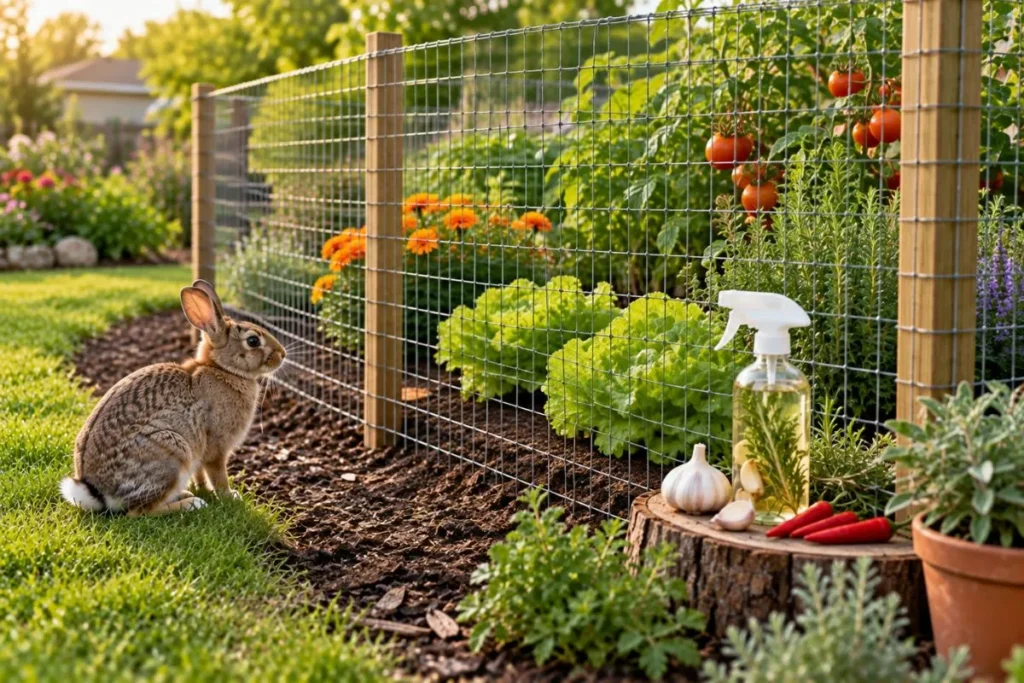
A rabbit-proof fence is your first line of defense, but adding natural or homemade repellents makes your garden even less attractive. This layered approach gives you much better protection for plants rabbit than using either method on its own.
Rotate Rabbit Deterrents
Rabbits can become familiar with the same smell or deterrent over time. Switching between different natural repellents every few weeks helps keep them effective. Rotating products is a simple way to keep rabbits away from plants for a longer period.
Inspect Your Garden Every Week
Spend a few minutes each week checking your fence, plant guards, and garden beds. Repair any small holes immediately and look for fresh bite marks or droppings. Early inspections help prevent small problems from turning into serious damage rabbit .
Give Extra Protection to New Plants
Newly planted flowers, vegetables, and shrubs need the most attention. Use wire cages, mesh covers, or temporary barriers until
plants become well established. Protecting young plants early greatly reduces the risk of future damage.
Use Multiple Layers of Protection
The best protection for plants from rabbits comes from combining several techniques. A rabbit-proof fence, homemade repellents, rabbit-resistant plants, clean garden maintenance, and regular inspections all work together to create a garden that rabbits are far less likely to visit.
This long-term strategy saves time, protects your investment, and keeps your garden healthy throughout the year.
Frequently Asked Questions (FAQ)
What is the best protection from rabbits for plants?
The best protection from rabbits for plants is a combination of methods rather than relying on one solution. A rabbit-proof fence, natural repellents, plant guards, and regular garden maintenance work together to provide the most effective long-term protection.
How do I protect plants from rabbits naturally?
If you’re wondering how to protect plants from rabbits naturally, start by using garlic or chili-based repellents, planting rabbit-resistant flowers, and removing places where rabbits like to hide. These natural methods are even more effective when paired with wire barriers around vulnerable plants.
Does chicken wire stop rabbits?
Yes, chicken wire is one of the most reliable barriers against rabbits. When installed correctly and buried several inches below the ground, it helps prevent rabbits from digging underneath and reaching your plants.
What smells keep rabbits away?
Rabbits generally dislike strong scents such as garlic, chili peppers, peppermint, vinegar, and certain herbs. These smells are commonly used in homemade and commercial rabbit repellents to discourage rabbits from entering the garden.
Are homemade rabbit repellents effective?
Homemade repellents can be effective for reducing rabbit activity, especially when applied regularly. However, they work best as part of a complete rabbit protection
for plants rather than as the only method of defense strategy
How tall should a rabbit-proof fence be?
A fence that is about 2 to 3 feet high is usually enough to stop rabbits. For added protection, bury the bottom of the fence around 6 inches into the ground to prevent digging.
Which plants do rabbits usually avoid?
Many rabbits avoid strongly scented or bitter plants such as lavender, marigolds, daffodils, garlic, onions, sage, and rosemary. Adding these rabbit-resistant plants to your garden can naturally reduce browsing.
How do I keep rabbits away from vegetable plants?
To keep rabbits away from vegetable plants, use wire cages around young crops, install rabbit-proof fencing, apply natural repellents, and harvest vegetables as soon as they mature. Combining these methods offers the best protection.
What is the best rabbit deterrent for gardens?
There isn’t a single best deterrent for every garden. The most successful approach combines fencing, natural repellents, homemade barriers, and regular inspections to create multiple layers of protection.
Can coffee grounds keep rabbits away?
Coffee grounds may discourage some rabbits because of their smell, but they are not a guaranteed solution. They should only be used as an additional deterrent alongside other proven methods like fencing and plant protection.
Conclusion
Protecting your garden doesn’t have to be difficult or expensive. By understanding rabbit behavior and taking simple preventive steps, you can enjoy healthy flowers, vegetables, shrubs, and seedlings without constantly worrying about damage. The key is to start early and stay consistent.
The most effective protection from rabbits for plants comes from combining several methods, including rabbit-proof fencing, natural repellents, homemade solutions, plant guards, and regular garden maintenance.
This layered approach provides dependable rabbit protection for plants, helps protect plants from rabbits, and makes it much easier to keep rabbits away from plants throughout every season.
With the right strategy, you can spend less time repairing rabbit damage and more time enjoying a beautiful, productive garden. If you have a favorite rabbit-proofing tip or a question about your garden, feel free to share it in the comments below. Your experience may help other gardeners protect their plants more effectively.

Plant Nest Blog’s author is passionate about plants, gardening, and sustainable living. Through research and practical experience, they share helpful plant care tips, gardening guides, and easy solutions to help readers grow healthier plants and create greener spaces.