
It’s often thought that how to care for a rattlesnake plant is complicated because this tropical houseplant has a reputation for being fussy. In reality, that’s one of the biggest myths. The truth is that a rattlesnake plant is easy to care for once you understand its basic needs.
Giving it the right amount of indirect light, consistent watering, proper humidity, and well-draining soil is all it takes to keep this beautiful Calathea rattlesnake plant healthy and thriving indoors.
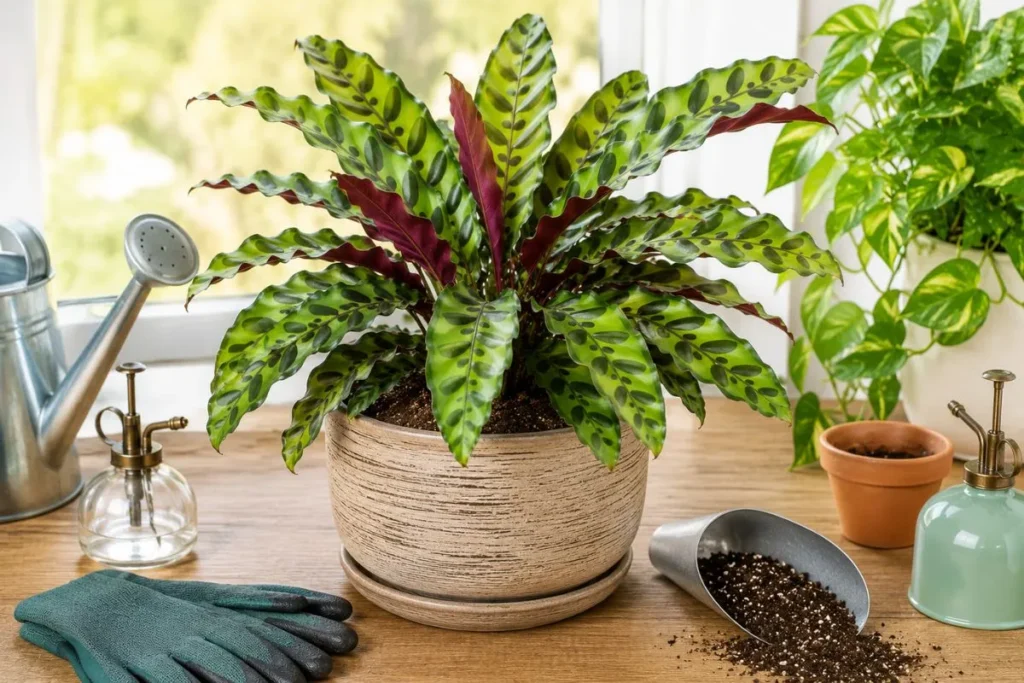
In this rattlesnake plant care guide, you’ll learn everything you need to know about caring for a rattlesnake plant with confidence.
We’ll cover how to grow a rattlesnake plant, the best light, watering schedule, ideal soil, humidity and temperature needs, fertilizing, repotting, propagation, common problems, and simple maintenance tips to help your plant stay healthy and vibrant all year round.
What Is a Rattlesnake Plant?
Before you can master how to grow a rattlesnake plant, it’s helpful to understand where it comes from and why it’s different from many other houseplants.
The rattlesnake plant, scientifically known as Calathea lancifolia (also classified as Goeppertia insignis), is a stunning tropical plant that belongs to the Marantaceae family.
It is native to the rainforests of Brazil, where it grows beneath large trees in warm, humid conditions. Because of its tropical background, it naturally enjoys filtered light, consistent moisture, and plenty of humidity.
Unlike flowering plants that attract attention with colorful blooms, this one steals the show with its incredible foliage.
Its long, narrow leaves feature dark green oval-shaped markings that resemble the pattern found on a rattlesnake’s skin. The undersides of the leaves display a rich purple color, creating a beautiful contrast that makes this plant stand out in any room.
One of the most fascinating things about this plant is that its leaves move throughout the day. During daylight hours, the leaves spread outward to absorb light. As evening approaches, they gently fold upward, almost as if the plant is going to sleep.
This daily movement is known as nyctinasty, a natural behavior shared by many members of the Calathea family.
Why Is It Called a Rattlesnake Plant?
The name comes directly from the unique pattern on its leaves. The dark markings closely resemble the skin of a rattlesnake, while the long, wavy shape of the leaves adds to the resemblance.
Fortunately, that’s where the similarity ends. The plant is completely harmless and brings a calm, tropical feel to your home instead of anything dangerous.
Why Is the Rattlesnake Plant So Popular?
The popularity of this tropical beauty has grown rapidly over the last few years, and it’s easy to see why.
Here are a few reasons plant lovers enjoy growing it indoors:
- Its bold leaf patterns instantly brighten living spaces.
- It thrives as an attractive indoor foliage plant without needing direct sunlight.
- It’s an excellent choice for anyone who loves tropical indoor plants.
- The moving leaves add a unique touch that many houseplants don’t offer.
- It pairs beautifully with modern, minimalist, and natural home décor.
Even when it isn’t producing flowers, the foliage alone creates a striking display that looks fresh and elegant throughout the year.
Is a Rattlesnake Plant Pet-Friendly?
Yes. One of the biggest advantages of this plant is that it is considered one of the most pet-friendly houseplants.
If you have curious cats or playful dogs that occasionally nibble on leaves, the rattlesnake plant is generally regarded as non-toxic to pets.
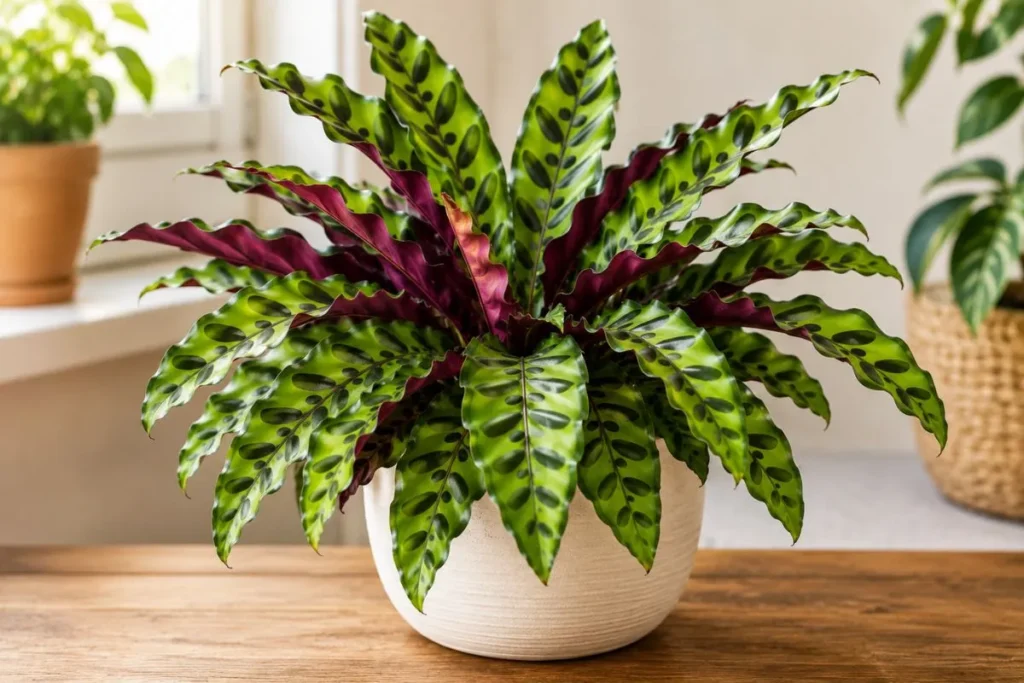
While it’s still a good idea to discourage pets from chewing on any houseplant, you can feel much more comfortable displaying this one around your home compared to many other popular indoor plants.
This makes it an excellent choice for families who want beautiful greenery without constantly worrying about pet safety.
Where Does a Rattlesnake Plant Grow Best?
Since it naturally grows beneath the rainforest canopy, the rattlesnake plant prefers conditions that mimic its native habitat.
It grows best in:
- Bright, indirect light
- Warm indoor temperatures
- Moderate to high humidity
- Well-draining soil that stays lightly moist
- Rooms protected from harsh afternoon sunlight
Understanding these natural preferences is the first step toward successful Calathea care. Once you recreate these conditions indoors, you’ll find that growing a rattlesnake plant indoors becomes much easier than many people expect.
How to Grow a Rattlesnake Plant Successfully
Many gardeners find that how to grow a rattlesnake plant is all about buying expensive fertilizers or using special gardening tricks. That’s not true. A healthy rattlesnake plant starts with the right environment, not complicated care routines.
If you choose a healthy plant, place it in a suitable location, and provide the conditions it naturally loves, you’ll have a much easier time growing a beautiful indoor plant.
Choose a Healthy Rattlesnake Plant
The first step to growing a rattlesnake plant indoors is choosing a healthy plant from the start. A strong, healthy plant adapts better to its new home and is less likely to develop problems later.
When shopping for a rattlesnake plant, look for these signs:
- Bright green leaves with bold patterns
- Firm, upright stems
- Purple undersides that look vibrant
- New leaves beginning to unfurl
- Soil that feels slightly moist but not soggy
At the same time, avoid plants with:
- Yellow or brown leaves
- Crispy leaf edges
- Drooping stems
- Mushy roots or a bad smell from the soil
- Signs of pests such as spider mites or tiny webs
Starting with a healthy plant makes Calathea rattlesnake plant care much easier from day one.
Pick the Right Spot in Your Home
Where you place your plant can have a huge impact on its growth. Unlike many common houseplants, the rattlesnake plant doesn’t enjoy sitting in direct sunlight for long periods.
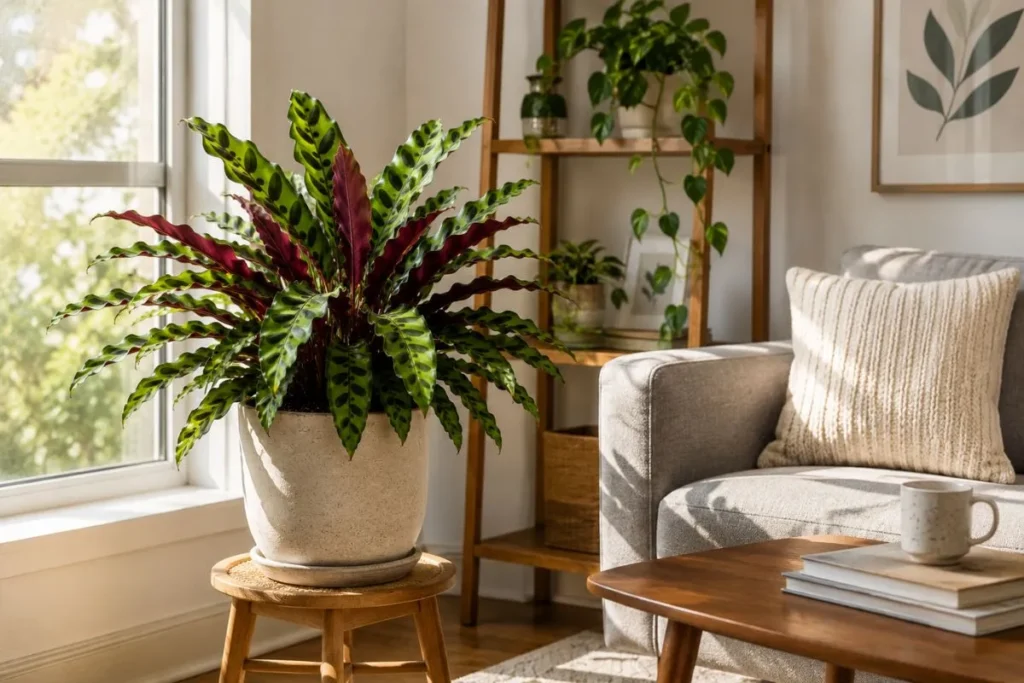
A bright room with filtered or indirect light is usually the best choice. East-facing windows are often ideal because they provide gentle morning sunlight. If you only have south- or west-facing windows, place the plant a few feet away or use a sheer curtain to soften the light.
Avoid placing your plant near:
- Heating vents
- Air conditioners
- Drafty doors
- Cold windows during winter
- Areas with sudden temperature changes
A stable environment helps the plant produce healthier leaves and maintain its beautiful patterns.
Create an Environment That Feels Like Home
Since the rattlesnake plant comes from tropical rainforests, it grows best when your indoor conditions resemble its natural habitat.
Focus on creating an environment with:
- Warm temperatures throughout the year
- Moderate to high humidity
- Bright, indirect light
- Good air circulation without strong drafts
You don’t need to turn your home into a rainforest. Small adjustments, like placing the plant in a naturally humid room or grouping it with other tropical indoor plants, can make a noticeable difference.
What Beginners Should Expect
If this is your first time caring for a rattlesnake plant, don’t expect rapid growth. This plant grows at a steady pace and spends much of its energy producing healthy, decorative foliage instead of growing quickly.
It’s also normal for the plant to need a little time to adjust after you bring it home. During the first couple of weeks, you may notice slight drooping or slower growth as it adapts to its new environment. This is completely normal and usually improves once the plant settles in.
As a beginner, remember these simple expectations:
- New leaves appear gradually, not overnight.
- Older leaves may naturally age and die off.
- Consistent care is more important than frequent changes.
- Avoid moving the plant from one location to another too often.
- Patience is key to long-term success.
The more stable the environment, the happier your rattlesnake plant will be.
Simple Tips for Successful Growth
If you want the best results, keep these easy tips in mind:
- Start with a healthy plant from a trusted nursery.
- Place it where it receives bright, indirect light.
- Keep the temperature warm and consistent.
- Avoid sudden environmental changes.
- Give the plant time to adapt before making adjustments.
- Check the leaves regularly for early signs of stress or pests.
Following these basics will help you build a strong foundation before moving on to watering, lighting, humidity, and other parts of your rattlesnake plant care guide.
Best Light for a Rattlesnake Plant
Many people think that giving a rattlesnake plant more sunlight will help it grow faster. That’s a common mistake. In fact, too much direct sun can damage its beautiful leaves instead of helping them grow.
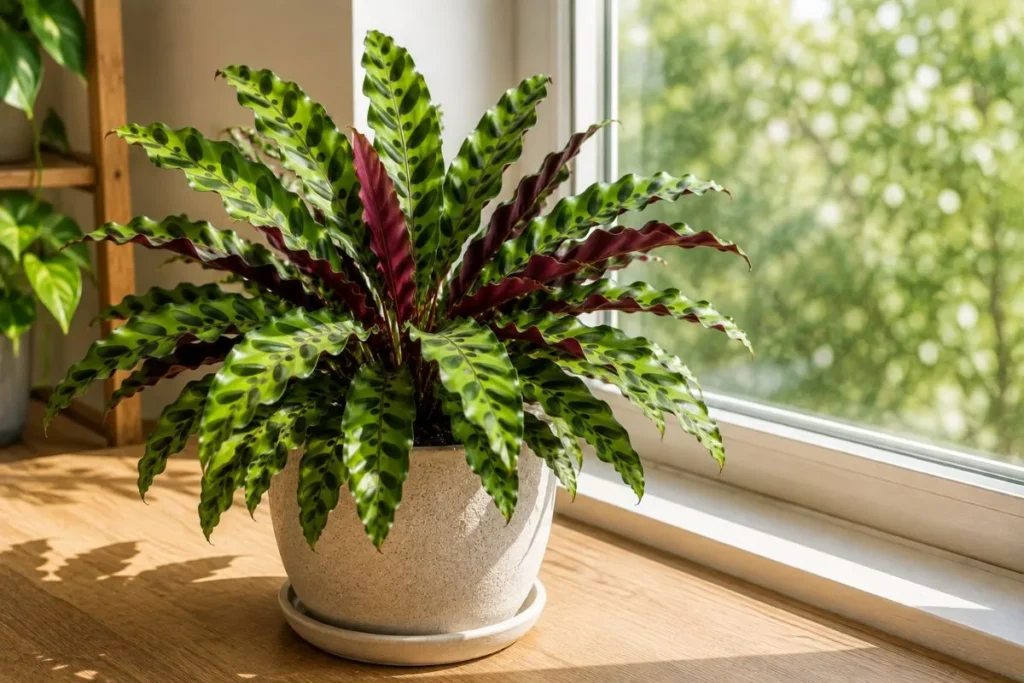
One of the most important parts of how to care for a rattlesnake plant is providing the right type of light. When your plant gets the proper lighting, it will produce healthy foliage, maintain its vibrant patterns, and continue growing steadily.
Bright Indirect Light Is Best
The rattlesnake plant light requirements are quite different from those of sun-loving houseplants. In its natural rainforest habitat, this plant grows beneath tall trees where sunlight is filtered through the canopy. That means it is used to soft, indirect light rather than harsh, direct rays.
At home, place your rattlesnake plant in a bright room where it receives plenty of natural light without the sun shining directly on its leaves. Bright indirect light helps the plant photosynthesize efficiently while protecting its delicate foliage from damage.
If natural light is limited, you can also use a full-spectrum LED grow light for several hours a day. This is a great option for rooms with small windows or during the darker winter months.
What Happens If It Gets Too Much Sun?
Direct sunlight is one of the fastest ways to damage a rattlesnake plant. Since its leaves are thin and delicate, intense sunlight can scorch the surface and reduce the plant’s overall health.
Signs that your plant is getting too much sunlight include:
- Brown or crispy leaf edges
- Faded or bleached leaf patterns
- Dry, curling leaves
- Leaves that feel brittle to the touch
- Slow or stressed growth
If you notice these symptoms, move the plant to a location with filtered light as soon as possible. In many cases, new growth will return to normal once the lighting conditions improve.
Can a Rattlesnake Plant Survive in Low Light?
Yes, a rattlesnake plant can tolerate low light better than many houseplants, which is why it is often listed among the best low light houseplants. However, low light doesn’t mean no light.
In very dark rooms, the plant may survive, but it won’t grow as well. You might notice:
- Slower growth
- Smaller new leaves
- Less vibrant leaf patterns
- Weaker overall appearance
For the healthiest growth, always aim for bright, indirect light. Low light should only be considered a backup option rather than the ideal growing condition.
Where to Place a Rattlesnake Plant Indoors
If you’re wondering where to place a rattlesnake plant indoors, the goal is to find a spot that offers consistent, filtered light throughout the day.
Some of the best locations include:
- Near an east-facing window with gentle morning light
- A few feet away from a south-facing window
- Close to a north-facing window with bright natural light
- Near a west-facing window covered with a sheer curtain
- In a well-lit office or living room that doesn’t receive direct afternoon sun
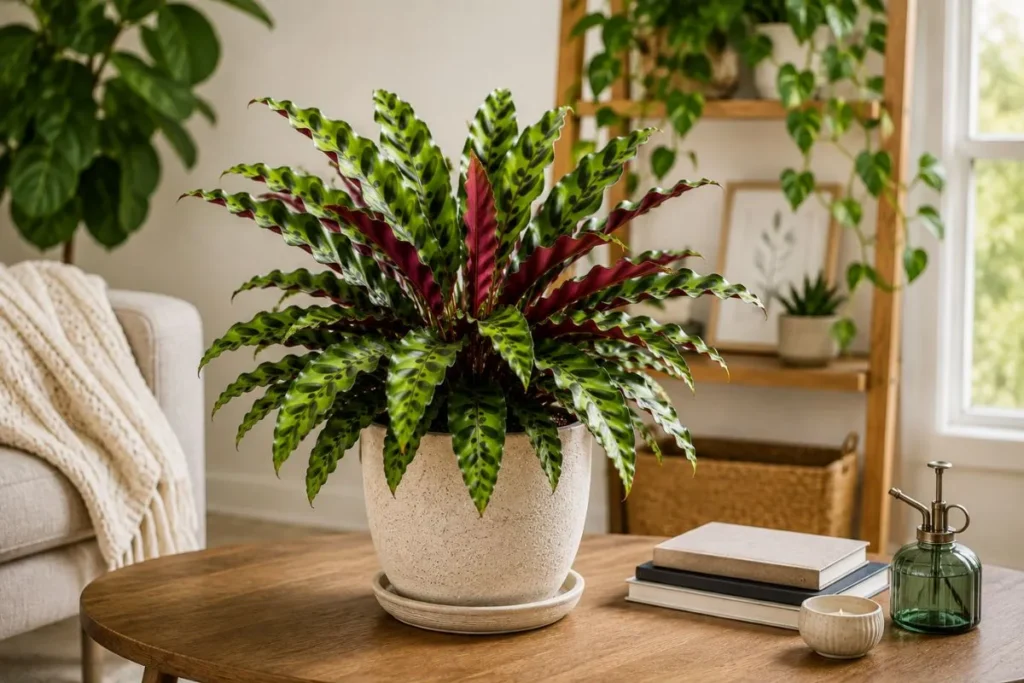
These locations provide the perfect balance of light while protecting the leaves from sunburn.
Avoid placing your plant:
- On a windowsill with strong afternoon sunlight
- Outdoors in direct sun
- In completely dark corners
- Next to heat-producing windows during summer
Choosing the right location is one of the easiest ways to improve your Calathea indoor care routine.
Should You Rotate Your Rattlesnake Plant?
Yes. Like many indoor foliage plants, a rattlesnake plant naturally grows toward its light source. If it stays in the same position for months, one side may become fuller than the other.
To encourage even growth, rotate the pot about a quarter turn every one to two weeks. This simple habit helps all sides of the plant receive equal light, resulting in a fuller and more balanced appearance.
Quick Light Care Tips
Follow these simple tips to meet your rattlesnake plant’s lighting needs:
- Provide bright, indirect light every day.
- Protect the leaves from harsh afternoon sun.
- Use sheer curtains if direct sunlight enters the room.
- Supplement with a grow light if natural light is limited.
- Rotate the pot regularly for even growth.
- Watch the leaves for signs of too much or too little light.
Getting the lighting right is one of the biggest steps toward successful rattlesnake plant care. Once your plant is in the ideal spot, it will reward you with vibrant foliage and healthy new growth.
How Often Should You Water a Rattlesnake Plant?
Many people believe that the secret to how to care for a rattlesnake plant is watering it every day. That’s a myth. In fact, watering too often is one of the biggest reasons these plants struggle indoors.
A rattlesnake plant likes soil that stays evenly moist, but it doesn’t like sitting in water. The key is to water only when the top layer of soil begins to dry out.
How Often Should I Water a Rattlesnake Plant?
One of the most common questions new plant owners ask is, “How often should I water a rattlesnake plant?” The answer depends on your home’s temperature, humidity, and the season.
As a general rule:
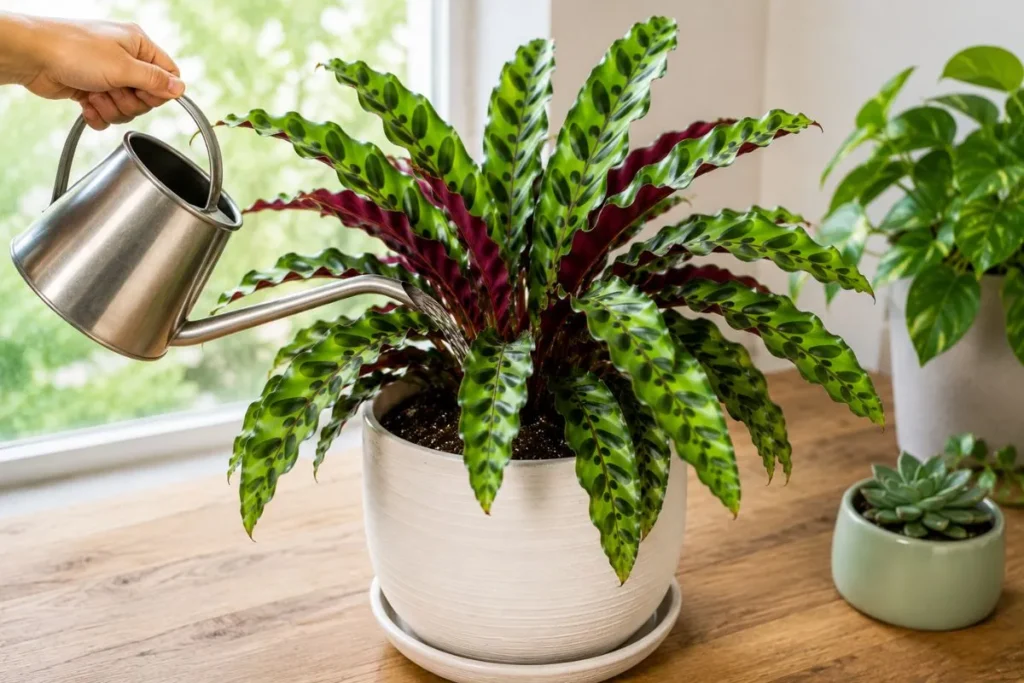
- Water about once every 7–10 days during spring and summer when the plant is actively growing.
- Reduce watering to every 10–14 days during fall and winter because growth slows down.
- Always check the soil before watering instead of following a fixed schedule.
Insert your finger about an inch into the soil. If the top inch feels dry, it’s time to water. If it still feels damp, wait another day or two before checking again.
This simple habit is one of the best Calathea watering tips and helps prevent both overwatering and underwatering.
How to Water a Rattlesnake Plant the Right Way
A proper watering routine is just as important as watering frequency.
Follow these easy steps:
- Check the moisture level of the soil.
- Water slowly and evenly around the base of the plant.
- Continue watering until excess water drains from the bottom of the pot.
- Empty the saucer after a few minutes so the roots aren’t left sitting in water.
This method keeps the moist soil for Calathea balanced while allowing excess moisture to drain away.
Signs Your Rattlesnake Plant Needs Water
Your plant will usually tell you when it’s thirsty. Learning to recognize these signs makes watering much easier.
Look for these common symptoms:
- Leaves begin to curl inward.
- The soil feels dry several inches below the surface.
- Leaf edges become slightly crispy.
- The plant starts to droop.
- New growth appears slower than usual.
Don’t wait until the leaves become severely dry. Watering before the plant becomes stressed helps maintain healthy growth.
Signs of Overwatering
Overwatering is much more harmful than slightly underwatering a rattlesnake plant. Constantly wet soil reduces oxygen around the roots and can lead to root rot.
Common signs include:
- Yellow leaves
- Soft or mushy stems
- Wet soil that stays soggy for days
- A musty smell coming from the pot
- Leaves falling off without drying first
If you notice these problems, allow the soil to dry slightly before watering again and make sure your pot has proper drainage holes.
What’s the Best Water to Use?
Water quality can make a surprising difference in rattlesnake plant care.
These tropical plants are sensitive to minerals, chlorine, and fluoride commonly found in tap water. Over time, these chemicals can cause brown leaf tips and reduce the plant’s overall health.
For the best results, use:
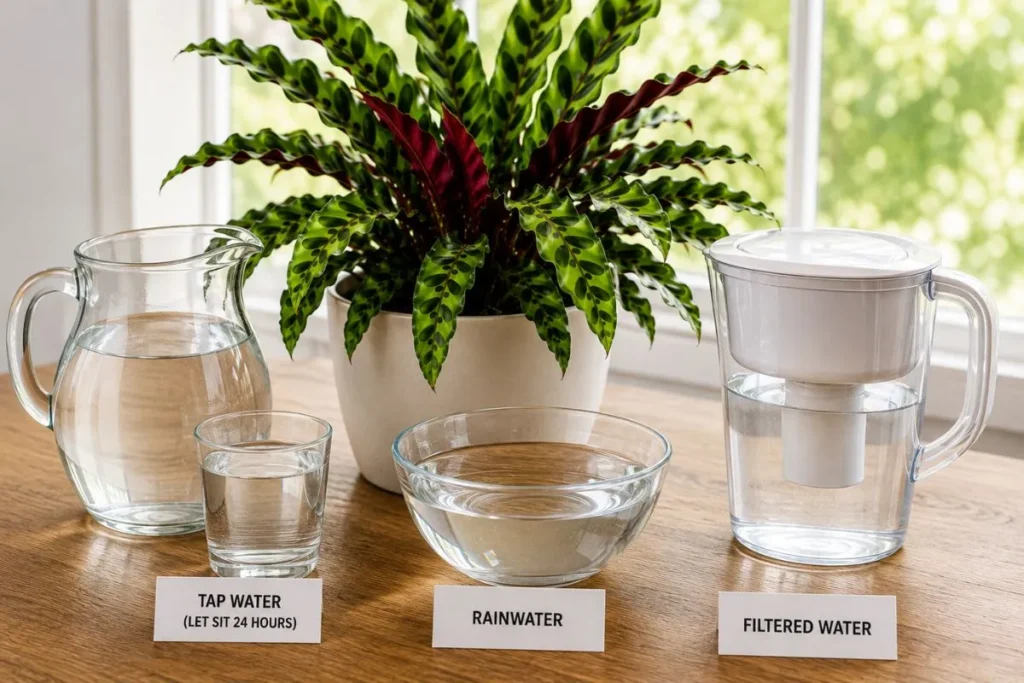
- Filtered water
- Rainwater
- Distilled water
- Tap water that has been left out overnight to allow some chlorine to dissipate
Using cleaner water helps keep the leaves looking fresh and colorful.
Adjust Your Watering with the Seasons
Your plant’s watering needs change throughout the year, so your routine should change too.
Spring and Summer
During the active growing season:
- Check the soil more frequently.
- Water when the top inch becomes dry.
- Higher temperatures may require slightly more frequent watering.
Fall and Winter
As growth slows:
- Water less often.
- Allow the top layer of soil to dry a little more between waterings.
- Avoid keeping the soil constantly wet.
Following a seasonal indoor plant watering schedule helps prevent unnecessary stress on the plant.
Common Watering Mistakes to Avoid
Even experienced plant owners can make watering mistakes. Avoid these common problems:
- Watering on a strict calendar without checking the soil.
- Letting the soil dry out completely.
- Leaving excess water in the saucer.
- Using pots without drainage holes.
- Watering lightly instead of soaking the soil thoroughly.
- Using cold water directly from the tap.
Small changes to your watering routine can have a big impact on your plant’s health.
Quick Watering Tips
Keep these simple tips in mind for healthy rattlesnake plant watering:
- Check the soil before every watering.
- Keep the soil lightly moist, not soggy.
- Water thoroughly until excess drains out.
- Use filtered or rainwater whenever possible.
- Reduce watering during colder months.
- Watch your plant’s leaves for early signs of stress.
Once you master watering, you’re well on your way to successful how to care for a rattlesnake plant. In the next section, we’ll look at the best soil mix for a rattlesnake plant and explain how the right potting mix supports healthy roots and long-lasting growth.
Best Soil Mix for a Rattlesnake Plant
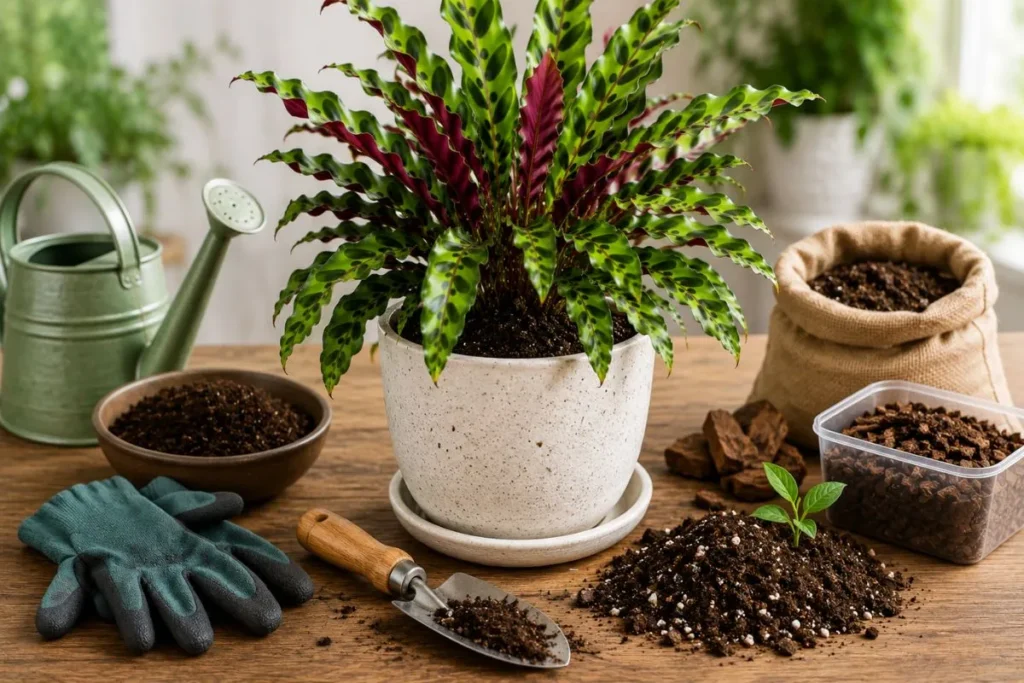
Many people think any regular potting soil is good enough for a rattlesnake plant. Unfortunately, that’s not the case. Heavy or compact soil can hold too much water, causing the roots to rot.
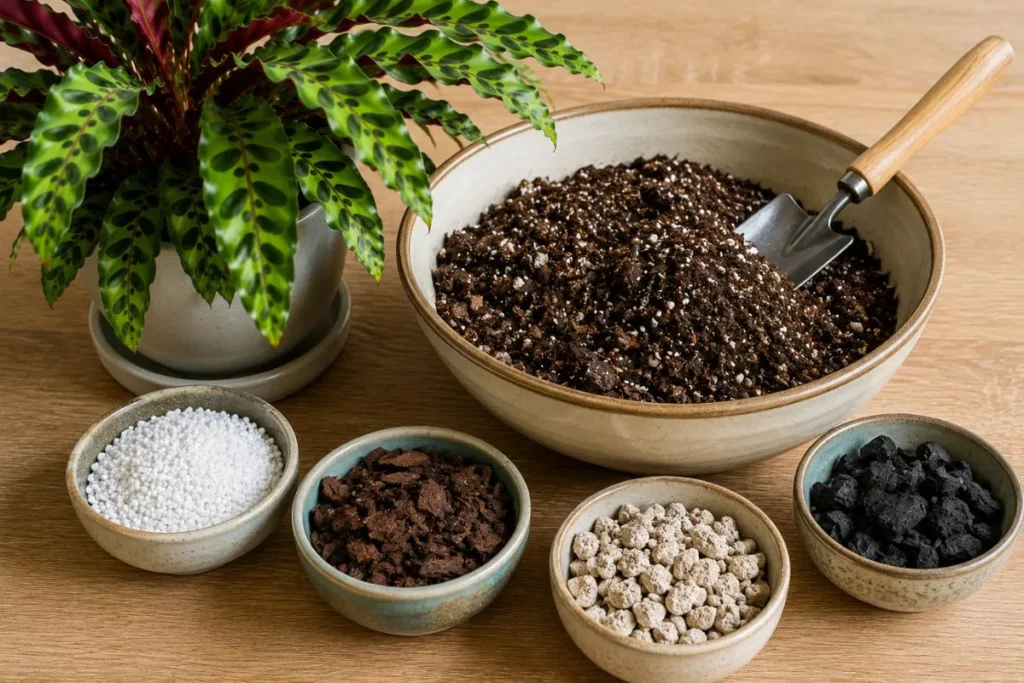
If you want to master how to care for a rattlesnake plant, choosing the right soil is just as important as watering and lighting. A light, airy, and well-draining soil mix will help your plant grow strong and healthy.
What Is the Best Soil Mix for a Rattlesnake Plant?
If you’re wondering about the best soil mix for a rattlesnake plant, the goal is to use a mix that holds enough moisture without becoming waterlogged.
The ideal best soil for a rattlesnake plant should:
- Retain light moisture
- Drain excess water quickly
- Allow plenty of airflow around the roots
- Be rich in organic matter
- Have a slightly acidic to neutral pH (around 6.0–7.0)
This combination creates the perfect environment for healthy root development and supports long-term Calathea indoor care.
Why Well-Draining Soil Matters
Healthy roots need both water and oxygen to thrive. When the soil stays wet for too long, air pockets disappear, making it difficult for the roots to breathe.
Using a well-draining rattlesnake plant soil helps:
- Prevent root rot
- Reduce the risk of fungal diseases
- Improve nutrient absorption
- Encourage stronger root growth
- Keep the soil evenly moist without becoming soggy
Good drainage is one of the easiest ways to avoid common plant care problems.
Make Your Own Soil Mix at Home
You don’t need an expensive specialty mix to grow a healthy rattlesnake plant. A simple homemade blend works just as well.
Try this easy recipe:
- 2 parts high-quality indoor potting soil
- 1 part coco coir or peat moss for moisture retention
- 1 part perlite for drainage and airflow
This mix stays light, drains well, and provides enough moisture for healthy root growth.
If you’d like to improve drainage even further, you can add a small amount of orchid bark or fine pine bark. These materials help keep the soil loose and allow more oxygen to reach the roots.
Can You Use Regular Potting Soil?
Yes, but not by itself.
Regular potting soil often holds too much moisture for tropical plants like the rattlesnake plant. Before using it, improve the texture by mixing in materials that increase drainage.
Adding ingredients such as:
- Perlite
- Coco coir
- Orchid bark
- Peat moss
creates a much healthier growing medium for your plant.
Signs Your Soil Needs Replacing
Over time, potting soil breaks down and becomes compacted. When this happens, it doesn’t drain as well as it should.
Watch for these signs:
- Water pools on the soil surface.
- The soil stays wet for several days.
- The mix feels dense or compact.
- Roots begin growing through the drainage holes.
- Your plant shows slow growth despite proper care.
If you notice these signs, refreshing the soil can help restore healthy root conditions.
Tips for Keeping Soil Healthy
The right soil won’t stay in perfect condition forever. Regular maintenance helps keep it fresh and supports healthy growth.
Here are a few simple tips:
- Use a pot with drainage holes.
- Avoid packing the soil too tightly.
- Replace old potting mix every two to three years.
- Remove fallen leaves from the soil surface to discourage mold.
- Check soil moisture before watering instead of watering on a fixed schedule.
These small habits make a big difference in maintaining healthy roots.
Common Soil Mistakes to Avoid
Many plant owners accidentally create problems by using the wrong type of soil.
Avoid these common mistakes:
- Using heavy garden soil indoors.
- Choosing dense soil that doesn’t drain well.
- Reusing old, compacted potting mix without refreshing it.
- Ignoring drainage holes in the pot.
- Adding too much sand, which can make the soil hard over time.
A loose, airy potting mix will always perform better than dense, compact soil.
Quick Soil Care Tips
Keep these simple tips in mind when choosing rattlesnake plant soil:
- Use a light, well-draining potting mix.
- Mix in perlite to improve drainage.
- Add coco coir or peat moss to retain moisture.
- Refresh the soil every few years.
- Always use a container with drainage holes.
The right soil creates the foundation for healthy roots and makes every other part of how to care for a rattlesnake plant much easier. In the next section, you’ll learn how to provide the ideal humidity and temperature so your plant can thrive just like it would in its natural tropical rainforest habitat.
How Much Humidity Does a Rattlesnake Plant Need?
Many people assume that keeping a rattlesnake plant in any room temperature is enough for it to thrive. While the plant can adapt to normal indoor conditions, it grows much better when it receives the warmth and humidity it naturally enjoys.
Since this plant comes from tropical rainforests, providing the right environment is an important part of how to care for a rattlesnake plant.
Ideal Temperature for a Rattlesnake Plant
The Calathea temperature requirements are fairly simple. This plant prefers warm, stable temperatures throughout the year and doesn’t like sudden changes.
The ideal temperature range is:
- 65°F to 80°F (18°C to 27°C) during the day
- Avoid temperatures below 60°F (15°C) for long periods
When temperatures become too cold, your rattlesnake plant may stop growing and begin showing signs of stress.
Keep the plant away from:
- Air conditioning vents
- Heating vents
- Drafty windows and doors
- Fireplaces
- Cold winter windowsills
A stable environment helps the plant produce healthier leaves and reduces stress.
Why Humidity Matters
One of the biggest differences between an average houseplant and a rattlesnake plant is its love for humidity.
In the wild, these plants grow in rainforests where the air is naturally moist throughout the day. Dry indoor air, especially during winter or in air-conditioned homes, can cause several problems.
Low humidity may lead to:
- Brown leaf tips
- Crispy edges
- Curling leaves
- Slower growth
- Dull-looking foliage
Maintaining good rattlesnake plant humidity helps the leaves stay soft, colorful, and healthy.
How Much Humidity Does a Rattlesnake Plant Need?
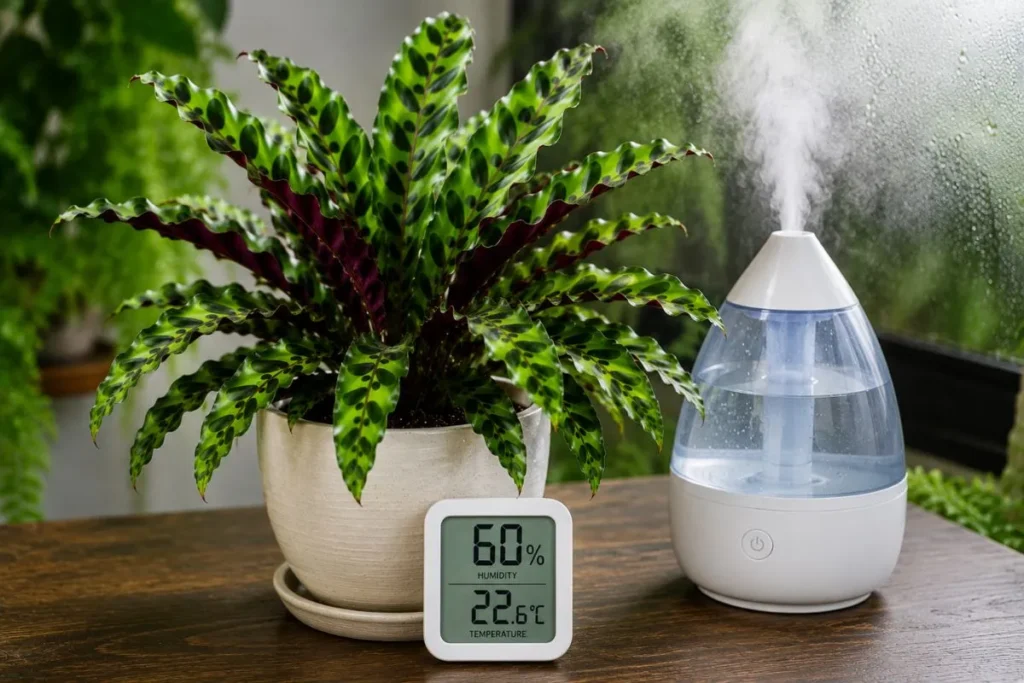
For the best results, aim for a humidity level of 50% to 70%.
Although the plant can survive in lower humidity, it performs much better when moisture levels stay above 50%.
If you’re unsure about your home’s humidity, a small digital hygrometer can help you monitor it. These inexpensive devices make it easy to know when your plant may need extra moisture in the air.
How to Increase Humidity for a Rattlesnake Plant
If you’re wondering how to increase humidity for a rattlesnake plant, there are several easy methods that work well indoors.
Use a Humidifier
A humidifier is one of the most effective ways to maintain consistent humidity.
It:
- Provides steady moisture throughout the day.
- Benefits all nearby humidity-loving plants.
- Requires very little effort once it’s set up.
If you own several tropical plants, a humidifier is often the best long-term investment.
Use a Pebble Tray
A pebble tray is an easy and affordable option.
Simply:
- Fill a shallow tray with small pebbles.
- Add water until it’s just below the top of the stones.
- Place the plant pot on the pebbles without letting the bottom of the pot sit directly in the water.
As the water evaporates, it increases the humidity around the plant.
Group Plants Together
Keeping several tropical houseplants close to one another creates a small humid microclimate.
As plants naturally release moisture through their leaves, the surrounding air becomes slightly more humid. This simple trick works especially well if you already grow other tropical indoor plants.
Place the Plant in a Naturally Humid Room
Rooms such as bathrooms or kitchens often have higher humidity because of daily activities like showering and cooking.
If these rooms receive enough bright, indirect light, they can be excellent locations for a rattlesnake plant.
Should You Mist a Rattlesnake Plant?
Many people mist their plants every day, believing it’s the best way to increase humidity. While occasional misting may provide temporary moisture, the effect doesn’t last very long.
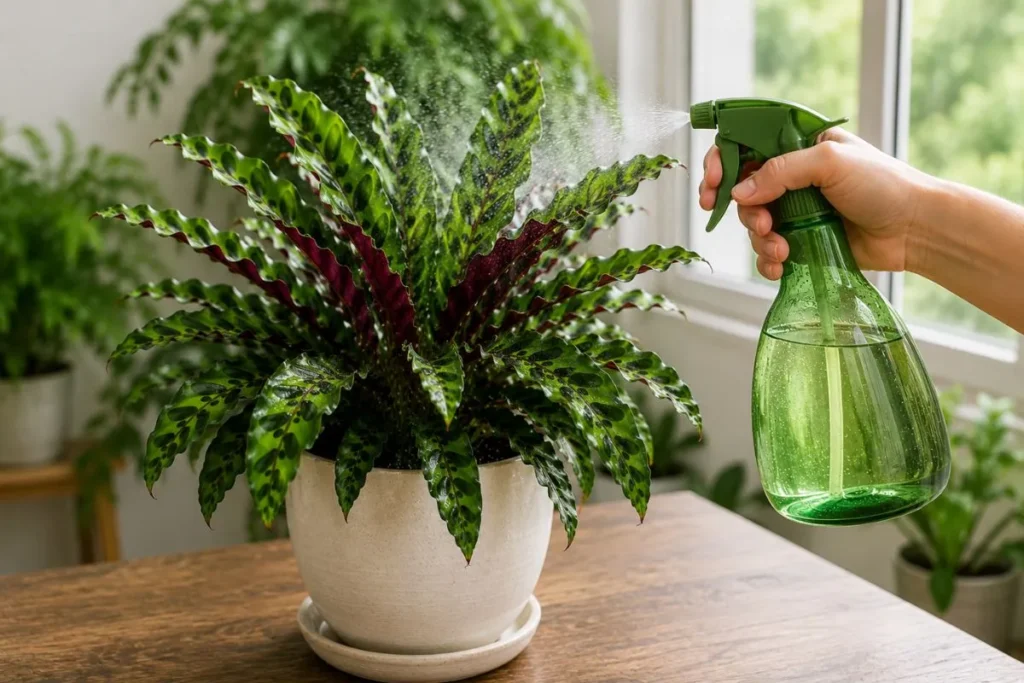
Frequent misting can also leave excess water on the leaves, which may encourage fungal problems if there isn’t enough air circulation.
Instead of relying only on misting, use methods like a humidifier or pebble tray for more consistent humidity.
Signs Your Plant Needs More Humidity
Your rattlesnake plant will often show visible signs when the air becomes too dry.
Watch for these symptoms:
- Brown or crispy leaf edges
- Curled leaves
- Dry leaf tips
- New leaves that don’t fully open
- Slower overall growth
Increasing humidity early can prevent these issues from becoming more serious.
Common Temperature and Humidity Mistakes
Avoid these common mistakes to keep your plant healthy:
- Placing the plant near heaters or air conditioners.
- Letting cold drafts reach the leaves.
- Keeping the plant in extremely dry rooms.
- Depending only on daily misting.
- Ignoring humidity during winter when indoor air becomes much drier.
A few simple adjustments can make a noticeable difference in your plant’s health.
Quick Humidity and Temperature Tips
Follow these easy tips for successful Calathea indoor care:
- Keep temperatures between 65°F and 80°F (18°C–27°C).
- Maintain humidity between 50% and 70% whenever possible.
- Use a humidifier for consistent moisture.
- Try a pebble tray if you don’t have a humidifier.
- Group tropical plants together to naturally raise humidity.
- Keep your plant away from drafts, heaters, and air conditioners.
Providing the right temperature and humidity will help your rattlesnake plant produce lush, healthy foliage throughout the year. In the next section, you’ll learn how to choose the best fertilizer for a rattlesnake plant, when to feed it, and how to avoid common fertilizing mistakes that can damage the roots.
Rattlesnake Plant Care Throughout the Year
Many people believe that a rattlesnake plant needs the exact same care every month of the year. That’s not true. Like most tropical indoor plants, its needs change with the seasons.
Changes in temperature, daylight, and humidity affect how quickly the plant grows and how much water and nutrients it uses. Adjusting your care routine throughout the year is one of the easiest ways to master how to care for a rattlesnake plant.
Spring Care
Spring marks the beginning of the growing season. As temperatures rise and days become longer, your rattlesnake plant starts producing fresh leaves and new growth.
During spring:
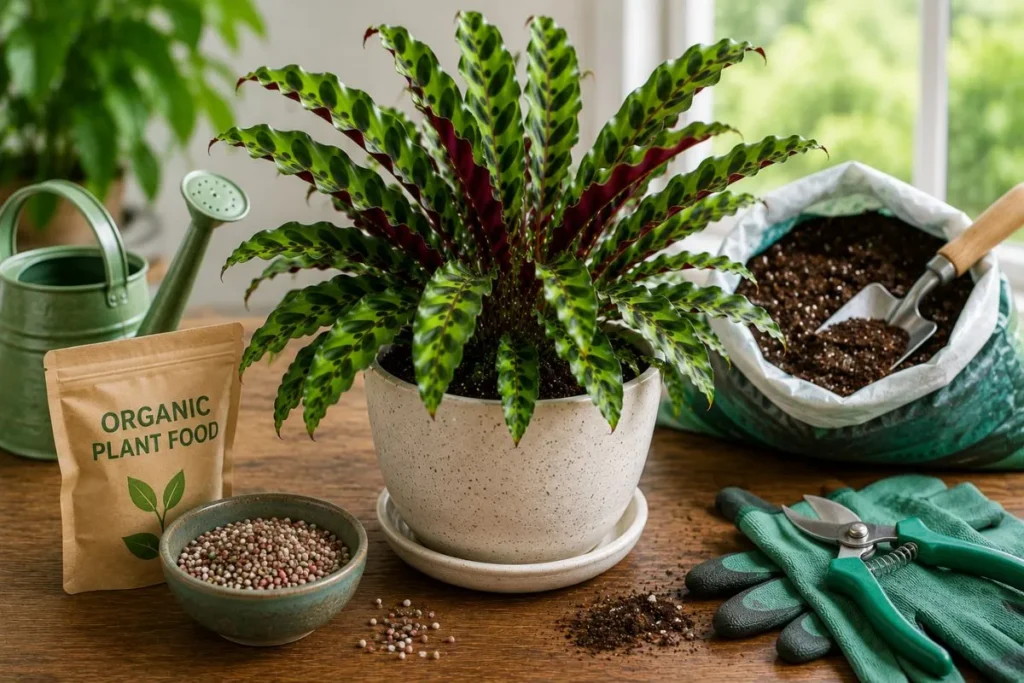
- Water when the top inch of soil feels dry.
- Resume regular fertilizing if you paused during winter.
- Check for new leaves and healthy growth.
- Repot the plant if it has become root-bound.
- Clean the leaves to remove dust and improve light absorption.
Spring is also the best time for propagation because the plant recovers more quickly during active growth.
Summer Care
Summer is usually the plant’s most active growing period. Higher temperatures mean the soil dries out faster, so your care routine may need slight adjustments.
During summer:
- Check soil moisture more often.
- Water thoroughly whenever the top layer of soil begins to dry.
- Maintain rattlesnake plant humidity at 50–70%.
- Keep the plant out of direct afternoon sunlight.
- Ensure good airflow while avoiding strong drafts.
If your home becomes very warm, monitor the leaves regularly. Curling or crispy edges may indicate that the air is too dry or the plant needs water sooner than usual.
Fall Care
As daylight hours become shorter, the rattlesnake plant naturally begins to slow its growth. This is the time to gradually reduce maintenance.
During fall:
- Water less frequently than in summer.
- Stop fertilizing or reduce feeding according to the fertilizer instructions.
- Continue providing bright, indirect light.
- Remove any yellow or damaged leaves.
- Keep humidity levels stable as indoor heating may begin to dry the air.
Avoid making sudden changes to your care routine, as consistency helps the plant adjust to seasonal changes.
Winter Care
Winter can be the most challenging season for Calathea indoor care because indoor heating often creates dry air, and shorter days reduce the amount of natural light available.
To keep your rattlesnake plant healthy during winter:
- Water only when the top inch of soil becomes dry.
- Keep the plant away from heaters, fireplaces, and cold drafts.
- Increase humidity with a humidifier or pebble tray if the air becomes dry.
- Continue providing bright, indirect light, or use a grow light if needed.
- Avoid repotting or propagating unless absolutely necessary.
Don’t worry if you notice slower growth during winter. This is completely normal, and your plant will become more active again when spring arrives.
Seasonal Care Tips at a Glance
Here’s a simple overview of how your rattlesnake plant care routine changes throughout the year:
| Season | Watering | Fertilizing | Humidity | Special Care |
| Spring | Moderate | Start feeding regularly | Moderate to high | Repot or propagate if needed |
| Summer | More frequent | Continue feeding | High | Protect from direct sun |
| Fall | Reduce gradually | Reduce or stop | Moderate | Remove damaged leaves |
| Winter | Least frequent | Do not fertilize | High | Keep away from cold drafts and dry heat |
Simple Tips for Year-Round Success
No matter the season, these habits will help keep your plant healthy:
- Check the soil before watering instead of following a fixed schedule.
- Maintain consistent indoor temperatures.
- Keep humidity above 50% whenever possible.
- Wipe the leaves regularly to remove dust.
- Watch for signs of pests or stressed leaves.
- Adjust your care routine as the seasons change rather than treating every month the same.
By making small seasonal adjustments, you’ll give your rattlesnake plant the conditions it needs to stay healthy, colorful, and full of beautiful foliage throughout the year.
Frequently Asked Questions (FAQ)
How do you care for a rattlesnake plant?
The best way to care for a rattlesnake plant is to place it in bright, indirect light, keep the soil evenly moist, maintain humidity above 50%, and use well-draining soil. Water only when the top inch of soil feels dry, fertilize during the growing season, and avoid direct sunlight, which can damage its beautiful leaves.
Is a rattlesnake plant easy to care for?
Yes. Although many people think it’s difficult, a rattlesnake plant is relatively easy to grow once you understand its basic needs. Providing the right balance of light, water, humidity, and temperature is usually enough to keep it healthy.
Following a consistent rattlesnake plant care guide makes caring for this tropical houseplant much simpler.
How often should I water a rattlesnake plant?
Most rattlesnake plants need watering every 7 to 10 days during spring and summer and every 10 to 14 days during fall and winter. However, always check the soil first instead of following a strict schedule. Water only when the top inch of soil feels dry to avoid overwatering.
Can a rattlesnake plant survive in low light?
Yes, a rattlesnake plant can tolerate low light, but it grows best in bright, indirect light. In darker rooms, the plant may survive, but growth will slow, and the leaf patterns may become less vibrant. For the healthiest foliage, provide filtered natural light whenever possible.
Why are my rattlesnake plant leaves curling?
Leaf curling is usually a sign that something isn’t quite right with your plant’s environment. The most common causes include:
- Underwatering
- Low humidity
- Excessive heat
- Too much direct sunlight
- Sudden temperature changes
Check the soil moisture and humidity first, then move the plant if it’s receiving harsh sunlight.
Should I mist my rattlesnake plant?
Occasional misting is fine, but it shouldn’t be your main method of increasing humidity. The moisture from misting disappears quickly and doesn’t provide lasting benefits. A humidifier or pebble tray is a much more effective way to maintain the rattlesnake plant humidity that this tropical plant prefers.
What is the best soil for a rattlesnake plant?
The best soil for a rattlesnake plant is light, well-draining, and rich in organic matter. A mix of indoor potting soil, coco coir or peat moss, and perlite works well because it retains enough moisture while allowing excess water to drain away.
How do I know if my rattlesnake plant is overwatered?
Overwatering usually causes:
- Yellow leaves
- Soft or mushy stems
- Constantly wet soil
- A musty smell from the pot
- Leaf drop
If you notice these symptoms, allow the soil to dry slightly before watering again and make sure your pot has proper drainage.
Is the rattlesnake plant safe for cats and dogs?
Yes. The rattlesnake plant is considered one of the best pet-friendly houseplants because it is non-toxic to both cats and dogs. While it’s still best to prevent pets from chewing on the leaves, you don’t have to worry about serious toxicity if they take a small bite.
How fast does a rattlesnake plant grow?
A rattlesnake plant has a moderate growth rate. During spring and summer, you can expect several new leaves to appear if the plant receives proper care. Growth naturally slows during fall and winter as the plant enters a less active period.
With the right lighting, watering routine, humidity, and soil, a healthy rattlesnake plant can continue producing lush, beautifully patterned foliage for many years.
Conclusion
Learning how to care for a rattlesnake plant doesn’t have to be difficult. Once you understand its basic needs, this tropical houseplant is surprisingly easy to grow.
The secret is to provide bright, indirect light, water only when the top layer of soil begins to dry, use a well-draining potting mix, maintain good humidity, and keep the plant in a warm, stable environment.
These simple habits will help your plant develop healthy roots and vibrant, eye-catching foliage.
Remember, caring for a rattlesnake plant is all about consistency rather than perfection. Don’t worry if you make a few mistakes along the wayevery plant owner does.
Pay attention to your plant’s leaves, adjust your care routine as the seasons change, and address small issues before they become bigger problems.
With regular care and a little patience, your Calathea rattlesnake plant will continue to reward you with stunning patterned leaves that bring a beautiful tropical touch to your home for years to come.

Plant Nest Blog’s author is passionate about plants, gardening, and sustainable living. Through research and practical experience, they share helpful plant care tips, gardening guides, and easy solutions to help readers grow healthier plants and create greener spaces.