
Many people think how do you care for an anthurium plant is a difficult question because anthuriums have a reputation for being fussy houseplants. The truth is, they’re much easier to care for than most people believe.
Once you understand their basic needs, anthuriums can reward you with glossy green leaves and beautiful flowers that last for weeks, or even months.
So, how do you care for an anthurium plant? The secret is to provide the right balance of bright indirect light, consistent watering, well-draining soil, warm temperatures, and plenty of humidity. When these basic care requirements are met, an anthurium can thrive indoors and continue producing colorful blooms throughout the year.
Anthuriums, also known as the flamingo flower or laceleaf plant, are tropical houseplants native to warm and humid environments. Because of their vibrant flowers and attractive foliage, they have become one of the most popular indoor flowering plants for homes and offices.
The good news is that you don’t need to be an experienced gardener to grow one successfully.
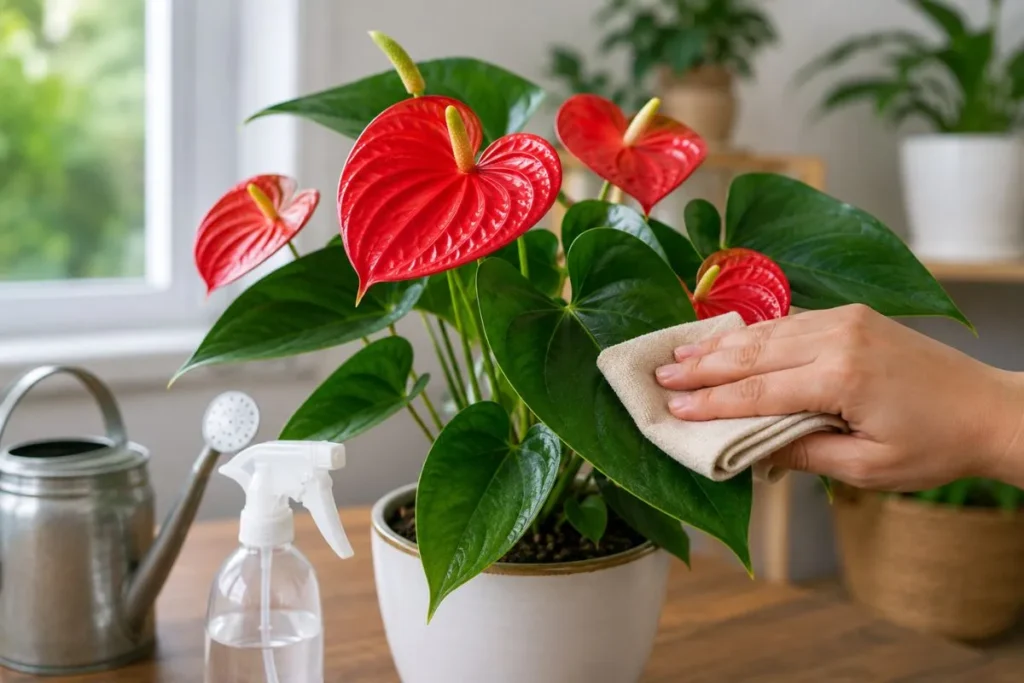
If you’re wondering how do you care for an anthurium plant indoors, the answer starts with creating an environment that closely resembles its natural habitat. Bright filtered light, moderate watering, high humidity, and a loose, airy soil mix are the keys to healthy growth.
With the right routine, your plant will not only survive but also produce healthier leaves and longer-lasting flowers.
Many beginners make the mistake of overwatering or placing their anthurium in direct sunlight. These simple errors can lead to yellow leaves, root rot, poor growth, and fewer blooms. Fortunately, they’re also some of the easiest problems to avoid once you know what your plant needs.
In this complete anthurium plant care guide, you’ll learn how to care for an anthurium plant from start to finish. We’ll cover the best lighting conditions, watering schedule, soil mix, humidity levels, fertilizer, pruning, repotting, propagation, and solutions to common problems.
By the end of this guide, you’ll know exactly how do you care for an anthurium plant so it stays healthy, grows faster, and blooms more often.
Quick Answer: How Do You Care for an Anthurium Plant?
If you’re searching for how do you care for an anthurium plant, here’s the quick answer.
Anthuriums grow best when they receive bright indirect light, are watered only after the top inch of soil becomes dry, and are planted in a well-draining soil mix that allows the roots to breathe. They also prefer warm temperatures between 65°F and 80°F (18°C to 27°C), humidity levels above 60%, and regular feeding during the growing season.
Following these simple care practices will help your anthurium develop healthy foliage and produce vibrant flowers for much of the year.
Anthurium Care Summary
| Care Factor | Best Practice |
| Light | Bright, indirect sunlight |
| Water | Water when the top inch of soil feels dry |
| Soil | Well-draining, airy potting mix |
| Humidity | 60% or higher |
| Temperature | 65°F–80°F (18°C–27°C) |
| Fertilizer | Balanced liquid fertilizer every 4–6 weeks during spring and summer |
| Repotting | Every 2–3 years or when root-bound |
Although these care requirements are simple, consistency is what makes the biggest difference. Anthuriums don’t like sudden changes in their environment. Maintaining a regular watering schedule and keeping the plant in stable conditions will encourage healthier growth and more frequent blooms.
If you’re asking how do you care for an anthurium plant at home, choose a location with plenty of natural light but avoid direct afternoon sun, which can scorch the leaves. A room with good airflow, steady temperatures, and moderate to high humidity provides the ideal environment for this tropical plant.
Proper indoor anthurium care also means paying attention to the condition of the leaves and flowers. Healthy leaves should be deep green, glossy, and firm. Bright, colorful blooms and steady new leaf growth are signs that your plant is receiving the care it needs.
Good anthurium maintenance doesn’t require complicated techniques. Watering correctly, using the right soil, feeding the plant during the growing season, and keeping the humidity at an appropriate level are usually enough to keep it healthy for years.
If you’re new to houseplants, don’t worry. Learning how to care for an anthurium plant is straightforward once you understand its basic needs. Even beginners can enjoy beautiful blooms by following a simple care routine instead of trying complicated gardening methods.
In the next section, we’ll take a closer look at the lighting requirements and explain how the right amount of sunlight can make a huge difference in your anthurium’s growth, leaf color, and flowering performance.
Best Light for an Anthurium Plant
Many people believe how do you care for an anthurium plant simply means placing it near the brightest window in the house. Unfortunately, that’s one of the biggest mistakes you can make.
Anthuriums love light, but too much direct sunlight can damage their leaves and reduce flowering. The key is giving your plant the right type of light rather than the most light.
If you’re learning how do you care for an anthurium plant, understanding its lighting needs is essential. The right amount of light encourages healthy green leaves, stronger roots, and continuous blooms, while poor lighting can slow growth and affect the plant’s overall health.
How Much Sunlight Does an Anthurium Need?
One of the most common questions people ask is, how do you care for an anthurium plant when it comes to sunlight? The answer is simple: anthuriums prefer bright, indirect light.
In their natural tropical habitat, anthuriums grow beneath the canopy of larger trees where they receive filtered sunlight throughout the day. Recreating these conditions indoors helps the plant grow faster and produce more flowers.
The best light for anthurium is several hours of bright but indirect sunlight each day. Morning sunlight is usually gentle enough, while harsh afternoon sun should be avoided because it can scorch the leaves.
If your home doesn’t receive much natural light, your anthurium can still survive in medium light conditions. However, slower growth and fewer blooms are common when light levels are too low.
When wondering how much sunlight does an anthurium need, remember that bright filtered light is always better than intense direct sunlight.
Best Place to Keep an Anthurium Indoors
Another important part of how do you care for an anthurium plant is choosing the right location inside your home.
The ideal place is near an east-facing window, where the plant receives soft morning sunlight followed by indirect light for the rest of the day. A north-facing window also works well because it provides gentle natural light without exposing the leaves to strong afternoon rays.
If your only option is a south- or west-facing window, place the plant a few feet away from the glass or use sheer curtains to filter the sunlight. This helps protect the leaves while still giving the plant enough light for healthy growth.
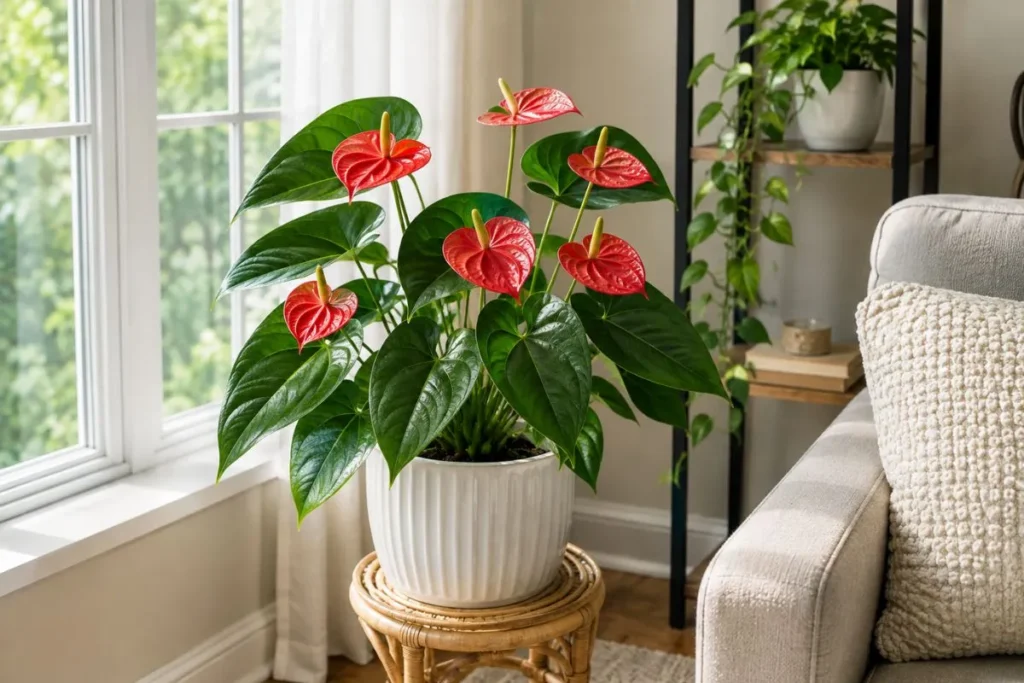
Good indoor anthurium care also includes maintaining stable temperatures and avoiding sudden drafts. Keep your anthurium away from air conditioners, heating vents, fireplaces, and frequently opened exterior doors, as rapid temperature changes can stress the plant.
Choosing the right location is one of the easiest ways to improve anthurium growing conditions and encourage year-round flowering.
Signs Your Anthurium Isn’t Getting the Right Light
If you’re still wondering how do you care for an anthurium plant, learning to recognize lighting problems can help you correct them before they become serious.
When an anthurium doesn’t receive enough light, it often grows more slowly than usual. New leaves may appear smaller, and the plant may stop producing flowers for long periods. The stems may also become stretched or lean toward the nearest light source as the plant searches for more sunlight.
Too much direct sunlight creates a different set of problems. The leaves may develop brown or faded patches, become scorched around the edges, or lose their rich green color. In severe cases, excessive sunlight can permanently damage the foliage.
Healthy anthurium leaf care starts with monitoring your plant regularly. Deep green, glossy leaves and steady new growth are good signs that your lighting conditions are suitable.
If your anthurium isn’t growing as expected, try moving it to a brighter location with indirect sunlight before making changes to watering or fertilizer. In many cases, adjusting the light is enough to restore healthy growth and encourage blooming.
Understanding how do you care for an anthurium plant begins with providing the right lighting environment. Bright, indirect light gives your plant the energy it needs to develop vibrant leaves and colorful flowers without exposing it to the damage caused by harsh direct sun. Once you get the lighting right, caring for your anthurium becomes much easier.
How Often Should You Water an Anthurium Plant?
Many people think how do you care for an anthurium plant simply means watering it as often as possible. In reality, overwatering is one of the biggest reasons anthurium plants struggle indoors. Anthuriums prefer consistently moist soil, but they do not like sitting in water. The secret is to water at the right time, not more often.
If you’re wondering how do you care for an anthurium plant, learning the correct watering routine is one of the most important steps. Proper watering keeps the roots healthy, prevents diseases, and encourages steady growth and long-lasting blooms.
How Often Should You Water an Anthurium Plant?
One of the most common questions new plant owners ask is, how often should you water an anthurium plant?
The answer depends on the season, indoor temperature, humidity, and the size of the pot. Instead of watering on a fixed schedule, check the soil first. Water your anthurium when the top 1 to 2 inches of soil feel dry to the touch. This simple habit helps maintain the perfect balance of moisture.
During spring and summer, when the plant is actively growing, you may need to water about once a week. In fall and winter, growth slows down, so watering every 10 to 14 days is often enough. Always adjust your watering schedule based on how quickly the soil dries.
If you’re learning how do you care for an anthurium plant indoors, remember that indoor conditions vary from home to home. A warm room with low humidity may require more frequent watering than a cooler room with higher humidity.
A good way to avoid mistakes is the finger test. Simply insert your finger into the soil. If the top layer feels dry, it’s time to water. If it still feels damp, wait another day or two before checking again.
Signs of Overwatering
Another important part of how do you care for an anthurium plant is recognizing the signs of overwatering before serious damage occurs.
An overwatered anthurium often develops yellow leaves, soft or mushy stems, and slow growth. In severe cases, excess moisture causes anthurium root rot, which prevents the roots from absorbing water and nutrients properly.
You may also notice a foul smell coming from the soil or leaves that fall off even though the soil remains wet. These are clear warning signs that your plant is receiving too much water.
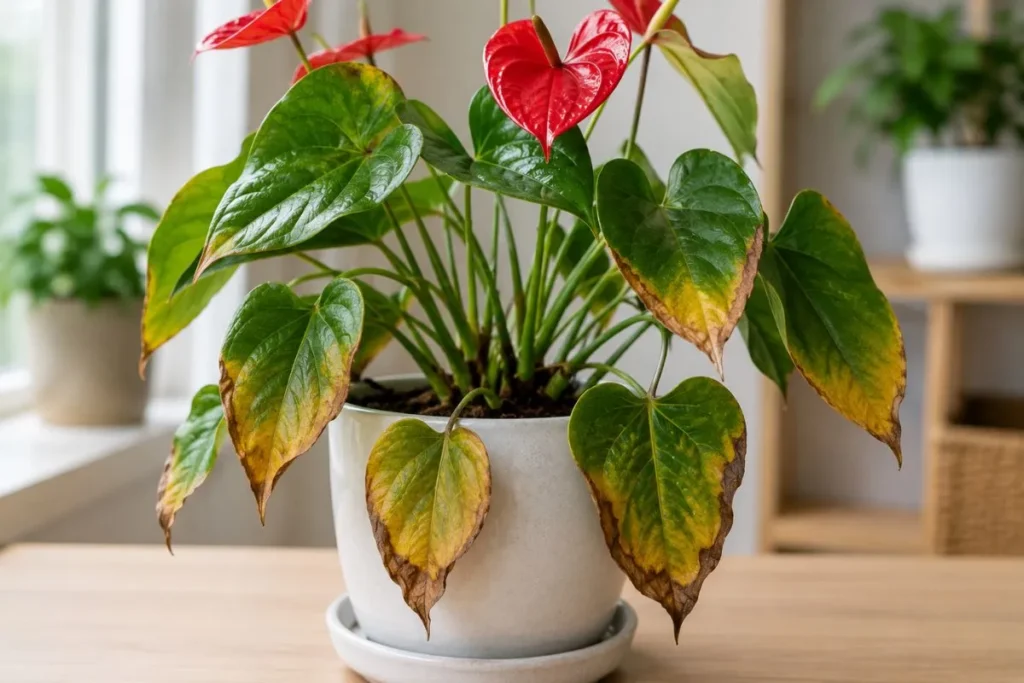
If you suspect your plant has been overwatered, stop watering immediately and allow the soil to dry partially. Check the roots while repotting if necessary, and remove any black or mushy roots to prevent further damage.
Preventing overwatered anthurium problems is much easier than treating them, so always let the soil guide your watering schedule instead of following the calendar.
Signs of Underwatering
While overwatering is more common, underwatering can also affect how do you care for an anthurium plant successfully.
An underwatered anthurium usually has dry soil, drooping leaves, brown crispy leaf edges, and slower growth. The flowers may also fade more quickly because the plant isn’t getting enough moisture to support healthy blooms.
Fortunately, underwatering is usually easy to fix. Water the plant thoroughly until excess water drains from the bottom of the pot. Then allow the soil to dry slightly before watering again.
Keeping the soil slightly moist but never soggy is the ideal balance for healthy anthurium watering.
Watering Tips for Healthy Growth
If you’re serious about learning how do you care for an anthurium plant, following a few simple watering habits can make a big difference.
Use room-temperature water whenever possible, as extremely cold water can shock the roots. Water slowly and evenly until moisture reaches the entire root system, allowing any excess water to drain completely from the pot.
Good drainage is just as important as watering itself. Always choose a pot with drainage holes because standing water can quickly lead to anthurium root rot. Empty the saucer after watering so the roots never sit in excess water.
The type of pot also affects watering frequency. Terracotta pots dry out faster because they allow moisture to escape through the clay, while plastic and glazed ceramic pots retain moisture for longer. Understanding your pot material will help you decide when your anthurium actually needs water.
Finally, pay attention to your plant instead of sticking to a strict schedule. Healthy leaves, firm stems, and steady new growth are signs that your watering routine is working well. If your anthurium starts showing yellow leaves, drooping foliage, or dry leaf edges, adjust your watering habits before the problem becomes more serious.
Learning how do you care for an anthurium plant isn’t about watering more it’s about watering wisely. By checking the soil regularly, providing proper drainage, and recognizing the early signs of overwatering and underwatering, you’ll create the ideal conditions for a healthy, vibrant anthurium that rewards you with beautiful foliage and colorful blooms.
Best Soil for Anthurium Plants
Many people believe how do you care for an anthurium plant is all about watering and sunlight. While those are important, the soil you use plays an equally important role. Even if you water correctly and provide the right amount of light, an anthurium can struggle if it’s planted in heavy, compact soil that traps too much moisture.
If you’re learning how do you care for an anthurium plant, choosing the right potting mix will help your plant develop healthy roots, absorb nutrients efficiently, and produce beautiful blooms year after year.
What Is the Best Soil for Anthurium Plants?
One of the most frequently asked questions is, what is the best soil for anthurium plants?
The best anthurium soil mix is light, loose, and well-draining. Anthuriums are tropical plants with roots that need both moisture and air. Unlike ordinary garden soil, a quality potting mix allows excess water to drain away while still holding enough moisture to keep the roots hydrated.
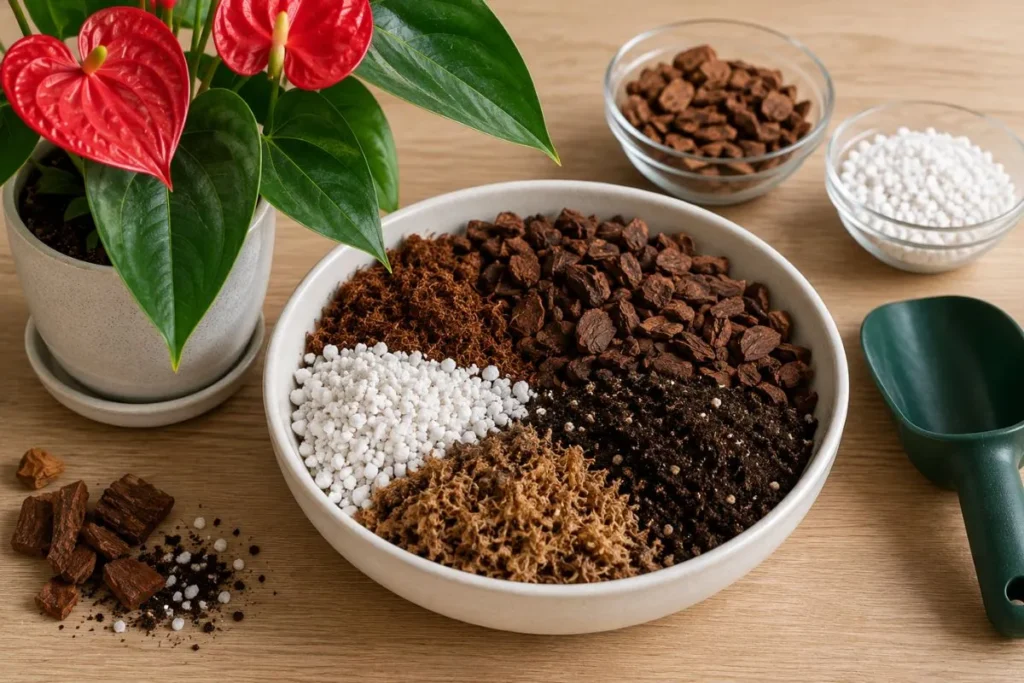
A well-balanced soil mix should also be rich in organic matter and provide plenty of air pockets around the roots. This helps prevent waterlogging, reduces the risk of anthurium root rot, and encourages faster, healthier growth.
Heavy soils that remain wet for long periods should always be avoided because they can suffocate the roots and increase the chances of fungal diseases.
If you’re wondering how do you care for an anthurium plant indoors, starting with the right soil is one of the easiest ways to keep your plant healthy.
DIY Anthurium Soil Mix
If you enjoy making your own potting mix, creating a homemade anthurium soil mix is both simple and cost-effective.
A popular combination includes orchid bark, perlite, peat moss, and coco coir. Orchid bark creates air pockets around the roots, while perlite improves drainage and prevents the soil from becoming compact. Peat moss or coco coir helps retain just enough moisture without making the soil soggy.
This type of mix closely mimics the natural growing conditions of anthuriums, allowing the roots to breathe while maintaining the moisture they need.
If you don’t want to prepare your own mix, you can also use a high-quality indoor tropical plant mix and improve its drainage by adding extra perlite or orchid bark.
Using the right soil mixture is an important step in how do you care for an anthurium plant because healthy roots are the foundation of a healthy plant.
Choosing the Right Pot
Choosing the right container is another important part of how do you care for an anthurium plant.
The best pot for anthurium is one with drainage holes at the bottom. Proper drainage allows excess water to escape, reducing the risk of root rot and keeping the root system healthy.
Pot size also matters. A pot that’s only slightly larger than the current root ball is usually the best choice. An oversized pot can hold too much moisture, causing the soil to stay wet for longer than necessary.
When choosing between materials, plastic pots retain moisture for a longer period, making them suitable for dry indoor environments. Terracotta pots are more porous and allow moisture to evaporate faster, making them a good option if you tend to overwater your plants.
As your anthurium grows, check the roots every couple of years. If they begin circling the inside of the pot or growing through the drainage holes, it’s probably time to repot into a slightly larger container.
Learning how do you care for an anthurium plant isn’t just about watering and feeding. The right soil and the right pot create the ideal environment for strong roots, healthy foliage, and continuous flowering. By choosing a loose, well-draining anthurium soil mix and a pot with proper drainage, you’ll give your plant the best possible start and enjoy healthier growth for years to come.
Frequently Asked Questions (FAQs)
How Do You Care for an Anthurium Plant Indoors?
If you’re wondering how do you care for an anthurium plant indoors, place it in bright, indirect light, use a well-draining soil mix, water only when the top inch of soil feels dry, and maintain humidity levels above 60%. Keeping the temperature between 65°F and 80°F (18°C to 27°C) will also help your anthurium grow healthy leaves and produce long-lasting blooms.
How Do You Care for an Anthurium Plant at Home?
Learning how do you care for an anthurium plant at home is simple. Keep the plant in a warm room with indirect sunlight, water it properly, feed it with a balanced fertilizer during the growing season, and repot it every two to three years. Regular care and consistent growing conditions are the keys to keeping your anthurium healthy.
How Often Should You Water an Anthurium Plant?
If you’re asking how often should you water an anthurium plant, the answer depends on your home’s temperature and humidity. In general, water the plant when the top 1 to 2 inches of soil become dry. During spring and summer, this is usually about once a week, while watering is less frequent during winter.
What Is the Best Soil for Anthurium Plants?
The best soil for anthurium plants is a loose, airy, and well-draining mix. A combination of orchid bark, perlite, peat moss, and coco coir works well because it allows the roots to breathe while retaining just enough moisture for healthy growth.
How Much Sunlight Does an Anthurium Need?
If you’re learning how do you care for an anthurium plant, providing the right light is essential. Anthuriums grow best in bright, indirect sunlight. Too much direct sunlight can scorch the leaves, while too little light may slow growth and reduce flowering.
Why Are My Anthurium Leaves Turning Yellow?
Yellow leaves are often caused by overwatering, poor drainage, or insufficient light. In some cases, nutrient deficiencies or natural aging can also cause leaves to turn yellow. Checking your watering routine and ensuring the plant is growing in well-draining soil usually helps solve the problem.
How Do You Keep an Anthurium Plant Blooming?
If you want to know how to keep an anthurium plant blooming, provide bright indirect light, maintain high humidity, fertilize every four to six weeks during the growing season, and avoid sudden temperature changes. Healthy growing conditions encourage your plant to produce flowers more consistently.
How Do You Revive a Dying Anthurium Plant?
If you’re wondering how do you revive a dying anthurium plant, first identify the cause of the problem. Check for overwatering, root rot, poor lighting, or pest infestations. Remove damaged leaves and roots if necessary, improve the growing conditions, and follow a consistent care routine. Most anthuriums recover well once their basic needs are met.
How Do You Propagate an Anthurium Plant?
The easiest way to propagate an anthurium plant is by division during repotting. Carefully separate healthy sections of the root ball, making sure each division has roots and leaves. Plant each section in fresh, well-draining soil and keep it lightly moist until new growth appears.
How Long Do Anthurium Plants Live Indoors?
With proper care, anthuriums are long-lived houseplants. If you consistently follow the best practices for how do you care for an anthurium plant, your plant can live for 5 to 10 years or even longer. Regular watering, occasional repotting, proper lighting, and routine maintenance will help it stay healthy and continue producing beautiful flowers for many years.
Conclusion
By now, you should have a clear answer to the question, how do you care for an anthurium plant. Although these tropical houseplants may seem delicate at first, they’re surprisingly easy to grow when you provide the right environment. Bright indirect light, proper watering, well-draining soil, high humidity, and regular feeding are the foundation of healthy anthurium plant care.
As you’ve learned throughout this guide, successful anthurium maintenance isn’t about following complicated gardening techniques. Instead, it’s about understanding your plant’s basic needs and maintaining a consistent care routine. Paying attention to the lighting, watering only when the soil begins to dry, using the right potting mix, and keeping humidity levels high will help your anthurium stay healthy and continue producing vibrant blooms.
If you’ve been wondering how do you care for an anthurium plant indoors, remember that small adjustments can make a big difference. Choosing the right location, avoiding overwatering, fertilizing during the growing season, and repotting when necessary will encourage stronger roots, healthier leaves, and more frequent flowers.
Whether you’re a beginner or an experienced plant owner, learning how to care for an anthurium plant doesn’t have to be difficult. With a little patience and regular attention, your anthurium can become one of the most rewarding indoor plants in your home.
Now that you know how do you care for an anthurium plant, you’re ready to grow a thriving tropical plant that adds color, beauty, and freshness to your indoor space for many years to come.

Plant Nest Blog’s author is passionate about plants, gardening, and sustainable living. Through research and practical experience, they share helpful plant care tips, gardening guides, and easy solutions to help readers grow healthier plants and create greener spaces.