
Spider plants are known for being easy to grow, but choosing the right pot can be a little confusing. Do spider plants like to be root bound, or does keeping them in a crowded container actually hurt their growth? If your plant has thick roots pushing against the pot, you might wonder whether it’s happy or simply running out of space.

The good news is that spider plants can tolerate slightly crowded roots and often grow well in smaller containers. However, there is a difference between being comfortably snug and becoming severely root bound.
Understanding that difference will help you choose the right pot, encourage healthy leaves, and keep your spider plant thriving indoors.
Do Spider Plants Like to Be Root Bound?
Yes, spider plants can tolerate being slightly root bound. In fact, they often grow perfectly well when their roots have filled much of the available space in their container. Unlike some houseplants that need frequent repotting, spider plants don’t mind staying in the same pot for a while.
Their thick, fleshy roots naturally store water and nutrients. As the plant grows, these roots can become crowded and fill the container. This doesn’t automatically mean something is wrong.
However, spider plants don’t need to be root bound to stay healthy. A little extra room helps their roots expand and allows the plant to continue growing.
The important thing is to recognize when your plant has moved beyond comfortable root crowding. If roots are tightly circling the pot, growing through drainage holes, or pushing the plant upward, it’s probably time for a larger container.
Why Spider Plants Can Grow Well in Smaller Pots
Spider plants are naturally adaptable, which is one reason they make such popular houseplants. They can grow in relatively small containers without needing constant attention.
There are a few reasons they handle limited root space so well.
Their Roots Store Water
Spider plants develop thick, fleshy roots that help store water. These roots act as small reserves, allowing the plant to handle occasional dry periods.
Because of this storage ability, spider plants can adapt to conditions where the roots have limited room. However, this doesn’t mean you should let the soil stay dry for too long.
They Don’t Need Constant Repotting
Unlike fast-growing plants that quickly outgrow their containers, spider plants can remain in the same pot for an extended period.
If your plant has healthy green leaves, produces new growth, and dries out at a reasonable rate, there may be no reason to repot it immediately.
Smaller Pots Can Help Manage Soil Moisture
A smaller container can make it easier to avoid keeping too much soil wet around the roots.

However, the pot must still have drainage holes. A container that is too small can dry out quickly, especially during hot summer weather or when placed near a sunny window.
Signs Your Spider Plant Has Become Too Root Bound
A crowded root system isn’t always a problem, but certain changes suggest your plant needs more space.
Watch for these signs before deciding to repot.
Roots Growing Through Drainage Holes
One of the easiest signs to notice is roots emerging from the bottom of the container.
A few roots coming through the drainage holes aren’t necessarily a concern. But when several thick roots are visible, the plant may have filled most of its available space.
Roots Pushing the Plant Out of Its Pot
Sometimes, a spider plant becomes so crowded that its root system pushes the entire plant upward.
You might notice that the base sits higher than before or that the plant looks unstable in its container.
This is a stronger indication that the roots need additional room.
Soil Dries Out Too Quickly
Does your spider plant need watering much more frequently than it used to?
When roots take up most of the container, there may be very little soil left to hold moisture. As a result, the pot can dry out faster than expected.
Before increasing your watering schedule, check the soil and root system. Frequent watering without checking moisture can lead to other problems.
Slow Growth and Smaller Leaves
A spider plant that has stopped producing new leaves or develops unusually small growth may be experiencing limited root space.

Keep in mind that slow growth can also happen because of low light, seasonal changes, or poor watering habits. Check the overall growing conditions before assuming the pot is responsible.
Thick Roots Circling Around the Container
If you gently remove the plant from its pot, you may notice roots tightly wrapping around the outside of the soil.
A few circling roots are normal. However, a dense mass of roots with very little visible soil suggests the plant has become severely root bound.
Should You Keep Spider Plants Slightly Root Bound?
Keeping a spider plant slightly root bound is generally fine if the plant looks healthy and continues growing.
There is no need to rush into repotting simply because you can see a few roots around the soil or through the drainage holes.
A slightly crowded container can be perfectly suitable for a mature spider plant. However, don’t intentionally restrict its roots just to encourage growth or produce baby plants.
The better approach is to observe how your plant responds.
If it produces fresh leaves, maintains its color, and doesn’t dry out unusually quickly, you can usually leave it alone.
On the other hand, if watering becomes difficult or the roots are tightly packed, giving the plant more room is a sensible choice.
What Size Pot Is Best for a Spider Plant?
Choosing the right container matters more than choosing a particularly large one.
Spider plants don’t need oversized pots. In fact, placing a small plant in a very large container can create watering problems because the extra soil may remain wet for too long.
A good rule is to select a pot approximately 1–2 inches wider in diameter than the current container when repotting.
For example, if your spider plant is growing in a 6-inch pot, an 8-inch pot may be a suitable next step.
Consider these factors when selecting a container:
Choose a Pot With Drainage Holes
Always choose a container with drainage holes at the bottom. Spider plants dislike constantly wet soil, and poor drainage increases the risk of root rot.
Terracotta pots can be a good option because their porous material allows moisture to evaporate through the sides. Plastic pots also work well, but the soil may stay moist longer.
Avoid Oversized Containers
A pot that’s much larger than the root ball holds more soil than the plant can use efficiently.
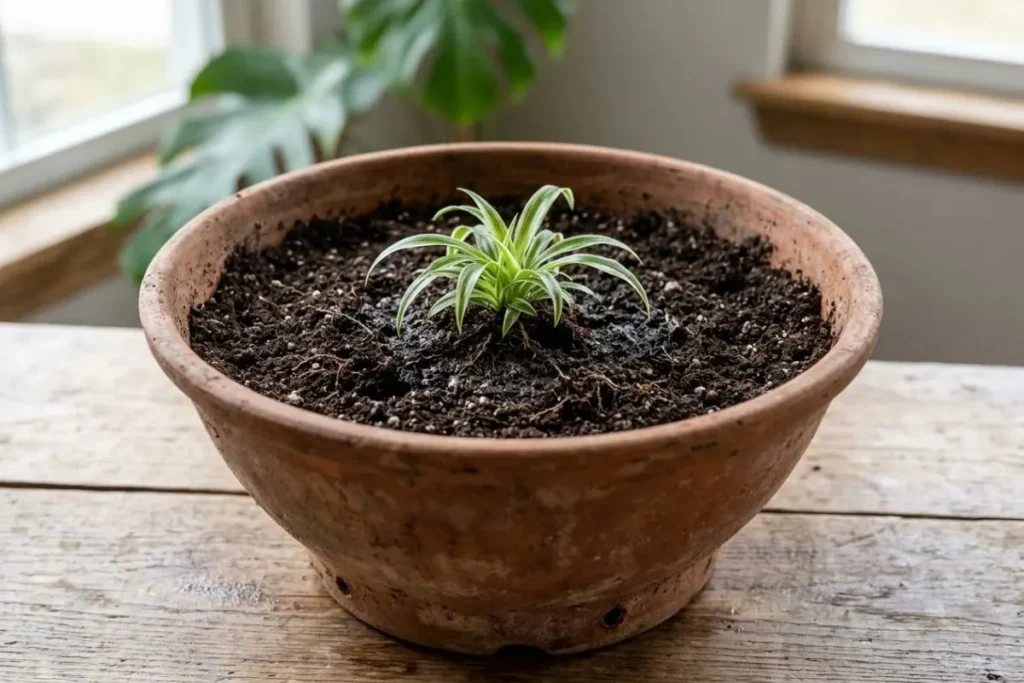
This can make it harder to judge when watering is necessary. Instead, increase the pot size gradually as the root system grows.
Consider the Plant’s Root Structure
Spider plants develop thick roots that can take up more room than you might expect from their leafy appearance.
When choosing a container, consider the width and depth of the root system rather than judging by the leaves alone.
How to Repot a Root-Bound Spider Plant
If your spider plant has clearly outgrown its container, repotting is relatively simple. You don’t need special gardening equipment or complicated techniques.
Follow these steps to give your plant a comfortable new home.
Choose a Slightly Larger Pot
Select a container that’s around 1–2 inches wider than the existing one.
Make sure it has drainage holes and is large enough to accommodate the roots without leaving excessive empty space.
Prepare Fresh Potting Mix
Use a well-draining indoor potting mix.
You can improve drainage by mixing standard potting soil with perlite. This creates a lighter growing medium that allows excess water to move away from the roots.
Avoid heavy garden soil because it can become compacted inside containers.
Carefully Remove the Plant
Hold the base of your spider plant gently and slide it out of its old container.
If the roots are tightly packed, squeeze the sides of a flexible plastic pot or gently tap the bottom to loosen the root ball.
Avoid pulling the plant forcefully by its leaves.
Loosen the Crowded Roots
Gently loosen the outer roots with your fingers.
If you notice a few damaged, dead, or mushy roots, remove them using clean scissors.

Healthy spider plant roots are generally firm and fleshy. Avoid cutting healthy roots unnecessarily.
Place It in the New Container
Add a little fresh potting mix to the bottom of the new pot.
Position your spider plant so the base sits at approximately the same depth as before. Fill the remaining space around the root ball with fresh soil.
Don’t bury the crown or pack the soil too tightly.
Water and Let It Adjust
Water the plant thoroughly until excess water drains from the bottom.
Allow the extra water to drain completely, then place the plant somewhere with bright, indirect light.
Give it time to adjust before making additional changes to its growing conditions.
Do Spider Plants Produce More Babies When Root Bound?
Spider plants are famous for producing small plantlets, often called spiderettes, that hang from long stems.
You may have heard that keeping a spider plant root bound encourages it to produce more babies.
There is some truth behind the idea that mature, established plants growing comfortably in their containers can produce plenty of spiderettes. However, being root bound is not a guaranteed way to increase baby production.
Flowering and spiderette production depend on several factors, including plant maturity, light, and general growing conditions.
If you want more spider plant babies, focus on providing:
- Bright, indirect sunlight.
- Consistent watering without waterlogging.
- Healthy, well-draining soil.
- Suitable temperatures.
- Enough time for the plant to mature.
A healthy, established plant is more likely to produce attractive spiderettes than one struggling with severely crowded roots.
How Often Should You Repot a Spider Plant?
Spider plants don’t follow a strict repotting schedule.
Some plants can stay in the same container for several years, while others may need repotting sooner depending on their growth rate and growing conditions.
Instead of repotting every year automatically, check the root system and overall plant health.

Spring is generally a convenient time for repotting because indoor plants are entering their active growing season.
However, if your spider plant is severely root bound or showing signs of stress, you don’t need to wait for spring.
A simple inspection every few months can help you decide whether the current pot is still suitable.
Common Mistakes to Avoid When Growing Spider Plants in Small Pots
Small containers can work well, but a few common mistakes can make growing spider plants more difficult.
Choosing a Pot Without Drainage
Even a healthy spider plant can develop root problems when excess water has nowhere to go.
Always use a pot with drainage holes, and empty any standing water from the saucer.
Repotting Too Frequently
Some plant owners repot their spider plants as soon as they notice roots appearing near the surface.
This isn’t necessary. A few visible roots don’t mean the plant is unhealthy.
Wait until the root system is genuinely crowded or the plant shows signs that it needs more room.
Using a Pot That’s Too Large
Moving a small spider plant into a huge container can cause the soil to stay wet for longer than necessary.
Choose a slightly larger pot rather than jumping several sizes at once.
Overwatering a Crowded Plant
A crowded root system doesn’t mean your spider plant needs extra water.
Always check the soil before watering. If the upper portion feels dry, water thoroughly and let the excess drain away.
Ignoring Root Rot
Thick spider plant roots can store water, but they aren’t immune to rot.
Soft, mushy, dark roots and an unpleasant smell can indicate a problem. Remove damaged roots and repot into fresh, well-draining soil if necessary.
FAQ About Spider Plants and Root Bound Conditions
Do spider plants prefer being root bound?
Spider plants tolerate slightly crowded roots and can grow happily in smaller containers. However, they don’t need to be root bound to remain healthy.
Do spider plants need to be root bound to produce babies?
No. A spider plant doesn’t need to become root bound to produce spiderettes. Good light, maturity, and healthy growing conditions are more important.
Are spider plants happy in small pots?
Yes. Spider plants can grow well in relatively small pots as long as their roots have enough room, the soil drains properly, and the plant receives suitable care.
Should spider plants be slightly root bound?
A little root crowding is usually harmless. However, you shouldn’t deliberately keep a plant severely root bound because restricted roots can affect water absorption and overall growth.
Do spider plants grow well in crowded pots?
They can tolerate crowded pots, but extremely tight root systems can eventually limit growth. Repot when roots fill the container and the plant starts showing signs of stress.
Can I leave my spider plant in the same pot for years?
Yes, provided the plant remains healthy and the container still supports good growth. Check the roots occasionally to make sure they haven’t completely filled the pot.
Do spider plants like deep or shallow pots?
Spider plants generally do well in containers that comfortably accommodate their thick roots. A moderately deep pot with good drainage is usually suitable, but an excessively deep container isn’t necessary.
Why are my spider plant roots coming out of the bottom?
This usually means the roots have reached the drainage holes. A few roots are normal, but a dense network of roots may indicate that your plant needs a slightly larger container.
Will a spider plant stop growing if it becomes root bound?
Severe root crowding can slow growth because the plant has less room for its roots to expand. However, slow growth can also result from insufficient light, watering problems, or seasonal changes.
Is it better to repot spider plants in spring?
Spring is a good time because plants generally begin growing more actively. However, you can repot a severely crowded or struggling spider plant at another time if necessary.
Conclusion:
Spider plants are surprisingly comfortable in smaller containers, and a little root crowding usually isn’t something to worry about. You don’t have to repot yours every time you notice a root near the drainage hole.
The key is knowing when comfortable crowding becomes a problem. If your plant continues producing healthy leaves, maintains its color, and responds well to watering, its current pot may be perfectly fine.
Give it a slightly larger container when the roots become tightly packed, use fresh well-draining soil, and avoid overwatering. With these simple adjustments, your spider plant can continue growing beautifully without unnecessary repotting.

Plant Nest Blog’s author is passionate about plants, gardening, and sustainable living. Through research and practical experience, they share helpful plant care tips, gardening guides, and easy solutions to help readers grow healthier plants and create greener spaces.