
Have you noticed your spider plant developing brown leaf tips, growing slowly, or producing fewer baby plants than before? The problem might not be your watering routine.
Sometimes, the real issue is the spider plant soil you’re using. The wrong potting mix can hold too much water, suffocate roots, and make it difficult for your plant to absorb the nutrients it needs.

Spider plants are relatively easy to grow, but they still need the right growing environment. A loose, well-draining soil mix helps their roots breathe while keeping enough moisture for healthy growth.
In this guide, you’ll learn how to choose the best potting soil, make a homemade soil mix, recognize common soil problems, and keep your spider plant thriving indoors.
What Type of Soil Do Spider Plants Need?
Spider plants (Chlorophytum comosum) grow best in loose, well-draining, nutrient-rich soil. Their roots need moisture, but they don’t like sitting in soggy conditions for long periods.
A good potting mix should hold some water without becoming compacted. It should also allow excess moisture to drain through the bottom of the container.
The ideal soil should provide good drainage, proper airflow, moderate moisture retention, and a light texture. It should also contain enough nutrients to support healthy leaf and root development.
Regular garden soil isn’t the best choice for indoor spider plants. It can become too dense in a container and may introduce pests or unwanted organisms. A quality indoor potting mix is a much better starting point.
Spider Plant Soil: The Best Potting Mix Recipe
If you want healthy roots and fresh green leaves, choosing the right soil ingredients makes a real difference. You don’t need an expensive specialty product. A simple combination of common potting materials works well.
Here is an easy soil recipe you can prepare at home.
The Ideal Spider Plant Soil Mix
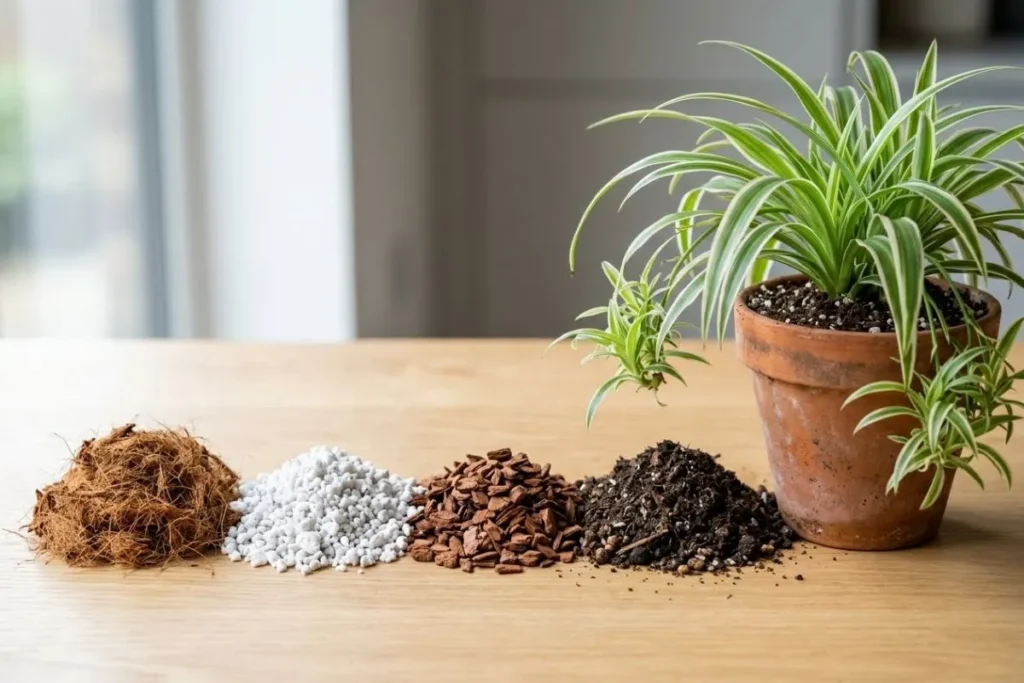
For a balanced homemade mixture, combine two parts indoor potting mix, one part perlite, and one part orchid bark.
| Ingredient | Amount | Purpose |
| Indoor potting mix | 2 parts | Provides a growing base and retains moisture |
| Perlite | 1 part | Improves drainage and airflow |
| Orchid bark | 1 part | Creates air spaces and improves soil structure |
Mix everything thoroughly before adding it to your plant’s container.
This combination creates a loose growing medium that drains well without drying out too quickly.
Why These Ingredients Work
Indoor Potting Mix
A quality indoor potting mix provides the basic structure your spider plant needs. It usually contains materials such as peat moss, coco coir, compost, or processed bark. It holds moisture and provides a suitable environment for root development.
Perlite
Perlite consists of lightweight, expanded volcanic material. It creates small air spaces in the growing medium and helps excess water drain away. It’s particularly useful if your home environment is humid or you sometimes overwater your plants.
Orchid Bark
Orchid bark adds structure and prevents the mixture from becoming too compact. Its larger pieces create spaces that allow air to move around the roots. Choose small-grade orchid bark rather than very large chunks so the ingredients blend evenly.
Can You Make a Simpler Soil Mix?
Absolutely. If you don’t have orchid bark, you can still prepare a suitable mixture. Combine two parts indoor potting soil with one part perlite. This simple recipe works well for many indoor spider plants.
The most important thing is to avoid a heavy, compacted growing medium.
Best Potting Soil for Spider Plants: What to Look For
Walking through a garden center can be confusing because there are so many potting soil options. Some bags are designed for vegetables, while others are made for succulents, orchids, or tropical houseplants.
For spider plants, look for a general-purpose indoor potting mix with good drainage and a light texture.
All-Purpose Indoor Potting Mix
A standard indoor potting mix is one of the easiest choices. It provides moisture retention and a suitable growing base.
However, some commercial mixes hold more water than spider plants need. Adding perlite can improve their drainage.
Houseplant Potting Mix
Houseplant mixes are another good option because they’re generally designed for container-grown plants. Choose a mix that feels loose rather than dense. Check the ingredients and look for materials that support aeration.
Peat-Free Potting Mix
Peat-free mixes often use coco coir, wood fiber, compost, or bark. These can work well for spider plants, provided the finished mixture drains properly and doesn’t stay waterlogged.

Coco coir can retain considerable moisture, so adding perlite may be helpful.
Succulent and Cactus Mix
Succulent mixes usually drain faster than standard houseplant soil. You can use one for spider plants, but some formulas dry out too quickly or contain too much coarse material.
If you choose this option, consider blending it with regular indoor potting mix to improve moisture retention.
Which Soil Should You Choose?
For most indoor growers, a quality houseplant potting mix amended with perlite is a practical starting point.
You don’t need a special product labeled specifically for spider plants. Focus on the ingredients, texture, and drainage instead of the marketing on the bag.
How to Make Homemade Soil for Spider Plants
Making your own potting mix gives you more control over moisture retention, drainage, and soil texture. It can also help you adjust the mixture to your growing conditions.
Gather Your Ingredients
Start with a clean container or mixing tub. You’ll need indoor potting soil, perlite, and optionally some fine orchid bark. Make sure the materials are suitable for indoor container gardening.
Measure the Ingredients
Use the same container to measure each ingredient. For example, use two cups of potting mix, one cup of perlite, and one cup of orchid bark. You can increase or decrease the quantity while keeping the same proportions.
Combine Everything
Mix the ingredients until the perlite and bark are evenly distributed. Break up large clumps of potting soil, but avoid crushing the bark into tiny pieces.
Check the Moisture Level
Pick up a handful of the mixture and gently squeeze it. It should feel slightly moist but not release water. When you open your hand, the mixture should loosen rather than remain a dense, sticky ball.

Fill Your Plant Container
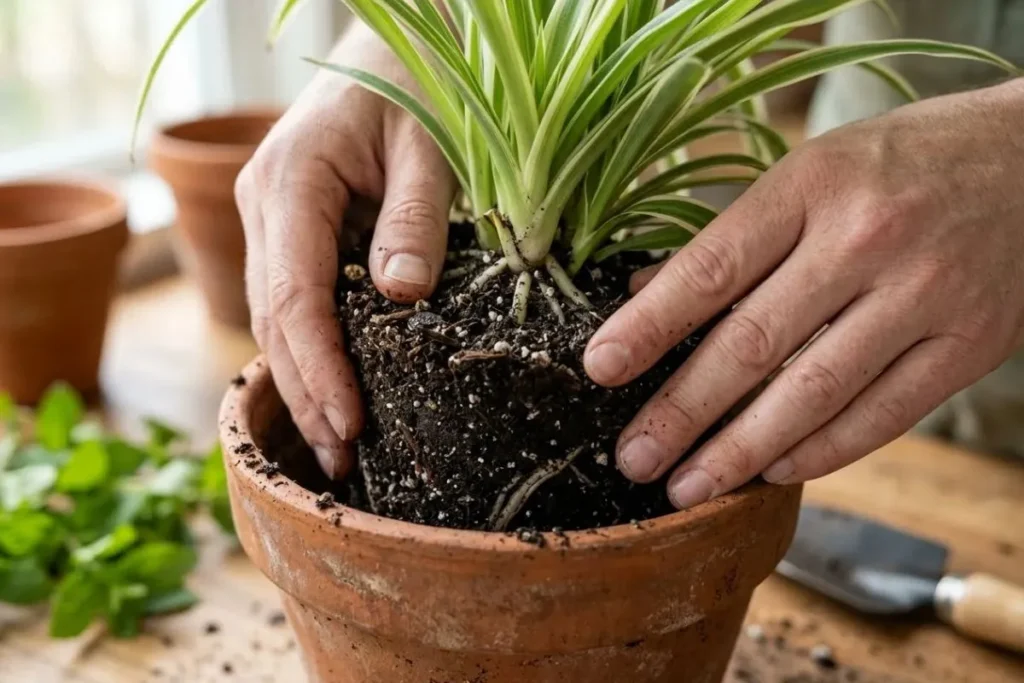
Add enough soil to cover the bottom of the pot. Position your spider plant in the center and gently spread the roots. Fill around the root system without pressing the soil too firmly.
Leave a little space below the rim so you can water without spilling.
What Is the Best Soil pH for Spider Plants?
Spider plants generally prefer slightly acidic to neutral soil. A pH range of approximately 6.0 to 7.0 is a reasonable target for a typical indoor potting mix.
You don’t need to test the pH every time you repot your plant. Most quality commercial houseplant mixes are suitable without additional adjustments.
Avoid adding lime, sulfur, or other pH-changing materials unless a soil test shows a genuine need. Excessive adjustments can create more problems than they solve.
How to Choose the Right Pot for Your Soil Mix
Even excellent soil won’t perform properly in a container without drainage. The pot and growing medium work together. A suitable container helps excess water escape, while the soil maintains the moisture your plant needs.
Choose a Pot With Drainage Holes
Always select a container with drainage holes at the bottom. Without them, excess water can collect around the roots and increase the risk of root rot.
If you prefer decorative pots without holes, keep your spider plant in a smaller nursery pot with drainage and place it inside the decorative container.
Remove the inner pot when watering and let it drain before putting it back.
Avoid Oversized Containers
A pot that’s much larger than the root system can hold more wet soil than the plant can use. This means the growing medium may stay damp for too long.
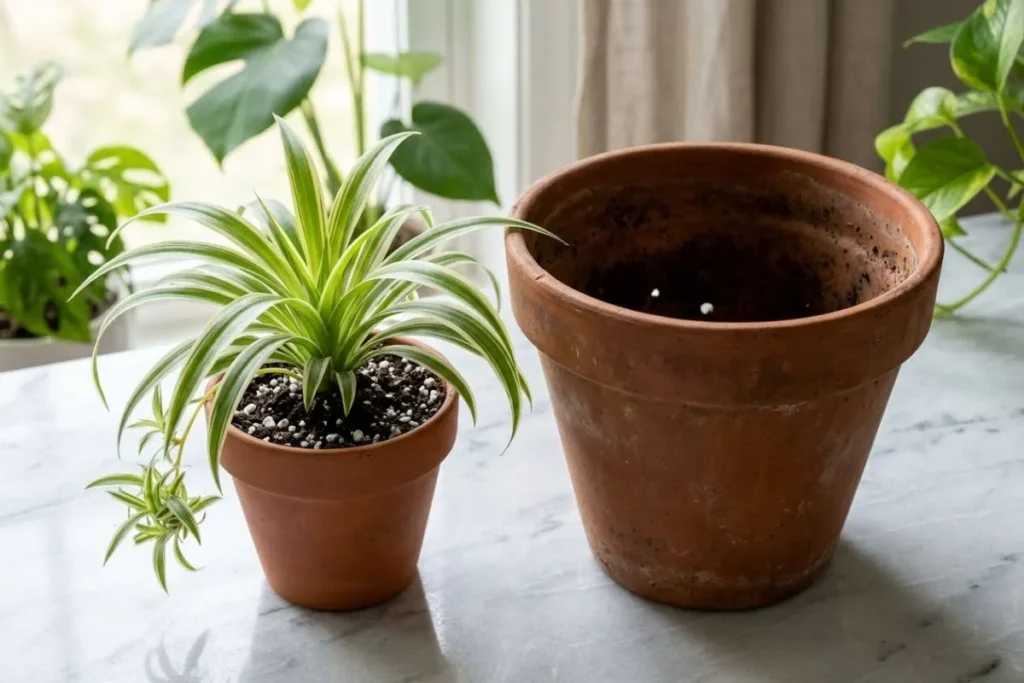
Choose a container only slightly larger than the existing root ball when repotting.
Terracotta or Plastic: Which Is Better?
Both materials can work well.
Terracotta is porous, allowing moisture to evaporate through the pot’s sides. It’s useful if your soil tends to stay wet.
Plastic pots retain moisture longer. They may be more convenient if your home is warm and your potting mix dries quickly.
Choose according to your watering habits and indoor conditions.
How to Water Spider Plants Based on Soil Conditions
The right soil mix makes watering easier, but it doesn’t eliminate the need to check moisture.
Spider plants prefer lightly moist soil during active growth. However, they don’t need constantly wet roots.
Before watering, check the upper layer of the potting mix. If the top inch or two feels dry, it’s generally a good time to water. You can also lift the container to judge its weight. A pot that feels noticeably lighter often indicates that the soil has dried.
When watering, pour slowly until excess water flows from the drainage holes. Empty the saucer afterward.
During winter, spider plants often grow more slowly and use less water. You may need to water less frequently.
Don’t follow a rigid watering schedule. Indoor temperature, humidity, light, pot size, and soil composition all affect how quickly the mixture dries.
Signs Your Spider Plant Is Growing in the Wrong Soil
Your plant often shows visible signs when the growing medium isn’t suitable. Recognizing these symptoms early can help you correct the problem before the roots become seriously damaged.
Brown Leaf Tips
Brown tips can develop for several reasons, including inconsistent watering, mineral buildup, dry air, and fertilizer problems.
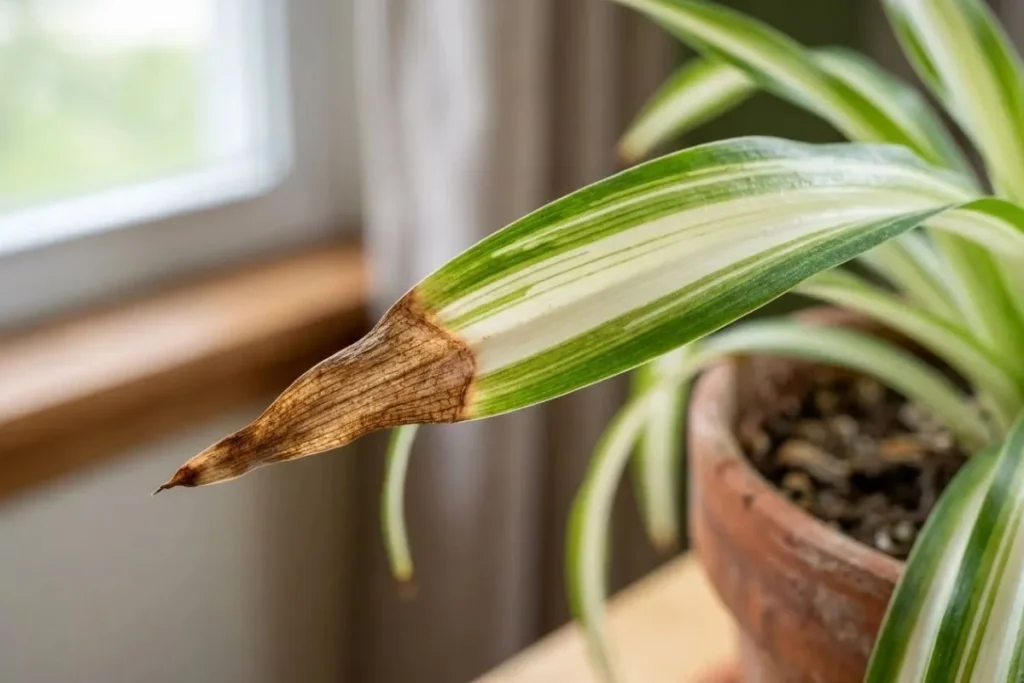
However, poorly draining soil can contribute to root stress. Check whether the potting mix remains wet for several days. If it does, consider improving the drainage.
Yellowing Leaves
Yellow leaves can indicate overwatering, root problems, insufficient light, or natural aging.
If several leaves turn yellow while the soil stays constantly wet, inspect the roots and growing medium.
Slow Growth
Spider plants may grow slowly when their roots don’t receive enough oxygen or when growing conditions are unsuitable.
Dense soil can restrict root development and make it harder for the plant to use available water and nutrients.
Mushy or Dark Roots
Healthy spider plant roots are generally firm and may appear white, cream, or pale tan. Soft, dark, unpleasant-smelling roots can indicate root rot.
If you notice these signs, remove the plant from its pot, trim damaged roots with clean scissors, and repot it in fresh, well-draining soil.
Common Soil Mistakes to Avoid When Growing Spider Plants
Even an easy-care houseplant can struggle when its growing medium isn’t suitable.
Using Garden Soil Indoors
Garden soil is often too heavy for containers. It may compact over time and restrict airflow. Use a quality indoor potting mix instead.
Adding Too Much Perlite
Perlite improves aeration, but using excessive amounts can make the mixture dry too quickly. Maintain a balanced ratio so the soil holds some moisture.
Pressing the Soil Too Tightly
Compact soil reduces the air spaces around roots. After repotting, gently settle the mixture around the plant rather than pressing it down firmly.
Ignoring Drainage Holes
A drainage-friendly mixture cannot solve the problem of a pot that traps excess water. Always provide a way for extra moisture to escape.
Adding Too Much Fertilizer
More fertilizer doesn’t automatically mean faster growth. Excess fertilizer can cause salt buildup in the potting medium and contribute to brown leaf tips.
Use a balanced houseplant fertilizer according to its label during active growth. Avoid fertilizing a stressed plant until its growing conditions improve.
When Should You Replace Spider Plant Soil?
You don’t need to replace the soil every few months. However, potting mix gradually breaks down and may lose its original structure.
Consider repotting when the soil becomes dense and compacted, water takes too long to drain, the mixture dries unusually slowly, or roots begin growing through drainage holes. You should also replace the growing medium if you discover root rot or another serious soil problem.
For many indoor spider plants, checking the growing medium every year is a sensible habit.
Repotting is often best during spring or early summer when the plant is actively growing.
If the plant is healthy and the soil still drains well, there’s no need to disturb it just because a year has passed.
Frequently Asked Questions About Spider Plant Soil
Can I use regular potting soil for spider plants?
Yes. Regular indoor potting soil can work well, provided it drains properly. If it feels heavy or holds too much water, mix in perlite to improve aeration.
Do spider plants need well-draining soil?
Yes. Spider plants need soil that drains excess water while retaining enough moisture for their roots. Poor drainage can increase the risk of root rot.
Is Miracle-Gro potting mix good for spider plants?
A general-purpose indoor potting mix from Miracle-Gro can be suitable. Check the ingredients and drainage properties. Adding perlite may help if the mixture retains too much moisture.
Can spider plants grow in coco coir?
Yes. Coco coir can be part of a spider plant soil mix because it retains moisture. However, it should be combined with materials such as perlite or bark to improve airflow and drainage.
Can I use cactus soil for spider plants?
Yes, but it depends on the formula. Some cactus mixes drain very quickly and may not hold enough moisture. Blending cactus soil with regular indoor potting mix can create a more balanced growing medium.
Do spider plants like acidic soil?
Spider plants generally grow well in slightly acidic to neutral soil. A pH around 6.0 to 7.0 is a suitable target.
Can spider plants grow in garden soil?
Garden soil isn’t recommended for indoor spider plants because it can become compacted in containers. It may also contain pests and weed seeds. Choose an indoor potting mix instead.
How often should I change the soil in my spider plant?
There isn’t a fixed replacement schedule. Check the soil annually and replace it when it becomes compacted, drains poorly, or shows signs of deterioration. Healthy plants don’t need unnecessary repotting.
Is perlite necessary for spider plants?
Perlite isn’t absolutely necessary, but it’s helpful. It improves airflow and drainage, especially when the original potting mix is dense or moisture-retentive.
Why does my spider plant soil stay wet for so long?
Possible reasons include a dense potting mix, an oversized container, insufficient drainage, low indoor temperatures, or limited light. Check the drainage holes and consider repotting into a lighter mixture if the problem continues.
Conclusion:
Healthy spider plants start with healthy roots, and the right growing medium makes a big difference. Choose a loose indoor potting mix that holds some moisture without becoming soggy.
A combination of indoor potting soil, perlite, and orchid bark provides a practical homemade option for many growing conditions. Pair it with a suitable pot, avoid overwatering, and check the soil before adding more water.
With the right balance of moisture, airflow, and drainage, your spider plant has a much better chance of producing strong roots, beautiful foliage, and plenty of healthy new growth.

Plant Nest Blog’s author is passionate about plants, gardening, and sustainable living. Through research and practical experience, they share helpful plant care tips, gardening guides, and easy solutions to help readers grow healthier plants and create greener spaces.