It’s common to think that any attractive pot can keep a houseplant healthy, but the right container makes a real difference. Best Indoor Plant Pots with drainage help excess water escape, giving plant roots a better chance to stay healthy.
Whether you’re growing a snake plant, pothos, succulent, or tropical houseplant, choosing a pot with proper drainage holes can help prevent waterlogged soil and reduce the risk of root rot.
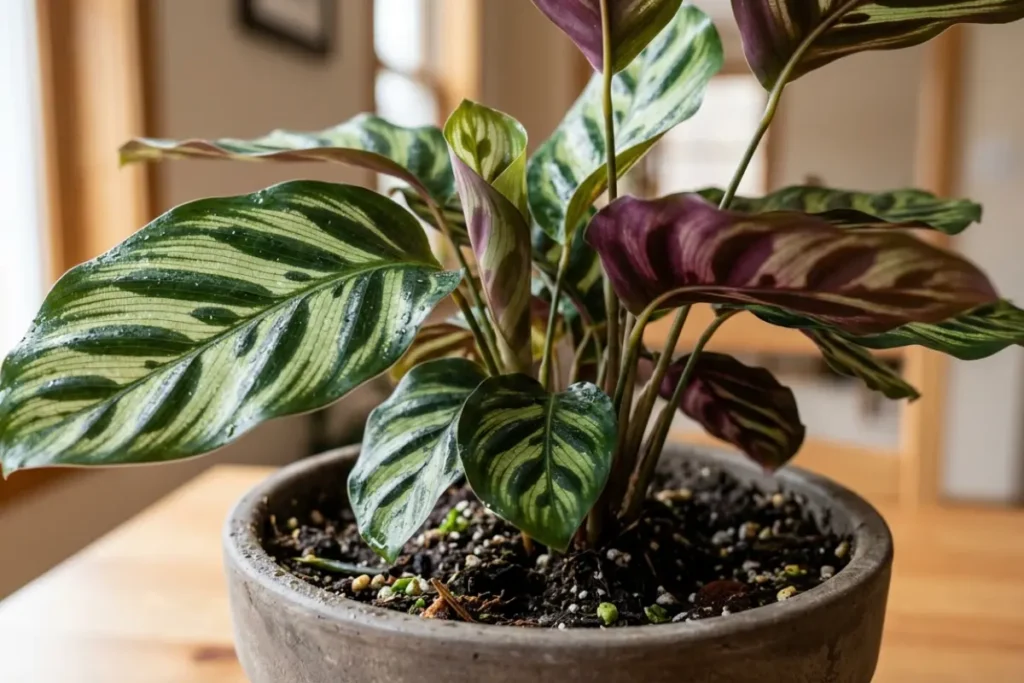
The good news is that you don’t have to sacrifice style for healthy plant growth. From decorative ceramic planters to affordable plastic containers and classic terracotta pots, there are plenty of indoor pots with drainage holes to suit every home. In this guide, you’ll discover how to choose the right pot size, material, and design, along with practical tips for watering your plants and keeping your indoor space clean with suitable saucers or drip trays.
Why Indoor Plants Need Pots With Drainage Holes
Indoor plants need proper drainage to grow healthy and strong. Without drainage holes, excess water can collect at the bottom of the pot and damage the roots. The right pot helps maintain suitable soil moisture and improves root health.
Let’s explore why drainage holes are essential for thriving indoor plants.
How Drainage Holes Protect Plant Roots
A beautiful plant can struggle even when you water it regularly and give it enough light. One common reason is poor drainage. When water has nowhere to go, it can collect around the roots and leave the potting mix too wet for too long.
Indoor plant pots with drainage holes allow extra water to flow out through the bottom, helping maintain a healthier balance of moisture and air around the roots.
Drainage holes are especially useful for houseplants that don’t like sitting in soggy soil, such as snake plants and succulents. They also make watering easier because you can see when excess water starts leaving the pot.
For the best results, use a suitable potting mix and a container with enough drainage openings. If your decorative planter has no holes, consider placing a removable nursery pot with drainage inside it.
Preventing Overwatering and Root Rot
Overwatering doesn’t always mean giving a plant too much water at once. Sometimes, the real problem is that the soil stays wet for too long. Without proper drainage, moisture can build up around the roots and limit the air they need.
This can damage the roots and increase the risk of root rot, which may cause yellowing leaves, weak growth, and a generally unhealthy appearance.
Choosing indoor plant pots with drainage to prevent root rot is a practical first step, but the pot alone cannot solve every watering problem. Check the soil before watering again, and make sure excess water doesn’t remain in the saucer.
Plants such as succulents usually need their soil to dry more thoroughly between waterings, while peace lilies prefer more consistent moisture. Adjust your watering habits to the plant’s needs instead of following the same schedule for every houseplant.
Improving Soil Aeration and Root Health
Plant roots need both water and oxygen to grow well. When potting mix remains saturated, air spaces in the soil fill with water, making it harder for roots to get enough oxygen. Proper drainage helps excess moisture escape and allows air to return to the growing medium as the soil dries.

For healthier indoor plants, pair a pot with drainage holes with a potting mix suited to the species. A loose, well-draining mix works well for many succulents, while tropical houseplants may need a mix that retains some moisture without becoming waterlogged.
Avoid packing the soil too tightly, and make sure the drainage holes remain open. These simple steps help create better growing conditions and support steady root development.
Are Indoor Plant Pots Without Drainage Holes a Good Idea?
Indoor plant pots without drainage holes can look stylish, but they require more careful watering. Because excess water cannot escape, it’s easier for moisture to collect at the bottom of the container, even when the soil surface looks dry.
This can make it harder to judge when your plant needs water, especially if you’re still learning how to care for houseplants.
If you love a decorative pot without drainage, you don’t necessarily have to avoid it. Use it as an outer planter and keep your plant in a separate nursery pot with drainage holes.
Remove the inner pot when watering, allow excess water to drain fully, and empty any water collected in the decorative container before putting it back. This approach gives you the appearance of a stylish indoor planter while making watering and root care much easier.
Best Indoor Plant Pots With Drainage for Every Home
Many people believe that stylish indoor plant pots are always better for houseplants, but appearance alone doesn’t make a pot a good choice. The best indoor plant pots with drainage combine the right material, size, and design to suit your plant’s needs.
Whether you’re looking for affordable containers, modern decorative planters, or pots for specific houseplants, choosing the right option can make indoor gardening easier and more enjoyable.
Ceramic Indoor Plant Pots With Drainage
Ceramic indoor plant pots with drainage are a popular choice for people who want attractive containers without sacrificing practicality. They come in different colors, shapes, and finishes, so you can easily find a style that suits your home.
Glazed ceramic pots are especially popular for living rooms, bedrooms, and office spaces because they offer a smooth, polished appearance.
Before buying, make sure the ceramic pot has a drainage hole at the bottom. Some decorative designs don’t include one, so check the product details carefully. Ceramic pots are also heavier than many plastic alternatives, which can help support taller plants.
They’re suitable for many houseplants, including pothos and peace lilies, when paired with the right potting mix.
Terracotta Pots for Indoor Plants
Terracotta pots are a timeless option for indoor gardening. Made from porous clay, these pots allow moisture to evaporate through their sides, which can help the potting mix dry faster. This feature makes them especially useful for plants that don’t like sitting in consistently wet soil.
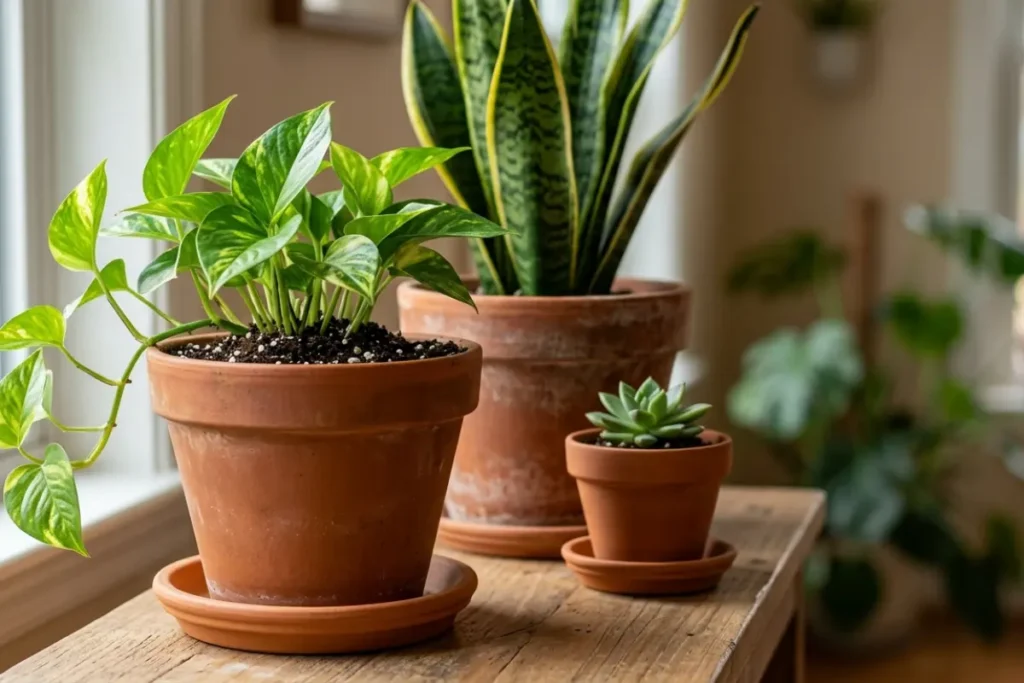
Terracotta pots for indoor plants work well for succulents and snake plants, which generally prefer their soil to dry between waterings. However, they may require more frequent watering than plastic or glazed ceramic pots.
Choose a terracotta container with a drainage hole and a suitable saucer to catch excess water.
Plastic Indoor Plant Pots With Drainage
Plastic indoor plant pots with drainage are lightweight, affordable, and easy to maintain. They’re available in different sizes and are often used as nursery pots for growing and repotting houseplants. Since they’re easy to move, they’re also practical for people who regularly rearrange their plants.
Plastic pots generally retain moisture longer than unglazed terracotta pots. This can be useful for some plants, but it also means you should check the soil before watering again.
Look for plastic containers with clear drainage openings rather than relying on appearance alone. If you prefer a more decorative look, place the plastic pot inside a stylish outer planter.
Modern Indoor Plant Pots With Drainage
Modern indoor plant pots with drainage are ideal for anyone who wants to create a neat, contemporary plant display. Popular designs include matte white planters, charcoal-gray pots, geometric shapes, and neutral colors that work well with different furniture styles.
When shopping for modern indoor planters, look for designs that combine attractive finishes with practical drainage holes. Matching pots in different sizes can create a coordinated look across shelves, tables, and floor spaces. You can also choose a simple pot with a separate drip tray to protect indoor surfaces from excess water.
Best for: Contemporary homes, minimalist interiors, and coordinated plant arrangements.
Small Indoor Plant Pots With Drainage
Small indoor plant pots with drainage are useful when you’re working with limited space. They fit easily on desks, windowsills, bookshelves, and kitchen counters. These containers are also suitable for young plants, small cuttings, and compact houseplants.

Choose a pot that gives the roots enough room without surrounding them with too much unused soil. An oversized container may retain more moisture than a small root system can use. If you’re buying pots online, check the inside diameter and depth instead of judging the size from product photos alone.
Large Indoor Plant Pots With Drainage Holes
Large indoor plant pots with drainage holes are designed for established houseplants that need more room for root growth. They’re popular for monstera plants, mature palms, and other large indoor greenery that can become a focal point in a room.
Size matters when choosing a large planter. Moving a small plant into a container that’s much too large can leave excess potting mix wet for longer than necessary. Measure the existing pot and select a slightly larger container when repotting is needed.
A sturdy base and a suitably sized drainage tray are also useful for heavier plants.
Indoor Plant Pots With Drainage Holes and Saucers
Indoor plant pots with drainage holes and saucers offer a convenient solution for collecting excess water. The pot allows water to escape, while the saucer catches runoff and helps protect floors, shelves, and furniture.
These pots are available in plastic, ceramic, terracotta, and other materials. Choose a saucer that’s wide enough to catch water without making the pot unstable. After watering, empty any standing water instead of leaving the pot sitting in it for long periods.
Best Indoor Plant Pots With Drainage for Different Houseplants
Many people believe that one type of pot works perfectly for every houseplant, but different plants have different root systems and watering needs. The best indoor plant pots with drainage should match the plant’s size, growth habits, and preferred soil moisture.
Choosing the right container for your monstera, snake plant, pothos, peace lily, or succulent can make everyday care easier and help your plants grow well indoors.
Best Pots for Monstera Plants
Monstera plants are known for their large, split leaves and impressive tropical appearance. As they grow, they may need a sturdy pot that provides enough room for their roots and supports their upright growth.
Choose an indoor plant pot with drainage holes that’s slightly larger than the current root ball rather than moving your monstera into an oversized container.
Plastic pots are practical because they’re lightweight and retain moisture, while ceramic pots offer extra weight and a decorative finish. A pot with a stable base is particularly useful for a mature monstera with large leaves. Pair it with a chunky, well-aerated potting mix that allows excess water to escape.
If your monstera has a climbing growth habit, consider a container that can accommodate a moss pole or another suitable support. This gives the plant room to develop while keeping the arrangement neat.
Best choice: A sturdy ceramic or plastic pot with drainage holes, suitable root space, and a stable base.
Best Pots for Snake Plants
Snake plants are popular indoor plants because they’re adaptable and relatively easy to care for. However, their roots can suffer if they remain in wet soil for too long. The best pots for snake plants provide good drainage and allow the potting mix to dry between waterings.
Terracotta pots are a useful option because their porous sides help moisture evaporate. Plastic and glazed ceramic pots can also work well, provided you use an appropriate potting mix and avoid overwatering. Since snake plants often grow upright, choose a pot with a stable base that won’t tip over easily.
Avoid selecting a container that’s much larger than the root system. Too much unused soil can stay wet longer, especially when the plant is growing slowly. A pot designed for indoor succulents can also be suitable if it has adequate drainage and enough space for the roots.
Best choice: A terracotta pot or another sturdy container with drainage holes and a well-draining potting mix.
Best Pots for Pothos Plants
Pothos plants are popular for their trailing vines and ability to grow in a variety of indoor settings. You can place them on bookshelves, desks, plant stands, or hanging displays. The best indoor plant pots with drainage for pothos should provide enough room for the roots without holding excessive moisture.
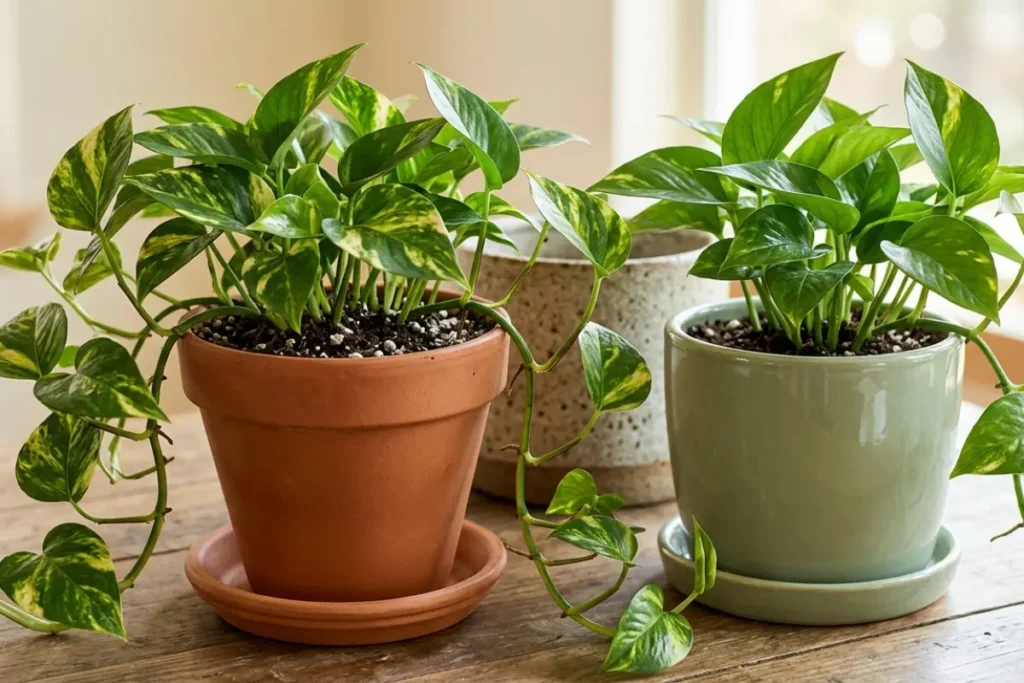
Plastic pots are a practical choice because they are lightweight and easy to move. Ceramic planters work well when you want a more decorative look, especially for a living room or office. If your pothos has long trailing vines, choose a pot that sits securely on its shelf or use a hanging planter designed to support the plant safely.
Pothos generally prefer soil that dries somewhat between waterings. Check the moisture level before watering again, and make sure the drainage openings aren’t blocked by compacted soil.
Best Pots for Peace Lilies
Peace lilies are known for their green leaves and elegant white flowers. Unlike succulents, they generally prefer more consistent moisture, but their roots still need access to air. A suitable pot helps balance these needs by allowing excess water to drain without drying the soil too quickly.
Plastic and glazed ceramic containers are good options because they tend to retain moisture longer than unglazed terracotta. Choose a pot that’s only moderately larger than the root ball and has drainage holes at the bottom. A matching saucer can collect excess water and protect your indoor surfaces.
Avoid leaving the peace lily sitting in standing water after watering. Although it prefers moist soil, permanently saturated conditions can damage its roots. Check the soil regularly and water when the upper portion begins to dry, adjusting your routine to the room’s temperature and light.
Best Pots for Spider Plants
Spider plants are easy-to-grow houseplants with long, arching leaves and small plantlets that can develop on trailing stems. Their roots can become crowded as the plant matures, so choosing the right container helps support healthy growth.
Plastic indoor plant pots with drainage are a convenient option because they’re lightweight and easy to handle. Ceramic pots also work well if you prefer a decorative container. Select a pot with enough room for the root system, but avoid moving the plant into an unnecessarily large container.
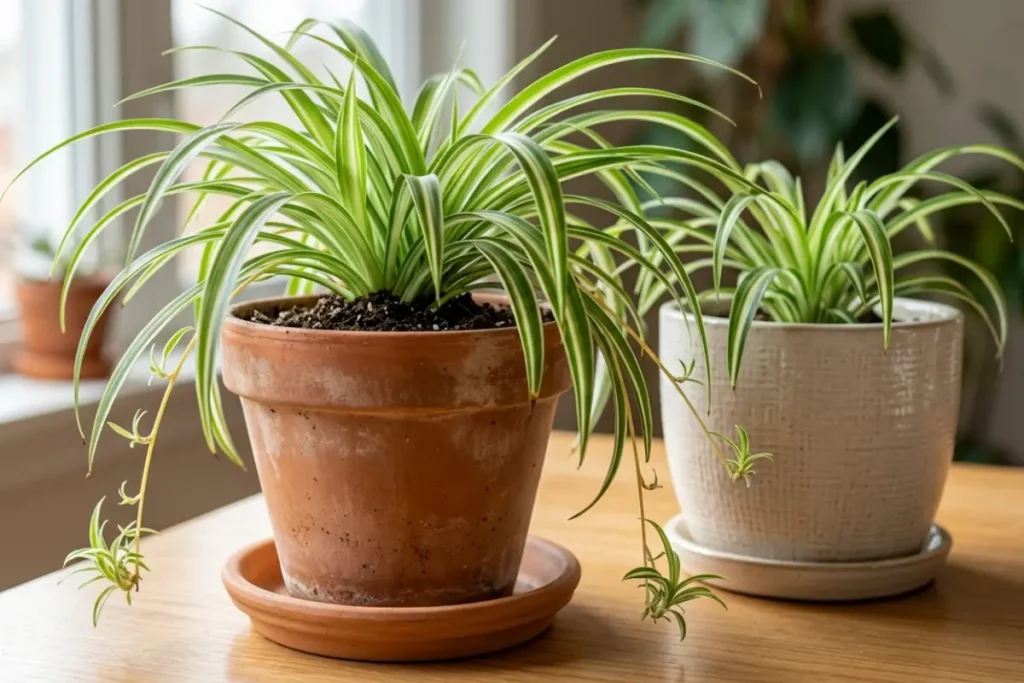
Spider plants can produce new plantlets that you may want to propagate in separate pots. Small indoor plant pots with drainage are useful for growing these young plants once they’re ready for their own containers.
Make sure each new pot has enough depth for the roots and openings that allow excess water to escape.
Best choice: A plastic or ceramic pot with drainage holes and enough space for the plant’s growing roots.
Frequently Asked Questions About Indoor Plant Pots With Drainage
Do Indoor Plant Pots Need Drainage Holes?
Yes, drainage holes are helpful for most indoor plants because they allow excess water to escape instead of collecting at the bottom of the pot. This makes it easier to manage soil moisture and reduces the risk of waterlogged roots.
For most beginners, indoor plant pots with drainage holes are the simplest option. If you prefer a decorative pot without holes, use it as an outer planter and keep your plant in a removable nursery pot with drainage.
What Are the Best Indoor Plant Pots With Drainage Holes?
The best pot depends on your plant, budget, and home decor. Terracotta pots are useful for succulents and other plants that prefer faster soil drying. Plastic pots are affordable and lightweight, while glazed ceramic pots offer a decorative finish and tend to retain moisture longer.
Before buying, check the pot’s size, drainage openings, and compatibility with your plant’s watering needs. A suitable potting mix is just as important as the container itself.
Are Ceramic Indoor Plant Pots With Drainage Better Than Plastic Pots?
Neither material is always better. Ceramic pots are often heavier and more decorative, making them a good choice for living rooms and other visible spaces. Plastic pots are lightweight, affordable, and easy to move.
Glazed ceramic and plastic containers can both retain moisture relatively well, although the exact drying rate depends on several factors. Choose ceramic for appearance and stability or plastic for convenience and lower cost. In both cases, proper drainage and suitable watering matter most.
Do Indoor Plant Pots With Drainage Need Saucers?
A saucer isn’t essential for plant growth, but it’s useful for protecting floors, shelves, and furniture from excess water. It collects runoff that escapes through the drainage holes when you water your plant.
Choose a saucer that’s wide enough to catch the water without making the pot unstable. Remember to empty it after watering so the plant doesn’t sit in standing water for long periods.
What Size Pot Should I Choose for My Houseplant?
Choose a pot that gives your plant’s roots enough room to grow without leaving too much unused soil around them. When repotting, moving up by roughly 1–2 inches in diameter is a useful starting point for many small to medium houseplants, although the ideal size depends on the plant and its root system.
A pot that’s too large may hold excess moisture for longer than the roots can use. Check the plant’s roots and current container before choosing a replacement.
Can I Use Indoor Plant Pots Without Drainage Holes?
Yes, but they require more careful watering because excess water cannot escape through the bottom. This makes it easier for moisture to accumulate around the roots, particularly when the potting mix retains water.
A practical alternative is to place your plant in a nursery pot with drainage holes and set that pot inside a decorative container. Remove the inner pot for watering, allow excess water to drain completely, and empty the outer pot before returning the plant.
Are Terracotta Pots Good for Indoor Plants?
Yes, terracotta pots are useful for many indoor plants, especially those that prefer their soil to dry between waterings. Their porous clay walls allow moisture to evaporate, which can help the potting mix dry faster.
However, terracotta may require more frequent watering than plastic or glazed ceramic pots. It’s a popular choice for succulents and snake plants, but moisture-loving plants may do better in a container that retains water for longer.
Do Self-Watering Indoor Plant Pots Need Drainage Holes?
It depends on the design. Many self-watering pots use a reservoir and a wicking system to supply moisture to the roots. Some have separate drainage features, while others rely on a specific internal design to manage water.
Read the manufacturer’s instructions before using one. Check the reservoir regularly and make sure the system suits your plant’s watering needs. Self-watering pots aren’t automatically suitable for every houseplant, especially those that prefer their soil to dry thoroughly between waterings.
Should I Put Rocks at the Bottom of Indoor Plant Pots?
No, adding rocks or gravel to the bottom of a pot doesn’t automatically improve drainage. A gravel layer can create a zone where water collects above the boundary between the soil and the larger particles, leaving the roots sitting in wetter soil than expected.
Instead, choose a pot with drainage holes and fill it with a potting mix suited to your plant. If the drainage holes are large enough for the mix to escape, use a suitable mesh or pot liner that keeps the openings clear without blocking water flow.
How Do I Prevent Root Rot in Indoor Plant Pots?
Start by choosing a pot with drainage holes and using a potting mix that suits your plant. Check the soil before watering again, and avoid leaving the pot sitting in water collected in a saucer or outer container.
Also, choose an appropriate pot size. Excess soil can remain wet for longer, especially when the plant has a small root system. If you notice yellowing leaves, soft roots, or an unpleasant smell from the soil, inspect the plant and its growing conditions to identify the problem.
How Often Should I Water Plants in Pots With Drainage Holes?
There’s no single watering schedule that works for every houseplant. Some plants need water more frequently, while others prefer the soil to dry between waterings. The right frequency depends on the plant species, pot size, material, potting mix, light, and temperature.
Check the soil moisture before watering. When a plant needs water, water thoroughly enough to moisten the root zone and allow excess water to drain away. Empty the saucer afterward, and adjust your routine as the seasons and growing conditions change.
Which Indoor Plant Pots Are Best for Succulents?
Terracotta pots with drainage holes are a popular option for succulents because their porous walls help the soil dry more quickly. Small ceramic and plastic pots can also work when paired with a suitable succulent potting mix.
Choose a pot that fits the root system and avoid unnecessarily large containers. Since succulent varieties have different needs, consider the specific plant you’re growing when deciding on pot size and watering frequency.
How Do I Protect Furniture From Water Draining Out of Plant Pots?
Use a saucer, removable drip tray, or waterproof plant mat beneath your pot. Make sure the tray can catch the runoff and that the pot doesn’t sit in standing water for long periods.
For delicate wooden furniture, check underneath the saucer occasionally and wipe away moisture promptly. You can also water plants at a sink and return them to their usual location after excess water has drained.
Can I Drill Drainage Holes in a Plant Pot?
Yes, you can sometimes add drainage holes, but the method depends on the pot’s material. Plastic pots are usually easier to modify, while ceramic and terracotta containers can crack if drilled incorrectly.
Use a suitable drill bit and follow the appropriate safety precautions for the material. If the pot is valuable, fragile, or difficult to drill, using a nursery pot with drainage inside it may be the safer option.
Conclusion:
Choosing the right indoor plant pots with drainage can make caring for your houseplants much easier. Whether you’re growing a monstera, snake plant, pothos, peace lily, or succulent, the right pot helps manage soil moisture and gives the roots a suitable environment to grow.
Before buying a new pot, consider its size, material, drainage holes, and placement in your home. Terracotta is a good option for plants that prefer faster soil drying, plastic pots are lightweight and budget-friendly, and ceramic pots offer a decorative look.
If you want to protect your furniture, choose a pot with a suitable saucer or removable drip tray.
Remember, a beautiful pot is only part of healthy plant care. Use a suitable potting mix, check the soil before watering, and empty excess water from the saucer.
By matching your pot to your plant’s needs, you can create a greener, healthier indoor space without making plant care unnecessarily complicated.

Plant Nest Blog’s author is passionate about plants, gardening, and sustainable living. Through research and practical experience, they share helpful plant care tips, gardening guides, and easy solutions to help readers grow healthier plants and create greener spaces.