
So, what is the fastest growing plant on Earth? The answer is bamboo, with certain species known for exceptionally rapid growth. Some bamboo can grow close to a meter in a single day during its peak growth period.
That makes bamboo one of nature’s most remarkable examples of rapid plant growth. The exact rate depends on the species, climate, water, soil, temperature, and other growing conditions.
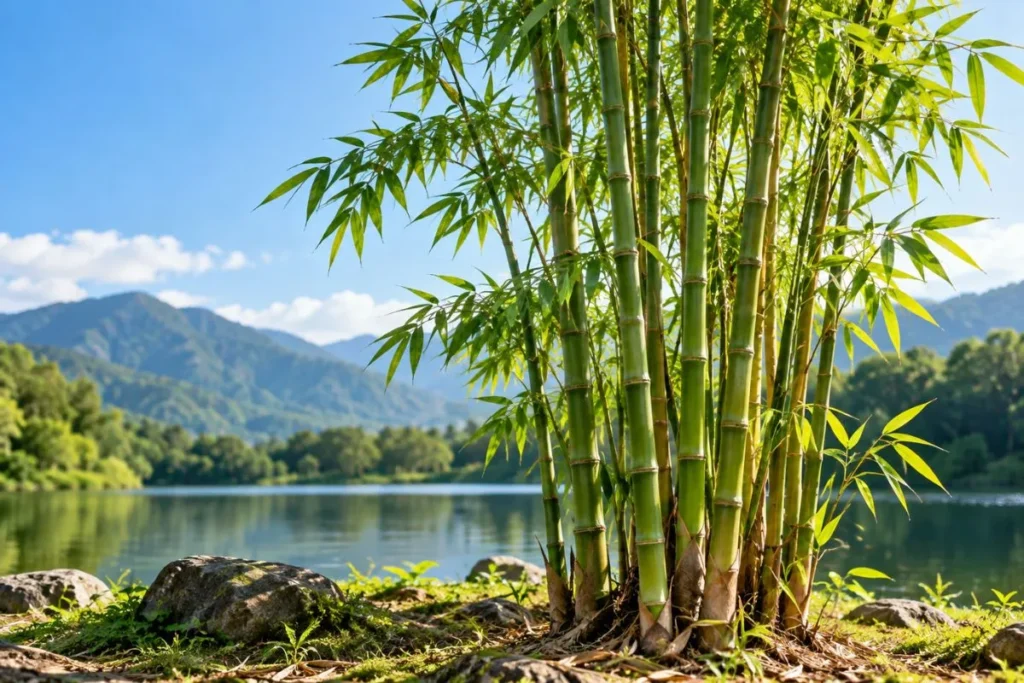
When people search for the fastest growing plant in the world, they’re usually looking for the plant with the most impressive upward growth rate. Bamboo fits that description because its new shoots can develop incredibly quickly.
However, it’s important to remember that not every bamboo plant grows at record speed. Those extraordinary numbers come from particular species growing under favorable conditions.
What Is the Fastest Growing Plant in the World?
Bamboo Holds an Extraordinary Growth Record
If you’re asking what is the fastest growing plant in the world, bamboo is the name that comes up again and again. Certain bamboo species can grow at an astonishing speed during their active growth period.
Unlike trees that slowly add height over many years, bamboo can push new shoots upward very quickly once the growing season begins.
This makes bamboo one of the most impressive rapid growing plants found on Earth. Its growth is especially remarkable because a new bamboo shoot can gain a large amount of height in a short time.
Still, the fastest growth rates are linked to particular species and favorable conditions, so you shouldn’t expect every bamboo plant in a garden to grow at the same speed.
Why Bamboo Grows Faster Than Most Plants
One reason bamboo can grow so quickly is its unique growth system. Bamboo belongs to the grass family, and many species spread through underground rhizomes. When conditions are right, these plants can send up new shoots that rapidly extend upward.
The plant already has much of its basic structure organized inside the young shoot. As the shoot develops, cells divide and expand rapidly, allowing the stem to become taller in a surprisingly short period.
This combination of bamboo growth speed, strong underground rhizomes, and favorable growing conditions helps explain why bamboo is often called the world’s fastest growing plant.
Is Bamboo Really the Fastest Growing Land Plant?
Yes, certain bamboo species are widely recognized for having an exceptional plant growth rate. However, there is an important detail: “fastest growing plant” does not mean that every bamboo species grows faster than every other plant in every situation.
Growth records depend on what scientists measure, where the plant grows, and which species they study. Some plants may grow rapidly in other ways, while bamboo is particularly famous for its vertical growth rate.
That is why terms such as fastest growing land plant and fastest growing plant species are often used when discussing bamboo.
Fastest Growing Plant vs. Fastest Growing Plant Species
There’s a small difference between these phrases that can make the topic confusing. “Fastest growing plant” is a broad description, while “fastest growing plant species” points to a specific plant that has demonstrated an unusually high growth rate.
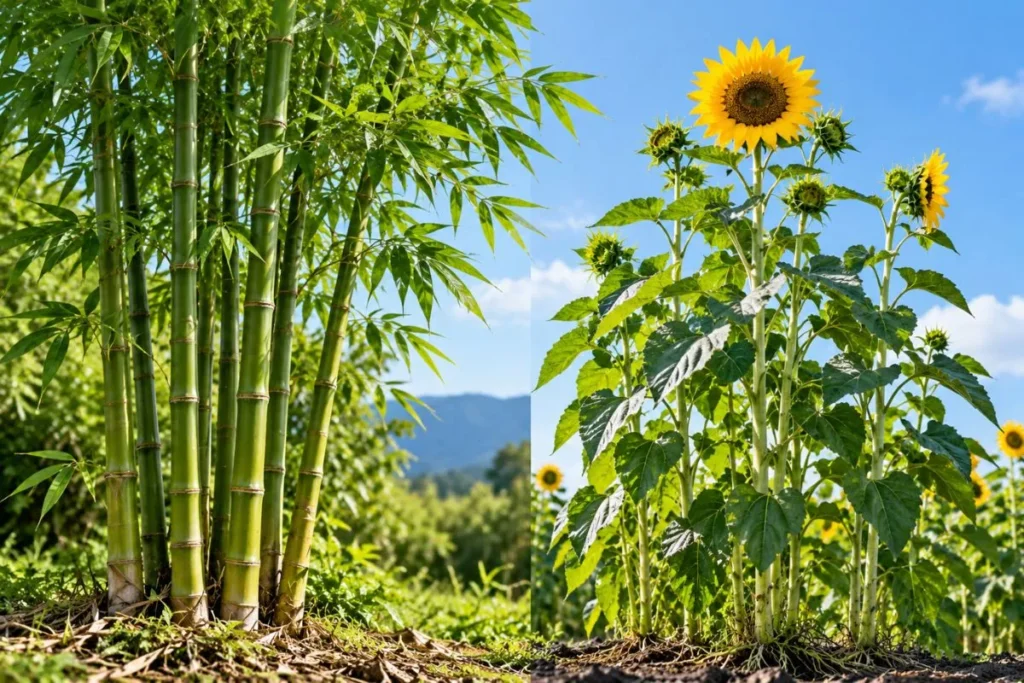
In bamboo, the species matters a lot. Some types can grow much faster than others, and environmental conditions can make a major difference. Temperature, moisture, soil quality, sunlight, and the plant’s growth stage can all influence bamboo growth rate.
Does Bamboo Grow at the Same Speed All Year?
Not at all. Bamboo does not maintain its maximum growth speed throughout the year. Its most dramatic growth happens during a concentrated period when new shoots are developing.
This is important when you see claims about bamboo growing several feet in a day. Such figures refer to exceptional growth during a particular stage, rather than saying the plant will continue gaining several feet every day for an entire year.
Understanding this difference gives you a much more accurate picture of why bamboo is considered one of nature’s fastest growing plants.
Why Is Bamboo the Fastest Growing Plant on Earth?
Bamboo Is a Grass, Not a Tree
One of the biggest surprises about the fastest growing plant on Earth is that bamboo is actually a type of grass. It may look like a tree because some species develop tall, hard, woody stems, but its growth pattern is very different from that of a typical tree.
Instead of slowly building a thick trunk over many years, bamboo produces new shoots from underground structures called rhizomes. When a new shoot appears, it can focus heavily on getting taller in a short amount of time.
This unusual growth system is one reason bamboo has such an impressive bamboo growth rate.
The Secret Is Rapid Cell Growth
So, why does bamboo grow so fast? A major part of the answer is rapid cell activity. As a bamboo shoot develops, cells divide and then expand along the growing stem. This rapid cell elongation allows the shoot to gain height much faster than most familiar plants.
Think of a bamboo shoot like a tightly packed structure waiting to expand. Once active growth begins, its cells can rapidly increase in size, pushing the stem upward. This process helps explain the incredible bamboo growth speed seen in rapidly growing species.
Research on Moso bamboo has found that rapid shoot growth involves intense cell division and cell elongation. Scientists have also identified changes in plant hormones and gene activity during this growth stage. So, bamboo’s incredible speed isn’t just a gardening myth—it has a biological explanation.
Bamboo Uses Underground Rhizomes to Produce New Shoots
Another important part of bamboo’s growth strategy is its underground rhizome system. Rhizomes are horizontal underground stems that store resources and help the plant produce new shoots.
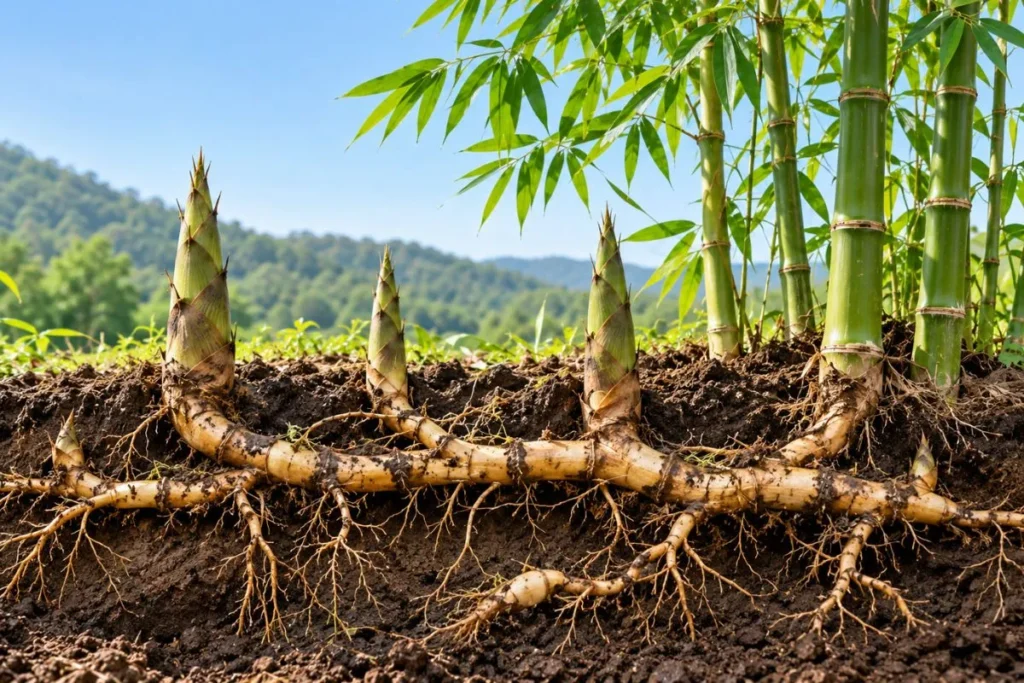
When the conditions are suitable, a rhizome can send a young bamboo shoot upward. That shoot then enters a period of rapid development. Because the underground system is already established, the plant can put considerable energy into above-ground growth.
This is also why bamboo can spread and create new stems without starting from a seed each time. Its bamboo rhizomes act as an important part of the plant’s growth and survival system.
Bamboo Shoots Are Built for Rapid Vertical Growth
A young bamboo shoot doesn’t grow upward in the same way a tree trunk develops. Bamboo stems contain repeated sections called internodes, separated by joints known as nodes. During rapid growth, these sections can extend quickly.
As each section lengthens, the entire shoot becomes taller. This gives bamboo its distinctive appearance and helps explain its remarkable bamboo culm growth.
The result can be dramatic. A bamboo shoot that looks small one day can become noticeably taller after only a short period when conditions are ideal.
Water Plays a Major Role in Bamboo Growth
Fast growth requires resources, and water is one of the most important. Bamboo needs sufficient moisture to support active cell expansion and transport water and nutrients throughout the plant.
That doesn’t mean more water always equals faster growth. Waterlogged soil can create problems for roots and rhizomes, while drought can slow shoot development. The plant needs the right balance.
This is why bamboo water requirements are closely connected to its growth potential. When moisture, temperature, and soil conditions work together, bamboo can enter a much more active growth phase.
Warm Conditions Can Support Faster Growth
Temperature also affects bamboo growth rate. Many bamboo species grow most actively when temperatures are favorable for their particular species. Cold conditions can slow biological processes, while suitable warmth can support active shoot development.
However, bamboo species don’t all have identical requirements. Tropical bamboo, temperate bamboo, and other species can respond differently to their surroundings.
So, when someone asks why bamboo grows so fast, the answer isn’t one single factor. Its growth comes from several systems working together.
Plant Hormones Help Control Rapid Growth
Plant hormones also play an important role in bamboo development. Hormones act as chemical signals that help control processes such as cell division, cell expansion, and shoot development.
During rapid bamboo growth, hormonal changes help coordinate what happens inside the developing shoot. Scientists studying Moso bamboo have found evidence that hormone-related processes are closely connected with its rapid growth phase.
In simple terms, hormones help tell the plant when and where to grow. They are part of the biological system that allows a bamboo shoot to switch into an intense period of development.
Why Doesn’t Every Plant Grow This Fast?
Bamboo has a combination of traits that makes its growth unusual. It has underground rhizomes, specialized stems, rapid cell expansion, and a growth system capable of producing large amounts of new tissue quickly.
Most plants simply don’t combine these characteristics in the same way. That’s why comparing bamboo with an ordinary garden plant can be misleading.
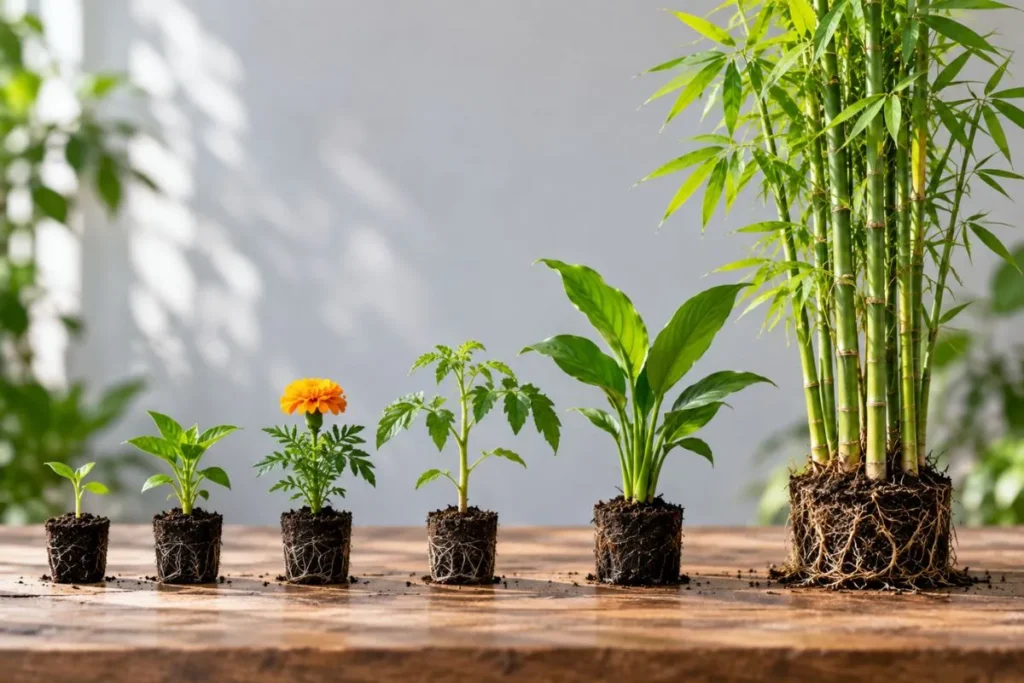
The fastest plant growth rate also depends on the species and the environment. Even within bamboo, growth can vary considerably. A plant growing in poor soil, low temperatures, or dry conditions won’t necessarily come close to the growth rates recorded under ideal circumstances.
How Fast Does the Fastest Growing Plant Actually Grow?
How Fast Does Bamboo Grow in One Day?
So, how fast does bamboo grow in one day? Under exceptional conditions, certain bamboo species can grow close to a meter in 24 hours. Some scientific measurements have recorded even higher rates during the most active stage of shoot development.
One well-studied example is Moso bamboo, which has been measured growing around 114.5 centimeters (about 45 inches) in a day during its rapid-growth phase.
Other commonly cited bamboo records are around 91 centimeters (about 36 inches) per day. These numbers show just how unusual bamboo growth can be, but they should not be treated as the everyday growth rate of every bamboo plant.
How Many Inches Can Bamboo Grow in a Day?
If you prefer inches instead of centimeters, the numbers become easier to picture. A growth rate of 91 centimeters per day works out to roughly 36 inches, or about 3 feet, in one day.
At a measured rate of 114.5 centimeters per day, the growth is roughly 45 inches in 24 hours. That’s almost 4 feet of vertical growth in a single day.
This is why searches for how many inches can bamboo grow in a day often lead to some surprising answers. The important detail is that these extreme figures apply to exceptional growth periods and particular bamboo species.
How Fast Can Bamboo Grow Per Hour?
Looking at bamboo growth by the hour makes the speed even easier to understand.
If bamboo were growing at a constant rate of 91 centimeters per day, that would average about 3.8 centimeters per hour, or roughly 1.5 inches per hour. At 114.5 centimeters per day, the average would be about 4.8 centimeters per hour, or around 1.9 inches per hour.
Of course, real plant growth doesn’t necessarily happen at a perfectly steady hourly rate. These figures are simply useful conversions of a daily growth rate. They help put the extraordinary bamboo growth speed into perspective.
How Fast Can the Fastest Growing Bamboo Grow?
The phrase fastest growing bamboo usually refers to particular species that have demonstrated exceptionally rapid shoot growth. The actual rate can change depending on temperature, moisture, soil conditions, sunlight, and the plant’s stage of development.
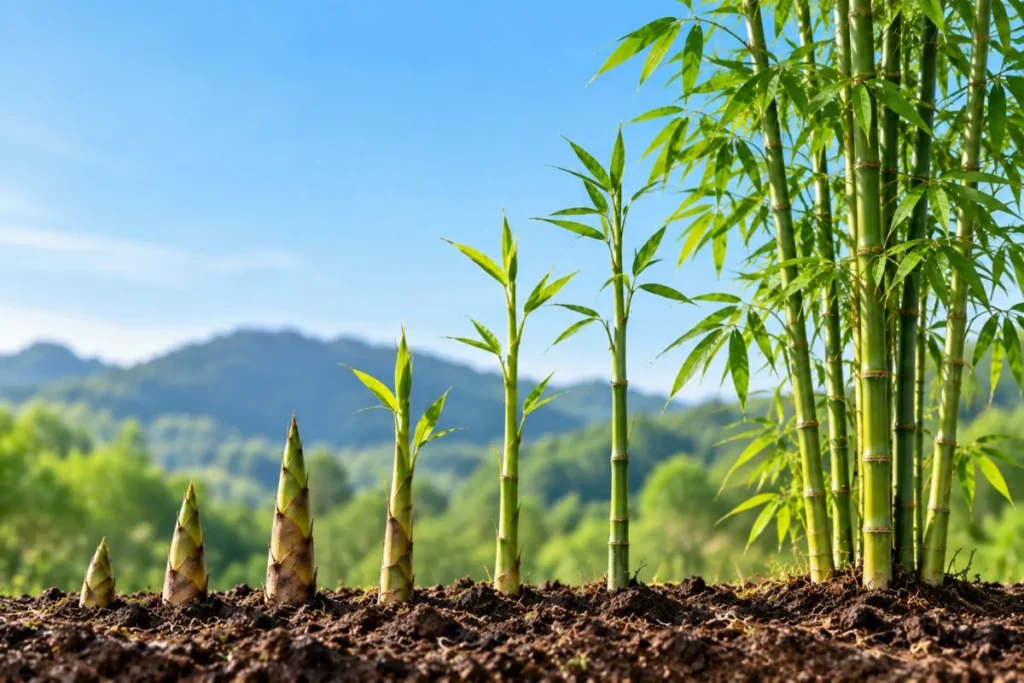
During the right growth window, a bamboo shoot can rapidly extend its existing stem sections. Once that intense phase ends, the dramatic daily increase in height slows considerably.
That’s why it’s better to think of bamboo as a plant capable of extremely fast peak growth, rather than a plant that grows several feet every day throughout its entire life.
Why Do Bamboo Growth Rates Vary So Much?
You may notice different numbers when researching the bamboo growth rate, and that can be confusing. But there isn’t one growth rate that applies to every bamboo plant. Different species and growing conditions can produce very different results.
Species Can Change Bamboo Growth
Different bamboo species have different growth potential. Some can produce shoots and new growth much faster than others. This is why one source may report a growth rate of around 35 inches per day, while another gives a higher or lower figure.
Climate Affects Growth
Temperature plays an important role in bamboo growth. When conditions are warm and suitable, bamboo can enter a more active growth period. Cooler or unsuitable conditions may slow the plant down.
Water Supports Active Growth
Bamboo needs adequate moisture during periods of active growth. When the plant receives the water it needs, new shoots can develop more actively. However, consistently waterlogged soil can create other growing problems.
Soil Provides Essential Resources
Healthy soil gives bamboo access to the water, nutrients, and support it needs for development. Poor soil conditions can limit growth even when the plant receives enough sunlight and water.
Season Influences Growth Rate
Bamboo does not grow at exactly the same speed throughout the year. It has periods of stronger growth and periods when development slows. The numbers you see online may therefore come from a specific growing season.
Plant Stage Makes a Difference
Young shoots can grow very differently from established bamboo stems. A measurement taken during rapid shoot development may look dramatically different from the average growth of an established plant.
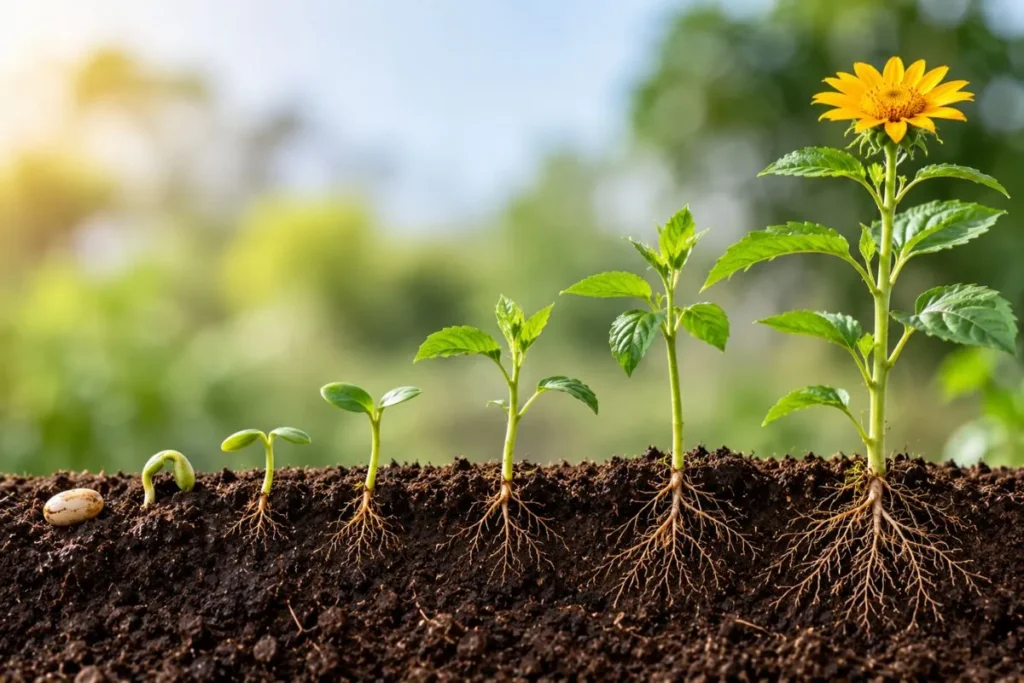
Why Bamboo Growth Numbers Can Look So Different
These factors explain why bamboo growth rate figures can vary so much. The reported measurement may come from a different species, climate, season, growing environment, or plant stage. So, instead of relying on one number, consider the conditions behind the measurement.
Does Bamboo Really Grow 3 Feet in One Day?
Yes, exceptionally fast bamboo growth can reach around 3 feet in a day, which is why this claim has become so popular. But there is a big difference between saying bamboo can reach that rate and saying all bamboo will grow that fast.
A record-level bamboo growth per day measurement represents a short period of intense development. Your garden bamboo may grow much more slowly because its species and growing conditions are different.
So, if you plant bamboo and don’t see several feet of growth the next morning, don’t worry. That doesn’t mean the plant is unhealthy. It simply means you’re not observing a record-setting growth event.
How Does Bamboo Growth Compare With Ordinary Plants?
Most familiar garden plants don’t show the same combination of rapid vertical growth and concentrated shoot development. A young bamboo shoot can gain substantial height in a short period, while many other plants spread their growth more gradually.
That’s what makes bamboo such a fascinating example of rapid plant growth. Its growth strategy is highly specialized for quickly extending new shoots when environmental conditions are favorable.
The important takeaway is simple: bamboo’s reputation as the fastest growing plant in the world comes from its extraordinary peak growth rate, not from maintaining that speed continuously.
What Is the Fastest Plant Growth Rate Ever Recorded?
There isn’t one universal number that applies to every definition of “fastest plant growth.” Scientists may measure growth differently, and different species perform differently under different conditions.
For bamboo, exceptionally rapid vertical growth has been documented at around a meter per day, with research on Moso bamboo reporting approximately 114.5 centimeters per day during its fastest growth phase.
That makes bamboo one of the clearest examples of an extraordinary plant growth rate and explains why it continues to attract so much attention from gardeners, researchers, and plant lovers.
Which Bamboo Species Grows the Fastest?
Moso Bamboo Is a Major Fast-Growing Bamboo
When people search for the fastest growing bamboo species, Moso bamboo is one of the most important names to know. Its scientific name is Phyllostachys edulis, and it is well known for producing large shoots and developing rapidly during its active growth period.
Moso bamboo is especially interesting because researchers have studied its rapid growth in detail. During its intense growth phase, new shoots can extend at an extraordinary rate. This makes Moso bamboo a useful example when explaining why bamboo has such a remarkable growth rate.
What Makes Moso Bamboo So Special?
Moso bamboo has a growth system designed for rapid development. Instead of starting from a tiny seedling every time it produces a new stem, an established plant can use its underground rhizome network to support new shoots.
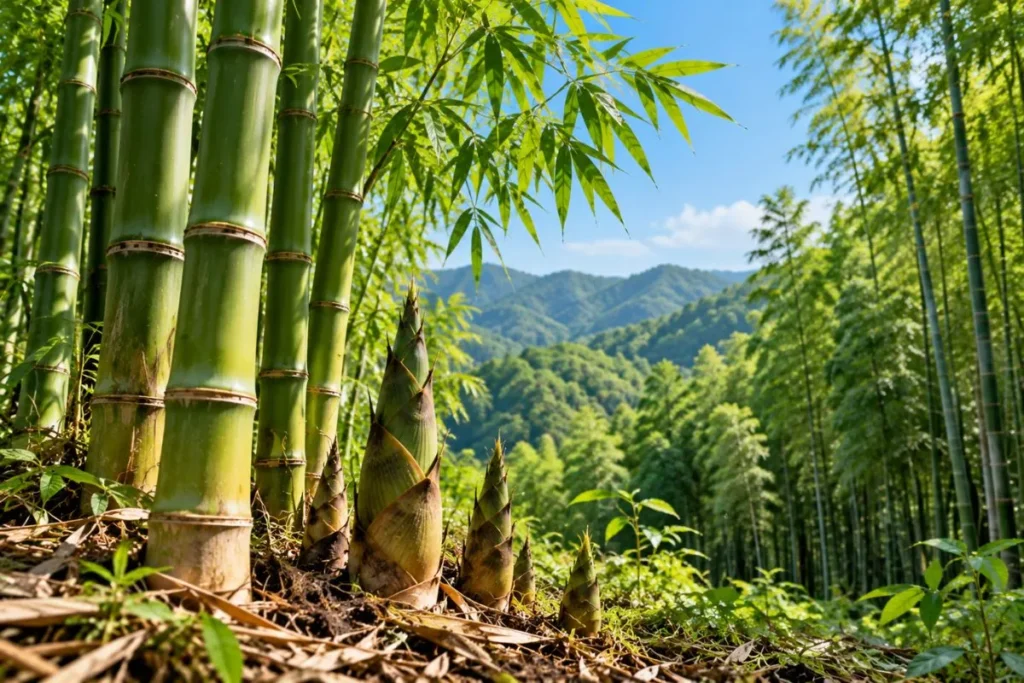
Once a shoot emerges, it can put a large amount of energy into vertical development. The stem is made up of nodes and internodes that extend as the shoot grows. This allows the plant to gain height quickly during its peak growth period.
That combination makes Moso bamboo one of the best-known examples when discussing the fastest growing plant species and the fastest growing bamboo.
How Fast Does Moso Bamboo Grow?
One reason Moso bamboo gets so much attention is its measured growth rate. Research has recorded Moso bamboo reaching approximately 114.5 centimeters of growth per day during its rapid-growth stage.
That’s roughly 45 inches in a day. However, this figure represents a particular period of exceptional growth under suitable conditions. It does not mean a Moso bamboo plant will continue growing 45 inches every day throughout the year.
This distinction matters when answering how fast can Moso bamboo grow per day. A record or research measurement shows what the plant can achieve during a specific growth phase, while everyday garden growth can be much slower.
Does Every Moso Bamboo Plant Grow This Quickly?
No. A plant’s potential and its actual growth are two different things.
Even though Moso bamboo has an impressive genetic capacity for rapid growth, its performance depends on its surroundings. Temperature, water availability, soil quality, sunlight, nutrients, and seasonal conditions can all affect Moso bamboo growth rate.
A plant growing in cool weather or poor soil may develop much more slowly than one growing in warm, favorable conditions. So, don’t use the highest recorded number as a guarantee for what you’ll see in your own garden.
Other Bamboo Species Can Also Grow Quickly
Moso bamboo isn’t the only bamboo capable of impressive growth. Bamboo contains thousands of species and varieties with different sizes, growth habits, and environmental preferences.
Some giant bamboo species can become extremely tall, while other varieties remain much shorter. Some prefer tropical climates, while others are adapted to temperate regions.
The important point is that “fastest” can change depending on the measurement. A species may be famous for its maximum daily growth, while another may be valued for reaching a particular height or producing vigorous new shoots.
Why Species Matters When Measuring Bamboo Growth
If you compare two bamboo plants, you may notice a major difference in their growth speed. That’s because bamboo growth rate isn’t a single number shared by every species.
Genetics plays a major role. Each species has its own growth pattern, mature size, rhizome behavior, and environmental preferences.
That’s why searches such as what type of bamboo grows the fastest need a little context. Instead of simply looking for the tallest bamboo, it’s better to ask which species has demonstrated the greatest rate of vertical growth under suitable conditions.
Moso Bamboo and Its Rapid Growth Phase
Moso bamboo’s most dramatic growth happens when new shoots are developing. This phase is very different from the slower periods of the plant’s life.
During active shoot development, the young culm can extend rapidly as its cells divide and elongate. Once the shoot reaches its mature height, it doesn’t continue stretching upward at the same extraordinary rate.
This explains why bamboo growth speed can appear almost unbelievable when observed during peak development but much more ordinary at other times.
Frequently Asked Questions
What Is the Fastest Growing Plant on Earth?
Certain bamboo species are widely recognized for having some of the fastest recorded vertical growth rates of any plant. Their new shoots can grow extremely quickly during a short period of active development.
The exact rate depends on the species and its growing conditions, so the record should not be treated as the normal growth rate of every bamboo plant.
What Is the Fastest Growing Plant in the World?
When people ask what is the fastest growing plant in the world, bamboo is the common answer because some species can produce remarkable daily height increases. However, “fastest” depends on how growth is measured and whether land or marine plants are being compared.
For land plants, bamboo is especially famous for its extraordinary vertical growth. That is why it is often described as the world’s fastest growing plant.
Which Bamboo Species Grows the Fastest?
Moso bamboo (Phyllostachys edulis) is one of the best-known species associated with exceptionally rapid growth. Research has recorded very high growth rates during its active shoot development.
Still, there isn’t one growth number that applies to every Moso bamboo plant. Climate, water, soil, temperature, and the plant’s growth stage can all affect its performance.
How Fast Does Bamboo Grow in One Day?
Under exceptional conditions, certain bamboo can grow close to a meter in a day. Research on Moso bamboo has recorded growth of about 114.5 centimeters in a day during its rapid growth phase.
That’s an extraordinary bamboo growth rate, but it represents a specific period of intense growth rather than a constant daily rate throughout the year.
Can Bamboo Really Grow 3 Feet in One Day?
Yes, some bamboo can reach growth rates of roughly 3 feet per day during exceptional periods. That’s where this popular bamboo fact comes from.
However, you shouldn’t expect every bamboo plant to add 3 feet overnight. The species, environment, season, and stage of growth all matter.
How Many Inches Can Bamboo Grow in a Day?
Some documented bamboo growth rates translate to roughly 36 inches per day, while certain research measurements are even higher.
For example, 114.5 centimeters is about 45 inches. These figures demonstrate the remarkable potential of bamboo but should be understood as peak growth measurements.
Why Does Bamboo Grow So Fast?
Bamboo combines several unusual growth features. Its underground rhizomes can produce new shoots, while the developing shoots undergo rapid cell division and elongation.
Its nodes and internodes also allow the stem to extend quickly. Together, these biological processes help create the remarkable bamboo growth speed that makes it one of the fastest-growing plants known.
Is Bamboo the Fastest Growing Land Plant?
Certain bamboo species are commonly recognized for exceptionally rapid vertical growth among land plants. The exact record depends on the species and how growth is measured.
So, it’s more accurate to say that bamboo contains species capable of extraordinary growth rates rather than claiming that every bamboo plant is automatically the fastest.
What Is the Fastest Growing Plant Naturally?
If you’re searching for the fastest growing plant naturally, bamboo is a strong answer because its remarkable growth occurs as part of its natural biology. It doesn’t need artificial genetic modification to have this impressive growth potential.
The actual rate still depends on natural factors such as rainfall, temperature, sunlight, soil, and seasonal conditions.
How Fast Can Moso Bamboo Grow Per Day?
Moso bamboo can experience an extremely rapid growth phase. Scientific research has measured approximately 114.5 centimeters of growth per day during this period.
That works out to around 45 inches per day, showing why Moso bamboo is so important when discussing the fastest growing bamboo species.
Conclusion:
So, what is the fastest growing plant on Earth? Bamboo is the standout answer when talking about extraordinary vertical growth, with certain species capable of remarkable growth rates during their peak development.
Moso bamboo is one of the most interesting examples. Its rapid growth comes from a combination of its rhizome system, specialized stem structure, rapid cell activity, and favorable environmental conditions. But remember, record growth doesn’t mean every bamboo plant will grow at the same speed.
The next time you see a small bamboo shoot pushing through the soil, don’t underestimate it. That little shoot can become a surprisingly tall plant in a remarkably short time. That’s what makes bamboo one of nature’s most fascinating examples of rapid plant growth.

Plant Nest Blog’s author is passionate about plants, gardening, and sustainable living. Through research and practical experience, they share helpful plant care tips, gardening guides, and easy solutions to help readers grow healthier plants and create greener spaces.