
Many people believe that once a basil plant starts wilting, turning yellow, or looking weak, it is already a lost cause. That’s not always true. If the roots and stems are still healthy, you may be able to revive a basil plant by finding the real problem and correcting it before the damage gets worse.
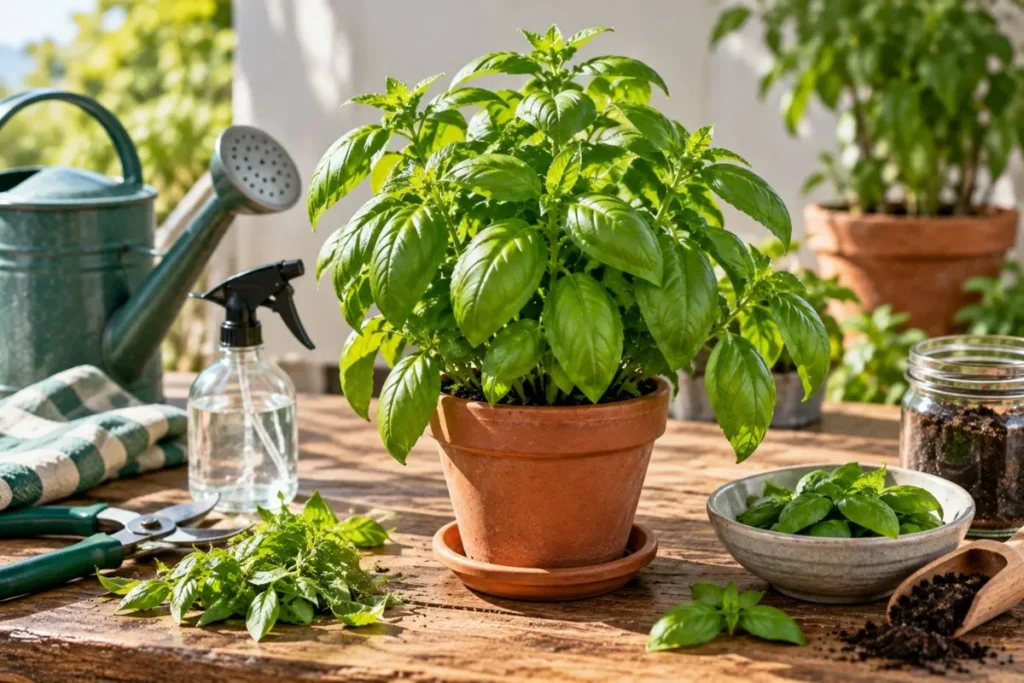
If you’re wondering how to revive a basil plant, start by looking beyond the leaves. Watering, sunlight, soil, drainage, temperature, and pests can all affect basil health.
In this guide, you’ll learn simple ways to save a dying basil plant, revive wilted basil, and help it return to healthy growth without making the problem worse.
Find Out Why Your Basil Plant Is Dying
Before you try to revive a dying basil plant, don’t assume it simply needs more water. A struggling basil plant can look similar when it has completely different problems.
Wilting may come from dry soil, while yellow leaves can point to excess moisture or poor growing conditions. Taking a few minutes to diagnose the plant first can save you from making the problem worse.
Check the Leaves
Your basil leaves can give you useful clues about what is going wrong. Basil plant leaves wilting often suggests water stress, heat, or root trouble. Yellow basil leaves may appear when the plant is receiving too much water, has poor drainage, or is struggling with its growing conditions.
If the leaves are brown and crispy, dryness, intense heat, or other environmental stress may be involved.
Also look for curled leaves, holes, spots, or leaves falling off. These signs can help you identify whether your basil needs better basil plant care, more suitable light, improved watering, or protection from pests. Don’t judge the entire plant from one damaged leaf; look for patterns across several leaves.
Check the Soil
Next, touch the soil before reaching for the watering can. If the soil feels very dry several inches below the surface, basil underwatering may be causing the plant to droop. In that situation, improving the watering routine may help revive wilted basil.
On the other hand, soil that stays wet for a long time can signal basil overwatering or poor drainage. Basil roots need access to air as well as moisture.
Constantly saturated soil can weaken the roots and increase the risk of basil root rot. That’s why good basil plant drainage and well-draining soil are essential for recovery.
Check the Roots
If the basil continues declining despite reasonable watering and light, take a closer look at the roots, especially if the soil has been consistently wet. Healthy roots should generally look firm rather than mushy or severely damaged. Dark, soft roots can be a warning sign of root problems.
Root health matters because damaged roots cannot effectively support healthy leaves and stems. If you suspect basil root rot, correcting the moisture and drainage problem becomes more important than simply adding fertilizer.
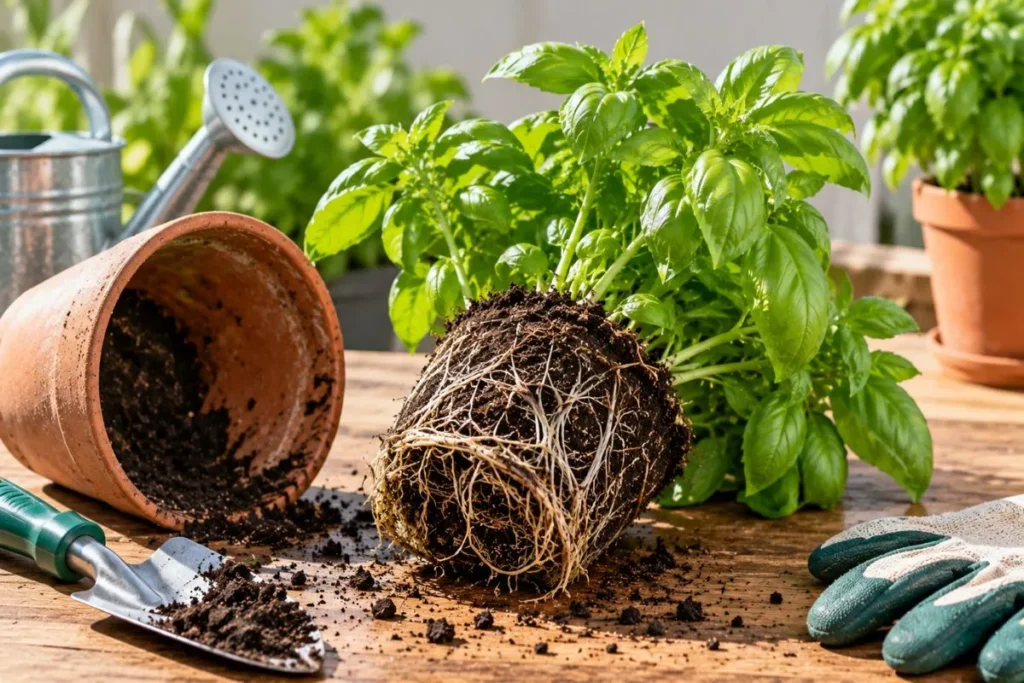
Once you understand what is happening below the soil, you can choose the right approach for basil plant recovery instead of guessing.
A quick diagnosis can make all the difference. Check the leaves, feel the soil, and inspect the roots when necessary. These simple steps help you understand how to revive a basil plant that is dying and give you a much better chance of bringing it back to healthy growth.
How to Revive a Basil Plant That Is Wilting
Many people believe that a wilting basil plant will bounce back as soon as you give it plenty of water. That sounds logical, but it can actually make things worse.
Wilting is a warning sign, not a clear instruction to water. The best way to revive a basil plant that is wilting is to respond calmly and give it the care it needs at that moment.
Move Your Wilting Basil to a Comfortable Spot
If your basil is suddenly drooping on a hot day, move the pot away from harsh afternoon heat. Choose a bright location with gentle light and good airflow. Don’t place the plant in a dark corner just because it looks weak. Basil still needs enough light to recover and continue growing.
If your basil plant is indoors, keep it away from hot windows, heaters, air conditioners, or strong drafts. Sudden temperature changes can add more stress while the plant is trying to recover.
Give Water Only When the Plant Needs It
If the soil is genuinely dry, water your basil slowly and thoroughly. Add enough water to moisten the root area, then let the excess drain from the pot. Don’t leave the container sitting in a saucer full of water.
This approach can help revive a wilted basil plant after underwatering without creating another problem. After watering, give the plant some time. Severely dehydrated basil may not stand upright immediately, so don’t keep adding water every few minutes.
Avoid Overwatering a Wilting Basil Plant
A droopy plant can have wet roots too. If the growing medium is already moist, adding more water won’t solve the problem. In fact, basil overwatering can reduce healthy root function and make recovery harder.
Instead, allow excess moisture to drain away and give the soil time to reach a more suitable moisture level. If the container drains poorly, correct that issue before continuing with your normal basil plant care routine.
Remove Severely Damaged Leaves
Once the immediate stress is under control, look at the foliage. Leaves that are completely brown, badly damaged, or dead won’t return to their original condition. You can carefully remove these damaged parts so the plant can focus on healthy growth.
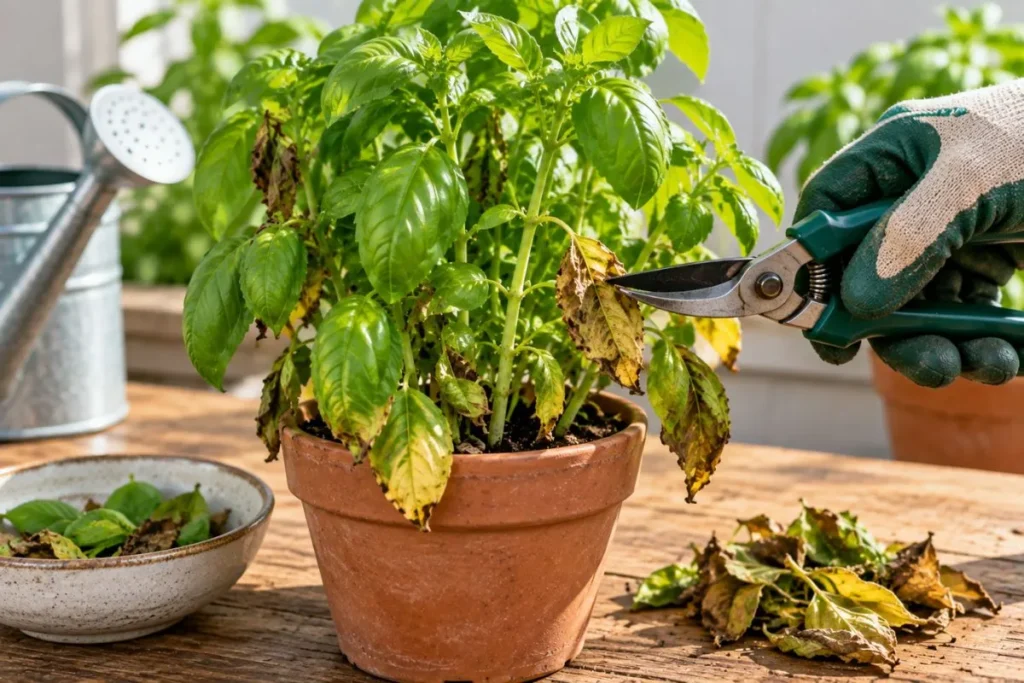
Don’t cut away every drooping leaf, though. If a leaf is still green and living, give it time to recover. Over-pruning a stressed plant can create additional stress instead of helping basil plant recovery.
Give the Plant Time to Recover
One of the hardest parts of saving a basil plant is simply being patient. After you correct the problem, avoid changing everything at once. Don’t move the plant repeatedly, flood it with water, add heavy fertilizer, or expose it to extreme sunlight.
Watch for small signs of improvement instead. Firmer stems, less drooping, healthier leaves, and new growth are encouraging signs. If the plant still has healthy stems and roots, there may be a good chance to bring your basil plant back to life.
Keep Care Consistent After Recovery
Once your basil begins standing upright again, don’t return to irregular care. Keep its growing conditions steady. Provide suitable sunlight, water according to soil moisture, maintain good drainage, and give the plant enough room for healthy growth.
A consistent routine is especially important for a potted basil plant, because containers can dry out faster than garden soil. Regular observation is better than following a rigid watering schedule. Check how the plant and soil actually look before deciding what to do next.
With the right response, a wilting basil plant doesn’t always mean the end of the plant. Act early, avoid unnecessary watering, protect it from harsh conditions, and give it time to respond. These simple steps can help save a dying basil plant and encourage fresh, healthier growth.
Fix Basil Plant Watering Problems
Many people believe that watering a struggling basil plant more often is the fastest way to save it. In reality, basil plant watering is about balance, not simply adding more water.
Too little moisture can leave the plant weak and droopy, while too much can create serious problems below the soil. The right approach depends on what your plant is experiencing.
How to Revive a Basil Plant After Underwatering
If your basil has been left dry for too long, the leaves may become soft, limp, and noticeably droopy. The soil may also pull away slightly from the sides of the container. In this situation, basil underwatering may be the main reason the plant is struggling.
To revive a basil plant after underwatering, give the soil a slow, thorough watering. Pour water gently around the base instead of dumping a large amount in one spot. Continue until the growing medium is evenly moist and a little water begins to drain from the bottom of the pot.
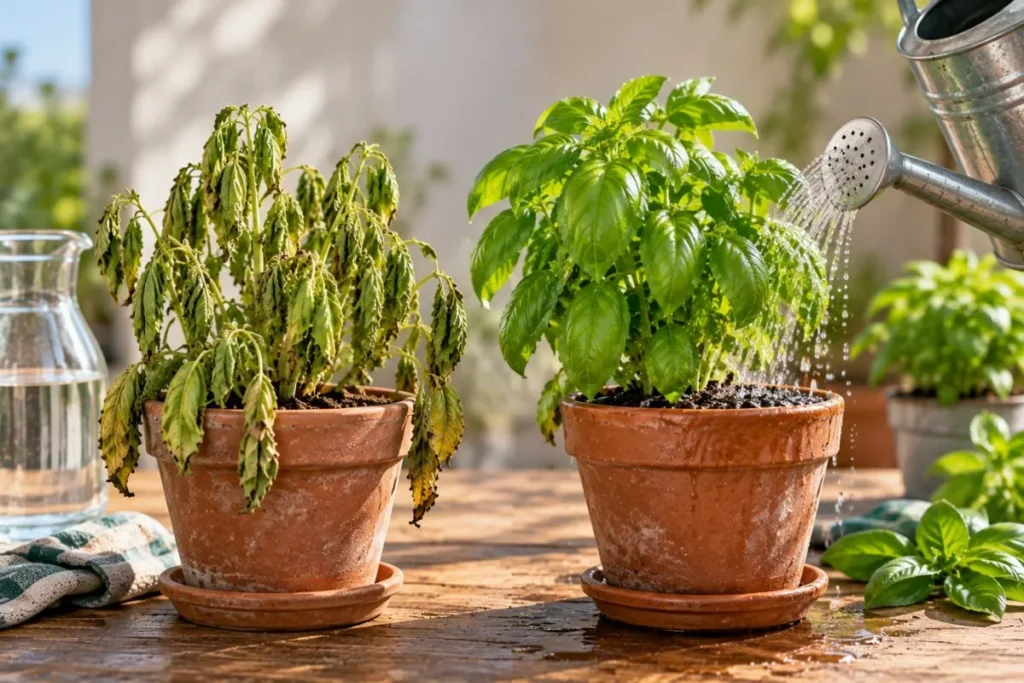
Don’t immediately water it again just because the leaves still look weak. Severely dehydrated basil may need some time to respond. Place the plant somewhere comfortable and allow it to recover gradually.
For a potted basil plant, check the soil more frequently because containers can lose moisture faster, especially during hot weather. A small pot can dry out surprisingly quickly, so paying attention to the soil is much more reliable than following a strict calendar.
How to Revive a Basil Plant After Overwatering
Overwatering creates a completely different situation. If the soil remains wet for days and the basil looks unhealthy, adding more water is the last thing you want to do.
To revive a basil plant after overwatering, stop watering temporarily and make sure excess water can escape from the container. Check that the drainage holes are open and that the pot isn’t sitting in collected water.
If the soil stays constantly soggy, the roots may struggle because they need both moisture and access to air. Prolonged excess moisture can also increase the risk of basil root rot.
Don’t try to fix an overwatered basil plant by adding fertilizer. A stressed root system may not handle extra nutrients well. First focus on restoring healthier moisture conditions and improving basil plant drainage.
If the roots are severely damaged, the plant may need more careful intervention. Remove unhealthy root material with clean tools and move the basil into fresh, well-draining soil when appropriate. Avoid keeping the new soil constantly wet while the plant recovers.
How Often Should You Water Basil?
There isn’t one perfect number of watering days for every basil plant. Your plant’s needs can change with temperature, sunlight, pot size, soil type, humidity, and whether it grows indoors or outdoors.
Instead of watering basil on a fixed schedule, check the soil regularly. If the upper layer has started to dry and the plant needs moisture, water thoroughly. If the soil is still noticeably wet, wait before watering again.
During hot weather, basil may need water more frequently because heat and sunlight increase moisture loss. Indoor basil may dry more slowly, especially in a cooler room.
The goal is to keep the growing medium consistently suitable for healthy growth without leaving the roots sitting in soggy soil. Good basil plant care means adjusting your watering routine as conditions change.
How to Avoid Watering Mistakes During Basil Plant Recovery
When you’re trying to save a dying basil plant, it’s easy to become overprotective. You may check it constantly and water whenever the leaves look slightly soft. Try not to fall into that trap.
Leaves can droop temporarily because of heat or environmental stress, so their appearance alone doesn’t always mean the plant needs water. Check the soil and consider the recent weather and growing conditions before watering.
Also, don’t let the plant swing between extreme dryness and heavy soaking. A steady, thoughtful routine gives the roots a better environment and supports long-term basil plant recovery.
Once you understand how your basil responds to moisture, watering becomes much easier. You’re no longer guessing—you’re responding to what the plant actually needs.
Frequently Asked Questions
How to Revive a Basil Plant That Is Wilting?
To revive a basil plant that is wilting, first identify whether the plant needs moisture or needs relief from excess moisture. If the soil is dry, water it thoroughly and let the excess drain.
If the soil is already wet, don’t add more water. Give the plant suitable light, comfortable temperatures, and time to recover.
How to Revive a Basil Plant That Is Dying?
If you’re wondering how to revive a basil plant that is dying, start by checking the plant’s overall condition. Look for healthy stems, new buds, and firm roots.
Then correct the main growing problem, such as poor watering, insufficient light, bad drainage, pests, or unsuitable temperatures. Avoid making several drastic changes at once.
How to Bring a Basil Plant Back to Life?
To bring a basil plant back to life, focus on the basics first. Give it appropriate sunlight, balanced moisture, good drainage, and suitable growing conditions. Remove only severely damaged growth and give the plant enough time to produce new leaves.
How to Save a Dying Basil Plant Indoors?
To save a dying basil plant indoors, place it somewhere bright but protected from extreme heat and cold drafts. Check the soil before watering and make sure the container has drainage holes. Indoor basil also benefits from good airflow and enough space around its foliage.
How to Revive a Basil Plant With Yellow Leaves?
Yellow basil leaves can have several causes, so don’t automatically add fertilizer. Check the moisture level, drainage, light, and general growing conditions. If the plant has been kept too wet, correcting the watering environment may be more useful than feeding it.
How to Revive a Wilted Basil Plant?
To revive a wilted basil plant, check the soil first. Dry soil may require a thorough watering, while consistently wet soil calls for better drainage and less frequent watering. Once the main problem is corrected, keep conditions stable and watch for fresh growth.
How to Revive a Basil Plant After Overwatering?
If your basil has been overwatered, stop adding water and allow excess moisture to drain. Make sure the container has proper drainage and avoid keeping the roots in soggy soil. If you notice severely damaged roots, the plant may need fresh, well-draining growing medium.
How to Revive a Basil Plant After Underwatering?
For a basil plant affected by underwatering, slowly rehydrate the soil until it becomes evenly moist. Let excess water escape through the drainage holes. Don’t repeatedly soak the plant throughout the day. Instead, allow it time to absorb the moisture and recover.
How to Save a Basil Plant With Drooping Leaves?
Drooping leaves don’t always mean your basil needs water. Check the soil and consider recent heat, sunlight, and growing conditions. If the soil is dry, provide appropriate moisture.
If it’s wet, focus on drainage instead. This helps you save a basil plant with drooping leaves without creating another problem.
How to Revive a Potted Basil Plant?
To revive a potted basil plant, pay close attention to the container, soil, drainage, light, and moisture. A pot that is too small, poorly drained, or exposed to harsh conditions can make recovery difficult.
Give the plant a suitable growing environment and maintain consistent care as it starts producing new growth.
Conclusion:
Learning how to revive a basil plant is mostly about understanding what your plant is telling you. Wilting, yellow leaves, weak growth, and other changes don’t automatically mean the plant is finished.
Sometimes a simple adjustment in watering, light, drainage, or growing conditions can make a noticeable difference.
The key is to avoid rushing. Don’t water blindly, don’t overload a stressed plant with fertilizer, and don’t make several major changes at the same time. Give your basil a stable environment and allow it time to respond.
Whether you’re trying to save a dying basil plant, revive wilted leaves, or bring an indoor basil plant back to healthy growth, early attention can make the process much easier. Keep checking your plant, learn its needs, and stay consistent with your care.
With a little patience and the right basil plant care, your struggling basil may have a second chance to produce fresh leaves and healthy new growth.

Plant Nest Blog’s author is passionate about plants, gardening, and sustainable living. Through research and practical experience, they share helpful plant care tips, gardening guides, and easy solutions to help readers grow healthier plants and create greener spaces.