
A lot of people believe that you can plant chamomile at any time of the year and still expect healthy growth. That’s one of the biggest gardening myths.
The truth is that when to plant chamomile plays a major role in how well your seeds germinate, how healthy the plants become, and how many fragrant flowers they produce. Choosing the right chamomile planting time gives your plants the best possible start.
If you’re wondering about the best time to plant chamomile, you’ve come to the right place. This guide covers everything you need to know, from selecting the right season and planting method to caring for your plants after they sprout.
Whether you’re planting chamomile in a garden bed, raised bed, or container, you’ll learn simple, practical tips to grow healthy plants and enjoy beautiful blooms throughout the season.
Understanding Chamomile Before You Plant
What Is Chamomile?
Chamomile is one of the most popular medicinal herbs grown around the world. It’s loved for its small daisy-like flowers, pleasant fragrance, and many traditional uses, especially in herbal teas and natural remedies.
Besides its beauty, chamomile is an easy-to-grow herb that fits perfectly in vegetable gardens, flower beds, herb gardens, and containers.
Many gardeners choose to grow chamomile because it’s low-maintenance and attracts helpful pollinators like bees and butterflies. Its delicate white flowers with bright yellow centers also add a charming touch to any garden while supporting local wildlife.
German Chamomile vs. Roman Chamomile
Before deciding when to plant chamomile, it’s important to understand that there are two main types: German chamomile and Roman chamomile. Although they look similar, they grow differently and serve different purposes.
German chamomile is an annual herb, meaning it completes its life cycle in one growing season. It grows taller, produces an abundance of flowers, and is the preferred choice for making herbal tea and harvesting dried blooms.
If you’re wondering when to plant German chamomile, it’s usually best to sow seeds in early spring after the danger of hard frost has passed, or start them indoors several weeks before your last frost date.
Roman chamomile, on the other hand, is a perennial herb. It comes back year after year in suitable climates and grows closer to the ground, making it an excellent choice for borders, pathways, and ground cover.
If you’re asking when to plant Roman chamomile, early spring or early fall is generally the ideal planting time, depending on your local climate.
Choosing the right variety depends on your gardening goals. If you want plenty of flowers for harvesting, German chamomile is usually the better option. If you’re looking for a long-lasting ornamental herb, Roman chamomile is an excellent choice.
Annual vs. Perennial Chamomile
Understanding whether your chamomile is annual or perennial helps you plan your garden more effectively.
Annual chamomile grows from seed, flowers, produces seeds, and finishes its life cycle within one season. You’ll need to plant chamomile seeds again the following year unless the plant self-seeds naturally.
Perennial chamomile survives through multiple growing seasons. Once established, it continues producing fresh growth each spring with minimal effort, making it a popular choice for gardeners who want a low-maintenance herb garden.
Knowing your plant type also helps you decide the best time to plant chamomile seeds and prepare for long-term care.
Benefits of Growing Chamomile at Home
Growing chamomile offers much more than attractive flowers. Fresh chamomile is widely used for herbal tea, homemade skincare products, aromatherapy, and dried floral arrangements. Having your own supply means you can harvest fresh blooms whenever you need them.
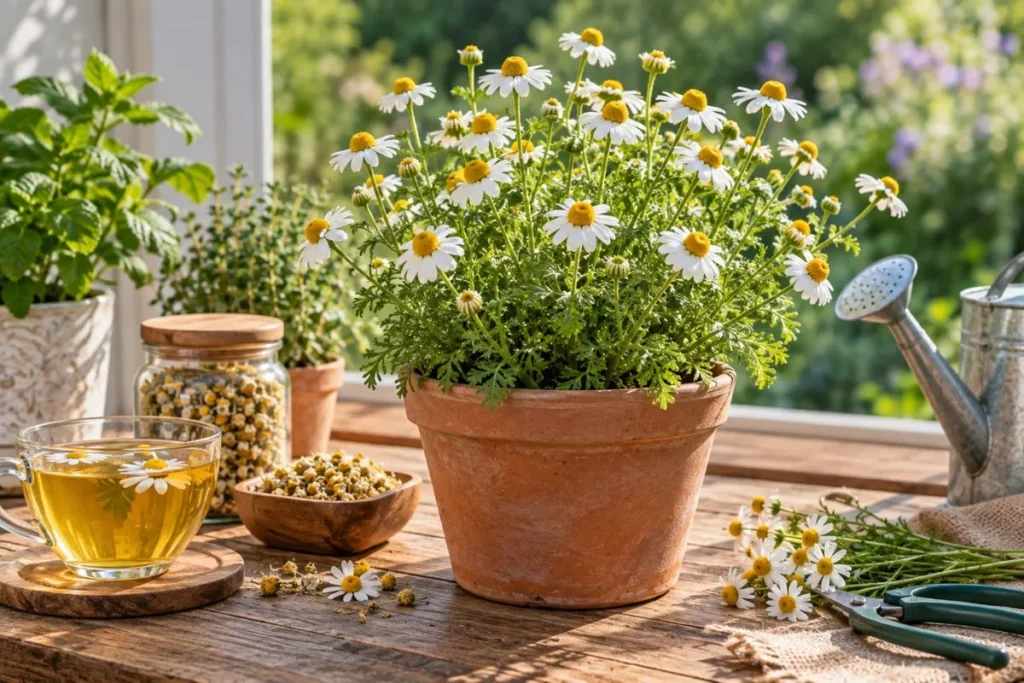
Chamomile also attracts bees and other beneficial insects, improving pollination for nearby fruits, vegetables, and flowers. At the same time, its pleasant scent makes it a valuable addition to any herbal garden.
Another advantage is how beginner-friendly it is. Even if you’re new to gardening, healthy chamomile plants are easy to grow with the right planting time and basic care.
Which Chamomile Variety Should You Choose?
The best variety depends on how you plan to use your plants.
If your main goal is harvesting flowers for tea, drying, or natural remedies, German chamomile is the most popular option because it produces abundant blooms in a single season.
If you prefer a decorative herb that spreads gently and returns every year, Roman chamomile is a better fit. Its low-growing habit makes it perfect for edging pathways, filling garden borders, or creating a fragrant ground cover.
Whichever variety you choose, understanding when to plant chamomile and selecting the right type for your climate will give you the best chance of growing vigorous plants with plenty of beautiful flowers.
When to Plant Chamomile
Many people think there is only one perfect time to plant chamomile, no matter where they live. That’s not true. The ideal when to plant chamomile depends on your local climate, the variety you’re growing, and whether you’re starting seeds indoors or sowing them directly outside.
Planting at the right time gives your seeds the best chance to germinate quickly and develop into healthy, productive plants.
Best Time to Plant Chamomile
The best time to plant chamomile is usually in early spring when the weather begins to warm and the risk of severe frost has passed. Chamomile prefers cool to mild temperatures during its early growth stages, making spring the ideal season for most gardeners.
If you live in a region with mild winters, you can also plant chamomile in the fall. The cooler temperatures allow the plants to establish strong roots before the growing season begins. Understanding your local climate is the key to choosing the right chamomile planting time and enjoying healthy blooms.
When to Plant Chamomile in Spring
Spring is the most popular season for planting chamomile because the soil begins to warm while temperatures remain comfortable for young seedlings.
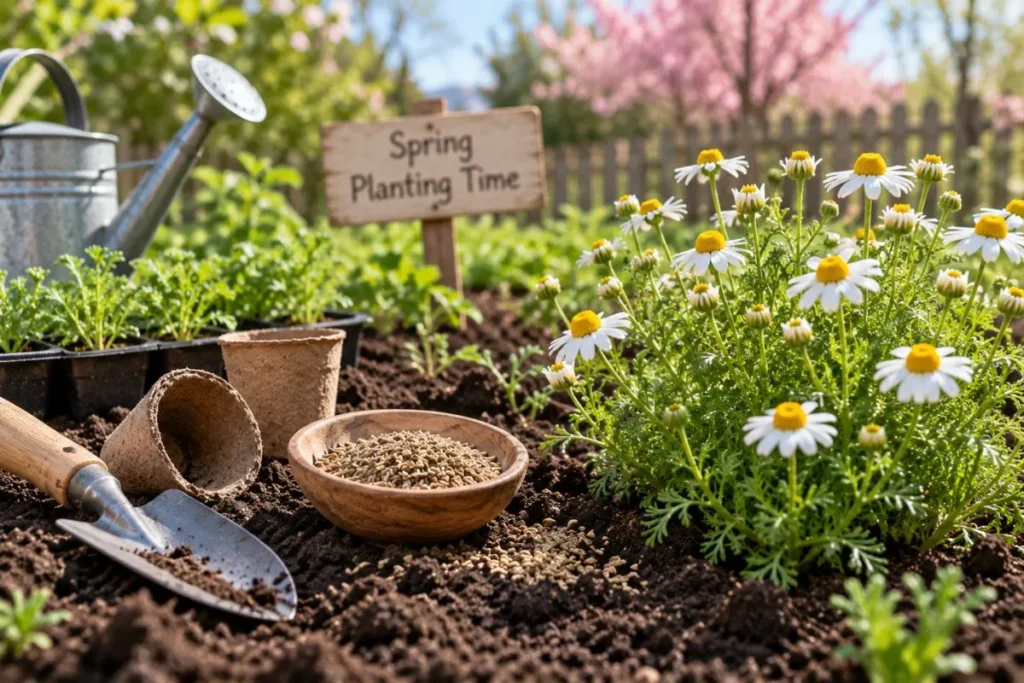
For most regions, sow chamomile seeds after the last hard frost when daytime temperatures stay between 60°F and 70°F (15°C to 21°C). These conditions encourage faster chamomile seed germination and reduce the risk of frost damage to young plants.
If your area experiences long, cold winters, waiting until the soil warms naturally will improve your success rate. Planting too early in cold, wet soil can slow germination and weaken young seedlings.
When to Plant Chamomile Seeds Outdoors
If you prefer planting chamomile seeds outdoors, wait until the danger of heavy frost has passed. Chamomile seeds are very small and germinate best when they receive plenty of light, so they should be lightly pressed onto the soil surface instead of being buried deeply.
Choose a sunny location with well-draining soil and keep the soil consistently moist until the seeds sprout. Under ideal conditions, most seeds germinate within 7 to 14 days.
Direct sowing works especially well in areas with moderate spring temperatures and gives plants plenty of time to establish before summer arrives.
When to Plant Chamomile Indoors
Starting chamomile indoors is an excellent option if your growing season is short or you want an earlier start.
For the best results, sow seeds indoors about 6 to 8 weeks before your area’s last expected frost date. Place the seed trays in a bright location where they receive plenty of light, or use grow lights to encourage healthy seedling development.
Once the weather has warmed and the seedlings have developed several true leaves, gradually harden them off before transplanting them into the garden. This process helps young plants adjust to outdoor conditions without suffering transplant shock.
If you’re searching for when to plant chamomile indoors, this simple approach gives your plants a strong head start and often leads to earlier flowering.
Planting by USDA Hardiness Zone or Climate
Your local climate is one of the biggest factors in deciding when to plant chamomile.
In colder regions with long winters, spring planting is usually the safest choice because frost can damage young seedlings. Gardeners in these areas often benefit from starting seeds indoors before moving them outside.
In regions with mild winters and long growing seasons, chamomile can be planted during either spring or fall. Fall planting allows the plants to establish roots during cooler weather, leading to vigorous growth when temperatures begin to rise again.
Instead of following a calendar date alone, pay attention to your local weather patterns and soil temperature. This approach leads to healthier plants and more reliable results year after year.
Can You Plant Chamomile in Fall?
Yes, in many climates you can successfully plant chamomile in the fall.
Fall planting works best in areas where winters remain relatively mild and the ground does not freeze for long periods. Cooler temperatures reduce stress on young plants while natural rainfall often provides enough moisture for steady growth.
However, gardeners in colder climates should avoid late fall planting because freezing temperatures may prevent seedlings from becoming established before winter arrives.
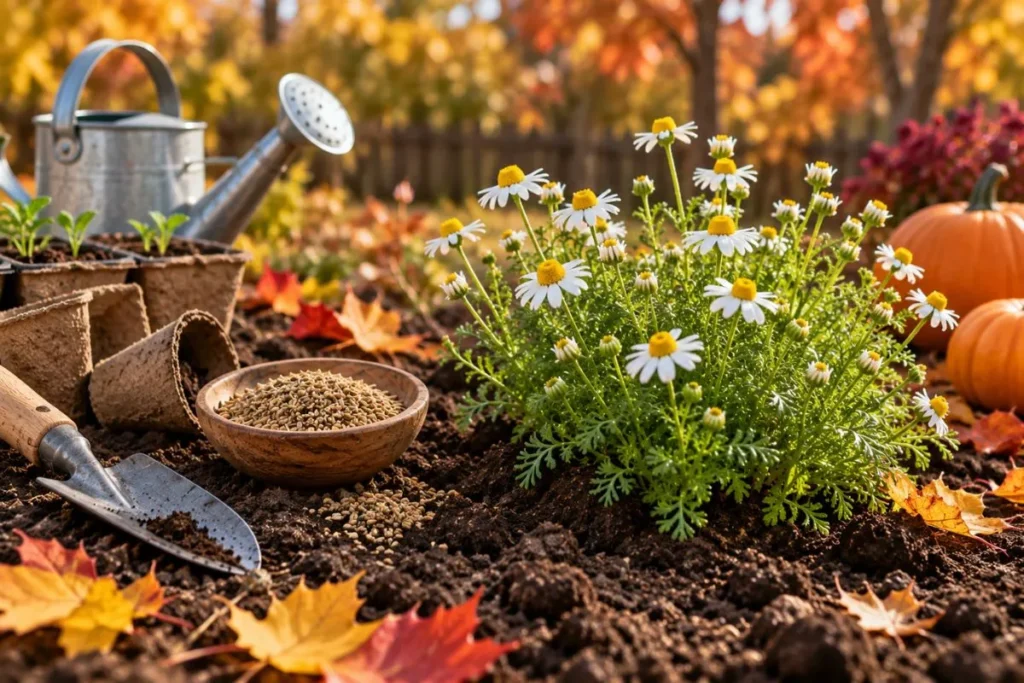
Whether you choose spring or fall, selecting the correct best time to plant chamomile seeds based on your region will help your plants grow stronger and produce more flowers throughout the season.
By understanding when to plant chamomile, choosing the right season, and adjusting your planting schedule to match your local climate, you’ll give your plants the strongest possible start.
Whether you’re wondering when to plant German chamomile, when to plant Roman chamomile, or when to plant chamomile seeds outdoors, proper timing is one of the simplest ways to enjoy healthy plants, abundant blooms, and a successful herb garden.
How to Plant Chamomile Successfully
Many gardeners believe that once they know when to plant chamomile, the rest is easy and they can simply scatter seeds anywhere. Unfortunately, that’s not how it works.
Even if you plant at the perfect time, poor planting techniques can lead to weak germination, slow growth, and fewer flowers. Learning the correct way to plant chamomile gives your seeds the best chance to develop into healthy, thriving plants.
Step-by-Step Guide to Planting Chamomile
Planting chamomile doesn’t require special gardening skills, but paying attention to a few important details will make a big difference. From choosing quality seeds to caring for young seedlings, each step helps create stronger plants that bloom beautifully throughout the growing season.
Choosing Quality Chamomile Seeds
The first step to success is selecting high-quality chamomile seeds. Healthy seeds have a much better germination rate and produce stronger plants with more flowers.
Purchase seeds from a trusted garden center or reputable online supplier. Always check the seed packet for the packaging date or expiration date because fresh seeds usually germinate more reliably than older ones.
Before planting, decide whether you want German chamomile or Roman chamomile. German chamomile is ideal if your goal is harvesting flowers for herbal tea, while Roman chamomile is better suited for ground cover and ornamental gardens.
Choosing the right variety before planting chamomile seeds helps you achieve the results you’re looking for.
Preparing the Soil
Healthy soil gives chamomile seedlings the nutrients they need during their earliest stages of growth.
The best soil for growing chamomile is light, loose, and well-draining. Soil that stays overly wet can cause seeds to rot before they germinate, while compacted soil makes it difficult for young roots to spread.
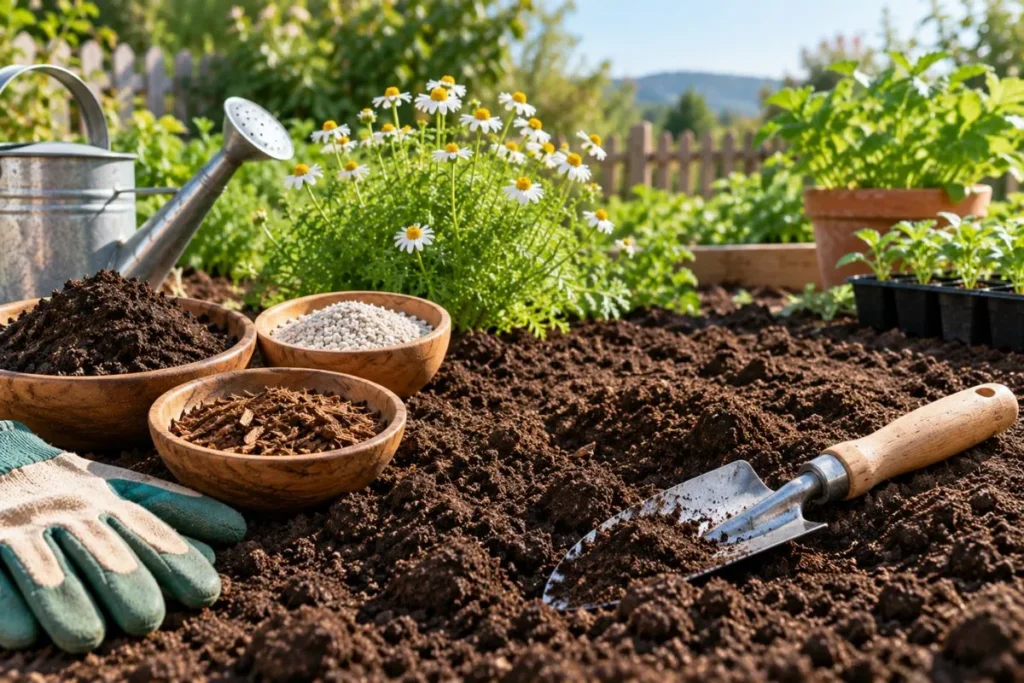
Work compost or other organic matter into the soil before planting. This improves drainage, adds nutrients, and creates an ideal growing environment for healthy root development. Remove weeds, stones, and large debris so seedlings won’t have to compete for space or nutrients.
Preparing the soil properly is one of the simplest ways to improve chamomile seed germination and encourage vigorous plant growth.
Sowing Seeds Correctly
One of the most common mistakes beginners make is planting chamomile seeds too deeply.
Since chamomile seeds need light to germinate, gently scatter them over the prepared soil and lightly press them into the surface with your hand or a flat board. Avoid covering them with a thick layer of soil, as this can reduce germination.
If you’re planning to direct sow chamomile, water the soil gently after sowing to avoid washing the tiny seeds away. Keeping the soil evenly moist during the first couple of weeks encourages faster and more uniform germination.
Seed Depth and Spacing
Proper chamomile plant spacing helps each plant receive enough sunlight, airflow, and nutrients.
Because the seeds are very small, they should remain on or just barely beneath the soil surface. Once seedlings have grown a few inches tall, thin them so they are spaced about 6 to 12 inches apart, depending on the variety.
Adequate spacing improves air circulation, reduces the chance of fungal diseases, and allows each plant to develop a fuller shape with more flowers.
Watering After Planting
Watering correctly after planting is essential for successful germination.
After sowing the seeds, moisten the soil gently without making it soggy. During the germination period, keep the soil consistently damp but never waterlogged. Too much water can cause seeds to rot, while dry soil may stop germination altogether.
Once seedlings become established, chamomile becomes fairly drought-tolerant. At that stage, it’s better to water deeply only when the top layer of soil begins to dry out. This encourages stronger root development and healthier plants.
Germination Timeline
One reason gardeners enjoy growing chamomile is that it germinates fairly quickly under the right conditions.
Most chamomile seeds begin to sprout within 7 to 14 days when temperatures remain between 60°F and 70°F (15°C to 21°C) and the soil stays consistently moist. Cooler temperatures may slow germination, while warmer conditions often encourage faster growth.
After the first seedlings appear, continue providing adequate sunlight and moisture so they can develop strong stems and healthy leaves. Within a few weeks, your young plants will be ready to establish themselves and begin steady growth.
By choosing fresh seeds, preparing fertile soil, sowing seeds correctly, maintaining proper chamomile plant spacing, watering carefully, and understanding the expected chamomile seed germination timeline, you’ll give your plants the strongest possible start.
These simple planting techniques not only improve germination but also lay the foundation for healthy plants and an abundance of fragrant chamomile flowers later in the season.
Best Soil, Sunlight, and Temperature for Chamomile
Many people think chamomile can grow well in almost any condition. While it’s a hardy herb, it performs much better when you provide the right soil, enough sunlight, and suitable temperatures. Creating the ideal growing environment helps healthy chamomile plants produce more flowers and stay vigorous throughout the season.
Best Soil for Growing Chamomile
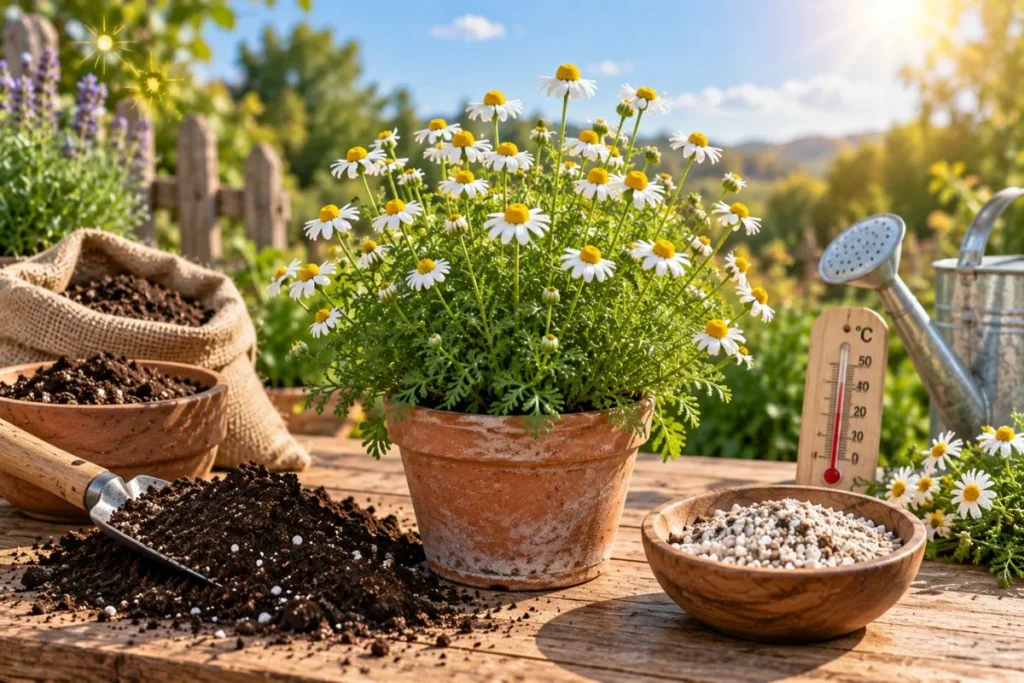
The best soil for growing chamomile is loose, well-draining, and rich in organic matter. Chamomile doesn’t like soggy soil because excess moisture can lead to root problems.
Mixing compost into the soil improves drainage and provides nutrients that support steady growth. Good soil preparation is one of the easiest ways to grow chamomile successfully.
Sunlight Requirements
Chamomile grows best in full sun, receiving at least 6 to 8 hours of direct sunlight each day. Plenty of sunlight encourages stronger stems, greener foliage, and more flowers.
In very hot climates, light afternoon shade can help protect plants from excessive heat while still allowing them to bloom well.
Ideal Temperature Range
Chamomile prefers cool to moderately warm weather. The ideal temperature for healthy growth is between 60°F and 75°F (16°C to 24°C). Mild temperatures encourage faster growth and longer flowering periods.
Although established plants can tolerate some heat, prolonged high temperatures may reduce flower production.
Soil pH Requirements
The ideal chamomile soil requirements include a slightly acidic to neutral pH of 6.0 to 7.5. Within this range, plants absorb nutrients more efficiently, resulting in healthier leaves and better blooms.
If needed, a simple soil test can help you determine whether any adjustments are necessary before planting.
Improving Soil Naturally
Improving soil naturally keeps chamomile healthy without relying heavily on chemical fertilizers. Add compost or well-rotted organic matter each season to increase soil fertility and improve moisture retention.
Applying a light layer of mulch also helps conserve moisture, suppress weeds, and regulate soil temperature. These simple organic practices create the ideal environment for growing strong, productive chamomile plants.
Frequently Asked Questions
When is the best time to plant chamomile?
The best time to plant chamomile is in early spring after the last hard frost has passed. In regions with mild winters, you can also plant chamomile in early fall to allow the roots to establish before the growing season.
Can I plant chamomile in the fall?
Yes, you can plant chamomile in the fall if you live in an area with mild winters. Fall planting gives the roots time to develop before spring, resulting in stronger and healthier plants.
When should I start chamomile seeds indoors?
Start chamomile seeds indoors about 6 to 8 weeks before the last expected frost in your area. This gives seedlings a strong head start before they are transplanted outdoors.
When should I direct sow chamomile seeds?
If you’re planting chamomile seeds outdoors, sow them after the danger of frost has passed and the soil begins to warm. Keep the soil lightly moist until the seeds germinate.
Does chamomile grow better in sun or shade?
Chamomile grows best in full sun, where it receives at least 6 to 8 hours of direct sunlight daily. In hotter climates, light afternoon shade can help prevent heat stress.
How long does chamomile take to germinate?
Most chamomile seeds germinate within 7 to 14 days when the soil remains consistently moist and temperatures stay between 60°F and 70°F (15°C to 21°C).
Can chamomile survive frost?
Established chamomile plants can tolerate light frost, especially Roman chamomile. However, young seedlings are more sensitive and should be protected from freezing temperatures.
What is the best soil for growing chamomile?
The best soil for growing chamomile is loose, fertile, and well-draining with a soil pH between 6.0 and 7.5. Adding compost before planting improves soil quality and supports healthy growth.
How often should I water chamomile?
Water chamomile when the top inch of soil feels dry. Once established, chamomile is fairly drought-tolerant and usually needs less frequent watering than many other herbs.
When should I harvest chamomile flowers?
Harvest chamomile flowers when the white petals are fully open and the yellow centers are
Conclusion
Knowing when to plant chamomile is one of the most important steps toward growing healthy, vibrant plants. Planting at the right time gives your seeds the best chance to germinate quickly, establish strong roots, and produce an abundance of fragrant flowers throughout the growing season.
Choosing the best time to plant chamomile also helps your plants adapt to local weather conditions. Whether you’re growing German chamomile for herbal tea or Roman chamomile as a beautiful ground cover, proper timing lays the foundation for long-term success.
Along with planting at the right season, providing well-draining soil, plenty of sunlight, regular watering, and simple maintenance will keep your chamomile healthy.
Paying attention to these basic growing conditions can make a noticeable difference in flower production and overall plant health.
If you’re planting chamomile seeds indoors or directly sowing them outdoors, always consider your local climate and frost dates. Adjusting your planting schedule to your region will help you enjoy stronger plants and a longer blooming period.
Remember that chamomile is a beginner-friendly herb that doesn’t require complicated care. With patience and consistency, you’ll soon have healthy plants that provide beautiful blooms for herbal tea, natural remedies, pollinator gardens, and decorative landscapes.
By following the tips in this guide on when to plant chamomile, you’ll have everything you need to grow a thriving herb garden with confidence. Start planting at the right time, care for your plants properly, and enjoy fresh chamomile flowers season after season.
If you found this guide helpful, share it with friends or fellow gardeners who are planning to grow chamomile. Feel free to leave a comment below with your questions, gardening tips, or personal experiences we’d love to hear how your chamomile plants are growing

Plant Nest Blog’s author is passionate about plants, gardening, and sustainable living. Through research and practical experience, they share helpful plant care tips, gardening guides, and easy solutions to help readers grow healthier plants and create greener spaces.