
Many people assume that because an eggplant has dark purple skin, the inside must also be purple. That is not true. When you cut a typical eggplant open, you will usually find light-colored flesh with small seeds spread through it. The exact appearance can vary with the variety and maturity.
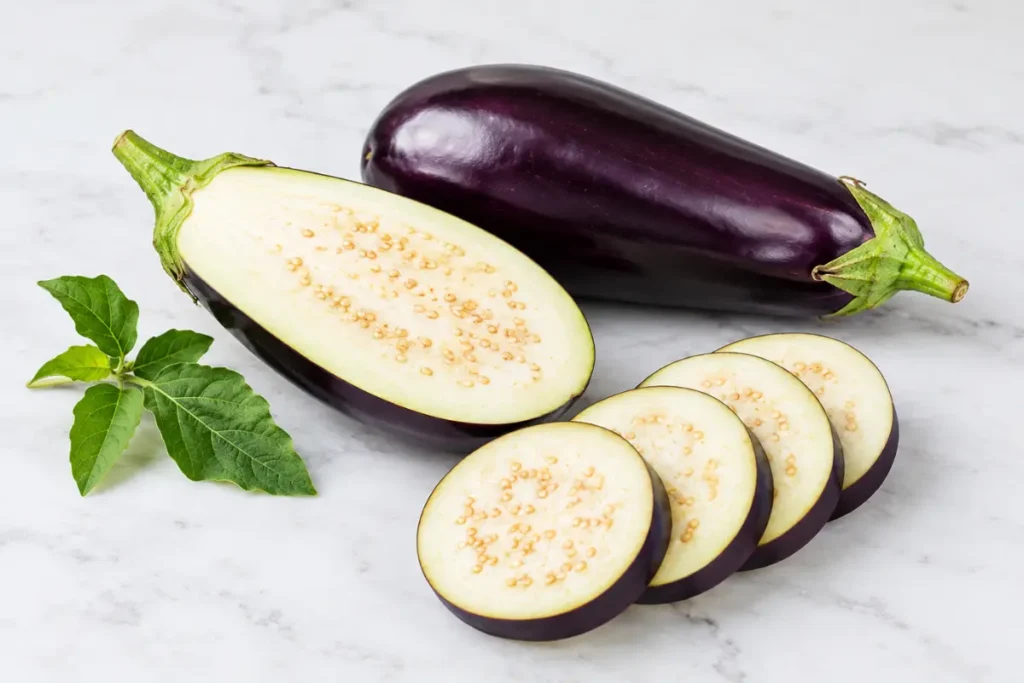
So, what does an eggplant look like on the inside? A fresh eggplant usually has pale white, cream, or slightly greenish flesh with a soft, spongy texture. The inside of an eggplant contains the edible flesh and many small seeds. A healthy eggplant interior should generally look moist and firm rather than slimy or severely discolored. If you cut one open and see light flesh with tiny seeds, that is a normal eggplant inside appearance.
What Color Is an Eggplant on the Inside?
When you cut open an eggplant, you’ll usually find a soft, pale interior that looks quite different from its dark outer skin. The inside is commonly white to creamy in color, with tiny seeds spread throughout the flesh. The exact shade can vary depending on the eggplant’s variety and how ripe it is.
The Inside Is Usually Much Lighter Than the Skin
It is easy to think that a purple eggplant should have purple flesh inside, but that is usually not the case. The outer skin can be deep purple while the inside remains much lighter. So, if you cut one open and find pale flesh, there is usually no reason to worry.
Common Eggplant Interior Colors
The eggplant interior color can range from white and creamy to pale green, depending on the variety and maturity. Some eggplants may develop a slightly yellowish tone as they become more mature. A typical purple eggplant inside is usually light-colored rather than purple, with small seeds spread through the flesh.
Does the Color Tell You If It Is Fresh?
Color alone does not always tell you whether an eggplant is fresh. A normal eggplant flesh color can vary naturally. It is better to also check the texture, smell, and overall condition. If the flesh looks reasonably fresh and firm without excessive darkening, slime, or an unpleasant odor, the color is usually nothing to worry about.
What Does the Inside of a Fresh Eggplant Look Like?
When you slice open a fresh eggplant, you’ll usually see soft, light-colored flesh with tiny pale seeds inside. The interior should look clean, moist, and firm rather than dark or mushy. A fresh eggplant often has a smooth, creamy-white inside that shows it is in good condition.
Fresh Eggplant Inside Is Not Always Perfectly White
A common belief is that a fresh eggplant must have completely bright-white flesh with no marks at all. That is not necessarily true. A healthy eggplant can naturally have slightly cream-colored or pale green flesh, and a few small differences in appearance do not automatically mean it has gone bad.
Signs of a Fresh Eggplant Inside
So, what does a fresh eggplant look like inside? When you cut a fresh eggplant open, the flesh should generally look clean, moist, and firm. It may feel slightly spongy when pressed, but it should not feel slimy or excessively soft. The fresh eggplant texture should have some structure and should not collapse easily.

You may also notice small seeds throughout the flesh. Their size can vary depending on the eggplant’s variety and maturity. A fresh eggplant can have a few visible seeds or many tiny ones, so the number of seeds alone is not a reliable sign of quality.
How to Check Freshness After Cutting
The fresh eggplant appearance is best judged by looking at several things together. Check the flesh for a healthy, even appearance and pay attention to its texture and smell. Fresh flesh should not have a strong unpleasant odor or a slimy surface.
If the inside looks reasonably firm and moist and does not show widespread dark discoloration, mold, or decay, it is generally a good sign. In other words, when checking a healthy eggplant inside, do not focus on one tiny spot or one unusual-looking seed.
Look at the overall condition of the vegetable.
What Do Eggplant Seeds Look Like Inside?
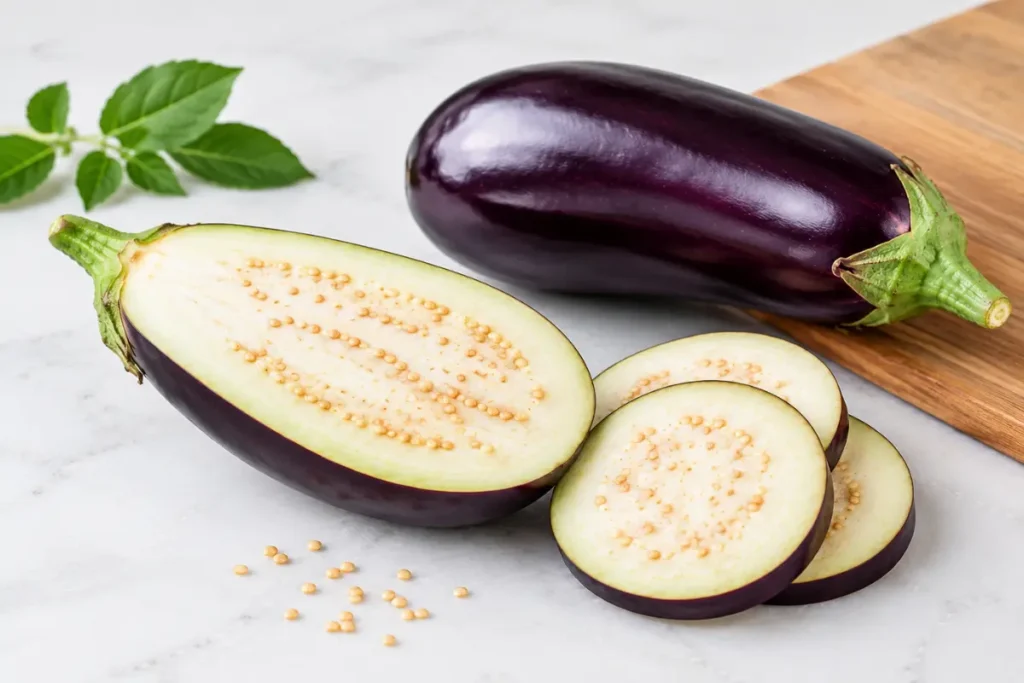
When you cut open an eggplant, you’ll notice small seeds tucked inside the soft flesh. They are usually pale cream or light tan and may look almost invisible in a young eggplant. As the eggplant gets more mature, the seeds can become darker, larger, and slightly harder.
Eggplant Seeds Are Not a Sign That Something Is Wrong
A common belief is that seeing lots of seeds inside an eggplant means the vegetable has spoiled. That is not true. Eggplant seeds inside are completely normal because seeds are a natural part of the fruit.
Their size, color, and visibility can change depending on the variety and how mature the eggplant is.
What Do Eggplant Seeds Look Like?
When you cut an eggplant open, you may notice tiny, soft seeds spread throughout the flesh. In a young eggplant, the seeds are often small, pale, and difficult to notice.
As the fruit becomes more mature, the eggplant seed color may become darker, and the seeds can become larger and more noticeable.
The seeds are usually surrounded by the soft eggplant flesh, so they do not appear in one single pocket. If you look at an eggplant cross section, you can often see many small seeds distributed through the inner flesh.
Why Do Eggplant Seeds Become Larger?
The size of the seeds is closely connected to eggplant seed development. As an eggplant matures, its seeds have more time to develop. This can make them firmer, darker, and easier to see.
This is why two eggplants can look different after being cut open. One may have almost invisible seeds, while another may have larger and more noticeable ones. Both can still be normal.
Is It Normal for an Eggplant to Have Seeds Inside?
Yes. If you are wondering, is it normal for an eggplant to have seeds inside, the answer is definitely yes. The seeds are a natural part of the fruit and are not, by themselves, a sign of spoilage.
When checking an eggplant, focus on its overall condition rather than the presence of seeds alone. The appearance of the flesh, texture, smell, and any signs of decay are more useful when deciding whether the eggplant is still in good condition.
Section 5. What Does a Ripe Eggplant Look Like Inside?
When you cut open a ripe eggplant, the inside is usually soft, pale, and creamy with small seeds spread throughout the flesh. A fresh ripe eggplant should have firm, smooth flesh without a strong brown or mushy appearance.
The seeds may become slightly darker as the eggplant gets more mature.
A Ripe Eggplant Does Not Have to Look Completely Different Inside
Some people believe that a ripe eggplant should have a completely different interior color or very large seeds. That is not always true. Eggplant maturity can change the flesh and seeds gradually, but the exact appearance also depends on the variety.
What Does a Ripe Eggplant Look Like Inside?
So, what does a ripe eggplant look like inside? A mature eggplant will generally still have light-colored flesh, often white, cream, or slightly greenish. The main difference may be more noticeable in the seeds and texture rather than a dramatic change in flesh color.
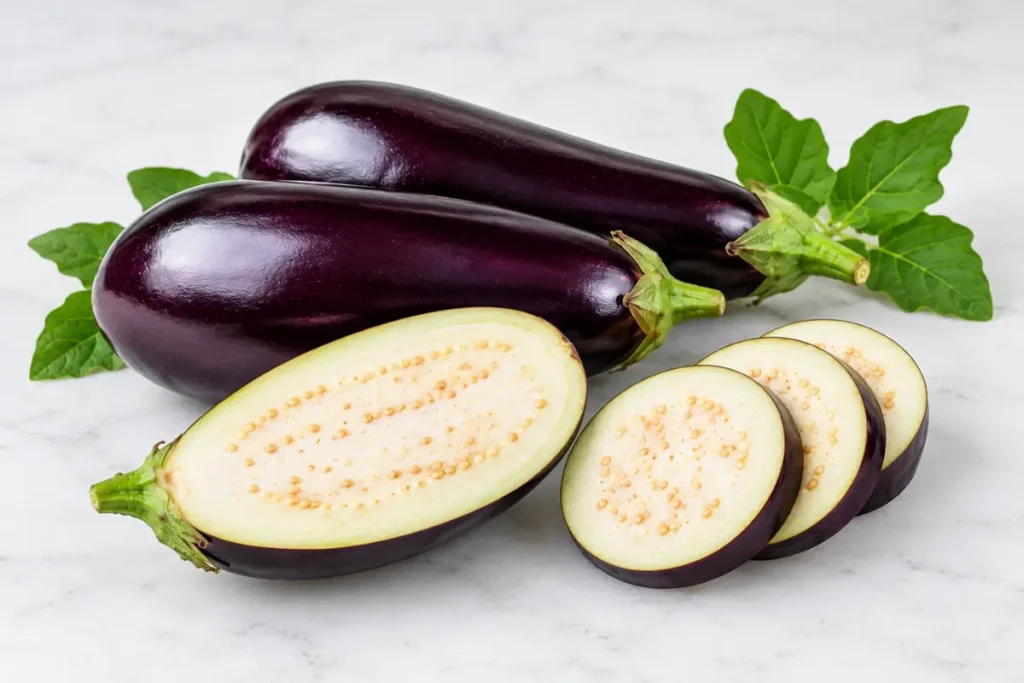
As the eggplant reaches maturity, its seeds can become easier to see. They may look slightly larger or darker than the tiny seeds found in a younger fruit. This is a normal part of eggplant seed development and does not automatically mean the eggplant is spoiled.
How Maturity Can Affect Eggplant Appearance
The ripe eggplant appearance can vary depending on the type of eggplant and how long it has been allowed to mature. A mature fruit may have slightly firmer or more developed seeds, while the flesh can still have a soft, spongy structure.
It is also important to separate ripeness from spoilage. A ripe or mature eggplant can have noticeable seeds without being bad. If the inside does not have extensive decay, mold, a slimy texture, or a strong unpleasant smell, the changes you see may simply be related to eggplant maturity.
Does a Ripe Eggplant Have More Seeds?
Not necessarily more seeds, but the existing seeds may become more developed and noticeable as the fruit matures. This is why a mature eggplant can look different from a younger one when you cut it open.
So, when checking ripe eggplant inside, look at the whole fruit rather than judging it only by its seeds. Seed size and color can provide clues about maturity, but freshness and overall condition are more important when deciding whether it is still good to use.
Frequently Asked Questions About Eggplant Inside
What does an eggplant look like on the inside?
A typical eggplant has pale white, cream, or slightly greenish flesh inside. You will also find small seeds spread through the flesh. The exact appearance can vary depending on the eggplant variety and its maturity.
What color is an eggplant on the inside?
The inside is usually much lighter than the outer skin. Common colors include white, cream, and pale green. A deep purple outer skin does not mean the flesh will also be purple.
What does a fresh eggplant look like inside?
A fresh eggplant generally has moist, firm, light-colored flesh. It can have a slightly spongy texture and small seeds. There should not be widespread decay, mold, or a strong unpleasant smell.
What do eggplant seeds look like inside?
Eggplant seeds are usually small and soft when the fruit is less mature. As the eggplant matures, the seeds can become larger, firmer, and darker. This change is generally a normal part of seed development.
What does a ripe eggplant look like inside?
A ripe eggplant usually still has light-colored flesh, but its seeds may be more developed and noticeable. The exact appearance depends on the variety and maturity of the fruit.
What does an overripe eggplant look like inside?
An overripe eggplant may have larger, harder, or darker seeds and softer flesh. The interior can also show more discoloration as the fruit ages. Overripe does not always mean spoiled, so check the texture, smell, and overall condition.
Why is my eggplant brown inside?
Some browning can happen naturally after an eggplant is cut and exposed to air. However, widespread brown or dark areas combined with a mushy texture, slime, mold, or an unpleasant odor can indicate spoilage.
Is it normal for an eggplant to have seeds inside?
Yes. Seeds are a natural part of an eggplant. Their size and color can vary with the variety and maturity. Simply seeing seeds does not mean the eggplant is bad.
How can you tell if an eggplant is good inside?
Look at the overall condition. Healthy flesh should generally be firm and moist without extensive decay or slime. Also check for an unusual smell, mold, or major discoloration before using it.
What does a spoiled eggplant look like inside?
A spoiled eggplant may have very soft or mushy flesh, sliminess, extensive dark discoloration, mold, or a strong unpleasant odor. When several of these signs appear together, it is safer to discard the eggplant rather than use it.
Conclusion:
A healthy eggplant does not need to look perfect inside to be good. When you cut one open, you will usually see light-colored flesh with small seeds throughout it. The exact color and seed size can vary with the variety and maturity, so small differences are normal.
If you are wondering what does an eggplant look like on the inside, the easiest thing to remember is to check the whole picture. Look at the flesh, texture, smell, and any unusual discoloration.
Light flesh and visible seeds are normal, while widespread decay, slime, mold, or a strong unpleasant smell are signs that the eggplant may no longer be suitable to use.
In short, what is inside an eggplant is mostly edible flesh and seeds. Once you know what a normal eggplant interior looks and feels like, it becomes much easier to tell the difference between natural changes and actual spoilage.

Plant Nest Blog’s author is passionate about plants, gardening, and sustainable living. Through research and practical experience, they share helpful plant care tips, gardening guides, and easy solutions to help readers grow healthier plants and create greener spaces.