
plant becomes too tall, it can be harder to support, manage, and harvest. Learning how to top tomato plants can help you control excessive growth and keep the plant easier to care for, especially when growing tall varieties.
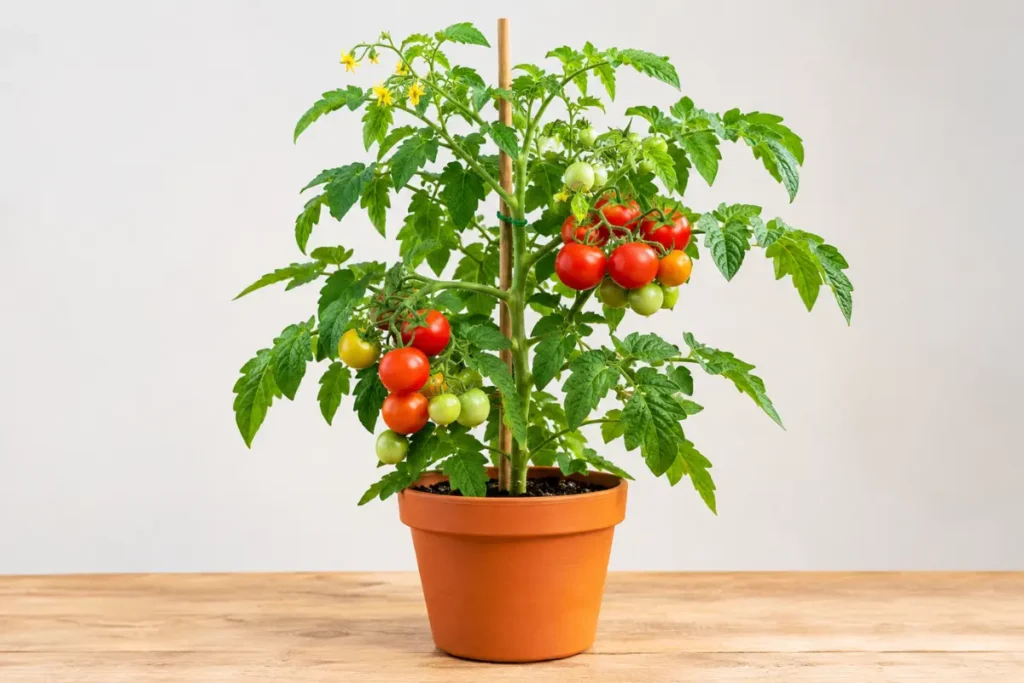
Topping tomato plants means controlling the plant’s upward growth when it reaches a suitable height. For gardeners growing tomatoes at home, this simple tomato plant care technique can make the plant more manageable and improve access to sunlight and airflow.
When done at the right time, topping can be a useful part of overall tomato plant maintenance and help create a healthier, more organized tomato garden.
What Does Topping a Tomato Plant Mean?
Topping a tomato plant does not simply mean cutting off the top whenever the plant gets tall. The goal is to remove the main growing tip at the right point so you can limit upward growth without taking away more healthy plant material than necessary.
What Is Topping a Tomato Plant?
In simple terms, topping a tomato plant means trimming the uppermost growing point of the main stem. This helps limit upward growth and keeps the plant more manageable. It is different from regular tomato plant pruning, where you may remove selected suckers, damaged leaves, or crowded growth.
Topping vs. Pruning and Trimming
Topping, pruning, and trimming are related but have different purposes. Topping tomato plants focuses mainly on removing the main growing tip to control height.
Pruning tomato plants involves selectively removing unwanted or unnecessary growth, while trimming tomato plants is a broader term for cutting back parts of the plant.
Topping vs. Removing Tomato Suckers
Removing tomato suckers, on the other hand, means taking out the small shoots that develop between the main stem and branches. This is different from topping because a sucker is a side shoot, while topping targets the main growing tip.
Why Understanding the Difference Matters
Understanding these differences makes tomato plant care much easier. Topping is mainly used for controlling height and growth, while regular pruning can help manage the plant’s shape, airflow, and structure.
Once you know what topping actually means, you can use this technique more carefully instead of cutting the plant simply because it looks tall
Which Tomato Plants Should You Top?
Not every tomato plant needs to be topped just because it is growing tall. A common mistake is treating all tomato varieties the same. The right approach depends on whether you are growing an indeterminate tomato plant or a determinate tomato plant, because these two types have very different growth habits.
Indeterminate Tomato Plants
Indeterminate tomato plants continue producing new stems, leaves, flowers, and fruit throughout the growing season as long as conditions allow. Because they can keep growing upward, they may eventually become difficult to manage, especially when grown on a tall stake, cage, or trellis.
This is where topping indeterminate tomato plants can be useful. If the main stem reaches the height your support system can comfortably handle, you can top the plant to limit further upward growth. This can also make harvesting easier and help you maintain better control over tomato plant height.
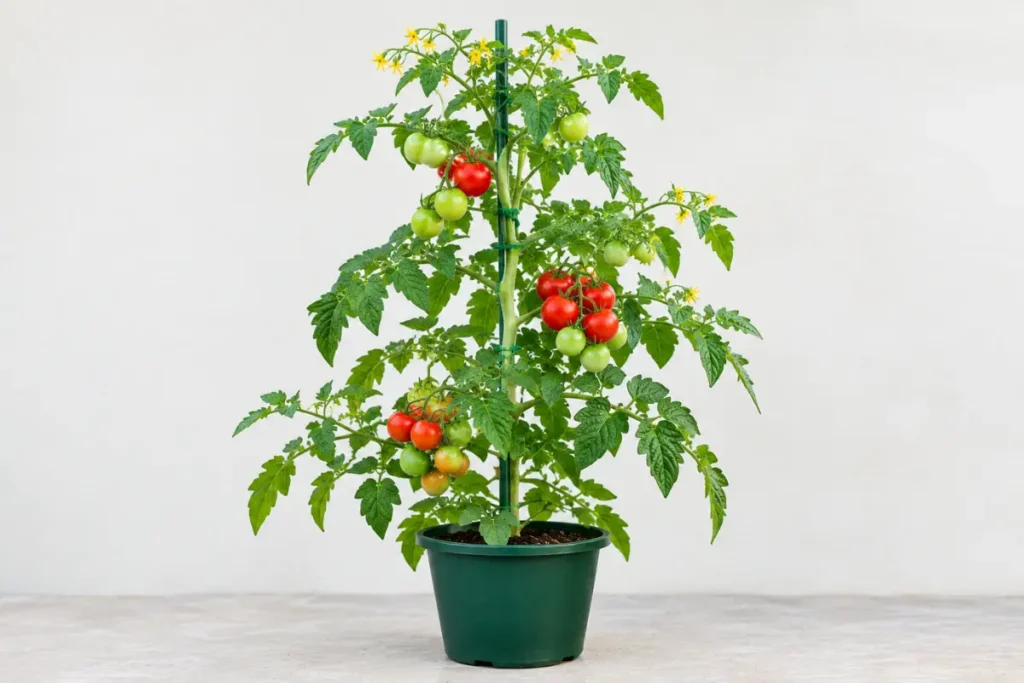
If your goal is how to top indeterminate tomato plants, first consider the available space and support. A plant growing in a small garden may need more height control than one growing on a large, sturdy trellis.
Avoid topping simply because the plant has become tall. Look at its overall health and growth pattern before making the cut.
Determinate Tomato Plants
Determinate tomato plants grow differently. They usually reach a more limited size and produce much of their fruit within a shorter period. Once they reach their natural growth limit, they generally stop extending upward in the same way indeterminate varieties do.
For this reason, determinate tomato plants usually do not need aggressive topping. Cutting the main growing tip too early can remove growth that the plant could have used for flowering and fruit production.
If you are growing a determinate variety, focus more on basic tomato plant care, support, watering, sunlight, and keeping the plant healthy.
Choosing the Right Approach
Before deciding to top a tomato plant, check its variety first. This small step can prevent unnecessary pruning and help you choose a better tomato plant maintenance routine.
For most gardeners, indeterminate varieties are the better candidates when height control is needed because they keep growing throughout the season. Determinate varieties often need less intervention because their natural growth habit already limits their size.
Your growing space also matters. A tall indeterminate plant may need topping when it reaches the top of a cage or trellis, while the same variety may not need topping if it has plenty of vertical space.
In other words, successful tomato plant growth management is not about cutting every plant in the same way. It is about understanding the variety and responding to how that particular plant is growing.
When Is the Best Time to Top Tomato Plants?
Many gardeners think a tomato plant should be topped as soon as it starts getting tall. That is not necessarily true. When to top tomato plants depends on the plant’s variety, growth stage, health, and the amount of space available.
Topping at the wrong time can remove useful growth, so it is better to watch the plant rather than follow a fixed date.
When the Plant Reaches the Desired Height
One of the easiest ways to decide when to top a tomato plant is to look at its height. When an indeterminate tomato plant reaches the height you want, you can consider removing the growing tip.
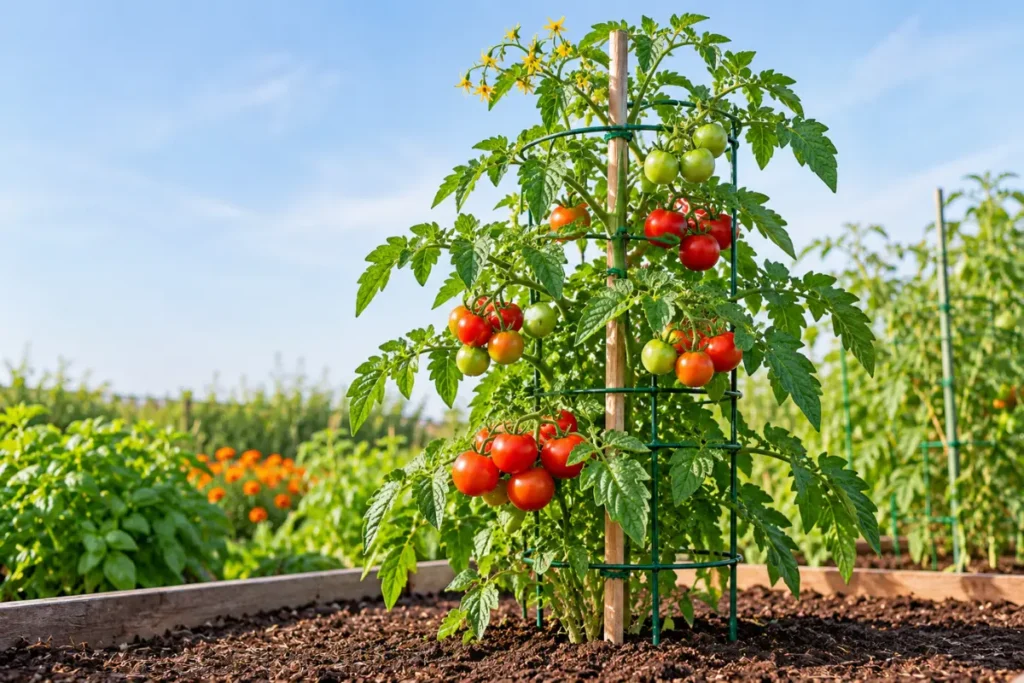
Your desired height will depend on the support you are using. A plant growing inside a tomato cage may need to be managed differently from one growing on a tall trellis. Topping at this stage helps prevent the plant from continuing upward when there is little room left.
When the Plant Has Developed Several Healthy Branches
A young tomato plant needs time to build strong stems, leaves, and branches. Topping too early can interfere with this natural development. It is better to allow the plant to establish healthy growth before removing the main growing tip.
Look for a plant with several strong branches and plenty of healthy foliage. This gives the plant a solid structure before you begin controlling its height. Healthy growth is an important part of successful tomato plant maintenance.
When the Plant Has Started Producing Flowers or Fruit
For many gardeners, topping becomes more useful once an indeterminate tomato plant has begun flowering or setting fruit and has reached the practical height for its growing space.
At this stage, the plant has already invested considerable growth into its structure. Managing the upper growth can help keep the plant within reach and make harvesting easier.
However, topping should not be treated as a guaranteed way to produce more tomatoes. Good sunlight, watering, nutrition, pollination, and general tomato plant care still play major roles in fruit production.
Why Topping Too Early Can Be Counterproductive
Topping a tomato plant too early may remove a growing tip that the plant still needs for healthy development. A small or recently transplanted plant may benefit more from establishing its roots, stems, and foliage than from having its height restricted.
If you are wondering when is the best time to top tomato plants, avoid focusing only on the calendar. Check the plant’s size, strength, and growth stage first. This approach is more useful than topping every tomato plant at the same age.
Why Waiting Too Long Can Make Topping Harder
Waiting until a tomato plant has grown far beyond its support can create another problem. Long stems may become difficult to manage, and the plant can be harder to reach when you finally decide to control its height.
Regularly checking tomato plant height helps you notice when the main stem is approaching the top of its cage, stake, or trellis. Taking action before the plant becomes completely unmanageable can make the job much easier.
The Right Time Depends on Your Growing Conditions
There is no universal date for the best time to prune tomatoes. Garden size, tomato variety, support system, weather, and plant health can all affect the decision.
For an indeterminate variety, a practical rule is to consider topping when the plant has reached its desired height, has established healthy growth, and is beginning to use more vertical space than your support system can comfortably handle.
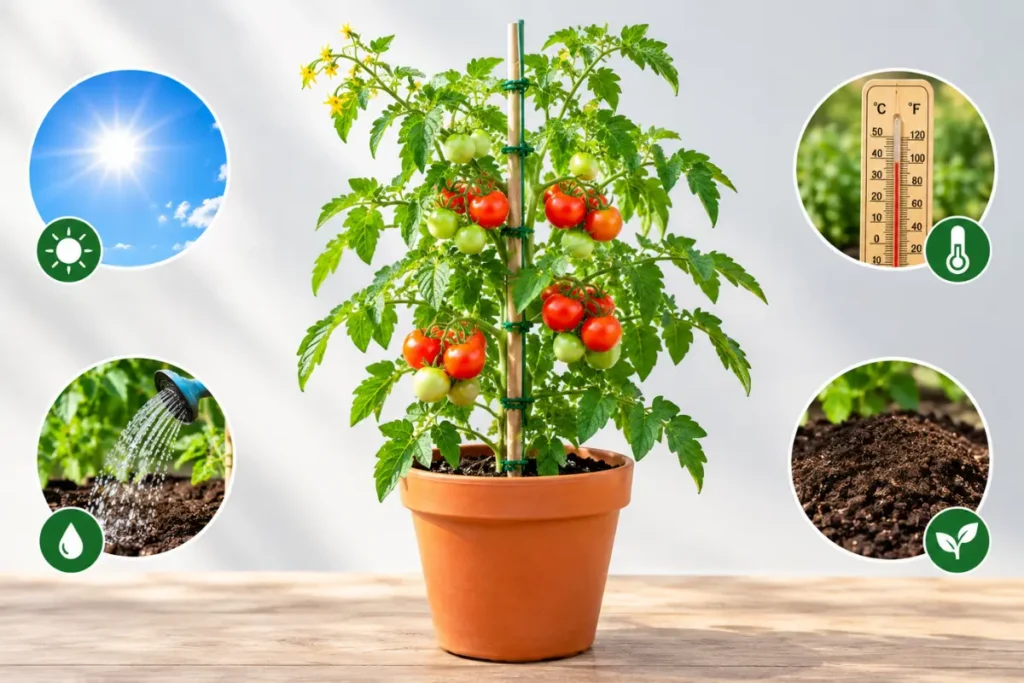
The main idea is simple: do not top just because the plant looks tall. Top when controlling its upward growth makes sense for the plant and your growing setup. This helps you manage growth without unnecessarily removing healthy parts of the tomato plant.
Top Tomato Plants for Better Growth
A common belief is that simply cutting the top of a tomato plant will automatically make it grow better. That is not always true. The purpose of topping is mainly to control excessive upward growth and keep the plant easier to manage.
When done at the right stage, top tomato plants for better growth can be part of a sensible tomato care routine.
Choose a Healthy Plant
Start with a plant that has a strong main stem, healthy leaves, and good support. Avoid cutting a plant that is already stressed or damaged. A healthy plant is more likely to respond well after the growing tip is removed.
Select the Right Height
Look at the height of the plant and consider its cage, stake, or trellis. The cut should be made at a practical point where the remaining plant still has enough healthy foliage. Cutting too much at once can put unnecessary stress on the plant.
Make a Clean Cut
Use clean, sharp pruning shears and make one controlled cut above a healthy leaf node. Avoid crushing the stem or removing nearby leaves unnecessarily. A simple, clean cut is better than making several cuts across the plant.
Give the Plant Proper Care
After topping, continue providing suitable sunlight, consistent watering, and proper support. Watch the plant for new growth and avoid repeated cutting without a clear reason. Topping works best as one part of overall tomato plant care rather than as a replacement for good growing conditions.
FAQs
A lot of gardeners have questions about topping because tomato plants do not all grow in the same way. The right approach depends on the variety, plant size, growing conditions, and support system.
What Does Topping a Tomato Plant Do?
Topping removes the main growing tip from the upper part of the plant. This helps limit further upward growth and can make a tall tomato plant easier to support, manage, and harvest.
When Should You Top Tomato Plants?
The best time depends on the plant’s variety, height, health, and available support. For an indeterminate variety, topping can make sense when the plant has reached a practical height and continued upward growth is no longer useful.
Can You Top a Tall Tomato Plant?
Yes. A tall tomato plant can be topped when its height has become difficult to manage. Before cutting, check the main stem, support structure, and overall plant health. Avoid removing too much growth in one go.
Should You Top Determinate Tomato Plants?
Usually, determinate tomato plants need less intervention because they naturally reach a more limited height. Aggressive topping is generally unnecessary, so focus on proper watering, sunlight, support, and general plant care.
Should You Top Indeterminate Tomato Plants?
Indeterminate plants continue growing throughout the season, so topping can be useful when they reach the height you can comfortably support. Topping tomato plants of this type is mainly useful for controlling excessive upward growth.
Does Topping Tomato Plants Produce More Tomatoes?
Not necessarily. Topping does not automatically increase fruit production. Healthy foliage, sunlight, water, nutrients, pollination, and suitable growing conditions all play important roles in the final harvest.
How Often Should You Top Tomato Plants?
There is no fixed schedule. Once the main growing tip has been removed, allow the plant to adjust and monitor its new growth. Repeatedly cutting healthy growing tips without a clear purpose can create unnecessary stress.
Can You Prune and Top Tomato Plants at the Same Time?
Yes, but both should be done carefully. How to top tomato plants is mainly about removing the main growing tip, while pruning can involve removing selected suckers, damaged leaves, or unwanted growth. Avoid removing too much healthy foliage at once.
What Should You Do After Topping a Tomato Plant?
After topping a tomato plant, continue normal care. Provide adequate sunlight, consistent moisture, and proper support. Keep an eye on the cut area and new growth, and avoid unnecessary additional cuts.
How High Should You Let Tomato Plants Grow Before Topping?
There is no single height that works for every tomato plant. Consider the variety, available space, and support system. If you want to top tomato plants for better growth, choose a height that leaves the plant manageable while retaining plenty of healthy foliage.
Conclusion:
Topping a tomato plant is a simple way to manage excessive upward growth, especially when an indeterminate variety starts reaching the limits of its support.
The key is to choose the right time, identify the main growing tip, and make one clean cut instead of removing large amounts of healthy growth.
Remember that topping is only one part of good tomato care. Proper sunlight, consistent watering, strong support, healthy foliage, and enough growing space all contribute to a productive plant.
When you top tomato plants for better growth, focus on keeping the plant balanced and manageable rather than cutting it simply because it has become tall.
With the right approach, topping can make tall tomato plants easier to support, maintain, and harvest throughout the growing season.

Plant Nest Blog’s author is passionate about plants, gardening, and sustainable living. Through research and practical experience, they share helpful plant care tips, gardening guides, and easy solutions to help readers grow healthier plants and create greener spaces.