
It’s widely thought that growing fresh green onions at home requires seeds, a garden, or special gardening skills. But that’s not true! Learning how to regrow green onion is much easier than you might think.
You can use leftover green onion roots from your kitchen and turn them into fresh green shoots with just a little water or soil. It’s a simple way to grow scallions at home without spending extra money.
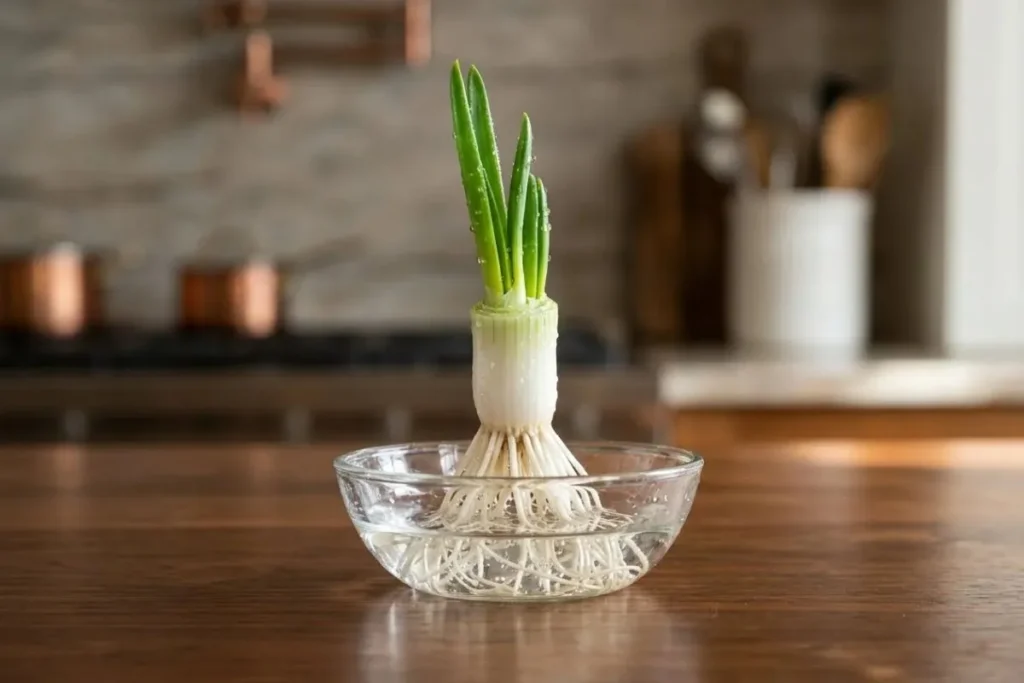
The best part is that you don’t need much space to get started. A small glass, a container, or a pot on your windowsill can be enough. Whether you want to regrow green onions from scraps, grow them indoors, or enjoy fresh spring onions for everyday meals, this easy gardening project is worth trying.
Can You Regrow Green Onions From Kitchen Scraps?
Yes! You can regrow green onions from kitchen scraps, and you don’t need to be an experienced gardener to do it. Green onions have a natural ability to produce new green shoots from their healthy white bases and roots.
When you save the bottom portion instead of throwing it away, you can use it to grow fresh leaves again.
This process works because the growing point at the base of the onion remains active even after you cut off the green tops. With enough moisture, light, and proper care, new shoots can emerge from the center. That’s why regrowing onions from scraps is such a popular kitchen gardening trick.
How Do Green Onion Roots Help Produce New Green Shoots?
Green onion roots play an important role in regrowth. They absorb water and help the plant take in nutrients needed for healthy development. The white base also contains the growing point that produces new green leaves.
When you place a healthy green onion base in water or plant it in soil, the roots continue supporting new growth. You may notice tiny green shoots appearing from the center after a few days. As the plant develops, these shoots become longer and ready for harvesting.
Healthy roots usually give you a better starting point, so avoid throwing away the white bottom part when preparing green onions for cooking.
Can You Regrow Green Onions From Store-Bought Onions?
Absolutely! Store-bought green onions are often perfect for regrowing, especially when they still have fresh, healthy roots attached. You don’t need to purchase special seeds or young plants from a nursery.
When choosing green onions, look for firm white bases, fresh green leaves, and roots that aren’t dry, slimy, or damaged. Save the bottom portion after cutting the leaves for cooking. These leftover bases can be used for regrowing green onions in water or planting them directly in soil.
This is one of the easiest ways to keep fresh scallions available at home while making better use of your grocery purchases.
Difference Between Green Onion Bulbs, Roots, and Cut Stems
Understanding the different parts of a green onion helps you get better results when regrowing it.
Green onion roots: These are the thin, hair-like structures growing from the bottom of the plant. They absorb water and nutrients and help keep the onion growing.
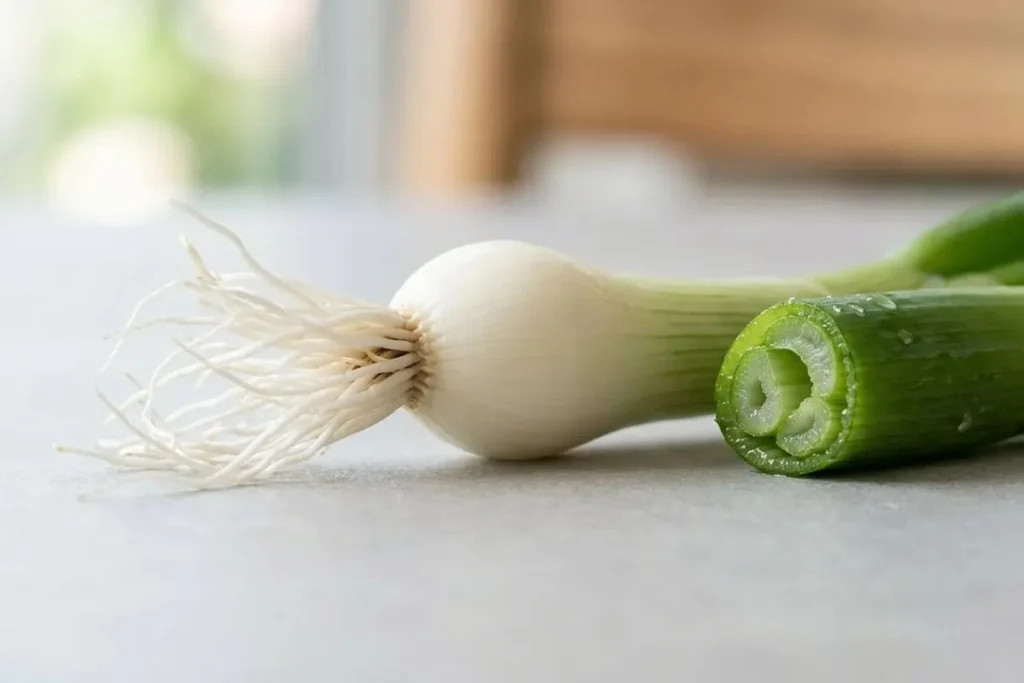
White onion base: This is the firm white portion just above the roots. It contains the growing point responsible for producing fresh green leaves.
Green cut stems: These are the long, hollow leaves commonly used in salads, soups, and other recipes. You can cut and use these leaves while keeping the healthy white base and roots for regrowth.
The most important part to save is the white base with its roots and growing point. Without a healthy growing point, regrowth may not happen successfully.
How Many Times Can You Regrow Green Onions?
Green onions can regrow more than once, but they won’t produce fresh leaves forever. Each time you harvest the green tops, the plant uses some of its stored energy to develop new growth. Eventually, regrowth may become slower, and the leaves may become thinner or weaker.
How many times you can regrow green onions depends on the health of the original plant, growing conditions, and how you harvest it. Plants growing in suitable soil with proper light and nutrients may continue producing new leaves longer than those kept in water alone.
For better results, avoid cutting the entire plant down to its base. Leave enough green growth for the onion to recover and produce fresh shoots.
What You Need to Regrow Green Onions at Home
Many people think you need expensive gardening tools or special equipment to regrow green onions, but that’s not the case. You can start with a few basic household items and supplies you may already have in your kitchen. Whether you plan on growing green onions in water or soil, having the right materials ready will make the process easier and help your plants grow successfully.
Before you begin, gather a few fresh green onion bases, a suitable container, clean water, and some basic gardening supplies. If you want to grow green onions indoors, a sunny windowsill and a small pot can be enough. Let’s look at everything you need to get started.
Fresh Green Onions With Healthy White Roots
The first thing you need is a bunch of fresh green onions. Choose ones with firm white bases and healthy roots because they provide a good starting point for regrowth. Avoid onions that look dried out, feel mushy, or have damaged roots.
You don’t need to buy a special variety for this project. Regular grocery-store green onions, scallions, or spring onions can work well. Just make sure the white bases are fresh and haven’t started rotting.
For the best results, choose green onions with roots that are still attached. Fresh roots make it easier to establish the plants in water or soil.
A Clean Glass or Small Container
If you want to learn how to regrow green onions in water at home, you’ll need a clean glass, jar, or small container. There is no need to purchase an expensive gardening setup. An ordinary drinking glass can work perfectly.
Choose a container that keeps the onion bases upright without crowding them. A clear glass is especially useful because you can easily check the water level and monitor root development.
Make sure the container is clean before adding your onion roots. Dirty containers can encourage bacterial growth and create unpleasant smells. A narrow glass can also help keep the onion bases in place while their roots sit in water.
Fresh, Clean Water
Water is essential for encouraging new green onion growth. If you’re using the water-growing method, you’ll need enough clean water to keep the roots moist without completely covering the white onion bases.
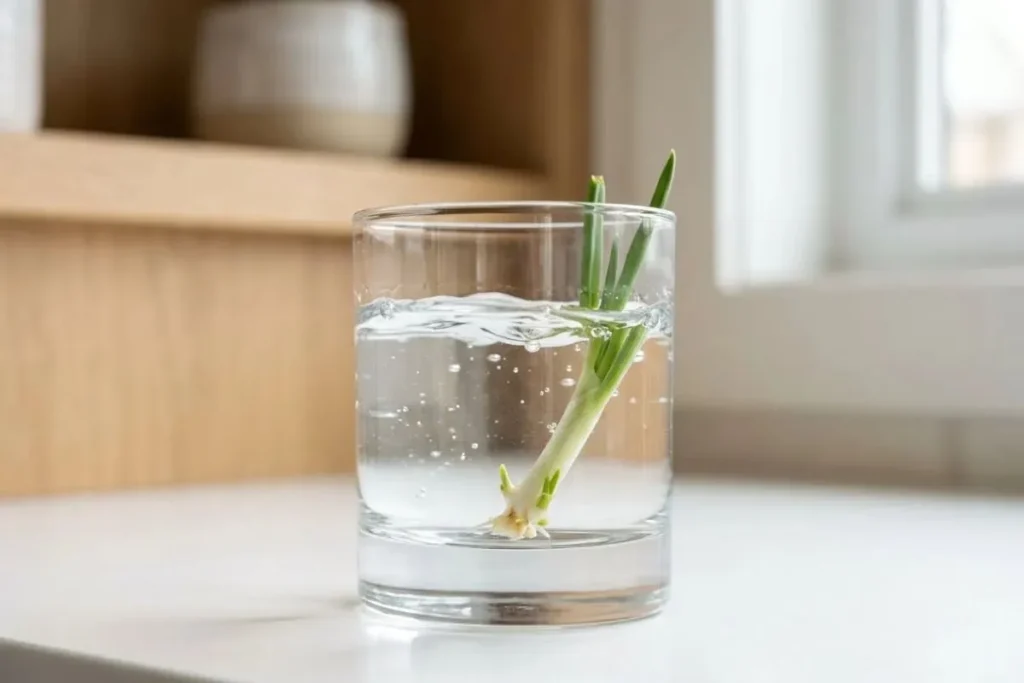
Regular tap water is generally suitable if it’s safe for drinking in your area. If your tap water has a strong chlorine smell, you can use filtered water instead.
Keep the water fresh by replacing it regularly. Avoid letting the roots sit in dirty or stagnant water because this can encourage rot. Clean water helps create a healthier environment for growing green onions indoors.
Small Pots or Containers With Drainage Holes
If you prefer growing green onions in soil, prepare a small pot or container with drainage holes. You don’t need a large garden planter because green onions have relatively small root systems.
A container around 6–8 inches deep is a practical starting point for a small indoor green onion garden. You can also use a wider pot if you want to grow several onion bases together.
Drainage holes are important because excess water needs somewhere to escape. Without proper drainage, the soil can become waterlogged and damage the roots.
You can use plastic, ceramic, or terracotta pots. Just choose something sturdy enough to support healthy plant growth.
Well-Draining Potting Soil
Good-quality potting soil is another important supply when growing green onions in containers. It provides support for the roots and holds the moisture and nutrients plants need.
Choose a loose, well-draining potting mix rather than heavy garden soil. A suitable mix allows water to move through easily while keeping enough moisture around the roots.
You don’t need a complicated soil mixture for this project. A standard vegetable potting mix is usually a convenient option for beginners.
Avoid using soil that feels compacted or stays wet for too long. Healthy green onion roots need both moisture and access to air.
How to Regrow Green Onions in Water (Step-by-Step)
Many people believe that growing green onions in water is difficult or that you need special gardening skills to get good results. However, it’s one of the easiest ways to grow fresh scallions at home.
You can regrow green onions in water using a simple glass or jar, a little clean water, and a bright spot near a window. This method is perfect for beginners who want fresh green onion leaves without dealing with potting soil or outdoor gardening.
The best thing about this method is that you can watch the roots and new shoots develop right before your eyes. If you’re wondering how to regrow green onions in water at home, follow these simple steps.
With a little attention and regular water changes, you can encourage healthy green growth in your kitchen.
Select Fresh Green Onions With Intact White Roots
Start by choosing green onions that have healthy white bases and intact roots. Fresh roots make it easier for the plant to absorb water and support new growth.
Avoid using onion bases that feel soft, look slimy, or have dark spots. These signs may indicate damage or rot, which can affect regrowth.
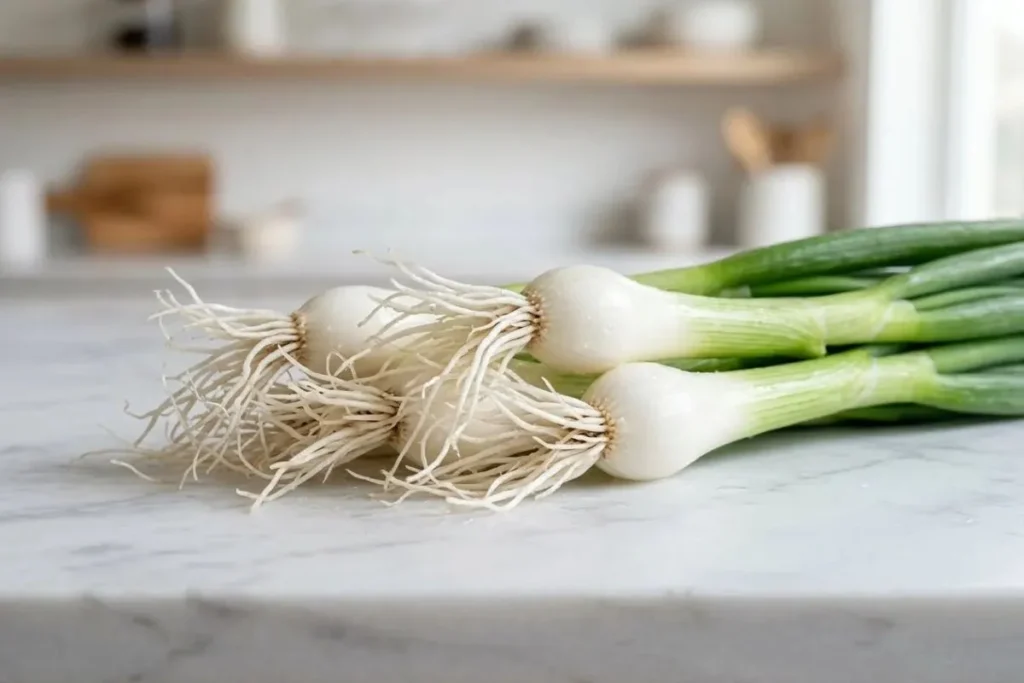
You can use green onions purchased from a grocery store or farmers’ market. Just make sure the roots haven’t dried out completely. Healthy onion bases give you a better chance of getting fresh green shoots.
Cut the Green Tops While Leaving 1–2 Inches of the White Base
Take your green onions and separate the white bottom portions from the green leaves. Using clean scissors or a sharp kitchen knife, cut the stems while leaving approximately 1–2 inches of the white base attached to the roots.
Try not to damage the center of the white base because this is where new leaves develop. Keep the roots attached and avoid cutting too close to them.
You can use the removed green tops in salads, soups, noodles, or other favorite recipes. This way, you get to enjoy the leaves while keeping the remaining onion bases for your indoor gardening project.
Place the Roots in a Clean Glass or Jar
Once you’ve prepared the onion bases, find a clean glass, jar, or small container. Place the white bases inside with their roots pointing downward.
Arrange them so they stand upright without being packed too tightly together. If the container is too wide, the onion bases may fall over. A narrow glass can help keep them in position.
You don’t need a special growing container. An ordinary kitchen glass works well as long as it is clean and provides enough space for the roots.
Add Enough Water to Cover the Roots
Pour fresh water into the glass until the roots are submerged. Keep the water level low enough that only the roots and the very bottom of the white bases touch the water.
Avoid covering the entire white onion portion because too much standing water can encourage rot. The goal is to keep the roots moist while allowing the upper part of the onion base to remain exposed to air.
Check the water level regularly, especially if your kitchen is warm. Water can evaporate faster in warmer conditions, so add fresh water whenever the roots are no longer properly covered.
Place the Container Near a Bright Window
Light is important when regrowing green onions in water. After preparing your container, place it near a bright window where the plants can receive plenty of natural light.
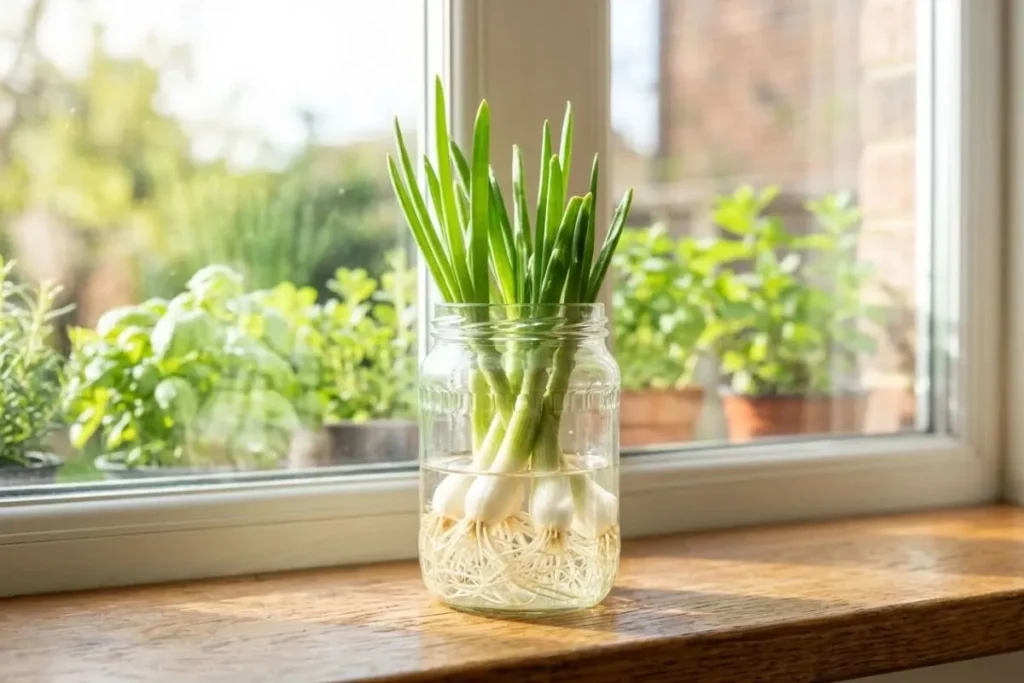
A sunny kitchen windowsill is often a convenient location. Try to provide around 6 hours of light daily, while avoiding excessive heat that may dry out the plants or warm the water too much.
If your home doesn’t receive enough natural sunlight, you can consider using a grow light. Proper lighting encourages stronger green leaves and helps prevent weak, pale growth.
Change the Water Regularly to Prevent Unpleasant Smells
One of the most important parts of growing green onions in water is keeping the water clean. Don’t leave the same water sitting in the glass for too long.
Replace the water every 1–2 days, or sooner if it becomes cloudy or develops an unpleasant smell. When changing it, gently rinse the roots and wash the container if you notice any residue.
Fresh water helps reduce bacterial growth and keeps the roots in a healthier environment. Also, check the onion bases regularly. If any part becomes slimy or starts rotting, remove the damaged portion before it affects the other plants.
Frequently Asked Questions About How to Regrow Green Onion
Can You Regrow Green Onions From Just the Roots?
Yes, you can regrow green onions from their roots if a small portion of the white base and its growing point remain attached. Healthy roots help the plant absorb water, while the growing point produces new green leaves. Simply placing loose roots without any living base usually won’t produce a new onion plant.
Can Green Onions Grow Back After Cutting?
Yes! Green onions can grow back after cutting as long as you leave the healthy white base and growing point intact. Use clean scissors to harvest the green leaves and avoid cutting too close to the base. With enough light, water, and proper care, new shoots can develop.
How Long Does It Take to Regrow Green Onions in Water?
Green onions may start producing fresh green shoots within a few days. However, growing enough leaves for harvesting can take longer. Sunlight, temperature, root health, and water quality all affect the growing speed. Keep the roots moist and replace the water regularly for better results.
Is It Better to Regrow Green Onions in Water or Soil?
Both methods work, but they serve slightly different purposes. Water is convenient for beginners because you can grow green onions in a simple glass without using potting soil.
However, soil generally supports better long-term growth because it provides nutrients and a more stable environment for the roots. If you want repeated harvests, growing green onions in soil is usually the better option.
How Many Times Can You Regrow Green Onions?
There isn’t a fixed number of times you can regrow green onions. It depends on the plant’s health, growing conditions, and harvesting habits. Repeated cutting can eventually weaken the plant, especially when it grows in plain water. Providing suitable soil, enough light, and proper care can help extend its productive life.
Can You Grow Green Onions Indoors All Year?
Yes, you can grow green onions indoors throughout the year. A bright windowsill, suitable container, and regular watering can help you maintain a small indoor garden. During darker months, a grow light may help provide enough light for healthy leaf development.
Do Green Onions Need Direct Sunlight?
Green onions need plenty of bright light, but they don’t always require strong direct sunlight throughout the day. A location receiving around 6 hours of sunlight is a good starting point. If the leaves become pale, thin, or weak, your plants may need more light.
Why Are My Regrowing Green Onions Turning Yellow?
Yellow leaves can develop for several reasons, including insufficient sunlight, poor water quality, overwatering, or unhealthy roots. If you’re growing green onions in water, check for cloudy water and slimy roots. For soil-grown plants, make sure the soil isn’t constantly soggy. Remove damaged leaves and improve the growing conditions.
Can You Regrow Green Onions From Store-Bought Onions?
Yes, store-bought green onions are a convenient option for regrowing at home. Choose fresh onions with healthy white bases and attached roots. Save the bottom portions after cooking and place them in water or plant them in soil. This is an easy way to turn grocery-store leftovers into fresh green onion plants.
Do Green Onions Need Fertilizer to Grow Back?
Green onions growing in plain water don’t receive all the nutrients they would normally get from soil. For longer-term growth, transferring them into nutrient-rich potting soil can help.
Soil-grown green onions may benefit from a balanced vegetable fertilizer when necessary. Always follow the product’s application instructions and avoid using too much fertilizer.
Can You Keep Green Onions Growing in Water Permanently?
Green onions can grow in water for some time, but keeping them in plain water permanently isn’t ideal. Water provides moisture but doesn’t contain all the nutrients plants need for continued healthy growth. Over time, the leaves may become thinner, and regrowth may slow down. Moving the plants into soil is a better choice if you want to maintain them for longer.
How Do You Keep Green Onions Growing After Harvesting?
To encourage continued growth, avoid cutting the entire plant down to its base. Leave the white portion and some healthy green leaves intact. Provide enough sunlight, maintain proper moisture, and remove damaged leaves when needed.
If the plants are growing in water and their growth becomes weak, consider transferring them into well-draining soil.
Conclusion:
Learning how to regrow green onion at home is a simple way to enjoy fresh vegetables while making better use of your kitchen leftovers. You don’t need a large garden, expensive supplies, or advanced gardening skills to get started.
A few healthy green onion roots, some clean water, or a small pot with soil can be enough to begin your growing journey.
Whether you choose to regrow green onions in water or plant them directly in soil, both methods offer an easy starting point. The water method is great for beginners who want to watch new shoots develop, while soil is generally better for maintaining healthy plants over a longer period.
Remember to provide enough sunlight, keep the roots healthy, and avoid overwatering. Harvest the green leaves carefully so your plants have a chance to grow again.
So, the next time you prepare green onions for a meal, don’t throw away those healthy white bases and roots. Save them, give them a little care, and enjoy growing your own fresh scallions right at home. Happy gardening!

Plant Nest Blog’s author is passionate about plants, gardening, and sustainable living. Through research and practical experience, they share helpful plant care tips, gardening guides, and easy solutions to help readers grow healthier plants and create greener spaces.