
Many gardeners believe that celery is too difficult to grow at home, but that is not entirely true. With the right conditions and a little patience, beginners can successfully grow celery from seed.
Learning how to plant celery seeds starts with understanding their need for consistent moisture, suitable temperatures, and enough light as the seedlings develop.
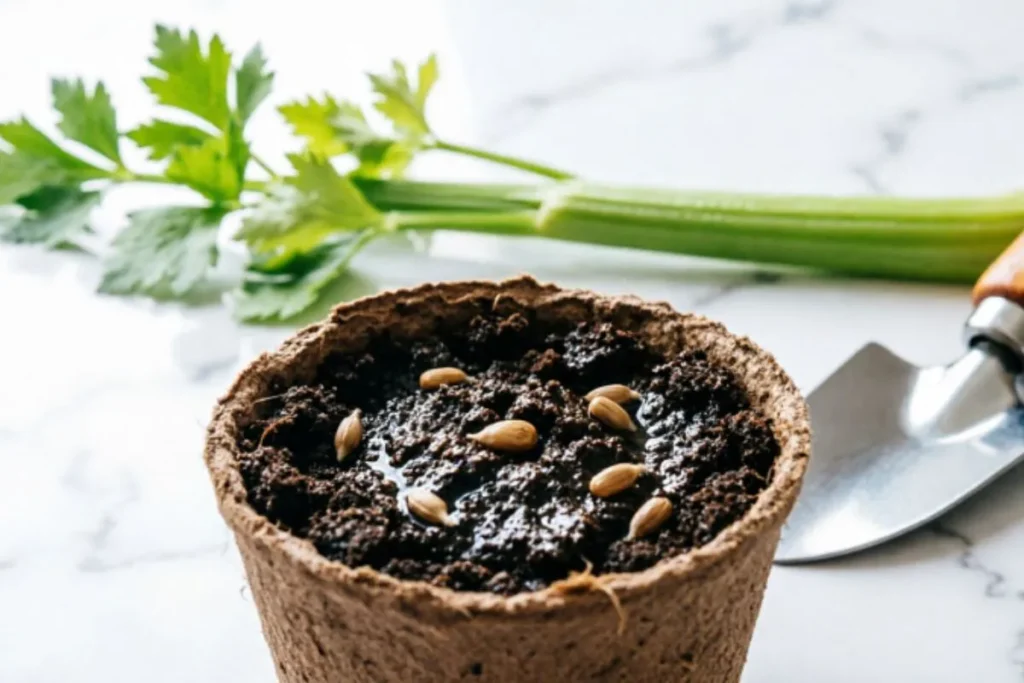
Growing celery from seeds lets you enjoy fresh stalks straight from your garden or containers. The process takes time, but starting seeds indoors and caring for young seedlings properly can make it easier.
In this guide, you’ll learn when to plant celery seeds, how to encourage germination, and how to grow healthy plants for a fresh homegrown harvest.
When Is the Best Time to Plant Celery Seeds?
Best Time to Start Celery Seeds Indoors
The best time to plant celery seeds depends on your local climate, but many gardeners start them indoors about 10–12 weeks before the last expected spring frost.
Celery grows slowly at first, so early seed starting gives seedlings time to develop before moving outdoors. If you’re wondering, “When is the best time to plant celery seeds?”, check your local frost dates and choose a schedule that allows your plants to grow during cooler weather.
Temperature and Growing Conditions for Celery Seeds
Celery seeds need suitable temperatures and steady moisture to germinate successfully. A temperature of around 70–75°F (21–24°C) is generally helpful during germination, although conditions can affect how quickly seeds sprout.
Once seedlings emerge, provide bright light and avoid exposing them to extreme heat or cold. Good celery seed germination starts with a moist not waterlogged growing medium and consistent care. These celery growing conditions help young plants establish strong growth before transplanting.
What You Need to Plant Celery Seeds
You don’t need expensive gardening equipment to learn how to plant celery seeds successfully. Many beginners assume they need a greenhouse or special tools, but a few basic supplies are enough to get started.
Good-quality seeds, a suitable growing mix, and a container with proper drainage will help you create a healthy environment for young celery seedlings.
Choosing the Right Celery Seeds
Start with fresh, good-quality celery seeds from a reliable gardening supplier. Check the seed packet for the variety, growing instructions, and expiry date. Fresh seeds generally have a better chance of germinating, although results also depend on storage and growing conditions.
If you plan to grow celery in your garden, choose a variety suited to your local climate and growing season. Some varieties are better suited to home gardens, while others may perform well in containers.
Remember that culinary celery seeds sold for seasoning are not always the best choice for planting because their variety, age, and germination ability may be uncertain.
Choosing suitable seeds is the first step in how to start celery seeds and grow healthy plants at home.
Choosing the Best Soil for Growing Celery
Celery seeds need a fine, light growing medium that holds moisture without becoming waterlogged. A quality seed-starting mix is a good choice because it provides a suitable environment for tiny seeds and developing roots. Avoid heavy garden soil in seed trays, as it can become compacted and make it harder for delicate seedlings to grow.
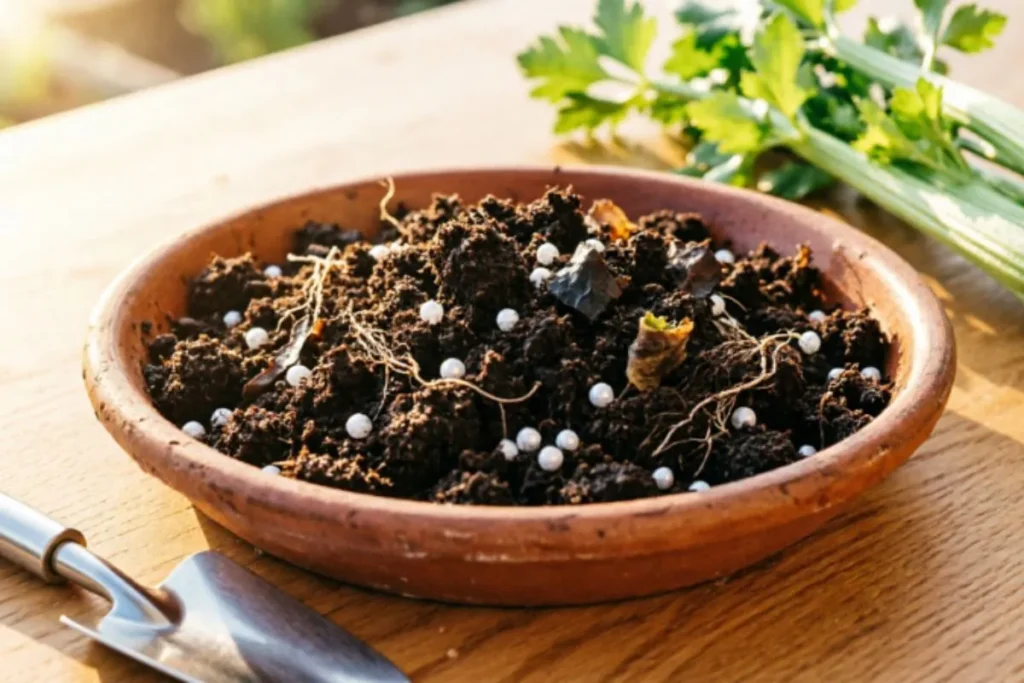
If you’re wondering, “What is the best soil for growing celery from seeds?”, look for a clean seed-starting mix that drains well and retains enough moisture to keep the seeds from drying out.
Celery grows best in fertile soil once established, but young seedlings benefit from a lightweight medium designed for seed starting.
Before sowing, moisten the mix evenly. It should feel damp to the touch without releasing excess water when squeezed. This simple preparation helps create suitable conditions for celery seed germination.
Selecting Seed Trays and Containers
A seed tray, small pots, or another clean container can work well for starting celery seeds indoors. Choose a container with drainage holes so excess water can escape. Good drainage helps prevent soggy soil, which may damage developing roots and encourage seedling diseases.
A shallow seed tray is useful when you want to start several seeds at once. Small individual pots can also work, especially if you prefer to move seedlings with less root disturbance later. Fill your chosen container with a suitable seed-starting mix and leave a little space at the top for watering.
For the best results, use clean equipment and avoid overcrowding the seeds. A suitable celery seed tray and quality seed starting mix for celery make seedling care easier. If you plan on growing celery in containers, you can move the young plants into larger pots after they develop enough growth.
How to Plant Celery Seeds Step by Step
Celery seeds are tiny, so planting them too deeply is a common mistake. You don’t need to bury them far beneath the soil to help them grow. Instead, focus on shallow sowing, gentle watering, and consistent moisture.
Follow these seven steps to learn how to plant celery seeds and give your seedlings a strong start.
Fill Your Seed Tray With Seed-Starting Mix
Fill a clean seed tray or small pots with your prepared seed-starting mix. Spread the medium evenly and gently level the surface without pressing it down too firmly. The goal is to create a light, even surface where the seeds can make good contact with the growing medium.
Moisten the mix before sowing. This helps prevent tiny celery seeds from being washed away when you water them later. Make sure the container drains properly and does not sit in standing water.
Sow Celery Seeds on the Soil Surface
Sprinkle the celery seeds lightly over the surface of the growing mix. Try to leave a little space between them so the seedlings will not become too crowded. Because celery seeds are small and need light for reliable germination, they should generally remain on the surface or receive only a very thin covering of fine growing medium.
If you’re asking, “How deep should you plant celery seeds?”, the simple answer is to sow them very shallowly rather than burying them deeply. Deep planting can make it harder for the tiny seedlings to emerge.
This method is the key to how to sow celery seeds successfully. After sowing, gently press the seeds against the moist surface to help them make contact with the growing medium. Avoid pushing them deep into the soil.
Water the Seeds Gently
Celery seeds need consistent moisture during germination, but strong water pressure can move them around or wash them out of position. Use a fine spray bottle or a gentle watering method to moisten the surface without disturbing the seeds.
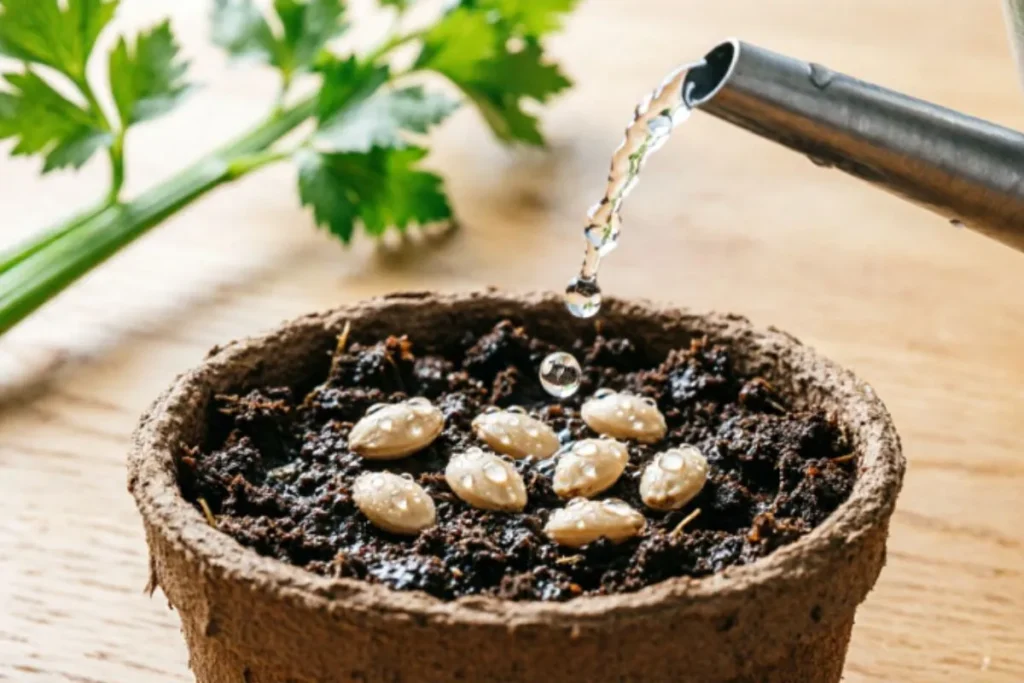
Check the growing medium regularly. If the surface starts to dry, add a light mist rather than soaking the tray. The soil should remain evenly moist, not muddy or waterlogged.
Many beginners ask, “How often should you water celery seedlings?” There is no single schedule that works for every home because temperature, light, and container size affect how quickly the soil dries. Check the moisture level daily and water whenever needed.
Provide Enough Light
Place your seed tray in a bright location. Once the seeds germinate, the young plants need sufficient light to develop strong stems and healthy leaves. A bright window may work, but a grow light can provide more consistent lighting if natural sunlight is limited.
Keep the light close enough to support healthy growth while following the manufacturer’s recommended distance. If seedlings become tall, thin, and weak, they may not be receiving enough light.
Good light requirements for celery seedlings are essential for healthy development. Rotate trays near a window when necessary so the seedlings do not lean too far in one direction.
Keep the Soil Consistently Moist
Celery seeds can struggle if the growing medium dries out during germination. Check the tray frequently and maintain even moisture throughout the seed-starting period. A clear humidity cover can help reduce moisture loss, but remove it or open it for ventilation as appropriate, especially once seedlings begin to emerge.
Avoid leaving the tray sitting in water for long periods. Excess moisture can reduce airflow around the roots and encourage fungal problems. The aim is to keep the growing medium damp while allowing excess water to drain freely.
Consistent moisture is one of the most important parts of growing celery from seed. Small daily checks can prevent both dry soil and overwatering.
Wait for the Seeds to Germinate
Celery seeds can take around two to three weeks to germinate, although some may take longer depending on seed freshness, temperature, and moisture. Do not assume the seeds have failed simply because they have not sprouted after a few days.
If you’re wondering, “How long do celery seeds take to germinate?”, allow enough time and keep the growing medium moist. Check that the seeds have not been buried too deeply and that the tray is in a suitable environment.
Once the first seedlings appear, continue providing bright light and gentle moisture. Remove any humidity cover gradually or as soon as it is no longer needed, allowing enough airflow to support healthy growth.
How to Grow Celery From Seeds Indoors
Growing celery indoors gives you more control over the conditions your young plants need. You don’t need a greenhouse or expensive equipment to get started.
With suitable light, consistent moisture, and a stable growing environment, you can raise healthy seedlings at home before transplanting them outdoors.
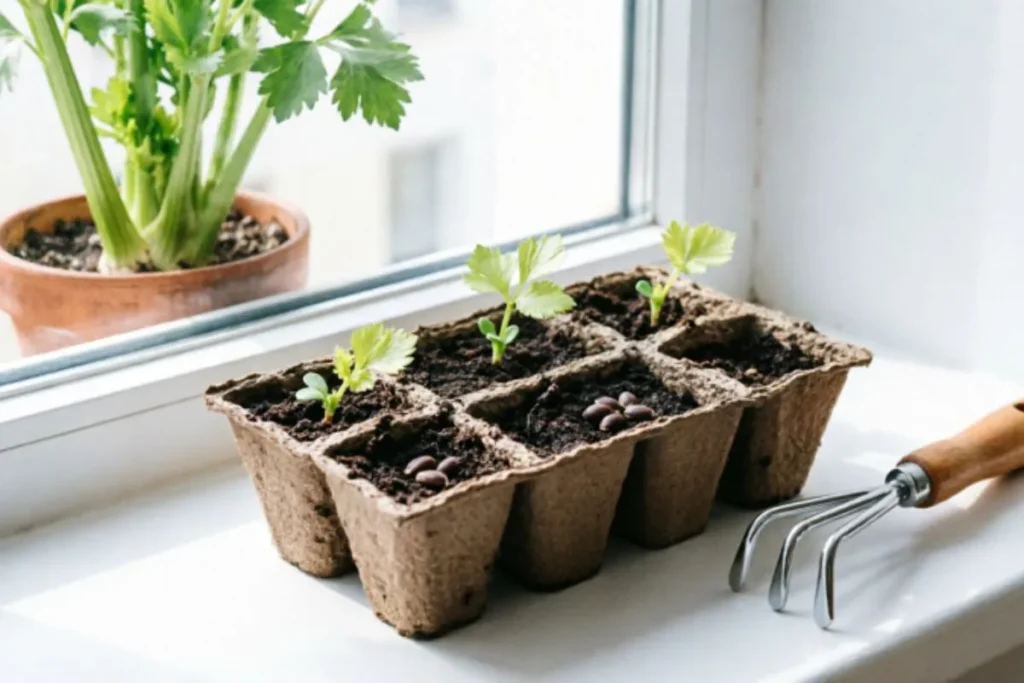
Set Up the Right Indoor Growing Environment
Choose a location where your celery seed tray can stay at a relatively stable temperature. Keep the growing medium moist and provide bright light as soon as the seedlings emerge. If a sunny windowsill doesn’t provide enough light, use a grow light to encourage healthy growth.
When planting celery seeds indoors, avoid placing the tray near heating vents or in areas with sudden temperature changes. Good airflow also helps prevent excess moisture from building up around young plants.
These simple steps support growing celery from seed indoors and help seedlings develop steadily.
How to Keep Celery Seedlings Healthy
Healthy celery seedlings need consistent moisture, sufficient light, and room to grow. Check the growing medium regularly and water when the surface begins to dry. Avoid overwatering because constantly soggy soil can damage delicate roots.
Make sure your seedlings receive enough light to prevent weak, stretched stems. If several seedlings grow too close together, thin them carefully to reduce competition. Handle the plants gently and avoid disturbing their roots unnecessarily.
For effective celery seedling care, inspect your plants regularly for yellowing leaves, weak stems, or signs of mold. Catching problems early makes it easier to adjust the growing conditions and maintain healthy development.
Common Indoor Seed-Starting Problems
Even with careful attention, you may experience a few problems when starting celery seeds indoors. The good news is that most issues become easier to manage when you understand their causes.
Slow germination: Celery seeds can take time to sprout. Check the seed packet, maintain suitable temperatures, and keep the growing medium consistently moist.
Dry growing medium: Small seeds can struggle if the surface dries out. Check the tray regularly and mist gently when needed.
Excess moisture: Waterlogged soil can encourage mold and root problems. Use containers with drainage holes and remove excess water.
Weak or leggy seedlings: Stretched stems often indicate insufficient light. Move the tray to a brighter location or adjust your grow light.
Crowded seedlings: Plants growing too closely may compete for light and space. Thin them carefully once they are large enough to handle.
If you notice any of these common celery growing problems, make one adjustment at a time and monitor the results. Consistent care and suitable growing conditions will give your indoor celery seedlings a better chance of developing into strong plants.
Frequently Asked Questions About How to Plant Celery Seeds
Can You Plant Celery Seeds Directly Outdoors?
Yes, you can plant celery seeds directly outdoors when your local climate provides suitable growing conditions. However, starting seeds indoors is often more reliable because celery grows slowly during its early stages. Indoor seed starting also gives you better control over moisture, temperature, and light.
Do Celery Seeds Need Light to Germinate?
Yes, celery seeds benefit from light during germination. Sow them on the soil surface or cover them with only a very thin layer of growing medium. Keep the surface moist and provide suitable temperatures to encourage successful germination.
How Deep Should Celery Seeds Be Planted?
Celery seeds should be planted very shallowly. Sprinkle them over moist seed-starting mix and gently press them against the surface. Avoid burying them deeply because this can make it harder for the tiny seedlings to emerge.
How Long Do Celery Seeds Take to Germinate?
Celery seeds typically take around two to three weeks to germinate, although some may need longer. Seed freshness, temperature, and moisture levels can affect the timing. Keep the growing medium consistently moist and give the seeds enough time to sprout.
Can You Grow Celery From Seeds in Pots?
Yes, you can grow celery from seeds in pots. Start the seeds in a small seed tray or container, then transplant the seedlings into a larger pot with drainage holes when they are ready. Use a fertile, moisture-retentive potting mix and provide sufficient light and regular watering.
Why Are My Celery Seeds Not Germinating?
Celery seeds may fail to germinate because the growing medium has dried out, the seeds were buried too deeply, temperatures were unsuitable, or the seeds were old. Check these conditions before starting another batch. Fresh seeds, shallow sowing, and consistent moisture can improve your chances of success.
How Often Should I Water Celery Seedlings?
Water celery seedlings whenever the growing medium begins to dry out. Check the soil regularly instead of following a strict watering schedule. Young seedlings need consistent moisture, but waterlogged soil can damage their roots and encourage fungal problems.
When Can I Move Celery Seedlings Outside?
Move celery seedlings outdoors when they are sufficiently developed and the weather is suitable for their variety. Before transplanting, gradually expose them to outdoor conditions over about a week.
This process, called hardening off, helps them adjust to sunlight, wind, and changing temperatures. Avoid moving delicate seedlings outside suddenly, especially during extreme weather.
Conclusion
Learning how to plant celery seeds is easier when you follow the right steps and give your plants consistent care. Start with quality seeds, sow them shallowly in a suitable growing mix, and keep the soil moist while they germinate.
Once seedlings emerge, provide enough light and protect them from extreme temperatures.
Whether you’re growing celery indoors, in pots, or in your garden, patience is essential because celery takes time to mature.
With proper watering, healthy soil, and careful transplanting, you can enjoy fresh, homegrown celery straight from your own growing space.

Plant Nest Blog’s author is passionate about plants, gardening, and sustainable living. Through research and practical experience, they share helpful plant care tips, gardening guides, and easy solutions to help readers grow healthier plants and create greener spaces.