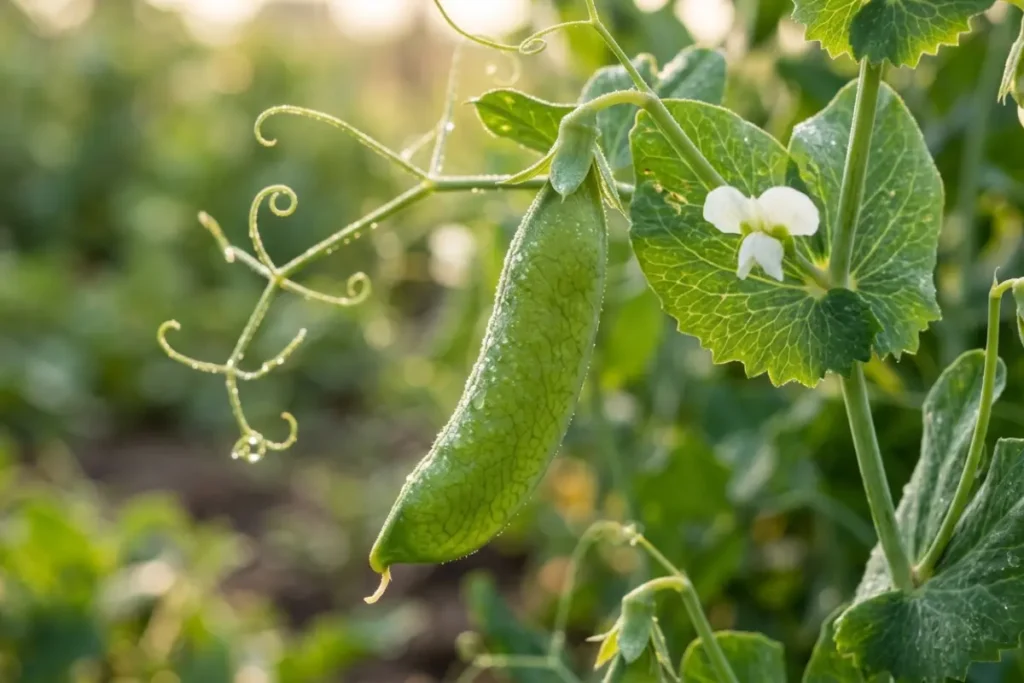
Many gardeners believe that growing fresh peas requires a large garden, but that is not true. How to Grow Pea Plants in Pots is a simple process that even beginners can manage with a little care.
Pea plants grow well in containers when they have enough space for their roots, suitable soil, and the right growing conditions. Whether you have a balcony, patio, or small outdoor area, you can enjoy growing green peas at home without needing a traditional garden.
The key to success is choosing the right pea variety, using a pot with drainage holes, and providing enough sunlight and water. Start with healthy pea seeds and a well-draining potting mix to give your plants a strong beginning.
With proper care, container-grown peas can produce fresh, tasty pods right outside your home, making them a rewarding choice for small-space vegetable gardening.
Why Grow Peas in Pots at Home?
Growing peas in pots is a great option if you want fresh vegetables but don’t have a large garden. Containers make it easy to grow peas on balconies, patios, and small outdoor spaces. With the right pot, suitable soil, and proper care, you can enjoy growing green peas at home without needing a traditional garden bed.
Benefits of Growing Pea Plants in Containers
Growing pea plants in containers gives you more control over their growing conditions. You can choose the right soil, manage watering easily, and keep an eye on plant health. Pots also help you make the most of limited space while enjoying fresh, homegrown peas.
How to Grow Peas in Pots When You Have Limited Gardening Space
You don’t need a large backyard to grow peas successfully. Choose a suitable container and place it on a balcony, patio, or sunny doorstep. If space is limited, consider compact pea varieties or use a trellis to help climbing plants grow upward instead of spreading across the ground.
Growing Green Peas at Home on Balconies, Patios, and Small Outdoor Areas
Pea plants can grow well in containers on balconies and patios when they receive suitable sunlight and regular care. Choose a location with plenty of light and protect your pots from excessive heat. Make sure the containers have drainage holes so extra water can escape and the roots stay healthy.
How Container Gardening Makes It Easier to Manage Soil, Watering, and Plant Care
One major advantage of container gardening is that you can choose a suitable potting mix instead of relying on the soil in your yard. You can also check soil moisture easily and adjust watering as the weather changes. Regularly inspect your pea plants for yellow leaves, pests, or signs of poor growth so you can address problems early.
Can You Grow Pea Plants Indoors or Do They Need to Stay Outdoors?
Pea plants generally grow best outdoors because they need plenty of natural light and good air circulation. Growing them indoors is possible if you have a bright location or a suitable grow light. However, limited light and poor airflow can lead to weak growth, so a sunny balcony or patio is usually a better choice.
Is Growing Peas in Pots Suitable for Beginners?
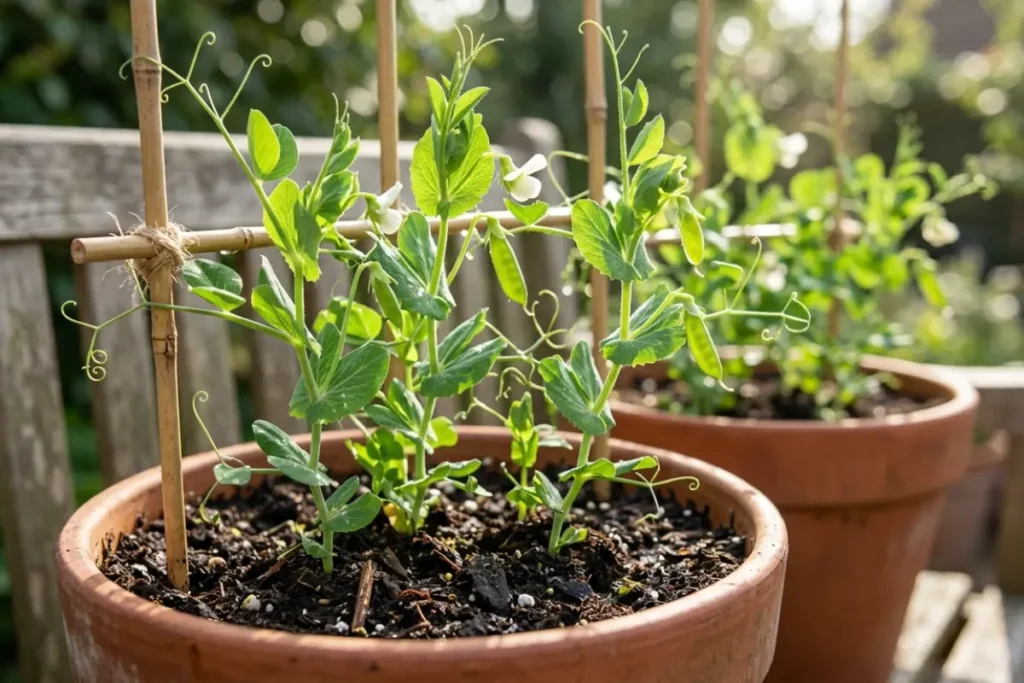
Yes, growing peas in pots is a beginner-friendly gardening project. Pea seeds are easy to plant, and the plants don’t require complicated equipment. Start with a suitable container, quality potting mix, and a variety that matches your available space.
Water when needed, provide enough sunlight, and support climbing varieties as they grow. With consistent care, beginners can learn the basics of container gardening and enjoy harvesting fresh peas at home.
Best Pea Varieties to Grow in Pots
Many gardeners believe that all pea plants need a large garden to grow well, but that is not true. Choosing the right pea variety makes it much easier to grow healthy plants in containers.
Some pea varieties grow compactly, while others climb and need support as they develop. When learning how to grow pea plants in pots, consider your available space, the type of peas you enjoy eating, and how much support you can provide.
Best Pea Varieties for Container Gardening
The best pea varieties for container gardening are those that fit your pot size and growing space. Bush peas are a good choice if you prefer shorter plants that need less support. Climbing peas are suitable for gardeners who want to grow upward using a trellis or other sturdy support.
Before buying seeds, check the plant’s mature height and growing requirements on the seed packet. Compact varieties work well on small balconies and patios, while taller varieties can produce plenty of pods when given enough root space and vertical support.
Choosing a suitable variety from the start can make growing green peas in containers easier and more enjoyable.
Bush Peas vs. Climbing Peas: Which Is Better for Pots?
Bush peas and climbing peas can both grow successfully in pots, but they have different space requirements.
Bush peas grow into shorter, more compact plants. They usually need less vertical support, making them a practical option for beginners or people with limited space. However, they still need a sufficiently deep container and good airflow around their leaves.
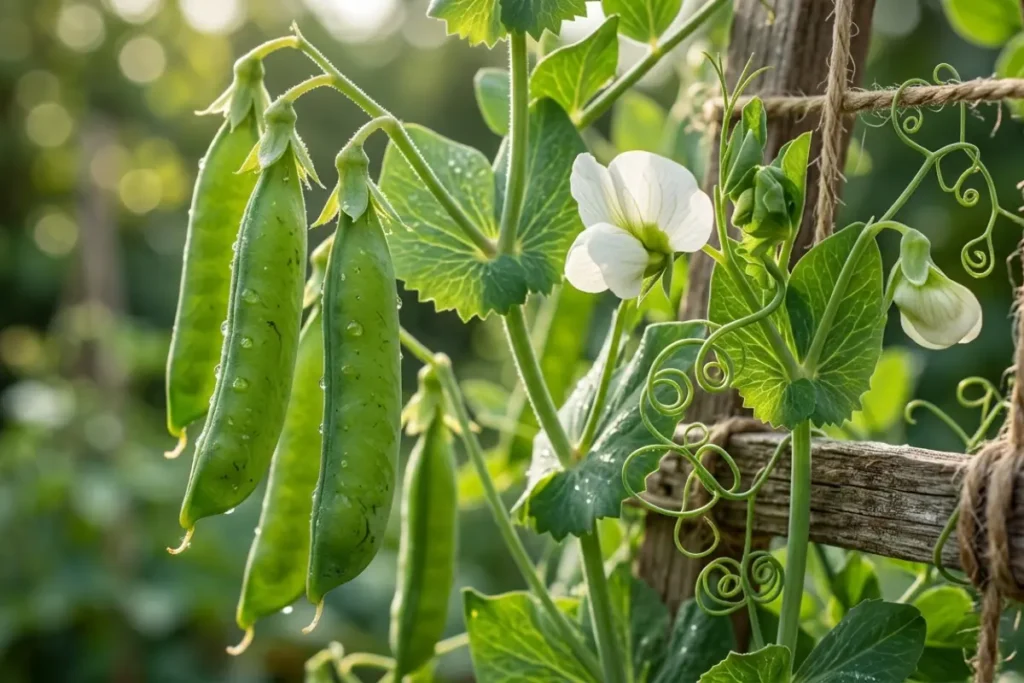
Climbing peas develop long vines that need something to grow on. A trellis, pea netting, or a suitable garden frame can help keep the vines upright. Growing vertically saves floor space and makes it easier to see and harvest the pods.
If you have a small balcony, bush peas may be easier to manage. If you have room for a trellis, climbing peas are also an excellent option. The best choice depends on your container size, available height, and personal preference.
Best Sweet Pea Varieties for Growing in Containers
If you want sweet, tender peas for fresh eating, look for edible-pod or shelling pea varieties that suit container growing. Shelling peas produce pods containing round peas that you remove before eating. Edible-pod varieties, such as snap peas and snow peas, are grown for their tender pods.
When choosing seeds, look for varieties described as compact, dwarf, patio-friendly, or suitable for containers. These descriptions can help you find plants that fit smaller spaces. However, always check the variety’s specific growing instructions because plant height, maturity time, and yield can differ.
Remember that ornamental sweet peas are grown mainly for their attractive flowers and fragrance. They are not the same as edible garden peas, and their seeds and pods should not be eaten. For harvesting food, choose seeds specifically sold for edible peas.
How to Choose Pea Seeds for Small Pots and Balcony Gardens
Choosing suitable pea seeds is an important step when growing peas in small pots. Start by checking whether the variety is compact or climbing. Compact types may be easier to manage in a limited area, while climbing varieties need room for a trellis.
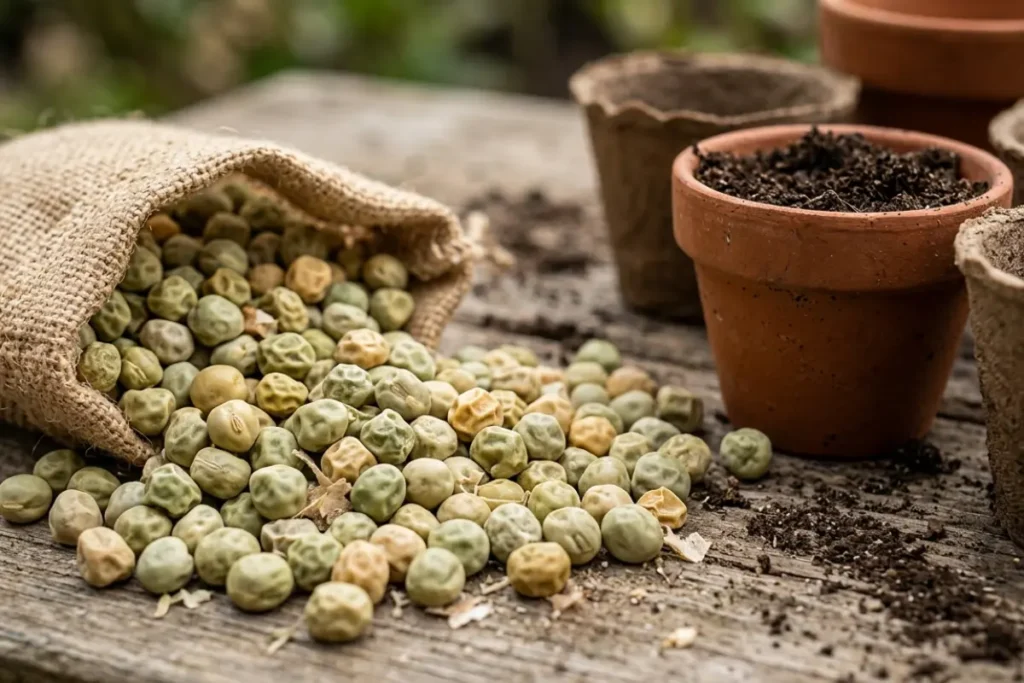
Next, consider how long the plants take to mature. If you want to harvest fresh peas sooner, look for an early-maturing variety and check the expected days to harvest on the packet. Also consider your local climate, since peas generally prefer cool growing conditions and may struggle during very hot weather.
Buy seeds from a reliable supplier and check the packet for planting instructions, seed quality, and the recommended growing season. Avoid choosing a variety based only on its name or appearance. Matching the seeds to your climate, container, and available space gives your pea plants a better chance of growing well.
Which Pea Varieties Are Best for Beginners?
For beginners, a compact bush variety can be a convenient starting point because it generally takes up less vertical space. It may also require less complicated support than a tall climbing variety. If you prefer climbing peas, choose a manageable variety and install its support before the vines become large.

Look for seeds that are suitable for your growing season and easy to find locally. Follow the packet’s instructions for sowing depth and spacing, and avoid overcrowding the container. Even beginner-friendly pea plants need enough sunlight, consistent moisture, and well-draining soil.
You don’t have to grow several varieties at once. Start with one variety that suits your space and learn how it responds to your local weather. Once you understand its needs, you can try other types of peas in future planting cycles.
Choosing the Right Pot for Growing Pea Plants
Many people believe that growing healthy pea plants in pots requires expensive containers or special gardening equipment, but that is not true. You can grow peas successfully in simple containers if you choose the right size, provide good drainage, and give the roots enough room to develop. When learning how to grow pea plants in pots, selecting a suitable container is an important step toward healthy growth and a better harvest.
What Size Pot Do Pea Plants Need?
Pea plants need enough room for their roots to spread and absorb water and nutrients. A pot that is too small can dry out quickly and limit root development, especially as the plants grow larger.
For most container-grown peas, choose a pot that is around 8–12 inches deep, then check the seed packet for any specific recommendations for your variety.
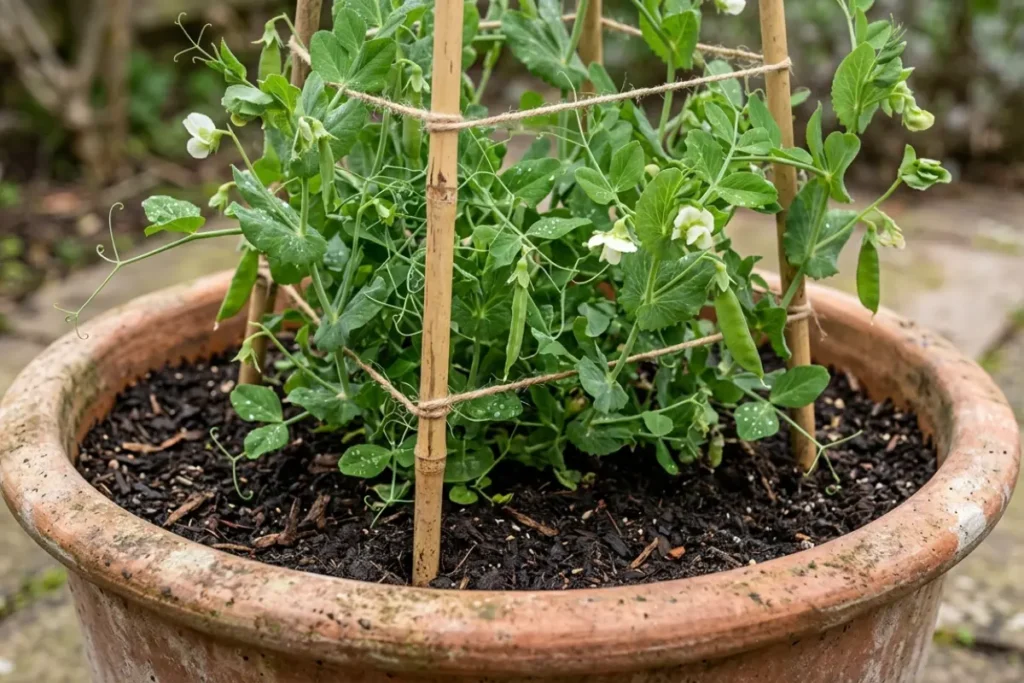
The width of the container also matters. A wider pot gives you more room to space several plants properly. If you plan to grow climbing peas, make sure the container can accommodate a trellis without becoming unstable. Choosing the right pot size for peas helps prevent overcrowding and makes regular watering easier.
Best Containers for Growing Peas at Home
You can grow pea plants in several types of containers, so there is no need to buy a special gardening pot. The best option depends on your budget, available space, and the type of peas you want to grow.
Plastic pots are lightweight and easy to move when the weather changes. They also tend to hold moisture longer than unglazed clay pots, which can be helpful during warmer days. However, you should still check the soil regularly to avoid keeping it too wet.
Fabric grow bags are another useful choice for growing peas in containers. They allow air to reach the roots and come in different sizes, making them suitable for balconies, patios, and small gardens.
Wooden planters can also work well if they are designed for growing edible plants and have adequate drainage.
Whatever container you choose, make sure it is sturdy enough to hold moist potting mix and support the plants as they grow.
Why Drainage Holes Are Important for Pea Plants
Good drainage is essential when growing peas in pots. If excess water cannot escape, the soil may remain soggy, leaving the roots with too little oxygen. This can encourage root problems and cause plants to turn yellow, wilt, or grow poorly.
Choose a pot with several drainage holes at the bottom. If you use a decorative outer container, make sure water does not collect inside it after watering. Empty any standing water rather than allowing the pot to sit in it for long periods.
Avoid containers without drainage unless you can safely modify them to let excess water escape. A layer of stones at the bottom does not replace drainage holes. Healthy roots need a suitable potting mix and a clear way for extra water to leave the container.
Can You Grow Peas in Buckets, Grow Bags, or Window Boxes?
Yes, you can grow pea plants in buckets, grow bags, and window boxes if the containers meet the plants’ basic needs. Each option has its own advantages, so choose one that suits your growing space.
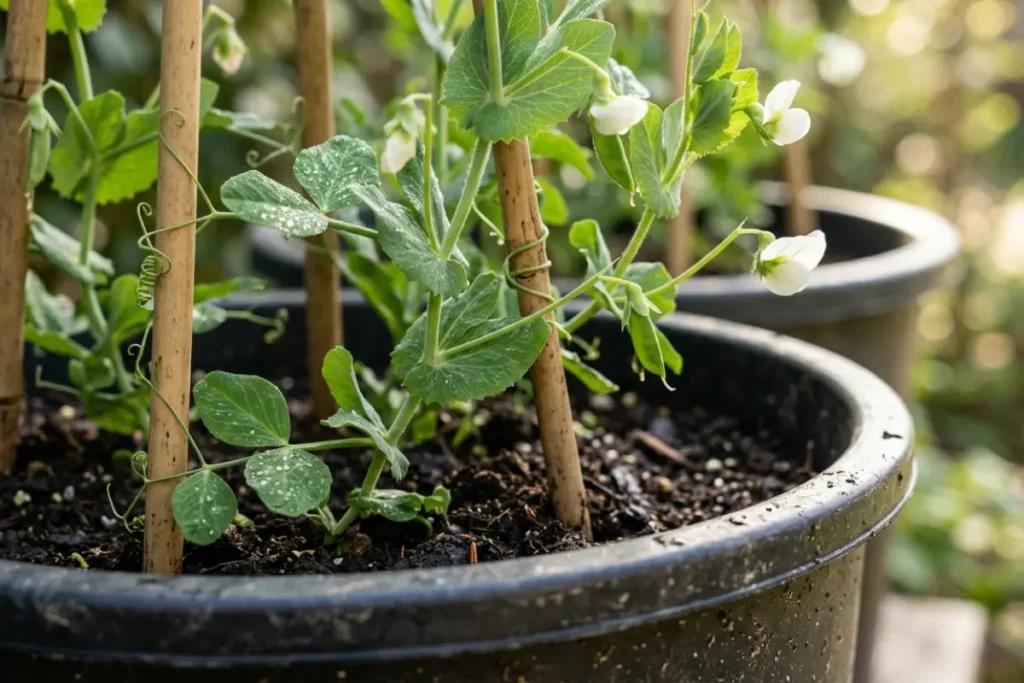
Buckets: Food-safe buckets can work well for growing peas, provided they are deep enough and have drainage holes. Avoid buckets that previously held paint, chemicals, or other harmful substances.
Grow bags: Fabric grow bags are easy to store and can be a good choice for patios and balconies. Select a size that provides enough room for the roots and the number of plants you intend to grow.
Window boxes: Long window boxes can work for compact pea varieties if they are sufficiently deep and securely positioned. Climbing varieties may need extra support, so consider where you will attach a small trellis.
Whatever container you use, check that it can safely support the weight of wet soil and plants. If you are growing peas on a balcony or windowsill, make sure the container is stable and cannot fall.
How to Prepare a Pot Before Planting Pea Seeds
Preparing your container before planting helps create a suitable environment for pea seeds and developing roots. Start by washing a reused pot to remove old soil and visible plant debris. If the container has been used for a diseased plant, clean it thoroughly before using it again.
Check the drainage holes to make sure they are open and not blocked. Then fill the pot with a good-quality potting mix that drains well but holds enough moisture for the roots. Avoid packing the mix too tightly because compacted soil can restrict root growth.
Leave a little space at the top of the container so water does not immediately spill over the sides when you water the plants. Before sowing, moisten the potting mix lightly so it is evenly damp rather than soaked.
Your pot is now ready for planting pea seeds according to the spacing and depth recommended on the seed packet.
Frequently Asked Questions About Growing Peas in Pots
How to Grow Pea Plants in Pots at Home?
To grow pea plants in pots at home, choose a container with drainage holes and fill it with a well-draining potting mix. Plant pea seeds at the depth recommended on the seed packet, leaving enough space between them.
Place the pot in a sunny location with suitable temperatures, and keep the soil consistently moist without making it soggy. If you grow climbing peas, provide a trellis for support. With regular care, you can enjoy fresh peas even without a garden.
How Do You Grow Green Peas in Containers From Seeds?
Growing green peas from seeds in containers is simple. First, select a pea variety that suits your available space and climate. Fill your pot with potting mix, sow the seeds according to the packet instructions, and water gently.
Keep the container in a bright location and check the soil regularly. Once the seedlings emerge, make sure they have enough room to grow and provide support if the variety produces long climbing vines.
What Are the Best Pots and Soil for Growing Pea Plants?
The best pots for growing peas are sturdy containers with adequate depth and drainage holes. A pot around 8–12 inches deep is a useful starting point for many varieties, although the ideal size depends on the plant and the number of seeds you sow.
Plastic pots, fabric grow bags, and suitable window boxes can all work well.
Use a quality potting mix that drains properly while retaining some moisture. Avoid heavy garden soil that becomes compacted in containers. Good drainage and suitable soil help pea roots receive the air and moisture they need for healthy growth.
How Deep Should You Plant Pea Seeds in Containers?
Pea seeds are commonly planted about 1 inch deep, although some varieties may require a slightly different depth. Always check the instructions on your seed packet before planting. Cover the seeds gently with potting mix and water the soil lightly.
Avoid planting seeds too close to the surface, where they may dry out quickly. Planting them too deeply can also delay emergence. Keeping the soil evenly moist while the seeds germinate helps encourage healthy seedlings.
How Often Should You Water Pea Plants in Pots?
Pea plants need consistent moisture, particularly during germination, flowering, and pod development. Check the top inch of potting mix regularly. If it feels dry, water thoroughly until excess water drains through the holes at the bottom.
The exact watering frequency depends on the weather, pot size, and type of container. Pots may dry out faster during warm, windy weather, while cool conditions can slow evaporation. Avoid watering on a fixed schedule without checking the soil, as overly wet conditions can damage the roots.
How Much Sunlight Do Potted Pea Plants Need?
Most pea plants grow well with around six hours of sunlight per day, although their needs can vary with the variety and local conditions. A bright outdoor spot is usually a good choice for growing peas in containers.
Peas generally prefer cool weather rather than extreme heat. If temperatures rise significantly, intense afternoon sunlight may stress the plants and affect flowering or pod production. In warmer climates, grow peas during a cooler season and choose a location that provides good light without excessive heat stress.
What Are the Best Dwarf Pea Varieties for Container Gardening?
Dwarf and compact pea varieties are useful for small-space gardening because they generally stay shorter than climbing types. They can be suitable for balconies, patios, and smaller containers where vertical space is limited.
When choosing dwarf pea seeds, look for varieties specifically described as compact or suitable for containers. Check the expected plant height, days to maturity, and recommended spacing. These details will help you select a variety that fits your pot and growing conditions.
How Do You Grow Climbing Pea Plants in Pots With a Trellis?
To grow climbing pea plants in pots, choose a container large and stable enough to support the plants and their trellis. Install the trellis before the vines become too large, so you do not disturb the roots later.
Plant the seeds according to the recommended spacing and keep the potting mix evenly moist. As the vines grow, gently guide them toward the trellis. Pea tendrils will often grip the support naturally, but you can carefully help them when needed.
A sturdy trellis improves airflow, keeps the vines upright, and makes harvesting easier.
How Long Does It Take to Grow Peas in Containers?
Many pea varieties take approximately 50–70 days from planting to harvest, although some mature earlier or later. The exact timing depends on the variety, temperature, sunlight, and growing conditions.
Check your seed packet for the expected days to maturity. Peas often grow best during cool weather, so extreme heat or unsuitable conditions may slow growth or reduce pod production. Harvest edible pods when they reach the recommended size and are tender.
Can You Grow Peas Indoors?
Yes, you can grow peas indoors if you provide enough light, suitable temperatures, and good air circulation. A bright window may work, but indoor light is sometimes insufficient for strong growth and healthy pod production. A suitable grow light can help when natural sunlight is limited.
Choose a container with drainage holes and use a well-draining potting mix. Avoid placing the plants in a hot, poorly ventilated room. Although indoor pea growing is possible, an outdoor balcony or patio is often easier for producing a good crop.
How Many Pea Plants Can Grow in One Pot?
The number of pea plants you can grow in one pot depends on its size, the pea variety, and the spacing recommended by the seed supplier. A wide container can hold more plants than a narrow one, but overcrowding can limit airflow and increase competition for water and nutrients.
Follow the seed packet’s spacing instructions and leave room for the plants to develop. If you are growing climbing peas, also allow space for the trellis. Fewer healthy plants are often more productive than a crowded container full of weak growth.
Why Are My Pea Plants Not Producing Pods?
Pea plants may fail to produce pods for several reasons, including excessive heat, insufficient sunlight, poor watering, or too much nitrogen fertilizer. High temperatures can interfere with flowering and pollination, while inconsistent moisture may stress the plants during pod development.
Conclusion:
Growing pea plants in pots is a rewarding way to enjoy fresh, homegrown vegetables without needing a large garden. By choosing the right pea variety, selecting a suitable container, and preparing well-draining soil, you can give your plants a healthy start.
Make sure your pea plants receive enough sunlight, keep the soil consistently moist without overwatering, and provide a sturdy trellis if you’re growing climbing varieties. Regularly check your plants for pests, yellow leaves, and other signs of stress so you can solve problems before they affect your harvest.
If you’re new to container gardening, don’t worry about getting everything perfect on your first try. Start with a few pea seeds and learn what works best in your available space and local climate.
Choose a suitable planting season, follow the instructions on your seed packet, and pay attention to how your plants respond to sunlight, watering, and changing temperatures.
You may need to adjust your care routine as the plants grow, but each growing season will help you become a more confident gardener. You can also experiment with different pea varieties to discover which ones grow best in your containers and produce the pods you enjoy eating.
The best part of growing peas at home is being able to harvest fresh pods and enjoy the results of your own effort. Whether you have a small balcony, a sunny patio, or a little outdoor corner, you can make the most of your space with container gardening.
So, gather your pea seeds, prepare your pots, and start growing your own fresh peas at home. With patience, regular care, and the right growing conditions, you can turn even a small space into a productive little vegetable garden.

Plant Nest Blog’s author is passionate about plants, gardening, and sustainable living. Through research and practical experience, they share helpful plant care tips, gardening guides, and easy solutions to help readers grow healthier plants and create greener spaces.