
Growing peppers at home is easier than you might think. You don’t need a large garden or years of gardening experience to get started. With the right soil, enough sunlight, and regular watering, you can grow healthy pepper plants in your backyard, raised beds, or even containers.
If you’re wondering how do you plant peppers, this guide explains everything from choosing seeds and preparing the planting area to watering, fertilizing, and caring for your plants as they develop.
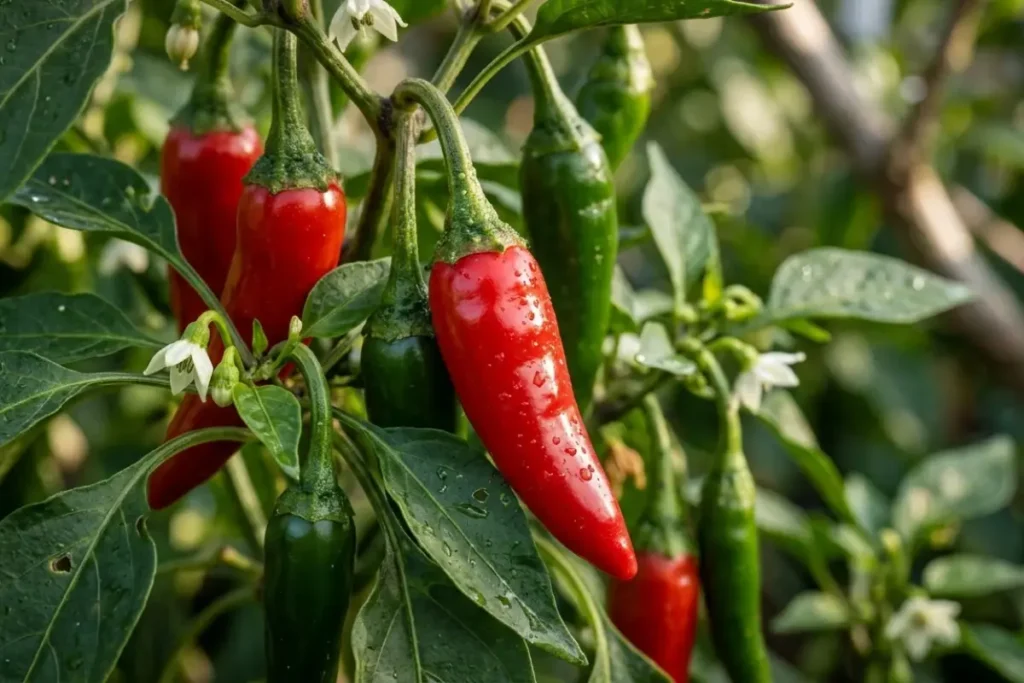
The trick is knowing when to plant them and how to give young plants a good start. Peppers love warm weather, but they can struggle in cold soil or when exposed to sudden temperature changes. A little preparation before planting can make a noticeable difference in how well your plants grow.
Understanding the Different Types of Peppers
Before planting, decide which type of pepper you want to grow. Peppers come in many shapes, sizes, colors, and heat levels. Some are sweet and mild, while others have a strong spicy flavor.
Bell peppers are a popular choice for home gardens because they produce thick, crunchy fruits that work well in salads, cooking, and stuffing. Jalapeños are another good option if you enjoy a little heat. Banana peppers, poblano peppers, cayenne peppers, and serrano peppers are also worth considering.
Your choice matters because different pepper varieties can have slightly different growing requirements. Some plants stay relatively compact, while others need more room to spread.
If you’re planting peppers for the first time, choose a variety that suits your local climate and available growing space. Check the seed packet for information about plant size, days to maturity, and recommended growing conditions.
When Is the Best Time to Plant Peppers?
Peppers are warm-season vegetables, so planting them too early can slow their growth. Cold temperatures make it difficult for young plants to establish strong roots.
The best time to plant peppers outdoors is after the last expected frost, when the soil has warmed to around 65°F (18°C) or higher. Daytime temperatures should generally remain warm, with nighttime temperatures preferably above 55°F (13°C).
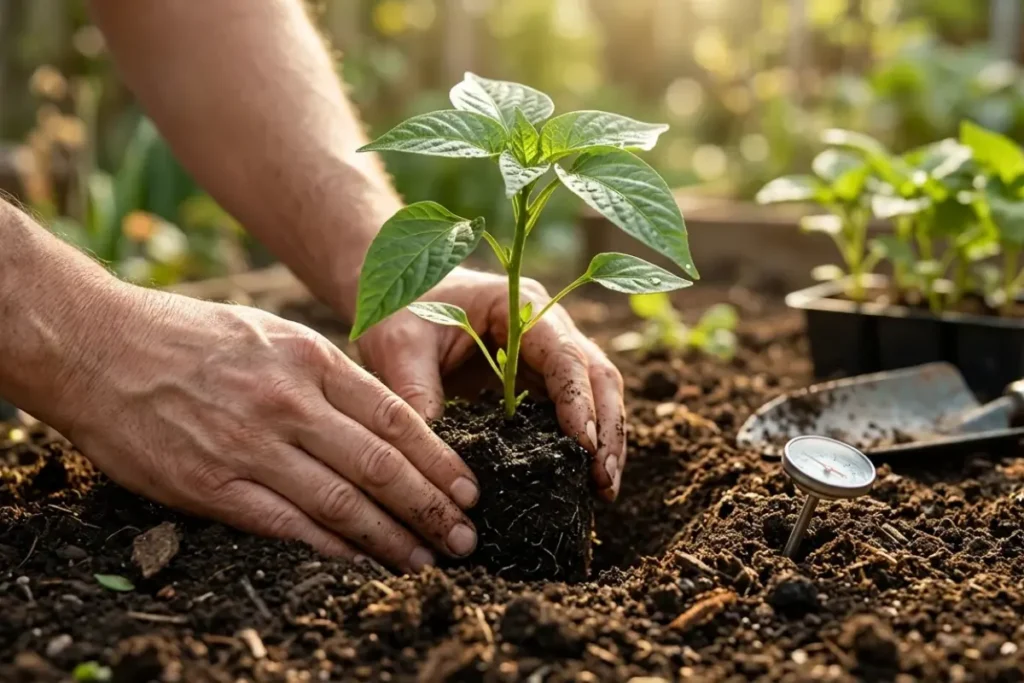
If you live in a warm climate without frost, you may have a longer planting season. However, extremely hot weather can also affect flowering and fruit production. In very hot regions, planting during a cooler growing period can help protect young plants.
For gardeners growing peppers in containers, moving pots to a sheltered location during unexpected cold weather is another useful option.
How to Choose the Right Location for Pepper Plants
Peppers need plenty of sunlight to grow strong stems, healthy leaves, and flavorful fruits. Choose a location that receives at least six to eight hours of direct sunlight each day.
A sunny garden bed or open patio can work well. Avoid planting peppers directly beneath large trees or beside structures that block sunlight for most of the day.
Good air circulation also matters. When plants grow too close together, moisture can remain trapped around their leaves, increasing the risk of fungal problems.
Choose a location with well-draining soil. Pepper roots need moisture, but they don’t like sitting in waterlogged ground. If your garden soil stays wet after rainfall, consider using raised beds or containers with drainage holes.
How to Prepare the Soil Before Planting Peppers
Healthy soil gives pepper plants a strong foundation. Before planting, loosen the soil so young roots can spread easily.
Remove weeds, stones, and old plant material from the growing area. Mix in some mature compost to improve soil structure and add organic matter.
Peppers generally grow best in fertile, well-draining soil with a slightly acidic to neutral pH, around 6.0 to 6.8.
If you’re unsure about your soil conditions, a simple soil test can help you understand its pH and nutrient levels. This is useful because adding too much fertilizer without knowing what your soil needs can create problems later.
Avoid using fresh manure directly around young pepper roots. It can be too strong and may damage delicate plants.
How Do You Plant Peppers From Seeds?
Starting peppers from seeds is an affordable way to grow different varieties. It also gives you more control over the growing process.
Pepper seeds usually need warmth to germinate, so starting them indoors is often helpful, especially in regions with shorter growing seasons.
Choose Fresh Pepper Seeds
Start with fresh seeds from a reliable supplier. You can grow peppers from seeds saved from mature fruits, but seeds from hybrid varieties may not produce plants identical to the parent.
Choose a variety based on your preferred flavor, heat level, and available space.
Prepare Seed-Starting Containers
Use small seed trays, nursery pots, or biodegradable containers with drainage holes. Fill them with a light, well-draining seed-starting mix.
Avoid using heavy garden soil because it can become compacted and hold too much moisture.
Sow the Seeds
Plant pepper seeds about ¼ inch deep in the prepared mix. Cover them lightly with soil and gently water the surface.
Keep the growing medium moist but not soaking wet. A warm location helps seeds germinate more consistently. A soil temperature around 80–85°F (27–29°C) is generally suitable for pepper seed germination.
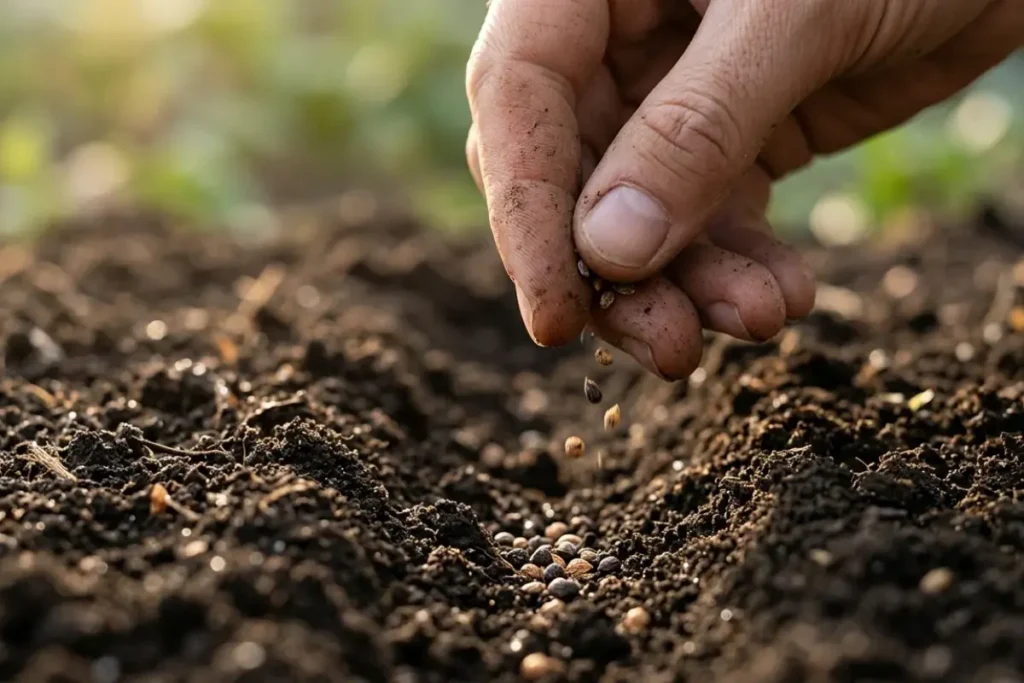
Some pepper seeds sprout within a week, while others may take several weeks, depending on the variety and growing conditions.
Give Seedlings Enough Light
Once the seeds sprout, move the containers to a bright location. A sunny windowsill may work, but seedlings can become weak and stretched if they don’t receive enough light.
If natural sunlight is limited, a grow light can help. Keep it at the recommended distance and provide a consistent daily lighting schedule.
Water gently whenever the surface begins to dry. Avoid letting the seedlings sit in standing water.
How to Start Growing Peppers From Seedlings
If you don’t want to wait for seeds to germinate, buying young pepper plants is another option. This is especially useful when you’re new to gardening or starting later in the growing season.
Look for seedlings with healthy green leaves, strong stems, and no visible signs of insects or disease.
Avoid plants with yellowing leaves, damaged stems, or roots growing heavily through the drainage holes.
Before moving seedlings outdoors, gradually introduce them to outdoor conditions. This process is called hardening off.
Start by placing them outside in a sheltered, shaded area for a short period. Gradually increase their exposure to sunlight and outdoor temperatures over seven to ten days.
This helps plants adjust without experiencing sudden stress.
How to Plant Pepper Seedlings Outdoors
Once the weather is warm and your seedlings are ready, you can move them into their permanent growing location.
Start by digging a hole slightly larger than the seedling’s root ball. Carefully remove the plant from its container without pulling on the stem.
Place the seedling in the hole at approximately the same soil depth it was growing in its original container. Fill around the roots with soil and gently press it into place.
Water immediately after planting to help settle the soil around the roots.
Leave enough space between plants for proper growth and airflow. Many pepper varieties need around 18–24 inches of spacing, although the exact distance depends on the variety and expected plant size.
If you’re growing several rows, leave enough room between them to walk comfortably and care for your plants.
How to Grow Peppers in Pots and Containers
You don’t need a traditional garden to enjoy homegrown peppers. Many varieties grow well in containers, making them suitable for patios, balconies, and small outdoor spaces.
Choose a container that holds at least 3–5 gallons of soil for most pepper plants. Larger varieties may benefit from even bigger pots.
Make sure the container has drainage holes at the bottom. Without proper drainage, excess water can collect around the roots and cause root problems.
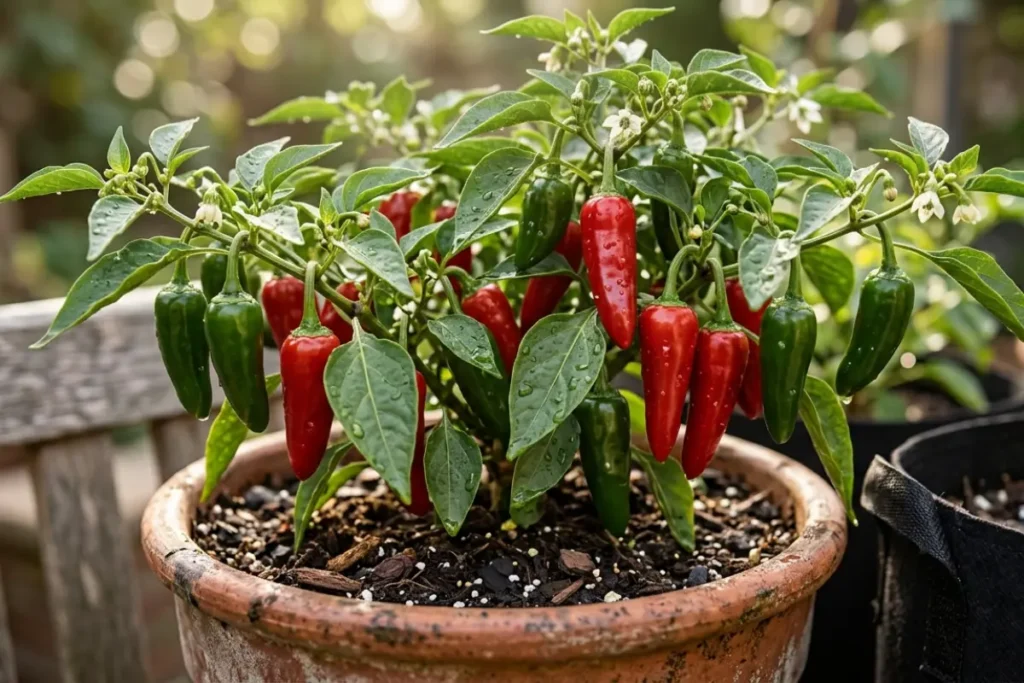
Fill the container with a high-quality potting mix designed for vegetables. Avoid filling it with ordinary garden soil because it may become too dense in a pot.
Place the container somewhere that receives plenty of direct sunlight. Water when the top layer of soil begins to dry, checking more frequently during hot weather.
Container-grown peppers may need more frequent watering than plants growing directly in the ground because pots lose moisture faster.
How to Water Pepper Plants Properly
Watering is one of the most important parts of pepper plant care. Both underwatering and overwatering can affect plant growth.
Young pepper plants need consistent moisture while their roots become established. Once the plants grow larger, allow the top layer of soil to dry slightly between watering sessions.
Instead of giving your plants small amounts of water throughout the day, water deeply enough to reach the root zone.
Water near the base of the plant rather than spraying the leaves. This helps keep foliage dry and reduces the chance of certain fungal diseases.
During hot weather, check your plants regularly. Drooping leaves can indicate water stress, but they can also temporarily droop during extreme afternoon heat. Check the soil before adding more water.
If the soil is already wet, additional watering may make the problem worse.
How Much Sunlight Do Pepper Plants Need?
Pepper plants grow best with plenty of direct sunlight. Aim for six to eight hours daily, although some varieties and growing conditions may benefit from even more.
Sunlight helps plants produce the energy needed for healthy growth and fruit development.
If your peppers receive too little light, they may develop long, weak stems and produce fewer flowers.
In extremely hot climates, however, intense afternoon sunlight can sometimes cause stress or sunscald on exposed fruits. Providing light afternoon shade during severe heat can help protect plants.
A location with strong morning sunlight and some protection from harsh afternoon heat can work well in particularly hot regions.
How to Fertilize Pepper Plants for Healthy Growth
Peppers need nutrients throughout the growing season, but the amount and type of fertilizer matter.
A balanced vegetable fertilizer can support early plant development. Once plants begin flowering and producing fruits, choose a fertilizer appropriate for fruiting vegetables.
Avoid using excessive nitrogen. Too much nitrogen can encourage leafy growth at the expense of flowers and peppers.
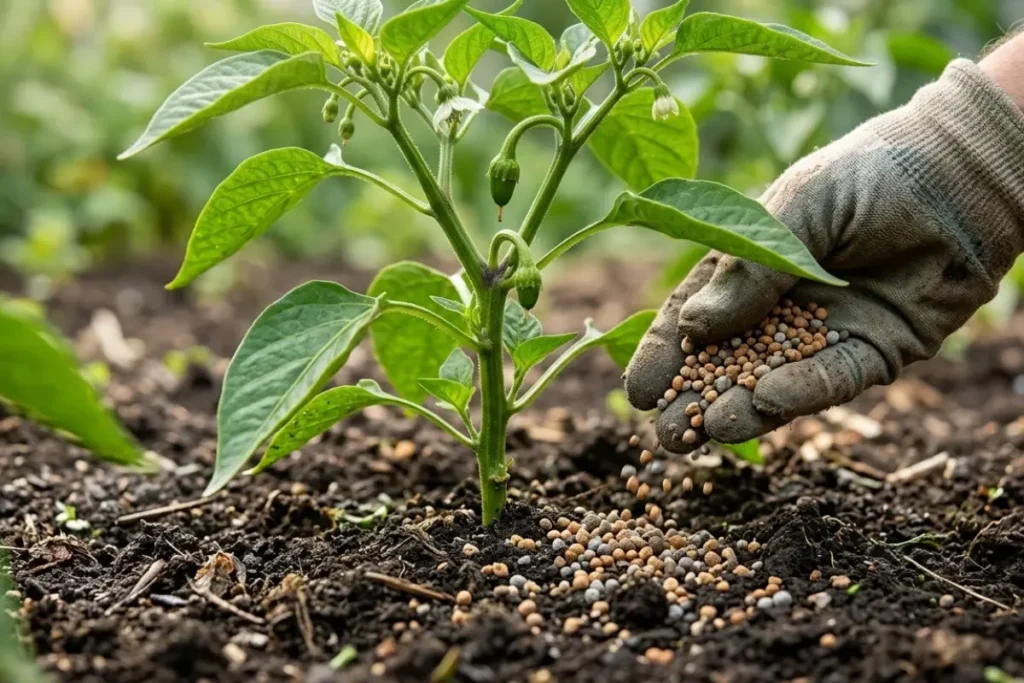
Follow the instructions on the fertilizer package rather than applying more than recommended.
Compost can also help improve soil quality and provide a gradual supply of nutrients.
If your plants have healthy green leaves and are growing steadily, you may not need to fertilize as frequently as you think.
How to Support Pepper Plants as They Grow
Most pepper plants have sturdy stems, but heavy fruits can sometimes cause branches to bend or break.
If your plants begin leaning, use a small garden stake or tomato cage for support.
Place stakes carefully so you don’t damage the roots. Tie the main stem loosely using soft garden ties.
Avoid pulling the plant tightly against the support. It should have enough room to move naturally as it grows.
Supporting pepper plants is especially helpful when growing larger bell pepper varieties or plants that produce many fruits.
Common Problems When Growing Peppers
Even with proper care, pepper plants can experience a few common growing problems. Recognizing the signs early makes it easier to protect your harvest.
Yellow Leaves
Yellow leaves can develop for several reasons, including overwatering, poor drainage, nutrient deficiencies, or insufficient sunlight.
Check the soil moisture first. If the soil stays wet for several days, improve drainage and reduce watering.
Flowers Falling Off
Pepper plants sometimes produce flowers that drop before forming fruits. High temperatures, inconsistent watering, and other environmental stresses can contribute to this problem.
Keep soil moisture consistent and avoid excessive fertilizer.
Blossom-End Rot
Blossom-end rot appears as a dark, sunken patch on the bottom of developing peppers. It is commonly associated with problems transporting calcium into the fruit, often because of irregular soil moisture.
Maintain consistent watering and avoid damaging the roots. Adding calcium without identifying the underlying problem may not solve it.
Pests on Pepper Plants
Aphids, spider mites, and other insects can damage pepper leaves and stems.
Inspect the undersides of leaves regularly. If you notice pests, remove heavily affected leaves when appropriate and use a suitable treatment according to its label.
Good airflow, clean gardening tools, and regular plant inspections can help prevent problems from spreading.
When and How to Harvest Peppers
The right harvesting time depends on the pepper variety and your preferred flavor.
Bell peppers can usually be harvested when they reach a suitable size and are still green. If you leave them on the plant longer, many varieties change color as they mature, becoming red, yellow, orange, or another color depending on the variety.
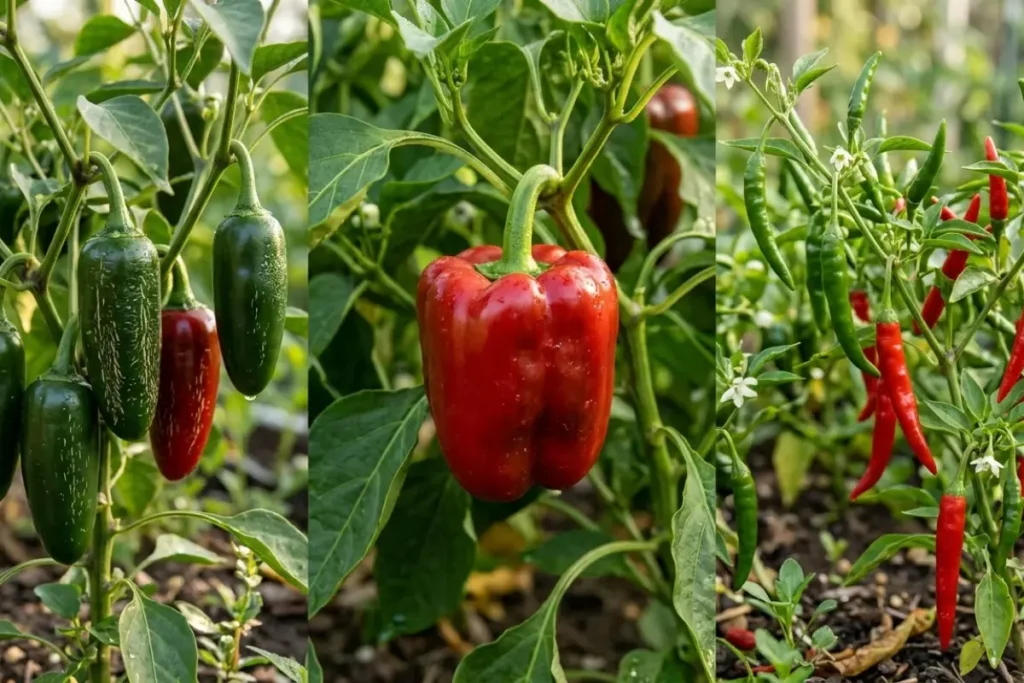
Hot peppers also have different maturity stages. Some can be harvested green, while others develop their full color and flavor as they ripen.
Use clean garden scissors or pruning shears to cut peppers from the plant. Avoid pulling them off by hand because this can damage branches.
Regular harvesting can also encourage some pepper varieties to continue producing fruits during the growing season.
Common Mistakes to Avoid When Planting Peppers
New gardeners sometimes struggle with peppers because they overlook a few basic growing requirements.
Planting too early is a common mistake. Cold soil can slow root development and leave young plants struggling to grow.
Another problem is overwatering. Pepper roots need moisture, but constantly wet soil can cause root damage.
Crowding plants is also worth avoiding. When pepper plants grow too close together, they compete for sunlight and airflow.
Some gardeners apply too much fertilizer because they expect faster growth. However, excessive nitrogen can produce lots of leaves without encouraging good fruit production.
Finally, don’t forget to harden off indoor seedlings before transplanting them outdoors. Moving a tender plant directly from an indoor environment into strong sunlight can cause leaf damage and transplant stress.
Frequently Asked Questions About Planting Peppers
How long does it take for peppers to grow?
Pepper seeds can take around one to three weeks to germinate under suitable conditions. After that, plants need additional time to grow, flower, and produce mature fruits. Depending on the variety, peppers may take approximately 60–90 days or longer after transplanting to reach harvest.
Can you plant pepper seeds directly in the ground?
Yes, you can sow pepper seeds directly outdoors when the soil is warm and the growing season is long enough. However, starting seeds indoors is often more reliable because peppers need warm conditions and a relatively long growing season.
How deep should you plant pepper seeds?
Plant pepper seeds approximately ¼ inch deep in a light seed-starting mix. Cover them gently with soil and keep the growing medium consistently moist.
Do peppers need full sun?
Yes. Most pepper plants grow best with at least six to eight hours of direct sunlight daily. In extremely hot climates, some afternoon shade can help protect plants from heat stress.
How often should I water pepper plants?
Water when the top layer of soil begins to dry. The exact frequency depends on temperature, rainfall, soil type, and container size. Check the soil rather than following a fixed daily watering schedule.
Can peppers grow in small pots?
Some compact pepper varieties can grow in smaller containers, but most plants perform better in pots holding at least 3–5 gallons of soil. Always choose a container with drainage holes.
Why are my pepper plants growing but not producing peppers?
Excessive heat, insufficient sunlight, irregular watering, and too much nitrogen can affect flowering and fruit production. Check the growing conditions and make adjustments where necessary.
Can I grow different types of peppers together?
Yes. You can grow sweet and hot pepper varieties in the same garden. However, if you plan to save seeds, keep in mind that different pepper varieties can cross-pollinate. This may affect the characteristics of plants grown from those saved seeds.
Should I remove the first flowers from pepper plants?
It isn’t necessary for every pepper plant. Some gardeners remove early flowers from small transplants to encourage vegetative growth, but healthy, established plants can usually be allowed to flower naturally.
What is the easiest pepper to grow for beginners?
Jalapeños, banana peppers, and many bell pepper varieties are suitable choices for home gardeners. Choose a variety that grows well in your climate and matches your available space.
Conclusion:
Growing peppers becomes much easier when you understand what the plants need from the beginning. Start with a suitable variety, prepare fertile and well-draining soil, and wait until the weather is warm before planting outdoors.
Give your plants enough sunlight, water them consistently, and avoid using too much fertilizer. Keep an eye on their leaves, flowers, and developing fruits so you can spot problems early.
You can start with just one or two plants in containers or make room for several varieties in your garden. With a little patience and regular care, planting peppers for beginners can turn into an enjoyable gardening project that rewards you with fresh peppers throughout the growing season.

Plant Nest Blog’s author is passionate about plants, gardening, and sustainable living. Through research and practical experience, they share helpful plant care tips, gardening guides, and easy solutions to help readers grow healthier plants and create greener spaces.