Many people think planting bell peppers in containers means putting a pepper plant into any pot and watering it whenever the soil looks dry. That can work for a while, but it does not always lead to healthy growth or a good harvest.
Container-grown bell peppers need the right combination of space, soil, sunlight, water, and nutrients to stay strong.
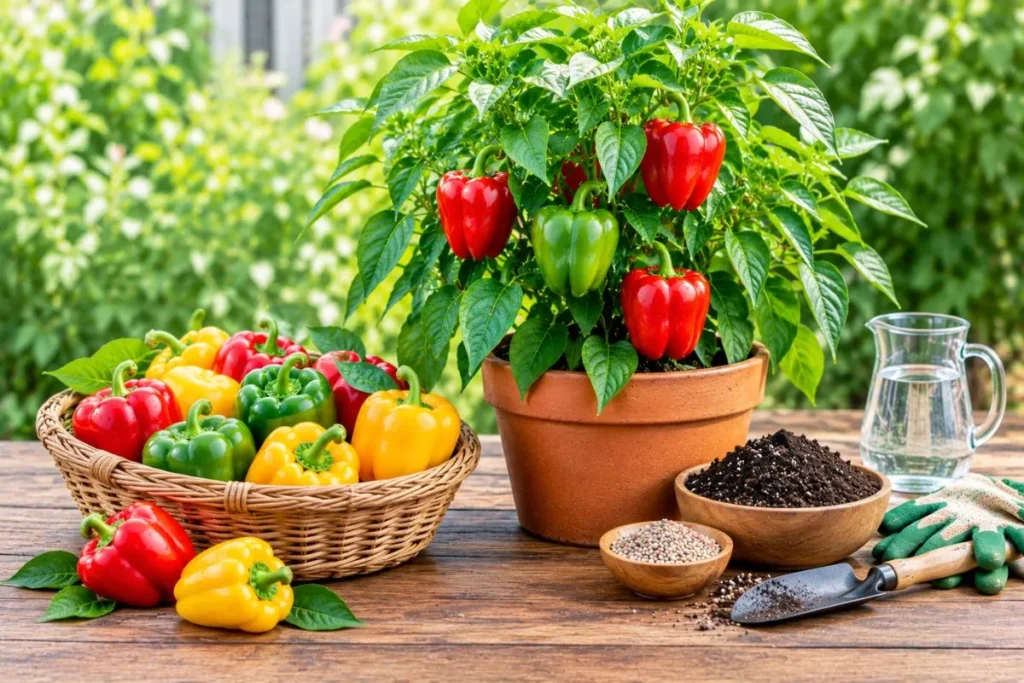
The good news is that you do not need a large garden to grow fresh peppers. With the right setup, growing bell peppers in containers can work well on a balcony, patio, or small outdoor space.
This guide will show you how to grow bell peppers in containers step by step, from choosing the right setup to caring for the plant as it grows.
Planting Bell Peppers in Containers: Quick Overview
A common belief is that planting bell peppers in containers is difficult because peppers need a large garden to grow well. That is not true. With the right container, growing medium, sunlight, water, and basic care, you can grow healthy bell peppers in a surprisingly small space.
Choose the Right Bell Pepper Variety
Start by choosing a bell pepper variety that matches your available space and growing conditions. Compact varieties are often easier to manage when growing bell peppers in containers, especially on balconies, patios, or other small areas.
Check the expected plant size before buying seeds or seedlings. A variety that stays reasonably compact can make container gardening bell peppers much easier. Also consider how long the variety takes to mature and the type of peppers you want to harvest.
Pick a Suitable Container
The container should give the plant enough room for its roots to develop. It also needs proper drainage so excess water can escape.
When planting bell peppers in pots, avoid choosing a container simply because it looks attractive. Function matters more than appearance. A suitable pot with enough space and drainage will give your plant a much better growing environment.
Use Quality Potting Mix
Good soil is one of the foundations of successful container growing. Bell peppers need a growing medium that holds moisture while allowing excess water to drain away.
Use a quality bell pepper potting mix instead of heavy soil that can become compacted inside a container. The right growing medium supports healthy roots and makes everyday watering easier.
Plant Seeds or Healthy Seedlings
You can start growing bell peppers in pots from seeds or begin with a healthy young plant. Seeds give you more variety choices, while seedlings can help you get started more quickly.
If you use a seedling, choose one with healthy leaves and a sturdy stem. If you start from seeds, give them suitable moisture and warmth while they germinate.
Give Bell Peppers Enough Sunlight
Bell peppers need plenty of light to support healthy growth and fruit production. Place the container in a bright location where the plant can receive adequate direct sunlight.
A sunny balcony, patio, or outdoor space can work well. If you are growing bell peppers in small spaces, observe the area throughout the day and choose the spot that receives the most suitable light.
Water the Plant Consistently
Container plants can dry out faster than plants growing in the ground, especially during warm or windy weather. Check the soil regularly instead of automatically watering at the same time every day.
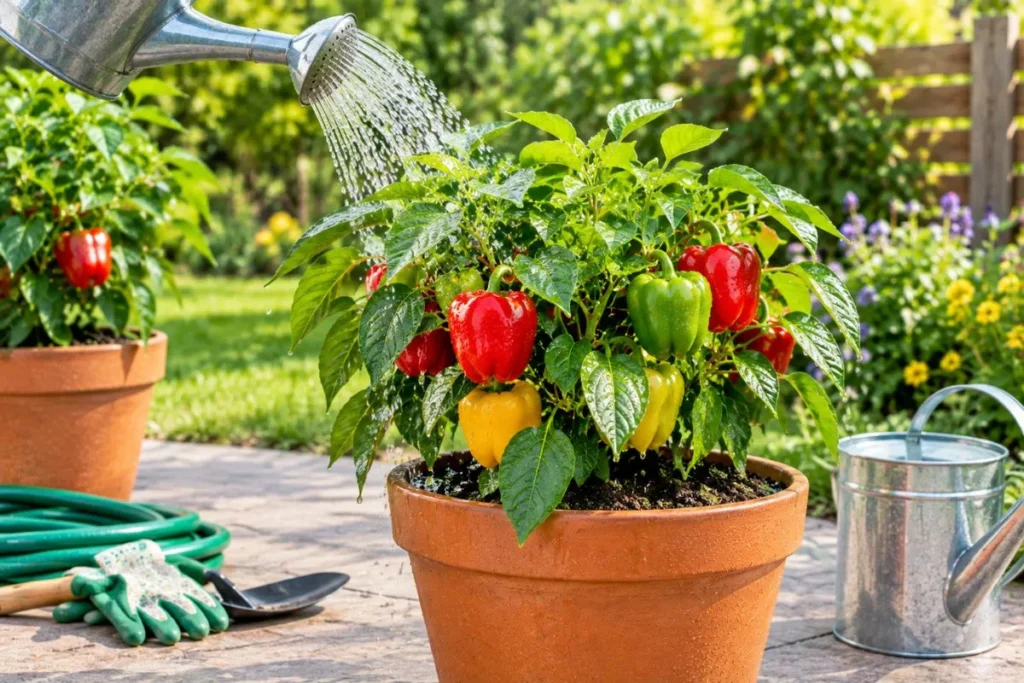
Water when the growing medium begins to dry, and make sure excess water can drain from the bottom. Avoid keeping the roots constantly soaked because poor drainage can create root problems.
Feed the Plant When Needed
As the plant grows, it uses nutrients from the container soil. Fertilizer can help replace those nutrients and support leaves, flowers, and developing peppers.
Use a suitable bell pepper fertilizer according to its instructions. More fertilizer does not always mean more peppers, so avoid overfeeding the plant.
Monitor Growth and Plant Problems
Regularly inspect your potted bell pepper plants. Look at the leaves, stems, flowers, and developing fruit for anything unusual.
Common bell pepper plant problems can include yellow leaves, slow growth, damaged foliage, flower drop, pests, or poor fruit production. Spotting these signs early gives you a better chance of correcting the growing conditions before the problem becomes serious.
Harvest Peppers at the Right Time
Once your plant begins producing peppers, check the fruit regularly. The right harvest stage depends on the variety and whether you prefer your peppers green or fully mature.
Harvest carefully so you do not damage the branches or the rest of the plant. Regular harvesting can also help you continue enjoying fresh peppers throughout the growing period.
Quick Container Growing Checklist
For successful how to grow bell peppers in containers, choose a suitable variety, use a container with good drainage, fill it with quality potting mix, plant healthy seeds or seedlings, provide enough sunlight, water consistently, feed when necessary, and check the plant regularly for pests or other problems.
These simple steps give your bell pepper plant a strong start and make growing bell peppers in containers easier to manage from planting through harvest.
Choose the Right Bell Pepper Variety for Containers
Many gardeners believe that any bell pepper variety will perform equally well in a pot. That is not always the case. Some plants grow large and need more room, while others stay compact and are much easier to manage in containers.
Choosing the right variety from the start can make planting bell peppers in containers much easier and give you a better chance of getting a healthy harvest.
The best choice depends on your container size, available space, and growing conditions. If you are growing on a balcony, patio, or in another small area, look for compact plants that are naturally suited to container growing.
Best Bell Pepper Varieties for Containers
When choosing the best bell pepper varieties for containers, focus on plants described as compact, dwarf, patio-friendly, or suitable for pots. These varieties generally take up less space and are easier to manage than large plants.
Compact plants are especially useful for growing bell peppers in containers because they can produce peppers without taking over your growing area. You should still check the mature height and width before planting. A small seedling can look harmless at first, but the mature plant may become much larger.
Another useful factor is the time to maturity. If you want peppers sooner, consider varieties with a shorter growing period. If you have plenty of time and suitable weather, you can also grow varieties that take longer to mature.
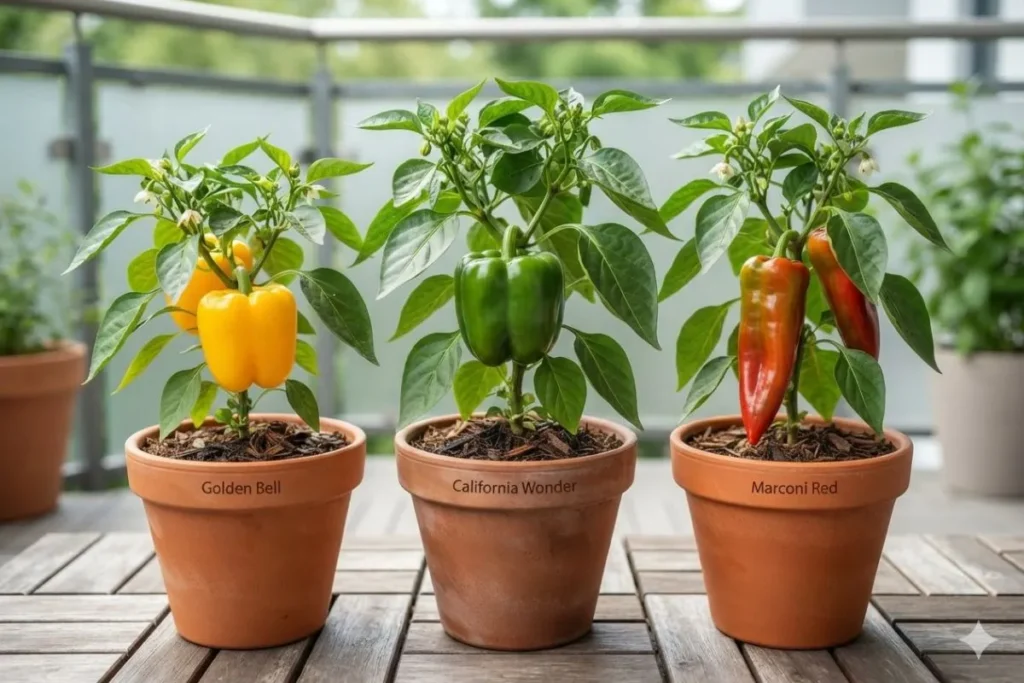
Look at the seed packet or plant label for details such as:
- Mature plant size
- Days to maturity
- Container suitability
- Expected fruit size
- Growing conditions
- Pepper color at maturity
Choosing based on these details is more reliable than simply picking a variety because the peppers look appealing.
Choose a Variety Based on Your Growing Space
Your available space should guide your variety choice. You do not need a huge garden for container grown bell peppers, but you do need to match the plant to the space you have.
For a balcony, choose a compact variety that will not become difficult to support or move. For a larger patio, you have more flexibility and can grow a somewhat larger plant if the container and growing conditions can handle it.
Think about the plant’s mature size, not just its size when you buy it. This simple step can prevent overcrowding later.
If you are growing peppers in small spaces, also consider where you will place the container. A plant that grows several feet tall may block a walkway or compete for sunlight with other plants. A compact variety is often easier to position and maintain.
You should also think about how many plants you actually need. One healthy plant can produce several peppers, so filling every available container with bell peppers is not necessary.
Choose the Best Container for Bell Peppers
Many people think that planting bell peppers in containers means you can use almost any pot as long as it holds soil. In reality, the container plays a big role in how well your pepper plant grows.
The wrong pot can restrict the roots, hold too much water, or become unstable as the plant gets larger. Choosing the right container from the beginning gives your bell pepper plant a better place to develop.
Best Container Size for Growing Bell Peppers
The best container size for growing bell peppers should give the roots enough room to spread and support the mature plant. A container that is too small can dry out quickly and may restrict root growth.
For most bell pepper plants, a pot around 5 gallons (19 liters) or larger is a practical choice. Larger varieties may benefit from even more space. If you are growing a compact variety, you can still use a suitable medium-to-large container rather than choosing a tiny pot.
When selecting a pot, think about the plant at its mature size. A small seedling may look perfectly comfortable in a small container, but it will need more root space as it develops.
A properly sized container also makes everyday bell pepper container care easier. The soil can hold enough moisture between watering sessions without becoming unnecessarily difficult to manage.
Bell Pepper Pot Size
Bell pepper pot size matters because the roots need adequate space for healthy development. A pot that is too shallow or narrow can limit the plant and make moisture levels harder to maintain.
A deep container is usually a better choice than a very shallow one. It provides more room for the root system and gives the plant better stability as it becomes taller and starts producing fruit.
If you are planting bell peppers in pots, check the dimensions as well as the volume. Two containers can hold a similar amount of growing medium but have very different shapes. A stable pot with enough depth is generally more practical for a growing pepper plant.
Also remember that a larger container will be heavier after you fill it with potting mix and water. If you plan on growing peppers on a balcony or moving the plant around, consider the final weight before choosing the container.
Best Containers for Bell Peppers
There is no single material that works for every gardener. The best containers for bell peppers depend on your space, budget, and how often you plan to move the plants.
Plastic pots are lightweight and easy to move. They also tend to retain moisture longer than some porous materials. This can be useful in warm conditions when containers dry out quickly.
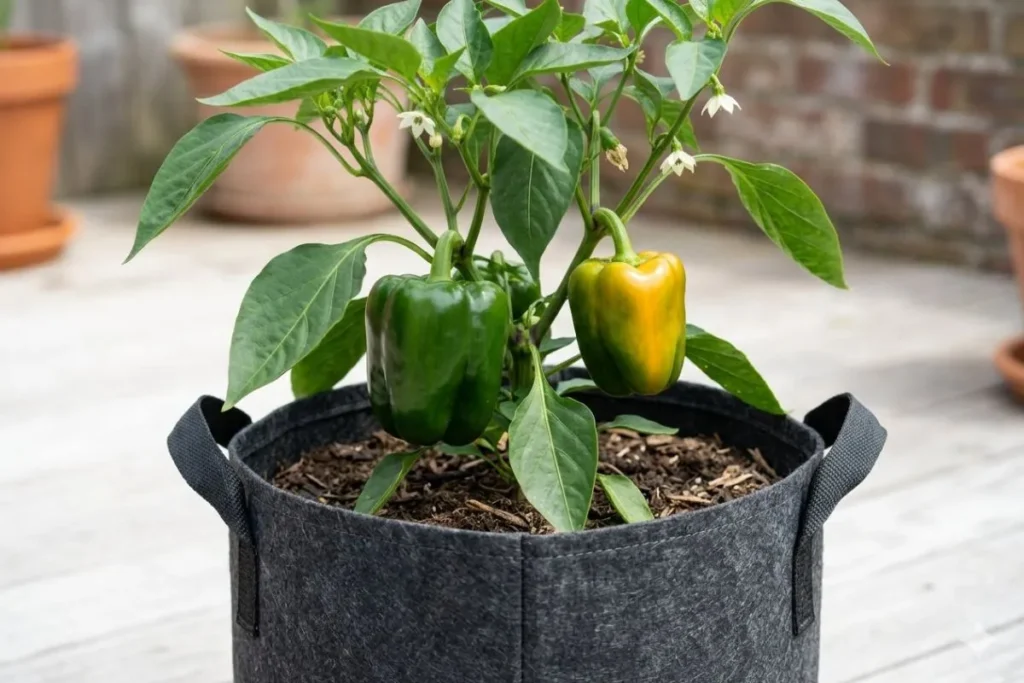
Fabric grow bags are another option for growing bell peppers in containers. They provide good airflow around the root area and are easy to store when the growing season ends. However, they can dry out faster, so you may need to monitor moisture more closely.
Terracotta pots can also be used, but their porous material allows moisture to escape more quickly. This means plants growing in terracotta may need more frequent attention during hot weather.
Whichever material you choose, make sure the container is strong enough to support the mature plant and its growing medium.
Best Soil for Bell Peppers
The best soil for bell peppers in containers should be loose, well-draining, and able to hold enough moisture without staying waterlogged. Bell pepper roots need both moisture and access to air, so the growing medium should not become dense and sticky.
A quality commercial potting mix is a simple choice for beginners. Look for a mix designed for containers rather than heavy topsoil or garden soil. A good mix should remain relatively light while supporting healthy root growth.
You can also improve a basic potting mix with organic material if needed. Compost can add nutrients and organic matter, but avoid adding too much because an overly rich or heavy mixture can hold excessive moisture.
The goal is simple: create a growing medium that stays loose, drains excess water, and provides a comfortable environment for developing roots.
Bell Pepper Potting Mix
A good bell pepper potting mix usually contains materials that improve drainage and airflow. Common ingredients in quality container mixes include peat moss or coco coir, compost, and materials such as perlite or vermiculite.
Coco coir can help retain moisture while keeping the mix relatively light. Perlite can improve drainage and create more air space around the roots. Compost can contribute organic matter and nutrients.
You do not need to make a complicated soil recipe to grow healthy peppers. A ready-made vegetable potting mix can work well if it is suitable for containers.
If you are growing bell peppers in pots at home, check the mix before filling the container. It should feel loose rather than dense. Avoid using soil that forms hard clumps when wet because compacted soil can restrict root development.
Prepare the Container Before Planting
Before adding your bell pepper container soil, make sure the container is clean and ready for use. Check the drainage holes and remove any dirt or debris that could block them.
Fill the container with the potting mix without pressing it down too firmly. The growing medium needs enough air space for the roots. If you pack it tightly, water movement and root growth can become more difficult.
Leave a little space between the top of the soil and the container rim. This makes watering easier and helps prevent soil from washing over the sides.
Before planting, lightly moisten the potting mix if it is completely dry. It should be evenly damp but not soaking wet.
If you are preparing several containers, use the same basic approach for each one. Consistent soil preparation makes container gardening bell peppers easier to manage and gives each plant a similar starting environment.
Good soil preparation is not about making the container complicated. It is about giving the roots enough moisture, air, and room to grow. Once the growing medium is ready, you can move on to planting bell peppers from seeds or seedlings.
FAQs About Planting Bell Peppers in Containers
Many gardeners think planting bell peppers in containers is complicated or only works for experienced growers. It is actually quite manageable when you understand the basic needs of the plant.
Below are answers to common questions about growing bell peppers in pots, from container size and watering to sunlight, feeding, and harvesting.
Can You Grow Bell Peppers in Containers?
Yes, you can grow bell peppers in containers successfully. Growing bell peppers in containers is a useful option when you have limited garden space, such as a balcony, patio, or small outdoor area.
Choose a suitable variety, use a container with good drainage, provide quality potting mix, and give the plant enough sunlight. Regular watering and feeding will also help support healthy growth.
What Is the Best Container Size for Bell Peppers?
A container of around 5 gallons (19 liters) or larger is a practical choice for many bell pepper plants. Larger varieties may need additional space.
The important thing is to provide enough room for the roots and enough stability for the mature plant. A container that is too small can dry out quickly and restrict root development.
How Often Should You Water Bell Peppers in Containers?
There is no fixed bell pepper watering schedule that works for every container. Weather, container size, potting mix, and plant size all affect how quickly the soil dries.
Check the growing medium regularly. Water when the upper portion begins to dry, then water thoroughly until excess moisture drains from the bottom. During hot or windy weather, container plants may need attention more often.
Avoid keeping the soil constantly saturated because excessive moisture can create root problems.
What Is the Best Soil for Planting Bell Peppers in Containers?
The best soil for planting bell peppers in containers is a light, well-draining potting mix that can hold moisture without becoming waterlogged.
A quality vegetable potting mix containing materials such as coco coir or peat moss, compost, and perlite can provide a suitable growing environment. Avoid heavy garden soil that can become compacted inside the container.
How Much Sunlight Do Bell Peppers Need in Containers?
Bell peppers generally perform best with plenty of direct sunlight. A bright location that receives roughly 6 to 8 hours of sunlight per day can support strong growth and fruit production.
When growing bell peppers on a balcony or patio, observe the area throughout the day. Place the container where the plant receives the most useful sunlight without being blocked by walls, furniture, or other plants.
Can You Grow Bell Peppers in Pots From Seeds?
Yes. Growing bell peppers in pots from seeds is possible, although many gardeners start seeds indoors or in small containers before moving the seedlings into their final pots.
Give the seeds suitable warmth, moisture, and light while they germinate. Once the seedlings become strong enough, they can be transplanted carefully into a larger container.
Starting from seeds also gives you access to more varieties than you may find as ready-grown plants.
How Do You Fertilize Bell Pepper Plants in Containers?
Container plants have a limited amount of growing medium, so nutrients can become depleted as the plant grows. A suitable bell pepper fertilizer can help replace those nutrients.
Follow the fertilizer label for application rates and timing. Avoid applying extra fertilizer simply because you want faster growth. Too much fertilizer can cause problems instead of improving the harvest.
During flowering and fruit development, consistent nutrition is especially important for maintaining healthy plant growth.
How Do You Get More Bell Peppers From Container Plants?
To get more peppers from container plants, focus on the basics rather than looking for a single secret trick.
Give the plant enough sunlight, maintain consistent moisture, use suitable fertilizer, and avoid overcrowding. Choosing a productive variety that fits your container can also make a difference.
Good bell pepper plant care throughout the growing season helps the plant maintain healthy leaves, flowers, and developing fruit.
Why Are My Container Bell Pepper Leaves Turning Yellow?
Yellow leaves on bell pepper plants can have several causes. Too much water, poor drainage, nutrient problems, insufficient light, or natural aging can all contribute to yellowing.
Start by checking the soil moisture and drainage. If the container stays wet for long periods, improve drainage and adjust your watering routine.
Also inspect the plant for pests or other signs of stress. Look at the entire plant rather than assuming that yellow leaves have only one possible cause.
Why Is My Bell Pepper Plant Not Producing Fruit?
A bell pepper plant not producing fruit may be experiencing insufficient sunlight, unsuitable temperatures, inconsistent watering, or pollination problems.
Flowering does not always guarantee fruit development. Watch the plant during flowering and make sure it receives suitable growing conditions.
If flowers appear but fall before producing peppers, review sunlight, moisture, temperature, and general plant stress. Correcting the growing conditions can help improve fruit production.
Can You Grow Bell Peppers Indoors?
Yes, indoor bell pepper container gardening is possible when the plant receives enough light and suitable growing conditions.
A sunny window may work in some situations, but indoor plants often benefit from additional grow lighting when natural light is limited. Good airflow and appropriate container drainage are also important.
Indoor peppers may require more attention because conditions inside a home can differ from outdoor growing conditions.
How Long Does It Take to Grow Bell Peppers in Containers?
The time required depends on the variety, starting method, temperature, sunlight, and general growing conditions. Seed-grown plants usually take longer than established seedlings because they need time to germinate and develop before producing peppers.
Check the seed packet or plant label for the variety’s approximate days to maturity. Keep in mind that this is an estimate rather than an exact harvest date.
With consistent care, your container-grown pepper plant can continue producing fruit throughout a suitable growing period.
he key to successful planting bell peppers in containers is consistency. Choose the right variety and container, use suitable soil, provide enough sunlight, maintain proper moisture, and monitor the plant as it grows. These simple habits can make container pepper gardening much easier.
Conclusion:
Planting bell peppers in containers doesn’t have to be difficult. When you choose the right variety, provide enough root space, use quality potting mix, and give your plant proper sunlight, water, and nutrients, you can grow healthy peppers even in a small space.
The key is consistent care rather than complicated gardening methods. Whether you are growing peppers on a balcony, patio, or at home, pay attention to your plant’s needs as it grows and make small adjustments when necessary.
With patience and the right approach, growing bell peppers in containers can give you fresh, homegrown peppers and make container gardening much more rewarding.

Plant Nest Blog’s author is passionate about plants, gardening, and sustainable living. Through research and practical experience, they share helpful plant care tips, gardening guides, and easy solutions to help readers grow healthier plants and create greener spaces.