
Many gardeners believe tomato plants can grow perfectly well without any support. While they’ll still grow, they usually end up sprawling across the ground, producing smaller harvests, and becoming more vulnerable to pests and diseases.
The truth is, learning how to build a trellis for tomato plants is one of the easiest ways to keep your plants healthy, organized, and highly productive.
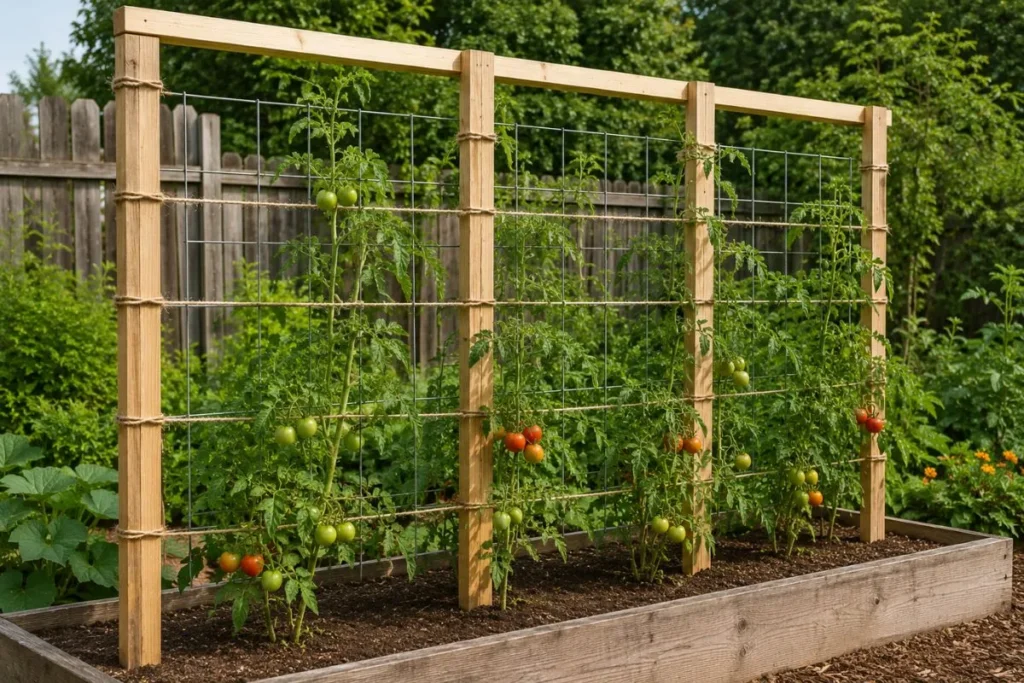
Another common myth is that building a tomato trellis is expensive or difficult. It isn’t. Whether you’re a beginner or an experienced gardener, you can build a tomato trellis using simple materials and basic tools.
In this guide, you’ll discover how to build a trellis for tomato plants step by step, choose the best trellis design, select the right materials, and learn expert tips that help you grow stronger plants and enjoy bigger tomato harvests all season long.
Why Tomato Plants Need a Trellis
Growing tomatoes without support often leads to tangled vines, damaged stems, and fruit that sits on the ground. A strong tomato support system lifts the plants off the soil, giving them the space they need to grow upward instead of spreading across your garden.
Whether you’re planning a backyard vegetable patch or growing tomatoes vertically in a small space, a sturdy trellis makes gardening easier and more productive.
Keeps Tomato Plants Upright
Tomato plants become heavy as they grow and start producing fruit. Without proper tomato vine support, the stems can bend, break, or collapse under the weight. A sturdy trellis keeps plants standing tall and helps them grow in the right direction throughout the season.
Improves Airflow
One of the biggest benefits of vertical tomato gardening is better air circulation. When the vines are lifted off the ground, air moves freely between the leaves. This helps the plants dry faster after watering or rain, reducing the chances of fungal diseases.
Reduces Diseases and Pest Problems
When tomato leaves and fruit touch the soil, they’re more likely to develop diseases and attract pests. A tomato support structure keeps the foliage away from the ground, helping prevent common problems such as early blight, fungal infections, and fruit rot.
Makes Harvesting Easier
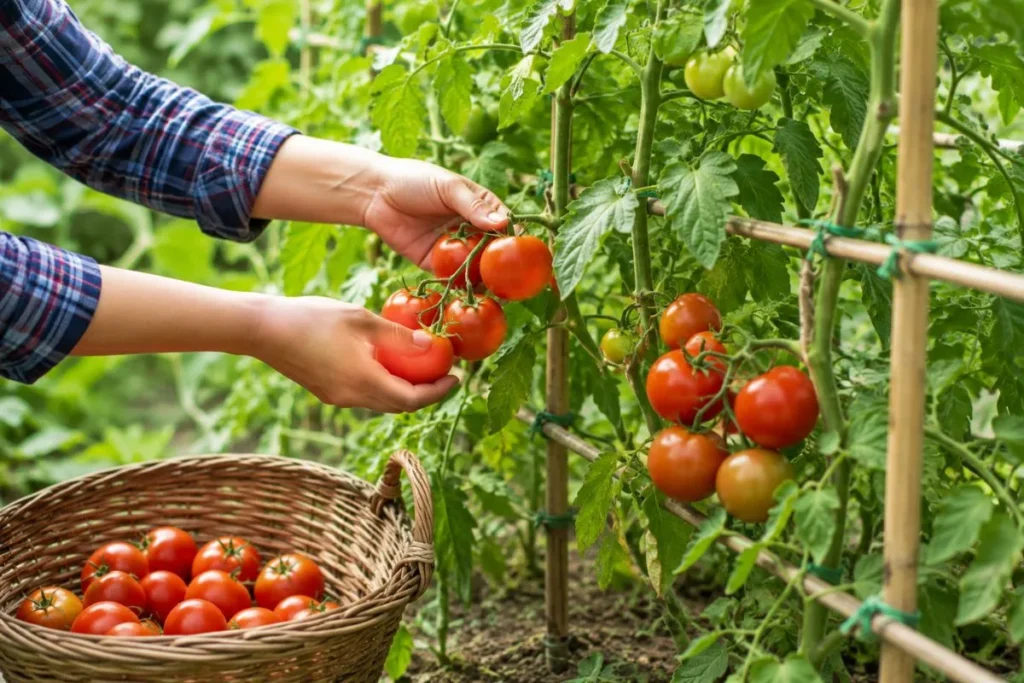
Picking ripe tomatoes is much easier when the plants are growing upward. Instead of searching through tangled vines, you can clearly see the fruit hanging on the trellis. This also reduces the risk of accidentally damaging stems while harvesting.
Saves Valuable Garden Space
If you have a small garden, a trellis is one of the smartest investments you can make. Growing tomatoes vertically allows you to use less ground space while producing more fruit. It’s an ideal solution for raised beds, patios, and compact vegetable gardens.
Produces Cleaner, Healthier Tomatoes
Tomatoes growing on the ground often become dirty, bruised, or damaged by insects and moisture. Keeping the fruit elevated on a trellis helps tomatoes stay cleaner and healthier until harvest.
Supports Heavy Tomato Vines
As the season progresses, tomato plants become much heavier with flowers and fruit. A well-built DIY tomato plant trellis provides the strength needed to support large vines without snapping or leaning over.
This is especially important for indeterminate tomato varieties that continue growing throughout the season.
Why a Trellis Is Better Than Tomato Cages
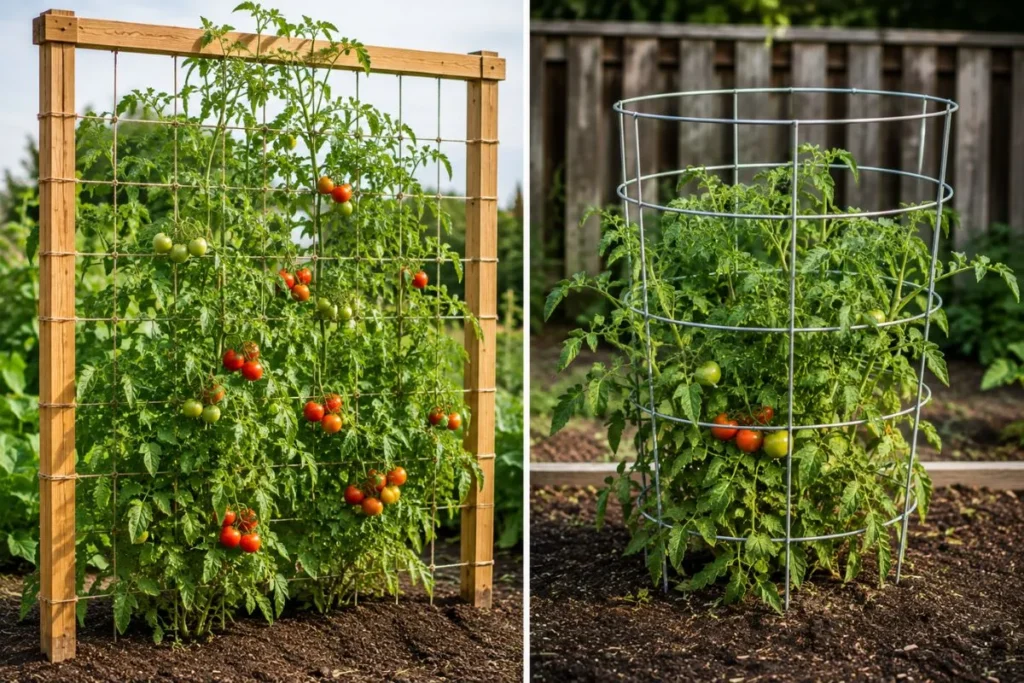
While tomato cages work for some smaller plants, they often become overcrowded as the vines grow. A trellis gives plants more room to spread naturally and makes pruning, watering, and harvesting much easier.
That’s why many gardeners consider a trellis the best tomato cage alternative for larger or fast-growing varieties.
Key Benefits of Building a Tomato Trellis
Here are the biggest advantages of using a tomato trellis:
- Keeps tomato plants upright and well-supported.
- Improves airflow around leaves and stems.
- Reduces the risk of diseases and soil-borne problems.
- Makes watering, pruning, and harvesting easier.
- Saves space by growing tomatoes vertically.
- Produces cleaner, healthier, and better-quality fruit.
- Supports heavy vines throughout the growing season.
- Works as an excellent tomato climbing support for indeterminate varieties.
A strong trellis is more than just a plant support it’s a simple way to improve plant health, increase your harvest, and make gardening much easier. Now that you know why tomatoes need support, the next step is choosing the right materials to make a trellis for tomato plants that is sturdy, affordable, and built to last.
What You’ll Need Before Building a Tomato Trellis
Many people think building a tomato trellis requires expensive materials and advanced DIY skills. That’s a common misconception. In reality, you can build a tomato trellis using affordable supplies and simple tools that are easy to find at any hardware store.
Choosing the right materials before you begin will make the project easier and ensure your trellis stays strong throughout the growing season.
Gather Your Materials
Before you start building, it’s a good idea to collect all the materials and tools you’ll need. Having everything ready saves time and makes the construction process much smoother.
Most DIY tomato plant trellis projects use common materials like wooden stakes, bamboo poles, PVC pipes, cattle panels, wire mesh, garden twine, and zip ties.
You’ll also need basic tools such as a hammer, drill, screws, a measuring tape, and wire cutters if you’re working with metal fencing. These simple supplies are enough to build a sturdy DIY garden trellis that supports tomato plants from planting to harvest.
How to Choose the Right Material
Choosing the right material is just as important as the design itself. The best option depends on your budget, garden size, and the type of tomatoes you’re growing.
Wooden stakes are a popular choice because they’re strong, durable, and ideal for permanent garden beds. Bamboo poles are lightweight, affordable, and perfect for beginners who want a quick and inexpensive solution.
If you’re looking for something weather-resistant, PVC pipes are an excellent option because they won’t rot or rust and can be reused for many growing seasons.
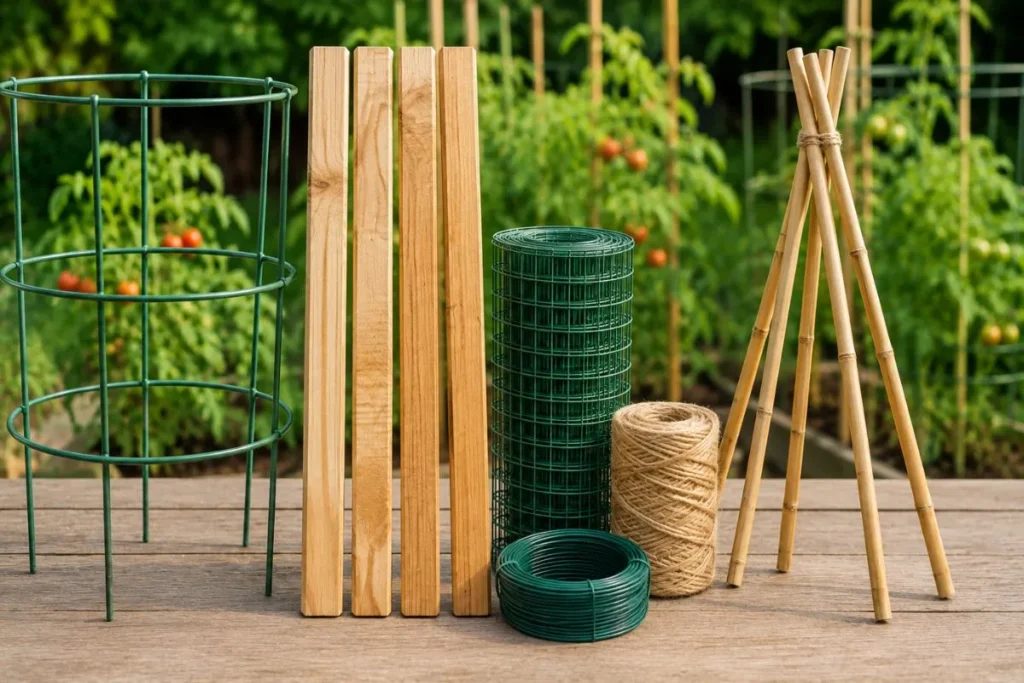
For gardeners growing large indeterminate tomatoes, cattle panels provide one of the strongest support systems available. They can easily handle heavy vines loaded with fruit, although they cost a little more and require extra effort to install.
Wire mesh is another practical option that creates an excellent climbing surface while improving airflow around the plants. No matter which material you choose, using quality tomato trellis materials will help you build a support system that’s safe, reliable, and long-lasting.
When comparing your options, think about the following factors:
- Cost: Bamboo and wire mesh are usually the most affordable choices.
- Durability: Wood, PVC, and cattle panels last much longer than lightweight materials.
- Ease of Installation: Bamboo and PVC are easier for beginners to assemble.
- Garden Size: Small gardens work well with bamboo or PVC, while larger gardens benefit from wooden frames or cattle panels.
Taking the time to choose the right materials now will make the rest of your project much easier and give your tomato plants the strong support they need.
Choosing the Best Tomato Trellis Design
Many gardeners think there’s only one right way to build a tomato trellis. The truth is that several trellis designs work well, and the best one depends on your garden space, budget, and the type of tomato plants you’re growing.
Whether you want a simple weekend DIY project or a permanent support system, choosing the right design will make how to build a trellis for tomato plants much easier.
Wooden Trellis
A wooden tomato trellis is one of the strongest and most attractive options for home gardens. It provides excellent support for both determinate and indeterminate tomato plants and can last for many years with proper care.
Pros
A wooden trellis is extremely strong and can easily support heavy tomato vines throughout the growing season. It is highly durable, can be customized to fit any garden size, and gives your vegetable garden a clean, attractive appearance. With proper maintenance, it can last for many years.
Cons
Wooden trellises usually cost more than bamboo or PVC options. They also take more time to build, and if untreated wood is used, it may rot after being exposed to moisture for several seasons.
Best For: Permanent garden beds and raised vegetable gardens.
Bamboo Trellis
A bamboo tomato trellis is an affordable and beginner-friendly option that works well in both small gardens and containers. Bamboo poles can be tied together to create simple teepee or A-frame designs that provide reliable support for tomato plants.
Pros
Bamboo is inexpensive, lightweight, and environmentally friendly. It is easy to assemble, simple to move around the garden, and makes an excellent choice for gardeners who want a quick and affordable DIY project.
Cons
Although bamboo is strong enough for many tomato varieties, it is less durable than wood or metal. It may need to be replaced after a few growing seasons and is not always the best option for supporting very large or heavy tomato plants.
Best For: Small gardens, containers, and beginner gardeners.
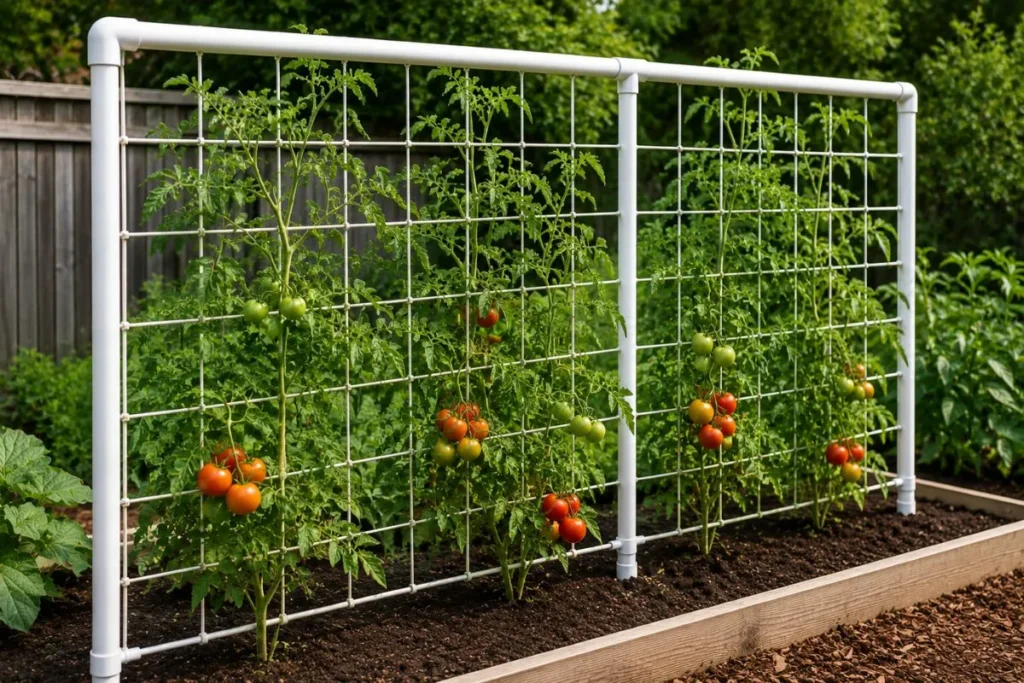
PVC Trellis
A PVC tomato trellis is a lightweight and reusable support system that requires very little maintenance. Since PVC doesn’t rot or rust, it’s a popular choice for gardeners looking for a long-lasting solution.
Pros
PVC trellises are weather-resistant, easy to clean, lightweight, and simple to assemble. They can be reused year after year and are easy to move whenever you rearrange your garden.
Cons
PVC pipes can bend if they’re supporting extremely heavy tomato vines without additional reinforcement. Some gardeners also prefer the more natural appearance of wood or bamboo over PVC.
Best For: Raised beds, container gardens, and DIY projects.
Cattle Panel Trellis
A cattle panel tomato trellis is one of the strongest support systems you can build. It easily supports vigorous indeterminate tomato plants that continue growing and producing fruit throughout the season.
Pros
Cattle panels are incredibly durable and capable of supporting very heavy tomato vines without bending. They improve airflow around the plants, require very little maintenance, and often last for many years, making them an excellent long-term investment.
Cons
The biggest drawbacks are the higher initial cost and the weight of the panels. They can be difficult to transport and usually require sturdy support posts during installation.
Best For: Large vegetable gardens and high-yield tomato production.
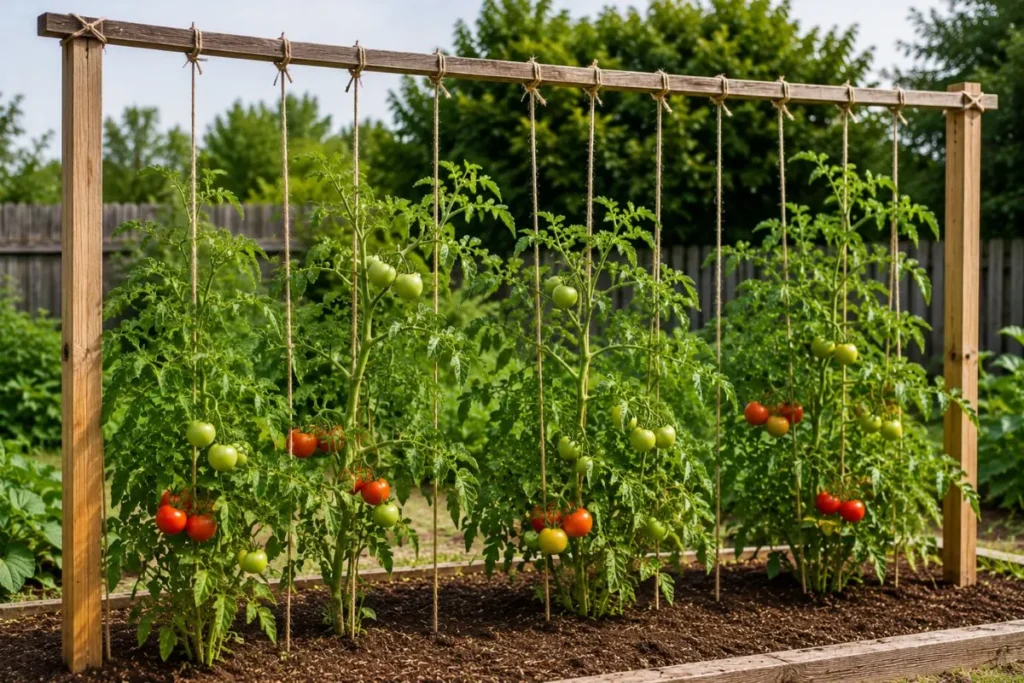
String Trellis
A string trellis is a simple support system that uses strong garden twine attached to an overhead frame. It is one of the most effective methods for growing tomatoes vertically, especially in greenhouses and raised beds.
Pros
String trellises are inexpensive, easy to install, and make excellent use of vertical space. They simplify pruning, improve airflow, and make harvesting much easier because the fruit remains visible and easy to reach.
Cons
Tomato plants need to be tied to the strings regularly as they grow. The garden twine usually needs replacing each season, and this method requires a sturdy overhead support structure to work effectively.
Best For: Greenhouses, raised beds, and gardens with limited growing space.
Which Trellis Design Should You Choose?
The best tomato garden trellis depends on your gardening goals. If you want a permanent and highly durable structure, a wooden trellis is an excellent choice.
Gardeners looking for a budget-friendly option often prefer bamboo, while PVC is ideal for those who want a lightweight and reusable support system.
If you’re growing large indeterminate tomato plants, cattle panels offer unmatched strength. For gardeners with limited space, a string trellis is one of the best ways to grow tomatoes vertically and maximize every inch of the garden.
How to Build a Trellis for Tomato Plants (Step-by-Step)
Many people believe building a tomato trellis is a complicated DIY project that takes days to complete. In reality, how to build a trellis for tomato plants step by step is much easier than it sounds.
With the right materials, a simple design, and a little planning, you can build a sturdy trellis in just a few hours. Whether you want to build a tomato trellis for a raised bed, backyard garden, or containers, these easy steps will help you create a strong support system that lasts throughout the growing season.
Choose the Best Location
The first step is selecting the right location for your trellis. Tomato plants grow best in an area that receives at least 6 to 8 hours of direct sunlight every day. Choose a spot with good air circulation and well-drained soil to reduce the risk of fungal diseases.
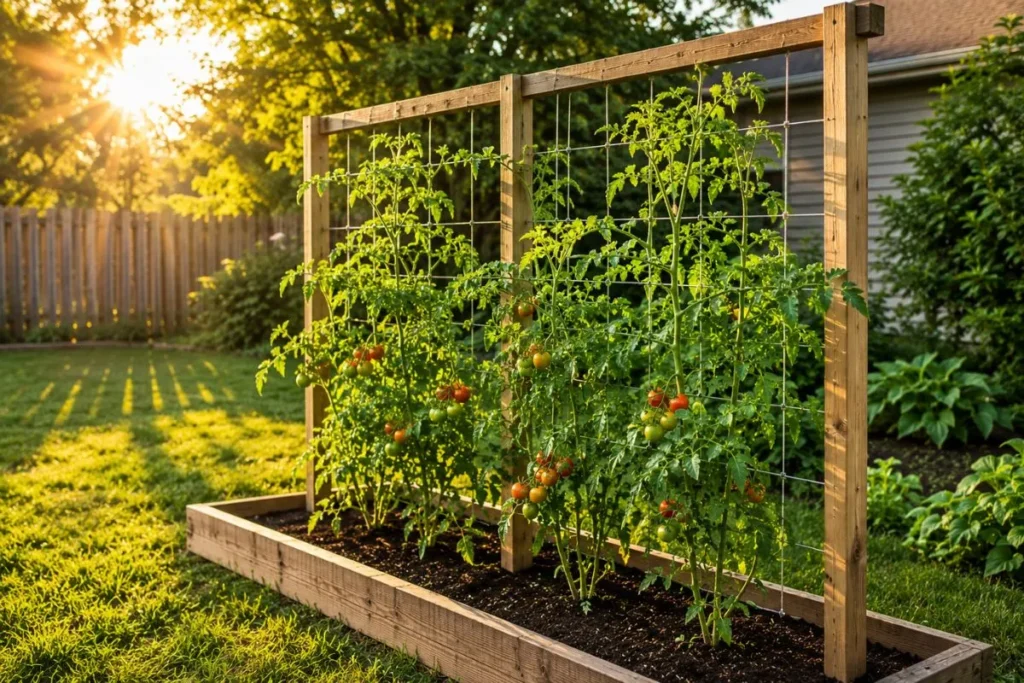
If you’re installing the trellis in a raised bed or vegetable garden, make sure there’s enough room to walk around the plants for watering, pruning, and harvesting. Planning the location before construction saves time and prevents the need to move the trellis later.
Measure the Garden Bed
Before cutting any materials, measure the space where the trellis will be installed. The width and length of your garden bed determine the size of the frame.
For most home gardens:
- A trellis height of 6 to 8 feet works well for indeterminate tomato varieties.
- Leave 18 to 24 inches between tomato plants to allow proper airflow.
- Build the trellis slightly wider than the planting area for better support.
Accurate measurements help you avoid wasting materials and ensure the finished trellis fits your garden perfectly.
Install the Main Supports
Once your measurements are complete, install the main support posts.
Whether you’re using wood, bamboo, PVC, or cattle panels, the posts should be placed firmly into the ground. Bury each support 12 to 18 inches deep to prevent the trellis from leaning once the tomato plants become heavy with fruit.
Check that every post stands straight before securing it permanently. A sturdy foundation is the key to building a reliable tomato support structure.
Attach Horizontal Supports
After installing the vertical posts, connect them using horizontal supports.
For a wooden trellis, attach wooden crossbars with screws. If you’re using PVC, connect the pipes with PVC fittings. Bamboo poles can be secured with strong garden twine or zip ties.
These horizontal supports strengthen the frame and create a stable structure that keeps the trellis from shifting during strong winds or heavy harvests.
Secure the Wire or Twine
The next step is creating the climbing surface.
Attach galvanized wire, wire mesh, or heavy-duty garden twine between the support posts. Stretch the material tightly so it doesn’t sag as the tomato vines grow.
If you’re making a string trellis, tie each piece of twine securely to the top frame and anchor the other end near the base of each tomato plant. This allows the vines to climb naturally as they grow upward.
This simple method is one of the best ways to build a trellis for tomato plants, especially if you’re growing several plants in a small space.
Test the Stability
Before planting or attaching your tomato vines, gently shake the completed trellis to check its strength.
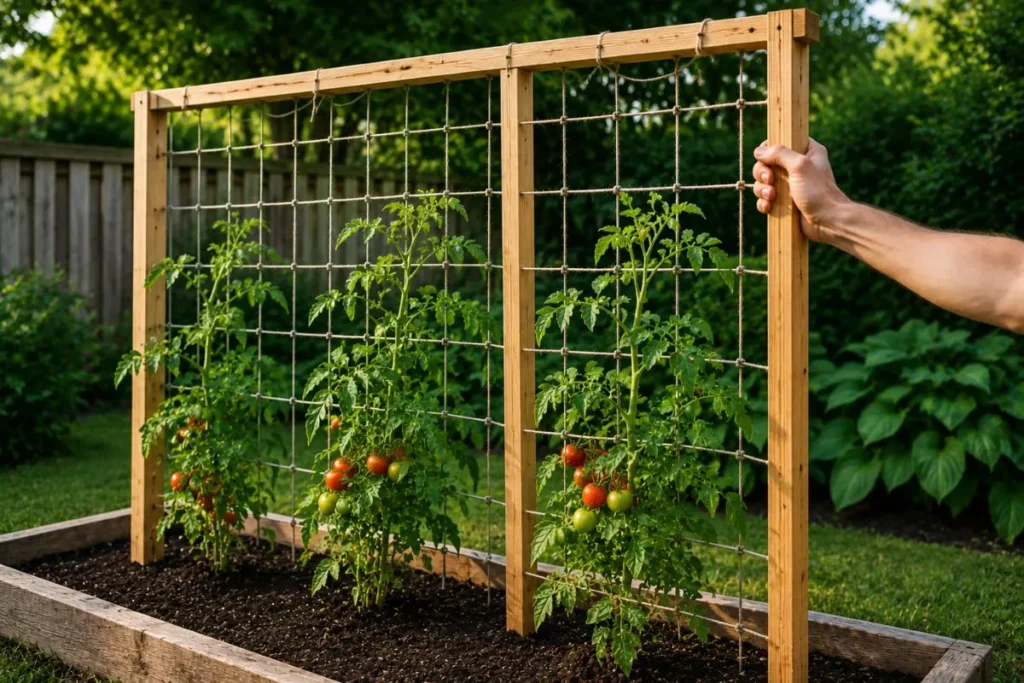
If the frame moves or feels unstable, reinforce it by tightening the fasteners, adding extra cross supports, or driving the posts deeper into the ground. Fixing weak areas now will prevent problems later when the plants become larger and heavier.
A strong trellis should remain stable throughout the entire growing season, even during windy weather.
Tie Tomato Plants Properly
Once your tomato plants reach 8 to 12 inches tall, begin attaching them to the trellis.
Use soft garden ties, plant clips, or strips of old fabric to loosely secure the main stem to the support. Avoid tying the stem too tightly because it needs room to expand as it grows.
As the plants continue growing, check them every week and add new ties whenever necessary. Regular training encourages the vines to grow upward, improves airflow, and makes harvesting much easier.
Following this method is an important part of how to build a DIY tomato trellis at home because a well-trained plant produces healthier vines and better-quality fruit.
Common Tips for Building a Strong Tomato Trellis
While building your trellis, keep these practical tips in mind:
- Build the trellis before your tomato plants become too large.
- Use weather-resistant materials whenever possible.
- Make sure all posts are firmly secured.
- Leave enough space between plants for airflow.
- Choose a design that can support the full weight of mature tomato vines.
- Inspect the trellis regularly and tighten any loose connections.
By following these simple steps, you can confidently make a trellis for tomato plants that is sturdy, durable, and easy to maintain. A well-built trellis not only supports healthy growth but also makes watering, pruning, and harvesting much more enjoyable.
With your support system in place, your tomato plants will be ready to climb, thrive, and produce an abundant harvest throughout the season.
Frequently Asked Questions (FAQs)
Can I Grow Tomatoes Without a Trellis?
Yes, you can grow tomatoes without a trellis, but it’s usually not the best approach. Without proper support, the vines spread across the ground, making the fruit more likely to rot, attract pests, and develop diseases.
Learning how to build a trellis for tomato plants helps keep the vines upright, improves airflow, and makes harvesting much easier.
What Is the Best Trellis for Tomatoes?
The best trellis depends on the type of tomatoes you’re growing and the space you have available. A wooden tomato trellis is ideal for gardeners who want a long-lasting structure, while a PVC tomato trellis is lightweight and reusable.
If you’re growing large indeterminate tomatoes, a cattle panel tomato trellis provides the strongest support. For beginners, a simple bamboo trellis is an affordable and effective option.
How Tall Should a Tomato Trellis Be?
Most tomato trellises should be between 6 and 8 feet tall. This height works well for indeterminate tomato varieties that continue growing throughout the season. Determinate tomatoes usually require a shorter support of about 4 to 5 feet, depending on the variety.
Which Tomatoes Need a Trellis?
Almost all tomato plants benefit from some type of support, but indeterminate tomatoes need a trellis the most because they keep growing and producing fruit until the end of the season.
Determinate varieties are more compact, but they also grow better with a sturdy support system to keep branches from bending under the weight of the tomatoes.
Can I Use Bamboo for a Tomato Trellis?
Absolutely. Bamboo is one of the most popular materials for building a tomato trellis. It’s lightweight, inexpensive, easy to assemble, and strong enough to support most tomato plants. A bamboo tomato trellis is an excellent choice for beginners and works especially well in small gardens and raised beds.
Is PVC Good for Tomato Trellises?
Yes. PVC is a durable and weather-resistant material that won’t rust or rot. A PVC tomato trellis is lightweight, reusable, and simple to build, making it a great option for gardeners who want a low-maintenance support system.
What’s the Cheapest DIY Tomato Trellis?
A bamboo or string trellis is usually the most affordable option. Both designs require only a few inexpensive materials and are easy to build at home. If you already have wooden stakes or recycled materials available, you can also create a sturdy DIY tomato plant trellis without spending much money.
How Often Should I Tie Tomato Plants?
Check your tomato plants at least once a week during the growing season. As the vines grow taller, loosely tie the main stem to the trellis using soft garden ties, cloth strips, or plant clips. Regularly securing the vines helps prevent broken stems and keeps the plants growing upward.
Can One Trellis Support Multiple Tomato Plants?
Yes, a well-built trellis can support several tomato plants. The exact number depends on the size and design of the trellis. Just make sure to leave 18 to 24 inches between plants so each one has enough space for good airflow, healthy growth, and easy maintenance.
How Long Does a Homemade Tomato Trellis Last?
The lifespan of a homemade trellis depends on the materials used. A wooden or cattle panel tomato trellis can last for many years if it’s properly maintained. PVC trellises are also long-lasting because they resist moisture and weather damage.
Bamboo trellises generally last two to four growing seasons, depending on your climate and how they’re stored during the off-season.
Conclusion
Building a sturdy tomato trellis doesn’t have to be difficult or expensive. As you’ve learned throughout this guide, how to build a trellis for tomato plants is a simple DIY project that anyone can complete with the right materials and a little planning.
Whether you choose wood, bamboo, PVC, cattle panels, or a string trellis, the goal is the same provide strong support that helps your tomato plants grow healthier and produce more fruit.
A well-built trellis offers many benefits beyond keeping plants upright. It improves airflow, reduces the risk of diseases, makes watering and pruning easier, and keeps tomatoes clean and off the ground.
Most importantly, it encourages your plants to grow vertically, allowing you to make better use of your garden space while increasing your harvest.
If you’re new to gardening, don’t feel like you need to build a complicated structure. Start with a simple DIY tomato plant trellis that fits your space and budget.
As your gardening skills improve, you can always upgrade to a larger or more permanent design. The key is to choose a support system that’s strong enough for your tomato variety and sturdy enough to last through the entire growing season.
Remember to inspect your trellis regularly, tighten loose connections, and continue tying the vines as they grow. A few minutes of maintenance each week will help keep your plants healthy and productive until the final harvest.

Plant Nest Blog’s author is passionate about plants, gardening, and sustainable living. Through research and practical experience, they share helpful plant care tips, gardening guides, and easy solutions to help readers grow healthier plants and create greener spaces.