
Weeds can take over a garden surprisingly fast. One day the soil looks clean, and a few days later you’re pulling unwanted plants from flower beds, vegetable patches, cracks, and around trees.
If you’re wondering how to suppress weeds the best approach is usually not one magic treatment it’s a combination of removing existing weeds and making the soil less inviting for new ones.
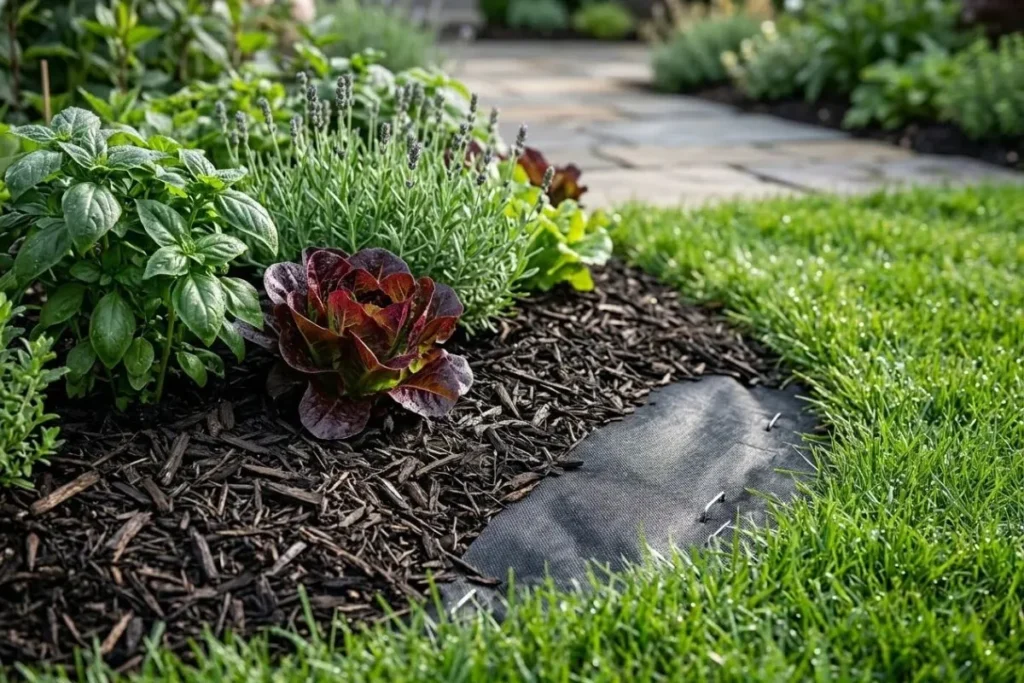
The good news is that you don’t need to spend every weekend weeding. In this guide, you’ll learn practical ways to suppress weeds, how to prevent them from coming back, which methods work best in different areas, and the common mistakes that make weed problems worse.
How to control weeds effectively
The most reliable weed-control strategy has three parts: remove weeds that are already growing, cover the soil so new weeds struggle to emerge, and deal with weeds before they produce seeds.
Start by identifying the weed
Before reaching for a weed killer, take a close look at what you’re dealing with. Annual weeds, perennial weeds, grasses, and broadleaf weeds can respond differently to control methods.
This matters because pulling a small annual weed may solve the problem, while a perennial weed with an established root system can grow back if you only remove the top.
If you’re unsure what a weed is, check its leaves, stems, flowers, and root structure. Correct identification helps you choose a control method that is effective without unnecessarily disturbing nearby plants.
Remove weeds when the soil is slightly moist
Hand-pulling is much easier after light rain or watering. Moist soil loosens around the roots, allowing you to remove more of the plant.
Try to pull slowly rather than yanking quickly. For weeds with long taproots, such as dandelion-type weeds, use a narrow weeding tool to loosen the soil around the root.
The goal is not simply to make the garden look clean for a day. You want to remove as much of the weed and its root system as practical.
Don’t let weeds reach the seed stage
A mature weed can turn one small problem into dozens or hundreds of new ones. Even if you don’t have time to remove every weed properly, cutting or removing flower heads before they produce seeds can reduce future weed pressure.
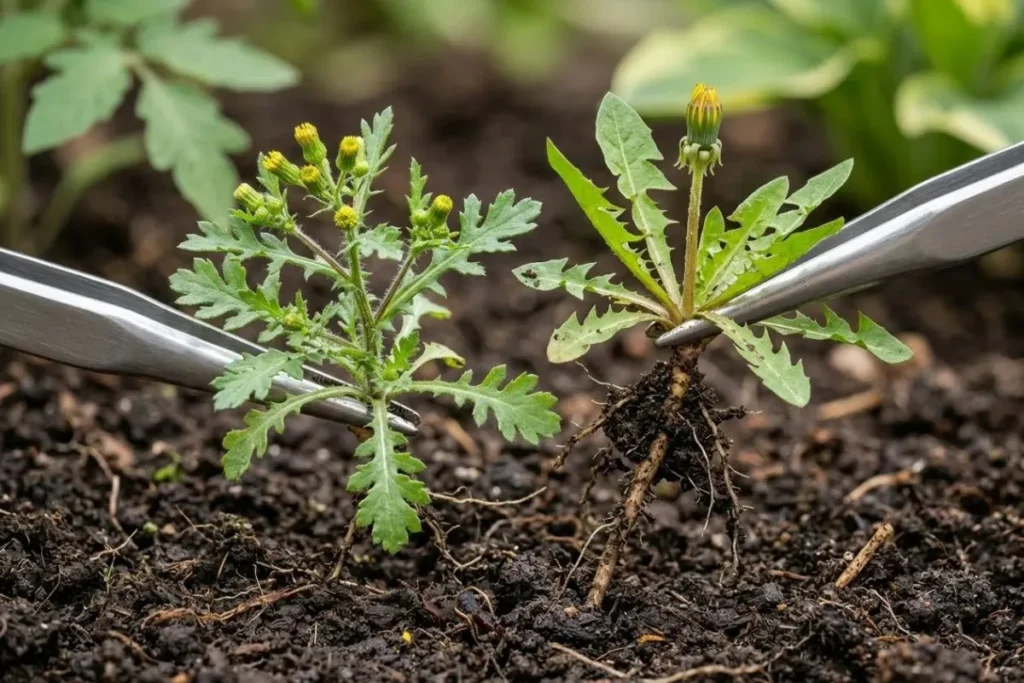
This is particularly useful for large areas where completely hand-weeding everything isn’t realistic.
However, cutting the tops isn’t the same as killing the plant. Some weeds will simply grow again, so follow up with a more suitable control method.
Cover bare soil to stop new weeds
Bare soil is an open invitation for weeds. If sunlight reaches the soil and moisture is available, weed seeds may find the conditions they need to germinate.
One of the most useful long-term strategies is therefore to keep soil covered.
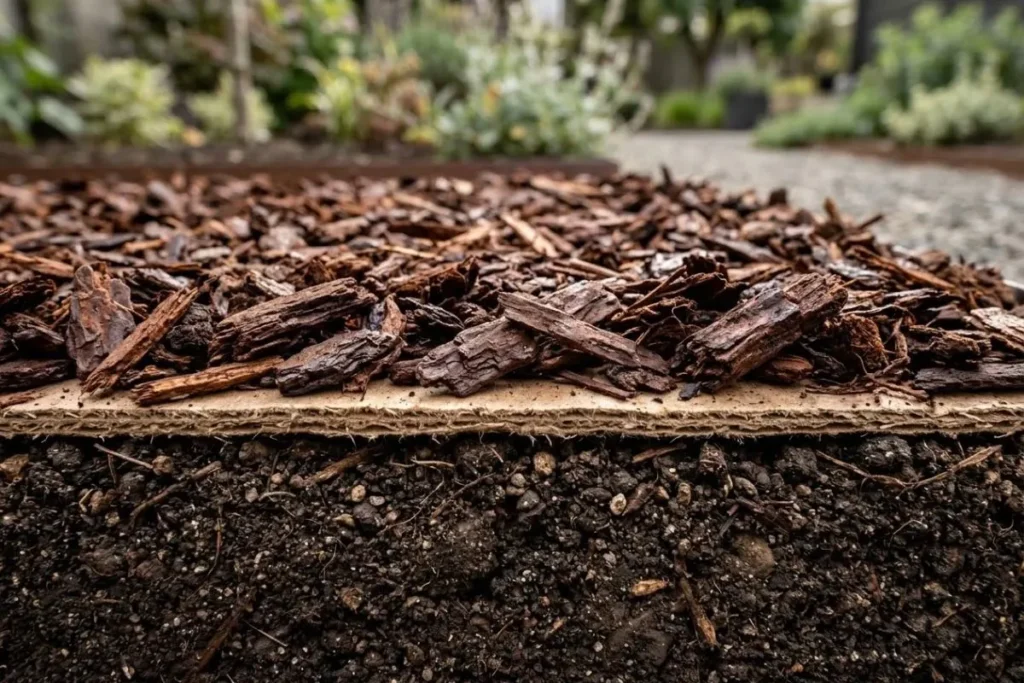
Don’t spread mulch too thinly
A thin layer may look neat but provide little weed suppression. As organic mulch settles and decomposes, it may also need to be topped up.
Avoid piling mulch directly against tree trunks or plant stems. Constantly damp material against plant tissue can create problems that have nothing to do with weeds.
Try landscape fabric where appropriate
Landscape fabric can help suppress weeds in some areas, particularly beneath paths, decorative stone, or certain long-term landscape installations.
It isn’t ideal for every garden bed. Soil, organic matter, and weed seeds can accumulate on top of the fabric over time, allowing weeds to grow above it. It can also make future planting and soil management more difficult.
For actively planted beds, organic mulch is often more flexible because you can move it, replenish it, and work the soil when needed.
How to prevent weeds before they appear
The easiest weed to control is one that never gets established. That means prevention should be part of your routine rather than something you think about only after the garden becomes overgrown.
Keep plants spaced to cover the soil
Plants naturally compete with weeds for sunlight, water, and nutrients. A garden with healthy, well-spaced plants can leave less exposed soil available for weeds.
Don’t overcrowd plants just to eliminate every bare patch, though. Poor airflow can create other problems. Instead, use appropriate spacing and consider ground-cover plants where they suit the site.
Water plants, not the entire garden
If possible, direct irrigation toward the plants you actually want to grow.
Drip irrigation or carefully positioned watering can reduce unnecessary wetting of surrounding soil. This doesn’t guarantee weed-free soil weed seeds can germinate with relatively little moisture but it can make water use more targeted.
Avoid bringing weed seeds into your garden
Weed seeds can enter through contaminated soil, compost, manure, mulch, tools, footwear, animals, and wind.

Be especially careful when adding compost or organic material from an unknown source. If the material contains viable weed seeds, you may accidentally introduce a new weed problem while trying to improve the soil.
Use the right method for different garden areas
Not every weed problem should be handled in the same way. The best method depends on where the weeds are growing and what you want to protect.
Vegetable gardens
In vegetable beds, start with hand-pulling, hoeing, and mulch. Shallow weeds are often easiest to control when they are young.
A sharp hoe can remove tiny weed seedlings quickly without requiring you to bend over and pull every plant individually. Work carefully around shallow-rooted crops so you don’t damage their roots.
Flower beds
Mulch is especially useful in ornamental beds because it suppresses weeds while keeping the area looking tidy.
Pull weeds that appear through the mulch before they become established. If you wait until they are large, removing them can disturb surrounding plants and decorative mulch.
Lawns
A healthy, appropriately maintained lawn can naturally compete with many weeds. Focus on suitable mowing practices, irrigation, soil conditions, and the needs of the particular grass.
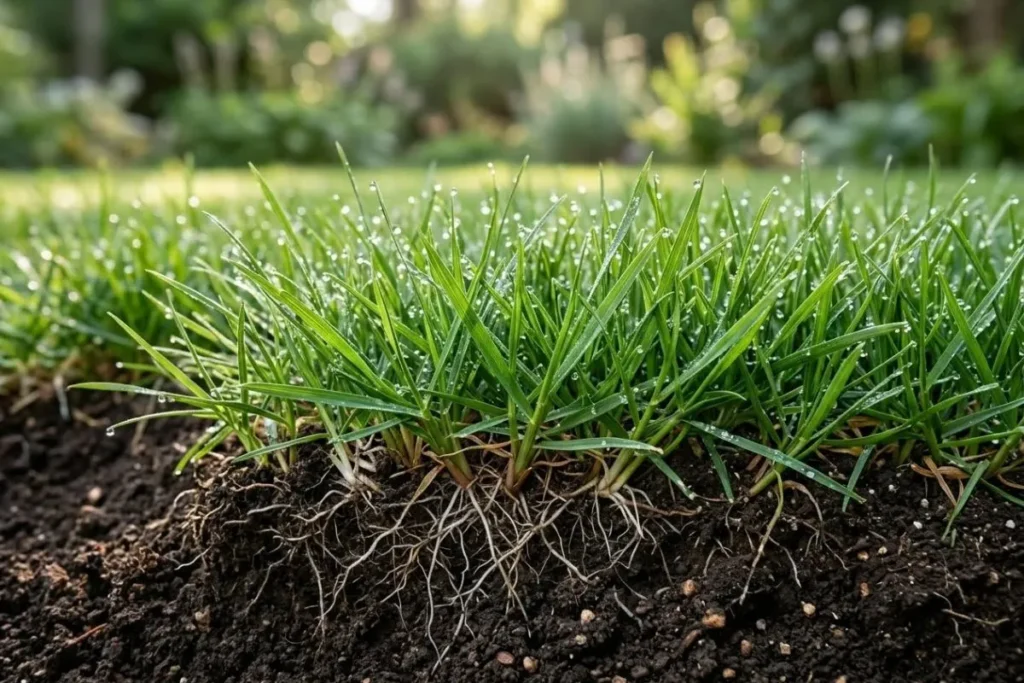
Avoid mowing extremely short simply because you want fewer mowing sessions. Cutting grass too aggressively can weaken it and leave more opportunities for unwanted plants.
Paths and cracks
Weeds growing through paving cracks are a different problem. For a small number of weeds, physically removing them may be enough.
For larger areas, improve the surface and address the underlying cause. If soil and organic debris continue collecting in cracks, weeds will keep finding a place to grow.
When herbicides make sense
Sometimes mechanical and cultural methods aren’t enough, particularly when weeds are widespread, deeply rooted, or difficult to remove manually.
Herbicides can be useful when applied correctly, but they should not be treated as a universal solution.
Read the product label before use and make sure the product is suitable for the weed, location, and plants you want to protect. Some herbicides can damage desirable plants if they drift or are applied incorrectly.
Use targeted treatments when possible
Spot treatment can be preferable to spraying an entire area when only a few weeds are present.
This reduces unnecessary exposure of surrounding vegetation and limits the amount of product used.
Take extra care around vegetable gardens, lawns, ponds, trees, and ornamental plants. The label should be your primary source for application instructions, protective equipment, timing, and restrictions.
Common weed-control mistakes to avoid
A few habits can make weed problems harder to manage.
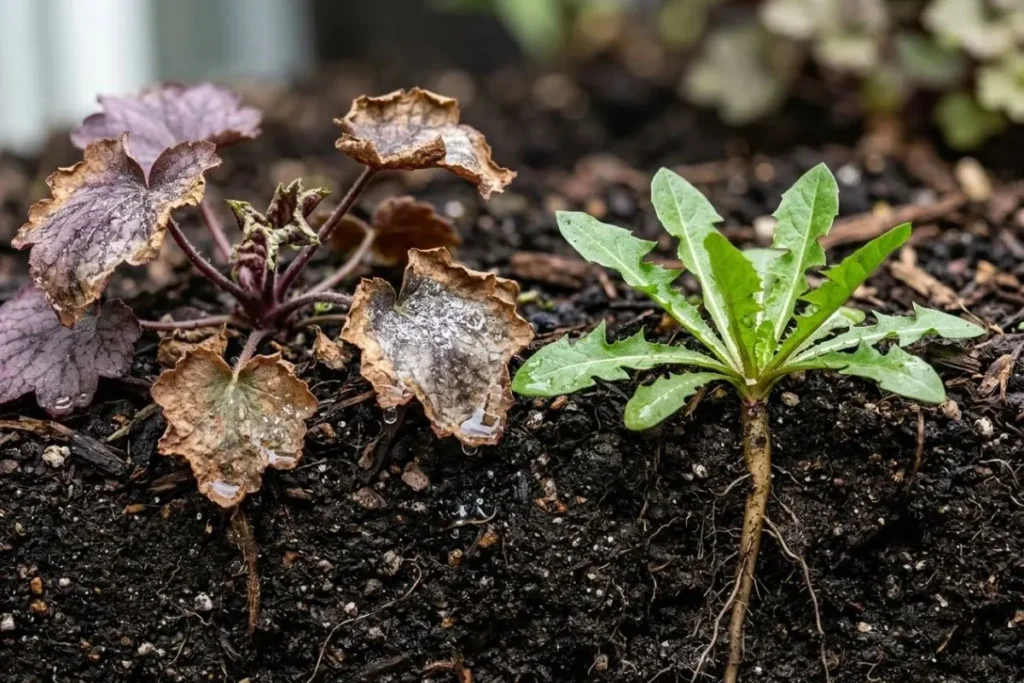
Pulling weeds but leaving the roots
Some weeds can regenerate from remaining roots or underground structures. If the plant is known to regrow from its root system, simply snapping off the top may give you temporary results.
Waiting until weeds are mature
Small weeds are generally easier to remove than large, established plants. Regular short weeding sessions can be far more manageable than waiting until the garden is covered.
Disturbing the soil unnecessarily
Digging and turning soil can bring buried weed seeds closer to the surface. You don’t need to avoid soil cultivation completely, but disturb it only when necessary.
Using too much mulch
More mulch isn’t always better. Extremely deep layers can interfere with water movement, airflow, or plant health. Keep mulch at a sensible depth and away from stems and trunks.
Assuming one treatment will solve everything
Weed management is usually an ongoing process. Even an excellent control method won’t prevent every new seed from arriving.
The goal is to keep weeds below the level where they become difficult to manage—not necessarily to maintain perfectly bare soil forever.
A simple weed-control routine that actually works
You don’t need a complicated schedule. A practical routine might look like this:
Once or twice a week: Walk through the garden and remove small weeds before they become established.
After weeding: Check whether bare soil needs mulch or another form of ground cover.
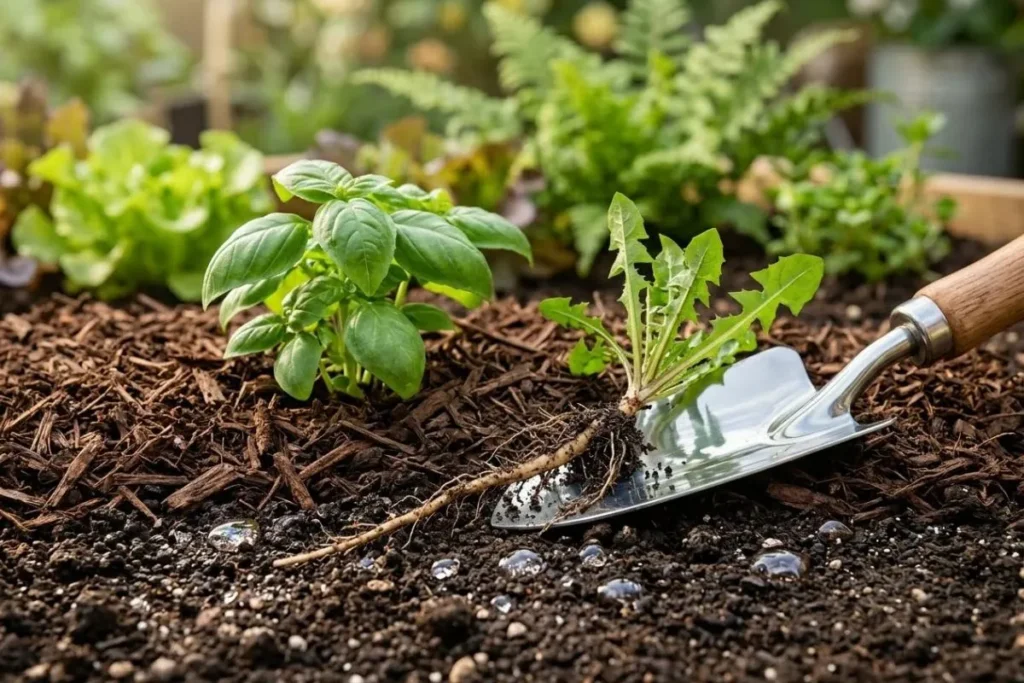
During the growing season: Watch for weeds that are beginning to flower and remove them before they set seed.
After heavy rain or irrigation: Inspect areas where soil has been disturbed or washed around.
Every few months: Check mulch depth, garden edges, paths, and other places where weeds tend to return.
This small amount of regular attention can prevent a manageable problem from turning into a major cleanup project.
Natural ways to suppress weeds
If you prefer to minimize chemical use, several non-chemical methods can work well together.
Hand-pulling is effective for individual weeds. Hoeing works well for small seedlings in cultivated beds. Mulching blocks light and reduces opportunities for new weeds to emerge. Dense, healthy planting can also reduce exposed soil.
For larger areas, solarization may be useful in suitable conditions. This involves covering moist soil with a clear plastic sheet for an extended period so solar heat builds beneath it. It requires planning and temporarily takes the area out of production, so it’s more suitable for certain garden situations than established beds containing plants.
How to choose the best weed-control method
| Situation | Useful approach |
| A few young weeds | Hand-pull or hoe |
| Weeds in garden beds | Hand-weeding + mulch |
| Large bare soil areas | Ground cover or mulch |
| Weeds in paving cracks | Physical removal + improve the surface |
| Lawn weeds | Improve lawn health + targeted control if needed |
| Deep-rooted perennial weeds | Repeated removal or an appropriate targeted treatment |
| Large, heavily infested areas | Combine mechanical, cultural, and carefully selected chemical methods |
The most effective approach is usually a combination rather than a single technique.
FAQ about controlling and preventing weeds
What is the easiest way to control weeds?
For a typical garden, regular removal of young weeds combined with mulch is one of the simplest approaches. The earlier you deal with weeds, the less effort the job usually requires.
How do I prevent weeds from growing?
Keep soil covered, maintain healthy plants, remove weeds before they produce seeds, and avoid introducing contaminated soil or organic material. These steps won’t stop every weed, but they can significantly reduce the number that establish.
Does mulch completely stop weeds?
No. Mulch can suppress many weeds, but some may still grow through it or germinate in material that accumulates on top. Regular inspection is still necessary.
Is pulling weeds better than spraying?
It depends on the situation. Pulling works well for small numbers of young weeds, while a carefully selected herbicide may be useful for large infestations or weeds that are difficult to control mechanically.
Will weeds grow back after pulling?
Some will. If part of the root system remains, certain weeds can regenerate. Other weeds may return because new seeds are already present in the soil.
How often should I weed my garden?
Check your garden regularly during periods of active growth. A quick weekly inspection is often easier than waiting several weeks and dealing with large, established weeds.
Can I stop weeds permanently?
Usually, no. Weed seeds can arrive through wind, water, animals, soil movement, and other sources. A realistic goal is long-term suppression and prevention rather than permanent elimination.
Conclusion how to suppress weeds:
Good weed control isn’t about constantly fighting the garden. It’s about making weeds harder to establish and dealing with them while they’re still small. Remove existing weeds, keep bare soil covered, protect the plants you want to grow, and stay consistent with maintenance.
If you build those habits into your normal gardening routine, how to control weeds becomes a much simpler problem. You spend less time battling overgrown patches and more time maintaining a garden that stays manageable.

Plant Nest Blog’s author is passionate about plants, gardening, and sustainable living. Through research and practical experience, they share helpful plant care tips, gardening guides, and easy solutions to help readers grow healthier plants and create greener spaces.