
If you’ve been wondering how many marigolds per square foot you should plant, you’re not alone. Whether you’re designing a flower bed, planning a raised garden, or trying square foot gardening with marigolds, proper spacing is one of the most important factors for success.
Giving each plant enough room helps it develop strong roots, produce more flowers, and stay healthy throughout the growing season.
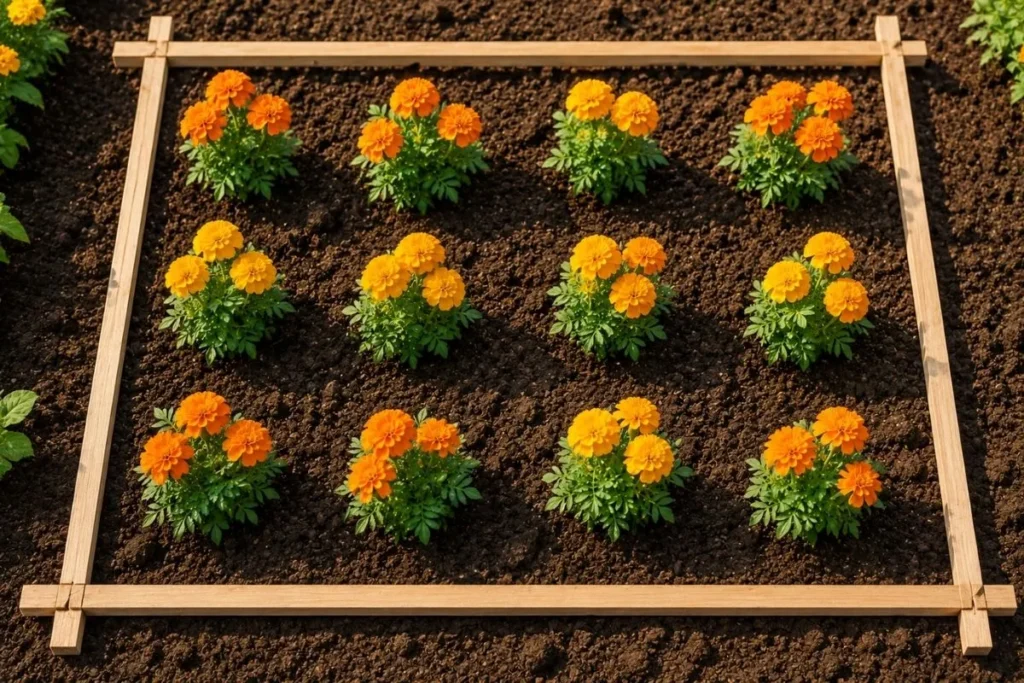
In this guide, you’ll learn how many marigolds fit in a square foot, the ideal spacing for different marigold varieties, and how far apart to plant marigolds in garden beds, raised beds, and containers.
We’ll also cover common spacing mistakes, expert planting tips, and the best ways to grow beautiful, long-lasting marigolds without overcrowding your garden.
How Many Marigolds Per Square Foot Should You Plant?
The answer depends on the variety of marigold you’re growing. Not all marigolds reach the same size, so using the same spacing for every type isn’t a good idea.
Some stay compact and fit comfortably in small spaces, while others grow tall and bushy, requiring much more room.
If you’re asking what is the ideal spacing for marigolds, the best approach is to match the spacing to the mature size of the plant instead of its size when you first transplant it.
French Marigolds
French marigolds are one of the most popular choices for home gardens because they stay compact and bloom heavily throughout the season. Most varieties grow between 6 and 12 inches tall, making them perfect for borders, containers, and square foot gardening.
For the best results, plant 4 French marigolds per square foot. This usually means spacing each plant about 6 inches apart. This arrangement provides enough room for healthy root development while creating a full, colorful display.
If you’ve been searching for how many French marigolds per square foot, four plants per square foot is the ideal balance between beauty and healthy growth.
African Marigolds
African marigolds are much larger than French marigolds. Many varieties grow 18 to 36 inches tall with wide, bushy foliage and large blooms. Because of their size, they need much more growing space.
The recommended spacing is 1 African marigold per square foot, although larger varieties may benefit from 12 to 18 inches between plants.
If you’re wondering how many African marigolds per square foot, planting just one per square foot prevents overcrowding and gives the plant enough room to produce its biggest flowers.
Dwarf Marigolds
Dwarf marigolds are excellent for edging pathways, filling small garden spaces, and creating neat flower borders. Their compact size allows you to plant more flowers without reducing airflow.
You can comfortably grow 4 to 6 dwarf marigolds per square foot, depending on the variety and the mature spread of the plants.
If you’re asking how many dwarf marigolds fit in one square foot, this spacing provides a lush appearance while still allowing each plant to thrive.
Signet Marigolds
Signet marigolds have delicate foliage and smaller flowers, but they naturally spread as they grow. Although they look light and airy, they still need enough room for good air circulation.
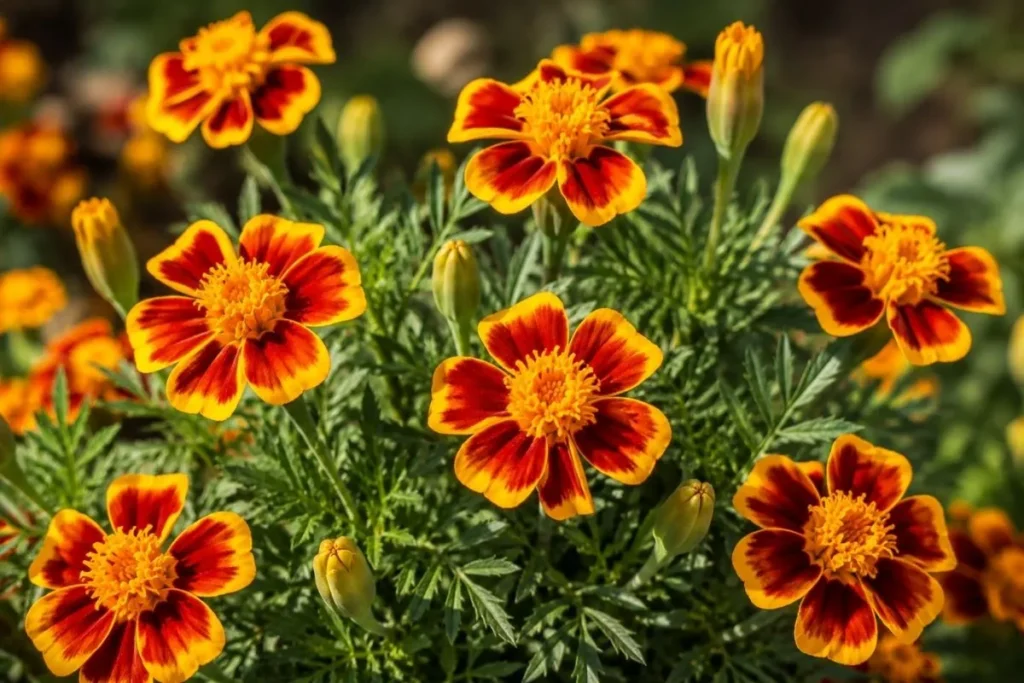
For healthy growth, plant 2 to 4 signet marigolds per square foot, leaving around 8 to 10 inches between plants. This spacing encourages bushier growth and continuous flowering throughout the season.
What Is the Ideal Spacing for Marigolds?
The best marigold spacing for healthy growth depends on the mature size of each variety rather than a fixed number of plants. As a general guideline:
- French marigolds: 4 plants per square foot
- African marigolds: 1 plant per square foot
- Dwarf marigolds: 4–6 plants per square foot
- Signet marigolds: 2–4 plants per square foot
Following these recommendations gives your marigolds enough room to develop strong roots, improves airflow around the plants, and encourages more blooms throughout the growing season.
By understanding how many marigolds per square foot you should plant, you’ll create a healthier, more attractive garden that’s easier to maintain and filled with vibrant flowers from spring until frost.
Why Proper Marigold Spacing Matters
Choosing the right marigold plant spacing isn’t just about fitting more flowers into your garden. Proper spacing helps every plant receive enough sunlight, air, water, and nutrients.
Whether you’re planting in a flower bed, raised bed, or practicing square foot gardening with marigolds, giving each plant enough space leads to healthier growth and longer-lasting blooms.
Better Airflow Around Your Plants
One of the biggest benefits of proper marigold spacing is improved airflow. When plants are packed too closely together, air cannot move freely between them.
This creates damp conditions where fungal diseases, mildew, and other common garden problems are more likely to develop.
By following the recommended spacing for each variety, fresh air can circulate around the leaves and stems. Better airflow helps keep the plants dry after rain or watering, reducing the chances of disease and keeping your marigolds looking fresh and healthy.
Healthier Root Growth
Healthy flowers start with healthy roots. Every marigold needs enough underground space to spread its roots and absorb water and nutrients from the soil.
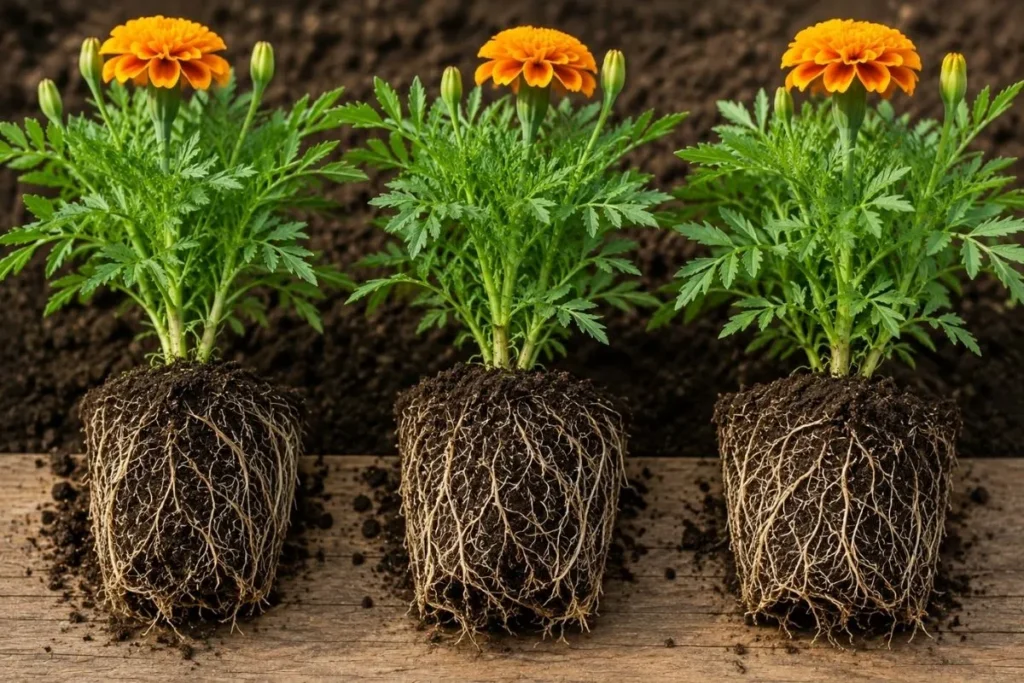
When you ignore the recommended marigold planting distance, nearby plants compete for the same resources. As a result, root growth becomes restricted, and the plants may struggle to reach their full size.
Giving each plant enough room encourages strong marigold root growth, helping it establish quickly and remain vigorous throughout the growing season.
More Flowers Throughout the Season
Most gardeners grow marigolds because they want bright, colorful blooms that last for months. Proper spacing plays a major role in achieving that goal.
When plants receive enough sunlight, nutrients, and airflow, they put more energy into producing flowers instead of competing with neighboring plants. This leads to better marigold bloom production, larger flowers, and continuous blooming from late spring until the first frost.
If your goal is a garden filled with vibrant color, proper spacing is just as important as watering and fertilizing.
Reduced Risk of Diseases and Pests
Crowded flower beds often create the perfect environment for pests and diseases. Moist leaves, limited airflow, and shaded soil can encourage fungal infections and make it easier for insects to spread from one plant to another.
Following the correct best marigold spacing for healthy growth helps minimize these problems. Plants dry faster after watering, leaves stay cleaner, and pests have fewer places to hide. This simple step can save you time and reduce the need for extra plant care later in the season.
Easier Garden Maintenance
Proper spacing doesn’t just benefit the plants it also makes gardening easier for you.
When your marigolds have enough room, it’s much simpler to water them, remove weeds, apply fertilizer, and deadhead faded flowers. You’ll also have better access to inspect your plants for insects or signs of disease before small problems become bigger ones.
Whether you’re growing marigolds in borders, containers, or a backyard flower garden, well-spaced plants are easier to maintain and continue looking attractive throughout the season.
Supports the Natural Growth Habit of Marigolds
Every marigold variety has its own natural shape and size. Some grow into compact mounds, while others become tall and bushy.
Understanding the marigold growth habit helps you choose the correct spacing from the beginning. Allowing each plant to grow naturally without crowding results in fuller foliage, stronger stems, and more balanced growth.
Instead of competing with neighboring plants, each marigold has the space it needs to reach its full potential.
Healthy Spacing Leads to Healthy Marigolds
If you’re wondering how many marigolds per square foot is best, remember that the goal isn’t to fit the most plants into your garden. The goal is to grow healthy marigold plants that produce abundant flowers with minimal problems.
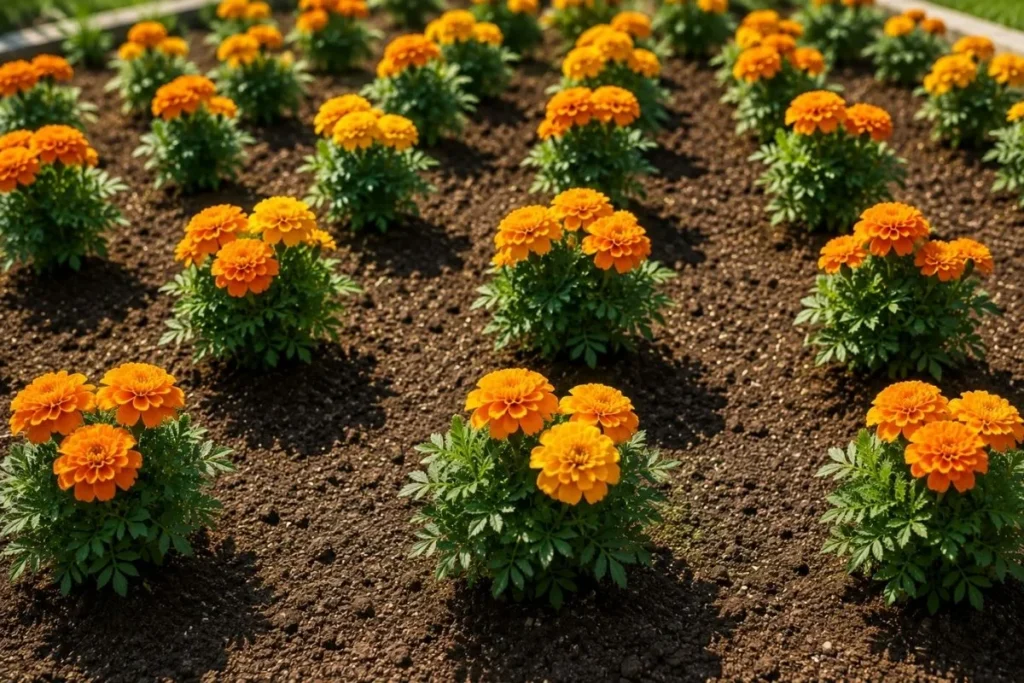
Proper spacing improves airflow, encourages stronger roots, increases bloom production, reduces disease risks, and makes ongoing care much easier. It’s one of the simplest gardening practices, yet it has one of the biggest impacts on the long-term success of your marigold garden.
How Far Apart Should Marigolds Be Planted?
If you want strong plants with continuous blooms, knowing how far apart should marigolds be planted is just as important as choosing the right variety. Proper marigold planting distance allows every plant to receive enough sunlight, air, moisture, and nutrients without competing with its neighbors.
While the recommended spacing depends on the type of marigold, your planting location also plays a major role. Here’s how to space marigolds correctly in different growing situations.
How Far Apart Should Marigolds Be Planted in Garden Beds?
Garden beds provide plenty of room for marigolds to spread naturally, making them one of the easiest places to grow these colorful flowers.
For most flower beds, French and dwarf marigolds perform well when planted about 6 to 8 inches apart. Larger African marigolds need 12 to 18 inches of space because they grow much taller and wider. Signet marigolds usually thrive with 8 to 10 inches between plants.
Following the proper garden bed spacing helps every marigold receive enough airflow while allowing the plants to fill in beautifully as they mature. Instead of overcrowding the bed, you’ll enjoy healthier plants with brighter, longer-lasting flowers.
How Far Apart Should Marigolds Be Planted in Raised Beds?
Raised beds are perfect for gardeners who want an organized planting layout and healthy soil conditions. However, because space is more limited, careful planning is essential.
If you’re practicing square foot gardening with marigolds, compact varieties like French and dwarf marigolds fit well within the planting grid. Larger African marigolds should be given extra room so they don’t shade nearby plants.
When deciding how many marigolds per square foot in a raised bed, always consider the mature size rather than the size of young transplants. Giving each plant enough growing space keeps the raised bed looking neat while encouraging healthy growth throughout the season.
How Far Apart Should Marigolds Be Planted in Containers?
Marigolds also grow exceptionally well in pots, planters, and window boxes. Although containers naturally limit root space, overcrowding should still be avoided.
A medium-sized container can comfortably support one large African marigold or several compact French or dwarf marigolds, provided there’s enough room between them. Leave enough space so each plant can expand without pressing against the others as it grows.
Proper spacing inside containers improves air circulation and helps prevent excess moisture from building up around the foliage. This simple step keeps your marigolds healthier and encourages steady blooming all season long.
How Far Apart Should Marigolds Be Planted in Landscape Borders?
Marigolds are popular border plants because they create bright edges along pathways, driveways, and garden beds. The key is to plant them close enough for a full appearance without causing overcrowding later.
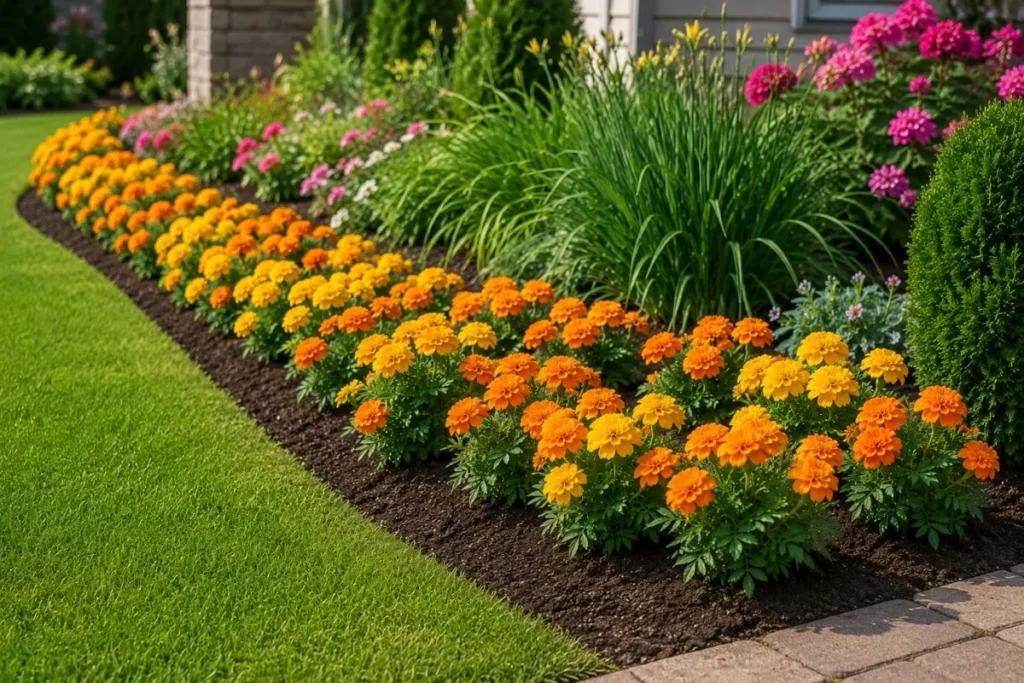
French and dwarf marigolds usually create the best border when spaced 6 to 8 inches apart. Larger varieties need additional room so each plant can maintain its natural shape.
Following the correct flower bed design principles allows the plants to grow together into a colorful border while still receiving enough sunlight and airflow to remain healthy.
How to Space Marigolds for the Best Results
No matter where you plant them, the goal is to give every marigold enough room to reach its mature size. A little extra planning before planting can make a huge difference later in the season.
If you’re unsure how to space marigolds, remember these general guidelines:
- Compact varieties need less space because they stay small and bushy.
- Tall varieties require wider spacing to support their larger stems and blooms.
- Always measure spacing based on the plant’s expected mature width rather than its current size.
- Avoid planting too closely, even if the bed looks empty at first. Marigolds grow quickly and naturally fill the available space.
Using the proper marigold planting distance not only creates a more attractive garden but also helps reduce maintenance, improves plant health, and encourages months of colorful blooms.
Now that you know how far apart to plant marigolds in different settings, you’re ready to learn how spacing works specifically in square foot gardening and raised beds, where maximizing every inch of growing space becomes even more important.
How Many Marigolds Per Square Foot in a Raised Bed?
Many gardeners think raised beds allow them to plant flowers much closer together because the soil is richer and drains better. While raised beds do provide excellent growing conditions, they don’t eliminate the need for proper spacing.
If you’re wondering how many marigolds per square foot in a raised bed, the answer still depends on the variety you choose and the amount of space each plant needs at full size.
Understanding Square Foot Gardening
Square foot gardening is a simple method that divides a raised bed into one-foot squares. Instead of guessing where to plant, each square is planned based on the mature size of the crop or flower.
When using this method, square foot gardening marigolds can grow beautifully without competing for sunlight, water, or nutrients. It also makes watering, fertilizing, and maintaining the garden much easier.
If you’re planning marigolds in a square foot garden, always think about how large the plants will become rather than how small they look when you first transplant them.
How Many Marigolds Per Square Foot for Square Foot Gardening?
The number of marigolds you can grow in one square foot varies by variety.
French marigolds are compact and are usually planted four per square foot, giving each plant enough room to spread naturally.
Dwarf marigolds can often fit four to six plants per square foot, depending on the mature width of the variety.

African marigolds grow much larger, so one plant per square foot is usually the best choice. Larger cultivars may even benefit from slightly more space to support their broad foliage and large blooms.
Signet marigolds generally perform best with two to four plants per square foot, allowing them to develop their naturally airy growth habit.
Following these spacing recommendations ensures healthy plants and answers one of the most common gardening questions: how many marigolds per square foot for square foot gardening.
The Best Raised Bed Layout for Marigolds
A well-planned square foot gardening layout helps every marigold receive enough light and airflow while making the most of your available space.
Place taller African marigolds toward the back or north side of the raised bed so they don’t block sunlight from shorter plants. French and dwarf marigolds work well along the front edges or between vegetables because of their compact size.
Signet marigolds can be planted around the borders, where their fine foliage adds texture and color.
Planning your layout before planting prevents overcrowding and creates a balanced, attractive garden.
Growing Marigolds with Vegetables
One of the biggest advantages of raised beds is the ability to combine flowers with vegetables. Vegetable garden marigolds are popular because they add bright color while attracting pollinators and beneficial insects.
Marigolds grow well alongside crops such as tomatoes, peppers, cucumbers, beans, lettuce, and herbs. Their compact growth makes them easy to fit into unused spaces without taking over the bed.
Even when mixing flowers and vegetables, avoid squeezing in too many plants. Proper spacing allows both crops and marigolds to grow without competing for sunlight, moisture, and nutrients.
Avoid Overcrowding in Raised Beds
It’s tempting to fill every empty space in a raised bed, but planting too closely often causes more problems than benefits. Crowded plants receive less airflow, making them more vulnerable to fungal diseases and reducing flower production.
Instead of focusing on planting more marigolds, focus on giving each one enough room to grow. Healthy, well-spaced plants will produce far more blooms than overcrowded ones struggling for space.
The Key to a Thriving Raised Bed
If you’re asking how many marigolds per square foot, remember that raised beds don’t change the basic spacing requirements. The best results come from choosing the right variety, following the recommended planting distance, and creating a thoughtful square foot gardening layout.
With proper planning, your raised bed will be filled with healthy marigolds that bloom continuously while complementing vegetables, herbs, or other flowers throughout the growing season.
Frequently Asked Questions (FAQs)
How many marigolds per square foot should I plant?
The answer depends on the variety you’re growing. If you’re wondering how many marigolds per square foot, French marigolds usually do well with 4 plants per square foot, African marigolds need 1 plant per square foot, dwarf marigolds can fit 4 to 6 plants per square foot, and signet marigolds generally grow best with 2 to 4 plants per square foot.
Following these guidelines helps prevent overcrowding and promotes healthy growth.
How far apart should marigolds be planted?
If you’re asking how far apart should marigolds be planted, compact varieties like French and dwarf marigolds should usually be spaced 6 to 8 inches apart.
Larger African marigolds require 12 to 18 inches, while signet marigolds perform well with about 8 to 10 inches of spacing. Proper marigold planting distance improves airflow and encourages more blooms.
Can you plant marigolds close together?
Yes, but only to a certain extent. Compact varieties can be planted fairly close, especially in decorative flower beds. However, planting marigolds too closely can reduce airflow, increase disease problems, and limit flower production.
Giving each plant enough room always produces healthier and more attractive results.
Which marigold variety needs the most space?
African marigolds require the most space because they grow much taller and wider than other varieties. Their large stems and blooms need extra room for healthy root development and proper air circulation. If you’re growing African marigolds, avoid overcrowding them with nearby plants.
Are marigolds good for square foot gardening?
Absolutely. Marigolds are one of the best flowers for square foot gardening because many varieties stay compact and fit neatly into small planting areas. French and dwarf marigolds are especially popular for raised beds since they provide colorful blooms without taking up much space.
How many marigolds fit in one square foot?
If you’re wondering how many marigolds fit in a square foot, the number depends on the variety. French marigolds usually fit four plants, dwarf varieties can fit four to six, signet marigolds fit two to four, while African marigolds generally need the entire square foot to themselves.
Do marigolds spread as they grow?
Most marigolds grow into bushy, rounded plants rather than spreading aggressively. However, they become much wider than they appear when first planted. That’s why it’s important to consider the mature size when deciding how to space marigolds instead of judging by the size of young seedlings.
Can marigolds grow well in raised beds?
Yes. Marigolds thrive in raised beds because the soil usually drains well and warms up quickly in spring. As long as you follow the recommended spacing and provide full sunlight, raised beds create an excellent growing environment for healthy marigold plants.
Should I thin crowded marigolds?
Yes. If your marigolds are growing too close together, thinning them early is a good idea. Removing a few plants improves airflow, reduces competition for nutrients, and helps the remaining marigolds grow stronger and produce more flowers throughout the season.
What happens if marigolds are planted too close together?
Planting marigolds too closely can lead to several problems. Overcrowded plants compete for sunlight, water, and nutrients, which often results in smaller flowers, weaker stems, and slower growth.
Poor airflow can also increase the risk of fungal diseases and pest infestations. Following the recommended marigold spacing per square foot helps avoid these issues and keeps your garden healthy.
Conclusion
Knowing how many marigolds per square foot can make a big difference in the health and beauty of your garden.
While it may be tempting to plant as many flowers as possible, giving each marigold the right amount of space allows it to develop strong roots, receive better airflow, and produce more vibrant blooms throughout the growing season.
As a general rule, French marigolds grow best with 4 plants per square foot, African marigolds need 1 plant per square foot, dwarf marigolds can fit 4 to 6 plants per square foot, and signet marigolds usually thrive with 2 to 4 plants per square foot.
Following these spacing recommendations helps you avoid overcrowding and creates a healthier, more attractive flower bed.
Whether you’re planting in a traditional garden, designing a border, or planning a square foot gardening layout, proper marigold spacing per square foot is one of the easiest ways to improve your results.
A little planning before planting will reward you with healthier plants, longer blooming periods, and less maintenance throughout the season.
Now that you know how many marigolds fit in a square foot and how to space marigolds correctly, you’re ready to create a colorful garden that flourishes from spring until the first frost.
Grab your gardening tools, choose the right marigold variety, and enjoy a season filled with bright, beautiful blooms.
Disclaimer
The information in this article is provided for educational and informational purposes only. The marigold spacing recommendations shared here are general gardening guidelines and may vary depending on the marigold variety, soil conditions, climate, and growing environment.
For the best results, always follow the care instructions for your specific marigold variety and adjust spacing as needed based on your garden’s conditions.

Plant Nest Blog’s author is passionate about plants, gardening, and sustainable living. Through research and practical experience, they share helpful plant care tips, gardening guides, and easy solutions to help readers grow healthier plants and create greener spaces.