
Many people believe that propagating a Crown of Thorns plant is difficult because it’s covered in sharp thorns and produces a milky sap. That’s simply not true.
While you do need to handle the plant carefully, learning how to propagate crown of thorns is actually one of the easiest gardening projects for beginners. With the right method and a little patience, you can turn one healthy plant into several thriving ones.
If you’ve ever wanted more beautiful blooms without spending money, propagation is the answer. Instead of buying another plant from a nursery, you can grow new plants from a healthy stem cutting.
The process is simple, doesn’t require expensive equipment, and gives you an excellent chance of success when you follow the right steps.
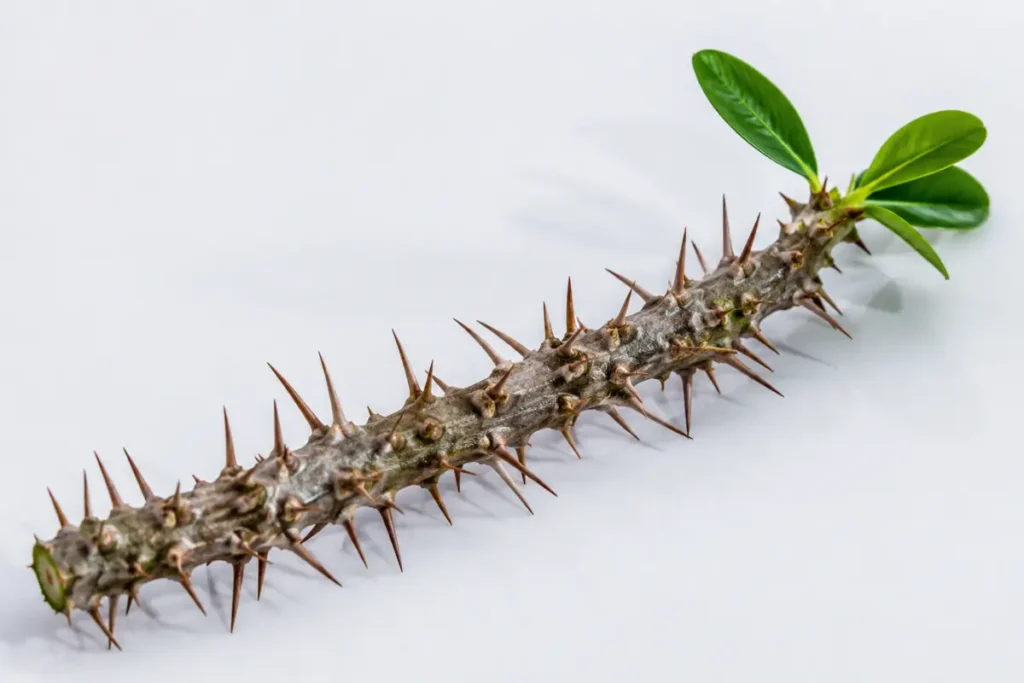
Whether you’re growing your plant indoors on a sunny windowsill or outside in a warm garden, this crown of thorns propagation guide will show you everything you need to know.
You’ll discover the best way to propagate a Crown of Thorns plant, learn when to do it, what tools you’ll need, and how to care for your new plants after they begin rooting.
If you’re completely new to gardening, don’t worry. This guide is written for beginners and experienced gardeners alike. By the end, you’ll know how to propagate a Crown of Thorns plant with confidence while avoiding the common mistakes that often prevent successful rooting.
In the following sections, you’ll also learn why propagation is worth your time, what makes this plant unique, and how to create the perfect conditions for healthy new growth.
What Is a Crown of Thorns Plant?
A Quick Introduction
The Crown of Thorns (Euphorbia milii) is a popular flowering succulent that is loved for its colorful blooms, thick stems, and low-maintenance nature. Despite its intimidating name and sharp thorns, it’s one of the easiest houseplants to grow and care for.
Native to Madagascar, this hardy plant has adapted to hot, dry environments. That means it doesn’t need constant watering or complicated care routines. If you’ve struggled with other flowering plants, you’ll probably find that the Crown of Thorns is much more forgiving.
One of the reasons this plant stands out is its ability to bloom for much of the year. Given enough sunlight, it can produce bright red, pink, yellow, white, or orange flowers for months at a time. Those colorful blooms make it a favorite for both indoor and outdoor gardens.
As a succulent, the plant stores water inside its thick stems. This natural feature helps it survive dry conditions and makes it less demanding than many other flowering plants.
Another reason gardeners enjoy growing Euphorbia milii indoors is its versatility. It grows well in containers, decorative pots, balconies, patios, greenhouses, and sunny garden beds. Whether you have a large backyard or a small apartment, this plant can thrive in almost any sunny location.
The Crown of Thorns is popular because it flowers for most of the year, needs very little water, tolerates heat and drought, is beginner-friendly, works well both indoors and outdoors, and can live for many years with proper care.
Like most succulents, it prefers bright sunlight and well-draining soil. Too much water is usually a bigger problem than too little, which is why many experienced gardeners recommend treating it much like a cactus.
If your goal is successful Crown of Thorns plant care, understanding its natural growing habits will make propagation much easier later on.
Indoor vs. Outdoor Growing
One of the biggest advantages of this plant is its flexibility.
When grown indoors, place it near a south-facing or west-facing window where it receives several hours of bright sunlight every day. Good light encourages stronger stems and more flowers.

Outdoors, the plant performs best in warm climates where temperatures stay above freezing. It loves full sun and dry conditions, making it an excellent choice for rock gardens, patios, or drought-tolerant landscapes.
Regardless of where you grow it, healthy plants produce stronger stems, which leads to better results when propagating Crown of Thorns from cuttings.
Flowering Season
Unlike many flowering plants that bloom for only a few weeks, the Crown of Thorns can flower almost continuously under the right conditions.
When it receives enough sunlight, proper watering, and occasional feeding, you’ll often enjoy colorful blooms throughout most of the year.
This long flowering season is another reason gardeners enjoy multiplying their plants. More propagated plants mean more flowers decorating your home or garden.
Growth Habits
The Crown of Thorns grows slowly but steadily.
Its thick stems gradually become woody as the plant matures, while fresh green shoots appear near the growing tips. These younger stems are usually the best choice when taking cuttings because they root more easily than older, hardened branches.
A mature plant can eventually reach several feet tall if left unpruned, although container-grown plants usually stay much smaller.
Healthy growth also means healthier cuttings, which greatly improves your chances of successful propagation.
Why Propagate a Crown of Thorns?
Once you own one healthy plant, it’s natural to want more. The good news is that you don’t have to buy additional plants every time. Learning how to propagate Crown of Thorns successfully at home allows you to multiply your collection with very little effort.
One of the biggest advantages is that it saves money. Mature flowering succulents can be surprisingly expensive at garden centers. Instead of purchasing several plants, you can grow multiple new ones from a single healthy parent plant.
Propagation also lets you expand your garden. You can place new plants in different rooms, brighten up your patio, create attractive succulent arrangements, or build a colorful collection with different flower varieties.
Another great reason is that propagated plants make thoughtful gifts. Sharing a healthy rooted cutting with friends or family is more personal than buying a plant from a store, and it’s an enjoyable way to introduce others to gardening.
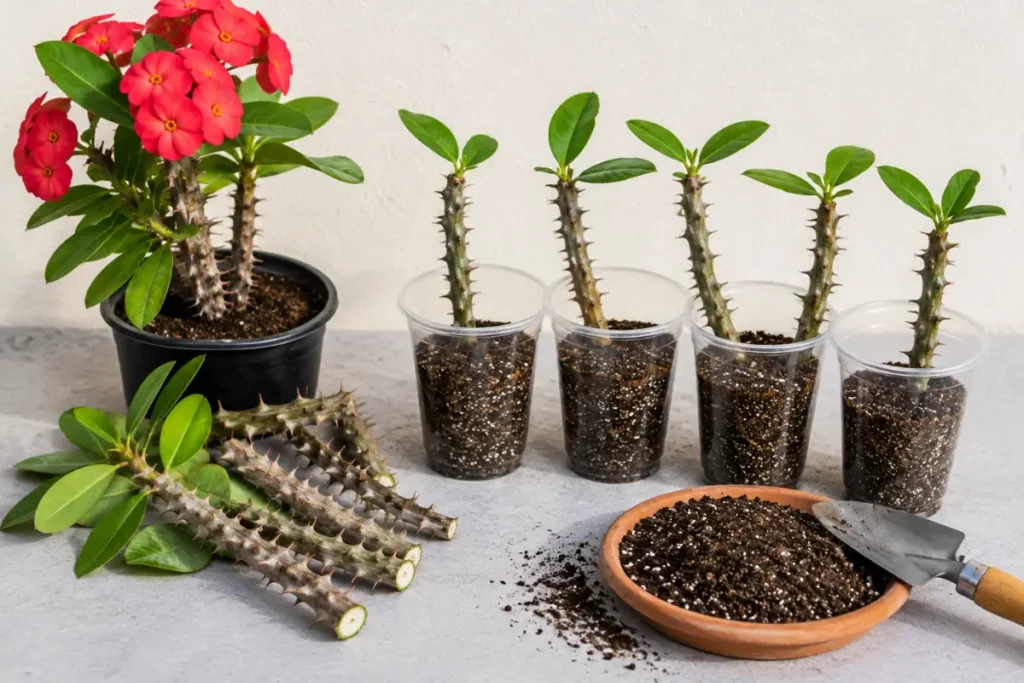
Propagation is also useful for replacing older plants. As Crown of Thorns plants mature, some stems may become woody, leggy, or produce fewer flowers. Taking healthy cuttings allows you to grow younger, fuller plants while keeping the original healthy through regular pruning.
In fact, propagation often improves the parent plant as well. Trimming long or overcrowded stems encourages fresh growth, resulting in a healthier and more attractive plant. At the same time, those trimmed stems become perfect material for growing new plants.
Many beginners assume only experienced gardeners can propagate succulents successfully. Fortunately, propagating Euphorbia milii is much easier than most people expect. With a healthy parent plant, clean tools, and proper growing conditions, the success rate is very high.
That’s why the Crown of Thorns is often recommended for anyone interested in easy succulent propagation or learning how to grow Crown of Thorns from cuttings for the very first time.
Best Time to Propagate Crown of Thorns
Many gardeners believe you can propagate a Crown of Thorns plant at any time of the year and get the same results. While the plant is tough enough to survive in different conditions, the timing of propagation plays a huge role in how quickly your cuttings develop healthy roots.
Choosing the right season can mean faster growth, stronger root systems, and a much higher success rate.
If your goal is how to propagate Crown of Thorns successfully at home, starting at the right time gives your cuttings the best possible chance to thrive. Although this succulent is more forgiving than many other plants, it naturally grows faster during certain times of the year.
Ideal Season
The best time to propagate Crown of Thorns is during spring and early summer. These seasons provide the warm temperatures and longer daylight hours that encourage active growth.
During spring, the plant comes out of its slower winter growth phase and begins producing fresh stems and leaves. This active growth means stem cuttings have more stored energy, making it easier for them to develop new roots.
Early summer is also an excellent time because the weather is consistently warm without being excessively hot in most regions. Warm soil and bright light help stimulate root formation, allowing your cuttings to establish themselves more quickly.

Another advantage of propagating during these seasons is that the parent plant recovers faster after a cutting is removed. Since it’s actively growing, it can produce fresh shoots more easily, helping it stay healthy while also giving you new plants.
If you’re planning how to propagate Crown of Thorns from stem cuttings, aim for a day when temperatures are mild and the plant looks healthy. Avoid taking cuttings immediately after heavy watering or during periods of stress caused by extreme heat.
Why Warm Weather Improves Rooting
Warm temperatures increase the plant’s natural metabolic activity. This allows the stem cutting to heal faster after being removed from the parent plant and begin producing new roots sooner.
At the same time, longer daylight hours provide more energy for photosynthesis. Healthy cuttings can use that energy to establish stronger root systems before putting their effort into producing new leaves and flowers.
This is one reason gardeners often notice that rooting Crown of Thorns happens much faster in spring than during colder months.
Signs Your Plant Is Ready for Propagation
Instead of choosing a date on the calendar alone, it’s also helpful to look at the condition of your plant.
A healthy Crown of Thorns that is ready for propagation usually has fresh green growth, firm stems, vibrant leaves, and regular flowering. New shoots are an especially good sign because they often produce the strongest cuttings.
Avoid taking cuttings from plants that are wilted, diseased, recently transplanted, or recovering from pest problems. Waiting until the parent plant regains its strength will greatly improve your propagation success.
3.2 When You Should Avoid Propagation
Although the Crown of Thorns is known for being a hardy succulent, there are times when propagation should be postponed.
Winter
Winter is generally the least suitable season for propagation.
During colder months, the plant naturally slows its growth. Since it’s not actively producing new stems or roots, cuttings usually take much longer to establish themselves. In some cases, they may fail to root altogether.
Lower temperatures also keep the soil moist for longer periods, increasing the risk of stem rot. If you’re wondering how to root Crown of Thorns cuttings quickly, winter is rarely the right time to start.
Dormant Periods
Even in warmer climates, plants occasionally enter periods of slower growth due to environmental changes.
When your Crown of Thorns isn’t producing new leaves or shoots, it’s better to wait before taking cuttings. Propagation during dormancy often results in slower rooting because the cutting has less energy available for root development.
Giving the plant a few extra weeks until active growth resumes can significantly improve your chances of success.
Extremely Humid Weather
Many people assume hot weather is always ideal for propagation, but excessive humidity can create problems.
High humidity slows the drying process after taking a stem cutting. Since propagating Euphorbia milii requires the cut end to dry and form a protective callus, constant moisture can encourage fungal diseases and stem rot.
If you live in a humid region, try propagating during a period of dry, warm weather instead of immediately after several rainy days.
Providing good airflow around the cuttings can also reduce excess moisture and improve rooting conditions.
Can You Propagate Crown of Thorns Year-Round?
Technically, yes. In tropical and frost-free climates where temperatures stay consistently warm, Crown of Thorns propagation can often be done throughout much of the year.
However, even in these regions, gardeners usually experience the fastest and most reliable rooting during spring and early summer because the plant is naturally growing at its strongest pace.
If you’re propagating indoors, maintaining warm temperatures, bright light, and proper airflow can also extend your propagation season.
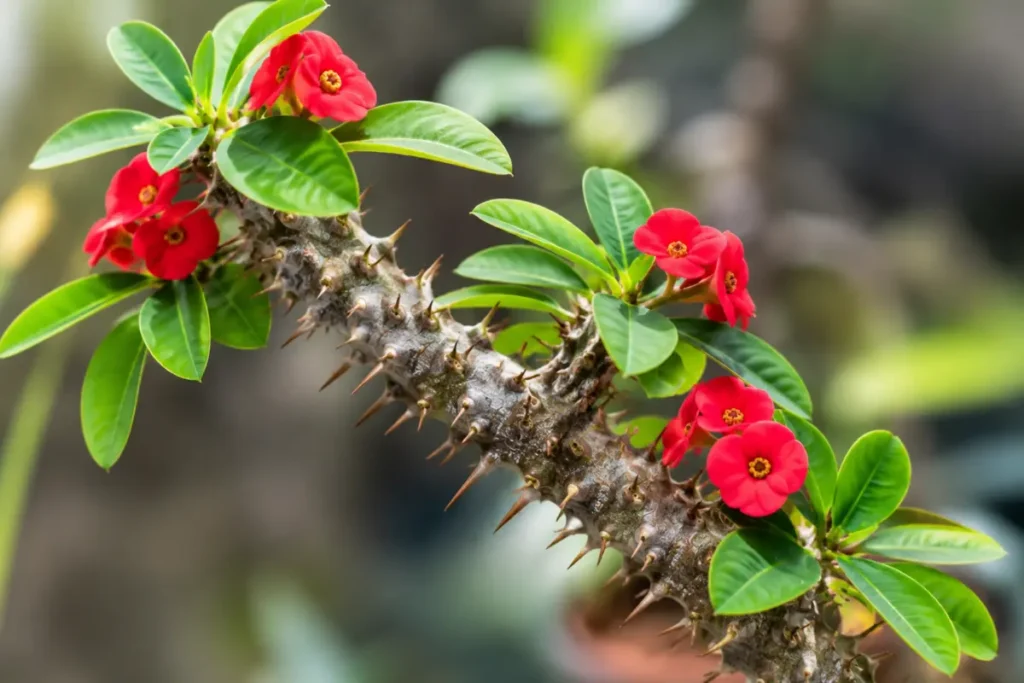
Even then, you’ll usually notice that cuttings taken during the active growing season establish themselves more quickly than those taken during winter.
Choosing the right season may seem like a small detail, but it can make a noticeable difference in how healthy and vigorous your new plants become. Starting with favorable growing conditions sets the foundation for successful propagation and gives your Crown of Thorns cuttings the best possible start.
Things You’ll Need Before You Start
Many people think they need expensive gardening tools or professional equipment before learning how to propagate Crown of Thorns. The truth is, successful propagation has very little to do with fancy supplies.
What really matters is using a few basic tools, keeping everything clean, and creating the right environment for your cutting to develop healthy roots.
Preparing everything before you make your first cut also helps the process go smoothly. Instead of searching for tools halfway through, you’ll be able to focus on making healthy Crown of Thorns stem cuttings and planting them correctly.
Essential Tools
Having the right supplies ready will make Crown of Thorns propagation easier, safer, and more successful. Fortunately, you probably already have most of these items at home.
Sharp Pruning Shears
The most important tool you’ll need is a pair of clean, sharp pruning shears or garden scissors.
A sharp blade creates a smooth, clean cut that heals much faster than a rough or crushed stem. Clean cuts also reduce stress on the parent plant and improve the chances of successful rooting.
Before taking any cutting, disinfect your pruning shears with rubbing alcohol or a household disinfectant. This simple step helps prevent bacteria and fungal diseases from spreading between plants.
If you don’t own pruning shears, a sharp utility knife or gardening knife can also work, provided it is clean and sterilized.
Gardening Gloves
Because Crown of Thorns has sharp spines and produces a milky white sap, wearing gloves is highly recommended.
A sturdy pair of gardening gloves protects your hands from painful scratches while making it easier to handle the plant. Gloves also reduce the chance of getting the sap on your skin.
Choose gloves that allow enough flexibility to make careful cuts while still providing protection from the thorns.
A Clean Pot
Once you’ve taken your cutting, you’ll need a container for planting.
Select a small pot with drainage holes at the bottom. Proper drainage prevents excess water from collecting around the cutting, which helps reduce the risk of root rot.
For most Crown of Thorns cutting propagation projects, a pot measuring about 4 to 6 inches in diameter is more than enough. As your new plant grows, you can move it into a larger container later.
Avoid decorative pots without drainage unless you’re using them as an outer cover for a properly draining nursery pot.
Well-Draining Soil
Choosing the right growing medium is just as important as choosing the right cutting.
The best Crown of Thorns soil mix should drain quickly while still providing enough support for new roots.
A commercial cactus or succulent mix works very well because it allows water to flow through easily. If you prefer making your own mix, combine regular potting soil with coarse sand and perlite or pumice to improve drainage.

Heavy garden soil should be avoided because it holds too much moisture around the stem. Excess water is one of the biggest reasons newly planted cuttings fail.
Using well-draining soil for Crown of Thorns encourages healthy root development while protecting young cuttings from rot.
Rooting Hormone (Optional)
Many beginners wonder whether they need rooting hormone to succeed.
The good news is that propagating Euphorbia milii usually works well without it. Healthy stem cuttings often develop roots naturally when planted under the right conditions.
However, rooting hormone can speed up root formation and may improve success rates, especially if you’re working with thicker or older stems.
Simply dip the cut end into the rooting hormone before planting. Only a light coating is needed, as using too much won’t make the roots grow faster.
Think of rooting hormone as a helpful bonus rather than a requirement. It’s useful, but it’s certainly not essential for successful propagation.
Should You Sterilize Your Tools?
Absolutely.
Even healthy-looking plants can carry bacteria or fungal spores that aren’t immediately visible. Sterilizing your cutting tools before each use greatly reduces the chance of infecting either the parent plant or the new cutting.
This small step only takes a minute but can prevent many common propagation problems.
If you’re taking multiple cuttings from different plants, clean your tools between each one to avoid spreading diseases.
Safety First
While the Crown of Thorns is a beginner-friendly succulent, it’s still important to handle it with care.
Understanding a few simple safety precautions will help protect both you and your plants throughout the propagation process.
Be Careful with the Milky Sap
One unique feature of the Crown of Thorns is its white, milky latex sap.
Whenever you cut a stem, this sap will begin to flow from the fresh wound. Although it’s a natural part of the plant, it can irritate the skin and may cause discomfort if it comes into contact with your eyes.
Some people have more sensitive skin than others, so it’s always better to avoid direct contact whenever possible.
If sap gets on your hands, wash the area thoroughly with soap and water as soon as possible.
Never touch your face or eyes while handling freshly cut stems.
Protect Your Hands
The sharp thorns are another reason to work carefully.
Even experienced gardeners occasionally get scratched while taking cuttings. Wearing thick gardening gloves makes handling the stems much easier and reduces the risk of injury.
If you’re working with a larger plant, move slowly and hold each stem securely before making your cut.
There’s no need to rush. A careful approach usually produces cleaner cuttings and healthier plants.
Protect Your Eyes
Although it doesn’t happen often, small amounts of sap can sometimes splash when cutting thicker stems.
For extra safety, especially when pruning mature plants, consider wearing protective glasses or safety goggles.
This simple precaution provides peace of mind and keeps the propagation process comfortable from start to finish.
Keep Children and Pets Away
Like many members of the Euphorbia family, the Crown of Thorns should be handled responsibly around children and pets.
Place freshly cut stems, gardening tools, and containers in a safe location while you work. This helps prevent accidental contact with the plant’s thorns or sap.
Once your propagation project is finished, wash your hands thoroughly and clean any tools you’ve used before storing them away.
A Little Preparation Leads to Better Results
Many propagation failures happen before the cutting is even planted. Using clean tools, choosing the right well-draining soil for Crown of Thorns, preparing a suitable pot, and following basic safety practices all increase your chances of success.
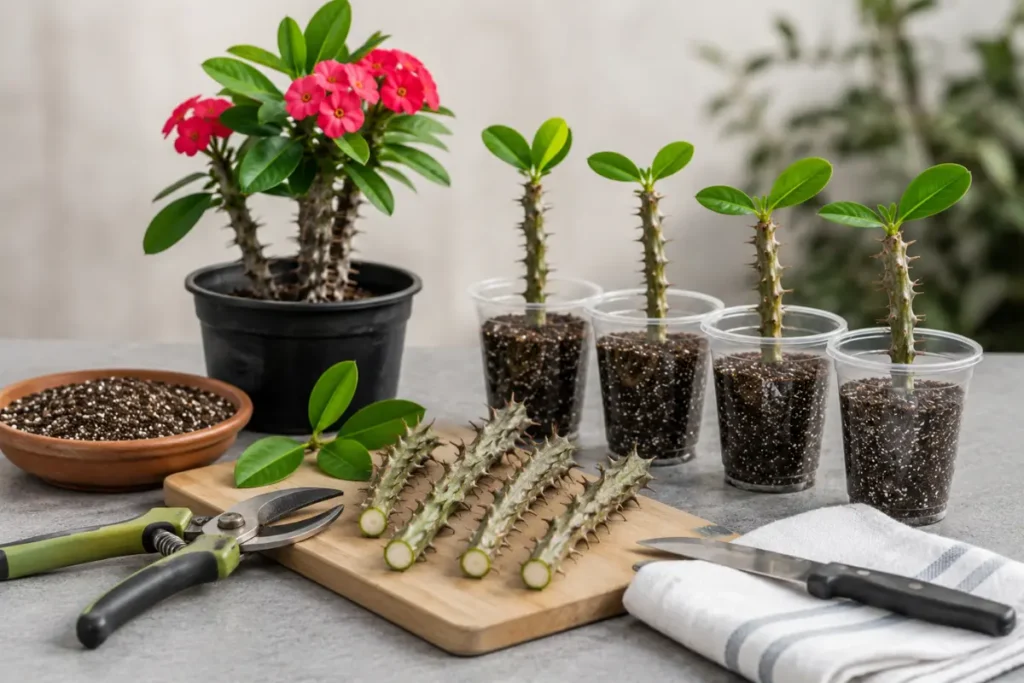
The good news is that none of these preparations are complicated. With just a few simple supplies and a little planning, you’ll be fully ready for the most exciting part of this guide—learning the step-by-step process of how to propagate Crown of Thorns from stem cuttings and encouraging healthy new roots to develop.
How to Propagate Crown of Thorns (Step-by-Step Guide)
Many people believe there’s a secret trick to successful Crown of Thorns propagation. In reality, there isn’t. The biggest reason cuttings fail isn’t because the method is difficult it’s because gardeners skip important steps or rush the process.
If you follow each step carefully, how to propagate Crown of Thorns from stem cuttings becomes simple, even if you’ve never propagated a plant before.
The method below is the best way to propagate a Crown of Thorns plant because it allows the cutting to develop a healthy root system before putting energy into producing new leaves and flowers.
Choose a Healthy Parent Plant
Everything starts with selecting the right plant. A healthy parent plant produces healthier cuttings, and healthy cuttings root much faster.
Choose a Crown of Thorns that has firm stems, vibrant leaves, and shows no signs of pests or diseases. Plants that are actively growing are much better candidates than those that look weak or stressed.
Look for young, green stems rather than old woody branches. Younger stems contain more active growth tissue, making them ideal for propagating Crown of Thorns from cuttings.
Avoid taking cuttings from plants that are wilting, suffering from root rot, or recently transplanted. A stressed plant should be allowed to recover before you remove any stems.
If your plant has recently produced fresh shoots, that’s an excellent sign. Those new stems usually root faster and establish themselves more easily.
Take a Healthy Stem Cutting
Once you’ve chosen the right plant, it’s time to take your cutting.
Using clean, sterilized pruning shears, cut a healthy stem that’s about 4 to 6 inches (10–15 cm) long. Make your cut just below a leaf node, as this is where new roots are most likely to develop.
Try to select a stem with several healthy leaves but avoid stems covered with flowers. Flowering stems often spend more energy supporting blooms than developing roots.
After making the cut, you’ll notice white milky sap flowing from the stem. This is completely normal for Euphorbia milii.
Allow the excess sap to drain naturally. Some gardeners gently rinse the cut end with cool water to stop the flow more quickly before allowing the cutting to dry.
Taking a clean cutting is one of the most important parts of Crown of Thorns cutting propagation, so avoid crushing or tearing the stem.
Let the Cutting Dry
This is one step many beginners skip, but it’s one of the most important.
Before planting, allow the cutting to sit in a dry, shaded place for 2 to 5 days. During this time, the cut end forms a protective layer known as a callus.
This natural seal helps prevent bacteria, fungi, and excess moisture from entering the stem after planting.
Planting a fresh cutting immediately into soil often increases the risk of stem rot, especially in succulent plants.
The cutting is ready once the end feels dry and slightly firm to the touch.
Patience during this stage greatly improves your chances of rooting Crown of Thorns successfully.
Apply Rooting Hormone (Optional)
Once the cutting has developed a callus, you can apply rooting hormone if you’d like to encourage faster root growth.
Although propagating Euphorbia milii doesn’t require rooting hormone, many gardeners use it to improve rooting speed and increase overall success.
Dip only the bottom inch of the stem into the rooting hormone powder or gel.
Gently shake off any excess product before planting. A light coating is all that’s needed.
If you don’t have rooting hormone, don’t worry. Healthy Crown of Thorns cuttings often root perfectly well without it when provided with warm temperatures, bright light, and well-draining soil.
Plant the Cutting
Now it’s time to place your cutting into its new home.
Fill a small pot with a high-quality cactus or succulent soil mix. Make a small planting hole before inserting the cutting. This prevents the rooting hormone, if used, from rubbing off.
Insert the bottom 1 to 2 inches of the stem into the soil and gently press the soil around it so the cutting remains upright.
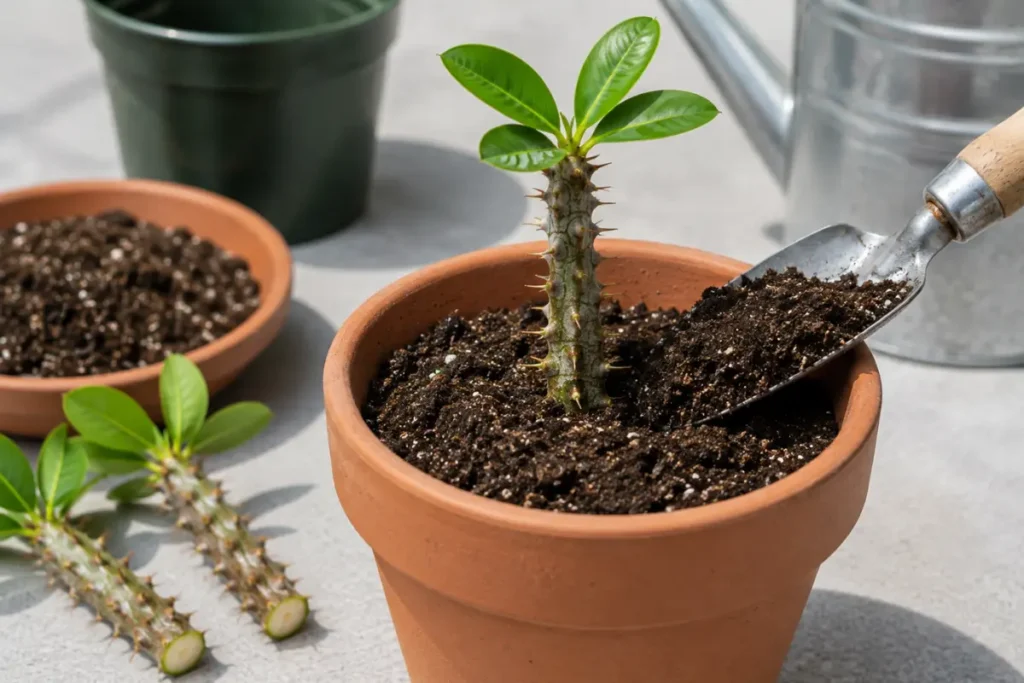
Avoid planting too deeply. Only the lower portion of the stem should be buried while the remaining stem and leaves stay above the soil surface.
Using well-draining soil for Crown of Thorns is essential because excessive moisture around the stem can lead to rot before roots have a chance to develop.
Water Properly
One of the biggest mistakes beginners make is watering too much.
After planting, lightly moisten the soil. It should feel slightly damp but never soggy.
Unlike many houseplants, a newly planted Crown of Thorns cutting doesn’t need frequent watering.
Allow the soil to dry almost completely before watering again. Since the cutting has not yet developed roots, excessive moisture can quickly cause decay.
As new roots begin forming, you can slowly return to a normal watering schedule suitable for mature plants.
Proper watering is one of the easiest ways to improve your Crown of Thorns propagation success.
Place in Bright Indirect Light
Light plays a major role in healthy root development.
Place your cutting somewhere that receives plenty of bright, indirect sunlight throughout the day.
Avoid harsh afternoon sun immediately after planting. Strong direct sunlight can stress the cutting before it has established roots.
A warm room with good airflow works especially well if you’re growing indoors.
Aim to keep temperatures between 70°F and 85°F (21°C to 29°C), as warm conditions encourage quicker root formation.
As the cutting becomes established, you can gradually introduce it to more direct sunlight.
Wait for Root Development
This is where patience becomes your greatest gardening tool.
Most Crown of Thorns stem cuttings begin producing roots within 3 to 6 weeks, although environmental conditions can speed up or slow down the process.
Avoid pulling on the cutting every few days to check for roots. Constant disturbance can damage delicate new root growth before it has fully developed.
Instead, watch for natural signs that rooting has begun.
New leaves are usually the first indicator that the cutting is becoming established. You’ll also notice the stem feels firmer and more stable in the soil.
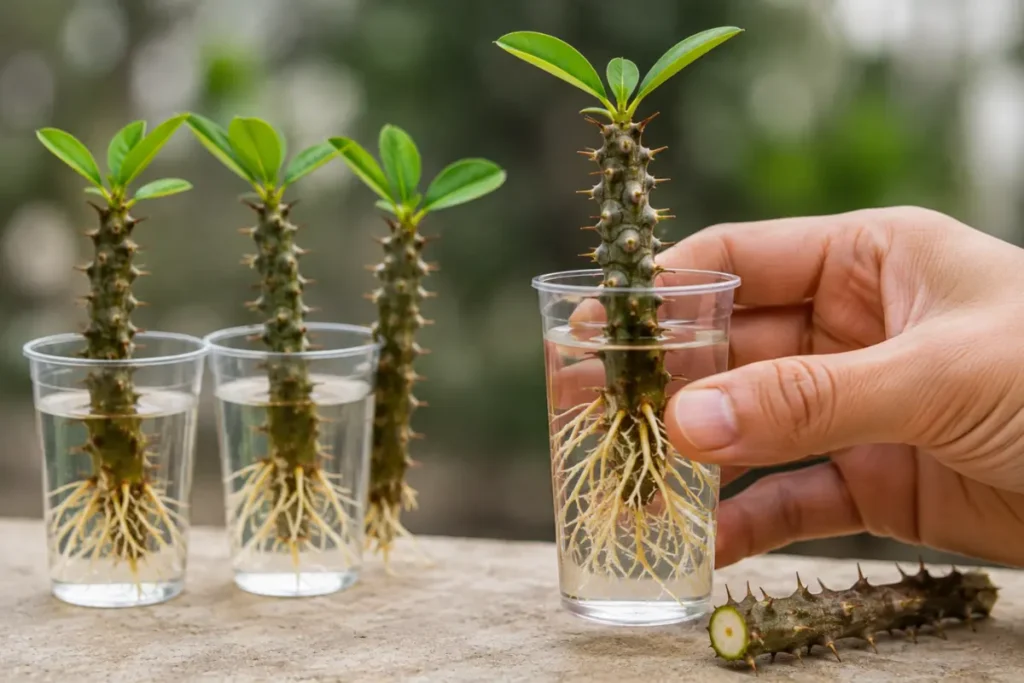
After several weeks, you can gently test the cutting by giving it a very light tug. If you feel slight resistance, healthy roots have likely formed beneath the soil.
Once your cutting begins producing fresh growth, you’ve successfully completed how to propagate Crown of Thorns successfully at home. At this stage, continue providing bright light, careful watering, and routine Crown of Thorns plant care to encourage strong, long-term growth.
By following these simple steps in order, even first-time gardeners can confidently master how to grow Crown of Thorns from cuttings and enjoy healthy new plants for years to come.
Frequently Asked Questions (FAQ)
Many people assume that if they still have questions after reading a propagation guide, they’re probably doing something wrong. That’s not true. Even experienced gardeners have questions about Crown of Thorns propagation, especially when trying it for the first time.
Below are answers to some of the most common questions to help you propagate your plant with confidence.
Can You Propagate Crown of Thorns from a Single Cutting?
Yes, absolutely.
A single healthy stem cutting is all you need to grow a brand-new plant. In fact, this is the most common and reliable method used by home gardeners and professionals alike.
For the best results, choose a healthy stem that is around 4 to 6 inches long, allow the cut end to callus, and plant it in a well-draining soil for Crown of Thorns.
If the cutting receives enough warmth, bright light, and proper care, it will gradually develop roots and begin producing new leaves.
Is Rooting Hormone Necessary?
No, rooting hormone is not required.
One of the reasons propagating Euphorbia milii is so popular is that the plant naturally roots quite well on its own.
However, rooting hormone can encourage faster root development and may improve your success rate, especially if you’re propagating thicker or older stems.
If you don’t have rooting hormone, don’t let that stop you. Healthy cuttings grown under the right conditions usually root successfully without it.
Can I Propagate Crown of Thorns Indoors?
Yes.
In fact, many gardeners successfully practice Crown of Thorns indoor gardening throughout the year.
Choose a bright location near a sunny window where the cutting receives several hours of indirect sunlight each day. Warm indoor temperatures and good air circulation create ideal conditions for healthy root growth.
If natural light is limited, a quality grow light can also support successful propagation.
Why Is My Cutting Not Rooting?
Several factors can slow down or prevent rooting.
The most common reason is overwatering. Since the cutting doesn’t have roots yet, constantly wet soil can cause the stem to rot before roots have time to develop.
Other possible causes include taking unhealthy cuttings, planting before the cut end has callused, using heavy soil that doesn’t drain well, low temperatures, or insufficient light.
If you’re wondering how to root Crown of Thorns cuttings quickly, make sure you’re providing warm temperatures, bright light, and a fast-draining succulent soil mix while avoiding excessive watering.
Can Crown of Thorns Grow from Leaves?
Unlike some succulents, Crown of Thorns cannot usually be propagated from individual leaves.
The most successful method is how to propagate Crown of Thorns from stem cuttings, as stems contain the growing tissue needed to develop both roots and new shoots.
If you try using only a leaf, it may stay green for a while but is very unlikely to produce a complete new plant.
How Often Should I Water Newly Propagated Cuttings?
Water sparingly.
After planting, lightly moisten the soil and then allow it to dry almost completely before watering again.
The exact schedule depends on your climate, pot size, and growing conditions, but in most cases watering every 7 to 14 days is sufficient.
Always check the soil first instead of following a fixed schedule. If the soil still feels damp, wait a few more days before watering.
Avoid overwatering, as it’s one of the leading causes of failed Crown of Thorns propagation.
What’s the Best Pot for Newly Propagated Crown of Thorns?
A small pot with drainage holes is the best choice.
A container that is about 4 to 6 inches wide provides enough room for the young roots without holding excess moisture.
Terracotta pots are especially popular because they allow moisture to evaporate more quickly, helping keep the soil from becoming overly wet.
As the plant grows and develops a stronger root system, you can move it into a slightly larger container.
Choosing the best pot for Crown of Thorns is just as important as selecting the right soil because proper drainage helps prevent root rot and supports healthy long-term growth.
Conclusion
Learning how to propagate Crown of Thorns is much easier than many people think. With a healthy parent plant, the right timing, a clean stem cutting, and proper care, you can grow several new plants without spending money on additional purchases.
Even if you’re completely new to gardening, this simple method is beginner-friendly and offers a high success rate when each step is followed carefully.
Throughout this Crown of Thorns propagation guide, you’ve learned how to choose the best season for propagation, prepare the necessary tools, take healthy stem cuttings, encourage strong root development, and care for your new plants after they begin growing.
These small but important steps work together to give your cuttings the best chance of becoming healthy, long-lasting plants.
Remember that patience is one of the most important parts of successful propagation. New roots don’t appear overnight, and checking your cuttings too often can do more harm than good. Give them enough warmth, bright light, and well-draining soil, and they’ll reward you with steady growth over the coming weeks.
Whether you’re interested in how to propagate Crown of Thorns from stem cuttings, how to grow Crown of Thorns from cuttings, or simply want to expand your collection of beautiful succulents, the process is both rewarding and cost-effective
. Before long, you’ll have healthy new plants ready to brighten your home, garden, patio, or even become thoughtful gifts for friends and family.
Now it’s your turn to put these tips into practice. Gather your supplies, choose a healthy plant, and start propagating with confidence. With a little care and consistency, you’ll soon discover why propagating Euphorbia milii is one of the easiest and most satisfying gardening projects for beginners and experienced plant lovers alike.
If you found this guide helpful, feel free to share it with fellow gardeners or leave a comment about your experience. We’d love to hear how your Crown of Thorns propagation journey goes and answer any questions you may have along the way.

Plant Nest Blog’s author is passionate about plants, gardening, and sustainable living. Through research and practical experience, they share helpful plant care tips, gardening guides, and easy solutions to help readers grow healthier plants and create greener spaces.