
Some people strongly believe that making kombucha at home is difficult and requires special equipment, but the process is simpler than it sounds. Learning how to make kombucha starts with a few basic ingredients, including tea, sugar, starter tea, and a SCOBY.
With the right setup and a little patience, you can brew your own fermented tea at home and adjust its flavor to suit your taste. Whether you prefer a mild, slightly sweet drink or a tangier, fizzy kombucha, homemade brewing gives you more control over the final result.
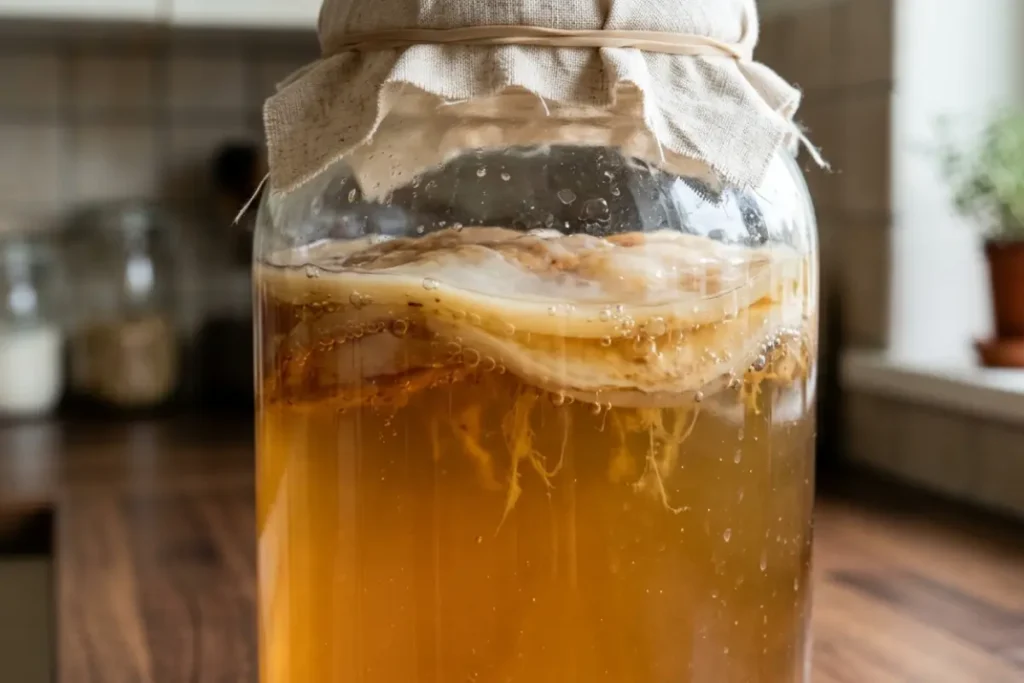
The key to a successful batch is using clean equipment, allowing the sweet tea to cool before adding the SCOBY, and giving the mixture enough time to ferment.
You can begin with an easy homemade kombucha recipe using black tea, then experiment with green tea, ginger, strawberries, or other fruit flavors. In this guide, you’ll learn the basics of homemade kombucha, how fermentation works, and what you need to prepare before starting your first batch.
What Is Kombucha and How Does It Work?
What Is Kombucha Tea?
Kombucha tea is a fermented drink made from sweetened tea using a living culture of bacteria and yeast. It usually has a slightly sweet, tangy taste that becomes more sour as fermentation continues.
People commonly make it with black tea or green tea, although the flavor can vary depending on the tea, fermentation time, and ingredients used.
Unlike ordinary iced tea, kombucha changes during fermentation. The yeast and bacteria use some of the sugar and produce different compounds, including organic acids and carbon dioxide.
This process gives kombucha its distinctive taste and can create a light natural fizz. If you enjoy homemade fermented drinks, kombucha is an interesting option because you can prepare it in batches and experiment with different flavors.
How Does Fermented Tea Work?
The fermentation process is what turns sweet tea into kombucha. First, you prepare tea and dissolve sugar in it. After the tea cools completely, you add starter tea and a SCOBY. The mixture then sits in a suitable container while the culture begins to ferment the sweetened tea.
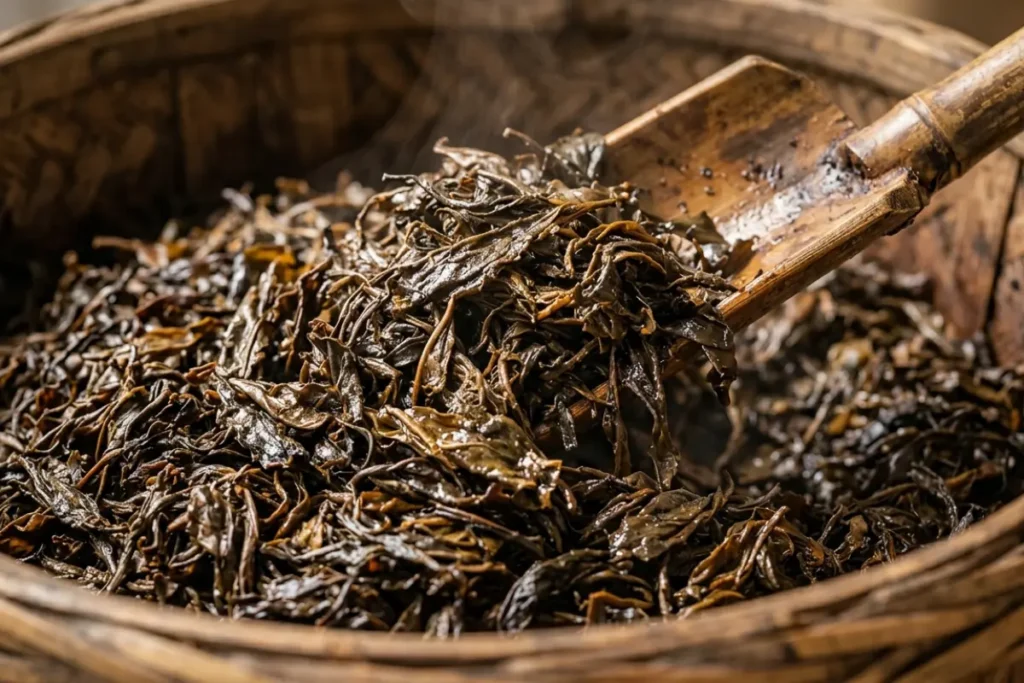
During fermentation, yeast helps break down sugar and produces compounds such as carbon dioxide and small amounts of alcohol. Bacteria use some of these products to create organic acids, which contribute to kombucha’s tangy flavor.
The balance changes as fermentation continues, so a batch left for longer may taste sharper and less sweet.
Temperature also affects how quickly kombucha ferments. A suitable, stable room temperature helps the culture work consistently, while conditions that are too cold can slow the process.
Instead of relying only on a fixed number of days, taste and assess the batch as it develops, while following safe brewing practices.
What Is a SCOBY for Kombucha?
A SCOBY is a culture of bacteria and yeast used to ferment kombucha. The name stands for symbiotic culture of bacteria and yeast. It often looks like a smooth, rubbery, cream-colored disc floating on the surface of the tea, although its shape, thickness, and position can vary.
The SCOBY helps support the fermentation process, but it is not the only important part of the culture. The starter liquid from a healthy, previously fermented batch also matters because it introduces active microorganisms and helps make the new mixture acidic.
This is why a reliable kombucha starter culture usually includes both a SCOBY and starter tea.
If you’re learning how to make kombucha at home for beginners, obtain your SCOBY and starter liquid from a reliable source. Handle them with clean hands and utensils, and inspect the culture before use.
A new layer may form on the surface during fermentation, which is normal. However, fuzzy mold or unusual signs of contamination mean you should discard the batch rather than attempt to save it.
What Is Kombucha Starter Tea?
Kombucha starter tea is a portion of previously fermented kombucha added to a fresh batch of sweet tea. It helps introduce the microorganisms needed for fermentation and lowers the mixture’s initial pH, creating a more suitable acidic environment for the culture.
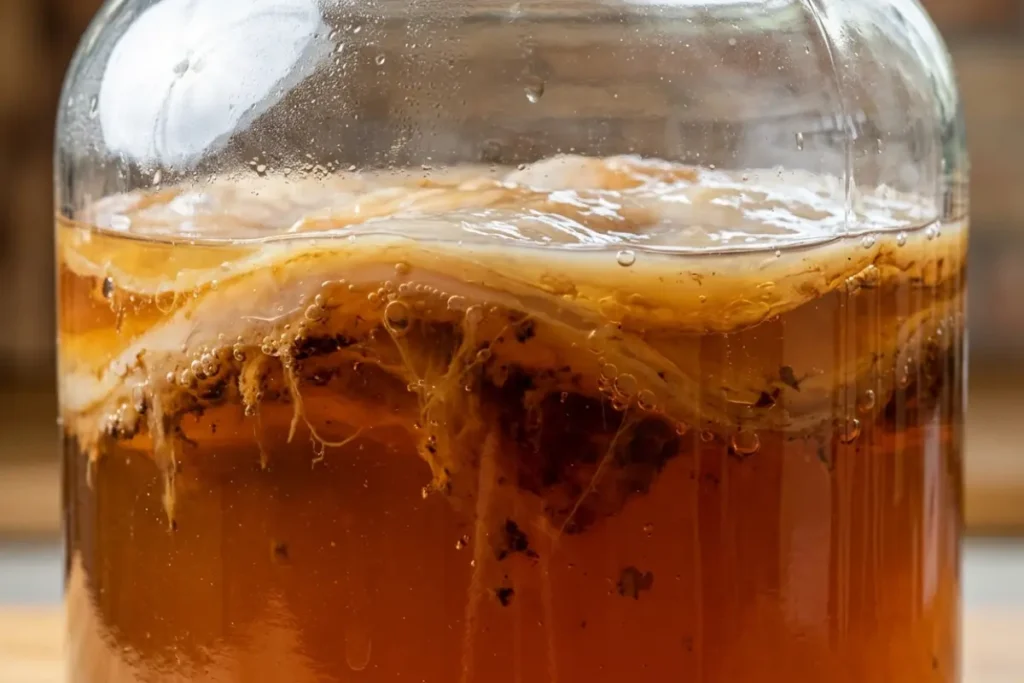
Starter tea is different from freshly brewed tea. Fresh tea provides the liquid, nutrients, and sugar for the next batch, while starter tea contributes an established fermentation culture and acidity. Using an appropriate amount from a reliable batch helps your kombucha get off to a better start.
When preparing homemade kombucha, follow a tested recipe for the correct amount of starter liquid. Avoid using an unknown liquid or an unverified culture.
If you’re starting with a commercial kombucha drink, make sure it is suitable for use as a starter; many commercial products are pasteurized or otherwise unsuitable for starting a new culture.
Ingredients Needed to Make Homemade Kombucha
Many people think you need expensive ingredients or a special brewing kit to make good kombucha, but you can start with a few simple items. The most important ingredients are tea, sugar, a healthy SCOBY, and starter tea from a reliable batch.
Choosing the right ingredients helps create a suitable environment for fermentation and gives your homemade kombucha a better chance of turning out well.
Black Tea or Green Tea: Which Is Better?
Black tea and green tea are both popular choices for homemade kombucha. The best option depends on the flavor you enjoy and the type of tea you have available. Both can support kombucha fermentation when prepared correctly, so beginners can choose either one.
Black tea usually produces a fuller, stronger flavor with a rich tea aroma. It is a common choice for a beginner kombucha recipe because its flavor holds up well during fermentation.
Plain black tea is a practical starting point if you want to learn the basic brewing process before trying different varieties.
Green tea generally creates a lighter, fresher flavor. It can be a good choice if you prefer a less robust tea taste. However, green tea can become bitter if you brew it too hot or leave the tea leaves steeping for too long. Follow the brewing instructions for your chosen tea before adding sugar.
For your first batch, use plain, unflavored black or green tea. Avoid teas containing added oils, strong flavorings, or ingredients that may interfere with the culture. Once you become comfortable with the process, you can experiment with suitable tea blends.
How Much Sugar Do You Need for Kombucha?
Sugar is an important part of the kombucha fermentation process. The yeast uses some of the sugar during fermentation, helping produce compounds that bacteria can then use. Without an appropriate sugar source, the culture may not ferment properly.
A common starting point is around 1 cup of regular white sugar per gallon (3.8 liters) of sweet tea, although the exact amount should follow a tested kombucha recipe. White granulated sugar is a straightforward choice because it dissolves easily and provides a predictable source of sugar for the culture.
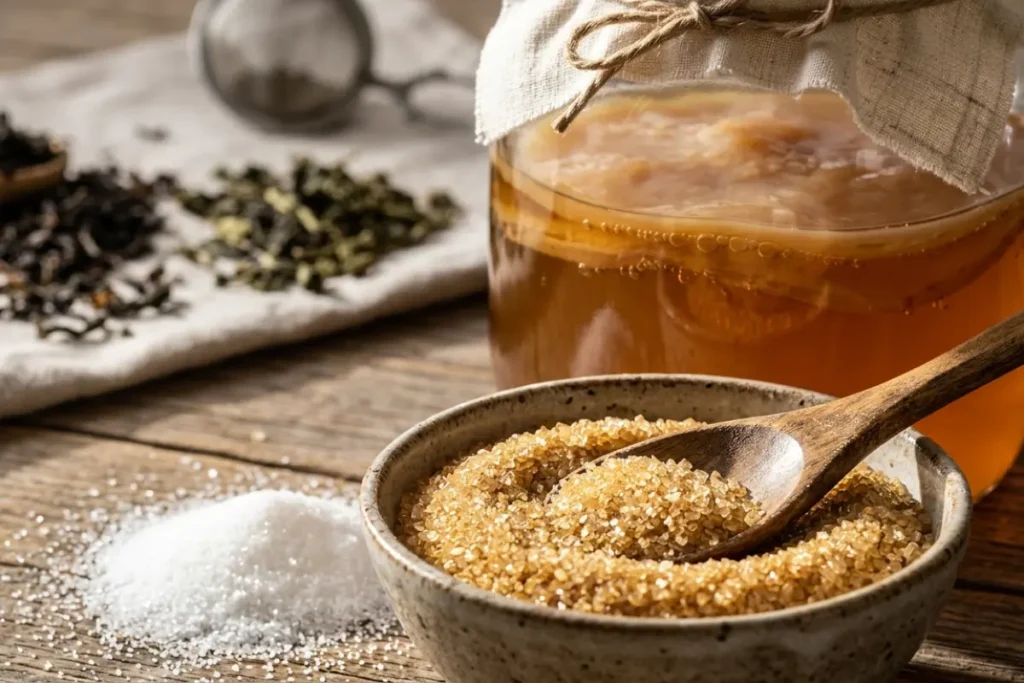
Avoid trying to make your first batch with artificial sweeteners. These do not provide the same fermentable sugar that the culture needs. Honey and other alternative sweeteners can also change the fermentation process, so they are not always suitable substitutes in a standard kombucha recipe.
Remember that fermentation does not necessarily remove all the sugar. The amount remaining in your finished kombucha depends on the ingredients and fermentation conditions. If sugar content matters to you, do not assume that a longer fermentation makes the drink completely sugar-free.
Why Is Starter Tea Important?
Starter tea is one of the most important ingredients when learning how to make kombucha at home for beginners. It is a portion of previously fermented kombucha that you add to freshly prepared sweet tea.
This liquid introduces an established culture of microorganisms and helps lower the acidity of the new mixture.
Using a healthy starter liquid helps create more suitable conditions for fermentation from the beginning. It also helps the new batch develop its characteristic tangy flavor over time.
The SCOBY and starter tea work together, so you should not treat the solid culture as a complete replacement for the liquid.
Choose starter tea from a reliable, properly fermented batch. If you purchase a SCOBY, check whether the supplier includes starter liquid and provides instructions for the amount needed. Follow a tested recipe rather than guessing how much to add.
Never use a liquid that shows signs of mold or contamination. If your starter tea has an unusual appearance or smell that suggests spoilage, discard it and obtain a fresh, reliable starter.
Where to Get a Healthy SCOBY
A healthy SCOBY provides the bacteria and yeast involved in kombucha fermentation. You can obtain one from a trusted kombucha brewer, a reputable supplier, or a suitable kombucha starter kit.
When choosing a SCOBY, look for a supplier that explains how the culture should be stored, transported, and used. A healthy SCOBY may be cream-colored, tan, uneven, or slightly stringy. It may also have brown yeast strands attached to it. These features alone do not necessarily indicate a problem.
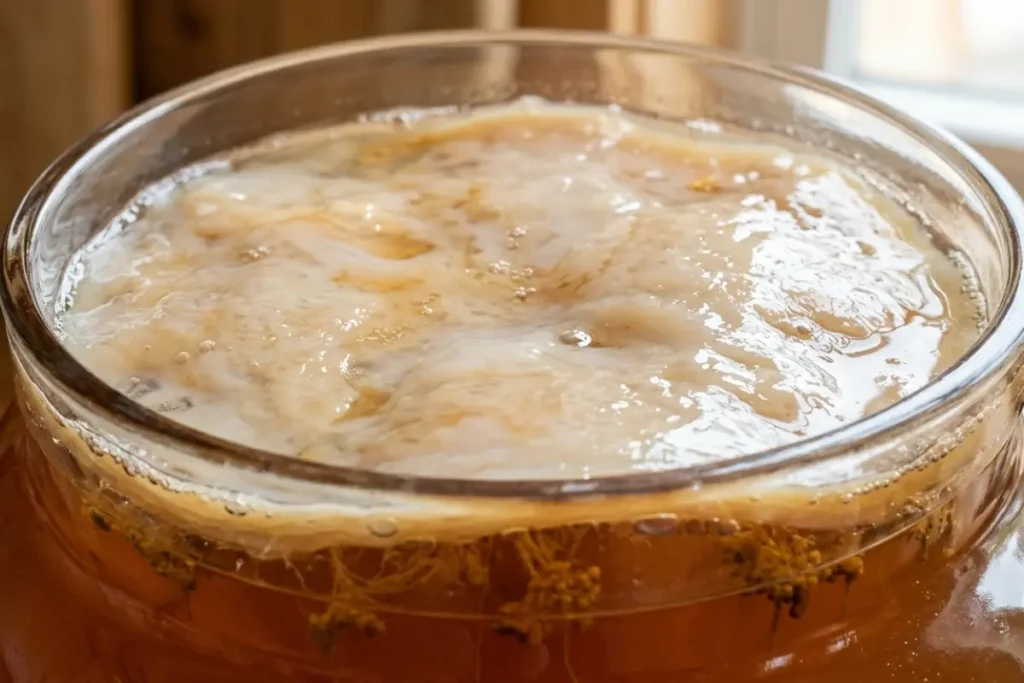
A SCOBY does not always look like a perfect, smooth disc. A new layer may develop on the surface during fermentation, and the culture may sink or float at different stages. These changes can be normal, so consider the overall condition of the batch rather than judging it by appearance alone.
Avoid cultures with fuzzy mold, particularly green, blue, black, or white fuzzy patches. If you see suspected mold, discard the entire batch, including the SCOBY and liquid. Do not try to wash off the affected area and continue brewing.
For beginners, a reputable starter kit can make the process easier because it may include a SCOBY, starter tea, and brewing instructions. You do not need an expensive kit, but you do need a suitable, reliable culture.
Can You Make Kombucha With Organic Ingredients?
Yes, you can make kombucha using organic tea and organic sugar if you prefer those ingredients. Organic black tea or green tea can be used in a homemade kombucha recipe, provided the tea is suitable for fermentation and does not contain added flavorings that may affect the culture.
Organic sugar can also provide the fermentable sugar needed for brewing. However, choosing organic ingredients does not remove the need for careful preparation. Clean equipment, a healthy culture, suitable fermentation conditions, and safe storage remain essential.
You can also use filtered drinking water if your tap water has a strong chlorine smell or taste. Water quality may affect the flavor of your tea, and some water-treatment chemicals can interfere with the microorganisms involved in fermentation.
If you use tap water, check your local water guidance and follow the recommendations for your brewing setup.
Keep your ingredient list simple when starting. Plain tea, regular sugar, suitable water, starter tea, and a healthy SCOBY are enough for a basic batch. Save extra ingredients and creative flavor combinations for later, when you have learned how the first fermentation works.
How to Choose the Right Ingredients for Your First Batch
Choosing reliable ingredients makes home brewing easier because you have fewer variables to manage. Start with plain black tea or green tea, regular white sugar, a healthy SCOBY, and starter tea from a trusted source. Use clean drinking water and follow a tested recipe that gives clear measurements for your batch size.
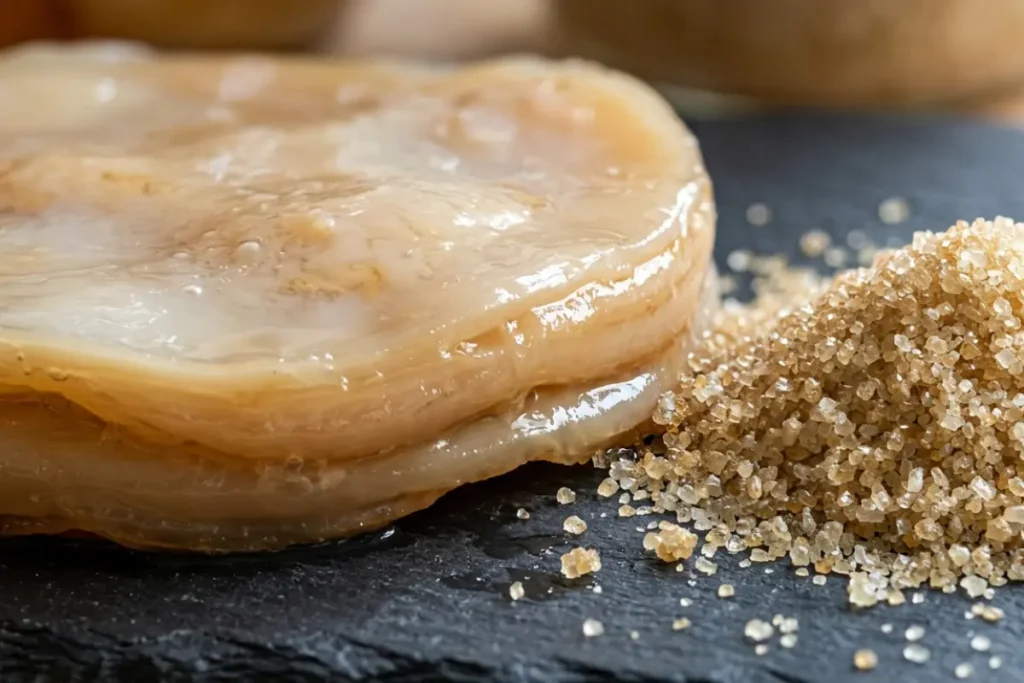
Check the tea packaging for added oils or flavorings. Choose a sugar that the culture can ferment, and make sure your starter liquid comes from a healthy batch.
If you are buying a kombucha starter culture online, read the supplier’s instructions carefully so you know whether the package contains both the SCOBY and enough starter tea.
It is also helpful to measure your ingredients rather than estimating everything by eye. Keeping track of the tea, sugar, water, and starter liquid makes it easier to understand why one batch tastes different from another.
Once you have mastered the basic recipe, you can explore other tea varieties and flavor combinations. Starting simple gives you a useful baseline and makes it easier to identify any problems during fermentation.
Equipment You Need for Brewing Kombucha
You do not need a kitchen full of special gadgets to brew kombucha, but choosing the right equipment is important. A suitable brewing jar, a breathable cover, clean utensils, and appropriate bottles will help you manage fermentation more easily.
Before you begin, gather everything you need so you can prepare the sweet tea and handle the SCOBY without unnecessary delays.
Choosing the Right Kombucha Brewing Jar
A glass jar is a popular choice for first-fermentation kombucha because it allows you to see what is happening inside. You can observe the developing surface layer, notice changes in the tea, and check the liquid without opening the jar repeatedly.
Choose a food-safe glass container that gives your kombucha enough room. A one-gallon jar is a convenient size for many beginner recipes, but you can use a smaller container if your recipe calls for less liquid. Leave some space at the top rather than filling the jar to the rim.
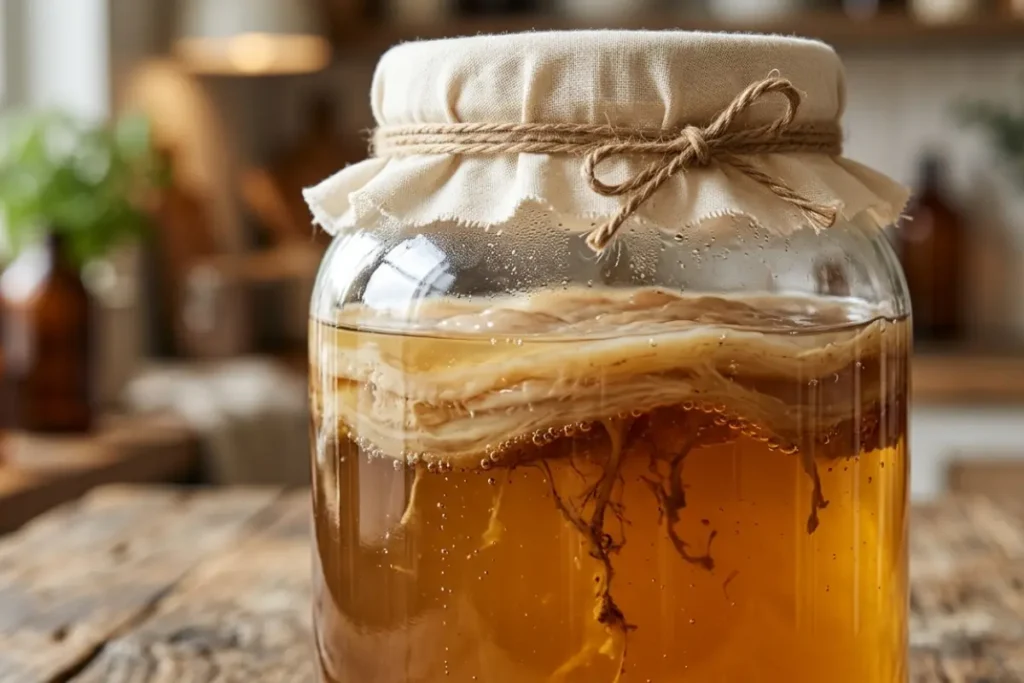
Avoid containers made from reactive metals, which may interact with the acidic liquid. If you choose a different food-safe container, make sure it is suitable for acidic beverages and follow the manufacturer’s instructions.
Before brewing, wash the jar thoroughly with hot water and dish soap, rinse it well, and allow it to dry. Clean equipment helps reduce contamination risks and gives your starter culture a better chance of developing properly.
Why You Need a Breathable Cover
During the first fermentation, kombucha needs airflow. Instead of sealing the brewing jar with an airtight lid, cover the opening with a clean, tightly secured, breathable cloth or suitable paper cover. This allows air to reach the fermenting tea while helping keep dust and insects out.
Secure the cover with a rubber band or another suitable fastener so fruit flies cannot easily enter the jar. A loose cover can allow insects or debris to reach the liquid, while an airtight seal is not appropriate for the usual first-fermentation method.
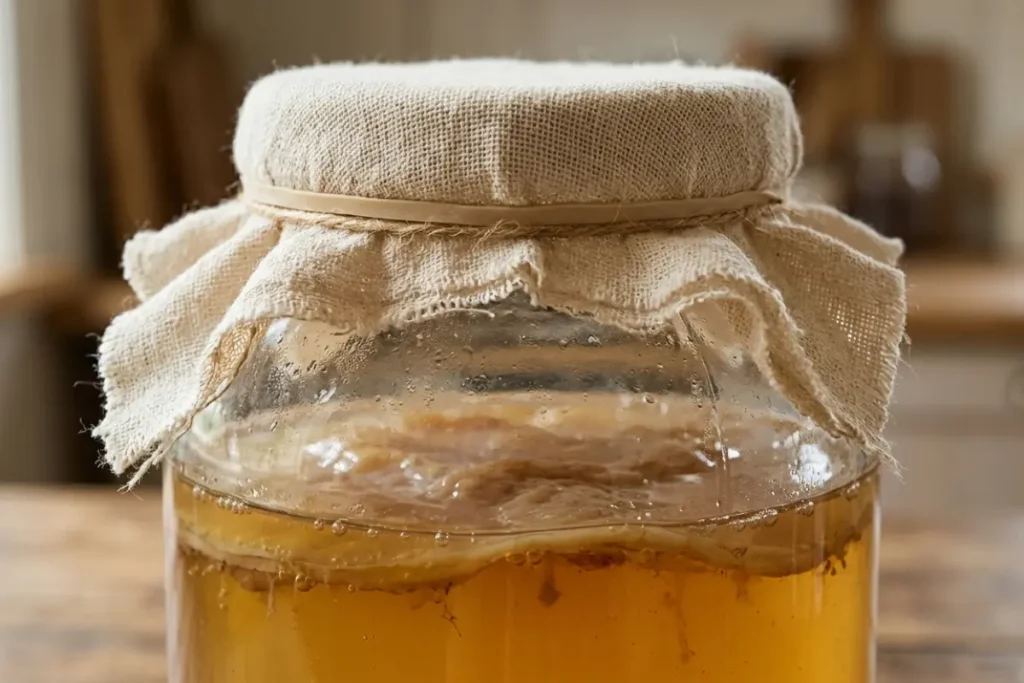
Keep the jar in a clean location away from cooking fumes, direct sunlight, and sources of contamination. Choose a stable spot where the jar will not be knocked over. Avoid moving it unnecessarily while a new surface layer is forming.
Remember that the first and second fermentation use different setups. The first fermentation typically uses a breathable cover. The second fermentation may take place in suitable sealed bottles to develop carbonation, which requires careful pressure management.
FAQs About How to Make Kombucha
How Do You Make Kombucha at Home for the First Time?
Making kombucha at home is easier when you start with a simple recipe. You need tea, sugar, a healthy SCOBY, starter tea, and a clean glass jar. Brew the tea, dissolve the sugar, and let it cool completely before adding the starter tea and SCOBY.
Cover the jar with a breathable cloth and secure it with a rubber band. Leave it to ferment at a suitable room temperature, then taste it periodically until it reaches your preferred balance of sweetness and tanginess.
How Long Does Homemade Kombucha Take to Ferment?
First fermentation commonly takes around 7–14 days, although the exact time depends on temperature, the strength of the starter tea, and your taste preference. Warmer conditions may speed up fermentation, while cooler conditions can slow it down.
Rather than relying only on the calendar, taste a small sample with a clean utensil. The kombucha should develop a pleasantly tart flavor. If you notice fuzzy mold or other signs of contamination, discard the entire batch.
Can You Make Kombucha Without a SCOBY?
A reliable SCOBY culture is the easiest way to begin brewing kombucha safely. In practice, the fermented starter liquid contains the microorganisms needed to start fermentation, so you generally need both a healthy culture and sufficiently acidic starter tea.
Some people use unpasteurized, unflavored kombucha from a trusted source to grow a culture, but results can vary. Avoid starting with plain sweet tea alone because it does not provide the established culture and acidity needed for a dependable batch.
What Is the Best Tea for Making Kombucha?
Black tea is a popular choice for beginners because it produces a rich, familiar flavor and generally works well for fermentation. Green tea is another option if you prefer a lighter taste.
Choose plain, unflavored tea without added oils or flavorings. You can experiment with different teas once you have a reliable brewing routine, but changing ingredients gradually makes it easier to understand how each tea affects the flavor and fermentation process.
How Much Sugar Do You Need to Make Kombucha?
The amount depends on your recipe and batch size. A common starting guideline is approximately one cup of sugar per gallon (3.8 liters) of tea, but use a tested recipe and measure accurately.
Sugar feeds the yeast and supports fermentation; it is not simply added for sweetness. Fermentation does not necessarily remove all the sugar, so homemade kombucha can still contain residual sugar even when it tastes tart.
Why Is My Homemade Kombucha Too Sweet?
Kombucha may taste too sweet when it has not fermented long enough or when the brewing environment is cool. Give it additional time if the batch appears healthy, and taste it periodically using clean utensils.
Keep in mind that fermentation speed varies from batch to batch. If the kombucha develops fuzzy mold, unusual contamination, or a clearly rotten smell, do not try to fix it by fermenting it longer; discard it.
How Can You Make Kombucha Fizzy?
Natural carbonation usually develops when kombucha undergoes a second fermentation in a suitable, pressure-rated bottle. You can add a small amount of fruit or fruit juice to provide fermentable sugar, then seal the bottle according to a tested recipe.
Carbon dioxide builds up inside, creating bubbles. Because pressure can become dangerous, use bottles designed for fermentation, check them carefully, refrigerate once carbonation is sufficient, and open them slowly. Never use ordinary thin glass bottles that are not designed to withstand pressure.
Is Homemade Kombucha Safe to Drink Every Day?
Some adults enjoy kombucha regularly, but homemade batches can vary in acidity, residual sugar, and alcohol content. Safe preparation and clean equipment are important, and home brewing does not guarantee a consistent final product.
Start with a small serving to see how you tolerate it. People who are pregnant, immunocompromised, or have certain medical conditions should seek advice from a healthcare professional before drinking homemade kombucha, as unpasteurized fermented drinks may carry additional risks.
How Do You Know If Kombucha Has Gone Bad?
Look for warning signs such as fuzzy patches of mold, particularly blue, green, black, or white growth with a fuzzy appearance. Mold can sometimes develop on the surface, and you should not remove it and keep the rest of the batch.
Discard the entire batch and any culture that may be contaminated. Brown yeast strands and a new smooth, cream-colored layer can be normal, but when you are unsure whether growth is mold, the safest choice is to throw it away.
Can You Reuse a SCOBY for Another Batch?
Yes. A healthy SCOBY can be reused for multiple batches of kombucha. After removing the finished drink, reserve enough fermented kombucha as starter tea for your next batch, following a tested recipe.
Add the culture and starter liquid to freshly brewed sweet tea that has cooled completely. Keep the SCOBY and starter liquid in a clean environment, and never reuse a culture from a batch showing signs of mold or contamination.
Can You Make Kombucha With Green Tea Instead of Black Tea?
Yes, green tea can be used to make kombucha. It generally produces a lighter flavor than black tea, although the final taste depends on the tea and fermentation time.
For your first green tea batch, follow a reliable recipe rather than changing several ingredients at once. If you are maintaining an established culture, use a consistent brewing method and monitor how the culture performs as you experiment.
Should Homemade Kombucha Be Refrigerated?
Refrigeration is important once kombucha has reached the flavor and carbonation level you want. Cold temperatures slow fermentation, helping preserve the taste and reduce further pressure buildup in sealed bottles.
Store finished kombucha in clean, suitable containers in the refrigerator. If a bottle is carbonated, open it carefully because pressure may have accumulated. Refrigeration does not make a contaminated batch safe, so discard kombucha if you see signs of mold or suspect contamination.
Conclusion:
Learning how to make kombucha at home can be a rewarding way to enjoy a fermented tea drink with a flavor that suits your preferences. With a few basic ingredients, clean equipment, and a little patience, you can prepare your first batch without buying an expensive brewing kit.
Start with a simple black tea recipe, follow the correct fermentation steps, and give the kombucha enough time to develop its characteristic tangy taste.
As you gain experience, you can experiment with green tea, ginger, berries, lemon, and other fruit flavors. Keep notes about fermentation time, room temperature, and taste so you can make adjustments to future batches.
Remember that good hygiene, a healthy SCOBY, and sufficient starter tea are essential for safer home brewing.
Homemade kombucha may take a little practice, but you do not need to master everything at once. Begin with one carefully prepared batch, check it regularly, and learn how the flavor changes during fermentation.
Always discard a batch if you notice fuzzy mold or suspect contamination, and use pressure-rated bottles when making fizzy kombucha.

Plant Nest Blog’s author is passionate about plants, gardening, and sustainable living. Through research and practical experience, they share helpful plant care tips, gardening guides, and easy solutions to help readers grow healthier plants and create greener spaces.