
Many people believe how to get rid of gnats in my house plants means throwing away the affected plant. That’s simply not true. Fungus gnats are annoying, but they are one of the easiest houseplant pests to eliminate when you use the right methods.
In most cases, you can save your plants without replacing them or using harsh chemicals.
If you’ve been searching for how to get rid of gnats in my house plants, you’re not alone. Fungus gnats are one of the most common indoor plant pests found in homes.
These tiny black flies are usually attracted to damp potting soil where they lay their eggs. Once the eggs hatch, the larvae live in the soil and feed on organic matter and, in severe infestations, young plant roots.
The good news is that getting rid of fungus gnats doesn’t have to be difficult. Whether you’re looking for how to get rid of gnats in my house plants naturally or you’re considering commercial fungus gnat treatment for houseplants, there are several proven solutions that work.
The key is to target both the adult gnats flying around your home and the larvae hiding in the soil.
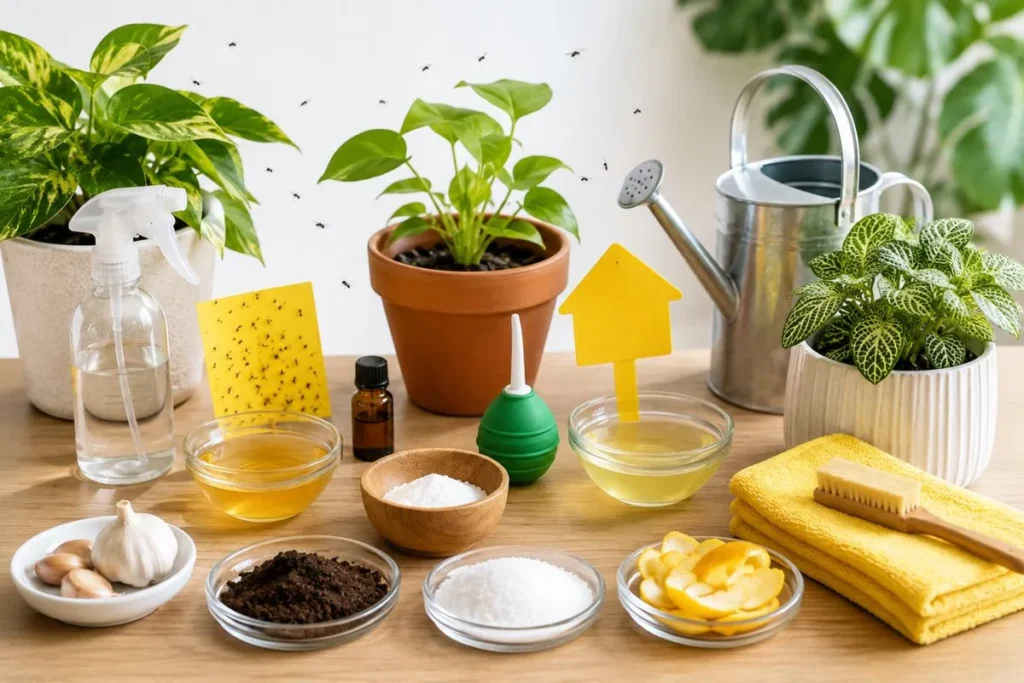
Understanding why gnats appear is the first step toward solving the problem. Overwatering, poor soil drainage, and constantly moist potting mix create the perfect breeding environment for fungus gnats.
Even healthy-looking houseplants can develop a fungus gnat infestation if the growing conditions allow the insects to reproduce.
Many homeowners mistake fungus gnats for fruit flies because they look similar. However, fungus gnats spend most of their time around your indoor plants rather than your kitchen or fruit bowl.
If you notice tiny flies hovering above the soil every time you water your plants, there’s a good chance you’re dealing with fungus gnats.
In this complete guide, you’ll learn how to get rid of gnats in my house plants using simple, effective, and beginner-friendly techniques. We’ll explain what causes these pests, how to eliminate both adult gnats and larvae, the best natural and commercial treatments, and how to prevent them from coming back. By the end of this guide, you’ll know exactly how to get rid of fungus gnats in indoor plants and keep your houseplants healthy all year long.
Quick Answer: How to Get Rid of Gnats in My House Plants
If you’re wondering how to get rid of gnats in my house plants, the fastest solution is to treat both the adult gnats and the larvae living in the soil. Simply killing the flying insects won’t solve the problem because new gnats will continue to hatch from eggs beneath the surface.
Start by allowing the top layer of soil to dry between waterings, since fungus gnats thrive in consistently damp soil. Next, place yellow sticky traps near your plants to catch adult gnats before they can lay more eggs.
To eliminate larvae, treat the soil with a hydrogen peroxide solution, Mosquito Bits, or another effective fungus gnat treatment. If the infestation is severe, repot the plant using fresh, well-draining potting mix.
Quick Solution Table
| Problem | Best Solution |
| Adult gnats | Yellow sticky traps |
| Fungus gnat larvae | Hydrogen peroxide solution or Mosquito Bits |
| Constantly wet soil | Allow the soil to dry before watering again |
| Severe infestation | Repot with fresh potting mix |
| Future prevention | Proper watering and good soil drainage |
How to Get Rid of Gnats in My House Plants Naturally
If you prefer natural methods, there are several effective ways to get rid of gnats in house plants without using harsh chemicals. Letting the soil dry slightly between waterings disrupts the fungus gnat life cycle because the larvae need moist conditions to survive.
Adding yellow sticky traps captures adult gnats, while natural treatments like diluted hydrogen peroxide, neem oil, or beneficial nematodes help eliminate larvae beneath the soil.
Using a combination of these methods often produces better results than relying on a single treatment. That’s why many experienced indoor gardeners recommend combining multiple approaches when trying to eliminate fungus gnats naturally.
Why Treating Both Adults and Larvae Matters
One of the biggest mistakes people make when learning how to get rid of gnats in my house plants is focusing only on the flying insects. Adult fungus gnats are mainly a nuisance, but the larvae are the real problem because they live in the potting soil and continue the infestation by developing into new adults.
Breaking the fungus gnat life cycle is the key to long-term success. Once you eliminate both the adults and the larvae, the infestation gradually disappears and your houseplants have a chance to recover.
What Results Can You Expect?
If you consistently follow the correct treatment plan, you’ll usually notice fewer flying gnats within a few days. Depending on the severity of the infestation, it may take two to four weeks to completely eliminate the pests because any remaining eggs still need time to hatch.
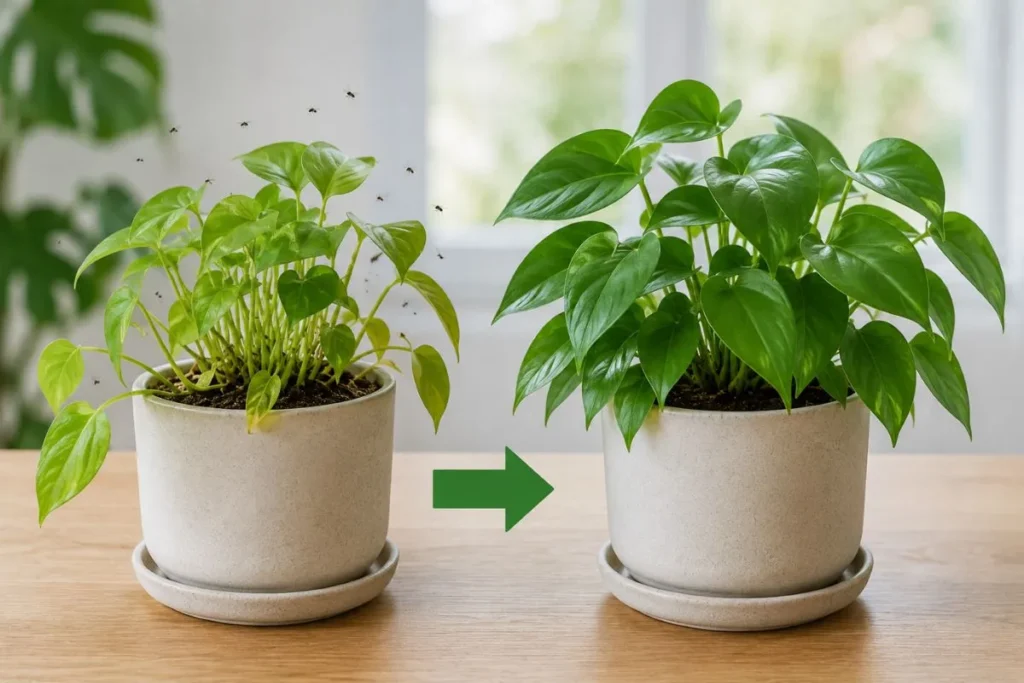
The good news is that once you understand how to get rid of gnats in my house plants and maintain proper houseplant maintenance, preventing future infestations becomes much easier.
Good watering habits, proper drainage, and regular plant inspections will help keep your indoor plants healthy and free from fungus gnats.
In the next section, we’ll explain what causes gnats in house plants, explore the fungus gnat life cycle, and help you understand why these pests keep returning if the root cause isn’t addressed.
What Causes Gnats in House Plants?
Many people believe how to get rid of gnats in my house plants simply means spraying the adult flies they see around their plants. Unfortunately, that only solves part of the problem.
The real issue starts beneath the soil, where fungus gnats lay their eggs and their larvae continue the infestation. Unless you remove the cause, the gnats will keep coming back.
If you’re trying to learn how to get rid of gnats in my house plants, understanding why they appear is just as important as knowing how to eliminate them. Once you identify what’s attracting them, you can stop the infestation at its source and keep your indoor plants healthy.
Why Are There Gnats in My House Plants?
One of the most common questions people ask is, why are there gnats in my house plants?
The biggest reason is consistently damp potting soil. Fungus gnats thrive in moist environments because they need wet soil to lay their eggs. When houseplants are watered too frequently or the soil doesn’t drain well, it creates the perfect breeding ground for these tiny insects.
Another common cause is overwatering. Even healthy plants can develop a fungus gnat problem if the soil never has a chance to dry slightly between waterings. Excess moisture encourages both fungal growth and organic matter decomposition, which provide food for developing larvae.
Poor drainage is another factor. Pots without drainage holes or compacted soil that holds water for too long make it easier for fungus gnats to reproduce.
If you’ve been wondering what causes gnats in house plants, remember that the insects aren’t attracted to the plant itself. Instead, they’re attracted to the moist soil and organic material surrounding the roots.
Understanding these conditions is the first step toward learning how to get rid of fungus gnats in indoor plants for good.
Understanding the Fungus Gnat Life Cycle
To fully understand how to get rid of gnats in my house plants, it’s helpful to know how fungus gnats reproduce.
The life cycle begins when adult fungus gnats lay tiny eggs just below the surface of damp potting soil. Within a few days, the eggs hatch into fungus gnat larvae.
These small, translucent larvae feed on fungi, decaying organic matter, and sometimes tender plant roots. While a few larvae rarely cause serious damage, a large infestation can weaken young plants and slow their growth.
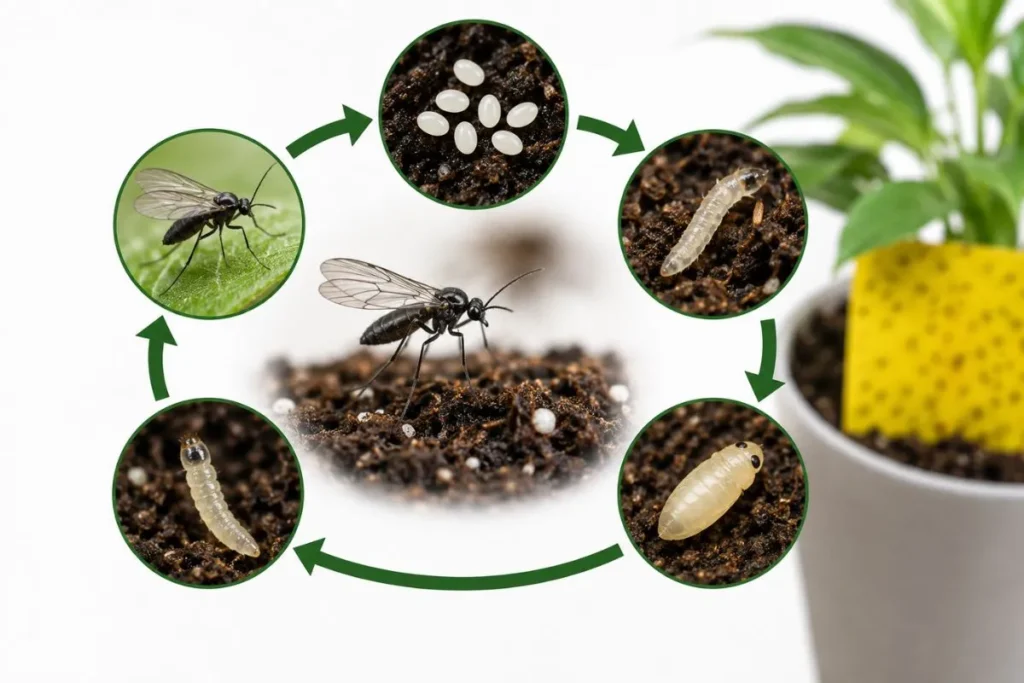
After feeding for about two weeks, the larvae develop into pupae inside the soil. A few days later, they emerge as adult gnats that begin laying eggs again, restarting the cycle.
Because the entire fungus gnat life cycle can be completed in just a few weeks, infestations can grow quickly if left untreated.
This is why simply killing the flying adults isn’t enough. If you truly want to know how to get rid of gnats in my house plants, you must eliminate both the adult gnats and the larvae hiding beneath the soil.
Are Results Can You Expect?
Many plant owners worry that fungus gnats will immediately kill their houseplants. Fortunately, that’s rarely the case.
Adult fungus gnats are mostly a nuisance. They fly around your plants and windows, making them annoying to live with, but they don’t feed on leaves or flowers.
The real concern is the fungus gnat larvae living in the soil. In small numbers, they usually feed on fungi and decaying organic material. However, when populations become large, they may begin feeding on delicate roots, especially in seedlings, young plants, and newly rooted cuttings.
Damaged roots make it harder for plants to absorb water and nutrients, which can result in slow growth, wilting, yellow leaves, and reduced overall health. Plants that are already stressed by poor watering or weak growing conditions are more likely to suffer from a severe fungus gnat infestation.
The good news is that mature, healthy houseplants usually recover quickly once the infestation is brought under control.
If you’re learning how to get rid of gnats in my house plants, remember that early action makes a big difference. Treating the problem as soon as you notice the first few gnats is much easier than dealing with a large infestation later.
By understanding what causes gnats in house plants, recognizing the fungus gnat life cycle, and knowing how these pests affect your plants, you’ll be better prepared to eliminate them completely.
In the next section, we’ll look at how to get rid of gnats in my house plants naturally, using safe, effective methods that target both adult gnats and larvae without harming your indoor plants.
How to Get Rid of Gnats in My House Plants Naturally
Many people believe how to get rid of gnats in my house plants requires strong chemical pesticides. The truth is, you can eliminate most fungus gnat infestations using simple, natural methods.
In many cases, changing your watering habits and using a few proven home remedies is enough to break the fungus gnat life cycle and keep your indoor plants healthy.
If you’re searching for how to get rid of gnats in my house plants naturally, the goal is to remove both the adult gnats and the larvae living in the soil. Using several natural treatments together usually delivers the fastest and longest-lasting results.
Let the Soil Dry Out
One of the easiest ways to get rid of gnats in my house plants naturally is to let the top layer of soil dry before watering again.
Fungus gnats prefer moist potting soil because it’s the perfect place to lay their eggs. When the surface of the soil stays wet all the time, the larvae have everything they need to survive and develop into adult gnats.
Allow the top 1 to 2 inches of soil to dry before watering your plants again. This simple change interrupts the breeding cycle and creates an environment that’s much less attractive to fungus gnats.
Be careful not to let the soil become completely dry for plants that require consistent moisture. The goal is to reduce excess moisture, not stress your houseplants.
If you’re wondering how to stop gnats from coming back in houseplants, improving your watering routine is one of the most effective long-term solutions.
Use Yellow Sticky Traps
Another excellent method for how to get rid of gnats in my house plants is using yellow sticky traps.
Adult fungus gnats are naturally attracted to the bright yellow color. Once they land on the sticky surface, they become trapped and can no longer reproduce.
Sticky traps won’t kill the larvae hiding in the soil, but they greatly reduce the number of adult gnats flying around your plants. They’re also an excellent way to monitor whether your fungus gnat treatment is working.
Place one or two traps near each affected plant and replace them when the surface becomes full of insects or dust.
Combining sticky traps with soil treatments produces much better results than using traps alone.
Apply a Hydrogen Peroxide Solution
If you’re looking for how to get rid of gnats in my house plants naturally, a hydrogen peroxide solution is one of the most popular home remedies.
Mix one part 3% hydrogen peroxide with four parts water, then use the mixture to water the affected plant. As the solution reaches the soil, it helps kill fungus gnat larvae without harming healthy plants when used correctly.
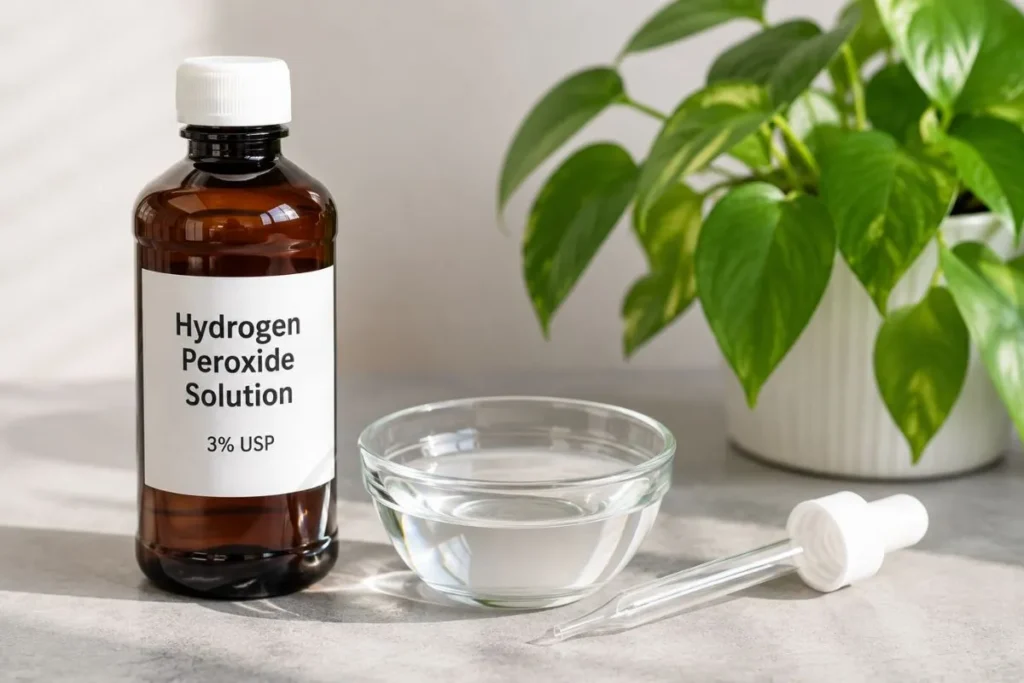
You may notice a slight fizzing sound after application. This is completely normal and happens as the peroxide breaks down in the soil.
Allow the soil to dry slightly before repeating the treatment if necessary. Most infestations improve after one or two applications combined with better watering habits.
Hydrogen peroxide works best as part of a complete natural fungus gnat treatment, not as the only solution.
Sprinkle Cinnamon on the Soil
Another natural remedy for how to get rid of gnats in my house plants is ordinary ground cinnamon.
Cinnamon has natural antifungal properties that help reduce the fungi growing in damp potting soil. Since fungus gnat larvae feed partly on fungi, reducing their food source can make your plants less attractive to them.
Simply sprinkle a light layer of cinnamon over the surface of the soil after watering.
Although cinnamon alone won’t eliminate a heavy infestation, it works well alongside other treatments such as drying the soil, using sticky traps, and applying hydrogen peroxide.
This simple remedy is inexpensive, safe for most houseplants, and easy to include in your regular houseplant maintenance routine.
Use Neem Oil
Neem oil is another highly effective option if you’re searching for how to get rid of gnats in my house plants naturally.
Neem oil works as a natural insect control product by disrupting the growth and reproduction of many common indoor plant pests, including fungus gnats.
You can use neem oil as a soil drench to target larvae beneath the soil or as a foliar spray to reduce adult insect activity around your plants. Always follow the manufacturer’s mixing instructions and avoid applying it during the hottest part of the day.
While neem oil is highly effective, it works best when combined with other methods such as proper watering, improved soil drainage, and yellow sticky traps.
Learning how to get rid of gnats in my house plants naturally is about using several proven techniques together instead of relying on a single remedy.
Letting the soil dry slightly, installing yellow sticky traps, treating the soil with hydrogen peroxide, applying cinnamon, and using neem oil all target different stages of the fungus gnat life cycle By combining these methods, you can eliminate fungus gnats naturally and keep your indoor plants healthy without using harsh chemicals.
Best Products to Kill Fungus Gnats
Many people think how to get rid of gnats in my house plants means buying the strongest insecticide available. In reality, that’s not always necessary. Several highly effective products are designed specifically to control fungus gnats, and many of them are safe to use around indoor plants when used as directed.
If you’re dealing with a persistent infestation and natural remedies aren’t enough, the right fungus gnat treatment can help eliminate both adult gnats and larvae more quickly. The key is choosing a product that targets the stage of the life cycle causing the problem.
Mosquito Bits
One of the most recommended solutions for how to get rid of gnats in my house plants is Mosquito Bits.
Mosquito Bits contain a naturally occurring bacterium called Bacillus thuringiensis israelensis (BTI), which targets fungus gnat larvae living in the soil. Once the larvae feed on the treated soil, they stop developing and eventually die, helping to break the breeding cycle.
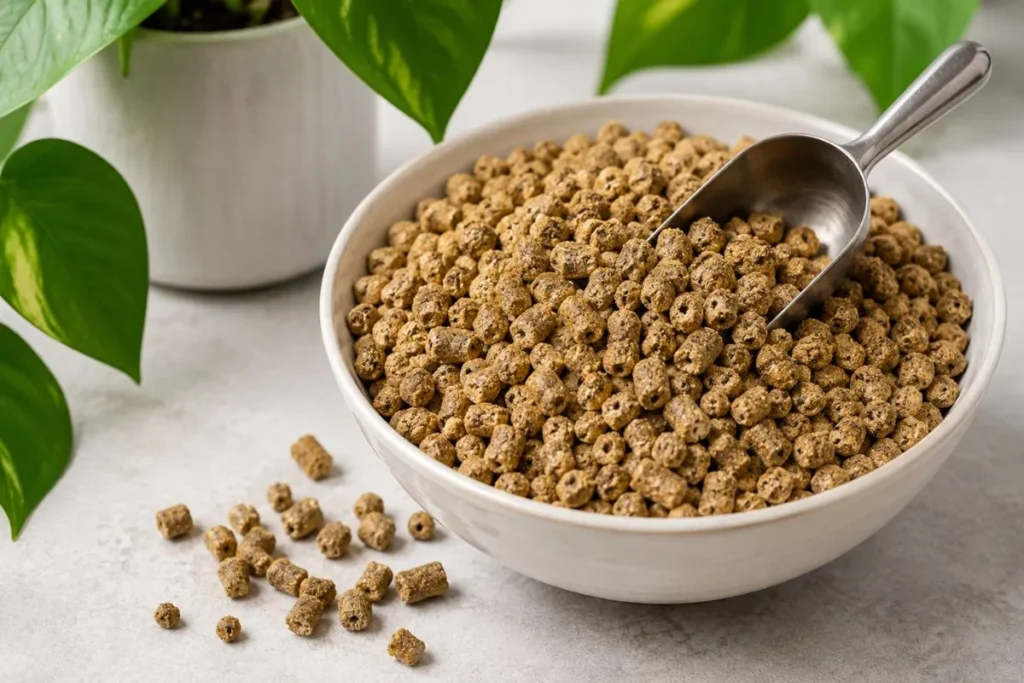
Many indoor gardeners soak Mosquito Bits in water before watering their plants, while others apply them directly to the soil surface according to the product instructions.
Because Mosquito Bits target the larvae rather than the adult gnats, combining them with yellow sticky traps often produces the best results.
Beneficial Nematodes
If you’re looking for an organic solution to how to get rid of gnats in my house plants, beneficial nematodes are another excellent choice.
Beneficial nematodes are microscopic organisms that naturally live in the soil. Once introduced into the potting mix, they seek out and destroy fungus gnat larvae without harming your plants, pets, or beneficial insects.
This method is especially effective for larger collections of houseplants or recurring infestations because the nematodes continue working beneath the soil after application.
Many gardeners consider beneficial nematodes one of the most effective long-term options for fungus gnat control.
Insecticidal Soap
Another product commonly used for how to get rid of gnats in my house plants is insecticidal soap.
Insecticidal soap works best against adult fungus gnats that come into direct contact with the spray. While it won’t eliminate larvae hidden in the soil, it helps reduce the adult population and slows the reproduction cycle.
Always spray according to the label instructions and avoid overapplying the product. Testing a small area of the plant first is also a good idea to ensure there are no adverse effects.
For the best results, use insecticidal soap together with a soil treatment that targets the larvae.
Commercial Fungus Gnat Treatments
If the infestation continues despite natural remedies, you may want to use a commercial fungus gnat treatment for houseplants.
Many products are specifically formulated to control fungus gnats in indoor plants. Some target larvae in the soil, while others reduce the adult population. Reading the product label carefully will help you choose the right treatment for your situation.
When using any commercial product, always follow the manufacturer’s instructions regarding application rates, frequency, and safety precautions. Proper use improves effectiveness while protecting your plants.
Commercial treatments are often most successful when combined with better watering habits and improved soil drainage.
Which Treatment Works Best?
If you’re wondering how to get rid of gnats in my house plants as quickly as possible, no single product works perfectly on its own.
The most effective approach is to combine multiple methods that target different stages of the fungus gnat life cycle. For example, use yellow sticky traps to capture adult gnats while applying Mosquito Bits or beneficial nematodes to eliminate larvae in the soil.
Improving your watering routine and allowing the soil surface to dry between waterings will further reduce the chances of new infestations.
For mild infestations, natural remedies may be all you need. For moderate to severe infestations, combining natural treatments with commercial fungus gnat control products usually provides the fastest and most reliable results.
Ultimately, learning how to get rid of gnats in my house plants is about treating both the visible insects and the hidden larvae beneath the soil. By choosing the right products and following a consistent treatment plan, you can eliminate fungus gnats and enjoy healthy, pest-free houseplants.
Frequently Asked Questions (FAQs)
How to Get Rid of Gnats in My House Plants Naturally?
If you’re wondering how to get rid of gnats in my house plants naturally, start by letting the top layer of soil dry between waterings.
Then use yellow sticky traps to catch adult gnats and apply natural treatments like hydrogen peroxide, neem oil, or beneficial nematodes to eliminate the larvae living in the soil. Combining these methods provides the best results.
Why Are There Gnats in My House Plants?
The most common reason for fungus gnats is consistently moist potting soil. Adult gnats lay their eggs in damp soil, where the larvae feed on fungi and decaying organic matter. Overwatering, poor drainage, and wet potting mix create ideal conditions for an infestation.
What Causes Gnats in House Plants?
If you’re asking what causes gnats in house plants, the main causes are overwatering, poor soil drainage, and excessive moisture. Organic matter in the soil also attracts fungus gnats because it provides food for their larvae.
How Do I Kill Fungus Gnat Larvae?
The best way to kill fungus gnat larvae is to treat the soil directly. Products like Mosquito Bits, beneficial nematodes, and diluted hydrogen peroxide are highly effective because they target the larvae before they develop into adult gnats.
Are Fungus Gnats Harmful to Houseplants?
Adult fungus gnats are mostly a nuisance, but the larvae can damage young roots when their population becomes large. Healthy, mature houseplants usually recover quickly once the infestation is controlled, while seedlings and newly propagated plants are more vulnerable.
Does Hydrogen Peroxide Kill Fungus Gnats?
Yes. A solution made with one part 3% hydrogen peroxide and four parts water can help kill fungus gnat larvae living in the soil. This treatment is commonly used as part of a complete fungus gnat treatment for houseplants and works best when combined with proper watering practices.
Does Neem Oil Get Rid of Fungus Gnats?
Yes. Neem oil helps reduce fungus gnat populations by disrupting their growth and reproduction. It can be applied as a soil drench to target larvae or as a foliar spray to help control adult gnats. For the best results, combine neem oil with other treatments rather than relying on it alone.
Should I Repot a Plant with Fungus Gnats?
Repotting isn’t always necessary, but it can be helpful if the infestation is severe or the soil is heavily contaminated. Replacing the old potting mix with fresh, well-draining soil removes many eggs and larvae while giving your plant a healthier growing environment.
How Long Does It Take to Eliminate Fungus Gnats?
If you’re learning how to get rid of gnats in my house plants, it’s important to be patient. Most infestations improve within a few days, but completely eliminating fungus gnats usually takes 2 to 4 weeks. The exact timeline depends on the severity of the infestation and how consistently you apply the treatments.
How Can I Prevent Fungus Gnats from Coming Back?
The best way to prevent future infestations is to avoid overwatering, use well-draining potting soil, remove dead leaves from the soil surface, inspect new plants before bringing them indoors, and allow the top layer of soil to dry slightly between waterings.
Following these simple habits will help keep your indoor plants healthy and significantly reduce the risk of fungus gnats returning.
Conclusion
By now, you should have a clear answer to the question, how to get rid of gnats in my house plants. While fungus gnats can be frustrating, they are completely manageable when you use the right approach. The key is to treat both the adult gnats flying around your plants and the larvae hiding in the potting soil.
Throughout this guide, you’ve learned that successful fungus gnat treatment for houseplants starts with identifying the root cause of the infestation. Overwatering, poor soil drainage, and constantly damp potting mix create the ideal environment for fungus gnats to breed.
By correcting these conditions, you’ll not only eliminate the current infestation but also reduce the chances of future outbreaks.
If you’re still wondering how to get rid of gnats in my house plants naturally, remember that simple methods can be highly effective. Letting the soil dry slightly between waterings, using yellow sticky traps, applying a diluted hydrogen peroxide solution, treating the soil with neem oil or beneficial nematodes, and improving drainage all work together to break the fungus gnat life cycle.
For more severe infestations, combining natural remedies with trusted commercial products like Mosquito Bits can provide faster and longer-lasting results. The most effective strategy is always a combination of treatments rather than relying on a single solution.
Most importantly, prevention is easier than treatment. Following a proper houseplant watering schedule, using well-draining potting soil, inspecting new plants before bringing them indoors, and keeping your pots clean will help you maintain healthy indoor plants that are far less likely to attract fungus gnats.
Now that you know how to get rid of gnats in my house plants, you can confidently protect your indoor garden from future infestations. With consistent plant care and a few simple maintenance habits, you’ll enjoy healthier, pest-free houseplants and spend less time dealing with unwanted insects.

Plant Nest Blog’s author is passionate about plants, gardening, and sustainable living. Through research and practical experience, they share helpful plant care tips, gardening guides, and easy solutions to help readers grow healthier plants and create greener spaces.