
Many people believe that aloe vera plants can survive anywhere without any care. While aloe vera is a hardy plant, it still needs the right growing conditions to stay healthy.
Too little light, unsuitable soil, or poor growing conditions can affect its growth over time. The good news is that learning how to look after aloe vera plant is easier than you might think.
With a little attention and a few simple habits, you can help your plant grow strong, develop thick green leaves, and stay healthy for years.
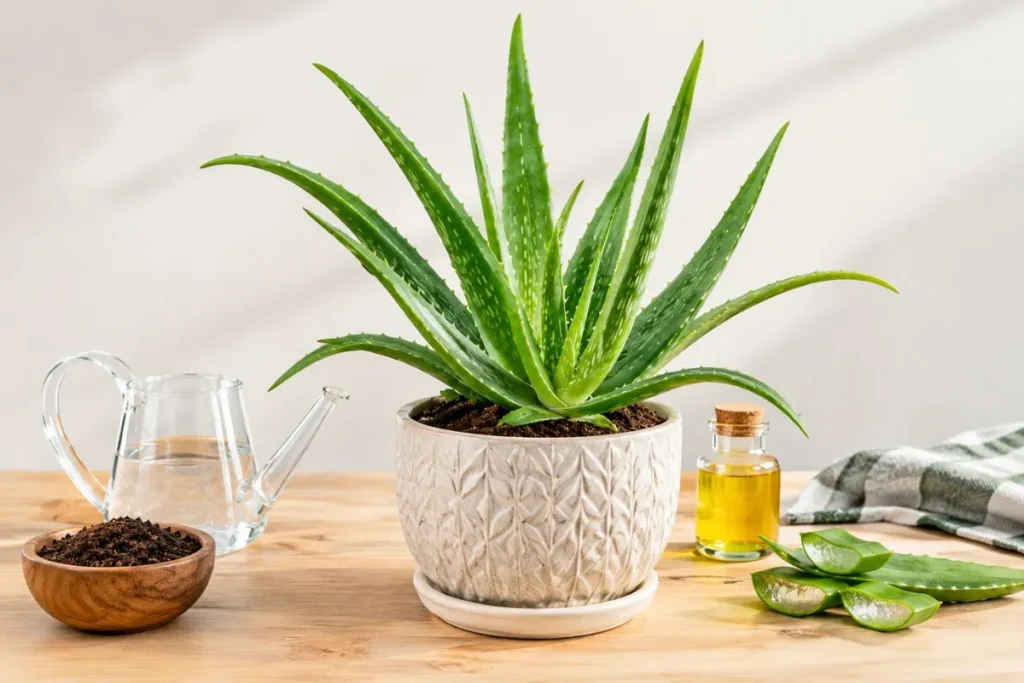
Aloe vera is a popular succulent because it looks attractive and doesn’t require constant attention. Its thick, fleshy leaves store water, which helps the plant tolerate short periods of dry soil.
This makes it a suitable choice for beginners, busy plant owners, and anyone who wants an easy-care houseplant. However, being low-maintenance doesn’t mean you can completely ignore its needs.
The key to successful aloe vera plant care is understanding what helps the plant grow naturally. You need to consider its growing environment, the amount of light it receives, and the conditions that keep its roots healthy. Once you understand these basics, caring for aloe vera becomes much simpler.
Understand Your Aloe Vera Plant Before You Start
Before changing your watering routine or moving your plant to a new location, take a moment to understand how aloe vera grows. Every plant has different needs, and knowing a little about this succulent will help you make better care decisions.
It can also help you avoid common mistakes that affect aloe vera plant growth.
What Makes Aloe Vera Different From Other Houseplants?
Aloe vera belongs to the succulent group of plants. Unlike houseplants with thin leaves that lose moisture quickly, aloe vera has thick, fleshy leaves that store water. This natural feature helps it survive periods when water is less available.
Its water-storing ability is one reason aloe vera plant maintenance is relatively simple. You don’t need to water it every day or keep its soil constantly moist. In fact, too much moisture can create problems for the roots. Aloe vera generally grows better when its growing medium drains well and has time to dry between waterings.
Another interesting feature is its growth pattern. Aloe vera usually develops a central cluster of leaves that spread outward as the plant matures. Under suitable conditions, a healthy plant may also produce smaller plants around its base.
These are called aloe vera pups, and they can eventually be separated to grow new plants.
Aloe vera also responds to its surroundings. When it receives suitable light and grows in the right conditions, its leaves tend to remain firm and its growth stays compact. When conditions aren’t suitable, you may notice weak growth, discolored leaves, or other signs of stress.
Understanding these characteristics makes aloe vera succulent care much easier. Instead of treating it like a tropical plant that needs frequent watering, you can provide the conditions that suit a water-storing succulent.
Is Aloe Vera an Indoor or Outdoor Plant?
Aloe vera can grow both indoors and outdoors. The better option depends on your local climate, available light, and the space where you want to keep the plant.
Growing Aloe Vera Indoors
Aloe vera is a popular indoor plant because it can grow well in a bright room without taking up much space. You can keep it near a suitable window, on a bright shelf, or in a well-lit part of your home.
Indoor aloe vera plant care is often easier because you can control its environment. You can protect the plant from heavy rain, sudden cold weather, and other outdoor conditions that may damage it.
However, indoor spaces aren’t always bright enough. If your aloe vera receives very little natural light, its growth may become weak or stretched. Choosing a bright location is an important part of growing aloe vera indoors successfully.
Growing Aloe Vera Outdoors
Outdoor aloe vera plants can thrive when the weather is warm and the growing conditions are suitable. You can grow them in garden containers or in the ground where the soil drains well and the climate is appropriate.
Outdoor plants may receive more natural light and airflow than indoor plants. However, intense sunlight, heavy rainfall, and cold temperatures can create problems.
If you live in a hot climate, such as many parts of Pakistan, pay attention to harsh afternoon sun and excessive heat, especially when moving a plant outside for the first time.
Aloe vera is sensitive to frost, so outdoor plants need protection when temperatures become too cold. Containers are particularly useful because you can move the plant to a sheltered location when conditions change.
Whether you choose indoor or outdoor aloe vera plant care, the goal is to provide a suitable environment rather than constantly adjusting the plant. Pay attention to how it responds to its location, and make changes gradually when necessary.
What Does a Healthy Aloe Vera Plant Look Like?
Learning to recognize a healthy aloe vera plant helps you spot problems before they become serious. You don’t need to be an experienced gardener to notice the basic signs of good growth.
A healthy aloe vera plant usually has firm, fleshy leaves that hold their shape. The leaves may range from light green to deeper green, depending on the plant variety and growing conditions. Some aloe vera plants also develop small spots or markings as part of their natural appearance.
The leaves should generally feel firm rather than mushy. New growth often appears near the center of the plant, where fresh leaves gradually develop. As the plant matures, it may become wider and produce pups around its base.
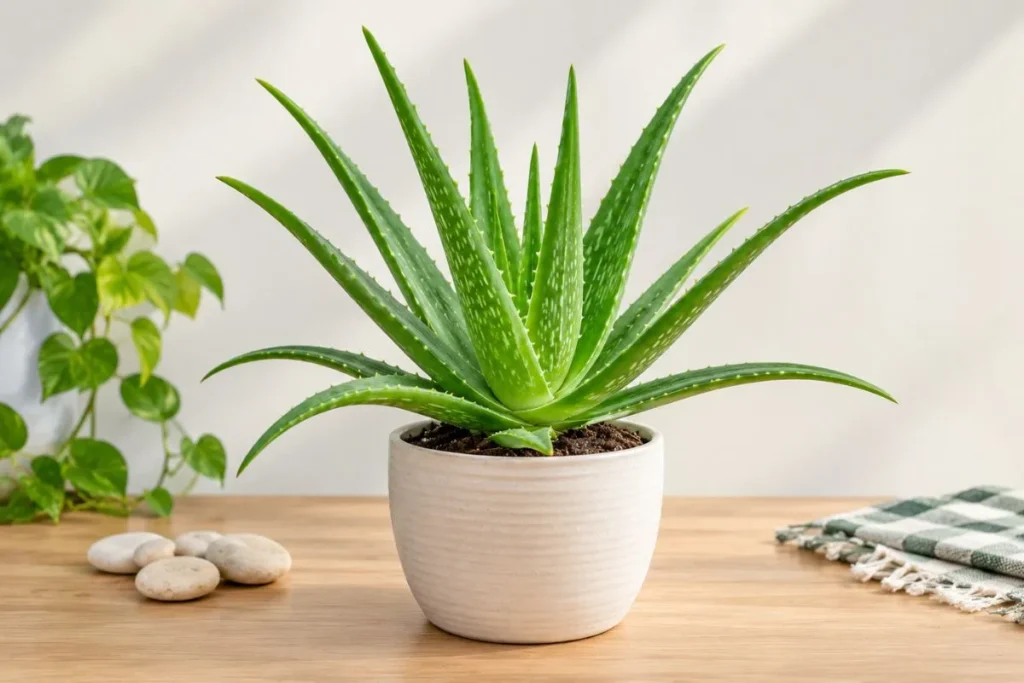
Growth speed can vary depending on the season, light, temperature, and overall growing conditions. Aloe vera isn’t always a fast-growing plant, so don’t worry if you don’t see new leaves every week. Consistent, healthy growth matters more than rapid growth.
You should also pay attention to changes in the plant’s appearance. Soft or yellowing leaves, dark patches, or a sudden loss of firmness can indicate that something isn’t right.
These symptoms don’t always point to the same problem, so it’s best to check the soil, roots, and growing environment before deciding what to do.
How Much Sunlight Does an Aloe Vera Plant Need?
Many people believe that aloe vera needs hours of strong, direct sunlight every day to grow well. However, too much intense sunlight can actually damage its leaves, especially when the plant hasn’t had time to adjust.
The right amount of light depends on where you keep your plant, the local climate, and how much sunlight reaches its leaves. Understanding aloe vera sunlight requirements will help you choose the best location and encourage healthy growth without unnecessary stress.
Find the Best Spot for Your Aloe Vera Plant
Choosing the right location is one of the easiest ways to improve aloe vera plant care. Your plant needs plenty of light to grow properly, but that doesn’t mean you should place it in the sunniest spot without considering the conditions.
For most indoor aloe vera plants, a bright location with plenty of natural light is a good starting point. An east-facing window can work well because it often provides gentle morning sunlight.
A bright south- or west-facing window may also be suitable, but you might need to protect the plant from intense afternoon sun, particularly during hot weather.
If you’re wondering how much sunlight an aloe vera plant needs, focus on providing several hours of bright light each day. The exact amount depends on the strength of the sunlight and whether the plant receives direct or indirect light.
A bright room with good natural lighting is generally better than a dark corner.
Pay attention to how your aloe vera responds to its location. If the leaves remain firm and the plant develops compact new growth, the light level may be suitable. However, if the leaves begin leaning toward a window or the plant looks stretched, it may not be receiving enough light.
Can Aloe Vera Grow in Direct Sunlight?
Yes, aloe vera can grow in direct sunlight, but the amount it can tolerate depends on its growing conditions. A plant that has gradually adjusted to outdoor sunlight may handle stronger exposure than one that has spent months indoors.
Morning sunlight is often a good option because it tends to be less intense than the afternoon sun. A few hours of gentle direct sunlight can support healthy growth, while bright indirect light can help protect the plant during particularly hot periods.
The main problem is sudden exposure to strong sunlight. If you move an indoor aloe vera plant directly into the midday sun, its leaves may develop brown patches, reddish discoloration, or dry, scorched areas. These changes can be signs of sun stress.
To prevent this, introduce direct sunlight gradually. Start by placing the plant in a bright, sheltered location where it receives gentle morning sun. Over several days or weeks, increase its exposure if the leaves show no signs of damage.
Climate matters, too. In cooler conditions, aloe vera may tolerate more direct sunlight than it can during extremely hot weather. In places with intense summer heat, protect the plant from harsh afternoon rays and watch for signs of stress.
How to Care for Aloe Vera Plants Indoors With Limited Sunlight
Growing aloe vera indoors is convenient, but limited natural light can make it harder to maintain healthy growth. If your home doesn’t receive much sunshine, choosing the right location becomes especially important.
Start by checking the brightest areas of your home. A window that receives good daylight is usually a better choice than a shelf far from the window. Keep in mind that a room can look bright to your eyes while still providing relatively little light for a plant.
One common sign of insufficient light is stretched growth. The leaves may become longer, thinner, or less compact as the plant tries to reach a stronger light source. You might also notice that the plant leans in one direction.
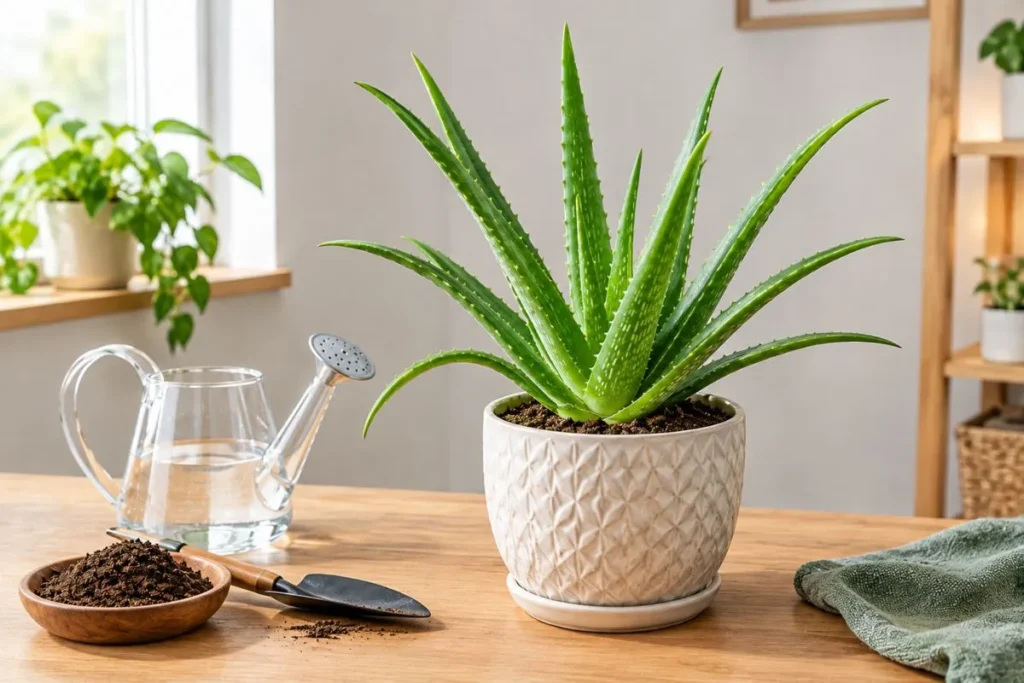
If you notice these changes, move your aloe vera closer to a bright window. Make the change gradually if the new location receives direct sunlight. Rotating the pot occasionally can also help the plant receive light more evenly, although rotation won’t solve a serious lack of light.
What if your room has very little natural sunlight? A grow light can help. Choose a plant light designed to support indoor plant growth and follow the manufacturer’s recommendations for distance and daily operating time. Avoid placing a powerful light so close that it overheats or stresses the leaves.
How to Look After Aloe Vera Plants Outdoors
Outdoor aloe vera can grow well when it receives suitable sunlight and protection from extreme weather. A balcony, patio, or garden can be a good location, provided you choose the spot carefully.
If you’re growing aloe vera outdoors, look for an area that receives good natural light but offers some protection from harsh afternoon sun during very hot weather. Gentle morning sunlight followed by bright shade can be a useful arrangement in climates with intense summer temperatures.
Before moving an indoor plant outside, allow it to adjust gradually. Start by placing it in a sheltered, bright area for a short period. Increase its exposure over the following days, watching for brown patches, reddish leaves, or other signs of stress.
Your outdoor setup also matters. A covered balcony can protect the plant from heavy rain, while an exposed garden location may leave it vulnerable to prolonged wet conditions. Choose a spot where the plant won’t remain soaked after rainfall.
How Often Should You Water an Aloe Vera Plant?
Many people believe that watering an aloe vera plant a little every day will help it grow faster and keep its leaves fresh. In reality, frequent watering can do more harm than good.
Aloe vera stores moisture in its thick leaves, so it doesn’t need constantly wet soil. The secret to healthy growth is knowing when the plant needs water and when it’s better to wait.
If you want to learn how often you should water an aloe vera plant, pay attention to soil dryness, the season, and your plant’s growing conditions rather than following a fixed schedule.
How to Know When Your Aloe Vera Needs Water
One of the easiest ways to care for aloe vera is to check the soil before watering. Don’t assume your plant needs water just because several days have passed since the last watering. The soil can dry at different rates depending on the temperature, pot size, sunlight, and type of potting mix.
Start by checking the top few inches of soil with your finger. If the soil still feels damp, wait before watering. You can also use a wooden stick or moisture meter to check deeper into the pot. The goal is to let the potting mix dry out thoroughly before adding more water.
The plant’s appearance can offer additional clues. Healthy aloe vera leaves usually feel firm and fleshy. If the leaves begin to look thinner or slightly wrinkled and the soil is completely dry, your plant may need water.
However, wrinkled leaves can sometimes indicate root damage, so check the soil and overall condition before assuming dehydration is the problem.
How to Water an Aloe Vera Plant Correctly
Knowing how to water an aloe vera plant properly is just as important as knowing when to water it. Instead of giving the plant small amounts of water every few days, water thoroughly when the soil is dry enough.
Water the soil slowly and evenly until excess water flows from the drainage holes at the bottom of the pot. Let the water drain completely, then empty the saucer so the roots don’t sit in collected water.
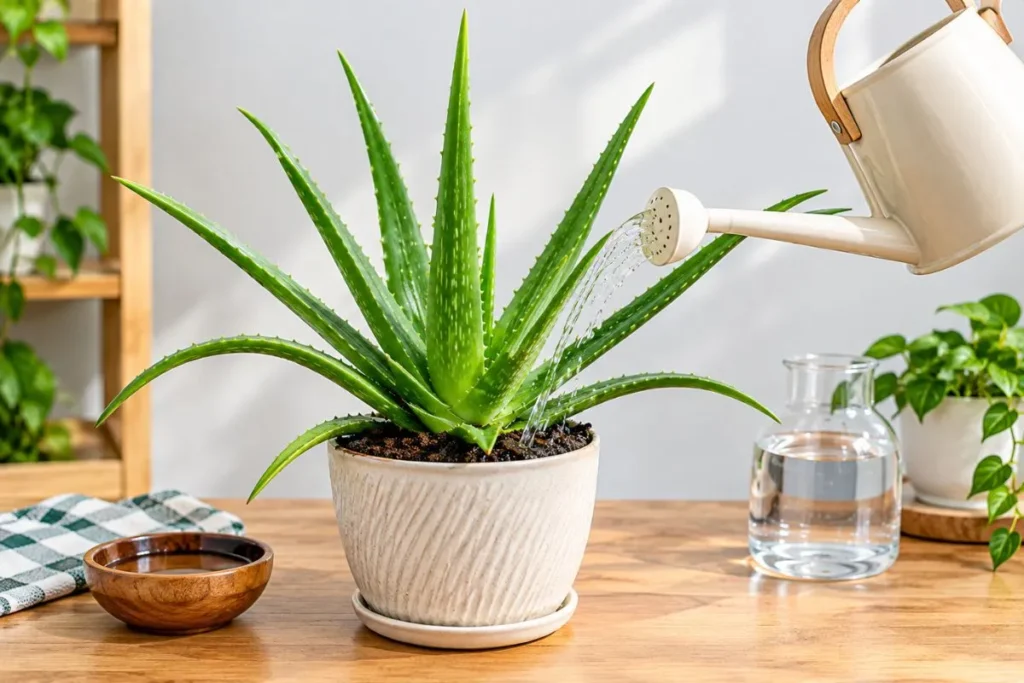
Try to direct the water toward the soil instead of pouring it into the center of the plant. Water trapped between the leaves can contribute to rot, especially when conditions are cool or airflow is poor.
Ordinary tap water is generally suitable if it’s safe for household plants. If your water is unusually salty or leaves heavy mineral deposits, consider using filtered water or another suitable source.
Avoid watering according to a rigid calendar. Even if your aloe vera needed water last week, it might not need another drink today. Soil moisture is a much better guide.
How Often Should You Water Aloe Vera in Summer and Winter?
Aloe vera doesn’t use water at the same rate throughout the year. Temperature, light exposure, humidity, and the growing medium all affect how quickly the soil dries. That’s why your watering routine may need to change with the seasons.
Watering aloe vera during summer
Warm weather and brighter light can cause the soil to dry more quickly, particularly when the plant grows outdoors or near a sunny window. During these periods, you may need to check the soil more often.
However, don’t automatically water more just because it’s summer. If the plant is in a shaded room or a large pot, the soil may remain damp for longer. Always check the actual moisture level before watering.
In extremely hot weather, protect the plant from excessive heat and inspect it for signs of stress. Don’t try to solve every problem by adding water, as heat damage and root problems can sometimes produce similar symptoms.
Signs You Are Overwatering Your Aloe Vera Plant
Overwatering is one of the most common reasons aloe vera plants develop problems. It usually happens when the soil stays wet for too long, leaving the roots without the air they need.
If you suspect that you have an overwatered aloe vera plant, look for yellowing leaves, soft or mushy foliage, and soil that stays wet for many days. Dark, mushy roots or an unpleasant smell from the potting mix may also indicate root rot.
These symptoms can have more than one cause, so check the entire growing environment before deciding what is wrong.
If the soil is wet and the plant shows signs of deterioration, stop watering until you understand the problem. Check whether the pot has drainage holes and whether the growing medium drains properly.
If you suspect root rot, carefully remove the plant from its pot and inspect the roots. Healthy roots are generally firm, while rotten roots tend to be dark and mushy. Remove badly damaged roots with a clean tool and repot the plant in fresh, well-draining succulent soil.
Choose a pot that allows excess water to escape, and don’t leave water sitting in the saucer. After addressing the problem, allow the plant to settle and resume watering only when the soil has dried sufficiently.
The most important lesson is that an overwatered aloe vera plant needs better moisture management, not more water. Correcting the cause is more useful than simply treating the visible symptoms.
Frequently Asked Questions About How to Look After Aloe Vera Plant
How Often Should I Water an Aloe Vera Plant?
Water your aloe vera plant when the potting soil has dried out completely or nearly completely, depending on the growing conditions. This may take a couple of weeks or longer, especially during winter.
Check the soil before watering instead of following a fixed schedule. Always use a pot with drainage holes to prevent excess moisture from damaging the roots.
Does Aloe Vera Need Direct Sunlight?
Aloe vera needs plenty of bright light to grow well, but it does not always need strong, direct sunlight throughout the day. A bright windowsill with indirect light or gentle morning sunshine can work well indoors.
Introduce your plant to stronger sunlight gradually because sudden exposure to intense afternoon sun can scorch its leaves.
How Do I Look After an Aloe Vera Plant Indoors?
To care for aloe vera indoors, place it near a bright window, use well-draining succulent soil, and choose a pot with drainage holes. Water only when the soil has dried sufficiently, and keep the plant away from cold drafts. Rotate the pot occasionally so all sides receive light and the leaves grow more evenly.
Why Are the Leaves on My Aloe Vera Plant Turning Yellow?
Yellow aloe vera leaves can indicate overwatering, poor drainage, insufficient light, or other growing problems. Check the soil first. If it stays wet for several days, the roots may be receiving too much moisture. Make sure the pot drains properly and allow the soil to dry before watering again. If the leaves are soft and mushy, inspect the roots for signs of rot.
Why Is My Aloe Vera Plant Turning Brown?
Brown aloe vera leaves may result from intense sunlight, underwatering, cold temperatures, or root damage. If the brown areas look dry and crispy, consider whether the plant is receiving too much direct sun or staying dry for too long.
If the leaves are soft or dark near the base, check for overwatering. Adjust the growing conditions according to the symptoms rather than changing everything at once.
What Is the Best Soil for an Aloe Vera Plant?
The best soil for aloe vera is a loose, fast-draining mix designed for cacti and succulents. It should allow excess water to escape rather than holding moisture around the roots.
Avoid heavy garden soil or ordinary potting mix that stays wet for long periods. Pair the soil with a pot that has drainage holes for healthier root growth.
Should I Fertilize My Aloe Vera Plant?
Aloe vera does not need frequent feeding. During active growth in spring and summer, you can use a balanced or succulent fertilizer diluted according to the product instructions. Avoid overfertilizing because too much fertilizer can damage the roots.
Feeding is usually unnecessary during winter when growth slows.
When Should I Repot My Aloe Vera Plant?
Repot your aloe vera when its roots become crowded, the plant becomes unstable, or pups need more room to grow. Spring is often a convenient time because the plant can recover during its active growing season.
Choose a pot only slightly larger than the root system and use fresh, well-draining succulent soil. A pot that is much too large may retain excess moisture.
How Can I Grow More Aloe Vera Plants?
The easiest way to propagate aloe vera is by separating the small offshoots, often called pups, that grow around the base of a mature plant. Wait until an offshoot has developed its own roots, then carefully separate it using a clean tool.
Plant it in a small pot with well-draining soil and allow any damaged areas to dry before watering. Growing aloe vera from leaf cuttings is generally less reliable.
Can Aloe Vera Survive Outdoors?
Yes, aloe vera can grow outdoors in a warm climate with plenty of light and well-draining soil. However, it is sensitive to frost and prolonged cold or wet conditions.
If temperatures drop significantly, move a container-grown plant indoors or provide suitable protection. In hot climates, introduce it to direct sunlight gradually to reduce the risk of leaf scorch.
How Do I Make My Aloe Vera Plant Grow Faster?
Give your aloe vera the right balance of bright light, suitable temperatures, well-draining soil, and careful watering. Avoid keeping the roots constantly wet or placing the plant in a dark corner.
Aloe vera naturally grows at a moderate pace, so patience is important. Healthy growing conditions are more effective than excessive watering or fertilizer.
Should I Cut Off Brown or Damaged Aloe Vera Leaves?
You can remove leaves that are completely dead, severely damaged, or mushy from rot. Use a clean, sharp tool and cut close to the base without damaging the healthy leaves.
Slightly brown tips do not always need to be removed unless you prefer a neater appearance. Correct the underlying problem so new growth has a better chance of staying healthy.
Conclusion:
Many people think aloe vera plants can survive without any care, but healthy growth still depends on the right growing conditions. Learning how to look after aloe vera plant properly helps you avoid common problems such as yellow leaves, root rot, brown tips, and slow growth.
The good news is that aloe vera is relatively easy to maintain once you understand its basic needs. Give your plant plenty of bright light, use well-draining succulent soil, and choose a pot with drainage holes.
Most importantly, check the soil before watering instead of following a strict schedule. Aloe vera stores moisture in its thick leaves, so letting the soil dry between waterings helps protect its roots.
Pay attention to seasonal changes, too. Your plant may need more frequent checks during warm, bright weather and less water during cooler months. Remove completely dead or damaged leaves when necessary, repot when the roots become crowded, and separate healthy pups if you want to grow more plants.
Remember that every aloe vera plant grows in slightly different conditions. A plant near a sunny window may dry out faster than one in a cooler room, so observe its leaves, soil, and overall growth before making changes.
With consistent, simple care, your aloe vera can remain healthy and attractive for years. Follow these practical aloe vera plant care tips, avoid overwatering, and give your plant time to grow.
You do not need an elaborate routine just the right light, suitable soil, careful watering, and a little attention.

Plant Nest Blog’s author is passionate about plants, gardening, and sustainable living. Through research and practical experience, they share helpful plant care tips, gardening guides, and easy solutions to help readers grow healthier plants and create greener spaces.