
Many people believe aloe plants can survive on their own without any care because they are succulents. However, even these hardy plants need the right balance of sunlight, water, and suitable soil to stay healthy.
Learning how to care for an aloe helps you avoid common problems and keep your plant looking fresh and strong.
Whether you grow aloe vera indoors or outdoors, a few simple habits can make a big difference. This guide covers watering, sunlight, soil, repotting, and common plant problems so you can help your aloe grow well without making plant care complicated.
Understanding Aloe Plants and Their Growing Needs
Aloe plants are succulents with thick, fleshy leaves that store water for dry periods. Although they are generally easy to maintain, their roots need good drainage, and their leaves need suitable light to support healthy growth.
Understanding these basic aloe vera growing conditions will help you give your plant the care it needs.
What Makes Aloe Plants Different From Other Houseplants?
Unlike many common houseplants, aloe plants store water in their leaves, which helps them tolerate short periods without watering. This makes aloe vera succulent care relatively simple, especially for beginners.
However, storing water also means aloe plants can suffer when their roots remain in wet soil for too long. Giving your aloe enough light and allowing excess water to drain away are important parts of keeping it healthy.
Can You Grow Aloe Vera Indoors and Outdoors?
Yes, you can grow aloe vera indoors or outdoors, depending on your climate and available space. Indoors, place the plant near a bright window where it receives plenty of natural light. Outdoors, choose a sunny or partly sheltered location with well-draining soil, and protect the plant from frost and extreme cold. Good indoor or outdoor placement helps your aloe adjust to its environment and grow more consistently.
What Conditions Help Aloe Plants Grow Well?
Healthy aloe plants need bright light, suitable temperatures, and soil that drains quickly after watering. Choose a pot with drainage holes and avoid leaving water sitting in its saucer. Aloe plants generally prefer warm conditions and can struggle in cold, damp environments.
By providing the right growing conditions and checking your plant regularly, you can support healthy leaves, strong roots, and steady growth.
How Much Sunlight Does an Aloe Vera Plant Need?
Many people believe aloe vera plants need strong, direct sunlight all day to grow well. In reality, too much intense sunlight can damage their leaves, especially when the plant has been growing indoors.
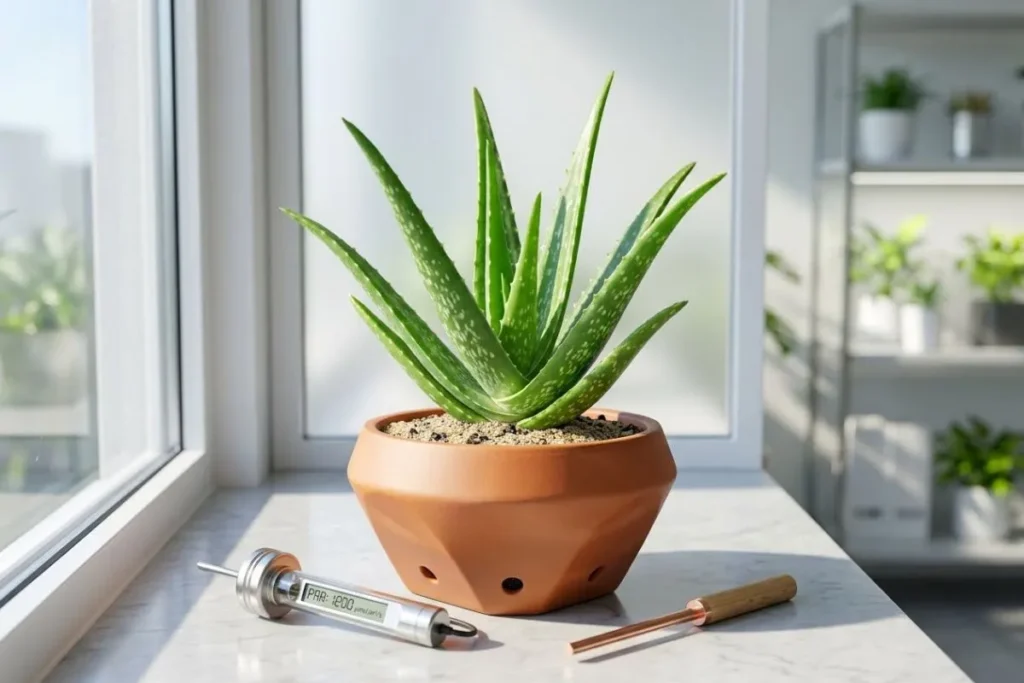
Understanding how much sunlight an aloe vera plant needs will help you choose the right spot and encourage healthy growth without causing sunburn.
What Is the Best Light for an Aloe Vera Plant?
Aloe vera grows best in bright light, with several hours of good natural light each day. Bright, indirect sunlight is often a great choice for indoor aloe plants because it provides enough light without exposing the leaves to harsh rays for too long.
If your plant grows outdoors, it can usually handle some direct sunlight, especially when it has gradually adjusted to the conditions. However, intense afternoon sun may scorch the leaves in hot climates. If you notice reddish-brown patches or dry, crispy areas, consider moving your plant to a spot with gentler light.
Where Should You Place an Aloe Plant Indoors?
A bright windowsill is often one of the best places for growing aloe vera indoors. An east-facing window can provide gentle morning sunlight, while a bright south- or west-facing window may offer stronger light.
If the sun becomes too intense, move the pot slightly away from the glass or use a light curtain to soften the rays.
Rotate your aloe plant occasionally so different sides receive light. This can help prevent uneven growth and keep the plant from leaning heavily toward the window. Good placement is an important part of aloe vera plant care, particularly if you want your plant to maintain a balanced shape.
How Can You Tell If Your Aloe Gets Too Much or Too Little Light?
Your aloe plant’s leaves can tell you a lot about its lighting conditions. When the plant does not receive enough sunlight, its leaves may become thinner, stretch outward, or lean toward the nearest window. Growth may also slow down, and the plant may lose its compact shape.
Too much intense sunlight can cause pale, reddish, or brown patches on the leaves. These marks may look dry or scorched, especially after a sudden move from a shaded room to direct sunlight.
If your aloe develops yellow leaves or brown tips, check its watering routine and root health, too, because lighting is not the only possible cause.
Can an Aloe Plant Survive in Low Light?
Aloe vera can tolerate lower light for a short time, but it usually will not thrive in a dark corner. Without enough natural light, the plant may grow slowly, become stretched, or lose its firm, compact appearance.
If your home does not receive much sunlight, place your aloe near the brightest available window. You can also consider a suitable grow light if natural light is limited. Introduce stronger light gradually rather than moving the plant suddenly into intense sunshine. This simple adjustment can help maintain healthy aloe leaves and encourage more balanced growth.
How Often Should You Water an Aloe Vera Plant?
A common mistake is believing that aloe vera needs frequent watering just because its leaves are growing or look slightly wrinkled. Aloe stores water in its leaves, so watering too often can cause more harm than good.
The best approach is to check the soil and understand your plant’s needs instead of following a strict daily or weekly schedule.

How Often Should You Water an Aloe Vera Plant?
There is no single watering schedule that works for every aloe plant. The right frequency depends on the pot size, soil type, temperature, sunlight, and growing season. In warm, bright conditions, the soil may dry faster. During cooler months, it usually stays moist for longer.
Before watering, check the soil with your finger. If the top few inches feel dry, check deeper into the pot to make sure the root area has also dried out. For many indoor aloe plants, this may mean watering every couple of weeks, but some plants need water sooner or later depending on their environment. Learning how often to water an aloe vera plant starts with observing the soil rather than relying only on the calendar.
What Is the Right Way to Water an Aloe Plant?
When the soil has dried sufficiently, water the plant thoroughly until excess water flows through the drainage holes. This allows moisture to reach the roots instead of wetting only the soil surface. Afterward, empty the saucer so the pot does not sit in standing water.
Use a pot with drainage holes and a fast-draining succulent mix to help prevent water from collecting around the roots. Avoid pouring small amounts of water into the pot repeatedly while the soil is still damp.
A proper watering routine gives the roots access to moisture when needed while allowing them to receive enough air between watering sessions.
How Can You Recognize Overwatering and Underwatering?
Overwatering is one of the most common aloe vera care mistakes. If the leaves become soft, mushy, or unusually yellow, the soil stays wet for a long time, or the plant develops an unpleasant smell near the base, the roots may be suffering from excess moisture.
In severe cases, root rot can develop and damage the plant’s ability to absorb water.
Underwatered aloe plants may have thinner, wrinkled, or less firm leaves. The leaves can begin to curl inward as the plant uses its stored moisture. However, wrinkles alone do not always mean the plant needs water, because damaged roots can also prevent it from absorbing moisture properly.
Check the soil before watering again. If it is completely dry, give the plant a thorough drink and let the excess drain away. If the soil is wet and the leaves are soft, wait before adding more water and inspect the roots if the plant continues to decline.
How Should You Adjust Aloe Watering in Summer and Winter?
Aloe plants often need more frequent watering during warm, bright weather because moisture evaporates faster and the plant may be actively growing. Still, always check the soil before watering. Hot weather does not mean the roots should remain constantly wet.
In winter, aloe growth often slows, especially when the plant receives less light and temperatures drop. As a result, the soil may take longer to dry, so you will usually need to water less often. Keep the plant away from frost, cold drafts, and damp conditions.

Adjusting your aloe vera watering guide to the season helps prevent both dehydration and root problems. Instead of following the same routine throughout the year, pay attention to soil ryness, light levels, and the plant’s overall condition.
What Type of Soil Helps Aloe Vera Grow Best?
Many people believe aloe vera can grow in any type of soil because it is a hardy succulent. However, ordinary garden soil or dense potting mix can hold too much moisture and damage the roots. Choosing the best soil for an aloe vera plant helps water drain properly, keeps the roots healthy, and supports steady growth.
Choose a Fast-Draining Soil Mix
Aloe vera grows best in loose, well-draining soil that allows excess water to escape quickly. A commercial cactus and succulent potting mix is a convenient option because it is designed to provide better drainage than many standard houseplant mixes.
If you prefer to make your own aloe vera potting mix, combine a suitable potting medium with mineral materials such as perlite, pumice, or coarse horticultural sand.
These materials help create air spaces in the soil and reduce the risk of waterlogged roots. Avoid fine sand or heavy garden soil, as they may compact the mixture instead of improving drainage.
How to Improve Soil Drainage for Aloe Vera
Good drainage is essential for successful aloe plant care. If water remains in the soil for several days, the mixture may be too dense for your plant. Adding perlite or pumice can improve airflow and help excess moisture move away from the roots.
Your choice of pot also matters. Use a container with drainage holes so extra water can escape freely after watering. Never rely on a layer of stones at the bottom of a pot to fix poorly draining soil. Instead, choose the right potting mix throughout the container and make sure the drainage holes remain clear.
How the Right Soil Protects Aloe Roots
Aloe roots need both moisture and oxygen to function properly. When the soil stays wet for too long, the roots may become damaged and begin to rot. Root rot can cause yellowing leaves, soft stems, and a plant that looks unhealthy even when you water it regularly.
To protect aloe vera root health, allow the soil to dry sufficiently between waterings and avoid using containers without drainage holes. If you suspect root rot, remove the plant carefully from its pot and inspect the roots.
Healthy roots are generally firm, while rotten roots may appear dark, soft, or mushy. Trim damaged roots with clean tools, allow any cuts to dry, and repot the plant in fresh, dry, well-draining succulent mix. Wait until the plant has settled before returning to a cautious watering routine.
Choosing the right soil from the beginning makes caring for an aloe vera plant much easier. A loose potting mix, suitable container, and careful watering routine work together to keep the roots healthy and the leaves firm.
Frequently Asked Questions About How to Care for an Aloe
How Do You Care for an Aloe Vera Plant Indoors?
Place your aloe vera plant near a bright window where it receives plenty of natural light. Use well-draining succulent soil and a pot with drainage holes. Water only when the soil has dried sufficiently, and avoid leaving excess water in the saucer. These simple steps help keep an indoor aloe healthy.
How Often Should You Water an Aloe Vera Plant?
Water your aloe when the soil has dried out, including around the root area. Depending on sunlight, temperature, pot size, and season, this may be every couple of weeks or less frequently. Always check the soil before watering instead of following a fixed schedule.
Can Aloe Vera Grow in Direct Sunlight?
Yes, aloe vera can grow in direct sunlight, but it needs time to adjust if it has been growing indoors or in shade. Start with gentle sunlight and gradually increase exposure. Very strong afternoon sun can scorch the leaves, especially during hot weather.
What Is the Best Soil for an Aloe Vera Plant?
A fast-draining cactus or succulent potting mix is usually the best choice. You can improve drainage by adding materials such as perlite or pumice. Avoid heavy soil that holds too much water, and always use a pot with drainage holes.
How Do You Care for an Aloe Vera Plant in Winter?
Keep your aloe in a bright, warm location away from frost and cold drafts. Reduce watering when growth slows and the soil takes longer to dry. Avoid placing the plant in cold, damp conditions because these can increase the risk of root rot.
Why Are My Aloe Vera Leaves Turning Brown?
Brown aloe leaves can result from intense sunlight, underwatering, physical damage, or other growing problems. Check the plant’s light exposure and soil moisture before making changes. If the leaves are soft and the soil stays wet, inspect the roots for possible rot.
How Do You Fix an Overwatered Aloe Vera Plant?
Stop watering and check whether the soil is staying wet. If the plant has soft leaves or a damaged base, remove it from the pot and inspect the roots. Trim rotten roots with clean tools and repot the plant in fresh, dry, well-draining soil. Resume watering cautiously once the plant has recovered from repotting.
How Can You Keep an Aloe Vera Plant Healthy and Growing?
Give your aloe bright light, suitable soil, and careful watering. Choose a pot with drainage holes, protect the plant from freezing temperatures, and check the leaves regularly for pests or damage. Avoid excessive fertilizer and repot only when necessary.
How Do You Care for a Small Aloe Vera Plant at Home?
Place a small aloe in a suitably sized pot with drainage holes and succulent soil. Provide bright, indirect light and allow the soil to dry between waterings. Small pots may dry faster than large ones, so check the soil regularly without watering too frequently.
How Often Should You Repot an Aloe Vera Plant?
Aloe vera usually does not need frequent repotting. Consider repotting when the roots become crowded, the plant becomes unstable, or the soil no longer drains properly. Choose a pot only slightly larger than the root system and use fresh succulent mix to help the plant settle comfortably.
Conclusion:
Learning how to care for an aloe vera plant does not have to be difficult, even if you are a beginner. The key is to understand what your plant needs and avoid giving it more water, sunlight, or fertilizer than necessary.
Aloe vera is a low-maintenance succulent, but providing the right growing conditions can make a big difference in its overall health and appearance.
Bright, indirect light or a suitable amount of gentle sunlight, fast-draining soil, a pot with drainage holes, and careful watering can help your aloe vera grow strong and maintain thick, healthy leaves.
It is also important to avoid leaving the roots in wet soil for long periods, as excess moisture can lead to root rot. During the growing season, occasional feeding with a suitable succulent fertilizer may support healthy growth, but too much fertilizer is unnecessary.
Remember that every aloe vera plant grows in slightly different conditions. Factors such as temperature, humidity, pot size, and the amount of light your plant receives can affect how quickly it grows.
Instead of following a rigid routine, pay attention to changes in the leaves and check the soil before watering. If the leaves become soft, yellow, or droopy, your plant may need a change in its care routine.
With a little patience and consistent care, you can keep your aloe vera plant healthy and attractive throughout the year. Whether you grow it indoors on a sunny windowsill or outdoors in a suitable climate, the right balance of light, water, and soil will help your plant thrive for years to come.

Plant Nest Blog’s author is passionate about plants, gardening, and sustainable living. Through research and practical experience, they share helpful plant care tips, gardening guides, and easy solutions to help readers grow healthier plants and create greener spaces.