
A lot of people think that you need special gardening skills to grow aloe vera, but that’s not true. Learning how to start an aloe plant is simple when you choose a healthy plant and give it the right growing conditions. Aloe vera is a low-maintenance succulent that can grow indoors or outdoors with suitable light, well-draining soil, and careful watering.
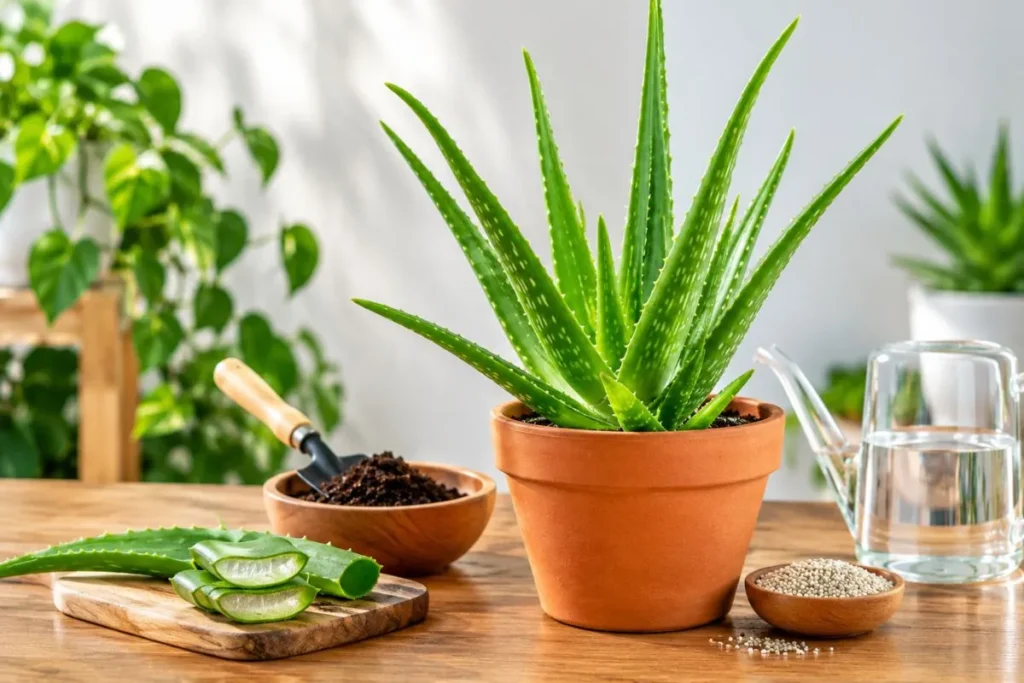
If you want to grow aloe vera at home, start with the basics rather than buying lots of gardening supplies. A suitable pot, the right soil, and a little patience can help your plant establish healthy roots. Whether you’re a beginner or already enjoy gardening, this guide will show you how to start an aloe vera plant and give it a healthy beginning.
Can You Start an Aloe Plant at Home?
Yes, you can start an aloe plant at home without being an experienced gardener. Aloe vera is a hardy succulent that stores water in its thick leaves, making it easier to care for than many other houseplants.
The key is to provide suitable soil, enough light, and a pot that drains well. Before you begin, it helps to understand what you need, why aloe vera is beginner-friendly, and when to plant it for the best results.
Why Aloe Vera Is Easy to Grow
Aloe vera is a popular choice for beginners because it doesn’t need constant attention. Its thick, fleshy leaves store water, so you don’t have to water it every day. In fact, allowing the soil to dry between waterings is one of the most important parts of proper aloe vera plant care.
This succulent can grow indoors near a bright window or outdoors in a warm climate with suitable sunlight. It also produces small offshoots, called aloe vera pups, that you can separate and grow into new plants. With well-draining soil and the right amount of light, growing aloe vera at home can be a simple and rewarding gardening project.
Best Time to Start an Aloe Vera Plant
The best time to start an aloe vera plant is generally during spring or early summer, when warmer temperatures and active growth can help it establish itself. During this period, a healthy pup may adjust to its new pot more easily than during colder months when growth slows down.
However, you can start an aloe plant at other times of the year if you provide suitable conditions. For indoor aloe vera, a warm room with enough natural light can work well throughout the year. If you’re planting outdoors, consider your local climate and avoid periods of frost, extreme cold, or prolonged heavy rain.
One important tip: Don’t rush the process by watering too often or placing a newly planted aloe in harsh sunlight straight away. Give it time to adjust, and focus on healthy roots rather than fast growth.
Choose the Best Method to Start an Aloe Plant
You don’t need to grow aloe vera from seeds to get a new plant. The easiest method for most beginners is to start with a healthy aloe pup or offshoot from a mature plant. You can also grow aloe vera from seeds, but this takes more time and patience.
The right method depends on what plant material you have and whether it already has healthy roots.
How to Start an Aloe Vera Plant From a Pup
Aloe vera pups are small plants that grow around the base of a mature aloe. They can eventually develop their own roots and grow into independent plants. If you’re wondering how to start an aloe vera plant from a pup, choose an offshoot with firm green leaves and, ideally, its own roots.
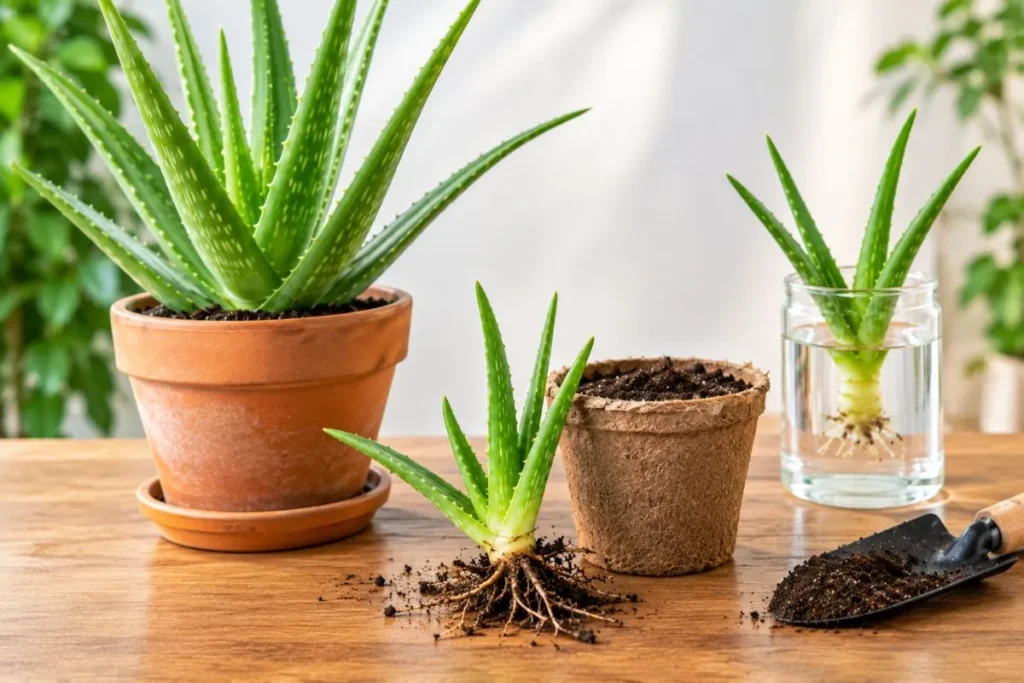
Gently remove some soil around the pup to see where it connects to the parent plant. Separate it carefully using clean gardening tools, keeping as many roots intact as possible. Avoid pulling hard because this can damage the young plant.
If separating the pup creates a fresh wound, let the damaged area dry and form a callus before planting. Once it’s ready, place it in a small pot with well-draining succulent soil. Keep the base of the leaves above the soil line, and avoid watering too frequently while the plant adjusts.
How to Start an Aloe Plant From an Existing Plant
If you already have a mature aloe vera plant, you may be able to grow another one without buying a new plant. Check around the base for small offshoots that can be separated and planted individually. Starting an aloe plant from an existing plant is a practical way to expand your indoor garden.
If necessary, carefully remove the parent plant from its pot and brush away enough soil to see the pup’s connection. Use a clean, sharp knife to separate a firmly attached offshoot rather than pulling it away. Try to preserve its roots and avoid unnecessary damage to the parent plant.
After separation, inspect the pup for damaged roots or soft, discolored tissue. Remove rotten material with a clean tool, if needed, and allow fresh wounds to dry before planting. Choose a suitable pot and well-draining growing medium so the new plant has a better chance of establishing itself.
How to Grow Aloe Vera From a Pup
Learning how to grow aloe vera from a pup is straightforward when you handle the young plant carefully. A pup with established roots is generally easier to grow because it can begin absorbing water from its new growing medium.
Start by choosing a healthy pup with firm green leaves and a solid base. Avoid plants with mushy tissue or obvious signs of rot. Carefully separate the pup from the parent plant without tearing its base or roots. Keep healthy roots intact, and use a clean tool to remove any clearly rotten portions.
If separation leaves a fresh wound, allow the damaged area to dry and form a callus before planting. Prepare a fast-draining cactus or succulent potting mix, then position the pup in the soil with its roots covered and the base of its leaves above the surface.
Place the newly planted aloe vera in bright, indirect light while it adjusts to its new pot. Gradually introduce stronger sunlight if needed, and avoid overwatering while the roots establish themselves.
How to Propagate an Aloe Vera Plant Successfully
There are several ways to propagate aloe vera, but some methods are more reliable than others. For most home gardeners, growing aloe vera from pups is the easiest practical option. These offshoots are already young plants, and those with established roots often adapt more easily to a new pot.
Another option is growing aloe vera from seeds. This method can be rewarding if you enjoy raising plants from the beginning, but germination and early growth require patience. Seeds need suitable warmth, moisture, light, and a well-draining growing medium. It usually takes longer to grow a mature plant from seed than to start with a healthy pup.
You may also hear about propagating aloe vera from leaves. However, aloe vera leaf cuttings generally do not produce new plants reliably. Detached leaves may dry out or rot instead of developing into a complete plant. For better results, choose a healthy pup or try growing aloe vera from seeds.
Gather the Right Soil, Pot, and Gardening Supplies
Many beginners believe that any pot and ordinary garden soil will work when learning how to start an aloe plant, but that isn’t true. Aloe vera needs a growing medium that drains quickly and a container that allows extra water to escape.
The right setup helps protect the roots from excess moisture and gives your plant a better chance to grow successfully.
You don’t need expensive gardening equipment to get started. A suitable pot, a quality succulent mix, and a few basic supplies are enough to prepare a comfortable growing environment for your aloe vera plant.
What Soil Is Best for Starting an Aloe Vera Plant?
The best soil for starting an aloe vera plant is a well-draining cactus or succulent potting mix. Aloe vera stores water in its thick leaves, so its roots don’t need soil that stays wet for long periods. Heavy, moisture-retaining soil can leave the roots sitting in water and increase the risk of root rot.
Look for a commercial cactus and succulent mix at a garden center. These mixes usually drain faster than standard indoor potting soil. Check the label before buying to make sure the product is designed for succulents and provides good drainage.

If you prefer to prepare your own mix, combine regular potting soil with materials that improve drainage, such as perlite or pumice. A simple starting point is two parts potting soil and one part perlite or pumice. Adjust the mixture if it stays wet for too long.
Avoid using dense garden soil straight from your yard. It can compact inside a container, restrict airflow around the roots, and hold excess moisture. Choosing the right soil is an important step when learning how to plant an aloe vera plant in a pot.
How to Prepare Aloe Vera Soil
Preparing aloe vera soil at home is simple, even if you have limited gardening experience. The goal is to create a loose growing medium that allows water to pass through easily while providing enough support for the plant.
Start with a clean container or bucket and add your chosen potting mix. If you’re using ordinary potting soil as part of the mixture, blend in perlite or pumice to improve drainage. Mix the ingredients evenly so that the growing medium doesn’t contain dense, waterlogged areas.
Check the texture before planting. The mixture should feel loose rather than sticky or compacted. Avoid adding too much compost or other moisture-retaining materials because aloe vera generally prefers a lean, well-draining medium.
You can also purchase a ready-made succulent soil mix if you want to save time. This is often the easiest option for beginners who are figuring out how to start an aloe plant at home.
One important point: don’t make the soil soggy before planting. If the mixture is already wet, allow excess moisture to drain and the soil to dry appropriately. Aloe vera roots need air as well as moisture, so the growing medium should never remain saturated for long periods.
How to Choose the Best Pot for Aloe Vera
Choosing the right pot for aloe vera is just as important as selecting the soil. A beautiful container won’t help your plant if it traps water around the roots. Always choose a pot with at least one drainage hole at the bottom.
Terracotta pots are a popular choice because the material is porous and allows some moisture to escape through the sides. This can help the soil dry more quickly between waterings. Plastic and glazed ceramic pots can also work well, but you may need to pay closer attention to how quickly the soil dries.
Size matters, too. Choose a pot that comfortably fits the plant’s roots without leaving a large amount of unused soil around them. An oversized container holds more moisture than a small aloe plant may need, which can increase the risk of overwatering.
For a small aloe pup, a modest pot is usually enough. As the plant grows and develops a larger root system, you can move it into a bigger container. This gradual approach helps you avoid unnecessary repotting and makes aloe vera plant care easier.
If you’re deciding between different containers, focus on drainage, size, and stability rather than appearance alone. The best pot is one that supports healthy roots and allows excess water to escape freely.
How to Prepare the Pot Before Planting
Before placing your aloe vera in its new pot, take a few minutes to prepare the container properly. This simple step helps create a cleaner growing environment and reduces common planting problems.
First, check that the drainage hole is open and large enough for water to escape. If you’re reusing an old pot, wash it to remove leftover soil and plant debris. Cleaning the container is especially important if the previous plant had root rot or other signs of disease.
Next, add a small amount of your prepared cactus or succulent mix to the bottom of the pot. Use enough to support the roots at the correct height, but don’t pack the soil tightly. Loose soil allows better airflow and helps water drain more effectively.
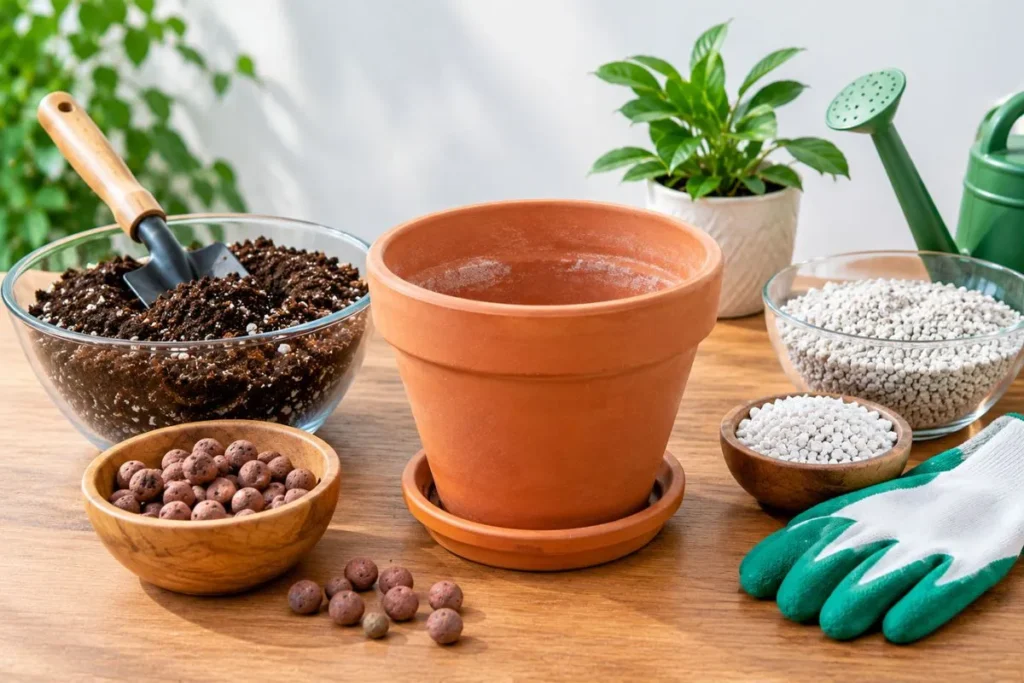
Position the aloe plant so its roots sit naturally in the container. The roots should be covered with soil, but the base of the leaves should remain above the soil surface. Planting too deeply can trap moisture around the leaves and cause the base to soften or rot.
Fill the remaining space with soil and gently settle it around the roots. Avoid pressing down hard because compacted soil can reduce drainage and limit airflow. Leave a little space below the rim so water doesn’t spill over during watering.
How to Plant an Aloe Vera Plant in a Pot Step by Step
Many people think planting an aloe vera plant is as simple as pushing it into soil and watering it immediately. However, the way you position the plant, handle its roots, and manage moisture can make a real difference. If you want to learn how to plant an aloe vera plant in a pot, follow these practical steps to help your plant settle into its new home.
Inspect the Aloe Plant
Before planting, take a close look at your aloe vera plant. Healthy leaves should feel firm and look green, although some varieties naturally have different shades or markings. Check the base for soft spots, dark patches, or unpleasant smells that could indicate rot.
If you’re planting an aloe pup, examine its roots carefully. Healthy roots are generally firm, while rotten roots may appear dark, mushy, or damaged. Remove only clearly rotten portions using clean scissors or a knife.
Handle the plant gently during this process. Aloe leaves can break if you bend or pull them too hard, and damaged tissue may struggle to recover. A careful inspection helps you identify problems before they become harder to manage.
Prepare the Aloe Pup or Plant
Once you’ve inspected the plant, prepare it for its new container. If you’re using a pup that has already been separated from the parent plant, make sure any fresh cuts or damaged areas have dried and formed a callus before planting.
This is especially important for aloe pups with damaged bases. Planting fresh wounds in damp soil can increase the risk of rot. Allow the wound to dry in a clean, shaded, well-ventilated place. The time needed depends on the size of the wound and the surrounding conditions.
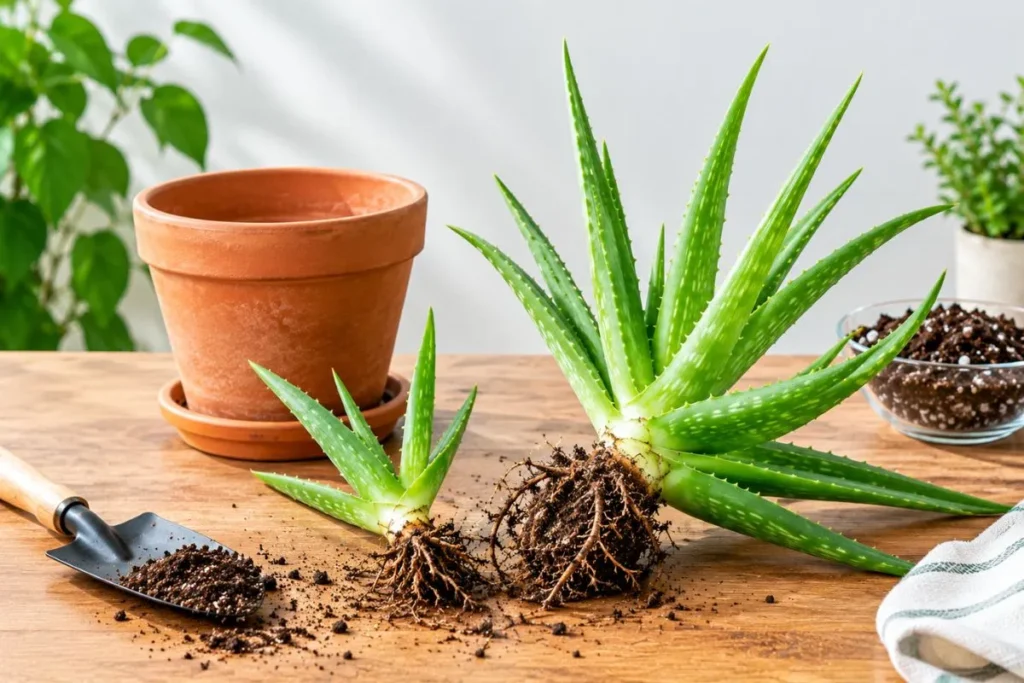
If you’re planting an established aloe vera plant, gently remove any loose, old soil from the roots without pulling them apart unnecessarily. Avoid trimming healthy roots just to make them fit the pot.
At this stage, prepare your pot and well-draining succulent soil. Having everything ready makes planting easier and reduces the time your aloe spends out of its growing medium.
Position the Plant in the Pot
Place a small amount of succulent potting mix in the bottom of the pot. Then position the aloe vera in the center, spreading the roots naturally over the soil rather than folding or squeezing them into a tight space.
The plant should sit at a comfortable height. Keep the roots beneath the soil, but leave the base of the leaves above the surface. Burying the leaves or covering the crown with soil can trap moisture and encourage rot.
Check the plant from different angles to make sure it stands upright. If your aloe is top-heavy, gently adjust the soil around its roots to provide support. Avoid pushing the plant too deeply into the pot to keep it from leaning.
Correct positioning gives the roots room to settle and helps prevent problems caused by excess moisture around the plant’s base.
Add Soil Around the Roots
After positioning your aloe vera, gradually add the prepared soil around its roots. Fill the gaps until the roots are covered and the plant feels stable. Use your fingers to guide the mix into empty spaces, but don’t press it down firmly.
Loose, well-draining soil allows air to reach the roots and helps excess water escape. If you compact the mixture too much, it may retain moisture and make it harder for the roots to establish themselves.
Leave a small gap between the soil surface and the pot’s rim. This space makes watering easier and helps prevent water from spilling over the sides.
Once you’ve finished, check the base of the plant again. The roots should be covered, while the leaves and central growing point should remain above the soil. This simple detail is important when learning how to start an aloe plant successfully.
Frequently Asked Questions About How to Start an Aloe Plant
How to Start an Aloe Plant at Home?
To start an aloe plant at home, choose a healthy aloe pup, a pot with drainage holes, and a well-draining cactus or succulent soil mix. Place the roots in the soil while keeping the base of the leaves above the surface. Give the plant bright light and avoid watering too frequently while it adjusts to its new pot.
How to Start an Aloe Vera Plant From a Pup?
Choose a healthy pup growing near the base of a mature aloe vera plant. Carefully separate it using a clean tool, keeping as many roots intact as possible. Allow any damaged areas to dry before planting the pup in suitable soil. A rooted pup is generally the easiest option for beginners.
How to Plant Aloe Vera Successfully?
To plant aloe vera successfully, use a pot with drainage holes and a fast-draining succulent mix. Position the plant so its roots are covered but its leaves remain above the soil. Keep it in a bright location and let the soil dry between waterings to reduce the risk of root rot.
How to Grow Aloe Vera From a Pup Without Roots?
You can sometimes grow an aloe pup without roots, provided its base is healthy and firm. Let any fresh wounds dry and callus before placing the pup in dry, well-draining soil. Keep it in bright, indirect light and avoid keeping the soil wet. Root development may take time, and not every pup will survive.
Can You Grow an Aloe Vera Plant From a Leaf?
Growing aloe vera from a leaf cutting is generally unreliable. Unlike some other succulents, a detached aloe leaf often dries out or rots before producing roots and a new plant. Starting with a healthy pup is usually a more dependable method for growing aloe vera at home.
How Often Should You Water a Newly Planted Aloe Vera?
Water a newly planted aloe vera only when the soil has dried out sufficiently. If the roots were damaged during planting, allow the wounds to callus before watering. The frequency depends on sunlight, temperature, soil type, and pot size. Always make sure excess water drains away instead of collecting around the roots.
How Much Sunlight Does a Newly Planted Aloe Vera Need?
A newly planted aloe vera needs bright, indirect light while it adjusts to its new environment. Once it becomes established, you can gradually introduce it to stronger sunlight. Avoid moving an indoor plant directly into intense outdoor sun because sudden exposure can cause leaf scorch.
How Long Does It Take for an Aloe Plant to Grow?
Aloe vera growth depends on the plant’s age, light, temperature, and growing conditions. A healthy pup may begin establishing roots within several weeks, although the exact time varies. Visible leaf growth can take longer. Provide suitable light, well-draining soil, and careful watering rather than expecting immediate results.
What Is the Best Soil for Starting an Aloe Vera Plant?
The best soil for starting an aloe vera plant is a well-draining cactus or succulent potting mix. You can also improve regular potting soil by mixing in perlite or pumice. Avoid heavy garden soil that holds too much water because consistently wet soil can damage aloe roots.
Can Aloe Vera Grow Indoors All Year?
Yes, aloe vera can grow indoors throughout the year if it receives enough light, suitable temperatures, and proper care. Place it near a bright window and use a pot with drainage holes. Water only when the soil has dried sufficiently, and protect the plant from cold drafts and frost.
Conclusion:
Learning how to start an aloe plant doesn’t require expensive tools or advanced gardening skills. With a healthy aloe pup, well-draining soil, a suitable pot, and the right amount of light, you can grow aloe vera successfully at home.
The key is to give your plant the right conditions from the beginning and avoid common mistakes like overwatering or using heavy soil.
Be patient while your aloe vera establishes its roots and begins producing new growth. Check the soil before watering, provide plenty of bright light, and make sure excess water drains away easily.
Whether you’re growing aloe vera indoors or outdoors, consistent care will help your plant stay healthy. Start with these simple steps, and enjoy watching your aloe vera grow over time.

Plant Nest Blog’s author is passionate about plants, gardening, and sustainable living. Through research and practical experience, they share helpful plant care tips, gardening guides, and easy solutions to help readers grow healthier plants and create greener spaces.