
Many people think bamboo is an indestructible plant that can survive without proper care. Others believe that once bamboo starts turning yellow, there’s no way to save it.
The truth is, neither of these myths is correct. Learning how to keep bamboo alive is actually quite simple when you understand what the plant needs. With the right care, bamboo can stay healthy, green, and beautiful for many years.
Bamboo is one of the most popular plants for both homes and gardens. Its elegant appearance, fast growth, and low-maintenance nature make it a favorite among beginners and experienced gardeners alike.
Whether you’re growing a lucky bamboo in a vase or true bamboo in your backyard, providing the right environment is the key to long-lasting growth.
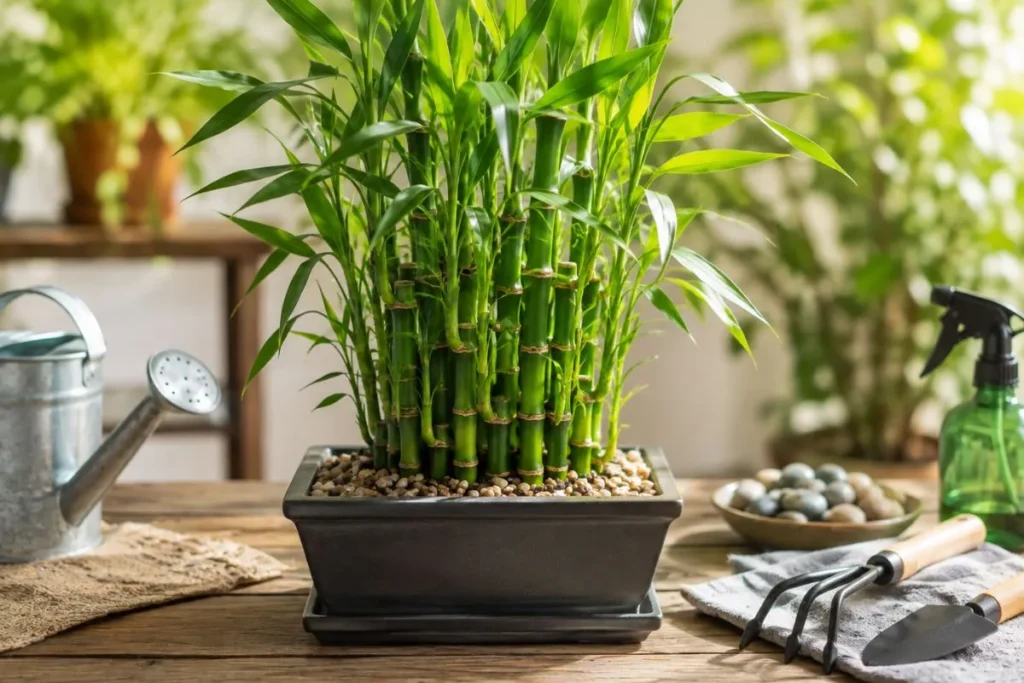
The good news is that you don’t need to be a gardening expert to succeed. A few simple habits can make a huge difference in your bamboo plant care routine.
Paying attention to light, water, soil, and regular maintenance will help your plant stay vibrant throughout the year.
In this complete guide, you’ll discover how to care for bamboo from the basics to advanced maintenance tips. We’ll cover everything from choosing the best growing conditions to watering correctly, fertilizing, pruning, solving common problems, and preventing pests.
Whether you’re searching for keeping bamboo alive, lucky bamboo care, or want to learn how to grow bamboo successfully indoors or outdoors, this guide will provide practical advice that’s easy to follow.
Understanding Bamboo Plants
Before you can master how to keep bamboo alive, it’s important to understand what type of bamboo you’re growing. Many people assume all bamboo plants are the same, but that’s not the case. Different types have different growing habits and care requirements.
Knowing whether you have true bamboo or lucky bamboo will help you provide the proper care from the very beginning.
What Is a Bamboo Plant?
Bamboo is a fast-growing evergreen plant that belongs to the grass family. It is known for its tall stems, lush green leaves, and impressive growth rate. Around the world, bamboo is grown for landscaping, privacy screens, decoration, and even construction materials.
However, many indoor plants sold as bamboo are not actually true bamboo.
Lucky bamboo is scientifically known as Dracaena sanderiana. Although it looks similar to bamboo, it belongs to the Dracaena family and has different care requirements. Lucky bamboo is commonly grown in water or decorative containers and is popular because it’s believed to bring good luck and positive energy.
True bamboo, on the other hand, grows naturally in soil and can reach impressive heights depending on the variety. It’s commonly used in outdoor gardens and landscapes because of its rapid growth and attractive appearance.
Understanding this difference is essential for successful bamboo plant care, especially if you’re looking for how to keep bamboo alive indoors.
Types of Bamboo
There are several popular bamboo varieties, and each has its own unique characteristics.
Lucky Bamboo (Dracaena sanderiana)
Lucky bamboo is one of the most common indoor plants. It grows well in water or soil and prefers bright, indirect light. Its twisted stems and compact size make it a favorite for homes and offices.
Because it requires minimal maintenance, lucky bamboo care is perfect for beginners who want an attractive houseplant without spending hours on plant care.
Clumping Bamboo
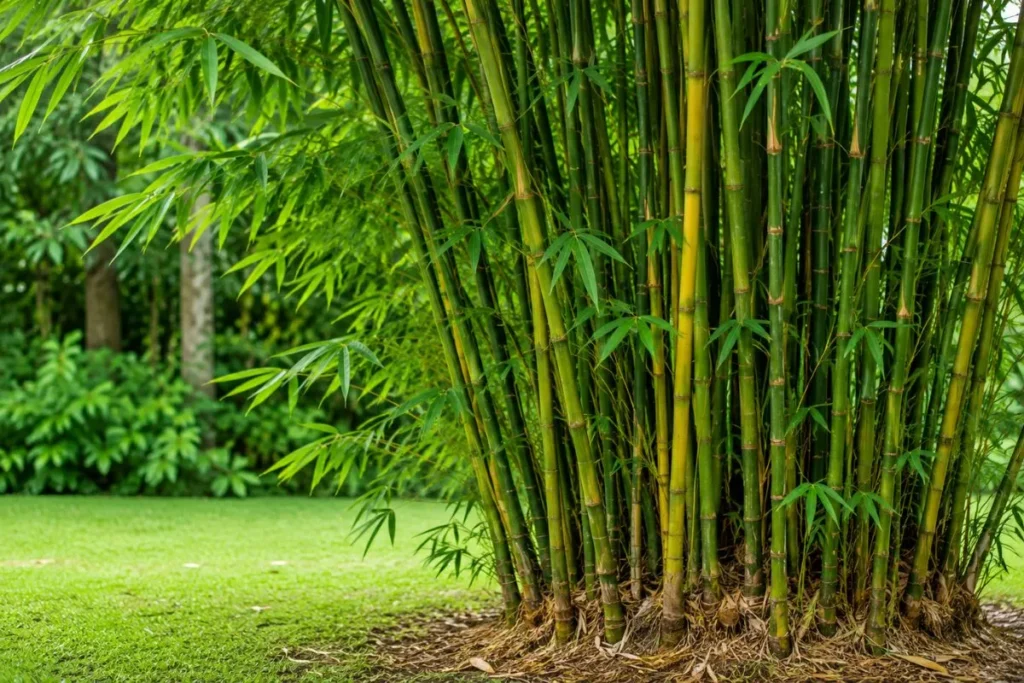
Clumping bamboo grows in tight groups and spreads slowly over time. It is well-behaved compared to other bamboo species and is widely used for hedges, privacy screens, and ornamental gardens.
This variety is easier to manage because it doesn’t spread aggressively.
Running Bamboo
Running bamboo grows much faster than clumping varieties. It spreads through underground rhizomes and can quickly cover large areas if left unchecked.
While it’s excellent for creating natural privacy screens, it often requires root barriers and regular maintenance to control its growth.
Dwarf Bamboo
Dwarf bamboo is a smaller variety that works well in containers, small gardens, and decorative landscapes. Its compact size makes it ideal for gardeners who have limited space but still want the beauty of bamboo.
Many homeowners choose dwarf bamboo because it’s easier to maintain while still providing an elegant appearance.
Benefits of Growing Bamboo
Bamboo is much more than just a beautiful plant. It offers several practical benefits that make it one of the best choices for both indoor and outdoor gardening.
One of its biggest advantages is its attractive appearance. Its graceful green leaves and upright stems create a calm, natural look that complements almost any home or garden design.
Many people also grow bamboo because it helps improve indoor spaces. Certain varieties, especially lucky bamboo, are often considered air-purifying plants, making them a popular addition to homes and offices.
Another reason bamboo is loved by gardeners is its low-maintenance nature. Once you understand the basics of how to care for bamboo, it becomes a relatively easy plant to manage.
With proper watering, suitable light, and occasional feeding, bamboo can remain healthy with minimal effort.
Bamboo is also extremely versatile. Indoor varieties make excellent decorative houseplants, while outdoor species are perfect for privacy screens, garden borders, and landscape design.
Perhaps the most impressive feature is its rapid growth. Many bamboo species are among the fastest-growing plants in the world, making them an excellent choice for gardeners who want quick results.
For beginners, bamboo is an ideal plant because it adapts well to different environments and rewards consistent care with healthy new growth.
Why Understanding Your Bamboo Type Matters
Every successful bamboo care routine begins with identifying the type of bamboo you own. Lucky bamboo thrives under different conditions than true bamboo, so using the same care methods for both plants can lead to unnecessary problems.

Once you know which variety you’re growing, it becomes much easier to provide the right amount of water, sunlight, humidity, and nutrition. This simple step helps prevent common issues and makes keeping bamboo alive much easier over the long term.
In the next section, you’ll learn the essential growing requirements, including the best light, temperature, humidity, soil, and container choices to help your bamboo thrive all year round.
How to Keep Bamboo Alive: Essential Growing Requirements
Many people believe bamboo can survive in any corner of the house without proper care. While bamboo is known for being a hardy plant, it still needs the right growing conditions to stay green and healthy.
If the plant doesn’t receive enough light, proper soil, suitable humidity, or the correct temperature, it can quickly develop yellow leaves, brown tips, or slow growth. Understanding these basics is the first step in learning how to keep bamboo alive for years.
Whether you’re growing lucky bamboo indoors or true bamboo in a pot, creating the right environment will make your bamboo plant care routine much easier.
Best Light for Bamboo
Light is one of the most important factors for healthy bamboo growth.
Most indoor bamboo plants, especially lucky bamboo, grow best in bright indirect light. Place your plant near a window where it receives plenty of natural light without direct afternoon sun.
Too much direct sunlight can scorch the leaves, causing them to turn yellow or develop brown edges. On the other hand, very low light can slow growth and make the plant look weak or pale.
If you’re growing true bamboo outdoors, choose a location that receives partial sunlight or gentle morning sun with some afternoon shade, especially in hotter climates.
Rotating your indoor bamboo every week helps all sides of the plant receive equal light, encouraging balanced growth.
Providing the right amount of light is one of the easiest ways to keep bamboo alive indoors and maintain healthy green foliage.
Ideal Temperature
Bamboo prefers stable temperatures and doesn’t respond well to sudden changes.
Most indoor bamboo grows best in temperatures between 65°F and 80°F (18°C to 27°C).
Keep your plant away from heaters, fireplaces, air conditioners, and cold drafts near windows or doors. Sudden temperature fluctuations can stress the plant and affect its growth.
Outdoor bamboo varieties are generally more tolerant of changing weather, but young plants should still be protected from severe frost or extreme heat.
Maintaining a comfortable environment helps support healthy leaves, stronger roots, and steady growth throughout the year.
Humidity Requirements
Bamboo naturally grows in humid environments, so it appreciates moderate to high humidity.
Fortunately, most indoor bamboo adapts well to normal household humidity. However, dry indoor air during winter can cause the leaf tips to become brown and crispy.
If the air in your home is very dry, increase humidity by placing a tray of water with small pebbles beneath the pot or grouping your bamboo with other indoor plants.
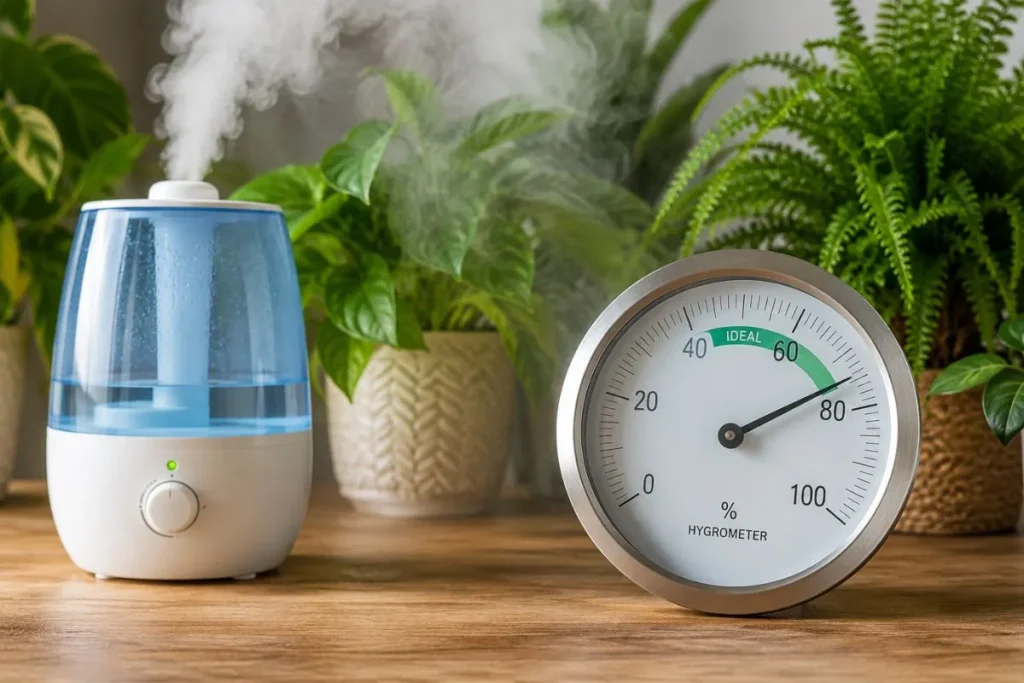
Avoid placing the plant directly beside heating vents, as constant dry air can damage the leaves over time.
Providing the right humidity is an important part of keeping bamboo healthy, especially for indoor plants.
Best Soil for Bamboo
If you’re growing bamboo in soil, choosing the right potting mix is essential.
The best soil for bamboo is fertile, loose, and well-draining. Good drainage allows excess water to escape while still holding enough moisture for healthy root development.
A quality potting mix combined with compost and perlite creates an ideal growing environment. This mixture improves drainage, increases airflow around the roots, and provides nutrients for healthy growth.
Avoid heavy clay soil because it holds too much water and may lead to root problems.
Healthy roots begin with healthy soil, making this one of the most important steps in how to care for bamboo.
Choosing the Right Pot or Container
The right container helps your bamboo grow stronger and reduces the risk of common problems.
If you’re wondering how to keep bamboo alive in soil, always choose a pot with drainage holes. Proper drainage prevents excess water from collecting around the roots, reducing the risk of root rot.
Select a container that’s only slightly larger than the root system. A pot that’s too large can hold unnecessary moisture, while one that’s too small may restrict root growth.
Plastic pots retain moisture longer, making them suitable for dry indoor environments. Terracotta pots allow moisture to evaporate more quickly, making them a good choice if you tend to water your plants frequently.
As your bamboo grows, repot it every few years or whenever the roots become crowded.
Choosing the right container is a simple but essential part of a successful bamboo care routine.
Creating the Perfect Growing Environment
Healthy bamboo doesn’t require complicated care. It simply needs the right combination of bright indirect light, comfortable temperatures, moderate humidity, well-draining soil, and a container with proper drainage.
When these conditions are met, your bamboo develops stronger roots, healthier leaves, and steady new growth. It also becomes more resistant to common problems such as yellow leaves and root rot.
Whether you’re growing lucky bamboo in your living room or true bamboo on your patio, providing a stable environment will help your plant thrive.
Watering Bamboo the Right Way
Many people think watering bamboo every day is the best way to keep it healthy. In reality, too much water is one of the biggest reasons bamboo plants struggle.
Whether you’re growing lucky bamboo in water or true bamboo in soil, the secret to how to keep bamboo alive is giving it the right amount of waterm not the most water.
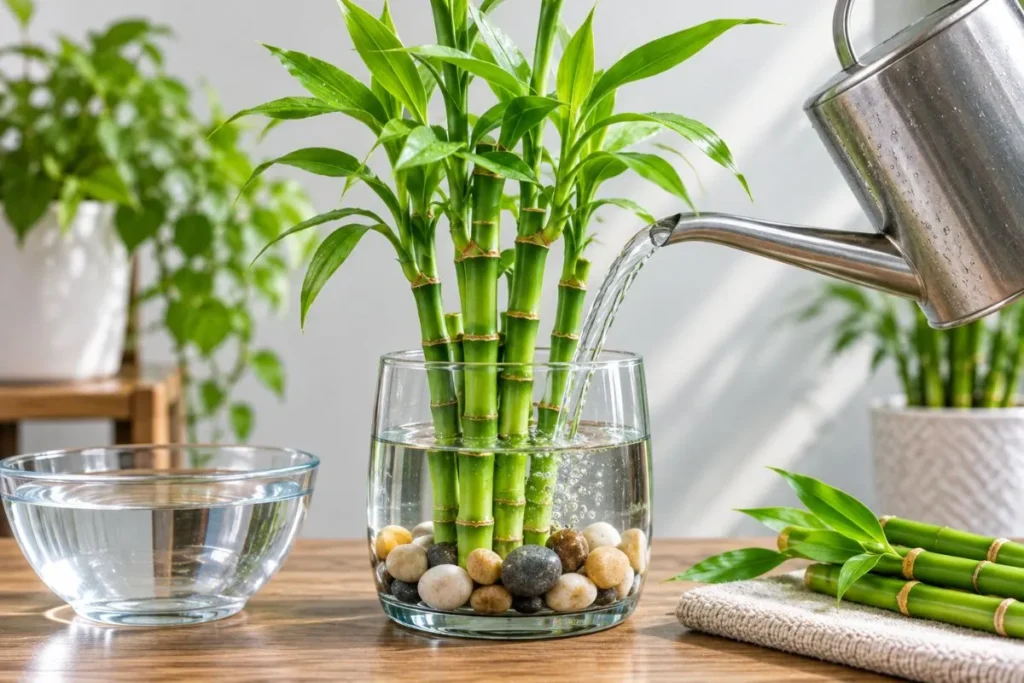
A proper watering routine keeps the roots healthy, encourages strong growth, and prevents common problems like yellow leaves and root rot. If you’re wondering how often should you water bamboo or how to keep bamboo alive in water, this section covers everything you need to know.
How Often Should You Water Bamboo?
One of the most common questions is, how often should you water bamboo?
The answer depends on where your bamboo is growing, the season, and the surrounding environment. Instead of following a strict schedule, check the soil before watering.
For bamboo growing in soil, insert your finger about one to two inches into the soil. If it feels dry, it’s time to water. If it’s still moist, wait another day or two before checking again.
During spring and summer, bamboo usually needs more water because it is actively growing. In fall and winter, growth slows down, so watering should be reduced.
The goal is to keep the soil evenly moist without making it soggy. This simple habit is one of the best ways to improve your bamboo plant care routine.
How to Keep Bamboo Alive in Water
Lucky bamboo grows very well in water when cared for properly.
If you’re learning how to keep bamboo alive in water, always make sure the roots stay submerged while keeping the stems above the waterline. The roots should have constant access to clean water, but the stalks should never sit completely underwater.
Replace the water every one to two weeks to prevent bacteria, algae, and unpleasant odors from developing. Before adding fresh water, rinse the container and gently clean the roots if needed.
Keep the water level consistent so the roots never dry out. Healthy roots are usually firm and light orange or reddish in color.
Clean water and regular maintenance are essential for successful lucky bamboo care.
Signs of Overwatering
Overwatering is one of the most common causes of bamboo problems.
When the roots stay in overly wet soil for long periods, they cannot get enough oxygen. This weakens the plant and may eventually cause root rot.
Some common signs include yellow leaves, soft or mushy stems, drooping foliage despite wet soil, slow growth, and a sour smell coming from the pot.
If you notice these symptoms, reduce watering immediately and allow the soil to dry slightly before watering again. Also check that your pot has proper drainage holes to prevent excess water from collecting around the roots.
Correcting overwatering early can often save a struggling bamboo plant.
Signs of Underwatering
Although bamboo dislikes soggy soil, it also shouldn’t stay completely dry for long periods.
When bamboo doesn’t receive enough water, the leaves may curl, become dry, develop brown edges, or start dropping. The stems may also lose their fresh appearance, and overall growth may slow down.
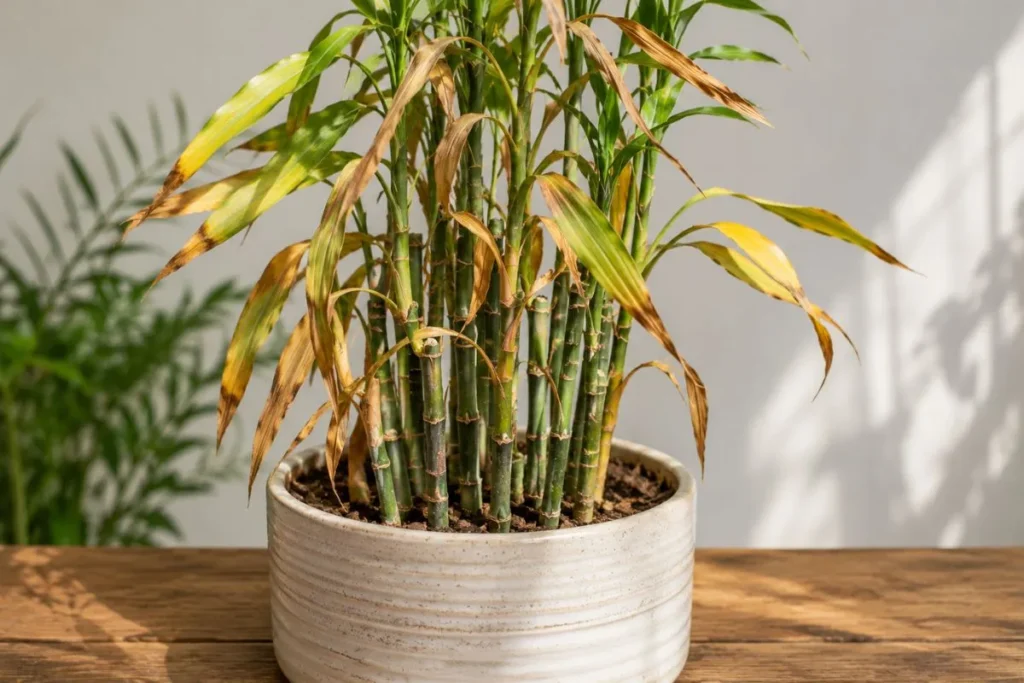
If the soil has dried out, water the plant thoroughly until excess water drains from the bottom of the pot.
After watering, allow the extra water to drain completely instead of letting the pot sit in standing water.
Maintaining consistent moisture helps keep bamboo healthy without stressing the roots.
Best Water to Use for Bamboo
The quality of the water you use is just as important as how often you water.
Lucky bamboo is sensitive to chemicals that are commonly found in tap water, especially chlorine and fluoride. Over time, these chemicals can cause yellow leaves and brown leaf tips.
Whenever possible, use filtered water, distilled water, or collected rainwater. If tap water is your only option, let it sit overnight before using it. This allows some of the chlorine to dissipate.
Always use room-temperature water, as extremely hot or cold water can shock the roots.
Choosing clean water is a simple step that can make a noticeable difference in keeping bamboo alive.
Helpful Watering Tips
Developing a few simple habits makes bamboo care much easier.
Check the soil before every watering instead of following a fixed calendar. Water deeply so moisture reaches the entire root system, then allow excess water to drain away. If you’re growing lucky bamboo in water, replace the water regularly and keep the container clean.
Avoid letting soil remain constantly soaked or completely dry for extended periods. A balanced watering routine supports healthier roots and stronger growth throughout the year.
Fertilizing Bamboo for Healthy Growth
Many people believe that feeding bamboo with lots of fertilizer will make it grow faster. While bamboo does benefit from nutrients, using too much fertilizer can actually damage the plant.
Overfertilizing may burn the roots, weaken the leaves, and slow healthy growth. If you want to learn how to keep bamboo alive, using fertilizer correctly is just as important as watering it properly.
A simple fertilizing routine helps your bamboo develop strong roots, vibrant green leaves, and steady growth throughout the growing season.
Does Bamboo Need Fertilizer?
Yes, bamboo benefits from fertilizer, but it doesn’t need large amounts.
True bamboo growing outdoors uses nutrients from the soil as it grows. Over time, those nutrients become depleted, so occasional feeding helps keep the plant healthy and encourages new shoots.
Indoor bamboo, including lucky bamboo grown in soil, also benefits from light feeding during the active growing season. However, lucky bamboo grown only in water requires very little fertilizer because too much can damage the roots.
If your bamboo is planted in fresh potting soil, you may not need to fertilize for the first few months since the soil already contains nutrients.
Understanding your plant’s needs is an important part of bamboo plant care.
Best Fertilizer for Bamboo
Choosing the right fertilizer helps your bamboo stay green and healthy without encouraging weak growth.
For bamboo grown in soil, a balanced fertilizer with equal amounts of nitrogen, phosphorus, and potassium works well. Formulas such as 10-10-10 or 20-20-20 provide the nutrients needed for healthy roots, stems, and leaves.
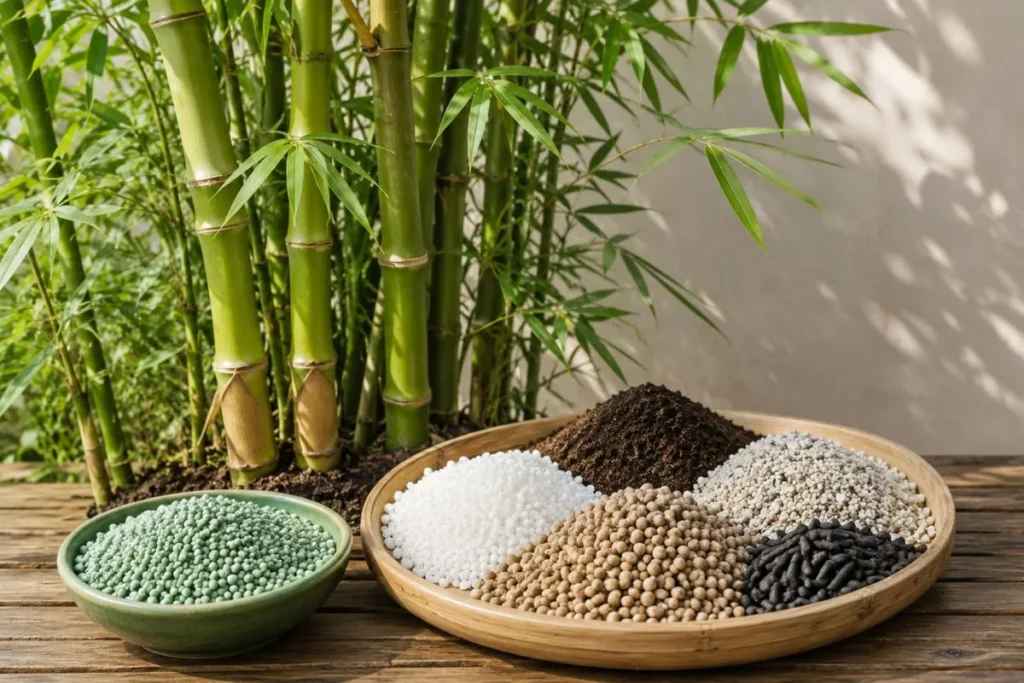
If you’re caring for lucky bamboo grown in water, use a fertilizer specifically made for lucky bamboo or dilute a liquid houseplant fertilizer to about one-quarter of its normal strength. Apply it only occasionally to avoid fertilizer buildup.
Organic fertilizers are another excellent choice. Compost, worm castings, fish emulsion, and seaweed extract provide nutrients gradually while improving soil quality naturally.
Using the best fertilizer for bamboo supports steady growth without overwhelming the plant.
How Often to Fertilize Bamboo
Bamboo doesn’t need frequent feeding.
During spring and summer, when the plant is actively growing, fertilize about once every four to six weeks. This schedule provides enough nutrients to support healthy development without overfeeding.
As temperatures begin to cool in fall, reduce fertilizing because growth naturally slows down.
During winter, most bamboo plants require little or no fertilizer. Feeding during this period is usually unnecessary since the plant is not growing as actively.
Following a seasonal fertilizing schedule is one of the easiest ways to improve your bamboo care routine.
Common Fertilizing Mistakes
Many bamboo care problems happen because of improper fertilizing rather than a lack of nutrients.
One common mistake is applying fertilizer too often. Excess nutrients build up in the soil and can damage the roots.
Another mistake is using concentrated fertilizer without dilution. Always follow the recommended directions on the product label to avoid burning the plant.
Applying fertilizer to completely dry soil is another error. Water the soil lightly before feeding so the nutrients spread evenly and the roots are protected.
Many gardeners also continue fertilizing during winter even though the plant’s growth has slowed. This usually isn’t necessary and may place unnecessary stress on the plant.
Avoiding these simple mistakes helps keep bamboo healthy and growing steadily.
Signs Your Bamboo Needs Fertilizer
Healthy bamboo produces fresh green leaves and consistent new growth.
If you notice pale foliage, slow growth, smaller leaves, or weaker stems during the growing season, your bamboo may benefit from a light feeding.
Before adding fertilizer, make sure the problem isn’t caused by poor watering, incorrect lighting, or unsuitable soil. These issues are far more common than nutrient deficiencies.
Once you’ve ruled out other causes, a balanced fertilizer can help restore healthy growth.
Expert Tips to Keep Bamboo Healthy Longer
Many people think keeping bamboo healthy requires expensive products or advanced gardening skills. The truth is, long-lasting bamboo health comes from following a few simple habits consistently.
Small improvements to your daily and weekly bamboo plant care routine can make a big difference in how your plant looks and grows.
Whether you’re learning how to keep bamboo alive indoors or caring for bamboo outdoors, these expert tips will help your plant stay green, healthy, and attractive for years.
Create a Consistent Care Routine
The best way to keep bamboo alive is to care for it consistently.
Check your bamboo every few days instead of waiting until it develops problems. Look at the leaves, stems, and soil to make sure everything appears healthy.
Water only when needed, keep the plant in the right lighting conditions, and follow a regular fertilizing schedule during the growing season.
A simple routine prevents many common bamboo problems before they start.
Rotate Indoor Bamboo for Even Growth
Indoor bamboo naturally grows toward the strongest light source.
If the plant always faces the same direction, one side may become fuller while the other becomes thin or uneven.
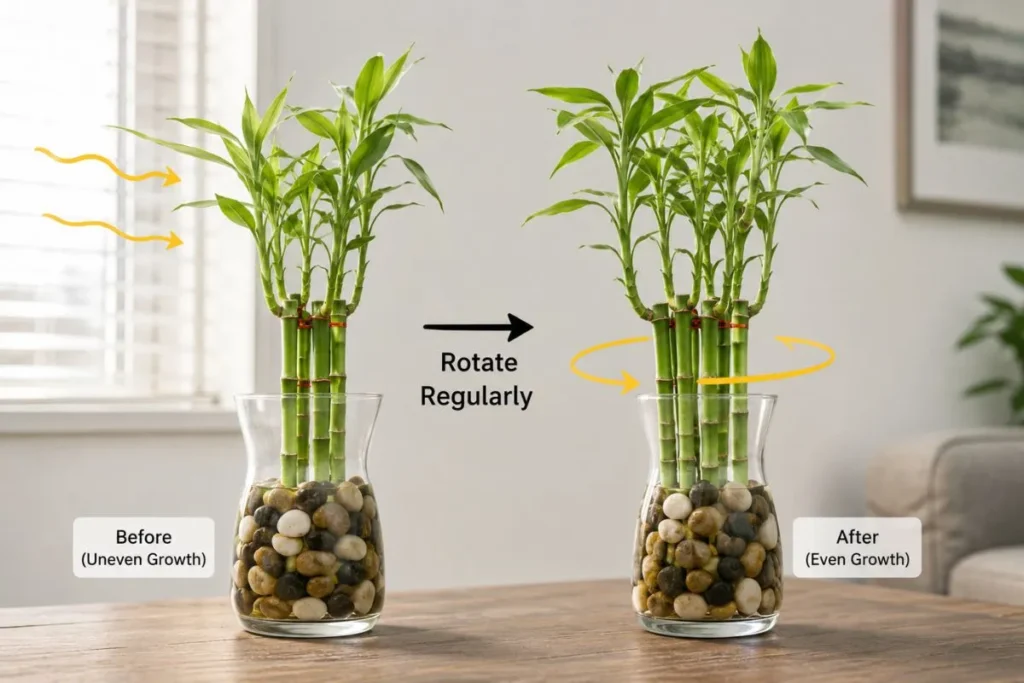
Rotate the pot about a quarter turn every week. This allows all sides of the bamboo to receive equal light and encourages balanced, upright growth.
This small habit helps maintain an attractive shape without extra effort.
Clean the Leaves Regularly
Dust can slowly build up on bamboo leaves, especially indoors.
Dirty leaves block sunlight and reduce the plant’s ability to photosynthesize efficiently.
Wipe the leaves gently with a soft, damp cloth every few weeks to remove dust and dirt. Clean leaves not only look healthier but also absorb light more effectively.
Avoid using leaf shine products, as they may clog the leaf surface.
Monitor Water Quality
Water quality is often overlooked, but it plays an important role in keeping bamboo healthy.
Lucky bamboo is especially sensitive to chlorine, fluoride, and mineral buildup found in some tap water.
Whenever possible, use filtered water, distilled water, or rainwater. If using tap water, allow it to sit overnight before watering.
Fresh, clean water helps prevent yellow leaves and brown leaf tips while supporting healthy root development.
Inspect for Pests Frequently
Even healthy bamboo can occasionally attract pests.
Take a few minutes each week to inspect both sides of the leaves and the stems for insects such as spider mites, aphids, mealybugs, or scale insects.
Early detection makes treatment much easier and prevents pests from spreading to other houseplants.
Keeping the plant clean and maintaining proper airflow also helps reduce pest problems.
Repot When Necessary
As bamboo grows, its roots eventually outgrow the container.
If you notice roots circling inside the pot, growing through the drainage holes, or the soil drying out unusually fast, it may be time to repot.
Choose a container that’s only slightly larger than the current one and fill it with fresh, well-draining soil.
Repotting every few years gives the roots more space, refreshes the soil, and encourages healthy long-term growth.
Frequently Asked Questions (FAQs)
How do you keep bamboo alive indoors?
To keep bamboo alive indoors, place it in bright, indirect sunlight and keep it away from direct afternoon sun. Water the plant only when needed if it’s growing in soil, or change the water every one to two weeks if it’s growing in water. Maintain a comfortable room temperature and inspect the plant regularly for signs of pests or yellow leaves.
How often should you water bamboo?
There is no fixed watering schedule because it depends on the season, temperature, and humidity. For bamboo planted in soil, water when the top one to two inches of soil feel dry. During spring and summer, you may need to water more often, while in cooler months, watering should be reduced.
Why are my bamboo leaves turning yellow?
Yellow leaves are usually caused by overwatering, poor-quality water, too much direct sunlight, or nutrient imbalance. If you are growing lucky bamboo, using filtered or distilled water can help prevent yellowing caused by chlorine or fluoride. Reviewing your watering routine and lighting conditions often solves the problem.
Can bamboo grow only in water?
Yes, lucky bamboo can grow successfully in water as long as the roots remain submerged and the water is changed regularly. However, true bamboo varieties grow best in nutrient-rich, well-draining soil and are not designed to live permanently in water.
What is the best fertilizer for bamboo?
A balanced fertilizer, such as 10-10-10 or 20-20-20, is ideal for bamboo grown in soil. For lucky bamboo growing in water, use a diluted liquid fertilizer made for houseplants or lucky bamboo only every few months. Applying too much fertilizer can damage the roots, so always use it sparingly.
How do you revive a dying bamboo plant?
Start by identifying the cause of the problem. Check the soil moisture, inspect the roots for rot, improve lighting if needed, and trim away damaged or yellow leaves. If the roots are healthy and you correct the care routine, most bamboo plants recover over time with proper attention.
Does bamboo need direct sunlight?
Most indoor bamboo, especially lucky bamboo, grows best in bright indirect light rather than direct sunlight. Strong afternoon sun can burn the leaves and cause brown tips. Outdoor bamboo varieties generally tolerate more sunlight, but many still benefit from partial shade during the hottest part of the day.
Is bamboo easy to care for?
Yes. Bamboo is considered a beginner-friendly plant because it is relatively low maintenance. Once you understand how to keep bamboo alive by providing proper light, clean water, suitable soil, and occasional feeding, it becomes easy to care for and can stay healthy for many years.
Conclusion:
Learning how to keep bamboo alive is much easier than many people think. Bamboo is a resilient and low-maintenance plant, but it still needs the right balance of light, water, soil, nutrients, and regular care to stay healthy. By understanding these basic needs, you can enjoy lush green foliage and steady growth throughout the year.
Whether you’re caring for lucky bamboo indoors or growing true bamboo outdoors, consistency is the key to success. Water your plant correctly, provide bright indirect light when needed, use well-draining soil, and fertilize during the growing season. These simple habits create the perfect environment for healthy growth.
It’s also important to pay attention to your bamboo. Yellow leaves, brown tips, curling foliage, or slow growth are early signs that something needs to be adjusted. Catching these issues early makes them much easier to fix and helps prevent long-term damage.
Regular maintenance, including cleaning the leaves, checking for pests, pruning damaged growth, and repotting when necessary, will keep your bamboo looking fresh and vibrant.
Small care routines performed consistently are far more effective than making major changes after problems appear.
Whether you were searching for how to keep bamboo alive indoors, how to keep bamboo alive in water, how to care for bamboo, or bamboo care for beginners, this complete guide has provided the practical steps you need to grow a healthy and long-lasting plant.
With a little patience and the right bamboo plant care routine, your bamboo can continue to brighten your home or garden for many years. Healthy bamboo not only enhances your space but also brings a natural, peaceful atmosphere that is easy to enjoy.
We hope this guide has answered your questions and given you the confidence to care for your bamboo successfully. If you found this article helpful, explore our other plant care guides for more expert tips, practical advice, and easy-to-follow tutorials that will help every plant in your collection thrive.

Plant Nest Blog’s author is passionate about plants, gardening, and sustainable living. Through research and practical experience, they share helpful plant care tips, gardening guides, and easy solutions to help readers grow healthier plants and create greener spaces.