
Some people would say that African violets need extra fertilizer or strong sunlight to produce more flowers, but that is not always true. If you are wondering how do you get African violets to bloom, the secret is to give them the right growing conditions and consistent care.
These beautiful indoor plants can produce lovely flowers when they receive suitable light, proper watering, and the nutrients they need.
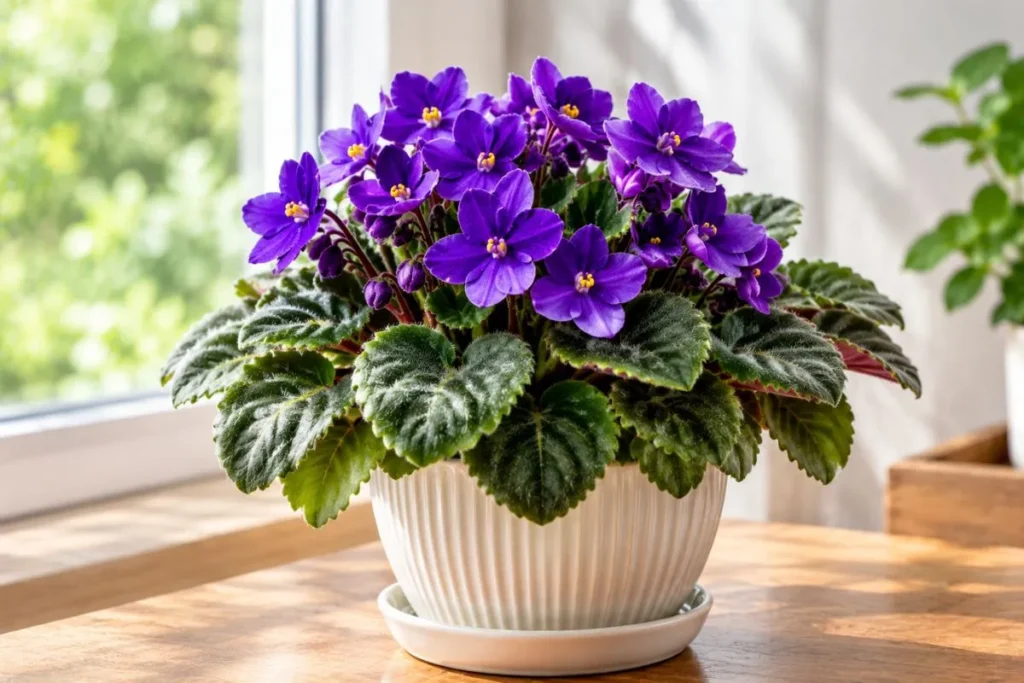
If your African violet has plenty of healthy leaves but no flowers, do not worry. A few simple changes to its care routine may help encourage new flower buds. In this guide, you will learn how to make African violets flower more often, identify common blooming problems, and create the right conditions for beautiful indoor blooms.
Why Is My African Violet Not Blooming?
African violets may stop blooming for several reasons, even when their leaves look healthy and green. They often need the right balance of light, water, nutrients, and temperature to produce beautiful flowers.
Sometimes, a small mistake in their daily care can prevent new buds from forming. Let’s look at the common reasons your African violet is not blooming and how you can fix them.
Common Reasons African Violets Stop Flowering
An African violet that refuses to flower is not necessarily unhealthy. Sometimes, the plant looks green and full but does not have the conditions it needs to produce flower buds.
Insufficient light is one of the most common reasons for poor blooming. Other possible causes include incorrect watering, unsuitable temperatures, poor soil drainage, and a lack of essential nutrients.
The size of the pot can also make a difference. African violets often grow well in relatively small pots, so an oversized container may encourage root and leaf growth instead of the flowering you want.
Before changing your entire care routine, check the plant’s location, soil moisture, and overall condition. Finding the actual problem is the first step toward getting your African violet to bloom again.
How Light, Water, and Nutrients Affect Flower Production
Light, water, and nutrients work together to support healthy African violet growth. When one of these essentials is missing or out of balance, the plant may struggle to produce flowers.
Light: African violets need bright, indirect light to grow and flower well. A suitable east-facing window may provide good conditions, while a location with very little natural light can limit flower production. If your room is dark, a suitable grow light can help provide the light your plant needs.
Water: These plants prefer consistent moisture without sitting in soggy soil. Overwatering can damage the roots, while allowing the potting mix to become completely dry for too long can stress the plant. Water when needed, ensure the pot drains properly, and avoid leaving the roots in standing water.
Nutrients: African violets need essential nutrients to maintain healthy leaves, roots, and flowers. A balanced fertilizer formulated for African violets can support growth when used according to its label. Too much fertilizer, however, can harm the roots and cause other problems rather than encourage more blooms.
Getting these three basics right gives your plant a better chance of producing healthy flowers. Instead of adding more fertilizer immediately, check whether your African violet receives enough light and whether its watering routine is suitable.
Powerful Tips on How Do You Get African Violets to Bloom
Many people think the fastest way to make African violets flower is to give them more fertilizer or place them in direct sunlight. However, too much fertilizer or harsh sunlight can actually damage these delicate plants.
If you want to know how do you get African violets to bloom more often, focus on their everyday needs. Small changes to lighting, watering, feeding, and general care can help your plant produce healthy flower buds.
Give Your African Violet the Right Amount of Light
Light plays a major role in African violet flower production. Your plant may grow plenty of leaves but produce few or no flowers if it does not receive enough light. The goal is to provide bright, indirect light that supports healthy growth without exposing the leaves to harsh midday sunshine.
An east-facing window can be a good choice because it often provides gentle morning light. A bright north-facing window may also work, depending on your location and the amount of daylight available. If your African violet sits far from a window, try moving it closer to a brighter spot and observe how it responds.
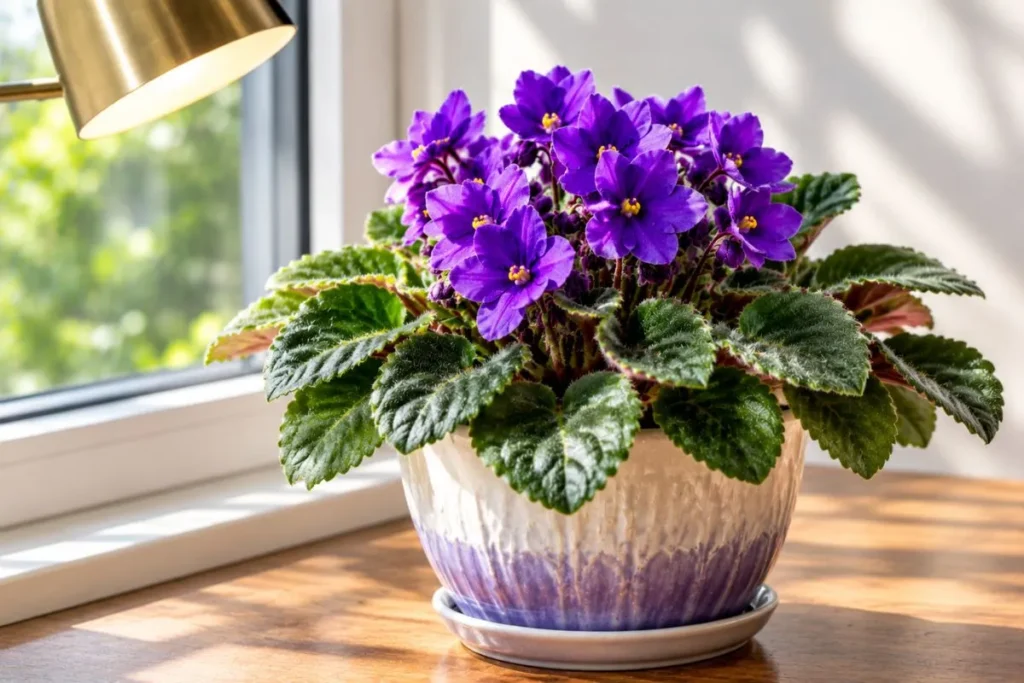
Watch the leaves for clues. Long leaf stems and weak growth may indicate insufficient light, while pale or scorched patches can suggest excessive direct sunlight. Make changes gradually rather than moving the plant suddenly into a much brighter location.
If you are wondering how much light African violets need to flower, remember that consistency matters. A suitable daily light period helps the plant produce the energy needed for new buds and beautiful blooms.
Use Grow Lights to Encourage More Flowers
Natural light is not always enough, especially during darker months or in rooms with small windows. In that situation, artificial lighting can help you create better growing conditions. A full-spectrum LED grow light is a practical option for African violet blooming indoors.
Position the light according to the manufacturer’s instructions because the correct distance depends on the lamp’s strength. Keep the light above the plant so the leaves receive even coverage. If the lamp sits too close, it may cause excess heat or light stress. If it is too far away, the plant may not receive enough useful light.
A timer can make your routine easier. Many African violets grow well with roughly 10–14 hours of suitable light per day, although the ideal amount depends on the light intensity and the plant’s response. Give the plant a dark period each day instead of leaving the grow light on continuously.
Artificial lighting can be especially useful when you want to encourage African violets to produce more flowers throughout the year. Check for steady growth and healthy leaves, then adjust the lighting gradually if the plant still struggles to bloom.
Water Your African Violet Correctly
Watering mistakes can affect both plant health and flowering. African violets need moisture to support their leaves and flower stems, but their roots also need access to air. Soil that stays waterlogged can lead to root problems, while extremely dry soil can stress the plant.
Check the potting mix before watering instead of following a rigid schedule. If the surface has started to dry and the pot feels lighter, it may be time to water. Use room-temperature water and allow excess moisture to drain freely from the container.
You can water from the top by applying water carefully to the soil, avoiding the crown and keeping water off the leaves when possible. Bottom watering is another option: place the pot in a shallow tray of water and let the mix absorb moisture, then remove the pot once the soil is adequately moist. Do not leave it sitting in water for long periods.
If you are trying to get African violets to bloom more often, pay attention to the soil rather than watering more frequently in the hope of producing flowers. A consistent, sensible watering routine supports healthy roots, steady growth, and better flower development.
Choose the Best Fertilizer for African Violets
African violets need nutrients to produce healthy foliage and flowers. If your plant has been growing in the same potting mix for a long time, or it receives little nutrition, a suitable fertilizer may help support new growth.
Choose a product formulated for African violets or a balanced, water-soluble fertilizer suitable for flowering houseplants.
Read the label before applying it. Different products have different concentrations, so there is no single amount that works for every fertilizer. Start with the manufacturer’s recommended instructions, and avoid using a stronger solution in the belief that it will make flowers appear faster.
A fertilizer that supplies essential nutrients in suitable amounts can support healthy leaves, roots, and flower buds. However, fertilizer will not correct poor lighting, damaged roots, or unsuitable watering. Address those conditions too.
When choosing the best fertilizer to make African violets bloom, look for a product suitable for regular use on these plants rather than relying on marketing claims alone. A consistent, careful approach is more helpful than repeatedly switching products.
Follow a Suitable Fertilizing Schedule
Fertilizer works best when you use it thoughtfully. African violets that are actively growing may benefit from regular feeding, but the correct schedule depends on the fertilizer, growing conditions, and health of the plant.
Follow the product label and avoid automatically feeding your plant every time you water. If the label allows frequent feeding at a reduced concentration, use that guidance rather than guessing. Also, avoid fertilizing a severely stressed plant or one with damaged roots until you have addressed the underlying problem.
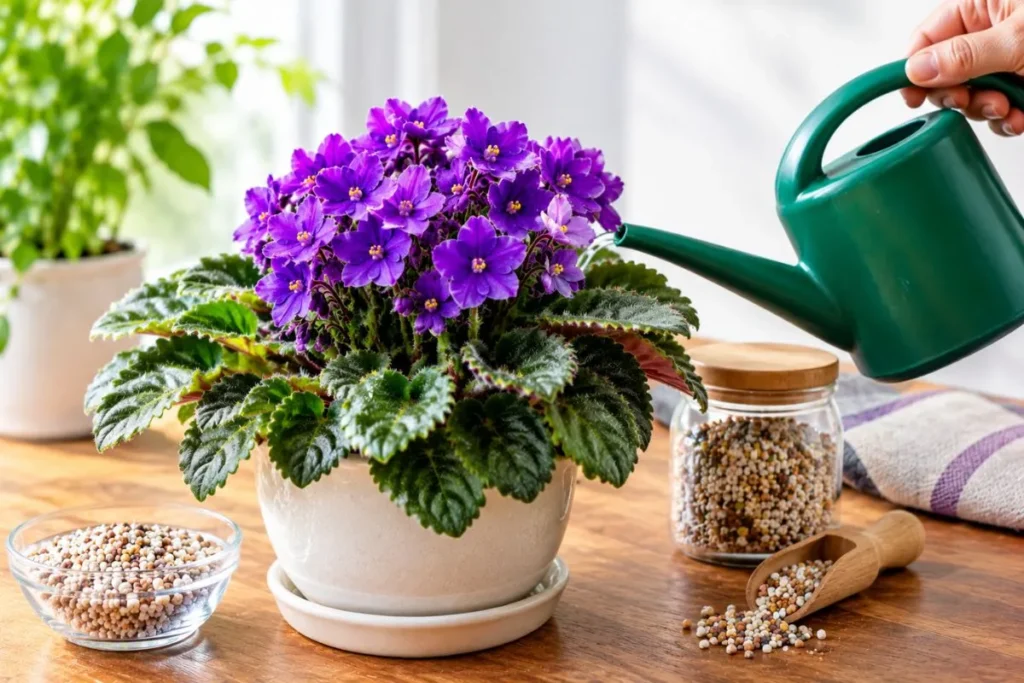
Signs of overfertilization can include damaged leaf edges, a crust of fertilizer salts on the soil, or poor growth. If these appear, review your feeding routine and consider whether excess fertilizer is building up in the potting mix.
A simple African violet fertilizer schedule should fit your plant’s needs, not force it into a strict routine regardless of its condition. Healthy roots and leaves provide a better foundation for blooming than excessive feeding.
Use the Right Soil Mix
Regular garden soil is usually too dense for African violets grown in containers. It may hold too much water, restrict airflow around the roots, and make it harder to maintain suitable moisture levels.
Instead, choose a light, airy African violet potting mix designed for container growing. A suitable mix should hold some moisture while allowing excess water to drain. Some gardeners use a mix containing peat or coco coir with materials such as perlite to improve airflow, but the best combination depends on the product and growing conditions.
Check the mix occasionally. If it becomes compacted, stays wet for too long, or no longer drains well, the plant may benefit from fresh potting material. Use a container with drainage holes so extra water can escape.
The right African violet soil mix helps maintain a healthier root environment. When roots can absorb water and nutrients properly, the plant is better prepared to support new leaves and flowers.
How to Get African Violets to Bloom Indoors
African violets do not need to sit in direct sunlight all day to flower beautifully. In fact, strong direct sun can scorch their leaves and create unnecessary stress.
The key to getting African violets to bloom indoors is to recreate their preferred growing conditions with suitable light, steady temperatures, proper watering, and enough nutrients.
Create the Best Indoor Growing Conditions
Start by choosing a location with bright, indirect light and a relatively stable temperature. Keep the plant away from cold drafts, hot radiators, and air-conditioning vents. These sudden changes can affect its growth and make it harder to maintain healthy flowers.
Use a light, well-draining potting mix and a container with drainage holes. Check the soil before watering, and never allow the pot to sit in standing water for long periods. Feed the plant according to the instructions on a suitable African violet fertilizer.
Also, give the plant enough space for air to move around its leaves. Avoid crowding it between other objects or placing it in a damp, poorly ventilated corner. These basic indoor gardening steps can help you maintain a healthy plant that is better prepared to produce flowers.
Find the Best Window or Lighting Location
The right window can make a big difference to African violet blooming indoors. An east-facing window often provides gentle morning sunlight, while a bright north-facing window may work well in some homes. A south- or west-facing window can provide stronger light, so you may need to move the plant back from the glass or use a sheer curtain to reduce direct sun.
Do not judge the location by brightness alone. Observe how the plant responds over time. If it develops weak growth and rarely forms buds, it may need more light. If the leaves develop scorched patches or look stressed after exposure to strong sunlight, reduce the intensity.
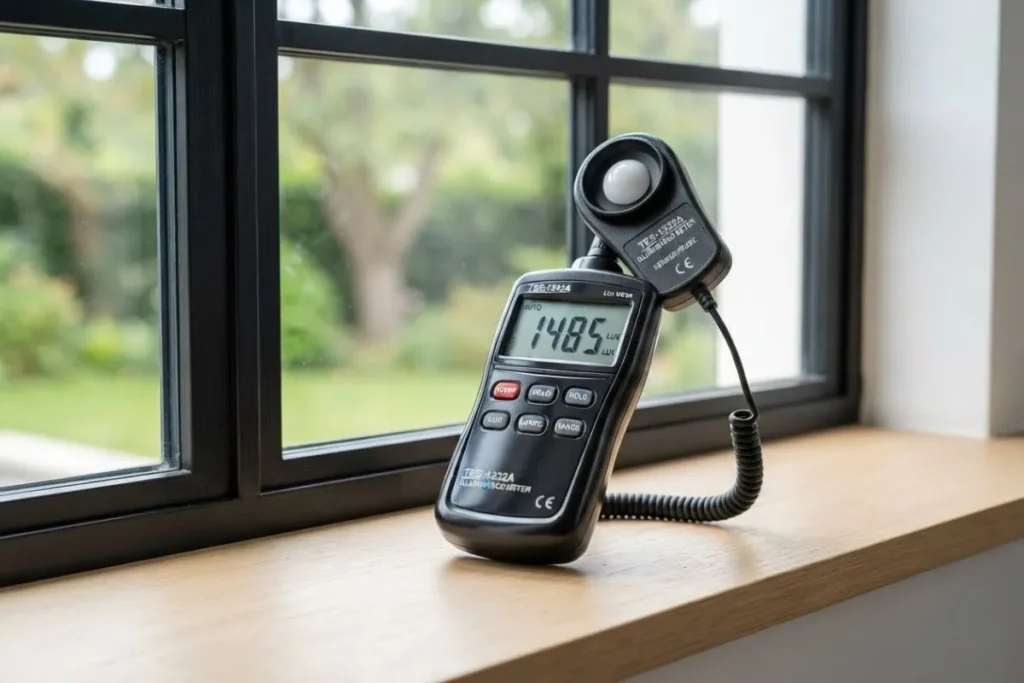
When natural light is limited, use a suitable LED grow light and follow its recommended distance and daily schedule. Keep the lighting consistent, and make adjustments gradually.
Finding the best indoor location is often more effective than repeatedly changing fertilizers. Once your African violet receives appropriate light, it can use that energy to support healthy foliage and flower production.
Balance Indoor Temperature and Humidity
Indoor conditions can change with the seasons, heating, and air conditioning. African violets generally prefer moderate temperatures and benefit from avoiding sudden fluctuations. Keep them away from chilly windows at night and from hot air blowing directly onto the leaves.
Moderate humidity can also help support healthy growth. If the air in your home is very dry, a room humidifier may help. Grouping plants together can slightly increase the humidity around them, provided there is enough airflow and the foliage is not constantly wet.
Avoid trying to create humidity by keeping the soil soaked. Humid air and waterlogged soil are two different things, and excessive moisture around the roots can cause serious problems. Continue checking the potting mix before watering and make sure excess water can drain away.
A stable indoor environment supports healthy leaf growth and bud development. If your African violet is not flowering, assess the combined effects of temperature, humidity, and light rather than focusing on just one condition.on guesswork.
Frequently Asked Questions About Getting African Violets to Bloom
How Do You Get African Violets to Bloom More Often?
To get African violets to bloom more often, provide bright, indirect light, water when needed, and use a suitable fertilizer according to its label. Keep the plant in a well-draining potting mix and maintain stable indoor temperatures.
Remove faded flowers and check regularly for pests or unhealthy roots. Consistent care helps encourage repeat flowering, although the timing varies from plant to plant.
Why Is My African Violet Not Blooming?
Your African violet may not be blooming because it receives too little light, has unsuitable watering conditions, or lacks essential nutrients. An oversized pot, damaged roots, pests, or temperature stress can also affect flowering.
Start by checking the plant’s location and soil moisture. Make gradual changes and give the plant time to respond before trying additional treatments.
How Much Light Do African Violets Need to Flower?
African violets generally need bright, indirect light for healthy growth and flower production. A suitable window with gentle light or a full-spectrum LED grow light can work well.
Many plants do well with around 10–14 hours of suitable light daily, depending on its intensity and the growing environment. Avoid harsh direct sunlight, which can scorch the leaves.
What Is the Best Fertilizer for African Violets to Bloom?
A fertilizer formulated for African violets is a practical choice because it is designed for their growing needs. A suitable balanced fertilizer may also work when applied according to its label.
Avoid using excessive amounts or assuming that a high-phosphorus product will automatically produce more flowers. Healthy roots, adequate light, and proper watering are just as important as nutrition.
How Often Do African Violets Bloom Indoors?
Healthy, mature African violets can flower repeatedly indoors when their growing conditions are suitable. Some may produce blooms for much of the year, while others have longer breaks between flowering cycles.
Light availability, variety, temperature, and plant health all influence blooming frequency. Consistent care can help encourage more regular flowers.
How Do You Get African Violets to Bloom Year-Round?
To encourage African violets to bloom throughout the year, maintain suitable lighting, stable indoor temperatures, and consistent watering. During darker months, a grow light may help provide enough light for flowering.
Feed the plant appropriately and remove faded blooms as needed. Even with excellent care, continuous flowering is not guaranteed because plants naturally vary in their blooming cycles.
Can African Violets Bloom Without Direct Sunlight?
Yes, African violets can bloom without direct sunlight. They generally prefer bright, indirect light, which helps prevent leaf scorching. A bright window or suitable artificial grow light can provide the conditions they need.
If the plant grows lots of leaves but produces few flowers, check whether its light exposure is sufficient.
Should You Remove Old Flowers From African Violets?
Yes, you can remove faded flowers and their stems once they have finished blooming. Use clean fingers or small, clean scissors to remove them without damaging nearby leaves.
Deadheading keeps the plant tidy and makes new flower buds easier to see. However, removing old flowers alone will not guarantee new blooms; suitable growing conditions are still essential.
Do African Violets Need Special Soil to Flower?
African violets benefit from a light, airy potting mix that retains some moisture while allowing excess water to drain. A mix specifically designed for African violets is a convenient option.
Ordinary garden soil is often too dense for container growing. Good potting mix supports healthy roots, which help the plant absorb the water and nutrients needed for flowering.
How Long Does It Take for an African Violet to Bloom Again?
The time needed for an African violet to bloom again depends on its variety, maturity, health, and growing conditions. A healthy, established plant may develop new flowers sooner than one recovering from stress or poor care.
Provide suitable light, water, and nutrients, then watch for new buds. Avoid making repeated changes simply because flowers do not appear immediately.
Conclusion:
Learning how do you get African violets to bloom does not have to be difficult. These beautiful houseplants can reward you with colorful flowers when you understand their needs and provide the right growing conditions.
The most important things to focus on are bright, indirect light, proper watering, suitable potting mix, and balanced nutrition. When these basic needs are met, your African violet has a better chance of producing healthy flower buds and blooming more regularly.
If your African violet has plenty of green leaves but no flowers, do not assume it needs more fertilizer right away. Check whether it receives enough light throughout the day, whether the soil drains properly, and whether the pot is suitable for its root system.
Too much water, excessive fertilizer, or harsh direct sunlight can create more problems instead of encouraging flowering. Make small adjustments based on what your plant actually needs, and give it enough time to respond.
Regular maintenance can also make a difference. Remove faded flowers, check the leaves for pests or damage, and keep an eye on the plant’s overall health.
If you grow African violets indoors, choose a comfortable location with stable temperatures and consider using a suitable grow light when natural light is limited. A consistent care routine is often more helpful than constantly moving the plant or trying different products.
Remember that African violets do not all bloom at the same pace. Their variety, age, health, and growing environment can affect how often they produce flowers.
Some plants may need time to recover from stress before developing new buds, so be patient and avoid expecting instant results. Healthy roots and leaves provide the foundation for long-lasting growth and repeat flowering.

Plant Nest Blog’s author is passionate about plants, gardening, and sustainable living. Through research and practical experience, they share helpful plant care tips, gardening guides, and easy solutions to help readers grow healthier plants and create greener spaces.