
Many gardeners believe marigolds can grow well anywhere as long as they get some water. That’s not quite true. Where to plant marigolds matters because the right spot can support stronger growth, healthier plants, and more flowers. A sunny location with good drainage is usually a much better choice than a dark or soggy corner.
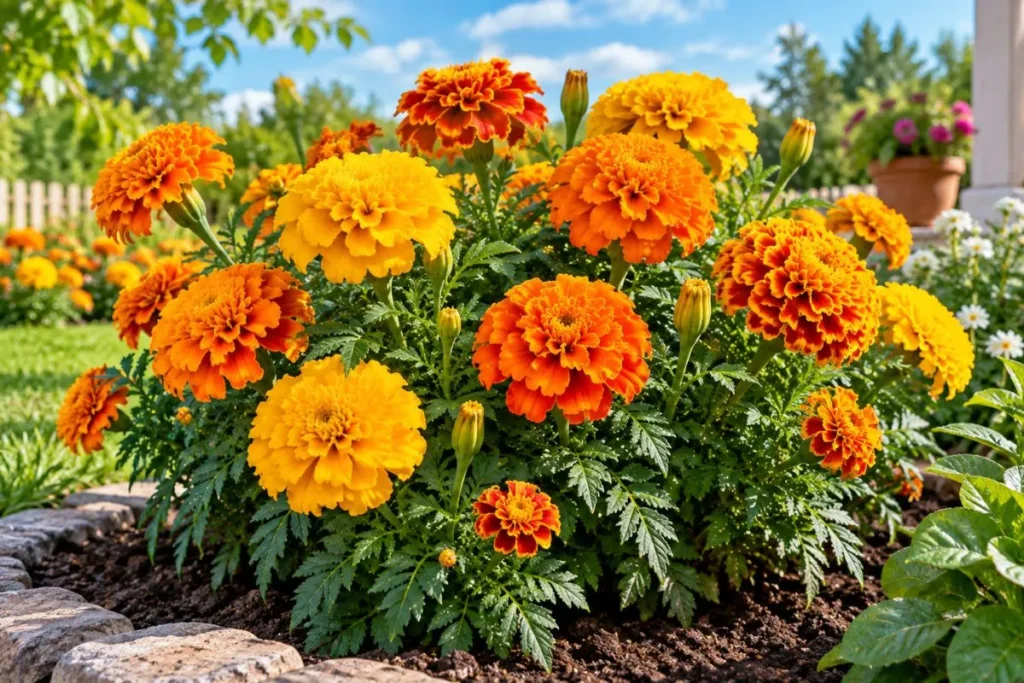
If you’re wondering where is the best place to plant marigolds, start by looking at sunlight, soil, and available space. Whether you’re growing them in a flower bed, vegetable garden, raised bed, or container, choosing the right location first can make growing marigolds much easier.
What Makes a Good Location for Marigolds?
The best location for marigolds isn’t complicated. These cheerful flowers mainly need enough sunlight, suitable soil, good drainage, and enough room to grow. Before you plant, take a quick look around your garden and choose a spot that meets these basic needs.
Sunlight Requirements
Marigolds generally perform best when they receive plenty of sunlight. A bright, open area is usually ideal for encouraging healthy growth and good marigold bloom production. If a location stays heavily shaded for most of the day, plants may produce fewer flowers and become less vigorous.
For this reason, marigolds in full sun are often a great choice for sunny flower beds, garden borders, and open vegetable gardens. Partial shade can work in some situations, but if you have a choice, give your marigolds a brighter spot.
Soil and Drainage
Good soil is another important part of choosing an ideal location for marigolds. They prefer soil that drains well rather than staying wet after watering or rain. Poor drainage can leave the roots sitting in excess moisture and create growing problems.
You don’t need perfect garden soil. Aim for loose, reasonably fertile soil with good drainage. If you’re asking where should I plant marigolds, avoid low spots where water tends to collect. A well-drained garden bed or raised bed can be a much better option.
Airflow and Available Space
Don’t forget about space. Marigolds need enough room to spread according to their variety and mature size. Planting them too close together can make the garden crowded and reduce airflow around the foliage.
Good marigold plant spacing also makes watering, weeding, and general plant care easier. Before planting, check how large your chosen variety is expected to become and leave enough space for it to grow naturally.
The simple rule is this: choose a bright location, use well-drained soil, and give each plant enough room. Get those basics right, and you’ve already made a smart start with your marigold garden.
Where to Plant Marigolds in the Garden
Many people think where to plant marigolds doesn’t matter as long as they put them somewhere in the garden. But that’s not the best approach. The same marigold can struggle in one spot and grow beautifully in another.
The trick is to match the plant with a location that suits its natural growth habit and your garden layout.
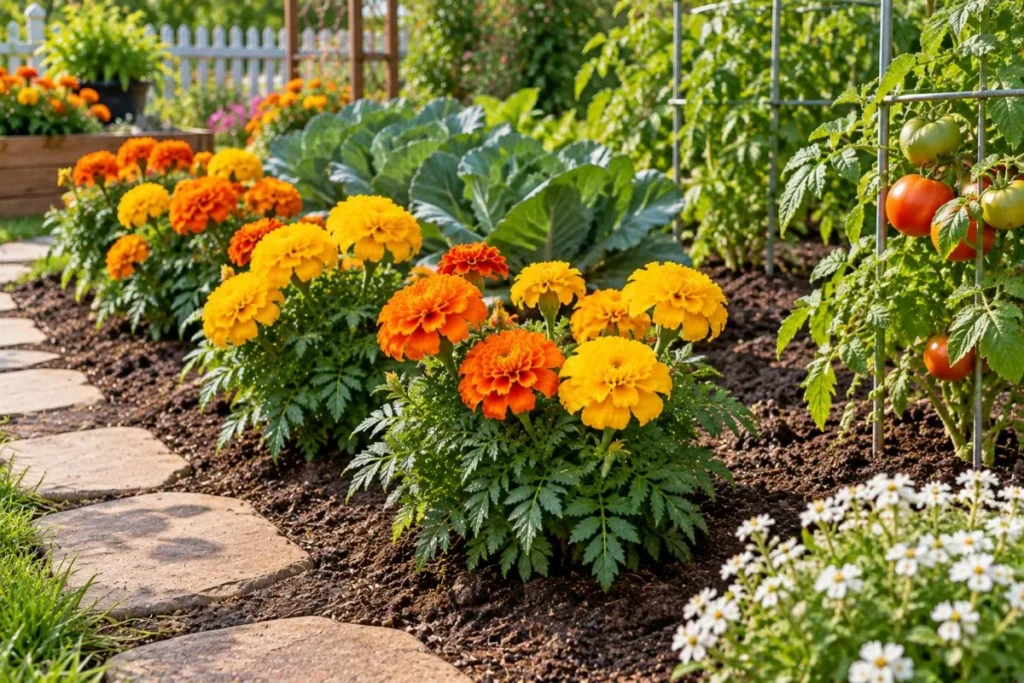
When choosing the best place to plant marigolds in the garden, think about how you want to use them. They can brighten flower beds, line walkways, fill empty spaces, or add color around vegetables. Pick a location where the plants can grow comfortably without being hidden, crowded, or constantly disturbed.
Plant Marigolds Where They Can Be Easily Seen
Marigolds are colorful, cheerful flowers, so why hide them? Place them in spots where their blooms can add visual interest to your garden.
Garden edges, pathways, flower beds, and open areas are excellent choices. Short varieties work especially well along borders because they stay relatively compact and don’t overwhelm nearby plants.
If you’re planning a marigold flower garden, you can also group several plants together. A small cluster often creates a fuller, more colorful display than scattering individual plants randomly around the yard.
Use Marigolds to Fill Garden Gaps
Have an empty patch between larger plants? Marigolds can be useful there.
They work well as filler plants because many varieties grow quickly and produce plenty of flowers during the growing season. Instead of leaving bare soil between established plants, you can use appropriately sized marigolds to add color and make the garden look more complete.
Just make sure the surrounding plants don’t eventually shade them heavily. A location that looks sunny in spring may become much darker once nearby plants grow larger.
Place Marigolds Along Garden Borders
Wondering where should I plant marigolds for a neat garden design? Try the edges.
Compact French marigolds are especially useful for garden borders, pathways, and the front of flower beds. Their smaller growth habit makes them easier to arrange without blocking taller flowers behind them.
For a layered garden, place shorter marigolds toward the front and taller varieties farther back. This gives every plant a better chance to be seen while creating a more natural-looking arrangement.
Give Taller Marigolds More Open Space
Not every marigold belongs at the front of a flower bed. Some varieties grow considerably taller and need more room.
Tall marigolds are better suited to the middle or back of a garden bed where they can rise above shorter plants. Avoid squeezing them into narrow corners or placing them directly in front of smaller flowers.
Before planting, check the mature height and width of the variety you’ve chosen. This simple step can prevent an overcrowded garden later.
Consider the Garden’s Daily Sun Pattern
Don’t judge a planting location by sunlight at only one time of day. Watch the area if you can.
A spot may look bright in the morning but become shaded in the afternoon because of a wall, tree, fence, or taller plant. Since marigolds generally perform best with plenty of sunlight, an open location is usually the safer choice.
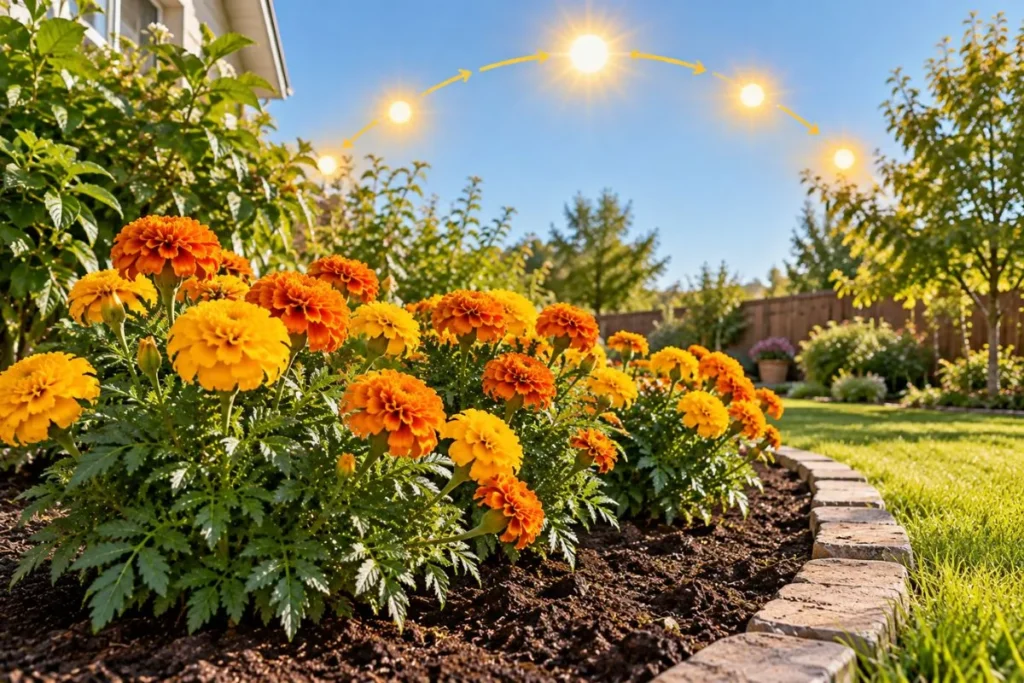
This is particularly important when deciding where to plant marigolds for healthy growth. Look at the entire area rather than focusing on one sunny moment.
Keep Marigolds Away From Constant Disturbance
A garden location can have good light and soil but still be inconvenient.
Avoid placing marigolds where people constantly walk, pets frequently disturb the soil, or gardening equipment may damage the plants. Choose a spot where the plants can establish without being knocked over or stepped on.
A little planning here goes a long way. The best location for marigolds should work for both the plants and the person caring for them.
Match the Location to Your Garden Design
Finally, think about the bigger picture. Marigolds don’t have to be planted in one specific type of garden.
You can use them in traditional flower beds, vegetable gardens, raised beds, containers, or along borders. The right choice depends on the variety, available space, sunlight, and the look you’re trying to create.
So, when deciding where to plant marigolds in the garden, don’t simply choose the first empty spot. Look for an open, practical location where the plants fit naturally into your garden design. That small decision can make your marigolds easier to grow and much more enjoyable to look at.
Where to Plant Marigolds for the Best Blooms
Many gardeners think the best blooms simply come from giving marigolds more water or fertilizer. That’s not always the answer. Where to plant marigolds for the best blooms can have a bigger impact than constantly adding extra care.
A good location helps the plant use sunlight efficiently and focus its energy on healthy flowering.
If your goal is bright, long-lasting flowers, choose the planting spot with the plant’s flowering needs in mind. An open, sunny location with comfortable growing space is usually a smart choice.
From a flower bed to a backyard border, the right position can help your marigolds put on a much better display.
Choose an Open Spot for Maximum Light
When deciding where is the best place to plant marigolds, look for an area that isn’t blocked by tall structures or large plants. Open garden spaces allow marigolds to receive more consistent light throughout the day.
This is especially helpful when your main goal is strong marigold bloom production. A plant surrounded by large shrubs or placed beneath a dense tree canopy may receive much less light than you expected.
Before planting, look around the area at different times of the day. If the spot remains bright and open, it’s a promising location for your marigolds.
Keep Tall Plants From Shading Marigolds
A sunny garden bed can change as neighboring plants grow. Tomatoes, corn, shrubs, and other tall plants may eventually cast shade over shorter marigolds.
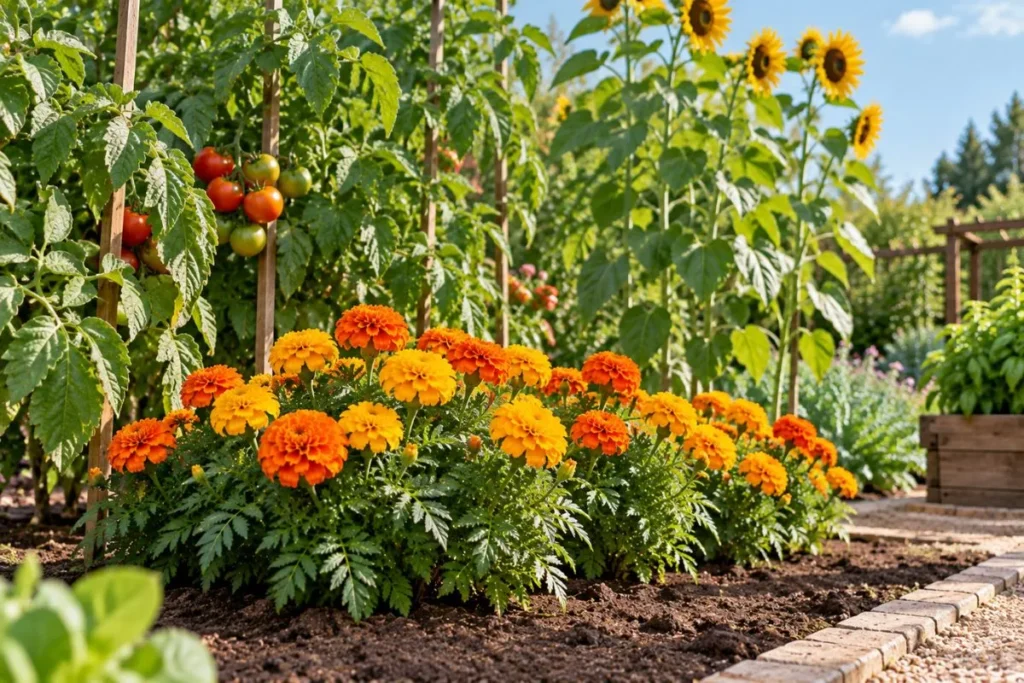
That doesn’t mean you can’t grow marigolds near taller plants. Simply consider their final height and position. Place marigolds where they can still receive useful sunlight rather than directly behind something that will block the light for much of the day.
This small bit of planning can make a big difference when growing marigolds for healthy growth and abundant flowers.
Give Flowering Plants Enough Breathing Room
A beautiful flower display isn’t just about the number of plants. Crowding too many marigolds into one small area can make the garden look messy and restrict airflow around the foliage.
Use the mature size of your variety to guide marigold plant spacing. Compact varieties can usually fit into smaller spaces, while larger types need more room to develop their full shape.
Good spacing also makes it easier to inspect the plants, remove weeds, and enjoy the flowers without everything growing into one tangled mass.
Use Garden Edges for a Strong Flower Display
If you’re looking for an attractive marigold garden placement, consider the front edge of a flower bed or a sunny walkway.
Short marigolds can create a clean border of color without hiding plants behind them. You can also repeat the same variety along an edge to create a simple, organized look.
This works particularly well when you want marigolds to act as both flowering plants and decorative garden borders.
Avoid Spots Where Water Collects
A location may look perfect but still be a poor choice if water regularly sits around the plants.
Marigolds generally do better in well-drained soil than in constantly wet ground. Choose a spot where excess water can drain away after heavy rain or watering.
If your garden has naturally heavy or poorly drained soil, a raised planting area can provide a better environment. The goal is simple: moisture should be available, but the roots shouldn’t remain surrounded by standing water.
Think About the View Before You Plant
Here’s a simple trick many gardeners overlook: stand back and look at your garden before deciding where the flowers should go.
Ask yourself where the blooms will be most visible. A group of marigolds can brighten a dull corner, frame a pathway, or add a warm splash of color to a vegetable garden.
The best spot to grow marigolds is therefore not only a good growing location. It can also be a place where you and your visitors can actually enjoy the flowers.
Match the Location With Your Marigold Variety
Different marigold types can have different growth habits. A compact variety may work beautifully along a border, while a taller type may be better positioned farther back in a flower bed.
So, before planting, consider the mature height and width of your chosen plant. Matching the variety to the available space helps create a balanced garden and prevents smaller plants from being overwhelmed.
When choosing where to plant marigolds for the best blooms, think beyond the empty space you have today. Plan for the mature plant you’ll have later.
The best location doesn’t need to be complicated. Give your marigolds a bright, practical spot that fits their mature size, avoids standing water, and lets their flowers remain visible. With that simple approach, your garden can look fuller, brighter, and much more intentional.
FAQs
Where is the best place to plant marigolds?
The best place to plant marigolds is usually a bright, open area where they can receive plenty of sunlight. Choose a location with good drainage and enough room for the variety to reach its mature size. A sunny flower bed, garden border, raised bed, or suitable container can all work well.
Can marigolds grow in partial shade?
Yes, marigolds can tolerate some partial shade, but they generally flower better when they receive plenty of direct sunlight. Too much shade can lead to weaker growth and fewer blooms. If you want the best flowering performance, choose a location with strong daily light.
Where should I plant marigolds in a vegetable garden?
You can plant marigolds along the edges of vegetable beds, between suitable crops, or in open spaces where they won’t compete heavily with larger plants. When choosing where to plant marigolds in a vegetable garden, make sure they still have adequate light, airflow, and growing space.
Where should I plant marigolds around tomatoes?
Marigolds can be planted near tomatoes as part of a mixed garden design. Keep them where they won’t crowd the tomato roots or block airflow around the plants. Bordering the tomato bed with appropriately sized marigolds is often a simple and attractive option.
Can I plant marigolds in raised beds?
Absolutely. Raised beds can be excellent for marigolds, especially when the garden soil drains poorly. The extra control over soil quality and drainage makes it easier to create suitable growing conditions.
When planting marigolds in raised beds, leave enough space between plants and consider their mature height before deciding where each variety should go.
Can marigolds grow in containers?
Yes. Marigolds in containers can grow very well when the container provides adequate drainage and enough room for the roots. Compact French or signet types are particularly convenient for pots, window boxes, and smaller spaces.
Place the container in a bright location rather than a permanently shaded corner. Also, make sure excess water can escape through the drainage holes.
Where should I avoid planting marigolds?
Avoid locations that remain deeply shaded, stay waterlogged, or become heavily overcrowded. A spot that constantly collects water can be especially troublesome because marigolds prefer well-drained growing conditions.
Also avoid planting them where large plants will eventually block most of their sunlight.
Do marigolds need full sun to bloom?
Marigolds don’t necessarily require perfect full sun every minute of the day, but plenty of sunlight generally supports stronger flowering. If your priority is abundant, colorful blooms, a sunny location is usually the better choice.
How much space do marigolds need?
Spacing depends on the variety. Compact marigolds need less room, while larger varieties require more space to develop properly. Check the mature width of the specific variety before planting rather than using one spacing rule for every marigold.
Proper spacing gives plants room to grow and helps prevent an overly crowded garden.
What makes an ideal location for marigolds?
An ideal location for marigolds combines good light, suitable soil, drainage, and enough growing space. It should also fit the size and purpose of your chosen variety.
In simple terms, don’t just look for an empty patch. Look for a place where the plant can grow comfortably and where you can enjoy its flowers.
Conclusion:
Choosing where to plant marigolds is easier when you stop thinking about the garden as having one perfect location. The right spot depends on the variety you’re growing and how you want to use it.
A compact marigold may look great along a border, while a taller variety can work better toward the back of a flower bed.
Focus on the basics: give your plants plenty of light, avoid constantly wet soil, and provide enough room for healthy growth.
Whether you’re planting marigolds in a flower bed, vegetable garden, raised bed, or container, a thoughtful location gives them a strong start and helps you enjoy their bright blooms throughout the growing season.

Plant Nest Blog’s author is passionate about plants, gardening, and sustainable living. Through research and practical experience, they share helpful plant care tips, gardening guides, and easy solutions to help readers grow healthier plants and create greener spaces.