
It is widely believed that healthy plants only depend on good soil, fertilizer, and regular watering. While those things are important, they are not the complete picture.
One of the easiest ways to grow stronger, healthier plants is by choosing the best companion plants. The right plant pairings can naturally reduce pests, improve growth, attract helpful pollinators, and even increase your harvest without relying heavily on chemicals.
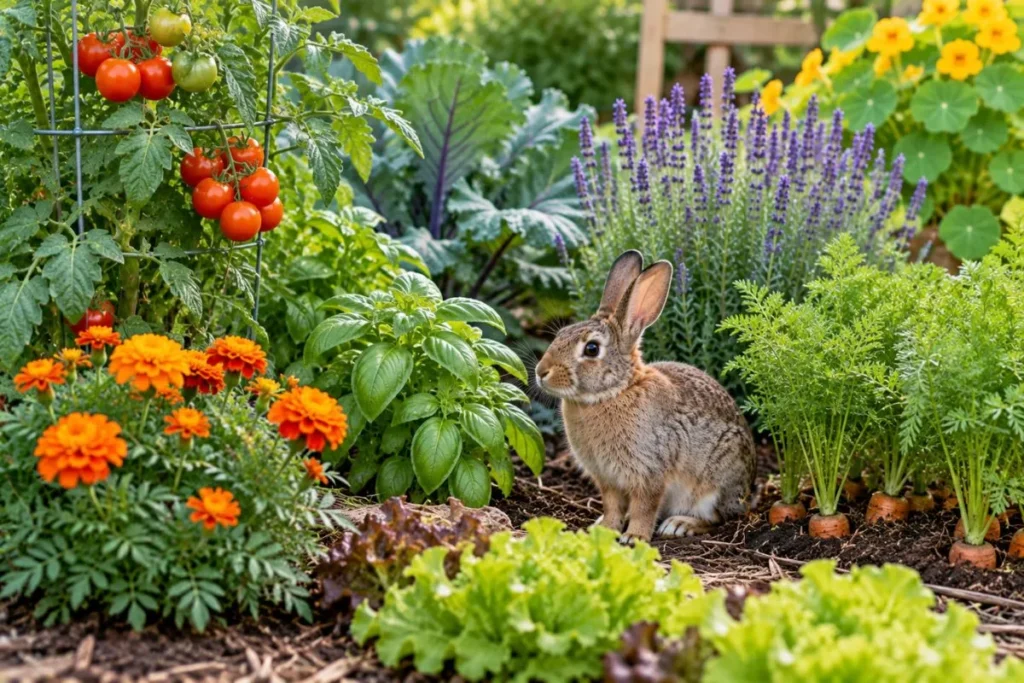
If you are looking for the best companion plants for your vegetable garden, raised beds, or flower borders, you have come to the right place. This guide will show you how companion plants for vegetables, herbs, and flowers work together to create a healthier garden.
Whether you are a beginner or an experienced gardener, you will discover practical companion planting combinations that make gardening easier, more productive, and environmentally friendly.
What Is Companion Planting and Why Does It Work?
Companion planting is the practice of growing different plants close together so they can benefit one another. Instead of planting crops randomly, gardeners carefully choose companion plants that naturally support each other’s growth.
Some plants repel harmful insects, while others attract pollinators, improve the soil, provide shade, or help neighboring plants grow stronger. This simple gardening technique has been used for generations and remains one of the most effective methods in organic companion planting.
One of the biggest reasons companion planting works is that nature thrives on diversity. A garden filled with different vegetables, herbs, and flowers creates a balanced environment where beneficial insects, healthy soil, and strong plants work together.
Rather than depending on chemical pesticides or fertilizers, you allow natural relationships between plants to do much of the work for you.
Natural Pest Control
Many of the best plants for companion planting release strong scents that confuse or repel common garden pests. Herbs like basil, rosemary, thyme, and sage help discourage insects from damaging nearby vegetables.
Flowers such as marigolds and nasturtiums are also widely used for natural garden pest control because they attract beneficial insects while keeping harmful pests away.
By adding pest-repelling plants throughout your garden, you can reduce insect problems naturally and create a healthier growing environment.
Attracts Pollinators
A productive garden depends on pollinators such as bees, butterflies, and other helpful insects. Many flowering garden companion plants produce nectar that attracts these visitors, increasing pollination for vegetables and fruits.
Plants like calendula, borage, lavender, sunflowers, and yarrow not only add beauty to your garden but also encourage more pollinators to visit. Better pollination often leads to healthier plants, stronger fruit development, and improved harvests.
Improves Soil Health
Some companion plants naturally improve the soil by adding nutrients or protecting it from erosion. Legumes such as beans and peas fix nitrogen in the soil, making it available for nearby plants that need it to grow.
Other low-growing companion plants help retain soil moisture, reduce weeds, and protect beneficial microorganisms. Over time, these natural processes contribute to improved soil health naturally, reducing the need for synthetic fertilizers.
Makes Better Use of Garden Space
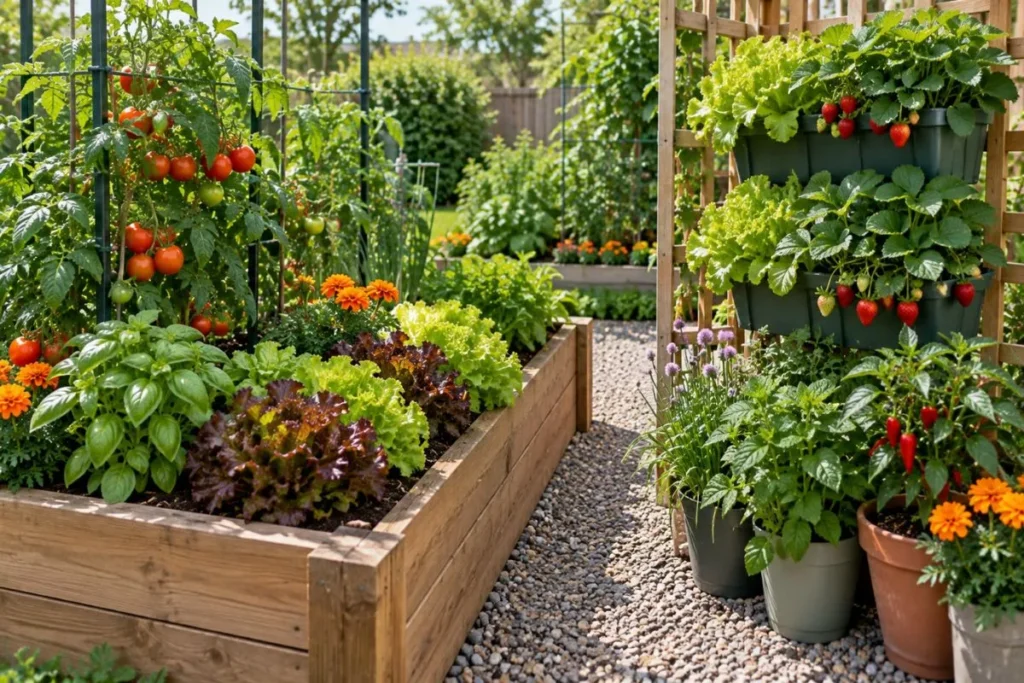
Companion planting is also an excellent way to maximize limited growing space. Tall plants can provide shade for crops that prefer cooler conditions, while shallow-rooted and deep-rooted plants grow together without competing for nutrients.
This makes mixed planting especially useful in small gardens, raised beds, and backyard vegetable gardens where every inch of space matters.
Supports Garden Biodiversity
A garden with many different plant varieties is usually healthier than one growing only a single crop. Companion planting increases garden biodiversity, attracting beneficial insects, birds, and pollinators while reducing the spread of pests and diseases.
A diverse garden is also more resilient to changing weather conditions, helping plants recover more quickly from environmental stress.
Produces Healthier Plants and Bigger Harvests
When compatible plants grow together, they compete less for resources and support one another throughout the growing season. Better pollination, healthier soil, fewer pests, and improved air circulation all contribute to stronger plant growth.
That’s why many gardeners use companion planting benefits as part of their overall gardening strategy. Whether you are growing tomatoes, cucumbers, peppers, lettuce, or herbs, selecting the top companion plants can lead to healthier crops and a more productive garden without adding unnecessary chemicals.
How to Choose the Best Companion Plants
Many gardeners think any two plants can grow together as long as they have enough space. That’s a common misconception. Successful companion planting isn’t about placing random crops side by side.
It’s about selecting plants with similar growing needs and natural benefits for one another. If you’re wondering how to choose the best companion plants, understanding a few basic factors will help you create a healthier, more productive garden while avoiding common planting mistakes.
Consider Plant Size and Spacing
Before planting, think about how large each plant will become at full maturity. Some vegetables spread across the ground, while others grow tall and upright.
Giving every plant enough room improves air circulation, reduces the risk of disease, and prevents unnecessary competition for sunlight and nutrients.
For example, tall crops like corn or sunflowers can provide light shade for plants that prefer cooler conditions. On the other hand, large sprawling plants such as pumpkins or squash should be given enough space so they don’t overwhelm nearby vegetables.
Planning your planting combinations carefully helps every plant grow at its best.
Match Sunlight Requirements
Plants that need full sun should generally be grouped together, while shade-loving varieties perform better in cooler areas of the garden. Mixing plants with very different light requirements can slow growth and reduce harvests.
Most vegetables, including tomatoes, peppers, cucumbers, and beans, thrive in six to eight hours of direct sunlight each day. Leafy greens like lettuce and spinach can tolerate some afternoon shade, making them suitable companions for taller crops in warmer climates.
Matching sunlight needs is one of the simplest ways to build successful companion planting combinations.
Choose Plants with Similar Water Needs
Watering becomes much easier when neighboring plants have similar moisture requirements. Some herbs, such as rosemary and thyme, prefer slightly drier soil, while vegetables like cucumbers and lettuce need consistently moist conditions.
Grouping plants with similar watering needs prevents both overwatering and underwatering. It also makes garden maintenance more efficient, especially in raised beds or small backyard gardens.
Pay Attention to Soil Preferences
Healthy companion planting starts with healthy soil. Some plants prefer rich, nutrient-filled soil, while others grow well in lighter or less fertile conditions. Choosing companions that enjoy similar soil conditions helps them develop stronger roots and healthier growth.
Adding compost before planting improves soil structure and supports beneficial microorganisms, making it easier for different crops to thrive together. This approach also supports sustainable gardening by reducing the need for synthetic fertilizers.
Think About Root Depth
Not all plants use the soil in the same way. Some develop deep root systems, while others grow close to the surface. Pairing deep-rooted and shallow-rooted plants allows them to access different soil layers without competing for the same nutrients and water.
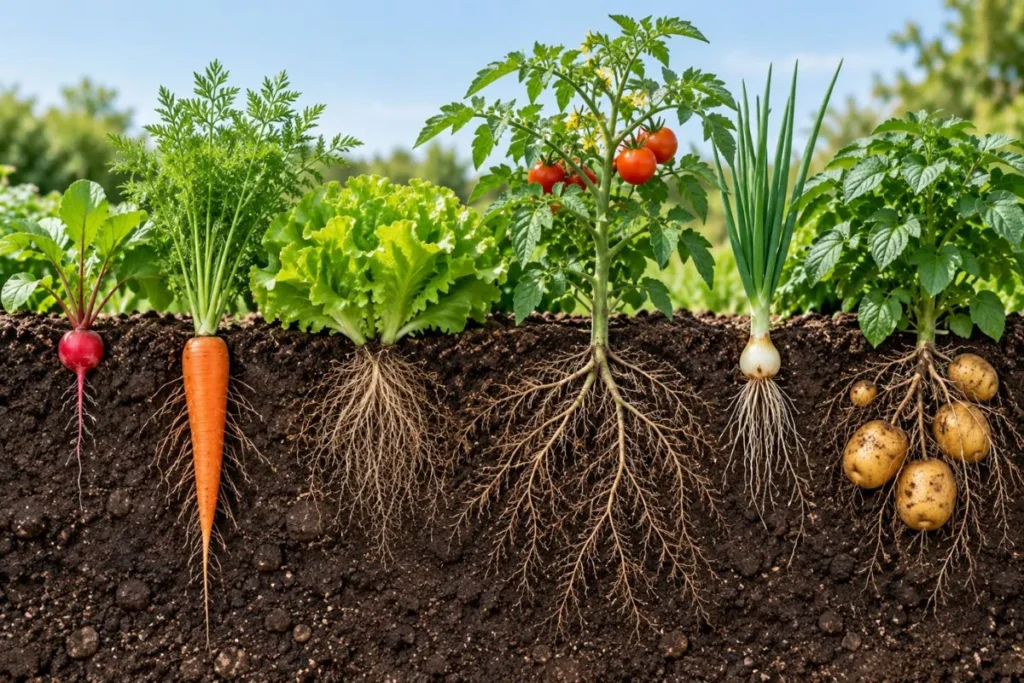
For example, carrots grow deep underground, while lettuce has relatively shallow roots. Growing them together makes better use of available space and encourages healthier development for both crops.
Understanding root depth is an important part of mixed planting and helps improve overall garden productivity.
Consider Growth Habits
Every plant has its own growth pattern. Some climb, some spread across the ground, and others remain compact throughout the season. Choosing companion plants with compatible growth habits prevents overcrowding and allows each crop to receive enough sunlight and airflow.
Climbing beans, for instance, can grow vertically on supports while low-growing herbs occupy the space below. This creates a more efficient garden layout and is especially useful in raised beds and smaller gardens.
Match Flowering Times
Flowering plants play an important role in companion planting because they attract bees, butterflies, and other beneficial insects. Selecting flowers that bloom throughout the growing season ensures pollinators continue visiting your garden.
Plants such as calendula, lavender, borage, and yarrow provide a steady source of nectar while supporting nearby vegetables. This not only improves pollination but also encourages greater garden biodiversity, creating a healthier ecosystem.
Follow Basic Companion Planting Rules
Successful companion planting doesn’t have to be complicated. A few simple guidelines can make a big difference.
Choose plants with similar growing requirements so they thrive under the same conditions. Avoid placing several heavy-feeding crops together because they compete for nutrients and can weaken one another.
Mix vegetables with herbs and flowers to encourage beneficial insects in the garden, improve natural pest management, and increase pollination. Finally, rotate crops each season to maintain healthy soil, reduce disease buildup, and support long-term organic companion planting.
By following these simple principles, you’ll have a much easier time choosing the best companion plants for your garden. Careful planning not only helps plants grow stronger but also creates a balanced, productive space that relies more on nature and less on chemicals.
Best Companion Plants for a Thriving Garden
Many gardeners think only vegetables can be used for companion planting. That’s far from true. Some of the best companion plants are actually herbs and flowers that naturally protect crops, attract pollinators, improve soil health, and reduce pest problems.
By mixing vegetables, herbs, and flowering plants, you can build a healthier and more productive garden without depending heavily on pesticides or chemical fertilizers.
Below are 21 of the best companion plants that can help your garden thrive naturally.
Basil
Basil is one of the most popular companion plants for vegetables, especially tomatoes. Its strong aroma helps confuse insects such as aphids, whiteflies, and mosquitoes, reducing pest pressure on nearby crops. Basil also attracts bees that improve pollination throughout the garden.
It grows well alongside tomatoes, peppers, lettuce, and asparagus. Since basil enjoys warm weather and similar growing conditions, it’s an excellent choice for anyone looking for the best companion plants for tomatoes.
Marigolds
Marigolds are famous for their ability to support healthy gardens. Their bright flowers attract bees, hoverflies, and ladybugs while helping reduce harmful insects like aphids and nematodes.
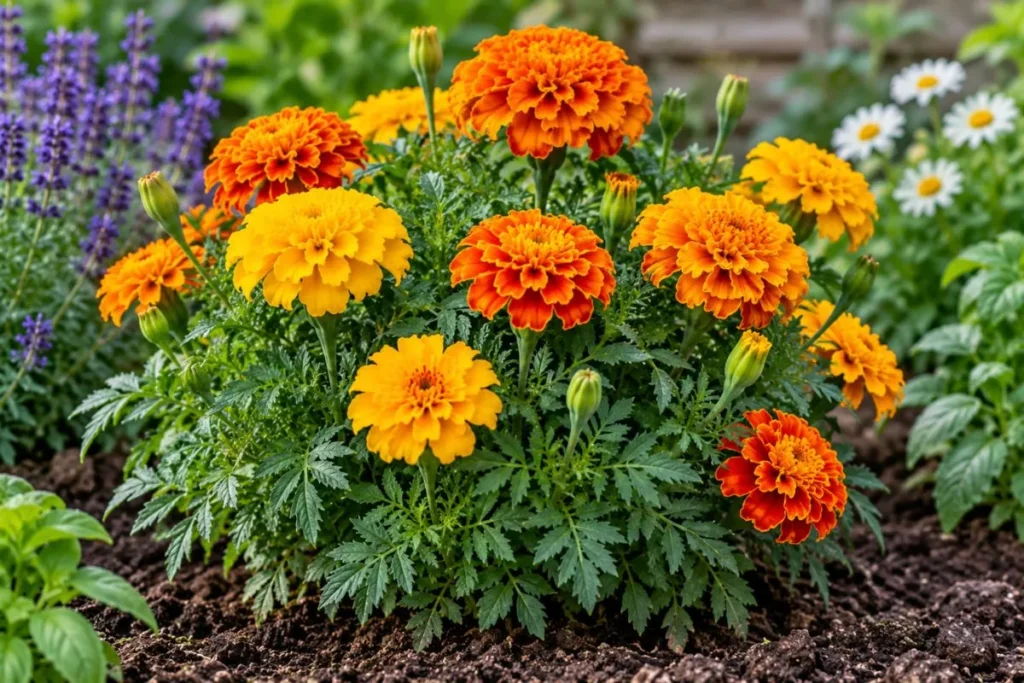
They grow well near tomatoes, cucumbers, peppers, beans, and squash. Besides improving natural garden pest control, marigolds add vibrant color that makes any vegetable garden more attractive.
Nasturtiums
Nasturtiums work as a natural trap crop by attracting aphids and certain beetles away from vegetables. This helps protect valuable crops while providing colorful flowers that pollinators love.
Plant nasturtiums near cucumbers, cabbage, pumpkins, and beans for better pest management and improved garden biodiversity.
Lavender
Lavender is valued for both its fragrance and its ability to attract bees and butterflies. At the same time, its strong scent helps discourage moths, fleas, and mosquitoes from the garden.
It grows well around herbs, vegetable beds, and fruit plants while adding beauty and supporting healthy pollination.
Rosemary
Rosemary is another aromatic herb that serves as an excellent natural companion. Its strong scent helps repel cabbage moths, bean beetles, and carrot flies while attracting beneficial pollinators.
It pairs particularly well with cabbage, beans, carrots, and sage, making it one of the top companion plants for organic gardens.
Chives
Chives are small but highly effective companion plants. Their onion-like fragrance helps deter aphids, Japanese beetles, and other common garden pests.
They grow especially well near carrots, tomatoes, apples, and roses while producing edible leaves that can be harvested throughout the season.
Dill
Dill attracts beneficial insects such as ladybugs, lacewings, and parasitic wasps that naturally control garden pests. It also supports pollinators by producing clusters of nectar-rich flowers.
This herb grows well beside cucumbers, onions, cabbage, and lettuce, making it one of the best herbs for companion planting.
Calendula
Calendula produces bright blooms that attract bees, butterflies, and other beneficial insects throughout the growing season. It also helps reduce populations of aphids and whiteflies by encouraging natural predators.
Its long flowering period makes it an excellent addition to vegetable gardens and flower borders alike.
Mint
Mint is well known for its refreshing scent, but it also helps discourage ants, flea beetles, and some flying insects. Because mint spreads aggressively through underground runners, it’s best grown in containers placed near garden beds.
Using containers allows you to enjoy mint’s pest-repelling benefits without letting it take over your garden.
Borage
Borage is one of the most valuable flowering companion plants. It attracts large numbers of bees, improving pollination for nearby vegetables and fruit crops.
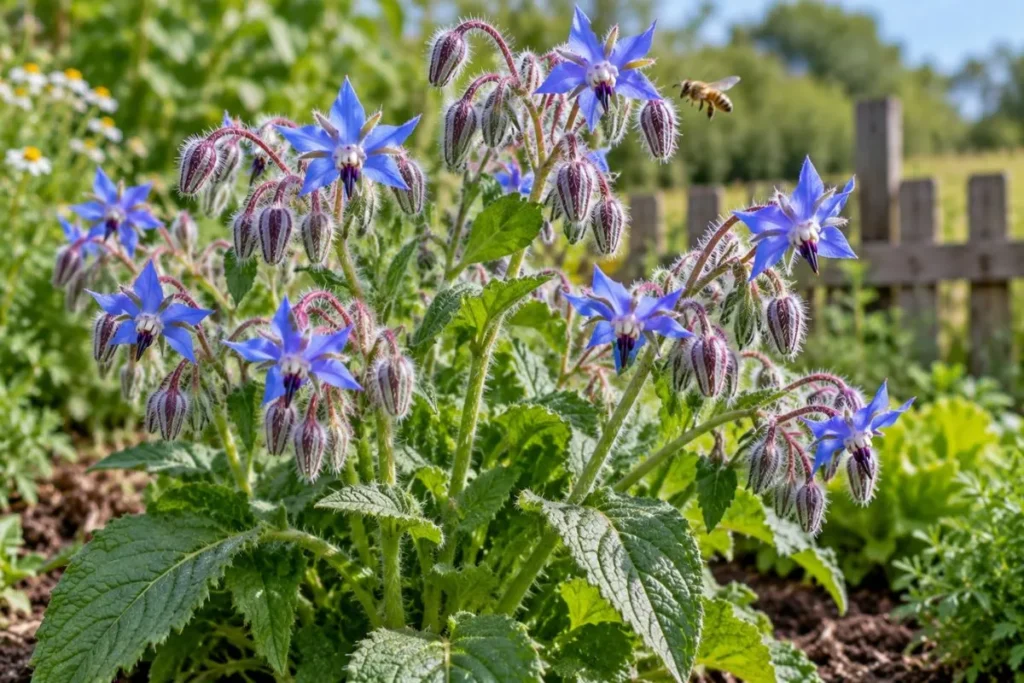
Gardeners often grow borage near tomatoes, squash, strawberries, and cucumbers because it supports stronger plant growth while increasing beneficial insect activity.
Garlic
Garlic naturally produces sulfur compounds that repel aphids, spider mites, and other common garden pests. It also helps reduce certain fungal problems around neighboring plants.
Growing garlic near roses, tomatoes, peppers, and fruit trees provides an extra layer of natural protection while producing an edible harvest.
Onions
Onions have a strong scent that helps mask nearby vegetables from insects looking for food. They are especially useful when planted near carrots because they help discourage carrot flies.
They also grow successfully beside lettuce, beets, strawberries, and cabbage.
Beans
Beans do more than produce delicious vegetables. As legumes, they naturally add nitrogen to the soil through beneficial bacteria living on their roots. This improves soil fertility for nearby crops.
Beans are commonly planted with corn, cucumbers, radishes, and potatoes as part of traditional companion planting combinations.
Peas
Like beans, peas enrich the soil with nitrogen while requiring very little additional fertilizer. Their climbing habit also makes efficient use of vertical space.
Peas pair well with carrots, lettuce, spinach, radishes, and turnips, making them excellent choices for cool-season gardens.
Sunflowers
Sunflowers offer much more than beautiful blooms. Their tall stems provide natural support for climbing vegetables while attracting bees, butterflies, and birds.
Growing sunflowers near cucumbers, beans, and squash can improve pollination and increase the overall diversity of your garden.
Yarrow
Yarrow produces clusters of flowers that attract ladybugs, lacewings, and parasitic wasps. These beneficial insects help control aphids, caterpillars, and other damaging pests.
Yarrow also improves soil quality as its leaves decompose, making it a valuable addition to organic companion planting systems.
Oregano
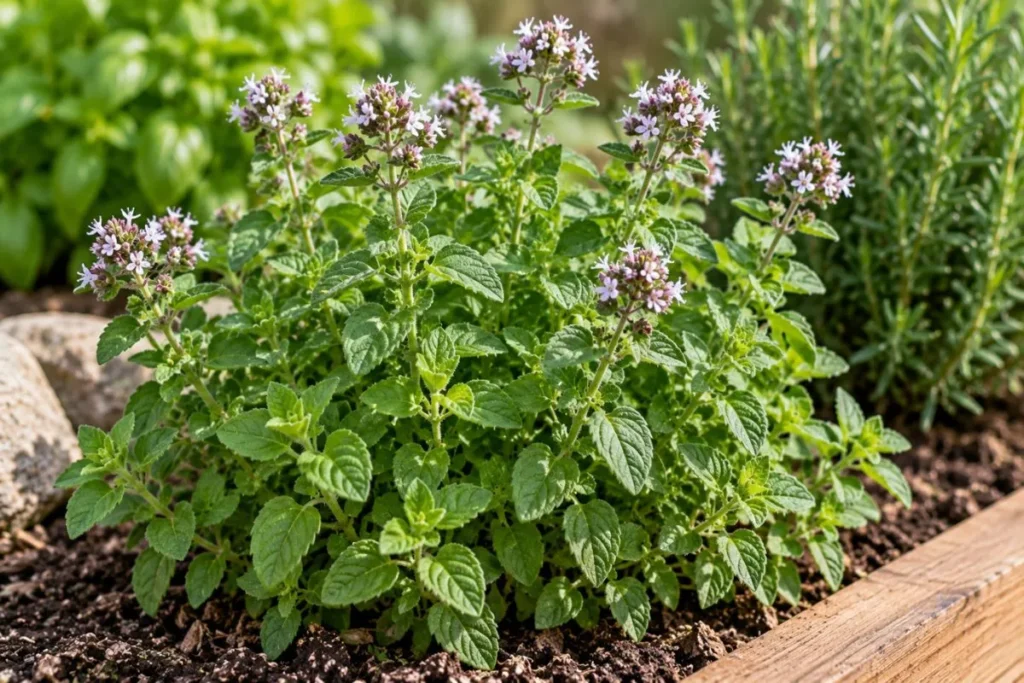
Oregano forms a dense, low-growing ground cover that helps suppress weeds while attracting bees with its small flowers. Its aromatic leaves may also discourage several insect pests.
It grows well beside peppers, tomatoes, cabbage, and many Mediterranean herbs.
Thyme
Thyme is a compact herb that attracts pollinators while helping deter cabbage worms and other destructive insects. Because it remains relatively low, it works well along garden borders and pathways.
Its drought tolerance also makes thyme a practical companion for vegetables that prefer well-drained soil.
Sage
Sage is widely appreciated for its strong fragrance, which helps discourage cabbage moths and carrot flies. It also attracts bees when allowed to flower.
Plant sage near cabbage, broccoli, cauliflower, and carrots for improved natural pest management.
Chamomile
Chamomile is often called the “plant doctor” because many gardeners believe it supports the health of nearby plants. Its flowers attract pollinators and beneficial insects while adding beauty to the garden.
Chamomile grows well beside herbs, onions, brassicas, and many flowering plants.
Clover
Clover is an outstanding living mulch that protects the soil while fixing nitrogen naturally. It reduces weed growth, improves soil structure, and helps retain moisture during dry periods.
Many gardeners use clover between vegetable rows or around fruit trees as part of a sustainable gardening system. It supports healthy soil, encourages pollinators, and remains one of the best companion plants for organic gardening.
These 21 best companion plants show that successful gardening isn’t just about growing individual crops it’s about creating plant partnerships that benefit the entire garden.
By combining vegetables, herbs, and flowers with similar growing needs, you can naturally reduce pests, attract pollinators, improve soil health, and enjoy stronger harvests throughout the season.
Best Companion Plants for Popular Vegetables
Many gardeners assume that the same companion plants work for every vegetable. In reality, each crop has different growing habits, nutrient needs, and pest problems.
Choosing the best companion plants for specific vegetables helps improve growth, reduce insect damage, and increase harvests naturally. Below are some of the most effective companion plants for vegetables that every gardener should know.
Best Companion Plants for Tomatoes
Tomatoes grow best when surrounded by plants that attract pollinators and discourage common pests. Basil is one of the most popular companions because its strong aroma helps confuse insects while thriving under the same growing conditions.
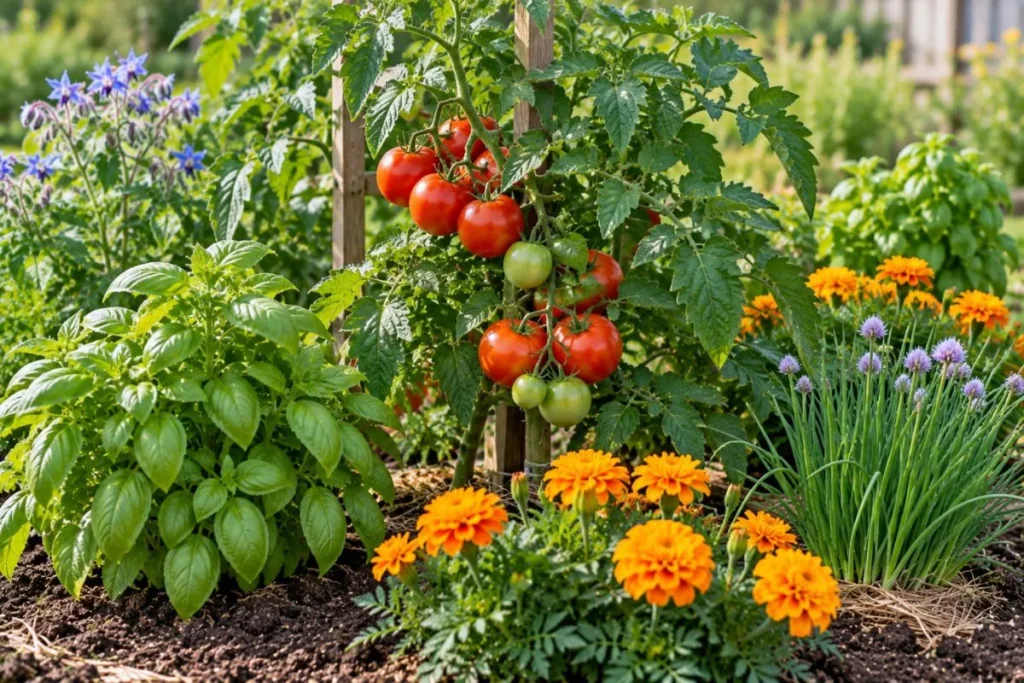
Marigolds attract beneficial insects and may help reduce soil pests, while garlic and chives naturally repel aphids and other sap-sucking insects. Borage is another excellent choice because it attracts bees that improve pollination and supports healthier tomato plants.
These combinations make some of the best companion plants for tomatoes in both garden beds and containers.
Best Companion Plants for Cucumbers
Cucumbers benefit from companions that improve pollination and help keep insect populations under control. Dill attracts ladybugs and lacewings that feed on harmful pests, while nasturtiums act as a trap crop by drawing aphids away from cucumber vines.
Marigolds provide additional pest protection, and beans naturally improve soil fertility by adding nitrogen. Together, these plants create one of the most productive companion planting combinations for healthy cucumber growth.
Best Companion Plants for Peppers
Peppers thrive alongside herbs and flowers that encourage pollinators and reduce pest activity. Basil grows well with peppers because both enjoy warm weather and similar watering conditions.
Onions help mask the scent of pepper plants from insects, while marigolds attract beneficial insects that support natural garden pest control. This combination encourages stronger plants and better fruit production throughout the season.
Best Companion Plants for Carrots
Carrots grow underground, but they still benefit from carefully selected companions. Chives and onions help discourage carrot flies with their strong aroma, while rosemary offers additional protection against common garden pests.
Since these plants have compatible growing requirements, they create a balanced planting arrangement that supports healthier root development and improves harvest quality.
Best Companion Plants for Lettuce
Lettuce grows quickly and pairs well with plants that don’t compete for space or sunlight. Basil provides light pest protection, while chives help deter aphids that commonly attack leafy greens.
Radishes also make excellent companions because they mature quickly and help maximize available garden space. These best companion plants allow gardeners to enjoy continuous harvests from small growing areas.
Best Companion Plants for Cabbage
Cabbage is often targeted by cabbage worms and moths, making companion planting especially valuable. Sage, rosemary, and thyme release strong scents that help confuse these pests, while dill attracts beneficial insects that feed on caterpillars and other harmful bugs.
Growing these herbs together with cabbage provides an effective and eco-friendly solution for protecting brassica crops without relying on chemical pesticides.
Best Companion Plants for Beans
Beans naturally enrich the soil by fixing nitrogen, making them valuable companions for many vegetables. Corn is a classic planting partner because bean vines can climb the tall stalks, while marigolds help reduce pest problems around the planting area.
Nasturtiums also attract aphids away from bean plants, helping protect the crop naturally. This traditional combination supports healthier plants, improves soil fertility, and creates one of the best companion planting ideas for home vegetable gardens.
Frequently Asked Questions
What are the best companion plants?
The best companion plants are those that naturally support the growth of nearby crops. Herbs like basil, rosemary, thyme, and chives help repel pests, while flowers such as marigolds, calendula, nasturtiums, and yarrow attract pollinators and beneficial insects.
Beans and clover also improve soil by adding nitrogen, making them excellent companions for many vegetables.
What vegetables grow best together?
Many vegetables grow better when paired with compatible companions. Tomatoes and basil are one of the most popular combinations because they share similar growing conditions.
Carrots grow well with onions and chives, while cucumbers benefit from dill and nasturtiums. Corn and beans are another classic pairing that improves space and soil use. Choosing the right companion plants for vegetables helps create a healthier and more productive garden.
Which companion plants keep pests away?
Several companion plants naturally discourage common garden pests. Marigolds help reduce nematodes and attract beneficial insects, while rosemary, sage, and thyme repel cabbage moths and other insects.
Garlic and onions produce strong scents that confuse aphids and carrot flies. If you’re looking for the best companion plants to keep pests away, combining herbs and flowers throughout your garden is one of the most effective natural solutions.
What are the best companion plants for beginners?
If you’re new to companion planting, start with easy and reliable combinations. Basil with tomatoes, marigolds with vegetables, dill with cucumbers, and chives with carrots are simple choices that require little extra care.
These plants grow well together and provide noticeable benefits, making them ideal for anyone learning how to choose the best companion plants.
Can herbs be used as companion plants?
Yes. Herbs are among the most valuable companion plants because many produce natural scents that discourage harmful insects while attracting pollinators.
Basil, rosemary, oregano, thyme, sage, dill, mint, and chives all work well in vegetable gardens. Besides protecting nearby crops, they also provide fresh herbs for cooking throughout the growing season.
What plants should not be planted together?
Not every plant combination is beneficial. For example, onions and beans generally don’t grow well together because onions can slow bean growth. Potatoes and tomatoes may spread similar diseases, while fennel is known to inhibit the growth of many nearby plants.
Understanding both good and poor plant pairings is an important part of successful companion planting combinations.
Does companion planting really work?
Yes, companion planting can be very effective when used correctly. Although it won’t eliminate every pest or disease, it helps improve pollination, supports beneficial insects, reduces pest pressure, and encourages healthier plant growth.
When combined with proper watering, healthy soil, and regular garden maintenance, companion planting becomes a valuable part of organic gardening.
Which flowers are best for companion planting?
Flowers play an important role in attracting pollinators and beneficial insects. Marigolds, nasturtiums, calendula, sunflowers, lavender, chamomile, and yarrow are some of the best flowers for companion planting.
They add color to the garden while helping protect vegetables from harmful insects.
Is companion planting good for organic gardening?
Absolutely. Companion planting is one of the simplest ways to support organic companion planting practices. It reduces the need for chemical pesticides, encourages biodiversity, improves soil health, and creates a balanced growing environment.
That’s why many gardeners consider it an essential part of sustainable gardening.
Can I use companion planting in raised beds?
Yes. Companion planting works exceptionally well in raised beds because space is limited and every plant needs to perform efficiently. Combining vegetables with herbs and flowers helps maximize growing space while improving pest control and pollination.
If you’re searching for the best companion plants for raised beds, choose varieties with similar sunlight, watering, and soil requirements to achieve the best results.
Conclusion:
Choosing the best companion plants is one of the easiest ways to create a healthier, more productive garden without relying on harsh chemicals.
Instead of growing vegetables, herbs, and flowers separately, you can use smart companion planting combinations that naturally improve plant health, attract pollinators, enrich the soil, and reduce common garden pests.
Even small changes in the way you arrange your plants can make a noticeable difference throughout the growing season.
Whether you’re growing tomatoes, cucumbers, peppers, carrots, lettuce, cabbage, or beans, selecting the right companion plants for vegetables helps each crop perform at its best.
Herbs like basil, rosemary, thyme, and chives, along with flowers such as marigolds, calendula, nasturtiums, and lavender, provide natural support while making your garden more colorful and diverse.
These top companion plants are suitable for traditional gardens, containers, and raised beds alike.
Remember that successful companion planting starts with good planning. Match plants with similar sunlight, water, and soil needs, avoid incompatible combinations, and rotate crops each season to maintain healthy soil.
By following these simple practices, you’ll enjoy stronger plants, fewer pest problems, and bigger harvests year after year.
Now it’s your turn to put these ideas into action. Start with a few of the best companion planting ideas, observe how your plants respond, and gradually expand your garden using proven pairings.
With patience and the right combinations, you’ll build a thriving, eco-friendly garden that rewards you with healthier plants and abundant harvests every season.

Plant Nest Blog’s author is passionate about plants, gardening, and sustainable living. Through research and practical experience, they share helpful plant care tips, gardening guides, and easy solutions to help readers grow healthier plants and create greener spaces.