
Growing cabbage at home can be rewarding, but moving young seedlings into the garden takes a little care. If you plant them too early, place them in poor soil, or damage their roots during transplanting, they may struggle to settle into their new location.
The good news is that transplanting cabbage doesn’t have to be difficult. With the right timing, prepared soil, enough space, and regular watering, you can give your young plants a healthy start.
Learning how to plant cabbage plants into the garden also helps you avoid common mistakes that can slow growth and affect head development.
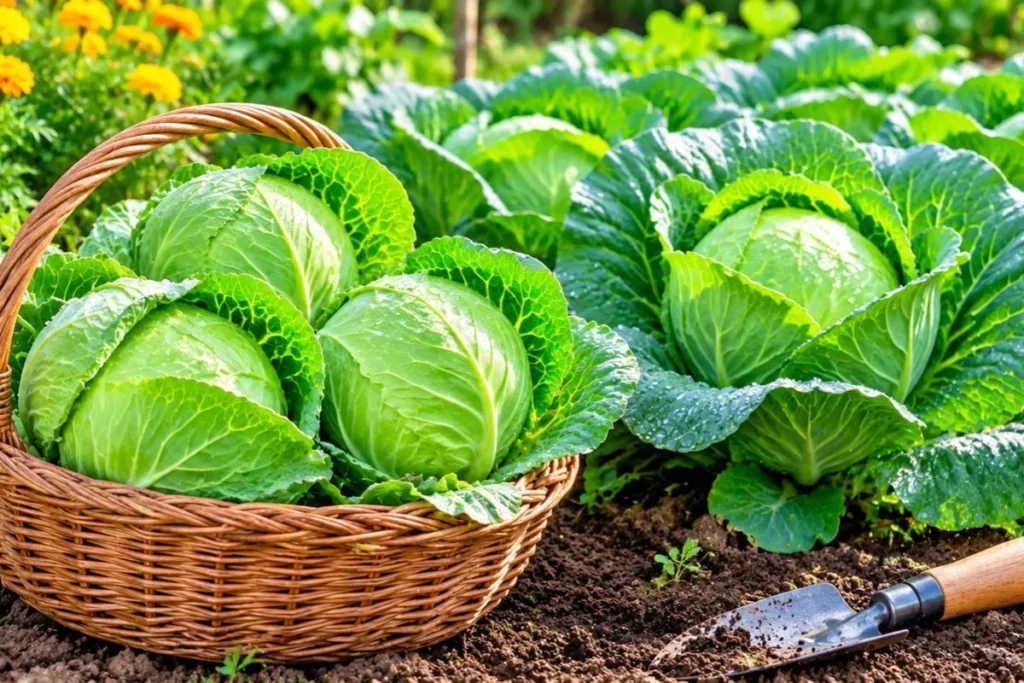
In this guide, you’ll learn how to prepare the garden bed, handle young seedlings, choose the right planting distance, and care for cabbage plants after transplanting so they have the conditions they need to grow well.
When Is the Best Time to Transplant Cabbage Plants? How to Plant Cabbage Plants Successfully
Timing plays an important role in helping cabbage seedlings adjust to outdoor conditions. Cabbage is a cool-season vegetable, so it generally grows best when temperatures are mild rather than extremely hot.
You can usually transplant cabbage seedlings when they have developed around four to six true leaves and have a reasonably strong root system. The plants should look healthy, with firm stems and green leaves. Avoid moving very small, weak seedlings into the garden because they may have difficulty adjusting.
Choose the Right Weather
A cloudy day or a cool afternoon is often a good time to transplant cabbage. Strong sunlight and hot weather can cause newly planted seedlings to lose moisture quickly. Planting during cooler conditions gives their roots a better chance to settle into the soil.
If you live in a region with warm winters and hot summers, consider growing cabbage during the cooler part of the year. In colder regions, gardeners often transplant cabbage in early spring or later in summer for a fall harvest.
Check the Soil Temperature
Cabbage prefers cool growing conditions, but the soil should not be frozen or excessively cold. It should be workable and moist enough to support healthy root development.
Before planting, check your local growing season and expected weather. A little planning can prevent seedlings from facing sudden temperature changes immediately after transplanting.
Prepare Cabbage Seedlings Before Transplanting
Before moving cabbage seedlings outside, give them time to adjust to outdoor conditions. Seedlings that have grown indoors or in a protected greenhouse are not immediately ready for direct sunlight, wind, and changing temperatures.
This adjustment process is called hardening off. It helps reduce transplant shock and makes it easier for young plants to adapt to the garden.
How to Harden Off Cabbage Seedlings
Start by placing your seedlings outside in a sheltered, partially shaded location for a few hours. Keep them away from strong winds and direct afternoon sunlight.
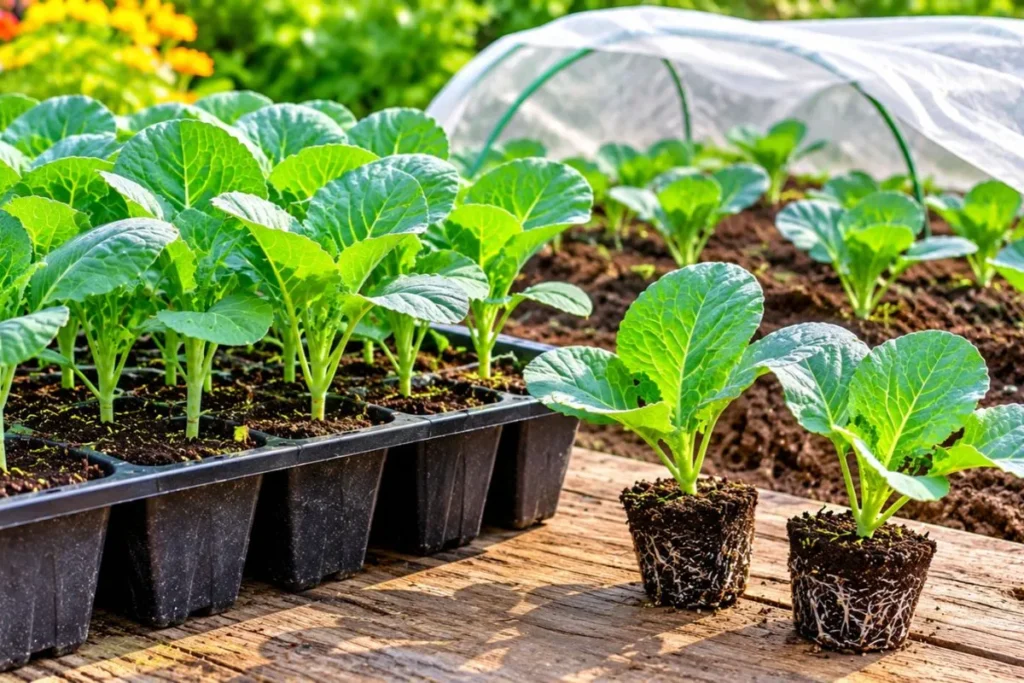
Gradually increase their outdoor time over the next seven to ten days. As they become stronger, allow them to receive more morning sunlight and experience normal outdoor conditions.
By the end of this period, your cabbage seedlings should be ready for transplanting. Keep the soil slightly moist during hardening off, but avoid overwatering.
Check the Roots Before Planting
Healthy cabbage seedlings should have firm stems, fresh green leaves, and roots that hold the growing medium together.
If roots are growing out of the drainage holes or circling tightly around the bottom of the container, the seedlings may be root-bound. Gently loosen the outer roots before planting, taking care not to tear them unnecessarily.
Avoid transplanting seedlings with damaged stems, yellowing leaves, or signs of disease.
How to Prepare Soil for Planting Cabbage Plants
Good soil preparation gives cabbage plants a strong foundation. Cabbage needs fertile, well-draining soil that holds enough moisture without becoming waterlogged.
Before transplanting, take some time to improve the garden bed. This is particularly important if your soil is hard, compacted, sandy, or low in organic matter.
Choose a Suitable Planting Location
Select a garden area that receives at least six hours of direct sunlight each day. Cabbage grows best with plenty of light, although some protection from intense afternoon heat can help in warmer climates.
Avoid low-lying areas where water collects after rainfall. Constantly wet soil can damage roots and encourage disease.
If possible, choose a location where you haven’t recently grown cabbage, broccoli, cauliflower, kale, or other members of the cabbage family. Rotating these crops helps reduce the buildup of certain soil-related pests and diseases.
Improve the Soil With Organic Matter
Remove weeds, stones, old roots, and plant debris from the planting area. Then loosen the soil to a depth of approximately 8 to 12 inches.
Mix in well-rotted compost or aged organic matter to improve soil structure, moisture retention, and fertility. If your garden soil is heavy clay, adding organic matter can help improve its texture and drainage.
Avoid using fresh manure because it can contain excessive nutrients and may damage young plants.
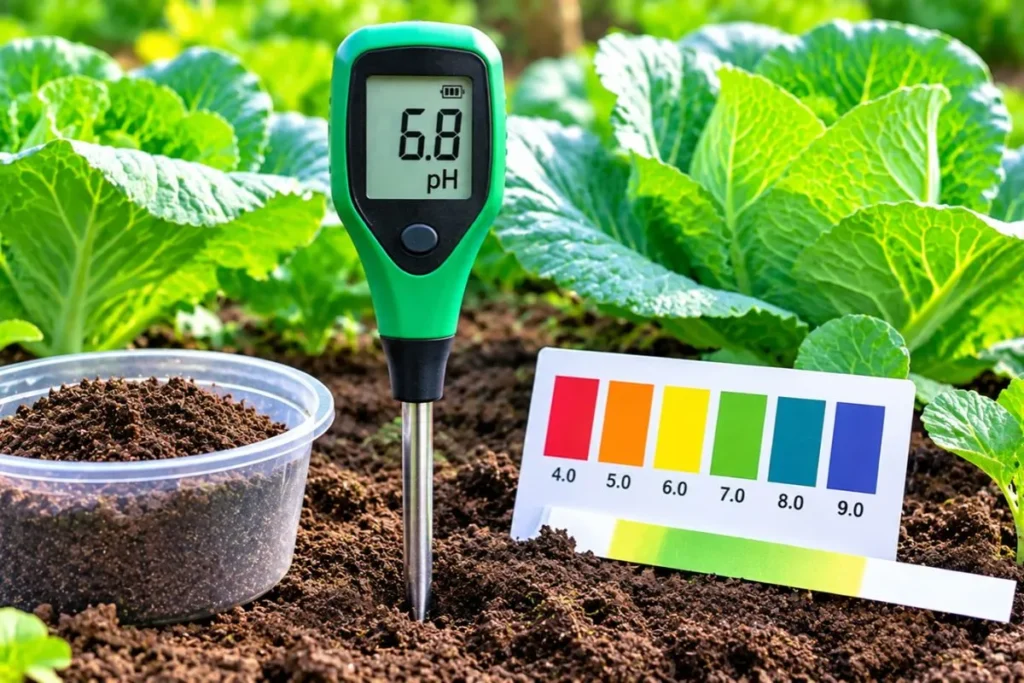
Check the Soil pH
Cabbage generally prefers slightly acidic to neutral soil, with a pH around 6.0 to 6.8.
A simple soil test can help you understand whether your garden bed needs adjustment. If the pH is too low or too high, use the test recommendations to determine the appropriate soil amendment.
Don’t add lime or other pH-adjusting materials without checking your soil first. Too much of an amendment can create additional growing problems.
Add the Right Nutrients
Cabbage needs nutrients to develop healthy leaves and form firm heads. Nitrogen supports leafy growth, while phosphorus and potassium contribute to overall plant development and health.
A balanced vegetable fertilizer or a fertilizer recommended by your soil test can help provide the nutrients your plants need.
Mix the recommended amount into the soil before transplanting, following the product instructions. Avoid placing concentrated fertilizer directly against the roots.
How to Transplant Cabbage Plants Into the Garden
Once the seedlings are ready and the soil is prepared, you can move them into the garden. The most important thing is to handle the roots gently and give each plant enough room to grow.
Follow these steps for a smooth transplanting process.
Water the Seedlings Before Removing Them
Water your cabbage seedlings a few hours before transplanting. Moist growing medium makes it easier to remove plants from their containers without disturbing the roots too much.
The soil should be moist but not dripping wet. Avoid pulling seedlings out by their stems because this can damage delicate tissues.
Dig the Planting Holes
Use a small garden trowel to make holes in your prepared garden bed.
Each hole should be wide enough to accommodate the root ball comfortably. Make the hole deep enough to cover the roots and support the base of the stem.
Leave enough space between holes so the cabbage plants won’t compete too heavily for sunlight, water, and nutrients as they mature.
Remove the Seedlings Carefully
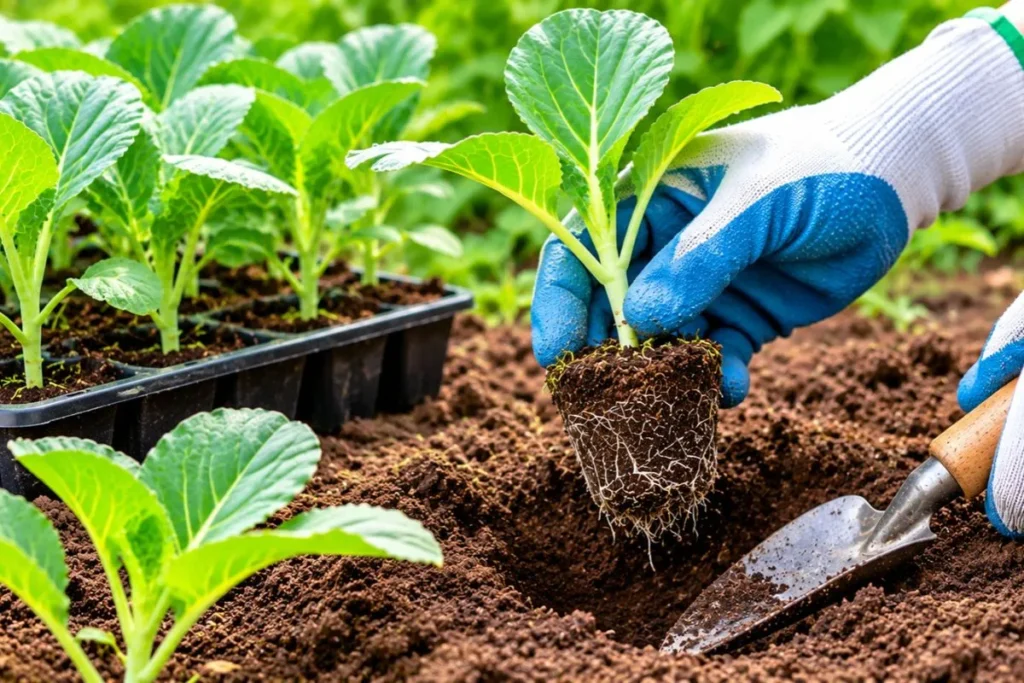
Hold the seedling gently around its root ball or leaves rather than squeezing its stem.
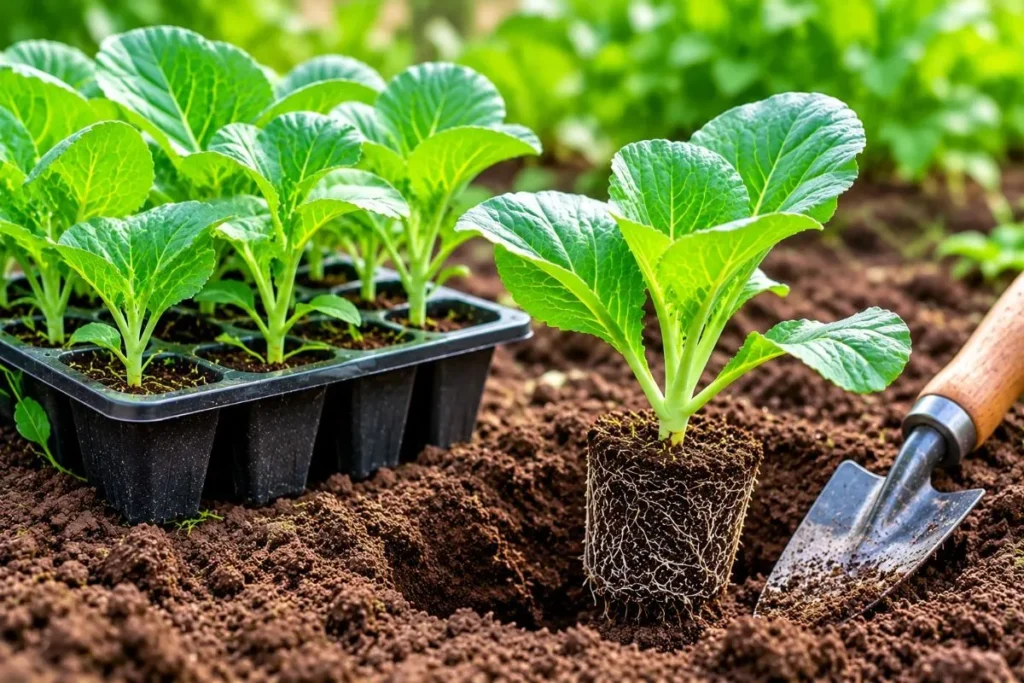
If you’re using plastic pots or seed trays, press the bottom gently to loosen the growing medium. Slide the plant out carefully and keep as much soil around the roots as possible.
If the roots are tightly packed, loosen them gently with your fingers.
Place Each Plant in the Hole
Position the cabbage seedling upright in the planting hole. Keep the roots spread naturally rather than bending or forcing them into a small space.
Set the plant at approximately the same depth it was growing in its original container. You can gently firm the surrounding soil to remove large air pockets.
Avoid burying the growing point at the center of the plant. This is where new leaves develop, and covering it can interfere with healthy growth.
Fill the Hole With Soil
Return the loose soil around the root ball and gently press it into place.
Don’t pack the soil too tightly because roots need air as well as moisture. The seedling should stand upright without leaning or wobbling.
Check that the soil surface is level with the surrounding garden bed.
Water Immediately After Planting
Give each newly transplanted cabbage plant a gentle, thorough watering.
Watering helps settle the soil around the roots and reduces the air pockets that may have formed during planting.
Make sure the water reaches the root zone rather than simply wetting the leaves. If the soil settles too much, add a little more around the roots.
How Far Apart Should You Plant Cabbage Plants?
Proper spacing is essential for healthy cabbage growth. When plants are crowded, they compete for sunlight, water, and nutrients. Poor airflow can also create conditions that encourage fungal problems.
The ideal spacing depends on the cabbage variety and the size of the mature heads.
| Cabbage type | Suggested spacing |
| Small or compact varieties | 12–15 inches |
| Medium cabbage varieties | 15–18 inches |
| Large cabbage varieties | 18–24 inches |
| Row spacing | 24–36 inches |
Always check the seed packet or plant label because some varieties need more room than others.
If you want larger cabbage heads, avoid overcrowding the plants. Giving them enough growing space makes garden maintenance easier and allows leaves to spread naturally.
What to Do Immediately After Transplanting Cabbage
Your work doesn’t end when the seedlings are in the ground. The first few days after transplanting are important because young cabbage plants need time to establish their roots.
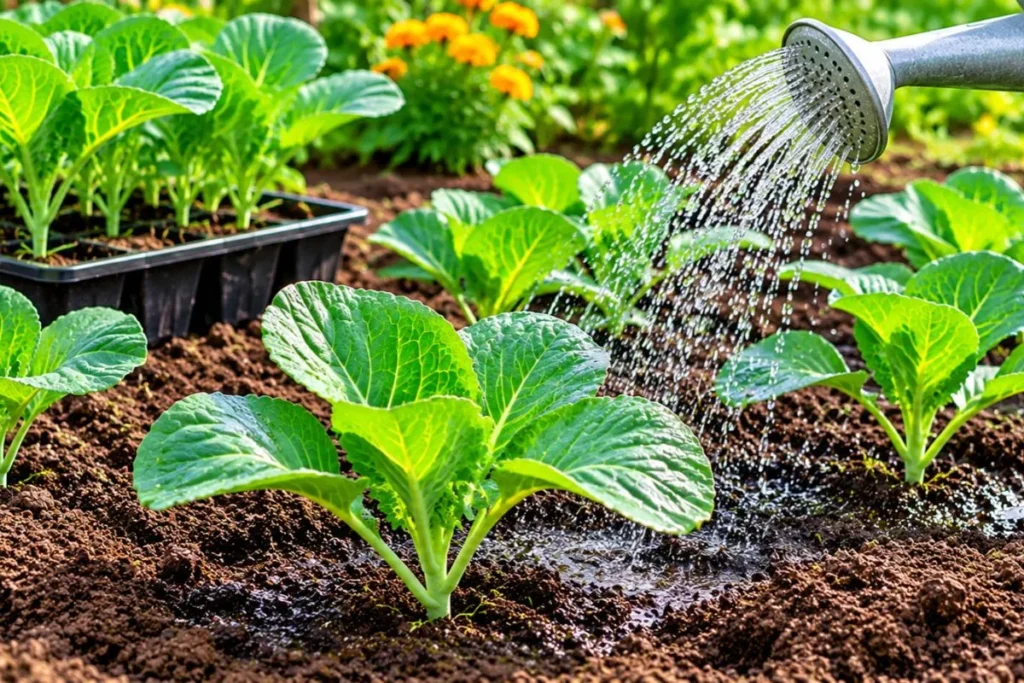
Some temporary drooping is normal after moving seedlings, especially when the weather is warm. However, you should take a few simple steps to help them recover.
Provide Temporary Shade if Needed
If the weather is sunny or unusually warm, protect newly transplanted seedlings from harsh afternoon sunlight for the first day or two.
You can use garden shade cloth or another suitable covering that allows air to circulate. Remove or adjust the protection as the seedlings recover.
Avoid keeping cabbage plants under heavy shade for long periods because they need sufficient sunlight for healthy growth.
Keep the Soil Consistently Moist
Check the soil regularly during the first week. Water when the upper layer begins to dry, making sure the root zone receives enough moisture.
Don’t follow a rigid watering schedule without checking the soil. Temperature, rainfall, soil type, and plant size all affect how frequently you need to water.
Apply a Layer of Mulch
Spread a thin layer of clean organic mulch around the cabbage plants. Straw, shredded leaves, or untreated grass clippings can help reduce moisture loss and suppress weeds.
Keep the mulch a little away from the main stem to avoid creating a constantly damp area around the plant’s base.
Mulching is especially helpful in gardens where the soil dries out quickly.
7. How to Water Cabbage Plants After Transplanting
Cabbage needs consistent moisture to support leaf development and healthy head formation. Irregular watering can stress plants and contribute to problems such as poorly developed heads.
However, giving them too much water is not helpful either.
Water According to Soil Conditions
Check the soil by touching it with your fingers. If the top inch feels dry, it’s generally a good time to water, particularly during dry weather.
Water deeply enough to reach the roots instead of giving the plants frequent, shallow sprinkles.
Sandy soil may need more frequent watering because it drains quickly. Clay soil holds moisture longer, so check it carefully before adding more water.
Water at the Base of the Plants
Whenever possible, direct water toward the soil rather than spraying the leaves.
Watering near the base helps reduce unnecessary leaf wetness and makes it easier to deliver moisture where the plant needs it.
Morning is usually a convenient time to water because excess moisture on the foliage has more time to dry during the day.
How to Care for Cabbage Plants as They Grow
Once cabbage seedlings recover from transplanting, focus on maintaining steady growing conditions. Healthy plants need enough sunlight, nutrients, moisture, and protection from common garden problems.
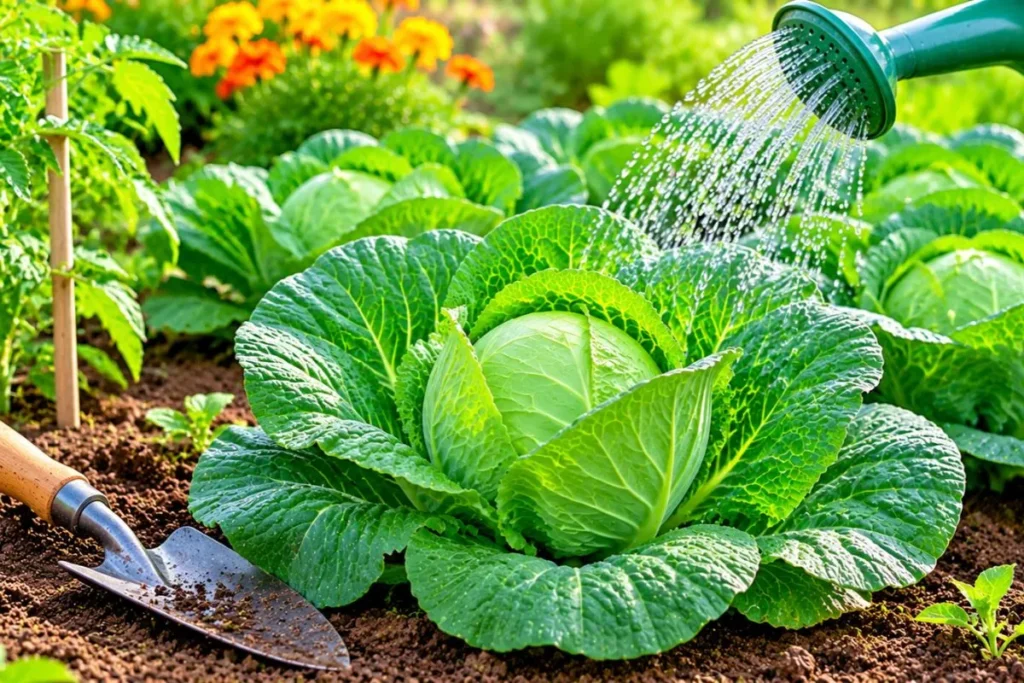
Feed the Plants When Needed
Cabbage is a relatively heavy feeder, especially while developing its large leaves.
If your soil is fertile and you added compost before planting, your plants may not need much additional fertilizer at first.
As they grow, you can use a suitable vegetable fertilizer according to the package directions or your soil test recommendations.
Avoid adding too much nitrogen late in the growing season. Excessive nitrogen can encourage leafy growth without necessarily improving head development.
Remove Weeds Regularly
Weeds compete with cabbage plants for water, nutrients, and growing space.
Pull small weeds by hand or use a shallow hoe around the plants. Be careful not to dig deeply because cabbage has roots close to the soil surface.
A layer of organic mulch can also reduce the amount of weeding required.
Watch for Garden Pests
Cabbage plants can attract several common garden pests, including cabbage worms, aphids, and cabbage loopers.
Check the undersides of leaves regularly. Look for small holes, curled leaves, clusters of insects, or tiny eggs.
You can handpick larger caterpillars and remove heavily infested leaves when appropriate. Floating row covers can also help prevent many flying pests from reaching young plants.
If you use an insect-control product, choose one labeled for edible vegetables and follow its instructions carefully, including any harvest waiting period.
Keep an Eye on Head Development
As cabbage matures, the center leaves begin to fold inward and form a compact head.
Continue providing consistent moisture and avoid disturbing the roots. If the heads start to feel firm when gently squeezed, they may be approaching harvest time.
Not every cabbage variety forms the same-sized head, so use the expected maturity information on the seed packet as a guide.
Common Mistakes to Avoid When Transplanting Cabbage
Even if you follow the basic planting steps, a few mistakes can make it harder for cabbage seedlings to establish themselves.
Here are some problems worth avoiding.
Planting Seedlings Without Hardening Them Off
Moving indoor seedlings directly into strong outdoor sunlight can cause leaf stress and transplant shock.
Give them around seven to ten days to adjust gradually before planting them permanently outside.
Planting in Poorly Drained Soil
Cabbage needs moisture, but its roots should not sit in waterlogged soil.
If your garden has drainage problems, improve the soil with organic matter or consider using raised beds.
Crowding the Plants
Planting cabbage too closely may limit airflow and prevent leaves from developing properly.
Follow the recommended spacing for your variety instead of trying to fit too many plants into one bed.
Burying the Center of the Plant
The growing point is essential for producing new leaves and forming a cabbage head.
Keep it above the soil when transplanting, and avoid piling soil over the center.
Allowing the Soil to Dry Out
Cabbage plants can become stressed when moisture levels change dramatically.
Check the soil regularly, especially during dry or windy weather. Mulch can help maintain more consistent moisture.
Transplanting During Extreme Heat
Hot weather can make it harder for newly planted seedlings to recover.
Choose a cooler day or plant in the late afternoon when temperatures are more comfortable.
How Long Does Cabbage Take to Grow After Transplanting?
Cabbage doesn’t produce mature heads immediately after transplanting. The growing period depends on the variety, weather, soil quality, and care.
Many cabbage varieties take approximately 60 to 100 days from transplanting to maturity, although some early or late varieties fall outside this range.
During the first few weeks, plants mainly focus on establishing their roots and producing larger outer leaves. As they mature, the inner leaves gradually form a compact head.
Check your seed packet for the expected maturity period. Also, remember that cool growing conditions and consistent moisture help support healthy development.
When and How to Harvest Cabbage
Knowing when to harvest cabbage helps you enjoy fresh, firm heads at their best.
Most cabbage heads are ready when they feel firm and solid when gently squeezed. Their size depends on the variety, so don’t rely on size alone.
Use a sharp, clean garden knife to cut the head just below its base. Leave a few outer leaves if you want to protect the remaining plant.
Some cabbage varieties may produce small secondary heads from the remaining stem after the main head is harvested. These smaller heads won’t always develop, but leaving the plant in place gives you a chance to enjoy additional growth.
Harvest cabbage before the heads become overly tight and start splitting. Regularly checking mature plants helps you avoid missing the right harvesting window.
Frequently Asked Questions About Transplanting Cabbage Plants
Can you transplant cabbage plants directly into the garden?
Yes, you can transplant cabbage seedlings directly into a prepared garden bed. Choose healthy seedlings with several true leaves, harden them off before planting, and water them thoroughly afterward.
How deep should you plant cabbage seedlings?
Plant cabbage seedlings at approximately the same depth they were growing in their original containers. Cover the roots and stabilize the base of the plant, but keep the growing point above the soil.
How far apart should cabbage plants be planted?
Most cabbage plants need around 12 to 24 inches of spacing, depending on their mature size. Leave approximately 24 to 36 inches between rows to provide enough room for growth and maintenance.
Do cabbage plants need full sun?
Cabbage generally grows best with at least six hours of direct sunlight daily. In regions with intense heat, some afternoon protection can help reduce stress.
Can you transplant cabbage plants in hot weather?
You can transplant cabbage during warmer weather, but extreme heat makes establishment more difficult. Choose a cooler day, plant in the late afternoon, and provide temporary shade if necessary.
Why are my cabbage plants wilting after transplanting?
Wilting can happen because of transplant shock, damaged roots, dry soil, or excessive heat. Keep the soil consistently moist, protect seedlings from harsh afternoon sunlight, and avoid disturbing their roots.
If plants continue wilting despite proper care, check for root damage, pests, or signs of disease.
Should I remove the lower leaves of cabbage plants?
You generally don’t need to remove healthy lower leaves. They help the plant collect sunlight and support growth. Only remove leaves that are dead, badly damaged, or diseased.
What is the best fertilizer for cabbage plants?
A balanced vegetable fertilizer can work well when the soil needs additional nutrients. Cabbage also benefits from fertile soil enriched with well-rotted compost. A soil test can help you choose the right fertilizer and avoid unnecessary applications.
Can cabbage grow in containers after transplanting?
Yes, compact cabbage varieties can grow in containers. Choose a pot with drainage holes and enough room for the roots, ideally at least 5 gallons for an individual plant. Use a good-quality vegetable potting mix and monitor moisture regularly because containers dry out faster than garden beds.
How often should I water newly transplanted cabbage?
Water thoroughly immediately after transplanting. During the following days, check the soil regularly and water whenever the upper layer begins to dry. Adjust watering according to rainfall, temperature, and soil conditions.
Conclusion:
Successful cabbage growing starts with giving young seedlings the right conditions when they move into the garden. Choose healthy plants, prepare fertile and well-draining soil, and transplant them carefully without damaging their roots.
Pay attention to spacing, keep the soil consistently moist, and protect young plants from extreme weather while they establish themselves. Regularly check for weeds and common cabbage pests as the plants develop.
Once you understand how to transplant cabbage plants into the garden, the process becomes much easier. A little preparation and consistent care can help your seedlings develop into strong plants with healthy, firm cabbage heads.

Plant Nest Blog’s author is passionate about plants, gardening, and sustainable living. Through research and practical experience, they share helpful plant care tips, gardening guides, and easy solutions to help readers grow healthier plants and create greener spaces.