
Growing beetroot at home is easier than you might think. You don’t need a large garden, expensive equipment, or years of gardening experience to enjoy fresh, homegrown beets. A small garden bed, a few containers, and good-quality seeds are enough to get started.
How to Germinate Beet Seeds can sometimes be frustrating. You might plant them carefully, water the soil, and wait several days without seeing anything happen. The good news is that beet seeds usually germinate well when they receive the right amount of moisture, warmth, and suitable soil conditions.
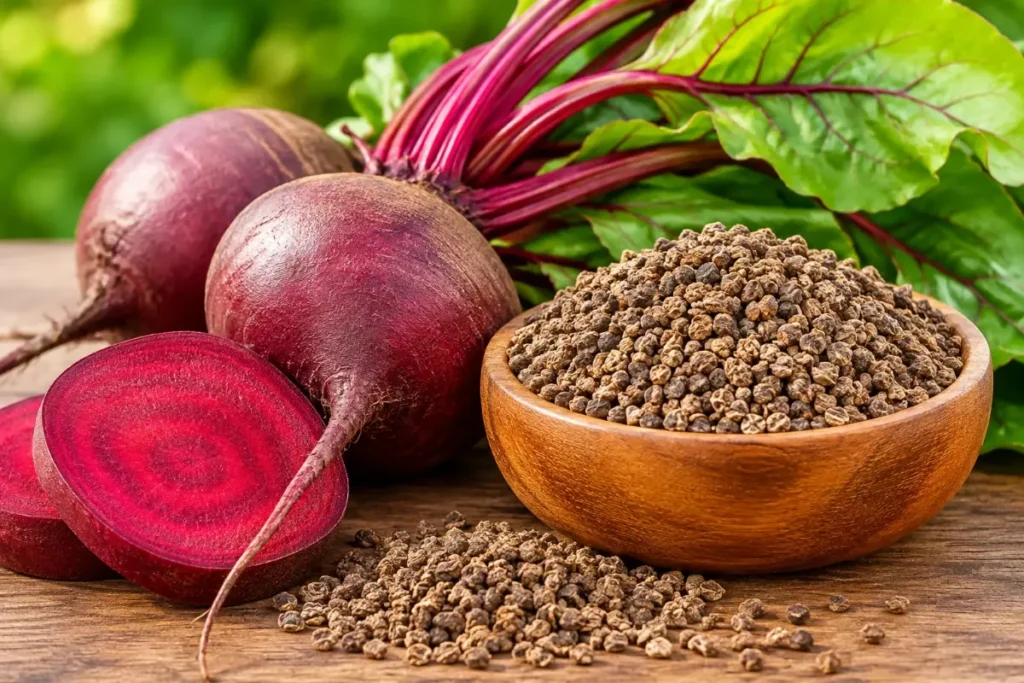
If you’re wondering how to grow beetroot from seed, the key is to understand how these seeds work and what they need during their early growth. In this guide, you’ll learn how to prepare the soil, plant beet seeds at the correct depth, encourage germination, and care for young seedlings so they develop into healthy plants.
Choose the Right Beetroot Seeds
Before planting anything, start with good-quality beetroot seeds. Fresh seeds generally have a better chance of germinating than old seeds that have been stored in poor conditions.
Beetroot comes in several varieties, and each offers something slightly different. Some produce deep red roots, while others have golden, white, or striped flesh.
Popular varieties include Detroit Dark Red, Early Wonder, Golden Beet, and Chioggia. Detroit Dark Red is a popular choice for home gardens because it produces attractive, deep-red roots and grows well in suitable conditions.
When choosing seeds, check the packaging for the variety, sowing instructions, and expiry date. If you’re growing beetroot for the first time, choose a variety that suits your local climate and growing season.
Prepare the Soil Before Planting
Healthy soil makes a big difference when growing beetroot from seed. These plants develop underground roots, so they need loose, well-draining soil that allows the roots to expand without difficulty.
Start by removing stones, weeds, and other debris from your planting area. Break up large soil clumps and loosen the ground to a depth of around 8–10 inches.
Mix in some mature compost to improve soil structure and provide organic matter. Avoid adding too much fresh manure or excessive nitrogen fertilizer because this can encourage leafy growth at the expense of root development.
Beetroot grows best in slightly acidic to neutral soil, with a pH around 6.0–7.0. If your garden soil is heavy clay, improve drainage by adding organic matter before planting.
For container gardening, use a good-quality, loose potting mix rather than dense garden soil. This gives young roots enough room to develop.
How to Germinate Beet Seeds: Easy Tips for Faster Growth
One of the most common questions gardeners ask is how to make beet seeds germinate successfully. The secret is providing consistent moisture, suitable temperatures, and proper planting conditions.
Beetroot seeds are actually seed clusters. Each cluster can contain more than one seed, which explains why several seedlings sometimes appear in the same spot.
Soak Beet Seeds Before Planting
Soaking beet seeds is an optional technique that can help soften their outer covering and encourage more even germination.
Place the seeds in a container of clean, room-temperature water for approximately 8–12 hours before planting. After soaking, drain the water and sow the seeds promptly.
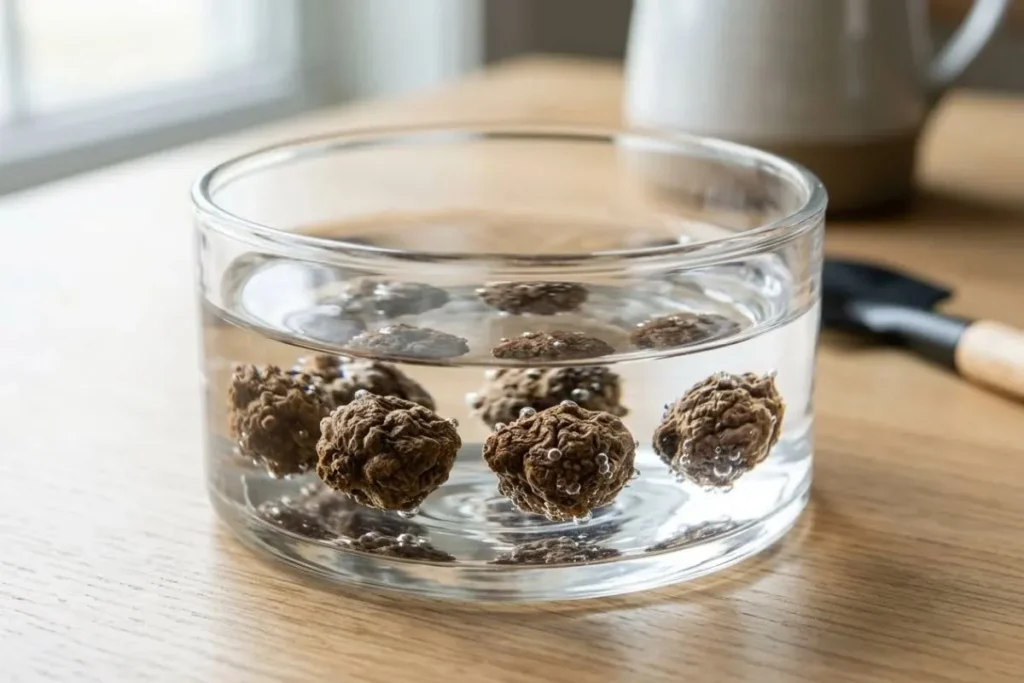
Don’t leave them soaking for several days because prolonged soaking can reduce the amount of oxygen available to the seeds.
Maintain the Right Temperature
Beet seeds germinate best in moderately cool conditions. A soil temperature of around 50–85°F (10–29°C) can support germination, although the process is generally more reliable in moderate temperatures.
If the soil becomes extremely hot, germination may become less successful. During warm weather, sow seeds in a cooler part of the day and keep the soil consistently moist.
Keep the Soil Moist
Moisture is essential during germination. Water the planting area gently after sowing so the seeds make good contact with the soil.
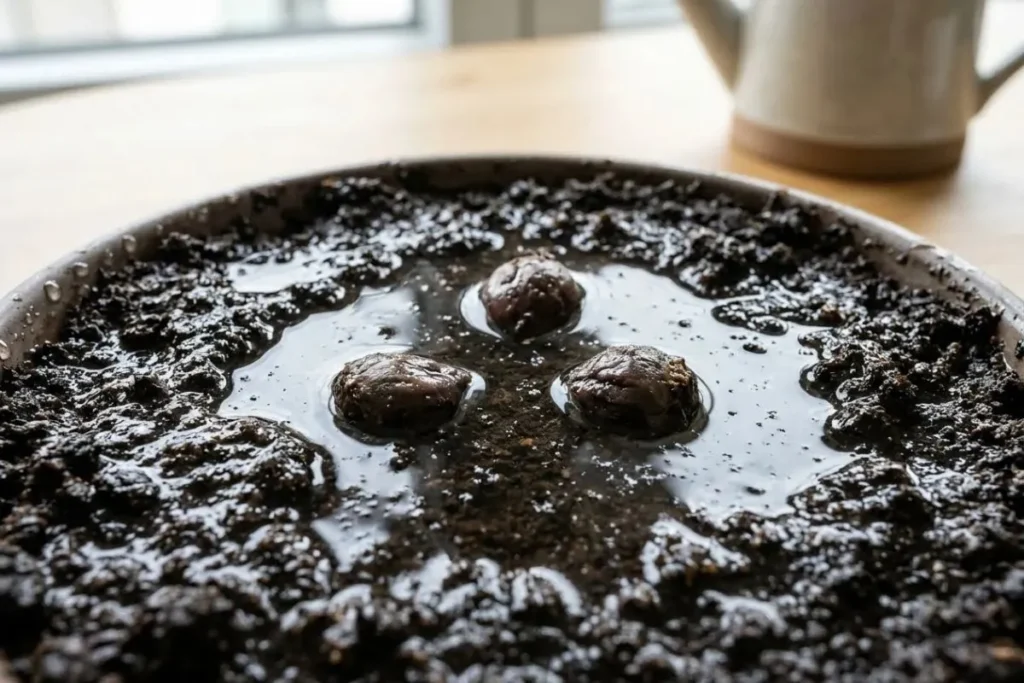
The soil should feel slightly moist, not soaked. Too much water can create poorly aerated conditions and encourage seeds to rot before they sprout.
Check the soil regularly, especially during hot or windy weather. If the surface starts drying out, give it a gentle watering.
Plant Beetroot Seeds at the Correct Depth
Once the soil is ready, it’s time to plant your seeds. Proper planting depth helps young seedlings emerge without struggling through too much soil.
Make small holes or shallow rows approximately half an inch deep. Place the beet seed clusters into the soil and cover them lightly with loose soil.
Leave around 1–2 inches between seed clusters when planting. If you’re making several rows, keep approximately 12 inches between them to provide enough room for growth and maintenance.
Water the area gently after planting.
You don’t need to bury beet seeds deeply. Planting too deep can delay emergence and make it harder for young seedlings to reach the surface.
If you’re growing beetroot in containers, choose a pot that is at least 10–12 inches deep and has drainage holes. A wider container is helpful if you want to grow several plants together.
How Long Do Beet Seeds Take to Germinate?
Beet seeds usually take around 5–14 days to germinate under suitable conditions. However, the exact timing depends on soil temperature, seed freshness, moisture, and planting depth.
You may notice tiny green shoots appearing through the soil before the rest of the seeds have sprouted. This is normal because not every seed cluster germinates at exactly the same time.
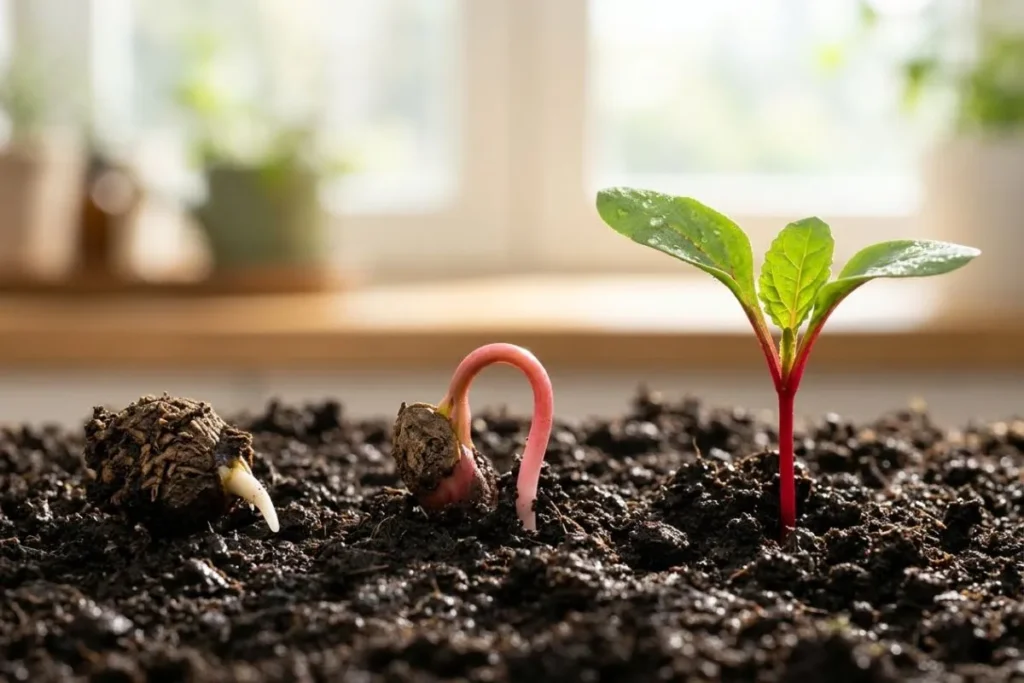
Avoid digging around the planting area to check whether the seeds are growing. Doing so can disturb developing roots and damage seeds that are beginning to sprout.
If nothing appears after two weeks, check the soil moisture and temperature. Extremely dry soil, waterlogged conditions, old seeds, or excessively deep planting may be responsible for slow germination.
Give the seeds suitable conditions before deciding to replant.
Thin the Seedlings After Germination
Once your beet seeds have sprouted, you may notice several small plants growing close together. This happens because a beet seed cluster can produce multiple seedlings.
Although it might seem helpful to keep every seedling, overcrowding can prevent roots from developing properly.
Wait until the seedlings are a few inches tall and have developed their first true leaves. Then thin them carefully, leaving approximately 3–4 inches between plants for normal-sized beetroot.
Remove the weaker seedlings while keeping the healthiest ones.
You can use small scissors to cut unwanted seedlings at soil level instead of pulling them out. This reduces the chance of disturbing the roots of nearby plants.
Proper spacing allows each beetroot plant to receive enough sunlight, water, and nutrients.
Water and Care for Young Beetroot Plants
After germination, beetroot plants need regular attention to develop healthy leaves and attractive roots.
Watering is particularly important because inconsistent moisture can affect root development. If the soil becomes too dry and then receives excessive water, the roots may become stressed or develop problems such as cracking.
Give Them Enough Sunlight
Beetroot grows best in a sunny location that receives around 6 hours or more of direct sunlight each day.
It can tolerate some partial shade, especially in warmer climates. However, plants growing in deep shade may produce more leaves and smaller roots.
If you’re growing beetroot in containers, place them somewhere they can receive sufficient sunlight without becoming excessively hot.
Water Consistently
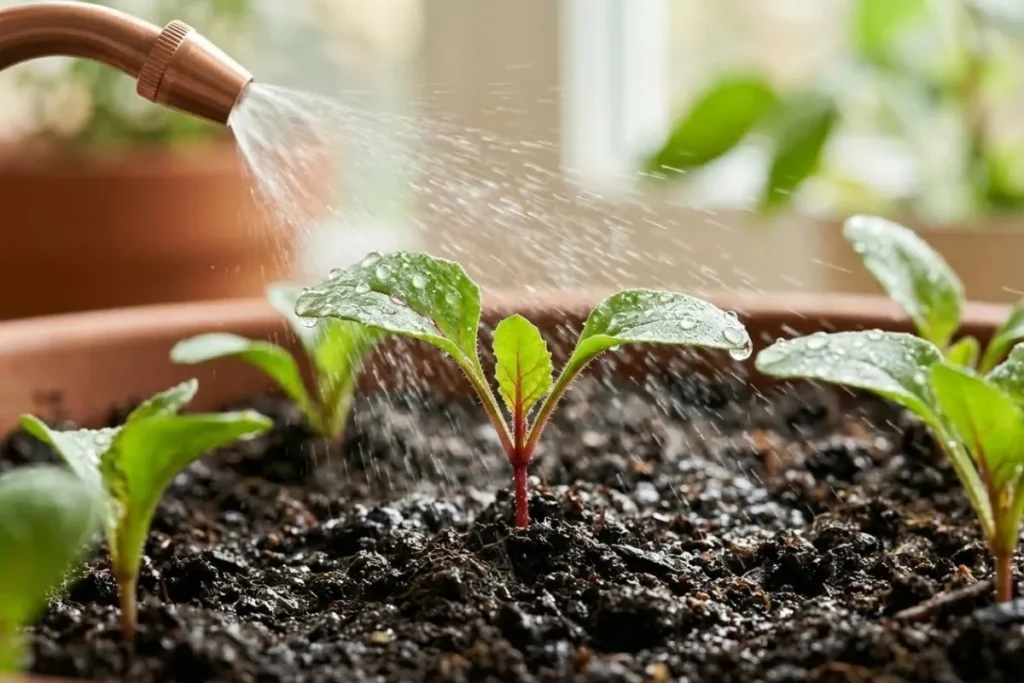
Keep the soil evenly moist throughout the growing season. Water near the base of the plants instead of constantly wetting the leaves.
Check the top layer of soil before watering. If it feels dry, provide enough water to moisten the root zone.
During hot weather, you may need to water more frequently. However, always make sure excess water can drain away.
Protect Plants From Weeds
Weeds compete with beetroot for moisture, sunlight, and nutrients. Remove them regularly while the plants are still young.
Be careful when working around beetroot because its roots grow close to the soil surface during early development.
A thin layer of organic mulch can help retain moisture and reduce weed growth.
Common Mistakes That Prevent Beet Seeds From Germinating
Even when you follow the basic planting instructions, small mistakes can affect germination. Understanding these problems can help you avoid wasting seeds.
Planting Seeds Too Deep
Beet seeds don’t need deep planting. If you bury them too far below the surface, young shoots may struggle to emerge.
Keep the planting depth around half an inch for better results.
Letting the Soil Dry Out
Seeds need moisture to begin germinating. If the soil dries out repeatedly, germination may become uneven or stop altogether.
Check the planting area regularly, particularly during warm weather.
Overwatering the Seeds
Too much water can remove air from the soil and create conditions that encourage seed decay.
Use well-draining soil and water gently rather than keeping the planting area constantly soaked.
Using Old or Poor-Quality Seeds
Old seeds may have reduced viability, especially when stored in warm or humid conditions.
Always check the seed packet before planting. Store unused seeds in a cool, dry place.
Planting During Extreme Heat
Very hot soil can make germination more difficult. If temperatures are high, consider planting during a cooler part of the growing season.
In warmer climates, choosing the right planting window can make a noticeable difference.
When Is Beetroot Ready to Harvest?
After spending time caring for your plants, you’ll eventually get to enjoy the best part: harvesting your beetroot.
Many varieties are ready to harvest approximately 50–70 days after sowing, although the exact time depends on the variety and growing conditions.
Check the seed packet for the expected maturity period.
You can gently move away a little soil around the top of the root to check its size. Many gardeners harvest beetroot when the roots are approximately 1.5–3 inches in diameter, depending on their preferred size and the variety.
Don’t leave every root in the ground for too long. Oversized beetroot can become woody or less tender.
To harvest, loosen the soil around the plant and gently pull the root out by its leaves. Avoid pulling too hard because the leaves may break.
After harvesting, remove the leaves while leaving a small portion of the stems attached. This helps reduce moisture loss from the roots.
Fresh beetroot can be used in salads, soups, roasted dishes, and homemade juices.
Frequently Asked Questions
How long does it take beet seeds to germinate?
Beet seeds generally germinate within 5–14 days when the soil has suitable moisture and temperature. Cold, dry, or excessively wet conditions can delay germination.
Should I soak beet seeds before planting?
Soaking beet seeds for approximately 8–12 hours is optional. It can soften the outer covering and may help encourage more even germination, but you can also plant them directly in moist soil.
Why are my beet seeds not germinating?
Common reasons include dry soil, excessive watering, unsuitable temperatures, old seeds, and planting too deeply. Check these conditions before planting another batch.
How deep should beetroot seeds be planted?
Plant beetroot seed clusters approximately half an inch deep. Cover them lightly with loose soil and water gently.
Can I grow beetroot in pots?
Yes, beetroot grows well in containers. Choose a pot at least 10–12 inches deep with drainage holes and use loose, well-draining potting mix.
How often should I water beetroot seeds?
Water whenever the soil begins to dry. Keep it consistently moist during germination, but avoid waterlogging because excessive moisture can cause seeds to rot.
Can I plant beetroot seeds directly in the garden?
Yes. Direct sowing is usually a good option because beetroot develops a taproot and generally grows best when its roots are not disturbed during transplanting.
Conclusion:
Growing beetroot from seed doesn’t have to be complicated. The most important things are choosing fresh seeds, preparing loose soil, planting at the correct depth, and maintaining consistent moisture during germination.
Once the seedlings appear, give them enough sunlight, thin overcrowded plants, and water regularly. With a little attention and patience, you can grow healthy beetroot in your garden or containers and enjoy fresh roots straight from your own harvest.
The next time you plant beet seeds, remember that good growing conditions from the beginning make all the difference.

Plant Nest Blog’s author is passionate about plants, gardening, and sustainable living. Through research and practical experience, they share helpful plant care tips, gardening guides, and easy solutions to help readers grow healthier plants and create greener spaces.