
Wet lettuce can ruin an otherwise perfect salad. Extra water makes dressing slide off the leaves, turns sandwiches soggy, and can cause stored lettuce to become slimy faster. Knowing how to dry lettuce leaves properly makes a big difference when you’re preparing fresh salads, wraps, burgers, or storing lettuce for later.
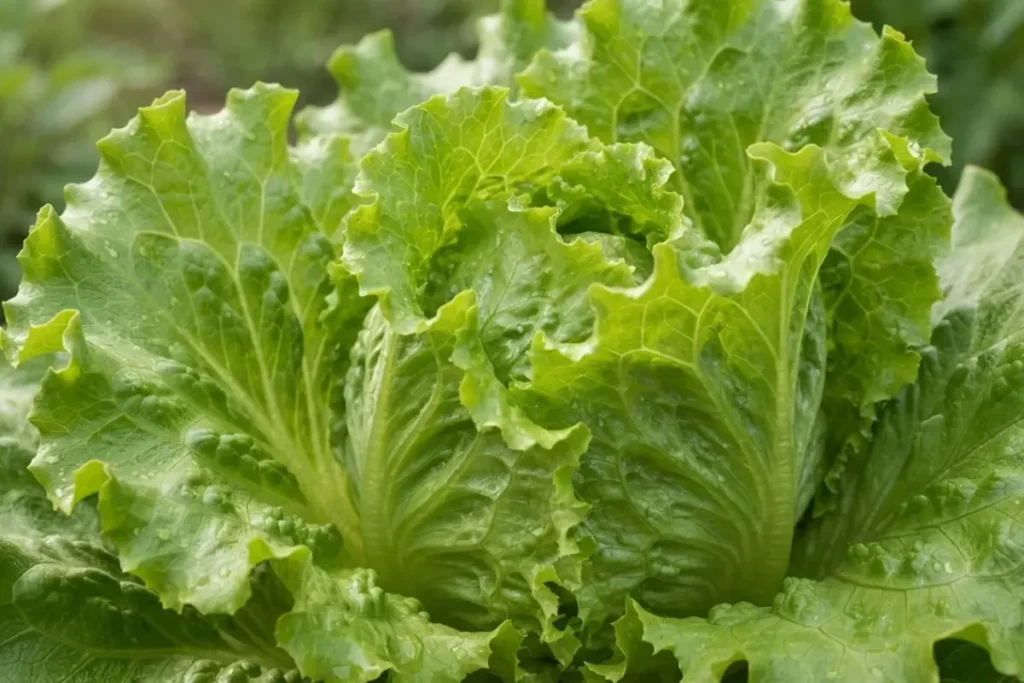
The good news is that you don’t need fancy kitchen equipment to remove moisture. A salad spinner, clean kitchen towel, paper towels, or even a little patience can help you get lettuce leaves dry and crisp. Below, you’ll find the easiest methods, helpful tips, and storage tricks to keep your lettuce fresh after washing.
Why Drying Lettuce Properly Matters
Lettuce naturally contains a lot of water, but the moisture left on its surface after washing is a different story. Water droplets can dilute your salad dressing, make leafy greens stick together, and leave your lettuce looking limp instead of fresh.
Drying lettuce also helps when you’re preparing food ahead of time. If you plan to refrigerate washed lettuce, removing excess moisture before storage can help prevent soggy leaves and unwanted spoilage. The goal isn’t to remove water from inside the lettuce but to get rid of the moisture clinging to its surface.
How to Dry Lettuce Leaves Using a Salad Spinner
A salad spinner is one of the easiest and most effective tools for drying washed lettuce. It removes excess water quickly without crushing delicate leaves, making it especially useful when preparing a large bowl of salad.
Wash and Separate the Leaves
Separate the lettuce leaves and rinse them under cool running water. Gently move the leaves around to remove dirt, sand, or other debris trapped near the stems. If you’re using romaine lettuce, pay extra attention to the inner folds.
Place the Lettuce in the Spinner
Put the washed leaves into the basket of your salad spinner. Avoid filling it too tightly because crowded leaves won’t move freely, making it harder to remove water.
Spin Away the Excess Moisture
Secure the lid and spin the basket several times. Stop, check the leaves, and spin again if they still look wet. Empty the water collected in the outer bowl between spins if necessary.
Check Before Storing
Take out a few leaves and check their surfaces. They should feel mostly dry rather than slippery or covered in droplets. If you notice a little moisture remaining, finish drying them with a clean towel.
How to Dry Washed Lettuce With a Kitchen Towel
If you don’t own a salad spinner, a clean kitchen towel works surprisingly well. This method is ideal for a small amount of lettuce or when you want to dry delicate leaves without spinning them.
Spread a clean, dry, lint-free kitchen towel on your countertop. Place the washed lettuce leaves in a single layer across the towel, leaving a little space between them. Cover the leaves with another clean towel or gently roll the bottom towel around them.
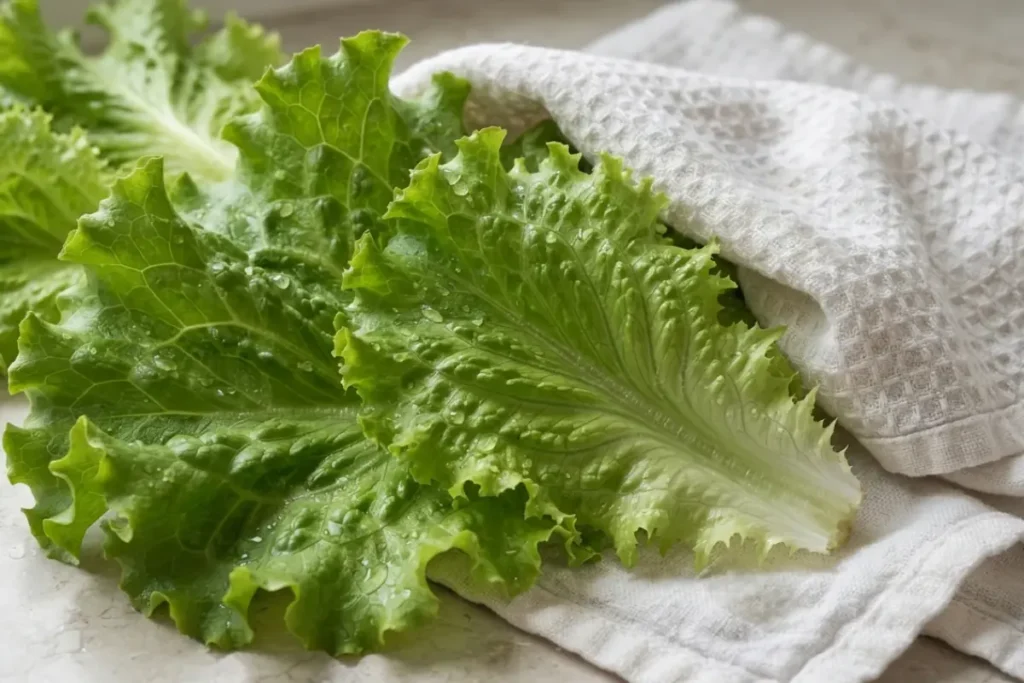
Press lightly with your hands to absorb excess water. Don’t rub, squeeze, or twist the leaves because they can bruise easily. Unroll the towel and check the lettuce. If the towel feels damp, switch to a dry one and repeat.
This method works especially well for butter lettuce, baby lettuce, and other tender greens that can tear when handled roughly.
How to Remove Moisture From Lettuce Using Paper Towels
Paper towels are a convenient option when you’re preparing lettuce for a sandwich, burger, taco, or quick lunch. You don’t need to dry an entire batch of greens if you’re only using a few leaves.
Place the washed lettuce leaves between two layers of paper towels. Gently pat the top surface until the paper absorbs the water. Turn the leaves over and pat the other side if needed.
For thicker lettuce leaves, such as romaine, pay attention to the center rib, where water may collect. You can fold a paper towel and press it gently along the rib to remove trapped moisture.
Avoid pressing too hard, particularly on soft leaves. A gentle pat is usually enough to leave the lettuce ready for dressing or assembly.
Best Methods for Drying Different Types of Lettuce
Not every lettuce variety responds the same way to drying. Some leaves are firm and sturdy, while others are delicate and easy to damage.
Romaine Lettuce
Romaine has sturdy leaves and thick ribs that hold water. A salad spinner is usually the best option because it removes moisture from both the leafy portions and the folds around the ribs. You can finish with a towel if needed.
Iceberg Lettuce
Iceberg lettuce has crisp, tightly packed leaves. After separating and washing them, use a spinner or gently shake off the water before patting them dry. Avoid squeezing the leaves because that can damage their crisp texture.
Butter Lettuce
Butter lettuce has soft, tender leaves that can tear easily. Spread them on a clean towel and blot gently. If using a spinner, use a light spin and avoid overcrowding the basket.
Leaf Lettuce
Green leaf and red leaf lettuce have loose, ruffled edges where water can collect. Spin them in small batches or spread them across a towel so the leaves dry evenly.
How to Air-Dry Lettuce Without Damaging It
Air-drying is a simple method when you have time and don’t want to use towels for every leaf. It works best for lettuce that has already been shaken to remove most of the water.
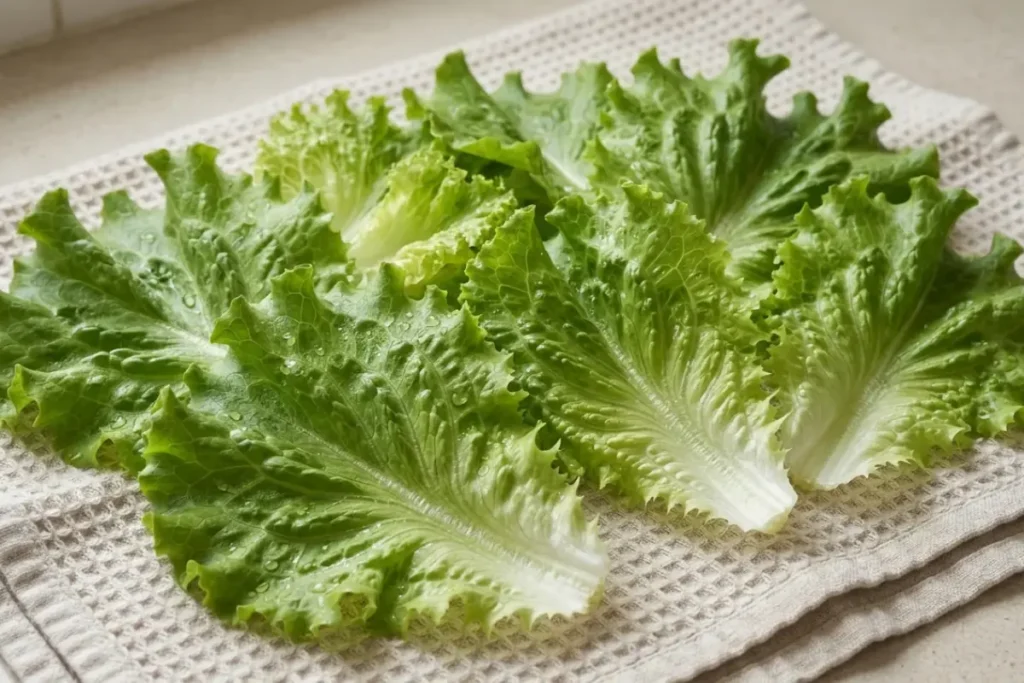
Spread the washed lettuce on a clean drying rack or towel in a single layer. Keep the leaves separated so air can move around them. Leave them for a short time in a clean kitchen away from dust, splashes, and direct sunlight.
Check the leaves occasionally and turn them gently if one side remains wet. Don’t leave lettuce sitting at room temperature for an extended period, especially in a warm kitchen. Once the surface moisture is gone, refrigerate it promptly if you’re not using it right away.
How to Get Lettuce Leaves Dry and Crisp for Salads
Dry lettuce is one of the easiest ways to make a homemade salad taste better. When leaves are free of excess surface water, dressing can coat them more evenly instead of sliding off into the bottom of the bowl.
For the best texture, wash the lettuce shortly before preparing your salad, remove excess moisture with a spinner or towel, and keep the leaves chilled until you’re ready to serve. If you like extra-crisp lettuce, place the washed leaves in the refrigerator after drying them. Cold temperatures help keep lettuce refreshing and firm.
Add the dressing just before serving. Even properly dried lettuce can become soft if it sits in dressing for too long, particularly when the dressing contains salt, vinegar, or citrus juice.
Common Mistakes to Avoid When Drying Lettuce
Drying Lettuce While the Leaves Are Still Clumped Together
Leaves that remain stuck together trap moisture between them. Separate the lettuce before washing and spread it out during drying to help water escape.
Using a Dirty or Damp Towel
A towel that’s already wet won’t absorb much additional water. Always start with a clean, dry towel to get better results and avoid transferring unwanted dirt to your lettuce.
Spinning Too Much Lettuce at Once
Overfilling a salad spinner prevents the leaves from moving properly. Dry smaller batches for better results, especially when working with large heads of lettuce.
Rubbing or Squeezing the Leaves
Lettuce is delicate, and rough handling can damage its structure. Use gentle pressure when patting leaves dry, and avoid squeezing them into a ball.
Putting Wet Lettuce Directly Into a Storage Container
Excess water trapped in a container can leave lettuce soggy. Dry the leaves first, then store them with a clean paper towel to absorb any remaining moisture.
How to Store Lettuce After Drying
Once your lettuce leaves are dry, proper storage helps maintain their texture and freshness. Place them in a clean container or reusable food-storage bag with a dry paper towel. The towel can absorb moisture that builds up during refrigeration.
Keep the lettuce in the refrigerator, preferably in the crisper drawer. Avoid packing the leaves too tightly because they need a little space to prevent crushing.
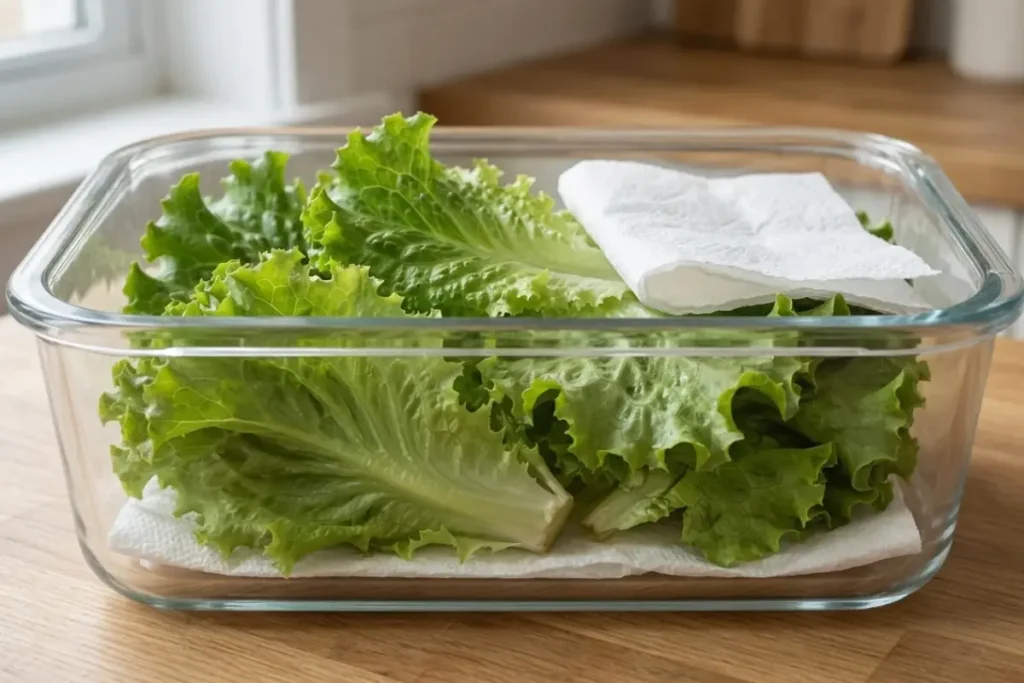
Check the paper towel if you’re storing lettuce for several days. Replace it if it becomes noticeably damp. If you see slimy leaves, unusual discoloration, or an unpleasant smell, discard the affected lettuce rather than trying to freshen it.
For the best texture, use dried lettuce as soon as practical after washing.
Frequently Asked Questions
Can I dry lettuce without a salad spinner?
Yes. You can dry lettuce using clean kitchen towels, paper towels, or a drying rack. Gently pat the leaves or spread them out to air-dry for a short time.
How long does it take to dry lettuce after washing?
A salad spinner can remove most surface water in a minute or two, depending on how much lettuce you’re drying. Towel drying usually takes a few minutes, while air-drying may take longer depending on airflow and how wet the leaves are.
Should lettuce be completely dry before storing it?
Lettuce should be mostly dry on the surface before refrigeration. A small amount of moisture inside the leaves is natural, but excess water trapped between leaves or in the storage container can make them soggy.
Can I dry lettuce in the refrigerator?
Yes. After removing most of the water with a spinner or towel, spread the lettuce in a clean container lined with paper towels and refrigerate it. Keep the leaves loosely arranged so remaining moisture can escape.
Why is my lettuce still wet after using a salad spinner?
The spinner may be overcrowded, or water may be trapped in folds and thick ribs. Spin smaller batches, shake the leaves gently, and finish with a towel if necessary.
Does dry lettuce stay fresh longer?
Removing excess surface moisture and storing lettuce properly can help reduce sogginess and maintain quality. However, drying alone doesn’t prevent spoilage. Freshness also depends on the lettuce’s condition, refrigerator temperature, and how it’s handled.
Conclusion:
Drying lettuce doesn’t have to be complicated. A salad spinner makes the job quick, while a clean towel or paper towels work just as well when you’re preparing a smaller amount. The trick is to remove excess water without bruising the leaves.
Once your lettuce is dry, keep it refrigerated in a clean container and add dressing only when you’re ready to eat. A few extra minutes of drying can make your salads, sandwiches, and wraps noticeably fresher and more enjoyable.

Plant Nest Blog’s author is passionate about plants, gardening, and sustainable living. Through research and practical experience, they share helpful plant care tips, gardening guides, and easy solutions to help readers grow healthier plants and create greener spaces.